Global Outdoor Furniture Market Size, Share, Trends & Growth Forecast Report By Product Type (Tables, Chairs and Dining Sets), Material Type, Sales Channel, and Region (North America, Europe, APAC, Latin America, Middle East and Africa) – Industry Analysis from 2026 to 2034
Market Size, 2025
$23.86 BnMarket Estimate, 2026
$25.3 BnMarket Forecast, 2034
$40.35 BnCAGR, 2026–2034
6.01%Global Outdoor Furniture Market Size
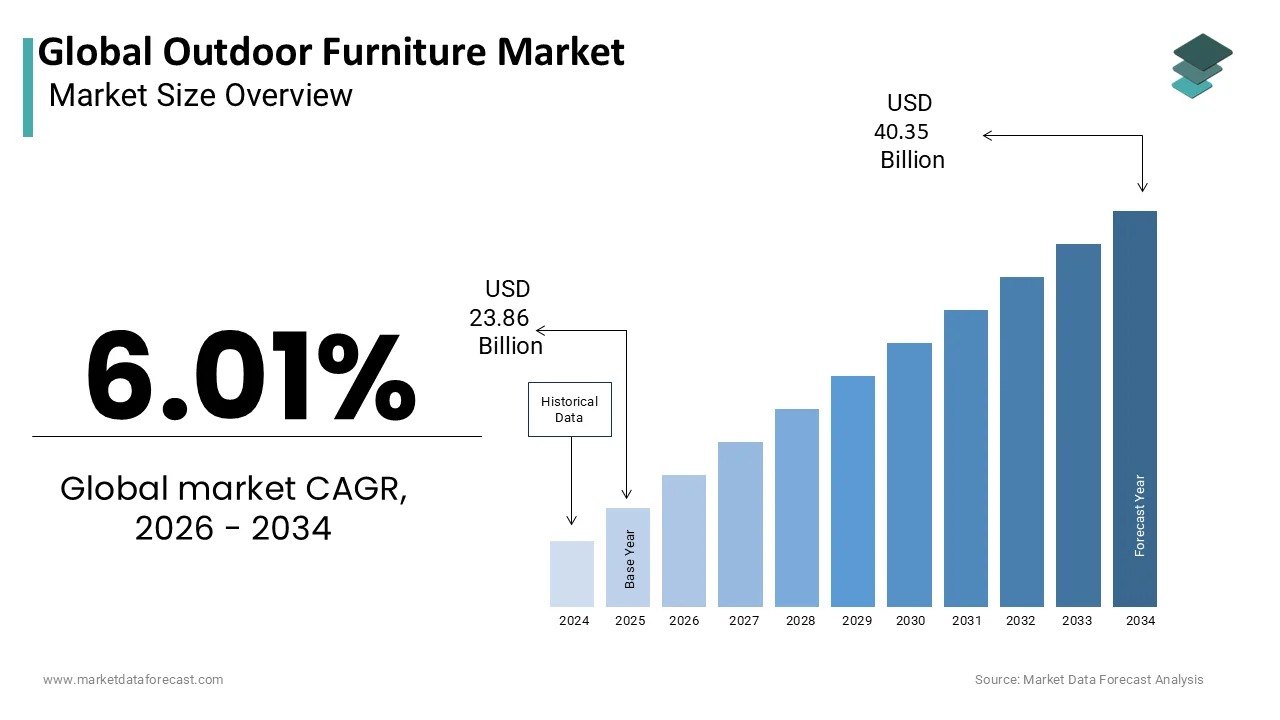
The global outdoor furniture market was valued at USD 23.86 billion in 2025, is estimated to reach USD 25.30 billion in 2026, and is projected to reach USD 40.35 billion by 2034, growing at a CAGR of 6.01% from 2026 to 2034.
The outdoor furniture is a wide range of products designed for use in gardens, patios, terraces, balconies, and commercial spaces such as restaurants, hotels, and resorts. These products are typically manufactured using durable materials such as rattan, wicker, metal, wood, plastic, and synthetic composites that can withstand exposure to weather elements. A key trend shaping this market is the growing emphasis on outdoor living spaces, particularly among homeowners who seek to extend their interior design aesthetics to exterior environments. Moreover, the hospitality and tourism sectors have contributed significantly to the growth of this market by incorporating premium outdoor furnishings in hotels, cafes, and recreational centers. Sustainability is also playing a pivotal role, with consumers increasingly favoring eco-friendly, recyclable, or ethically sourced materials.
MARKET DRIVERS
Rise in Residential Renovation and Outdoor Living Trends
One of the primary drivers fueling the growth of the outdoor furniture market is the increasing focus on residential renovation and the expansion of outdoor living spaces. With a shift in lifestyle preferences, especially in suburban and semi-urban areas, homeowners are transforming their backyards, patios, and balconies into functional extensions of indoor living areas. According to the Joint Center for Housing Studies at Harvard University, home improvement expenditures in the U.S. reached over $470 billion in 2023, with outdoor enhancements accounting for a significant share.
This trend has been further amplified by remote work culture and the desire for personal relaxation zones amid rising stress levels. Consumers are investing in durable, stylish, and comfortable outdoor furniture to create inviting spaces for social gatherings, dining, and leisure. In response, manufacturers have introduced innovative designs that blend aesthetics with weather resistance, offering modular sets, loungers, fire pits, and shade solutions tailored to modern lifestyles.
Growth in the Hospitality and Tourism Industry
Another major driver contributing to the expansion of the outdoor furniture market is the steady growth of the hospitality and tourism sector. Hotels, resorts, restaurants, cafes, and event venues are increasingly investing in premium outdoor furniture to enhance guest experiences and optimize space utilization. According to the World Travel & Tourism Council, the global travel and tourism industry contributed over $9 trillion to the global economy in 2023 by marking a strong recovery and renewed investment in infrastructure. In particular, boutique hotels and open-air dining establishments have embraced unique, designer outdoor furniture to create visually appealing and comfortable environments. This trend has been reinforced by changing consumer preferences for experiential travel and al fresco dining, especially in urban centers and vacation destinations. Companies like Royal Botania, Tropitone, and Dedon have reported increased orders from commercial clients seeking bespoke, weather-resistant furniture solutions.
MARKET RESTRAINTS
Fluctuations in Raw Material Prices
A significant restraint affecting the outdoor furniture market is the volatility in raw material prices, which directly impacts production costs and profit margins. Materials such as aluminum, teak wood, rattan, and high-density polyethylene (HDPE) are subject to price fluctuations due to supply chain disruptions, geopolitical tensions, and changes in trade policies. These cost increases have led to higher end-product pricing, which may deter budget-conscious consumers from making purchases. Small and mid-sized furniture producers, in particular, struggle with sourcing affordable yet high-quality materials without compromising on product durability. Moreover, the rising cost of shipping and logistics has compounded the challenge, especially for companies relying on imported raw materials. Until there is greater stability in commodity markets and alternative sourcing strategies are adopted, price sensitivity will continue to pose a barrier to market expansion.
Seasonal Demand and Weather Dependency
Another critical constraint impacting the outdoor furniture market is its seasonal nature and dependency on favorable weather conditions. Unlike indoor furniture, which maintains consistent demand throughout the year, outdoor furniture sales tend to peak during warmer months and decline sharply in winter or rainy seasons. According to data from the National Retail Federation, nearly 60% of outdoor furniture purchases in the U.S. occur between March and September, reflecting strong correlation with climate patterns.
This seasonality creates cash flow challenges for retailers and manufacturers, necessitating aggressive promotional campaigns during off-peak periods to maintain revenue streams. Additionally, unpredictable weather events, such as unseasonal rains or extreme heatwaves, can disrupt consumer purchasing behavior and lead to inventory pileups. In regions prone to prolonged winters, demand remains subdued for several months, which is limiting business opportunities.
MARKET OPPORTUNITIES
Expansion of E-commerce and Direct-to-Consumer Sales
One of the most promising opportunities in the outdoor furniture market is the rapid expansion of e-commerce platforms and direct-to-consumer (DTC) sales channels. With the growing preference for online shopping, especially among younger demographics, brands are leveraging digital marketplaces, mobile apps, and company-owned websites to reach a broader audience beyond traditional brick-and-mortar stores.
Furniture retailers are enhancing their online presence through immersive product visualization tools, augmented reality (AR) previews, and personalized recommendations to improve customer engagement. Companies such as Article, West Elm, and Joybird have successfully capitalized on this trend by offering curated outdoor collections with fast delivery and flexible financing options. Additionally, the integration of subscription-based models for outdoor furniture rentals in urban apartments and co-living spaces presents a novel avenue for market penetration.
Rising Demand for Sustainable and Eco-Friendly Products
A transformative opportunity emerging in the outdoor furniture market is the growing consumer demand for sustainable and eco-friendly products. With heightened awareness around environmental impact, buyers are increasingly prioritizing furniture made from recycled materials, sustainably sourced wood, and biodegradable components. Manufacturers are responding by introducing product lines that feature reclaimed wood, recycled aluminum, UV-stabilized HDPE lumber, and low-VOC finishes. Companies like Ethimo and Sklum have launched collections crafted entirely from ocean plastics and repurposed industrial waste, aligning with global sustainability goals. Certifications such as FSC (Forest Stewardship Council) and Cradle to Cradle are also gaining traction, providing assurance of ethical sourcing and responsible manufacturing.
MARKET CHALLENGES
High Logistics and Assembly Costs
A major challenge facing the outdoor furniture market is the high cost associated with logistics and product assembly. Outdoor furniture items, especially those made from natural materials like wood and stone, tend to be bulky, heavy, and difficult to transport, leading to increased shipping expenses. According to the National Association of Home Builders, delivery and installation costs can account for up to 20% of the total furniture purchase value, reducing affordability for price-sensitive consumers. Additionally, many outdoor furniture sets require professional assembly, which adds another layer of expense and complexity. While some brands offer flat-pack or easy-to-assemble designs to reduce costs, others struggle to balance product quality with ease of transportation. This issue is particularly pronounced in cross-border e-commerce, where import duties, customs clearance delays, and last-mile delivery inefficiencies further inflate costs. Until companies adopt more streamlined packaging, localized warehousing, and optimized distribution strategies, the burden of logistics and assembly will remain a persistent challenge in scaling outdoor furniture sales.
Intense Competition and Price Pressures
Another significant challenge confronting the outdoor furniture market is the intense competition among domestic and international players, leading to downward pressure on pricing and profit margins. Established global brands compete against local manufacturers and private-label offerings from large retailers, creating a fragmented landscape where differentiation is difficult. This competitive environment forces companies to continuously innovate in design, materials, and marketing while maintaining cost efficiency. Smaller firms often struggle to keep pace with large-scale investments in branding, digital marketing, and supply chain optimization. Furthermore, the influx of inexpensive imports from countries like China and Vietnam has intensified price-based competition, particularly in mass-market segments.
REPORT COVERAGE
| REPORT METRIC | DETAILS |
| Market Size Available | 2025 to 2034 |
| Base Year | 2025 |
| Forecast Period | 2026 to 2034 |
| Segments Covered | By Product Type, Material Type, Sales Channel, and Region |
| Various Analyses Covered | Global, Regional & Country Level Analysis, Segment-Level Analysis, DROC, PESTLE Analysis, Porter’s Five Forces Analysis, Competitive Landscape, Analyst Overview of Investment Opportunities |
| Regions Covered | North America, Europe, APAC, Latin America, Middle East & Africa |
| Market Leaders Profiled | Aura Global Furniture, Inter Ikea Group, Ashely Industries, Kimball International, Brown Jordan, Barbeques Galore, Keter Group, Agio International Company Limited, Lloyd Flanders and Ace Hardware Corporation, and others |
SEGMENTAL ANALYSIS
By Product Type Insights
The chairs segment was the largest and held 37.4% of the outdoor furniture market share in 2025. One key driver behind this dominance is the high frequency of individual purchases, particularly among urban dwellers looking to furnish compact balconies or small courtyards. According to the American Home Furnishings Alliance, over 65% of homeowners prefer modular chair arrangements that allow flexibility in space utilization and design personalization. Additionally, the growing trend of outdoor dining and lounging has increased demand for stackable, lightweight, and weather-resistant chair options across cafes, restaurants, and event spaces.
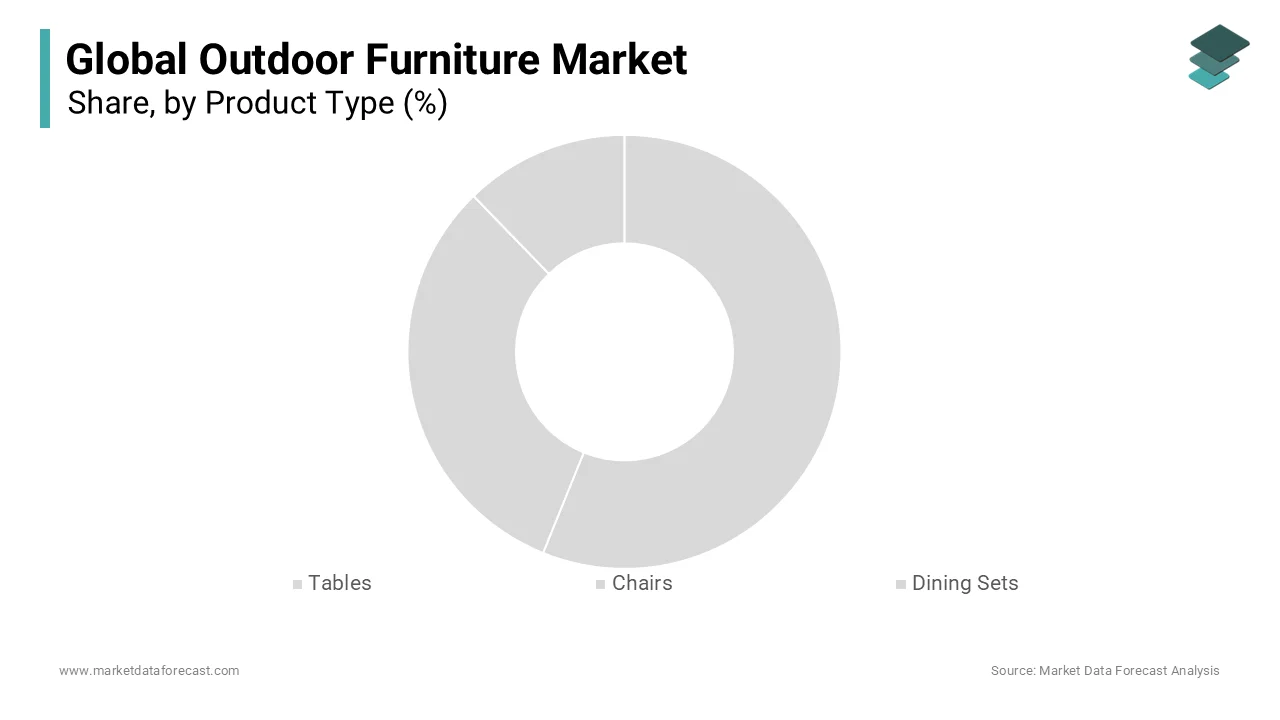
The dining sets segment is projected to grow at the fastest CAGR of 8.4% throughout the forecast period. A major factor driving this growth is the shift toward experiential home environments, especially post-pandemic. According to the National Association of Home Builders, nearly 58% of new single-family homes built in 2023 included dedicated outdoor dining spaces, up from 42% in 2019. This architectural integration has directly boosted demand for all-in-one dining sets that offer style, durability, and ease of setup. Additionally, online retailers and direct-to-consumer brands are promoting ready-to-assemble dining sets with modern designs and competitive pricing, making them accessible to a broader audience. The rise of lifestyle influencers advocating for curated outdoor aesthetics on platforms like Instagram and Pinterest has further amplified consumer interest, ensuring sustained momentum for this product category.
By Material Type Insights
The metal segment 39.3% of the outdoor furniture market share in 2025. One of the key drivers behind this dominance is the growing preference for contemporary, minimalist, and industrial-style furniture, particularly in urban settings. Additionally, metal furniture’s compatibility with powder coating and other protective finishes enhances its resilience against rust and UV degradation, extending product lifespan. Commercial establishments such as rooftop bars, hotels, and public parks favor metal-based outdoor setups for their structural integrity and ability to withstand heavy usage.
The plastic segment is anticipated to grow with a CAGR of 9.1% during the forecast period with the advancements in polymer technology, rising affordability, and expanding applications in residential and contract furniture sectors. High-density polyethylene (HDPE), polypropylene, and resin-based composites are gaining traction for their lightweight, waterproof, and recyclable properties. Furthermore, manufacturers are introducing innovative designs that mimic the appearance of wood and wicker using synthetic resins, appealing to eco-conscious consumers seeking sustainable alternatives without compromising aesthetics. The expansion of e-commerce and big-box retail chains offering plastic furniture at competitive price points is also accelerating adoption rates.
By Sales Channel Insights
The retail stores segment was accounted in holding 42.3% of the outdoor furniture market share in 2025. A key driver of this segment's dominance is the tactile nature of furniture buying, where many consumers prefer to test comfort, weight, and build quality before committing to a purchase. According to the National Retail Federation, over 60% of U.S. consumers still prefer purchasing large furniture items in physical stores despite the growth of online channels. Retail giants like IKEA, Target, and Lowe’s continue to expand their outdoor furniture sections, integrating seasonal promotions and bundled offers to drive footfall and sales. Additionally, strategic partnerships between furniture brands and national retailers ensure wide distribution and brand visibility, particularly in suburban and rural markets where digital penetration is lower.
The e-commerce stores segment is expected to grow with a CAGR of 11.3% in the next coming years. One major factor fueling this growth is the enhanced accessibility of immersive shopping tools such as augmented reality previews, detailed product videos, and customer reviews, which help bridge the gap between virtual browsing and real-world expectations. Additionally, the proliferation of direct-to-consumer brands leveraging social media marketing and influencer endorsements has expanded digital reach. Companies like Article, Joybird, and Burrow have capitalized on this shift by offering streamlined delivery, customizable options, and hassle-free return policies.
REGIONAL ANALYSIS
North America
North America was the top performer in the outdoor furniture market with 32.3% of share in 2025 owing to the strong disposable incomes, a well-established home improvement culture, and a growing emphasis on outdoor living spaces. A key growth driver is the increasing number of multi-family housing developments incorporating communal outdoor seating and recreational zones. According to the Joint Center for Housing Studies at Harvard University, home improvement spending in the U.S. surpassed $470 billion in 2023, with outdoor furniture and décor accounting for a notable portion. Additionally, the rise of remote work has prompted homeowners to convert backyards into functional relaxation and entertainment areas.
Europe
Europe was next with 28.3% of the outdoor furniture market share in 2025. One of the key factors supporting this position is the region’s focus on sustainability, with European consumers increasingly opting for eco-friendly, durable, and ethically sourced outdoor furniture. According to Euromonitor International, over 55% of European consumers consider environmental impact when purchasing home décor products. Moreover, the hospitality industry especially in Mediterranean destinations is a major buyer of high-quality outdoor furniture for resorts, cafes, and open-air dining venues.
Asia-Pacific
Asia-Pacific is likely to grow with a fastest CAGR in the next coming years. China’s Ministry of Housing and Urban-Rural Development reported that over 12 million new residential units were completed in 2023, many of which included balcony or terrace spaces designed for outdoor relaxation. In India, the rise of premium apartment complexes with landscaped gardens has spurred demand for stylish yet affordable outdoor furniture. Meanwhile, Japan’s aging population is driving interest in ergonomic and low-maintenance outdoor setups for elderly care facilities.
Latin America
Latin America outdoor furniture market is likely to be driven with rising disposable incomes, and expanding tourism infrastructure. Consumers in the region have a strong cultural affinity for outdoor living, reflected in the prevalence of terraces, patios, and open-air social gatherings. A major growth driver is the increasing number of boutique hotels, beach resorts, and café-style eateries adopting modern outdoor furniture to enhance guest experiences. According to the Latin American Hotel Association, the hospitality sector in the region invested over $2.5 billion in property upgrades in 2023, including outdoor space enhancements. Additionally, local furniture manufacturers are adapting to global design trends while maintaining cost competitiveness.
Middle East and Africa
The Middle East and Africa outdoor furniture market is likely to have steady pace in the next coming years with growth concentrated in the Gulf Cooperation Council (GCC) countries and South Africa. The UAE, Saudi Arabia, and Qatar are leading adopters due to their investment in luxury real estate, hospitality development, and public space beautification projects. According to the Dubai Statistics Center, the UAE welcomed over 14 million tourists in 2023, prompting hoteliers and developers to upgrade outdoor amenities to attract high-end visitors. In South Africa, the growing middle class and increasing home ownership rates have contributed to stronger demand for outdoor furnishings. Government-led initiatives aimed at improving public infrastructure and recreational areas are also boosting market activity.
KEY MARKET PLAYERS AND COMPETITIVE LANDSCAPE
Companies such as Aura Global Furniture, Inter Ikea Group, Ashely Industries, Kimball International, Brown Jordan, Barbeques Galore, Keter Group, Agio International Company Limited, Lloyd Flanders and Ace Hardware Corporation are playing a dominating role in the global outdoor furniture market.
The competition in the outdoor furniture market is highly fragmented, featuring a mix of global giants, regional manufacturers, and niche design-focused brands vying for consumer attention across diverse price points and styles. Established players leverage their strong distribution networks, brand equity, and economies of scale to maintain dominance, while emerging brands differentiate themselves through customization, sustainability, and digital-first strategies. The convergence of lifestyle trends, increased home investment, and shifting retail dynamics has intensified rivalry across both physical and online channels. Companies are continuously adapting to changing consumer preferences by introducing modular, compact, and multi-functional outdoor furniture suited for urban living. Additionally, the rise of direct-to-consumer brands and private-label offerings from large retailers has further diversified the market, which is making innovation, customer experience, and supply chain efficiency key battlegrounds for competitive advantage.
TOP 3 PLAYERS IN THE MARKET
IKEA
IKEA is a global leader in home furnishings, which is offering a wide range of affordable and functional outdoor furniture tailored to modern urban lifestyles. The company has significantly influenced the market by making stylish, modular, and space-saving outdoor solutions accessible to a broad consumer base. Its emphasis on sustainability, flat-pack design, and seamless integration with indoor décor has reshaped purchasing behavior worldwide.
Ethimo
Ethimo specializes in high-end, designer outdoor furniture crafted from natural and eco-friendly materials such as teak, aluminum, and synthetic wicker. The brand’s focus on craftsmanship and environmental responsibility has set new benchmarks in product development and material sourcing.
Manutti
Manutti is a Belgian brand recognized for its innovative designs, superior comfort, and use of high-performance materials suited for all climates. It serves both private and contract markets, including hotels, restaurants, and wellness centers. Manutti's commitment to blending European design heritage with cutting-edge technology has positioned it as a preferred choice among architects and interior designers globally
TOP STRATEGIES USED BY KEY MARKET PLAYERS
One major strategy employed by key players in the outdoor furniture market is product innovation and design differentiation , where companies introduce unique aesthetics, multifunctional features, and weather-resistant materials to stand out in a competitive landscape. Another critical approach is expanding digital presence and e-commerce capabilities by allowing brands to reach a wider audience through immersive online experiences, augmented reality previews, and direct-to-consumer models. Lastly, sustainability-driven branding plays a crucial role, with leading manufacturers emphasizing recyclable materials, ethical sourcing, and carbon-neutral production processes to align with evolving consumer values and regulatory expectations.
RECENT HAPPENINGS IN THE MARKET
- In February 2025, IKEA launched a new line of sustainably sourced outdoor furniture made entirely from recycled plastics and FSC-certified wood by reinforcing its commitment to circular design and environmental responsibility.
- In May 2025, Ethimo announced a strategic partnership with a renowned architectural firm to co-develop exclusive outdoor furniture collections tailored for luxury hospitality projects in Europe and the Middle East.
- In July 2025, Manutti expanded its global footprint by opening a flagship showroom in Singapore, targeting growing demand in the Asia-Pacific region and strengthening its presence in upscale residential and resort markets.
- In September 2025, a U.S.-based outdoor furniture brand introduced an AI-powered virtual styling tool that allows customers to visualize different furniture sets in their outdoor spaces using smartphone apps.
- In November 2025, a leading Scandinavian furniture retailer entered into a joint venture with a logistics provider to establish regional warehousing hubs across North America, which is aiming to reduce delivery times and enhance customer satisfaction.
MARKET SEGMENTATION
This research report on the global outdoor furniture market has been segmented and sub-segmented based on product type, material type, sales channel, and region.
By Product Type
- Tables
- Chairs
- Dining Sets
By Material Type
- Wood
- Plastic
- Metal
By Sales Channel
- Retail Stores
- Direct-To-Consumer
- Manufacturer Store
- E-Commerce Store
By Region
- North America
- Europe
- Asia Pacific
- Latin America
- The Middle East and Africa
Frequently Asked Questions
What are the dominant countries in the geography section of the global outdoor furniture market?
Leading players in the global outdoor furniture market include Agio International Company, Brown Jordan International, and Centure Furniture, among others
Which organizations are leading the global outdoor furniture market industry?
The value is anticipated to increase at US$ 25.20 Billion by 2029, with a growing CAGR 5.1% in the term 2024-2029.
What are the challenges that are facing by the global outdoor furniture market?
North America accounted for the largest share, next is APAC and the last is the Europe in the outdoor furniture market
What is the boosting factor in the whole global outdoor furniture market?
Increasing disposable income of consumers is likely to be the major driver for the outdoor furniture market.
Related Reports
Access the study in MULTIPLE FORMATS
Purchase options starting from
$ 2500
Didn’t find what you’re looking for?
TALK TO OUR ANALYST TEAM
Need something within your budget?
NO WORRIES! WE GOT YOU COVERED!
Call us on: +1 888 702 9696 (U.S Toll Free)
Write to us: sales@marketdataforecast.com