- Product Description Description
- Table of Contents TOC
- List of Table & Figure LOT
- Get Free Sample PDF Sample PDF
Market Size, 2025
$19.29 BnMarket Estimate, 2026
$21.43 BnMarket Forecast, 2034
$49.67 BnCAGR, 2026–2034
11.08%Executive Summary: Global Packaged Vegan Food Market
- Market Scope: Comprehensive global packaged vegan food market analysis covering product types, distribution channels, regional leadership frameworks, and dietary and lactose intolerance adoption metrics.
- Market Valuation: Valued at USD 19.29 billion (2025), estimated at USD 21.43 billion (2026), and projected to reach USD 49.67 billion by 2034, registering a robust CAGR of 11.08% (2026–2034).
- Primary Growth Drivers: High dietary and health adoption volumes (lactase deficiency affecting approximately 68% of adults worldwide with rates exceeding 90% in East Asian populations, and more than 70 countries implementing formal vegan certification frameworks). Key demand and operational trends include rising plant-based retail sales (such as U.S. sales hitting USD 8.1 billion and Germany generating EUR 2.2 billion annually) alongside clean-label formulations and allergen transparency.
Key Market Segment Metrics (2026–2034)
| Category | Leading Segment (2025 Position) | Fastest-Growing Segment |
|---|---|---|
| By Product | Dairy alternatives (dominated with a 41.4% market share in 2025) | Packaged meals (projected to grow at a 14.7% CAGR) |
| By Distribution Channel | Hypermarkets and supermarkets (led with a 48.3% share in 2025) | Online retailers (forecast to expand at an 18.3% CAGR) |
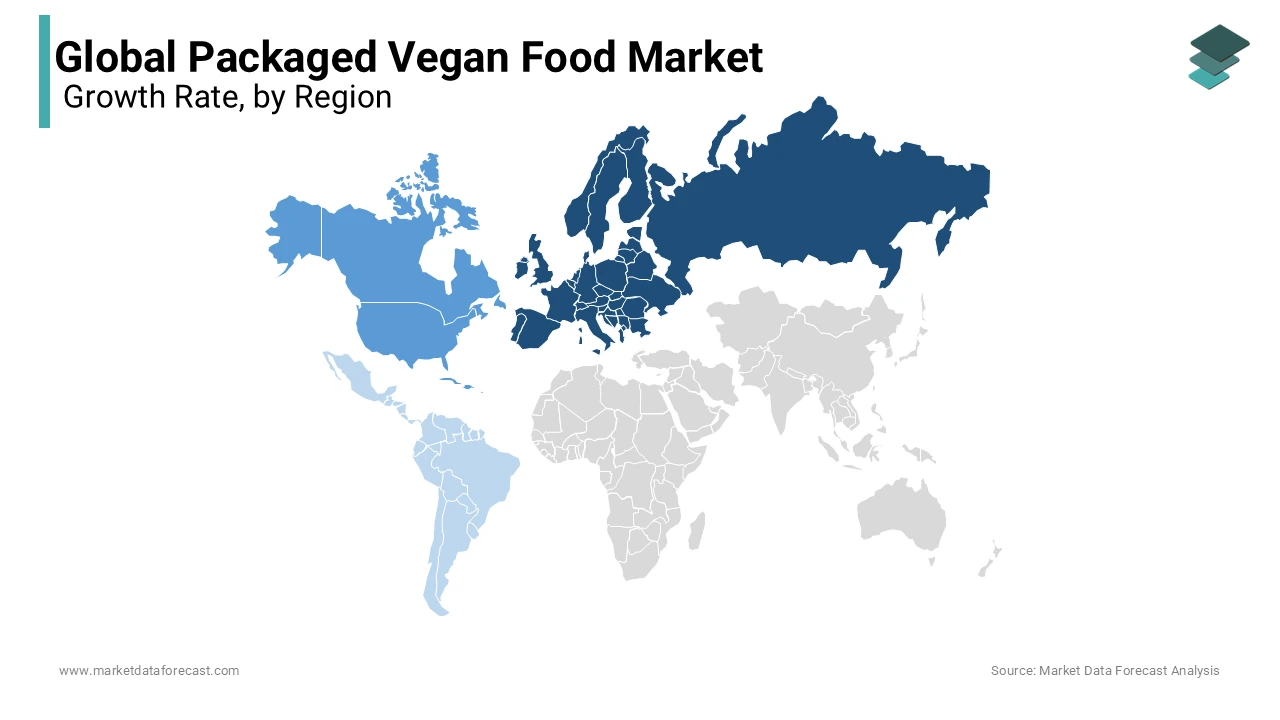
| By Region | North America (dominated with a 35.4% share in 2025) | Europe (supported by high market penetration, such as 97% of German supermarkets stocking vegan alternatives and strong local revenue growth) |
Major Market Players & Market Structure
Market Structure: Highly competitive packaged vegan food landscape featuring major global brands and specialized manufacturers competing intensely on product localization, clean-label formulations, allergen transparency, sustainable packaging, fermentation-based proteins, retail partnerships, direct-to-consumer distribution, and digital engagement.
Key Companies: Beyond Meat, Amy’s Kitchen, Plamil Foods, Tofutti Brands, White Wave Foods, Annie's Homegrown, Barbara's Bakery, Dr. McDougall's Right Foods, Edward & Sons, Galaxy Nutritional Foods, Pacific Foods, The Bridge, and Vegan Made Delight.
Global Packaged Vegan Food Market Size
The size of the global packaged vegan food market was valued at USD 19.29 billion in 2025. The global market is further estimated to grow from USD 21.43 billion in 2026 to USD 49.67 billion by 2034, experiencing a CAGR of 11.08% from 2026 to 2034
The Packaged Vegan Food is ready-to-consume or shelf-stable food products derived entirely from plant sources, excluding any animal-derived ingredients such as dairy, eggs, or honey, and typically verified through certification standards like Vegan Society or V-Label. These products span categories including plant-based meats, dairy alternatives, ready meals, snacks, and frozen entrees, which are designed for convenience without compromising ethical or dietary principles. As urban lifestyles accelerate and dietary consciousness deepens, packaged vegan foods are transitioning from niche offerings to mainstream staples. More than 70 countries now have formal vegan certification frameworks, indicating institutional recognition of this dietary shift. The integration of clean-label ingredients and transparent sourcing further escalates the sector’s evolution beyond mere substitution toward holistic food system transformation.
MARKET DRIVERS
Rising Incidence of Lactose Intolerance and Animal Protein-Related Allergies
The growing prevalence of lactose intolerance and allergies to animal proteins, which affects a substantial portion of the global population, is majorly propelling the Packaged Vegan Food Market growth. According to the World Allergy Organization, approximately 68% of adults worldwide exhibit some degree of lactase deficiency, with rates exceeding 90% in East Asian populations. This biological predisposition limits dairy consumption and drives the adoption of plant-based milk alternatives such as oat, soy, and almond beverages. As documented by the American Academy of Allergy, Asthma & Immunology, egg and milk allergies are among the most common food sensitivities in children, affecting nearly 2% and 0.5% of young populations, respectively. In response, manufacturers are reformulating products to exclude allergens while ensuring nutritional adequacy.
Expansion of Ethical Consumerism Among Younger Demographics
Ethical consumerism, particularly among Generation Z and Millennials, is fundamentally reshaping food purchasing behaviors, with increasing emphasis on animal welfare and environmental accountability, significantly propelling the growth of the Packaged Vegan Food Market. In December 2023, the UNEP published “What's Cooking?”, an assessment on novel meat and dairy alternatives. It focused on the environmental impact of animal agriculture. This demographic exhibits a strong alignment between personal values and consumption patterns by favoring brands that demonstrate cruelty-free production and transparent supply chains. In South Korea, youth-led campaigns against intensive livestock farming have contributed to a 35% rise in vegan product launches between 2021 and 2023. The university campuses across Australia and India have introduced mandatory vegan meal options in cafeterias, which reflects institutional support for ethical diets.
MARKET RESTRAINTS
Sensory and Textural Limitations of Plant-Based Substitutes
Most of the packaged vegan foods continue to face criticism for failing to replicate the sensory experience of animal-based counterparts, particularly in texture, mouthfeel, and flavor release, which is a majorly restraining factor on the Packaged Vegan Food Market. Multiple studies and market research reports, including some from 2023 and 2025, confirm that the texture of plant-based meat is a significant barrier to consumer acceptance. Attributes like juiciness, chew, and overall mouthfeel are consistently cited as areas where plant-based options fall short of conventional meat. In Asia, where umami depth and textural complexity are central to culinary expectations, this gap is even more pronounced. These discrepancies hinder repeat purchases and limit mainstream adoption beyond ethically motivated consumers. While extrusion and fermentation technologies are improving, the inability to consistently deliver sensory parity remains a significant barrier to mass-market penetration, especially in gastronomically sophisticated regions.
High Dependency on Imported Raw Materials and Supply Chain Vulnerability
The production of packaged vegan foods often relies on a narrow set of key ingredients, such as pea protein, coconut oil, and chickpea flour, many of which are imported, which is creating supply chain fragility, leading to limited growth opportunities in the Packaged Vegan Food Market. As per the International Trade Centre, over 60% of global pea protein is sourced from just three countries: Canada, France, and Russia, which is making manufacturers vulnerable to geopolitical disruptions and export restrictions. In 2022, shipping delays from Canada to Southeast Asia extended lead times by up to 40 days, which directly impacted production schedules. The climate volatility is affecting crop yields. In a September 2023 forecast, ABARES estimated the 2023–24 chickpea crop at 533,000 tonnes, which was a decrease from the 544,000 tonnes forecast in June. Industry traders later expected the crop to be even smaller, at less than 500,000 tonnes. This dependency not only increases costs but also undermines claims of sustainability, as long-haul transport contributes significantly to carbon footprints.
MARKET OPPORTUNITIES
Integration with Smart Retail and AI-Powered Personalization Platforms
The convergence of packaged vegan food with digital retail ecosystems enhances targeted consumer engagement, creating opportunities in the growth of the Packaged Vegan Food Market. As per the report on June 2026 analysis, Asia is a leader in AI-powered e-commerce innovation, using AI for personalization, logistics, and customer service. For Instance, in Japan, Rakuten Seimei’s health app integrates with supermarket inventories to suggest vegan meals based on users’ medical records and fitness tracker data. Similarly, in India, BigBasket’s AI engine has observed a 67% higher click-through rate on vegan products when personalized nudges are deployed. These systems not only enhance discovery but also build consumer trust through tailored nutritional insights.
Development of Fermentation-Based Precision Proteins
Next-generation fermentation technologies, particularly precision and biomass fermentation, are unlocking new frontiers in vegan food development by enabling the creation of animal-free proteins with near-identical functional properties, leading to the growth of the Packaged Vegan Food Market. As per the National Institute of Advanced Industrial Science and Technology, in 2023, Japanese firm Shojin Bio launched animal-free egg white protein using filamentous fungi, which is achieving a 98% structural match to hen-derived albumin. This innovation allows for superior baking performance and foaming capacity by overcoming long-standing limitations in vegan baking. With fermentation facilities requiring significantly less land and water than traditional agriculture, this pathway aligns with regional sustainability goals. The scalability of microbial fermentation positions it as a fundamental for the next evolution of packaged vegan foods.
MARKET CHALLENGES
Regulatory Fragmentation in Vegan Labeling and Certification Standards
The absence of harmonized global regulations for vegan claims is leading to consumer confusion, and compliance complexity is posing challenges in the expansion of the Packaged Vegan Market. The countries without legal criteria rely on private certifications like V-Label or The Vegan Society. In India, the Food Safety and Standards Authority has yet to establish a national vegan standard by forcing brands to adopt EU or UK certifications, which may not reflect local supply chain realities. In contrast, Taiwan implemented its own vegan labeling law in 2022, which requires third-party audits for all plant-based claims. This regulatory patchwork increases compliance costs and risks of mislabeling, particularly for multinational brands.
Nutritional Imbalance in Ultra-Processed Vegan Products
Most of the packaged vegan foods are ultra-processed and may lack essential micronutrients such as vitamin B12, iron, and omega-3 fatty acids, raising concerns about long-term dietary adequacy. A March 2023 study focusing on products in Spanish supermarkets found that most plant-based meat alternatives were "upper-moderate to high in salt". For Instance, in Australia, the George Institute for Global Health found that 41% of vegan-labeled products fall into the highest category of ultra-processed foods under the NOVA classification. This paradox, where ethical choices may inadvertently compromise health, creates cognitive dissonance among consumers. Pediatricians in Canada have reported increased cases of nutrient deficiencies in children on exclusively vegan diets lacking supplementation.
REPORT COVERAGE
| REPORT METRIC | DETAILS |
| Market Size Available | 2025 to 2034 |
| Base Year | 2025 |
| Forecast Period | 2026 to 2034 |
| CAGR | 11.08% |
| Segments Covered | By Product, Distribution Channel, and Region |
| Various Analyses Covered | Global, Regional & Country Level Analysis, Segment-Level Analysis, DROC, PESTLE Analysis, Porter’s Five Forces Analysis, Competitive Landscape, Analyst Overview of Investment Opportunities |
| Regions Covered | North America, Europe, APAC, Latin America, Middle East & Africa |
| Market Leaders Profiled | Beyond Meat, Amy’s Kitchen, Plamil Foods, Tofutti Brands, White Wave Foods, Annie's Homegrown, Barbara's Bakery, Dr. McDougall's Right Foods, Edward & Sons, Galaxy Nutritional Foods, Pacific Foods, The Bridge, and Vegan Made Delight |
SEGMENTAL ANALYSIS
By Product Type Insights
The Dairy alternatives segment dominated the Packaged Vegan Food Market by capturing 41.4% of the market share in 2025. The widespread lactose intolerance, evolving dietary preferences, and the seamless integration of plant-based milks into daily consumption are majorly driving the segment growth. The high prevalence of lactose maldigestion is driving substitution. In East Asia, this exceeds 90% by making traditional dairy consumption physiologically challenging. This biological reality has accelerated the adoption of soy, oat, almond, and coconut-based milks. These products are no longer seen as substitutes but as primary staples, especially among younger consumers who associate them with lighter digestion and environmental responsibility. The dairy alternatives benefit from mature production systems and extensive retail availability, particularly in developed markets. A May 2025 report from the Plant Based Foods Association (PBFA) and the Good Food Institute (GFI), referencing SPINS data, states that plant-based milk represented about 14% of total milk sales by dollar sales in 2023. Major retailers like Tesco, Walmart, and Woolworths dedicate entire refrigerated sections to vegan dairy, including yogurts, cheeses, and creams. Oatly and Alpro have leveraged co-branded partnerships with coffee chains such as Starbucks and Costa, and are embedding their products into daily routines.
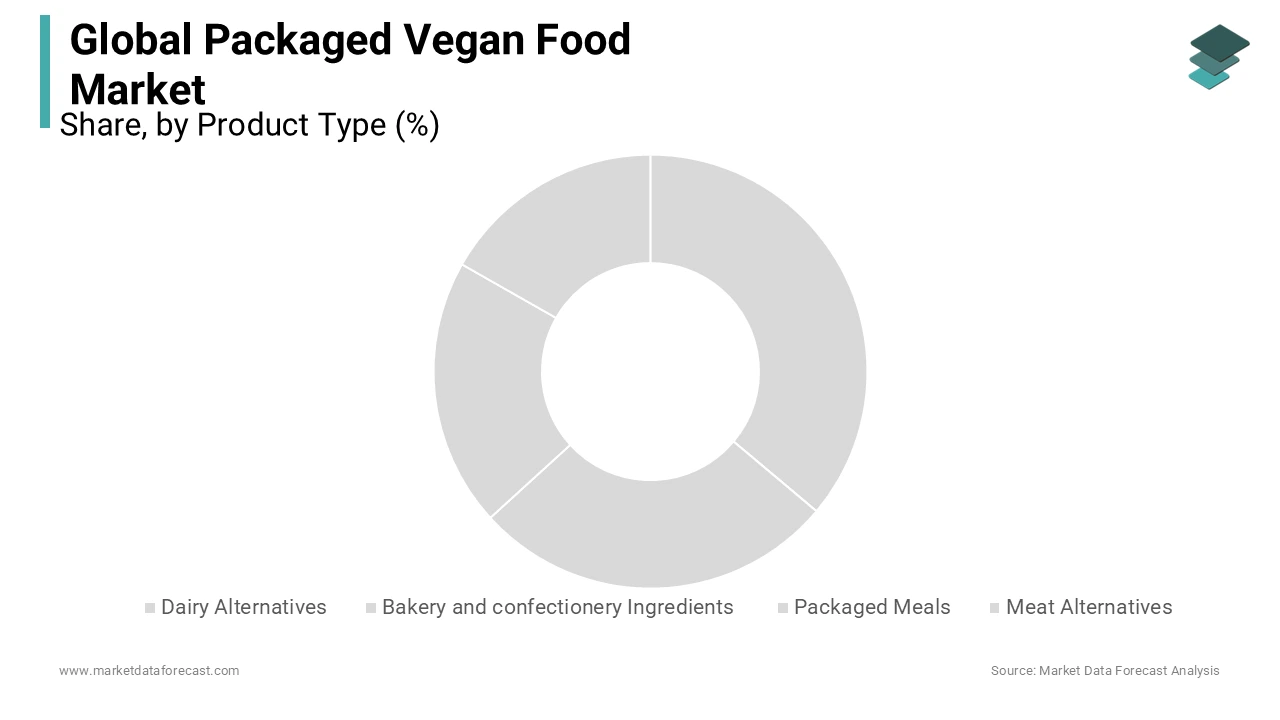
The packaged meals segment is estimated to register a CAGR of 14.7% from 2026 to 2034 in the Packaged Vegan Market. The surge is fueled by shifting lifestyles and the demand for convenience without compromising dietary ethics, which is primarily boosting the segment growth. The Rise of Single-Person Households and Urban Solo Dining is fueling the segment expansion. In Japan, where 37% of households consist of one person, demand for ready-to-eat vegan meals has grown annually since 2021. These consumers prioritize time efficiency, and portion control is favoring microwaveable vegan curries, noodle bowls, and frozen entrees. Brands like Amy’s Kitchen and Wicked Kitchen have responded with compact, recyclable packaging tailored for solo consumption, turning ethical eating into a practical daily habit. The Integration with Meal Delivery and Quick Commerce Platforms is fueling the segment growth. The fusion of vegan packaged meals with digital food ecosystems is accelerating adoption. A 2021 report, for instance, indicated a 107% growth in the vegan category on Deliveroo's platform and that 50% of orders contained vegan grocery items.
By Distribution Channel Insights
The hypermarkets and supermarkets segment led the Packaged Vegan Food Market by capturing 48.3% of the market share in 2025. Their dominance is rooted in physical accessibility, consumer trust, and strategic shelf placement. The centralized shopping behavior and consumer reliance on familiar retail environments are escalating the segment growth. An October 2025 report on India notes that in 2023, 93% of the food and grocery retail sector consisted of largely unorganized, traditional physical store formats. An August 2023 survey noted that 61% of vegan and vegetarian respondents would buy more plant-based products if retailers expanded their ranges. These stores offer chilled sections specifically for vegan cheeses and meat alternatives, often co-located with conventional counterpar, which is normalizing their presence. In Australia, Coles and Woolworths stock over 500 vegan SKUs each by enabling discovery through in-store sampling and signage.
The online Retailers segment is projected to grow at a CAGR of 18.3% of share between 2026 and 2034 in the Packaged Vegan Food Market. This rapid ascent is driven by digital-native consumers and evolving logistics infrastructure. The expansion of Direct-to-Consumer Brand Models and Subscription Services is fueling the segment growth rate. The vegan food brands are increasingly bypassing traditional retail to engage consumers directly. Companies like Moving Mountains and THIS Inc. use targeted social media campaigns to drive traffic to their e-stores and are offering personalized bundles and loyalty rewards. In India, Vegan First reported a 140% increase in website sales after launching a monthly vegan snack box subscription. These models foster deeper customer relationships, which enable data collection and reduce dependency on third-party margins, making online channels a strategic growth lever.
REGIONAL ANALYSIS
North America Market Analysis
North America was the top performer in the global Packaged Vegan Food Market and accounted for 35.4% of the market share in 2025. The region’s growth is anchored in early adoption, robust infrastructure, and a culture of dietary innovation. According to the Plant Based Foods Association, the U.S. alone accounts for the majority of North American sales, with plant-based food retail value reaching $8.1 billion in 2023. California and New York lead in product launches by hosting over 40% of all vegan startups. As per the report by the Yale Program on Climate Change Communication, consumer awareness is high, where 62% of Americans now recognizing the environmental impact of animal agriculture. Regulatory support, such as the FDA’s clear labeling guidelines for plant-based claims, has reduced confusion. The institutional adoption in schools and hospitals, including the Los Angeles Unified School District’s vegan school meal program, is signaling systemic integration. With venture capital flowing into fermentation and precision protein firms, North America remains the epicenter of technological and cultural advancement in the sector.
Europe Market Analysis
Europe is enlarging significantly in the Packaged Vegan Food Market by capturing 30.5% of the market share in 2025. The growth is reflecting a well-established ecosystem of consumer demand, regulatory clarity, and industrial capacity. As per the German Vegetarian Society, Germany, the UK, and the Netherlands are the primary drivers, with Germany alone accounting for €2.2 billion in annual vegan food sales. For Instance, a 2025 call under the Farm to Fork topic allocated over €900 million for projects that include sustainable and healthy food system transitions. In 2023, France implemented a law mandating that at least one vegan option be available in all public canteens, which affects over 3 million daily meals. Consumer trust is reinforced by strict labeling standards—V-Label certification is recognized in 16 EU countries. The retail penetration is unmatched: for instance, 97% of German supermarkets stock vegan meat alternatives. This combination of policy support, public sector adoption, and private innovation ensures Europe’s sustained leadership in ethical food transformation.
Asia-Pacific Market Analysis
Asia-Pacific packaged vegan food market is emerging as the most dynamic growth region due to rising health consciousness and urbanization. China leads the regional surge, with plant-based food sales doubling between 2020 and 2023. In Singapore, government-backed initiatives like the “30 by 30” food security plan aim to produce 30% of nutritional needs locally by 2030 by prioritizing sustainable proteins. As per Japan’s Ministry of Health, Japan’s aging population is increasingly turning to easy-to-digest vegan meals, with sales of plant-based ready foods growing at 15% annually. E-commerce is a major catalyst; Alibaba’s Tmall recorded a 65% increase in vegan product sales in 2023. While traditional diets include plant-based staples, modern urban consumers are now embracing Western-style vegan meats and dairy, which is creating a hybrid market with immense scalability potential.
Latin America Market Analysis
Latin America's packaged vegan food market is gaining momentum due to agricultural advantages and shifting urban diets. Brazil is the regional leader in producing 40% of the world’s soybeans, which form the base of many vegan products. São Paulo and Mexico City have seen a proliferation of vegan fast-casual chains like Veggie Brasil, and Green Corner is driving category awareness. Government initiatives are also emerging, where Colombia introduced tax incentives for plant-based food manufacturers in 2022. More than half of the population under 35, youth-driven demand for ethical and sustainable options is rising. The traditional cuisines rich in beans, lentils, and plantains provide a natural foundation for vegan innovation, positioning Latin America as a future leader in culturally resonant plant-based solutions.
Middle East and Africa Market Analysis
The Middle East and Africa packaged vegan food market represents a nascent but strategically important frontier. The Gulf Cooperation Council (GCC) countries are leading adoption, with the UAE alone contributing over 60% of regional sales. Dubai launched the “Dubai Vegan City” initiative in 2022, aiming to make the emirate a global hub for plant-based innovation. As per the Dubai Health Authority, vegan restaurant numbers increased between 2021 and 2023. In South Africa, where Nando’s introduced a vegan chicken alternative in 2021, plant-based meat sales grew in two years. Religious observances such as Ramadan and Lent are also driving seasonal demand for ethical foods. With rising obesity rates and water scarcity, governments are exploring plant-based diets as sustainable solutions, signaling long-term policy support for market development.
COMPETITION OVERVIEW
Competition in the Packaged Vegan Food Market is intensifying as global corporations, regional specialists, and agile startups converge on a rapidly expanding niche. The landscape is marked by a struggle between scale and authenticity, with multinational brands leveraging distribution power while local players emphasize cultural relevance and ingredient transparency. Incumbents face pressure from private-label expansions by major retailers and disruptive innovations from biotech-driven entrants. Differentiation hinges on sensory performance, nutritional profile, and environmental claims, all under increasing regulatory scrutiny. Geographic disparities in consumer awareness, infrastructure, and dietary traditions necessitate highly tailored approaches. In the Asia Pacific, competition is further shaped by the rise of quick commerce and digital-first brands that bypass traditional retail. Mergers, co-developments, and vertical integration are becoming common as firms seek to control supply chains and intellectual property.
KEY MARKET PLAYERS
Companies playing a major role in the global packaged vegan food market include Beyond Meat, Amy’s Kitchen, Plamil Foods, Tofutti Brands, White Wave Foods, Annie's Homegrown, Barbara's Bakery, Dr. McDougall's Right Foods, Edward & Sons, Galaxy Nutritional Foods, Pacific Foods, The Bridge, and Vegan Made Delight.
Top Strategies Used by the Key Market Participants
Key players in the Packaged Vegan Food Market are deploying integrated strategies to capture consumer trust and expand reach. Product localization is paramount, with companies reformulating offerings to align with regional taste preferences, such as spicier plant-based meats for Southeast Asia or umami-rich sauces for Japan. Strategic partnerships with foodservice chains and retailers amplify visibility and trial. Investment in regional manufacturing reduces costs and ensures freshness, particularly in climate-sensitive areas. Brands are also prioritizing clean labeling, fortification, and allergen transparency to address nutritional concerns. Digital engagement through social media, influencer marketing, and direct-to-consumer platforms enhances brand loyalty among younger demographics. Sustainability is embedded across operations, from renewable packaging to carbon footprint reduction.
LEADING PLAYERS IN THE PACKAGED VEGAN FOOD MARKET
Beyond Meat
Beyond Meat has established a significant footprint in the Packaged Vegan Food Market by pioneering plant-based meat alternatives that replicate the sensory experience of animal protein. In the Asia Pacific region, the company has expanded through strategic partnerships with quick-service restaurants and retail chains, including McDonald’s in Japan and Aeon supermarkets in Japan and Thailand. In September 2023, Beyond Meat launched its plant-based "Beyond Steak" in the UK food service market, positioning it for dishes like stir-fries. The company also opened an innovation lab in Singapore to accelerate product development for tropical climates and diverse taste profiles.
Oatly
Oatly has redefined the dairy alternatives segment in the Packaged Vegan Food Market through its focus on oat-based beverages and scalable fermentation technology. Active across Asia Pacific, Oatly has forged alliances with major coffee chains such as % Arabica and Starbucks in China, Japan, and the investment is part of P&G's strategic vision to use Singapore as a global hub for trade and technology. Oatly also launched a low-sugar, high-fiber oat drink variant specifically for health-conscious consumers in Australia and New Zealand. Its aggressive digital marketing campaigns emphasize sustainability and transparency, and have resonated strongly with urban millennials.
Tetra Pak
Tetra Pak plays a transformative role in the Packaged Vegan Food Market by enabling safe, sustainable, and scalable packaging solutions for plant-based liquids. The company supports major vegan dairy producers across the Asia Pacific by providing aseptic cartons that extend shelf life without refrigeration, which is significant for distribution in tropical climates. The company also introduced its Plant-Based Carton, made from 100% renewable materials, which has been adopted by brands in India and Vietnam. Through technical collaboration and sustainability certifications, Tetra Pak empowers smaller producers to meet international standards. Its investment in recycling infrastructure in Thailand and Malaysia further strengthens the circular economy for vegan food packaging by making it an indispensable enabler of market growth.
Global Packaged Vegan Food Market News
- In December 2025, Oatly announced the closure of its Singapore plant to streamline its supply chain and reduce costs. The company stated that the Asia-Pacific region would be served by its facilities in Europe instead.
- In January 2025, Nestlé India collaborated with a foodservice partner to launch a new plant-based range.
- In January 2025, IFF announced a major investment in high-moisture extrusion (HME) technology to develop next-generation plant-based meat alternatives.
- In February 2023, Thai Union launched a vegan, fish-free tuna alternative in the Netherlands under its John West brand.
MARKET SEGMENTATION
This research report on the global packaged vegan food market has been segmented and sub-segmented based on the product type, distribution channel, and region.
By Product Type
- Dairy Alternatives
- Bakery and confectionery Ingredients
- Packaged Meals
- Meat Alternatives
By Distribution Channel
- Online Retailers
- Hypermarket/Supermarket
- Natural and Organic Stores
By Region
- North America
- Europe
- Asia Pacific
- Latin America
- The Middle East and Africa