- Product Description Description
- Table of Contents TOC
- List of Table & Figure LOT
- Get Free Sample PDF Sample PDF
Market Size, 2025
$77.56 BnMarket Estimate, 2026
$82.11 BnMarket Forecast, 2034
$129.5 BnCAGR, 2026–2034
5.87%Global Pasta Market Size
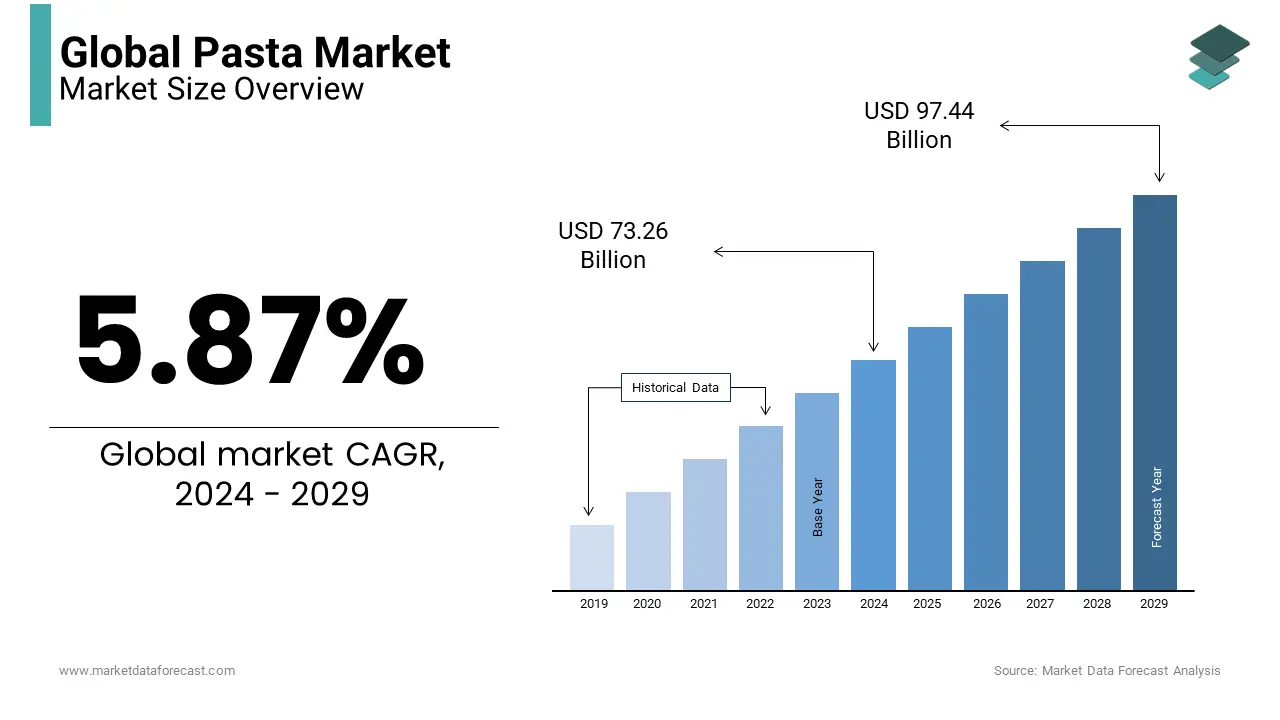
The global pasta market was estimated to be worth USD 77.56 billion in 2025 and is anticipated to be worth USD 129.59 billion by 2034 from USD 82.11 billion in 2026, growing at a CAGR of 5.87% during the forecast period.
Pasta is an unleavened dough product typically made from durum, wheat, semolina, and water. This staple food item is characterized by its versatility, long shelf life, and cultural integration into diverse culinary traditions worldwide. The definition extends beyond traditional Italian varieties to include Asian noodles and innovative grain-based alternatives. Consumers increasingly view pasta as a convenient and affordable source of energy suitable for quick meal preparation. As per the International Grains Council, global wheat production reached 772 million metric tons in the 2023-2024 season, ensuring ample raw material availability for pasta manufacturers. According to the International Pasta Organization, in Italy, the historic heart of pasta culture, per capita consumption remains robust at approximately 23 kilograms annually. This sustained demand underscores the deep-rooted cultural significance of pasta in Mediterranean diets. The market is also defined by a shift towards premiumization, where artisanal and organic variants command higher prices. Urbanization and changing lifestyles have further cemented pasta as a key component of modern diets due to its ease of storage and preparation. In emerging economies, rising disposable incomes are driving increased adoption of Western dietary habits, including pasta consumption. The industry is responding to health trends by introducing whole-grain and legume-based options. This evolution reflects a dynamic market that balances tradition with innovation to meet contemporary consumer needs. The widespread acceptance of pasta across different age groups and demographics ensures its continued relevance in the global food landscape.
MARKET DRIVERS
Convenience and Affordability in Modern Lifestyles
The inherent convenience and affordability of pasta are majorly fuelling its sustained demand in modern households, which is one of the major factors driving the growth of the global pasta market. As urbanization accelerates and dual-income families become more common, consumers seek quick and cost-effective meal solutions. Pasta requires minimal preparation time and can be paired with a variety of sauces and ingredients to create balanced meals. According to the U.S. Bureau of Labor Statistics, the average price of macaroni and cheese or similar pasta products was approximately 1.48 dollars per pound in early 2024, which is making it an economical choice compared to protein-rich alternatives. This price stability is crucial during periods of economic uncertainty when consumers prioritize budget-friendly options. The long shelf life of dried pasta reduces food waste and allows for bulk purchasing, which appeals to cost-conscious shoppers. According to Eurostat, household spending on food and non-alcoholic beverages in the European Union saw a significant increase due to inflation in recent years, reflecting a shift towards value-oriented purchases. Pasta fits seamlessly into this trend, offering high satiety at a low cost. Furthermore, the versatility of pasta allows it to be used in diverse cuisines, from Italian to Asian fusion, broadening its appeal. Ready-to-eat and microwaveable pasta products have gained popularity among younger demographics who prioritize speed and convenience. The availability of pasta in various formats, such as cups and trays, enhances its portability for on-the-go consumption. This combination of economic accessibility and culinary flexibility ensures that pasta remains a staple in pantries globally. The product’s ability to adapt to various dietary preferences further strengthens its position as a reliable food source.
Cultural Integration and Global Culinary Adoption
The deep cultural integration and global adoption of pasta cuisine significantly drive the global pasta market growth. Originally rooted in Italian tradition, pasta has transcended geographical boundaries to become a universal comfort food. This widespread acceptance is facilitated by globalization and the proliferation of international restaurant chains. According to the National Restaurant Association, pasta is featured on the majority of restaurant menus across the United States, indicating its mainstream appeal. The adaptability of pasta to local tastes allows it to resonate with diverse populations. In Asia, for instance, instant noodles and stir-fried pasta variations have become integral parts of daily diets. According to the World Instant Noodles Association, global demand for instant noodles reached 120 billion servings in 2023, demonstrating the massive scale of pasta consumption. Social media and cooking shows further popularize pasta recipes, encouraging home cooks to experiment with new flavors and techniques. The perception of pasta as a family-friendly meal enhances its appeal among parents seeking nutritious options for children. Educational initiatives by industry bodies promote the benefits of the Mediterranean diet,s where pasta plays a central role. This cultural endorsement reinforces positive consumer attitudes towards pasta consumption. Additionally, the rise of food tourism has exposed travelers to authentic pasta experiences, which they seek to recreate at home. This cross-cultural exchange fosters a continuous demand for diverse pasta types and sauces. The emotional connection consumers have with pasta as a comforting and familiar food sustains its popularity across generations.
MARKET RESTRAINTS
Health Concerns Related to Carbohydrate Consumption
Health concerns related to high carbohydrate intake and gluten sensitivity are impeding the expansion of the global pasta market. Growing awareness of lifestyle diseases, such as obesity and type 2 diabetes, has led many consumers to reduce their consumption of refined carbohydrates. Traditional pasta made from white flour has a high glycemic index, which can cause rapid spikes in blood sugar levels. According to the Centers for Disease Control and Prevention, approximately 38.4 million people in the United States have diabetes, driving individuals to seek low-carb alternatives such as zucchini noodles or shirataki rice. Furthermore, the rise of ketogenic and paleo diets, which strictly limit carbohydrate intake, has reduced the addressable market for conventional pasta. As per the International Food Information Council, a significant portion of consumers reported following specific eating patterns, including low-carb diets, in 2024. Gluten intolerance and celiac disease also restrict consumption for a significant portion of the population. According to the Celiac Disease Foundation, celiac disease is estimated to affect 1 in 100 people worldwide, necessitating strict avoidance of wheat-based products. Although gluten-free options exist, they often lack the texture and taste of traditional pasta, limiting their appeal. Negative perceptions surrounding processed foods further dampen demand for mass-produced pasta brands. Consumers are increasingly scrutinizing ingredient labels and avoiding products with additives or preservatives. These health-related constraints force manufacturers to reformulate products, which can be costly and technically challenging. Until healthier alternatives achieve parity in taste and texture, health concerns will continue to hinder market expansion.
Volatility in Raw Material Prices and Supply Chain Disruptions
Volatility in raw material prices, particularly durum wheat and energy costs, is another major restraint to the pasta market growth. Durum wheat is the primary ingredient for high-quality pasta, and its price is subject to fluctuations due to weather conditions, geopolitical tensions, and trade policies. According to the Food and Agriculture Organization of the United Nations, global food prices have faced upward pressure due to climate events in major producing regions, impacting production expenses for manufacturers who operate on thin margins. Energy costs are another critical factor, as pasta production involves energy-intensive processes such as extrusion and drying. According to Eurostat, industrial energy prices in the European Union remained elevated following historical peaks, affecting manufacturing competitiveness. These rising operational costs force companies to either absorb losses or pass them on to consumers through higher prices. Price hikes can dampen demand, particularly in price-sensitive markets where consumers may switch to cheaper alternatives. Supply chain disruptions, caused by logistical bottlenecks or labor shortages, further exacerbate the situation. According to the American Trucking Associations, the industry faced a significant shortage of drivers in recent years, impacting the timely delivery of goods. Small and medium-sized enterprises are particularly vulnerable to these fluctuations, as they lack the bargaining power of larger corporations. The unpredictability of input costs makes long-term planning difficult and stifles investment in innovation. This economic pressure threatens the stability of the pasta supply chain and limits market growth potential.
MARKET OPPORTUNITIES
Expansion into Health-Conscious and Functional Segments
The expansion into health-conscious and functional pasta segments is a significant opportunity for market players. Consumers are increasingly seeking nutritious options that align with their wellness goals without compromising on taste. Manufacturers are innovating with alternative flours, such as chickpea, lentil, quinoa, and spinach, to create protein-rich and fiber-dense pasta varieties. As per various food trend reports, launches of high-protein and plant-based pasta products have increased significantly, reflecting growing consumer interest in functional foods. These alternatives appeal to fitness enthusiasts, vegetarians, and those managing blood sugar levels. The incorporation of vitamins, minerals, and probiotics into pasta formulations further enhances their nutritional profile. According to the Global Wellness Institute, the functional food market is one of the fastest-growing sectors in the wellness economy. Gluten-free pasta made from rice, corn, or buckwheat also caters to the growing population with dietary restrictions. According to the Celiac Disease Foundation, the demand for gluten-free products has led to a major increase in retail availability. Retailers are dedicating more shelf space to these specialized categories, recognizing their high growth potential. Online direct-to-consumer channels provide an effective platform for reaching niche audiences interested in specific dietary needs. By diversifying their portfolios with health-focused options, companies can capture new revenue streams and enhance brand loyalty. This strategic shift aligns with broader trends towards personalized nutrition and preventive healthcare. Innovation in texture and flavor ensures that these healthy alternatives remain appealing to mainstream consumers.
Sustainability and Eco-Friendly Packaging Initiatives
Sustainability and eco-friendly packaging initiatives offer substantial opportunities for differentiation in the pasta market. Consumers are increasingly concerned about the environmental impact of food production and packaging waste. Manufacturers are responding by adopting sustainable sourcing practices and biodegradable packaging materials. According to various consumer studies, a large majority of global consumers prefer brands that demonstrate environmental responsibility. Pasta brands are transitioning from plastic to paper-based or compostable packaging to meet these expectations. The use of recycled materials in packaging design also enhances brand image and appeals to eco-conscious shoppers. In Europe, the European Union’s Single Use Plastics Directive has accelerated the adoption of sustainable packaging solutions. According to the European Commission, new rules aim to significantly reduce plastic waste and promote a circular economy. Companies are also investing in carbon-neutral production processes and water conservation technologies to minimize their ecological footprint. Certifications, such as Rainforest Alliance and Organic label, provide credibility and attract environmentally aware consumers. Collaborations with environmental organizations help brands communicate their sustainability efforts effectively. Transparent supply chains allow consumers to trace the origin of ingredients, fostering trust and loyalty. The development of upcycled ingredients from food waste further supports circular economy principles. These initiatives not only mitigate regulatory risks but also create competitive advantages. By leading in sustainability, pasta manufacturers can build strong brand equity and secure long-term growth in a conscientious market.
MARKET CHALLENGES
Intense Competition from Alternative Grain Products
Intense competition from alternative grain products and substitute carbohydrates poses a major challenge to the pasta market. Consumers have a wide array of options, including rice, quinoa, couscous, and potato-based dishes, that compete directly with pasta for share of stomach. The rise of ancient grains, such as farro, spelt, and barley, has attracted health-conscious consumers seeking diverse nutritional profiles. According to the Whole Grains Council, the consumption of ancient grains has seen steady growth as consumers seek out minimally processed foods. These alternatives are often perceived as healthier and more exotic than traditional wheat pasta. Fast-casual restaurants and meal-kit services frequently feature these substitutes in their menus, influencing consumer choices. The convenience of ready-to-cook rice and quinoa packets also appeals to busy households. In Asia, rice remains the dominant staple, limiting the penetration of wheat-based pasta in certain regions. According to the Food and Agriculture Organization of the United Nations, rice remains a primary caloric source for over half the world’s population, particularly in Asia. The saturation of the pasta market in mature regions leads to fierce price competition and margin compression. Private-label brands offer lower-priced alternatives that erode brand loyalty among cost-conscious shoppers. Additionally, the perception of pasta as a heavy or fattening food discourages regular consumption among weight watchers. Overcoming this competition requires continuous innovation and effective marketing to highlight the unique benefits of pasta. Manufacturers must differentiate their products through quality, convenience, and nutritional enhancements to maintain relevance.
Regulatory Pressures and Labeling Requirements
Regulatory pressures and stringent labeling requirements present ongoing challenges for the pasta market. Governments worldwide are implementing stricter regulations regarding nutritional labeling, allergen declarations, and health claims. In the European Union, the Regulation on the Provision of Food Information to Consumers mandates detailed nutritional information on packaging. According to the European Food Safety Authority, rigorous safety assessments are required for any new food ingredients or additives. Mislabeling or non-compliance can result in hefty fines and product recalls, damaging brand reputation. The requirement to declare allergens, such as gluten and eggs, prominently on packaging adds complexity to production lines. In the United States, the Food and Drug Administration requires the disclosure of added sugars and specific nutrients on all packaged foods. These changes necessitate reformulation or revised marketing strategies to avoid negative consumer perceptions. Additionally, varying regulations across different countries complicate international trade and expansion efforts. Manufacturers must navigate a complex web of local laws regarding ingredients, additives, and packaging materials. The push for clean-label products forces companies to remove artificial colors and preservatives, which can affect shelf life and appearance. Maintaining consistency in quality while adhering to diverse regulatory standards is resource-intensive. Small and medium-sized enterprises often struggle with the costs associated with compliance. These regulatory hurdles can slow down product launches and increase operational burdens. Ensuring full compliance while maintaining competitiveness remains a critical challenge for industry participants.
REPORT COVERAGE
| REPORT METRIC | DETAILS |
| Market Size Available | 2025 to 2034 |
| Base Year | 2025 |
| Forecast Period | 2026 to 2034 |
| CAGR | 5.87% |
| Segments Covered | By Product, Raw Material, Sauce, Distribution Channel, and Region |
| Various Analyses Covered | Global, Regional & Country Level Analysis; Segment-Level Analysis, DROC, PESTLE Analysis, Porter’s Five Forces Analysis, Competitive Landscape, Analyst Overview of Investment Opportunities |
| Regions Covered | North America, Europe, APAC, Latin America, Middle East & Africa |
| Market Leaders Profiled | Barilla Holding, Ebro Foods, Campbell Soup Company, Tree House Foods, Inc., Unilever, The Kraft Heinz Company, Nestle, Armanino Foods of Distinction, and Borges International Group |
SEGMENTAL ANALYSIS
By Product Type Insights
The dried pasta segment held the commanding lead in the global pasta market by holding 71.9% of the global market share in 2025. The dominance of the dried pasta segment in the global market is primarily driven by its exceptional shelf stability and cost-effectiveness, which align with consumer preferences for pantry staples. Dried pasta can be stored for extended periods without refrigeration, reducing food waste and allowing for bulk purchases. According to the U.S. Department of Agriculture, pasta and other dry grains are staples in the majority of American households due to their long storage life. The production process for dried pasta involves low moisture content, which significantly lowers transportation and storage costs compared to chilled or fresh alternatives. In Europe, according to the International Pasta Organization, dried pasta constitutes the majority of consumption due to its deep integration into Mediterranean dietary habits. The versatility of dried pasta allows it to be used in a wide variety of dishes, from simple weeknight dinners to complex gourmet meals. Retailers prioritize dried pasta due to its high turnover rates and minimal spoilage risks. The availability of diverse shapes and sizes in dried form caters to specific culinary applications, enhancing its appeal. Furthermore, the affordability of dried pasta makes it accessible to lower-income demographics, ensuring broad market penetration. The established manufacturing infrastructure for dried pasta supports mass production and efficient distribution globally. This combination of logistical efficiency, economic accessibility, and culinary versatility solidifies the dried pasta segment as the undisputed leader in the market.

However, the chilled pasta segment is a promising segment and is estimated to witness a CAGR of 7.4% over the forecast period, owing to the increasing consumer demand for fresh-tasting and premium-quality pasta options that offer superior texture and flavor. Chilled pasta is perceived as closer to homemade than dried varieties, appealing to discerning consumers who prioritize quality. According to various retail reports, sales of fresh and chilled pasta products in North America have seen robust growth as consumers seek out higher-quality meal solutions. The busy lifestyles of urban professionals have fueled the demand for convenient yet high-quality meal options that require minimal preparation time. Chilled pasta often comes paired with fresh sauces and ingredients, creating complete meal kits that simplify cooking. In the United Kingdom, according to the British Retail Consortium, sales of chilled convenience foods have outpaced many other categories in recent years. The expansion of cold-chain logistics has improved the availability and quality of chilled pasta in retail outlets. Supermarkets are dedicating more refrigerated shelf space to premium pasta brands, enhancing visibility. Additionally, the perception of chilled pasta as a healthier option with fewer preservatives appeals to health-conscious consumers. The ability of manufacturers to innovate with unique flavors and organic ingredients in the chilled segment further drives growth. This combination of convenience, quality, and innovation positions chilled pasta for sustained rapid expansion.
By Raw Material Insights
The wheat-based pasta segment dominated the market by capturing 81.8% of the global market share in 2025. The overwhelming dominance of the wheat-based pasta segment in the global market is driven by the widespread availability of durum wheat and the traditional culinary acceptance of wheat pasta across cultures. Durum wheat semolina provides the ideal texture and cooking characteristics that consumers expect from pasta. According to the International Grains Council, global production of durum wheat is concentrated in key regions like Canada and the EU, ensuring a stable supply chain for manufacturers. The established agricultural infrastructure for wheat cultivation in regions like North America, Europe, and Asia supports consistent raw-material sourcing. Wheat pasta is also significantly more affordable than alternative grain options, making it the default choice for budget-conscious consumers. In Italy, according to the International Pasta Organization, wheat pasta remains the cornerstone of the national diet, with per capita consumption being the highest in the world. The familiarity of wheat pasta among consumers reduces barriers to purchase and encourages repeat consumption. Major food-service establishments and households rely on wheat pasta for its versatility and ease of preparation. The extensive research and development invested in wheat breeding have optimized yield and quality, further cementing its position. Government agricultural policies in many countries also help keep raw material costs competitive. This economic and cultural entrenchment ensures that wheat-based pasta remains the primary choice for the majority of consumers globally.
However, the gluten-free pasta segment is experiencing the fastest growth and is estimated to record a CAGR of 10.2% over the forecast period in the global market, owing to the rising prevalence of celiac disease, gluten sensitivity, and the voluntary adoption of gluten-free diets for perceived health benefits. Consumers are increasingly aware of the adverse effects of gluten on digestive health, leading to higher demand for safe alternatives. According to the Celiac Disease Foundation, the diagnosis rate of celiac disease has improved significantly, leading to a larger patient population. Manufacturers are responding by innovating with diverse ingredients, such as rice, corn, quinoa, lentils, and chickpeas, to create nutritious and tasty gluten-free options. These alternative grains offer additional nutritional benefits, such as higher protein and fiber content, appealing to health-conscious buyers. As per retail food industry data, launches of gluten-free pasta products have grown by a significant percentage in recent years, reflecting a strong industry commitment to this segment. Improved processing technologies have enhanced the texture and taste of gluten-free pasta, addressing previous consumer complaints about grittiness or mushiness. Retailers are expanding their "free-from" sections, providing greater visibility and accessibility. The premium pricing of gluten-free pasta also attracts manufacturers seeking higher margins. Social media and influencer marketing have played a crucial role in normalizing gluten-free diets and promoting specific brands. This combination of health drivers, innovation, and marketing support positions gluten-free pasta as a high-growth category.
By Distribution Channel Insights
The supermarkets and hypermarkets segment held the leading position in the pasta market by holding 56.4% of the global market share in 2025 due to the one-stop shopping convenience and extensive product variety offered by these retail formats. Consumers prefer purchasing pasta alongside other grocery items, such as sauces, cheeses, and vegetables, making supermarkets the most logical destination. According to the Food Marketing Institute, grocery stores remain the primary location for household food purchases. Supermarkets provide ample shelf space for both mainstream and premium pasta brands, allowing for effective product visibility and comparison. Private-label pasta brands offered by supermarket chains provide affordable alternatives that attract price-sensitive shoppers. In Europe, according to Eurostat, grocery retail remains the largest channel for the sale of dry goods and pantry staples. Promotional activities, such as discounts and bundle offers in supermarkets, drive volume sales and encourage bulk purchasing. The presence of in-store bakeries and deli counters also complements pasta sales by offering fresh ingredients for meals. Loyalty programs and digital coupons further enhance customer retention and frequency of visits. The ability of supermarkets to manage large inventories ensures consistent product availability, reducing stockouts. This reliability and convenience make supermarkets the primary channel for pasta distribution, reaching a broad demographic across urban and suburban areas.
On the other hand, the online stores segment is the fastest-growing distribution channel for pasta and is estimated to register a CAGR of 12.2% over the forecast period, due to the increasing adoption of e-commerce platforms and the convenience of home delivery. Consumers are shifting towards online grocery shopping to save time and avoid crowded stores, which is a trend accelerated by the pandemic and sustained by habit. According to various e-commerce reports, online grocery sales in North America have seen double-digit growth in recent years, with pasta being a frequently purchased item. E-commerce platforms offer a wider selection of niche and artisanal pasta brands that may not be available in local supermarkets. Subscription services for staple foods like pasta provide added convenience and cost savings for regular consumers. In China, according to various digital economy reports, online retail of food and beverage products has seen significant expansion. Digital marketing and personalized recommendations on online platforms drive discovery and trial of new products. The integration of quick-commerce services, enabling delivery within hours, has further boosted online pasta sales. Enhanced packaging solutions ensure that pasta arrives in perfect condition, addressing previous concerns about damage. The ability to read reviews and compare prices easily online empowers consumers to make informed decisions. This combination of convenience, variety, and technological advancement positions online stores as a key growth driver.
REGIONAL ANALYSIS
Europe Pasta Market Analysis
Europe held the dominant position in the global pasta market by accounting for 40.6% of the global market share in 2025. The region is the historical and cultural heartland of pasta consumption, particularly in Italy, Spain, and Greece. According to the International Pasta Organization, Europe is the leading continent in terms of total pasta consumption, reflecting its deep integration into daily diets. The strong tradition of home cooking and family meals sustains high demand for both dried and fresh pasta. In Italy, pasta is considered a national symbol with strict regulations governing quality and production methods. According to the Italian Ministry of Agricultural, Food, and Forestry Policies, the country is a global leader in both production and export of pasta. The trend towards premiumization is evident, as consumers seek organic and artisanal varieties. Health consciousness is driving innovation, with whole-grain and legume-based pastas gaining traction. The European Union’s support for sustainable agriculture encourages local sourcing and eco-friendly practices. Retailers are expanding their private-label offerings to cater to budget-conscious shoppers amidst economic pressures. The robust tourism industry also contributes to demand, as visitors seek authentic culinary experiences. Europe continues to lead in quality standards and innovation, influencing global trends. The mature market structure ensures stable growth driven by replacement demand and premium upgrades.
North America Pasta Market Analysis
North America represents a significant and mature market for pasta. The North American market is characterized by high consumption levels driven by the popularity of Italian-American cuisine and the convenience of pasta as a quick meal solution. According to the National Pasta Association, millions of Americans enjoy pasta on a regular basis for its versatility and nutrition. The diverse population supports a wide variety of pasta types, including traditional wheat and emerging gluten-free options. The rise of dual-income households has increased demand for ready-to-cook and meal-kit solutions featuring pasta. In Canada, according to the Government of Canada, pasta remains a key staple and a major category in the retail food sector. Health trends are influencing product development, with manufacturers introducing high-protein and vegetable-infused pastas. The strong retail infrastructure ensures widespread availability across supermarkets and online platforms. Food-service sectors, including casual dining and fast-casual chains, contribute significantly to volume sales. The influence of social media and cooking shows promotes experimentation with new recipes and flavors. Economic factors, such as inflation, have boosted demand for affordable staples like pasta. North America remains a key market for innovation and brand competition, driving global industry standards.
Asia Pacific Pasta Market Analysis
The Asia Pacific region is an emerging and rapidly growing market for pasta worldwide. The market is driven by urbanization, rising disposable incomes, and the adoption of Western dietary habits among the middle class. In countries like China, Japan, and Australia, pasta is increasingly viewed as a convenient and trendy food option. According to the Food and Agriculture Organization of the United Nations, demand for wheat-based products in the region has seen steady growth, supporting pasta production. International food chains and local restaurants have popularized pasta dishes, adapting them to local tastes. In Australia, according to the Australian Bureau of Statistics, pasta and noodles are among the most commonly purchased pantry items. The growth of modern retail channels, such as supermarkets and e-commerce platforms, has improved accessibility. Local manufacturers are producing pasta using indigenous ingredients to cater to regional preferences. Health consciousness is driving demand for whole-grain and organic variants. The young demographic in the region is open to experimenting with new flavors and formats. Government initiatives to promote food security and local agriculture support domestic production. Asia Pacific offers significant growth potential as penetration rates remain low compared to Western markets. The region is expected to be a key driver of future global pasta demand.
Latin America Pasta Market Analysis
Latin America accounts for a notable share of the global pasta market and is expected to showcase steady growth over the forecast period. In countries like Brazil, Argentina, and Mexico, pasta is a staple food often consumed with local sauces and ingredients. According to various regional agricultural reports, pasta consumption has shown resilience and growth across South American markets. Economic volatility has reinforced the demand for affordable and filling food options like pasta. The influence of Italian immigration in countries like Argentina and Brazil has established a strong pasta culture. In Brazil, according to ABIMA, the pasta industry is a major component of the national food-processing sector. Urbanization is driving the shift from traditional home-made pasta to commercially produced varieties. Supermarkets are expanding their reach in rural areas, increasing access to packaged pasta. The rise of quick-service restaurants featuring pasta dishes contributes to market growth. Local manufacturers are innovating with enriched and fortified pasta to address nutritional deficiencies. Trade agreements within the region facilitate the movement of raw materials and finished products. Despite economic challenges, the cultural importance of pasta ensures resilient demand. Latin America presents opportunities for growth through product diversification and improved distribution networks.
COMPETITION OVERVIEW
The competition in the Pasta Market is characterized by a mix of large multinational corporations and numerous regional artisans, creating a fragmented yet consolidated landscape at the top. Major players leverage economies of scale, extensive distribution networks, and strong brand recognition to dominate retail shelves. Price competition is intense, particularly in the standard dried pasta segment, where private label brands offer lower cost alternatives. Differentiation through quality, sustainability, and health benefits becomes crucial for maintaining market share. Innovation in product formulations, such as high-protein or vegetable-infused pastas, helps brands stand out. The rise of e-commerce has lowered barriers to entry, allowing smaller niche brands to reach wider audiences. Retailers play a pivotal role by deciding shelf allocation,s which influences brand visibility significantly. Supply chain efficiency and raw material sourcing capabilities provide competitive advantages during periods of price volatility. Consumer loyalty is often driven by taste, texture, and brand heritage, making it difficult for new entrants to displace established leaders. Overall, the market remains dynamic with companies striving to balance tradition with modern demands for convenience and health.
KEY MARKET PLAYERS
A few major players of the pasta market include
- Barilla Holding
- Ebro Foods
- Campbell Soup Company
- Tree House Foods, Inc
- Unilever
- The Kraft Heinz Company
- Nestle
- Armanino Foods of Distinction
- Borges International Group
Top Strategies Used by Key Market Participants
Key players in the Pasta Market primarily employ product innovation and sustainability initiatives to maintain a competitive advantage. Companies frequently introduce healthier alternatives, such as whole-grain legume-based and gluten-free options, to address evolving consumer preferences. This diversification helps capture niche market segments and drives trial among health-conscious buyers. Sustainability is another critical strategy with firms adopting eco-friendly packaging and responsible sourcing practices to enhance brand equity. Investment in supply chain optimization ensures cost efficiency and product availability amidst volatile raw material prices. Digital marketing and e-commerce expansion enable direct engagement with consumers and broader market reach. Strategic partnerships with retailers and food service providers secure prominent shelf space and menu inclusion. Manufacturers also focus on premiumization by launching artisanal and organic lines to command higher margins. These combined approaches allow companies to adapt to market dynamics and sustain growth in a mature industry landscape.
Leading Players in the Market
- Barilla Group stands as a global leader in the pasta industry, renowned for its extensive portfolio of high-quality durum wheat products. The company operates numerous production facilities worldwide, ensuring a consistent supply and adherence to strict quality standards. Recently, Barilla has intensified its focus on sustainability by committing to zero deforestation in its supply chain and reducing carbon emissions. The brand actively promotes healthy eating through educational campaigns highlighting the benefits of Mediterranean diets. Barilla expands its reach by introducing innovative formats such as whole-grain and legume-based pastas to cater to health-conscious consumers. Strategic partnerships with local farmers secure premium raw materials while supporting community development. The company leverages digital marketing to engage with younger demographics and enhance brand loyalty. Its investment in advanced manufacturing technologies improves efficiency and product consistency. Barilla continues to dominate shelf space in major retail chains globally through strong brand recognition and reliable distribution networks. These efforts solidify its reputation as a trusted and innovative provider of staple food products.
- De Cecco is a prestigious Italian pasta manufacturer distinguished by its commitment to traditional craftsmanship and superior quality. The company utilizes bronze dies and slow drying methods to produce pasta with exceptional texture and flavor profiles. De Cecco has recently expanded its international presence by strengthening distribution networks in North America and Asia. The brand emphasizes transparency by sourcing high-quality durum wheat from selected regions and maintaining rigorous control over production processes. De Cecco introduces premium product lines such as organic and artisanal varieties to appeal to discerning consumers. The company invests in sustainable packaging solutions to reduce environmental impact and align with consumer values. Collaborations with renowned chefs enhance brand credibility and showcase culinary versatility. De Cecco maintains a strong direct-to-consumer channel through e-commerce platforms, offering exclusive products. Its dedication to authenticity and quality differentiates it from mass market competitors. These strategic initiatives reinforce its position as a premium choice in the global pasta market.
- Ebro Foods S.A. is a major multinational food company with a significant footprint in the rice and pasta sectors. The company owns prominent pasta brands such as Panzani and Garofalo, both of which are widely recognized in Europe and beyond. Ebro Foods focuses on operational efficiency and innovation to drive growth in competitive markets. Recently, the company has invested in expanding its production capacity in key regions to meet rising demand. Ebro Foods prioritizes sustainability by implementing water conservation techniques and renewable energy sources in its facilities. The company diversifies its portfolio by introducing healthy options, including gluten-free and protein-enriched pastas. Strategic acquisitions allow Ebro Foods to enter new geographic markets and strengthen its brand portfolio. The firm leverages data analytics to optimize supply chain logistics and reduce costs. Ebro Foods engages in corporate social responsibility initiatives to support local communities and promote nutrition education. These actions enhance its competitive edge and ensure long-term viability in the global food industry.
MARKET SEGMENTATION
This research report on the global pasta market has been segmented and sub-segmented based on product, raw material, sauce, distribution channel, and region.
By Product
- Dried
- Chilled
- Canned
By Raw Material
- Wheat
- Barley
- Rice
- Maize
- Others
By Sauce
- White
- Red
- Mix
By Distribution Channel
- Supermarkets/ Hypermarkets
- Convenience Stores
- Online Stores
- Others
By Region
- North America
- Europe
- Asia Pacific
- Latin America
- Middle East and Africa