- Product Description Description
- Table of Contents TOC
- List of Table & Figure LOT
- Get Free Sample PDF Sample PDF
Market Size, 2025
$194.94 BnMarket Estimate, 2026
$205.08 BnMarket Forecast, 2034
$307.64 BnCAGR, 2026–2034
5.2%Executive Summary: Pizzas Market
- Market Scope: Comprehensive global pizzas market analysis covering digital ordering platforms, urbanization trends, plant-based and health-oriented menu variants, AI kitchen automation, and quick-service restaurant delivery infrastructures.
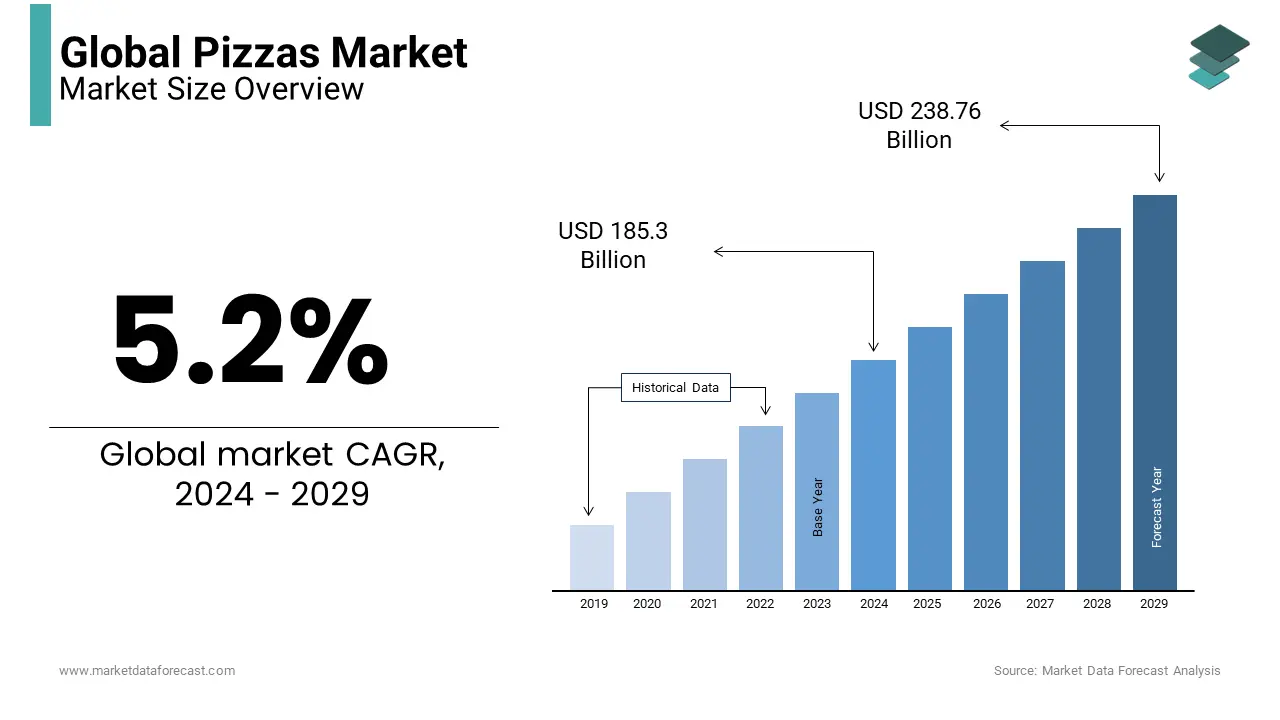
- Market Valuation: Valued at USD 194.94 billion (2025), estimated at USD 205.08 billion (2026), and projected to reach USD 307.64 billion by 2034, registering a steady CAGR of 5.2% (2026–2034).
- Primary Growth Drivers: Ubiquity of digital ordering, high meal affordability, rapid urbanization, contactless delivery infrastructure, and rising middle-class adoption of Western dining habits in Asia-Pacific. Key challenges include urban market saturation, labor shortages, and negative health perceptions regarding processed ingredients.
Key Market Segment Metrics (2026–2034)
| Category | Leading Segment (Position) | Fastest-Growing Segment |
|---|---|---|
| By Size, Crust, Type, Distribution & Region | 12-inch pizza (dominated with 46.4% share in 2025) & Thin crust (accounted for 51.5% share) & Non-vegetarian pizza (held 57.5% share) & Quick Service Restaurants (dominated distribution with 54.1% share) & North America (led globally with 36.1% share) | 9-inch size segment (projected at 7.4% CAGR) & Stuffed crust (growing at 8.1% CAGR) & Vegetarian pizza (registering fastest CAGR of 9.1%) |
| By Regional Leadership | North America (36.1% global market share) and Europe (second-largest market with culturally embedded consumption) | Asia-Pacific (expanding middle-class populations adopting Western dining habits and QSR formats) |
Major Market Players & Market Structure
Market Structure: Highly competitive global quick-service restaurant and food retail landscape featuring major international pizza chains driving digital ordering platforms, delivery tracking optimization, and supply chain modernization.
Key Companies: Boston Pizza, California Pizza Kitchen Inc., Domino's Pizza Inc., Pizza Capers (Retail Food Group), Papa John's Pizza, Telepizza, Pizza Hut, Pizza Delight, CEC Entertainment LLC, and Papa Murphy's International.
 Download Free Sample Report
Global Pizzas Market Size
The global pizza market size was calculated to be USD 194.94 billion in 2025 and is anticipated to be worth USD 307.64 billion by 2034, from USD 205.08 billion in 2026, growing at a CAGR of 5.20% during the forecast period.
Pizzas encompass a diverse array of commercial establishments and product formats, including full-service restaurants, quick-service outlets, frozen retail products, and delivery-only cloud kitchens that prepare and distribute pizza. This culinary staple has evolved from its Italian origins into a global phenomenon characterized by extensive customization and regional adaptation. The market is driven by the convenience, affordability, and social appeal of pizza, which transcends cultural boundaries. According to the Food and Agriculture Organization of the United Nations, global wheat production reached a record 781 million tonnes in 2024, providing the fundamental base for pizza crusts and supporting widespread availability. Furthermore, as per the International Dairy Federation, global cheese production exceeds 22 million tonnes annually, with mozzarella being a primary ingredient in pizza manufacturing, ensuring consistent supply chains for key components. The proliferation of digital ordering platforms has transformed consumer behavior, enabling seamless access to pizza through mobile applications and online portals. Urbanization trends have further accelerated demand as busy lifestyles prioritize quick meal solutions. The industry is also witnessing a shift towards premium ingredients and artisanal styles, reflecting changing consumer preferences for quality and authenticity. Government regulations regarding food safety and labeling continue to shape operational standards across different jurisdictions. The integration of technology in logistics and customer engagement has become a critical differentiator for market participants. Consequently, the pizza market is not merely a segment of the food service industry but a dynamic ecosystem influenced by technological, agricultural, and sociocultural factors.
MARKET DRIVERS
Ubiquity of Digital Ordering Platforms and Delivery Infrastructure
The pervasive adoption of digital ordering platforms and the robust expansion of delivery infrastructure are primarily fuelling the growth of the pizza market. Consumers increasingly rely on mobile applications and websites for convenient meal acquisition, reducing the friction associated with traditional dining or pickup. According to the United Nations Conference on Trade and Development, the global e-commerce sector reached a value of $26.7 trillion recently, with food delivery becoming a dominant sector in urban economies. In major metropolitan areas, the penetration of smartphones exceeds 80%, facilitating seamless interaction with pizza brands through dedicated apps. As per the International Telecommunication Union, approximately 67% of the global population, or 5.4 billion people, are now using the internet, enabling broader access to online food services even in developing regions. The efficiency of third-party delivery aggregators allows pizza operators to reach customers beyond their immediate physical vicinity, thereby expanding their potential market size. Real-time tracking and personalized promotions enhance user engagement and encourage repeat purchases. The ability to offer contactless delivery has further solidified consumer trust and preference for home dining options. Pizza chains have invested heavily in optimizing their digital interfaces to ensure smooth transactions and accurate order fulfillment. This technological integration reduces wait times and improves overall customer satisfaction. The synergy between advanced logistics networks and digital connectivity ensures that pizza remains a top choice for convenient dining. As digital literacy increases across demographics, the reliance on online ordering will continue to drive volume growth in the pizza market.
High Affordability and Versatility of Pizza as a Meal Option
The inherent affordability and versatility of pizza make it an attractive meal option for a wide range of consumer segments, which is further boosting the expansion of the pizza market. Pizza offers a cost-effective solution for individuals, families, and groups, providing substantial caloric value at a relatively low price point compared to other dining-out options. According to the World Bank, food expenditures can account for over 50% of household budgets in low-income countries, making affordable meals like pizza highly appealing. The ability to customize toppings allows consumers to tailor pizzas to various dietary preferences and budget constraints, enhancing their universal appeal. As per the United States Department of Agriculture, wheat prices averaged approximately $6.00 per bushel in 2024, ensuring relatively stable production costs for manufacturers. This stability enables pizza operators to maintain competitive pricing strategies even during periods of economic uncertainty. Pizza is also perceived as a social food, ideal for gatherings, parties, and casual dining experiences, which boosts its consumption frequency. The availability of diverse crust options and topping combinations caters to varied tastes, from vegetarian to meat lovers. Quick-service pizza chains leverage economies of scale to offer value menus that attract price-sensitive customers. The perception of pizza as a comfort food further reinforces its position in regular dining routines. These factors combined ensure that pizza remains a staple in the global food landscape, driving consistent market expansion.
MARKET RESTRAINTS
Health Consciousness and Negative Perception of Processed Ingredients
Growing health consciousness and the negative perception associated with processed ingredients act as significant restraints on the pizza market. Consumers are increasingly aware of the nutritional content of their food, seeking options that align with wellness goals. According to the World Health Organization, more than 1 billion people globally are now living with obesity, prompting individuals to reduce intake of high-calorie, high-sodium, and high-fat foods. Traditional pizza is often viewed as unhealthy due to its refined carbohydrate crust, processed meats, and high cheese content. As per the Centers for Disease Control and Prevention, approximately 90% of Americans consume more than the recommended amount of sodium, contributing to cardiovascular issues and leading many consumers to limit their pizza intake. The rise of clean-label movements encourages shoppers to avoid artificial preservatives and additives commonly found in frozen and fast-food pizzas. Nutritional labeling requirements in many countries have made calorie and ingredient information more transparent, influencing purchasing decisions. Health-focused consumers are shifting towards alternative diets, such as keto, paleo, or vegan, which may exclude traditional pizza components. Although some brands are introducing healthier options, the overarching perception of pizza as an indulgent rather than nutritious meal persists. This shift in consumer mindset limits the frequency of consumption among health-conscious demographics. Regulatory pressures to reduce salt and sugar content further challenge manufacturers to reformulate recipes without compromising taste. These health-related concerns constrain market growth by reducing overall demand from a significant segment of the population.
Volatility in Raw Material Prices and Supply Chain Disruptions
The volatility in raw material prices and frequent supply chain disruptions are further hindering the growth of the global pizza market. Key ingredients, such as wheat, cheese, and tomato sauce, are subject to fluctuating costs due to weather conditions, geopolitical tensions, and logistical bottlenecks. According to the Food and Agriculture Organization of the United Nations, the Food Price Index averaged 124.0 points in late 2024, reflecting significant variability in global commodity costs. Droughts and extreme weather events in major agricultural regions can lead to shortages of wheat and tomatoes, driving up procurement costs. As per the International Monetary Fund, global inflation is projected to fall to 5.8% in 2024, yet cumulative price increases continue to strain supply chains. Cheese prices are particularly volatile due to fluctuations in milk production and dairy processing capacities. These cost increases often force pizza operators to raise menu prices, which can dampen consumer demand, especially in price-sensitive markets. Supply chain interruptions can also lead to inconsistent availability of ingredients, affecting menu consistency and customer satisfaction. Small and medium-sized pizza businesses are disproportionately affected as they lack the bargaining power to negotiate favorable terms with suppliers. The reliance on global sourcing for certain ingredients exposes the market to international trade risks. Mitigating these risks requires significant investment in supply chain resilience and alternative sourcing strategies. Until stability is restored in the agricultural and logistical sectors, the pizza market will face ongoing pressure on margins and operational efficiency.
MARKET OPPORTUNITIES
Expansion of Plant-Based and Health-Oriented Pizza Variants
The rising demand for plant-based and health-oriented pizza variants offers a lucrative opportunity for the pizza market. Consumers are increasingly seeking alternatives that accommodate dietary restrictions and ethical preferences, such as veganism and lactose intolerance. According to the Good Food Institute, retail sales of plant-based foods in the U.S. reached $8.1 billion recently, with dairy-free cheese alternatives gaining traction among mainstream consumers. Pizza operators can capitalize on this trend by offering menus featuring vegetable-based crusts, nut-derived cheeses, and plant-based meat substitutes. As per the European Society for Clinical Nutrition and Metabolism, a significant percentage of the population now identifies as flexitarian, which emphasizes functional foods that provide additional health benefits. Incorporating whole-grain, gluten-free, or cauliflower crusts appeals to health-conscious individuals seeking lower-carbohydrate options. The introduction of organic and locally sourced toppings further enhances the appeal of premium healthy pizzas. Retailers are also expanding their frozen pizza sections to include clean-label and organic varieties, catering to home cooks who prioritize health. Collaborations with plant-based ingredient suppliers enable pizza brands to develop innovative formulations that mimic the taste and texture of traditional ingredients. Marketing campaigns highlighting the health benefits and sustainability of these options can attract new customer segments. By diversifying their product portfolios to include health-focused variants, pizza companies can tap into a growing niche market. This strategic shift aligns with broader wellness trends and offers a pathway for sustainable growth.
Integration of Automation and Artificial Intelligence in Operations
The integration of automation and artificial intelligence in pizza preparation and delivery operations offers significant opportunities for the global pizza market. Automated kitchen systems and robotic assistants can streamline production processes, reducing labor costs and ensuring consistent quality. According to the International Federation of Robotics, the installation of service robots for professional use grew by 48% in a single year, as businesses seek to optimize operational efficiency. AI-driven algorithms can analyze customer data to predict demand patterns, optimize inventory management, and personalize marketing offers. As per the McKinsey Global Institute, data-driven supply chain management can improve service levels by 65% while reducing costs. Drone delivery and autonomous vehicles are being tested to expedite last-mile delivery, reducing reliance on human drivers. Smart ovens equipped with sensors can monitor cooking temperatures in real time, ensuring perfect crust texture and topping melt. These technological advancements enable pizza chains to scale operations while maintaining high standards of service. Customer-facing technologies, such as chatbots and voice ordering systems, enhance the user experience by providing quick and convenient interactions. The use of data analytics allows operators to identify emerging trends and adjust menus accordingly. By embracing digital transformation, pizza businesses can achieve competitive advantages through improved efficiency and enhanced customer satisfaction. This technological evolution positions the pizza market for future growth and innovation.
MARKET CHALLENGES
Intense Competition and Market Saturation in Urban Areas
The intense competition and market saturation in urban areas are significant challenges to the expansion of the global pizza market. The low barriers to entry in the quick-service segment have led to a proliferation of pizza brands, ranging from global chains to local independents. According to the National Restaurant Association, there are more than 750,000 restaurants in the United States, creating a highly competitive environment where distinguishing brands becomes increasingly difficult. Consumers are spoiled for choice, leading to fragmented loyalty and price sensitivity. The profit margin for the pizza restaurant industry typically hovers around 6.5%, as operators engage in promotional wars to attract customers. The dominance of established players with extensive delivery networks makes it challenging for new entrants to gain market share. Cloud kitchens have further intensified competition by allowing multiple virtual brands to operate from single locations, increasing the volume of available options. Differentiation through unique toppings or crusts is often short-lived, as competitors quickly replicate successful innovations. The saturation of the market means that growth must come from stealing share rather than expanding the total customer base. High customer acquisition costs and the need for continuous marketing spend strain financial resources. Operators must constantly innovate and improve service quality to retain customers in a crowded marketplace. This competitive pressure necessitates strategic positioning and operational excellence to survive and thrive in saturated urban markets.
Labor Shortages and Rising Operational Costs
Acute labor shortages and rising operational costs are further challenging the expansion of the global pizza market. The food service industry relies heavily on manual labor for preparation, cooking, and delivery, yet finding and retaining skilled workers has become increasingly difficult. According to the International Labour Organization, global youth unemployment stands at 13%, yet the hospitality sector faces chronic staffing gaps due to changing workforce preferences. In many developed nations, the unemployment rate is near historic lows, leading to a tight labor market where wages are driven up. As per the Bureau of Labor Statistics, average hourly earnings for employees in the leisure and hospitality industry increased by approximately 4% year-over-year in 2024. The turnover rate in quick-service restaurants remains high, often exceeding 100% annually, requiring continuous recruitment and training efforts, which are costly and time-consuming. Delivery drivers are also in high demand, leading to increased compensation and incentive costs for pizza chains. Rising rents for prime retail locations further exacerbate financial pressures, limiting the ability of operators to expand physically. Energy costs for ovens and refrigeration have also surged, impacting overall operational expenses. These combined factors squeeze profit margins and force operators to raise prices, which may deter price-sensitive customers. Automating certain tasks offers a partial solution but requires significant upfront investment. Addressing labor and cost challenges requires strategic workforce management and operational optimization to maintain viability in a challenging economic environment.
REPORT COVERAGE
| REPORT METRIC | DETAILS |
| Market Size Available | 2025 to 2034 |
| Base Year | 2025 |
| Forecast Period | 2026 to 2034 |
| CAGR | 5.2% |
| Segments Covered | By Size, Crust Type, Type, Distribution Channel, and Region |
| Various Analyses Covered | Global, Regional & Country Level Analysis; Segment-Level Analysis, DROC, PESTLE Analysis, Porter’s Five Forces Analysis, Competitive Landscape, Analyst Overview of Investment Opportunities |
| Regions Covered | North America, Europe, APAC, Latin America, Middle East & Africa |
| Market Leaders Profiled | Boston Pizza, California Pizza Kitchen Inc., Domino's Pizza Inc., Pizza Capers (Retail Food Group), Domino's Pizza, Inc., Papa John's Pizza, Telepizza, Pizza Hut, Pizza Delight, CEC Entertainment LLC, and Papa Murphy's International |
SEGMENTAL ANALYSIS
By Size Insights
The 12-inch pizza segment dominated the market by commanding the largest share of 46.4% of the global pizza market in 2025. The dominance of the 12-inch segment in the global market is majorly driven by its versatility as a standard serving size for small groups and its optimal balance between price and portion. The status of 12-inch pizza as the ideal portion size for social dining and sharing among small groups, such as couples or families of three, is further contributing to the dominance of this segment in the global market. This size offers sufficient surface area to accommodate a variety of toppings while remaining manageable for consumption in a single sitting. According to the National Restaurant Association, approximately 60% of adult consumers prefer to order shared appetizers or entrees, making the 12-inch pizza a logical choice for shared meals. The psychological perception of value is heightened with this size, as it appears substantial enough to satisfy hunger without resulting in excessive waste. In Europe, the European Food Information Council notes that consumers are increasingly focused on portion control to align with balanced dietary guidelines, reducing the guilt associated with overindulgence. The 12-inch format allows for easy slicing into eight pieces, facilitating equitable distribution among diners. Retailers and restaurants frequently promote this size as a family deal or couple’s special, enhancing its appeal through bundled pricing strategies. The versatility of the 12-inch pizza makes it suitable for both lunch and dinner occasions, bridging the gap between individual snacks and large feast formats. This adaptability ensures consistent demand across different times of the day and social contexts. The widespread acceptance of this size as the industry standard further reinforces its market leadership, as consumers are accustomed to ordering this dimension for regular gatherings.
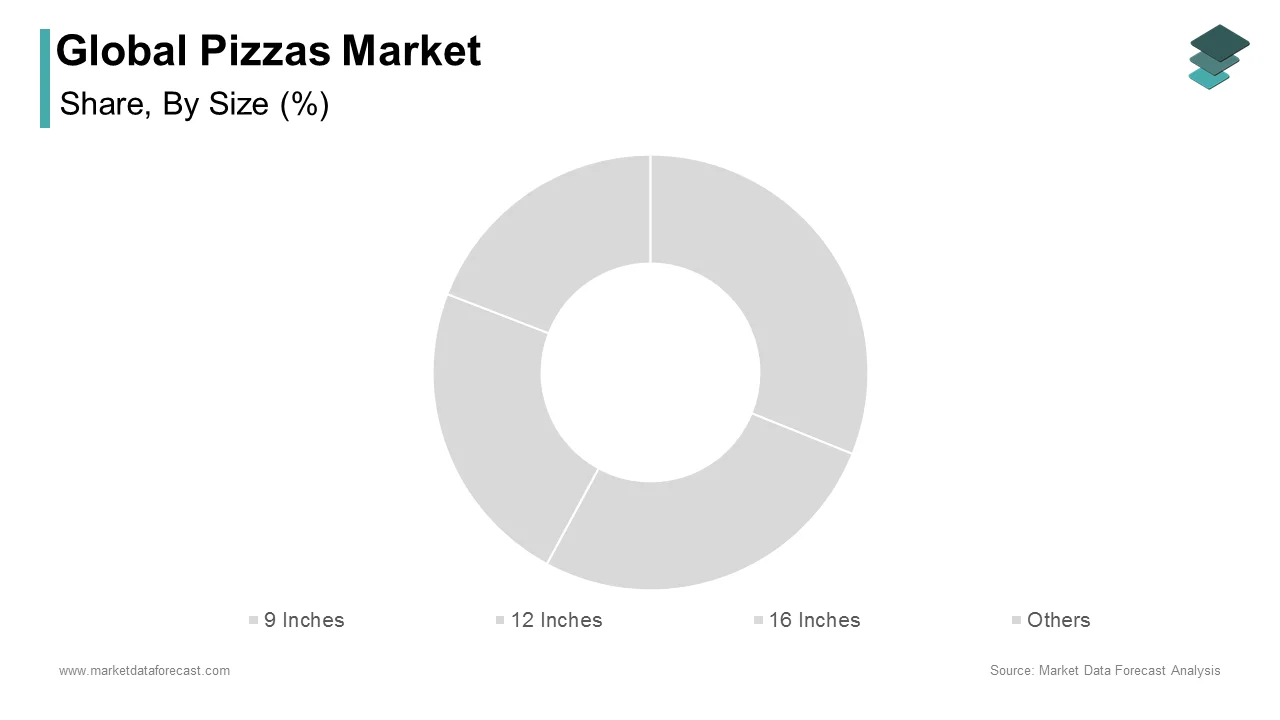
However, the 9-inch pizza segment is anticipated to record a CAGR of 7.4% over the forecast period in the global market. Factors such as the rise of single-serve meals, health-conscious portion control, increasing prevalence of single-serve meals, and the trend towards individual consumption are further boosting the expansion of the 9-inch pizza segment in the global market. Modern lifestyles, characterized by busy schedules and smaller household sizes, have shifted demand towards personalized dining experiences. According to the United States Census Bureau, single-person households now represent approximately 29% of all households, creating a demographic that prefers portion-controlled meals over large shared pies. The 9-inch pizza offers a complete meal for one person without the leftovers or waste associated with larger sizes. In urban centers across the Asia Pacific, the concept of solo dining is gaining traction as young professionals seek convenient and quick lunch options. As per the Asian Development Bank, the urban population in Asia is expected to reach 55% by 2030, leading to a higher concentration of individuals living alone who prioritize convenience and portion management. Quick-service restaurants are responding by introducing personal pan pizzas and box lunches featuring the 9-inch format. This size is also ideal for children’s menus in family restaurants, appealing to parents who want to provide appropriate portion sizes for their kids. The ability to order multiple different 9-inch pizzas allows groups to enjoy variety without committing to a single large flavor profile. This flexibility enhances the dining experience and encourages experimentation with new toppings. The alignment of the 9-inch pizza with the trend towards individualization and convenience drives its accelerated growth in the market.
By Crust Insights
The thin crust segment dominated the market by accounting for 51.5% of the global market share in 2025. The dominance of the thin crust segment in the global market is attributed to its perceived lightness and the ability to highlight topping flavors. The consumer preference for a lighter texture that allows the flavors of the toppings and sauce to take center stage is further contributing to the expansion of the thin-crust segment in the global market. Unlike thick crusts, which can be doughy and filling, thin crusts offer a crispier and more delicate eating experience. According to the International Culinary Center, modern consumers are increasingly favoring "authentic" food experiences where the quality of ingredients is paramount. Thin-crust pizzas are often associated with traditional Neapolitan and New York styles, which are highly regarded for their balance and simplicity. In Europe, the Associazione Verace Pizza Napoletana enforces strict standards for Neapolitan pizza, influencing global perceptions of quality. As per the Specialty Food Association, the specialty food market reached $194 billion in 2023, as consumers seek gourmet experiences that emphasize fresh herbs, high-quality cheeses, and premium meats. The thin crust acts as a canvas that does not overpower these sophisticated flavors. This style is also perceived as less heavy, making it suitable for lunch or lighter dinners. The visual appeal of a thin crust with visible char marks and vibrant toppings enhances its attractiveness on social media platforms, driving consumer interest. Restaurants often highlight their thin-crust offerings as signature items, distinguishing themselves from competitors who focus on heavier styles. The alignment with culinary sophistication and ingredient quality sustains the leading position of the thin-crust segment.
On the other side, the stuffed-crust segment is emerging as the fastest-growing crust segment in the pizza market and is estimated to grow at a CAGR of 8.1% over the forecast period due to innovation and the demand for indulgent eating experiences. The continuous innovation in stuffed-crust varieties and the consumer desire for novelty are further propelling the rapid growth of this segment. Stuffed-crust pizzas offer an element of surprise and excitement by incorporating cheese, meats, or other fillings into the outer edge of the crust. According to the Mintel Global New Products Database, novelty food launches have increased by 15% recently, as brands seek to differentiate themselves in a crowded market. Consumers, particularly younger demographics, are drawn to unique and Instagram-worthy food experiences that stand out from traditional options. In North America, major pizza chains frequently introduce limited-time offers featuring exotic fillings such as bacon, jalapeño, or dessert toppings. As per the NPD Group, “indulgent” food categories saw a 4% increase in traffic recently, showing that novelty items drive trial and incremental sales among occasional diners. The tactile experience of pulling apart a stuffed crust adds to the enjoyment and social aspect of dining. Social media influencers often showcase these innovative products, generating buzz and encouraging peer adoption. The ability to customize stuffed crusts allows for personalization, enhancing customer engagement. Brands leverage this segment to reinvigorate interest among existing customers who may be experiencing menu fatigue. The constant rotation of new stuffing options keeps the product line fresh and exciting. This focus on innovation and experiential dining drives the accelerated adoption of stuffed-crust pizzas.
By Type Insights
The non-vegetarian pizza segment occupied the leading share of 57.5% of the global market in 2025. The growth of the non-vegetarian pizza segment in the global market is attributed to the widespread popularity of meat toppings and traditional flavor profiles. The enduring popularity of traditional meat toppings, such as pepperoni, sausage, ham, and bacon, is further contributing to the segmental expansion in the global market. These ingredients are deeply ingrained in pizza culture and are often the default choice for many consumers. According to the North American Meat Institute, pepperoni is used as a topping on 36% of all pizzas ordered in the United States, reflecting a strong cultural preference for cured meats. The savory and umami flavors provided by meats enhance the overall taste profile of the pizza, making it highly satisfying. In Europe, the European Commission reports that meat consumption per capita remains high at approximately 66 kg per year, supporting the demand for non-vegetarian pizzas. The familiarity and comfort associated with meat-topped pizzas ensure consistent demand across diverse demographics. Fast-food chains heavily promote "meat lovers" combinations, driving volume sales through bundled offers. The availability of various meat options allows for customization, catering to different taste preferences. The perception of meat as a primary source of protein and satiety further reinforces its appeal. Despite the rise of alternative diets, the majority of consumers continue to prefer meat-based pizzas for their robust flavor and heartiness. This entrenched preference sustains the leading position of the non-vegetarian segment in the global market.
On the other hand, the vegetarian pizza segment is anticipated to record the fastest CAGR of 9.1% over the forecast period, owing to the health trends, the expansion of plant-based diets, and the increasing adoption of plant-based and flexitarian diets. Consumers are actively reducing their meat consumption for health, ethical, and environmental reasons, which is leading to a surge in demand for vegetable-centric meals. According to the Good Food Institute, the plant-based meat market is projected to reach $35 billion by 2027, with vegetables taking center stage in mainstream dining. Flexitarians, who represent approximately 42% of global consumers, occasionally abstain from meat and seek diverse vegetarian options. According to the European Vegetarian Union, the number of vegetarians has increased to over 6% of the population, driving demand for meat-free pizzas in Europe. Pizza operators are responding by introducing innovative vegetable combinations, such as mushrooms, spinach, artichoke, and roasted peppers. The availability of high-quality fresh produce allows for the creation of flavorful and satisfying vegetarian pies. The perception of vegetables as healthy and nutritious enhances the appeal of these pizzas among health-conscious consumers. Marketing campaigns highlighting the freshness and variety of vegetable toppings attract new customers. The normalization of vegetarian dining in social settings further supports this growth. As more people embrace plant-forward lifestyles, the vegetarian pizza segment experiences accelerated expansion.
By Distribution Channel Insights
The Quick Service Restaurants (QSR) segment dominated the market by holding 54.1% of the global market share in 2025. The dominance of the QSR segment in the global market is attributed to convenience, speed, extensive delivery networks, and the unparalleled convenience and speed of service it offers to consumers. In today’s fast-paced world, individuals prioritize quick meal solutions that fit into their busy schedules. According to the International Labour Organization, the average worker in the U.S. logs over 1,800 hours per year, leaving limited time for meal preparation. QSR pizza chains are optimized for rapid order fulfillment, whether through dine-in, takeaway, or delivery. The standardized operations and efficient kitchen workflows ensure that pizzas are ready within minutes. In the United States, the Bureau of Labor Statistics notes that more than 40% of food spending occurs away from home, with time poverty being a significant factor. The ability to order ahead via mobile apps and pick up without waiting further enhances convenience. QSRs are strategically located in high-traffic areas, ensuring easy access for customers. The consistency of service and product quality across locations builds trust and loyalty. The integration of technology, such as self-ordering kiosks and automated tracking systems, streamlines the customer journey. This focus on efficiency and accessibility makes QSRs the preferred choice for spontaneous and routine pizza consumption. The alignment with modern lifestyle demands sustains the leading position of this distribution channel.
REGIONAL ANALYSIS
North America Pizza Market Analysis
North America dominated the pizza market worldwide in 2025 with 36.1% of the global market share. Factors such as the high consumption rates, mature industry infrastructure, the deep cultural integration of pizza, and the dominance of major international chains are primarily driving the dominance of North America in the global market. According to the United States Department of Agriculture, Americans consume an average of 23 pounds of pizza per person each year, supporting the foundational ingredients of pizza. The presence of headquarters for major brands like Domino’s, Pizza Hut, and Papa John's facilitates continuous innovation and marketing efforts. As per the National Restaurant Association, pizza remains the top choice for delivery, with over 1 billion pizzas delivered annually in the U.S. The well-established delivery infrastructure and high smartphone penetration enable efficient service. Consumer preferences are shifting towards premium and customized options, driving product diversification. The region benefits from advanced supply chain logistics, ensuring consistent quality and availability. Health-conscious trends are influencing menu developments with more whole-grain and vegetable options. The competitive landscape drives aggressive promotional strategies and loyalty programs. North America serves as a trendsetter for global pizza innovations. The mature market focuses on retention and efficiency. The strong domestic demand and technological adoption position North America as the leader in the global pizza landscape.
Europe Pizza Market Analysis
Europe occupied the second-largest position in the global pizza market in 2025. Europe is the origin of pizza and has a strong preference for authentic artisanal styles. The cultural heritage and the demand for high-quality ingredients are mainly propelling the European pizza market expansion. According to the European Commission, the "Pizza Napoletana" is protected as a Traditional Speciality Guaranteed (TSG) product, ensuring adherence to strict quality standards. Italy remains the spiritual home of pizza, influencing tastes across the continent. As per the Italian Ministry of Agricultural, Food and Forestry Policies, there are more than 75,000 pizzerias in Italy alone, supporting global authenticity. Consumers in countries like France, Germany, and the United Kingdom increasingly seek gourmet and organic options. The rise of independent pizzerias challenges large chains by offering unique and localized experiences. Regulatory frameworks regarding food labeling and sustainability impact operational practices. The trend towards healthy eating drives the inclusion of fresh vegetables and whole grains. Tourism contributes significantly to pizza consumption in major cities. The balance between tradition and innovation defines the European market. The focus on quality and authenticity sustains steady growth. Europe’s cultural significance ensures its continued prominence in the global pizza industry.
Asia Pacific Pizza Market Analysis
Asia-Pacific represents a rapidly emerging market in the global pizza market owing to the rapid urbanization, the growing middle class, the increasing adoption of Western dining habits, and the expansion of international chains. According to the Asian Development Bank, the middle class in Asia is expected to reach 3.5 billion people by 2030, enabling consumers to indulge in dining out and delivery services. Countries like China, India, and Japan are seeing significant growth in pizza consumption. As per the China Chain Store and Franchise Association, international brands are expanding aggressively, with some chains opening over 500 new stores annually in tier-one and tier-two cities. Local adaptations, such as spicy seafood or tandoori chicken toppings, cater to regional tastes. The proliferation of food delivery apps facilitates access in densely populated urban areas. Young demographics are particularly influential in driving demand for Western-style fast food. Infrastructure improvements in logistics and cold chains support the expansion of frozen and fresh pizza retail. Asia-Pacific is poised to become a major contributor to global market volume. The region’s dynamic economic environment and changing dietary patterns offer immense growth opportunities.
COMPETITION OVERVIEW
The competition in the pizza market is intense and characterized by a mix of global giants and local artisanal pizzerias. Leading multinational chains leverage their brand recognition, extensive delivery networks, and technological advantages to maintain dominance. However, independent restaurants are gaining traction by offering unique gourmet experiences and authentic traditional styles. The market witnesses frequent innovation in toppings, crusts, and dietary options such as vegan and gluten-free varieties. Price competition is fierce in the quick service segment, prompting operators to offer value deals and promotions. Digital platforms have lowered barriers to entry, allowing cloud kitchens and virtual brands to compete effectively. Delivery speed and accuracy are critical differentiators influencing customer choice. Regulatory compliance regarding food safety and labor standards impacts operational costs. The shift towards healthy eating challenges traditional models, requiring adaptation. This dynamic environment drives continuous improvement in service quality and product innovation across the globe.
KEY MARKET PLAYERS
A few major players of the global pizza market include
- Boston Pizza
- California Pizza Kitchen Inc
- Domino's Pizza Inc
- Pizza Capers (Retail Food Group)
- Domino's Pizza, Inc
- Papa John's Pizza
- Telepizza, Pizza Hut
- Pizza Delight
- CEC Entertainment LLC
- Papa Murphy's International
Top Strategies Used by the Key Market Participants
Key players in the pizza market primarily employ strategies such as digital transformation and expansion of delivery networks to enhance customer accessibility. Companies frequently introduce localized menu items to cater to diverse cultural preferences and dietary needs. Strategic partnerships with third-party delivery platforms help operators reach wider audiences and increase order volumes. Investment in automation and artificial intelligence optimizes kitchen operations and improves delivery efficiency. Focus on sustainability, including eco-friendly packaging and responsible sourcing, to meet growing consumer expectations. Loyalty programs and personalized marketing campaigns drive customer retention and frequency. These multifaceted approaches enable companies to strengthen their competitive positions and address the evolving demands of the global food service industry effectively.
Leading Players in the Market
- Domino's Pizza Inc is a global leader in the pizza industry, renowned for its technological innovation and efficient delivery network. The company contributes to the global market by setting high standards for digital ordering and logistics efficiency. Recent actions include expanding its store footprint in international markets such as India and China while enhancing its proprietary delivery tracking systems. Domino's invests heavily in artificial intelligence to optimize delivery routes and improve customer experience. The company also focuses on menu innovation, introducing diverse crust and topping options to cater to local tastes. By prioritizing speed and convenience, Domino's strengthens its brand loyalty. Its commitment to digital transformation ensures it remains at the forefront of the quick service sector. These strategic initiatives reinforce its position as a dominant force in the global pizza landscape without relying on specific market share metrics.
- Yum! Brands Inc operates Pizza Hut, one of the most recognized pizza chains worldwide, contributing significantly to the global food service industry. The company plays a pivotal role in shaping dining trends through its extensive network of dine-in and delivery outlets. Recent strategies involve revitalizing the Pizza Hut brand with modernized restaurant designs and enhanced digital platforms. Yum! Brands have focused on expanding their delivery capabilities and partnering with third-party aggregators to reach broader audiences. The company emphasizes menu diversification, offering premium and health-conscious options to attract varied consumer segments. By leveraging its global scale, Yum! Brands drive operational efficiency and consistent quality. Its investment in technology and customer engagement tools enhances the overall dining experience. These efforts solidify Pizza Hut’s reputation as a versatile and innovative player in the competitive global pizza market.
- Restaurant Brands International Inc owns Popeyes and Burger King, but also has significant interests in the pizza sector through strategic investments and regional franchises. The company contributes to the global market by applying its proven quick-service restaurant model to diverse culinary segments. Recent actions include optimizing supply chain operations and expanding digital ordering capabilities across its portfolio. Restaurant Brands International focuses on value-driven menus and aggressive marketing campaigns to drive traffic. The company leverages data analytics to understand consumer preferences and tailor offerings accordingly. By emphasizing operational excellence and franchisee support, Restaurant Brands International strengthens its market presence. Its ability to adapt to local markets while maintaining global standards ensures sustained growth. The focus on innovation and customer satisfaction reinforces its competitive position. These strategic moves enable the company to capture new opportunities in the dynamic global pizza and quick service landscape.
DETAILED SEGMENTATION OF THE GLOBAL PIZZA MARKET IS INCLUDED IN THIS REPORT
This research report on the global pizza market has been segmented and sub-segmented based on size, crust type, distribution channel, and region.
By Size
- 9 Inches
- 12 Inches
- 16 Inches
- Others
By Crust Type
- Thick Crust
- Thin Crust
- Stuffed Crust
By Type
- Non-vegetarian Pizza
- Vegetarian Pizza
By Distribution Channel
- Quick Service Restaurants
- Full-Service Restaurants
- Others
By Region
- North America
- Europe
- Asia Pacific
- Latin America
- Middle East and Africa