- Product Description Description
- Table of Contents TOC
- List of Table & Figure LOT
- Get Free Sample PDF Sample PDF
Market Size, 2025
$0.73 BnMarket Estimate, 2026
$0.79 BnMarket Forecast, 2034
$1.47 BnCAGR, 2026–2034
8.10%Executive Summary: Global Protein Hydrolysates Market
- Market Scope: Comprehensive global analysis of the protein hydrolysates industry, covering product types (milk, plant, animal derivatives), applications (infant nutrition, sports nutrition, nutraceuticals), processing methods, physical forms, and major geographic regions.
- Market Valuation: Valued at USD 0.73 billion in 2025, estimated at USD 0.79 billion in 2026, and projected to reach USD 1.47 billion by 2034, registering a compound annual growth rate (CAGR) of 8.10% from 2026 to 2034.
- Primary Growth Drivers: Heightened fitness and muscle recovery demands among health-conscious consumers, rising popularity of sports nutrition, increasing adoption of specialized infant formulas, and efficient online retail and e-commerce distribution platforms.
Key Market Segment Metrics (2026–2034)
| Category | Leading Segment Position | Fastest-Growing / Key Growth Segment |
|---|---|---|
| By Type | Milk Protein Hydrolysates (dominates the market due to superior solubility, complete amino acid profile, and high multi-industry utility) | Plant Protein Hydrolysates (expanding rapidly on the back of vegan-friendly trends, clean-label preferences, and advanced taste-masking technologies) |
| By Application | Sports Nutrition & Infant Formula (anchoring massive consumption volumes driven by muscle-building requirements and early-life health standards) | Dietary Supplements & Nutraceuticals (experiencing strong adoption among mainstream wellness consumers seeking rapid amino acid absorption) |
| By Region / Country | North America (leads the global market share owing to high consumer purchasing power, advanced agri-food infrastructure, and widespread fitness cultures) | Asia-Pacific (projected as the fastest-growing region, propelled by rising disposable incomes, large raw material availability, and expanding infant-nutrition demand in China and India) |
Major Market Players & Market Structure
Market Structure: Highly competitive global marketplace featuring major food and nutrition multinationals competing through formulation innovation (such as taste-masking and novel beverage applications), strategic brand acquisitions, and direct-to-consumer digital expansion.
Key Companies: Abbott Nutrition, Koninklijke DSM N.V., Kerry Group PLC, FrieslandCampina, Arla Foods, Tate & Lyle PLC, Archer Daniels Midland Company, Glanbia PLC, Danone Nutricia, Nestle S.A., and Others.
Global Protein Hydrolysates Market Size
The size of the global protein hydrolysates market was valued at USD 0.73 billion in 2025. The global market size is expected to grow at a CAGR of 8.10% from 2026 to 2034 and be worth USD 1.47 billion by 2034 from USD 0.79 billion in 2026.
Protein hydrolysate is a mixture of amino acids produced by spitting out proteins using an enzyme, alkali, or acid. It is a type of protein that is partially hydrolyzed or digested to consume, which facilitates its absorption or digestion. Protein hydrolysate is available in solid and liquid form. It is derived from plants, animals, or dairy products. Protein hydrolysate is used in solid and liquid food products listed in special diets or for patients to provide an additional nutritional diet. It is also commonly used for patients who cannot take protein from their regular menu. Hydrolysis is the chemical breakdown of a molecule using water. Its products are termed hydrolysates. Protein Hydrolysates are formed by hydrolysis of proteins. They have numerous health benefits as they help the body absorb amino acids more rapidly than intact proteins, thus maximizing nutrient delivery, and have various applications in the Food and Beverage Industry. It is also used in the biotechnology industry as a supplement to cell cultures.
MARKET DRIVERS
Regular consumption of protein is often considered vital for the growth and development of muscle cells because protein helps build new cells and repair damaged tissue in the body. For this reason, health-conscious consumers have shown a growing interest in protein ingredients over the years. Protein ingredients like protein hydrolysates are in burgeoning demand among fitness enthusiasts and other consumers to build their physiques. Milk protein hydrolysates, such as casein and whey, are well known for enhancing muscle growth and development due to the presence of an adequate concentration of highly purified proteins. Whey protein and casein hydrolysates also have functional advantages, such as a high solubility rate compared to other protein ingredients that have allowed their application in nutritional and complementary powders that provide the nine essential amino acids. Unlike other nutraceutical protein supplements, casein-derived protein hydrolysates gradually discharge amino acids into the body, making them perfect nighttime supplements. For these reasons, the global protein hydrolysate market is expected to remain positive throughout the forecast period.
Protein hydrolysates are derived from relatively common raw materials such as milk, soy, and eggs. The easy availability of these materials, combined with high demand, has led to the emergence and presence of a significantly high number of national or small-scale protein hydrolysates as ingredients or manufacturers of finished products worldwide. The online channel offers substantial benefits to these small manufacturers, who may face various entry-level barriers, such as high marketing costs. The online channel provides a platform to reduce distribution costs and more effectively attract consumer attention significantly. The increasing use of modern technologies and social networking sites is driving the use of online shopping for infant formula and sports nutrition products in both developed and developing countries. In developed economies, sales of infant formula and internet supplements have increased significantly compared to offline sales.
MARKET RESTRAINTS
However, milk protein hydrolysates dominate the market due to their multifunctional characteristic, which facilitates their application in sports, nutraceuticals, and children's nutrition.
REPORT COVERAGE
| REPORT METRIC | DETAILS |
| Market Size Available | 2025 to 2034 |
| Base Year | 2025 |
| Forecast Period | 2026 to 2034 |
| CAGR | 8.1% |
| Segments Covered | By Type, Application, Process, Form & Region. |
| Various Analyses Covered | Global, Regional and Country Level Analysis; Segment-Level Analysis; DROC; PESTLE Analysis; Porter’s Five Forces Analysis; Competitive Landscape; Analyst Overview of Investment Opportunities |
| Regions Covered | North America, Europe, APAC, Latin America, Middle East & Africa |
| Market Leaders Profiled | Abbott Nutrition, Koninklijke DSM N.V, Kerry Group PLC, Frieslandcampina, Arla Foods, Tate & Lyle PLC, Archer Daniels Midland Company, Glabnia PLC, Danone Nutricia, Nestle SA. |
REGIONAL ANALYSIS
North America is expected to have the largest share due to the presence of the main players in the agri-food industry in the region, offering opportunities to protein hydrolysate manufacturers with a large consumer base. In addition, the high cost of production leads to an increase in the price of the final products borne by the consumer. As the purchasing power of consumers is high, the acceptability of the product is increasing in developed countries.
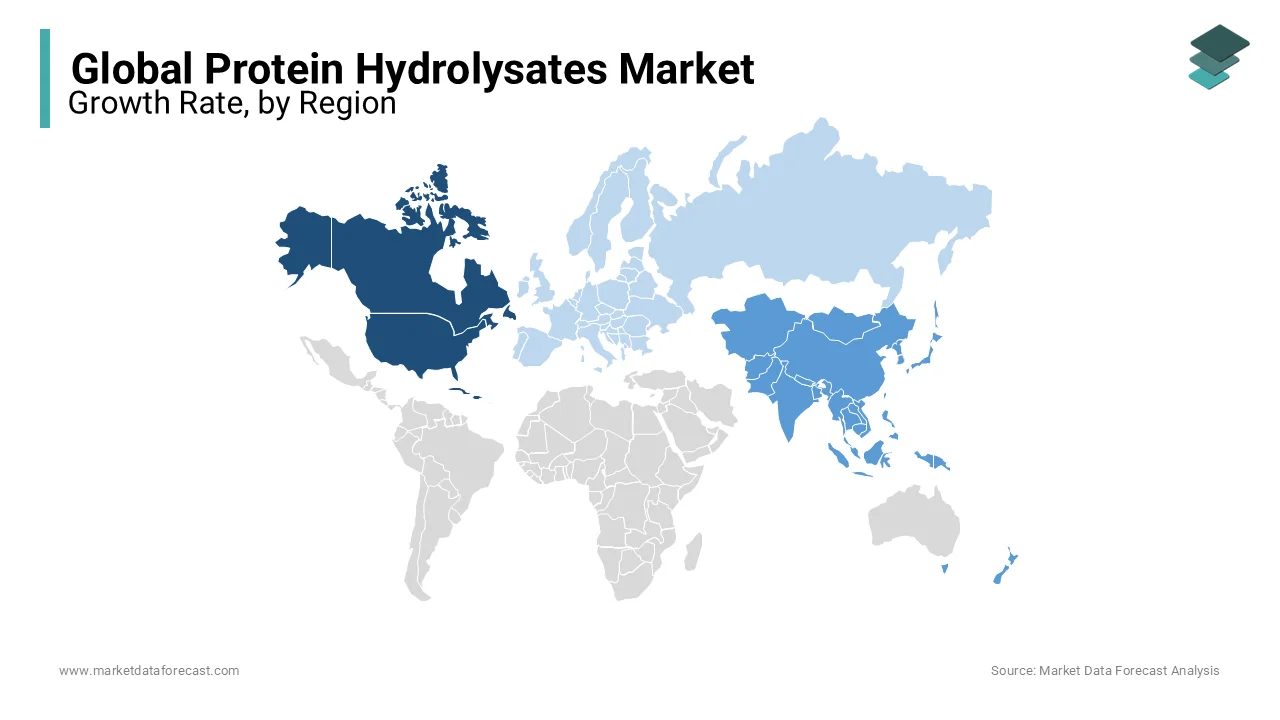
The Asia-Pacific Protein Hydrolysates Market is likely to be the fastest-growing market due to increased consumer disposable income and lower production costs with the introduction of new technologies. Also, a large consumer base combined with many raw materials in the region is foreseen to promote market growth in the Asia-Pacific region during the projection period. The size of the protein hydrolysate market in China is supposed to experience significant gains of more than 8% due to increased demand due to the one-child policy change for a decade in 2016. This is assumed to have a positive impact on China's crude birth rate, thus increasing the demand for infant formula. The Chinese Ministry of Finance has imposed a new rule for infant formula imports from international websites, which requires that these imports be officially approved by 2018. The size of the Brazilian protein hydrolysate market is foreseen to experience significant gains due to the higher feed industry demand. The production of animal feed in South America comes mainly from Brazil, which the third-largest producer of livestock feed around the world. Livestock farming is one of the main pillars of Brazilian agriculture, supporting the expansion of the protein hydrolysates market.
China's protein hydrolysate market size should observe critical additions at over 8%, inferable from an expansion sought after owing change in decade-long single youngster strategy in 2016. This is relied upon to have a positive effect on China's rough birth rate, hence the increased interest in newborn infant formula. The money service of China forced another standard for baby milk formula imports from universal sites, which will require official endorsement by 2020.
Europe is anticipated to grow at a healthy CAGR over the forecast period. Expanded spending on sports nutrition combined with successful promoting efforts of top producers to draw in mass customers with lower estimated contributions will drive the market request. Despite the fact that competitors and weightlifters are the principal buyers of sports nutrition items in the locale, more standard clients are buying the items so as to continue a dynamic way of life.
Brazil's protein hydrolysate market size should observe huge additions attributable to expanded interest from the feed industry. Feed production in South America is basically from Brazil, which is positioned third worldwide as a feed production nation. Animal cultivation is one of the backbone businesses of Brazilian farming.
KEY MARKET PLAYERS
Abbott Nutrition, Koninklijke DSM N.V, Kerry Group PLC, Frieslandcampina, Arla Foods, Tate & Lyle PLC, Archer Daniels Midland Company, Glabnia PLC, Danone Nutricia and Nestle SA are a few of the prominent players in the protein hydrolysates market.
RECENT HAPPENINGS IN THE MARKET
- In March 2017, Kerry introduced a new vegetable protein solution using a processing technique and aroma masking technology. These technologies are aimed at the grainy and calcareous texture and mask the characteristic notes and bitterness of vegetable proteins. This has complemented customer demand in the market and will contribute to business growth.
- In March 2018, Milk Specialties created and introduced a new category of protein. It is the first carbonated whey protein and is called PRObev. This product helped the company grow its product portfolio and enabled it to earn a name in the market.
- In October 2018, Agropur, Canada launched Inno Accel. This is the Inno Agropur program for the first time in North America, especially in dairy companies. It is the largest open innovation initiative the company has taken in the country of North America.
- In November 2017, Carbery launched its new range of innovative hydrolyzed whey proteins, Optipep 4bars. It contains a unique ingredient that provides a smooth texture throughout the shelf life with better nutritional quality.
- In November 2017, Friesland Campina launched its whey protein hydrolysates at FI Europe. The product is the latest innovation and has helped the company strengthen its extensive dairy protein portfolio
MARKET SEGMENTATION
This research report on the global protein hydrolysates market has been segmented and sub-segmented based on type, application, process, form & region.
By Type
- Milk Protein Hydrolysates
- Whey Protein Hydrolysate
- Casein Protein Hydrolysate
- Plant Protein Hydrolysates
- Soy Protein Hydrolysate
- Other
- Animal Protein Hydrolysates
- Meat Protein Hydrolysate
- Fish Protein Hydrolysate
- Egg Protein Hydrolysate
By Application
- Infant Nutrition
- Sports Nutrition
- Dietary Supplements
- Nutraceuticals
By Process
- Enzymatic Hydrolysis
- Acid and Alkali Hydrolysis
- Based on Source:
- Plant
- Animal
By Form
- Powdered
- Liquid
By Region
- North America
- Europe
- The Asia Pacific
- Latin America
- Middle East and Africa