- Product Description Description
- Table of Contents TOC
- List of Table & Figure LOT
- Get Free Sample PDF Sample PDF
Market Size, 2025
$83.5 BnMarket Estimate, 2026
$100.2 BnMarket Forecast, 2034
$430.8 BnCAGR, 2026–2034
20%Global Regulatory Information Management Market Report Summary
The global regulatory information management market was valued at USD 83.5 billion in 2025 and is projected to grow from USD 100.20 billion in 2026 to USD 430.84 billion by 2034, registering a CAGR of 20.0% from 2026 to 2034. Market growth is driven by increasing regulatory complexity across the pharmaceutical, biotechnology, and healthcare industries, growing demand for compliance management solutions, and rising adoption of digital platforms to streamline regulatory processes. Regulatory information management (RIM) solutions help organizations manage product registrations, submissions, regulatory documentation, and compliance requirements more efficiently. The growing focus on global regulatory harmonization, automation, and cloud-based compliance management systems is further accelerating market expansion.
Key Market Trends
- Increasing adoption of cloud-based regulatory information management platforms.
- Growing demand for automation of regulatory submissions and compliance workflows.
- Rising complexity of global regulatory requirements and product registration processes.
- Expansion of AI-powered analytics and regulatory intelligence solutions.
- Increasing focus on data integrity, transparency, and regulatory compliance management.
Segmental Insights
- Based on type, the software segment dominated the global regulatory information management market by accounting for 65.2% share in 2025, driven by growing adoption of digital platforms that streamline regulatory documentation, submission management, and compliance tracking activities.
- Based on application, the pharmaceutical segment led the market by capturing 43.8% share in 2025, supported by increasing regulatory requirements, expanding drug development activities, and the need for efficient management of global product registrations and approvals.
Regional Insights
The global regulatory information management market is witnessing substantial growth across major regions, supported by increasing regulatory scrutiny, digital transformation initiatives, and rising investments in compliance technologies.
- North America dominated the global market in 2025 with 40.4% share, driven by stringent regulatory requirements, strong pharmaceutical and biotechnology sectors, and significant investments in research and development activities.
- Europe held the second-largest position by accounting for 30.7% share in 2025, supported by comprehensive regulatory frameworks, increasing adoption of digital compliance solutions, and growing emphasis on regulatory harmonization across the region.
- Asia-Pacific is projected to register the fastest growth during the forecast period, driven by expanding pharmaceutical manufacturing activities, increasing regulatory modernization efforts, and rising investments in healthcare and life sciences infrastructure.
Competitive Landscape
The global regulatory information management market is characterized by intense competition among software providers, regulatory consulting firms, and compliance management solution developers. Market participants are focusing on cloud-based platforms, automation technologies, regulatory intelligence capabilities, and integrated compliance management solutions to strengthen their market position. Strategic partnerships, acquisitions, product innovation, and expansion of global regulatory support services are shaping competitive dynamics across the industry.
Prominent companies operating in the global regulatory information management market include Acuta LLC, Parexel, MasterControl, Dassault Systèmes SE, Sparta Systems, Veeva Systems, Computer Sciences Corporation (CSC), ArisGlobal, Ennov, Amplexor, Samarind, and Dovel Technologies.
Global Regulatory Information Management Market Size
The global regulatory information management market was worth US$ 83.5 billion in 2025 and is anticipated to reach a valuation of US$ 430.84 billion by 2034 from US$ 100.20 billion in 2026, and it is predicted to register a CAGR of 20% during the forecast period 2026 to 2034.
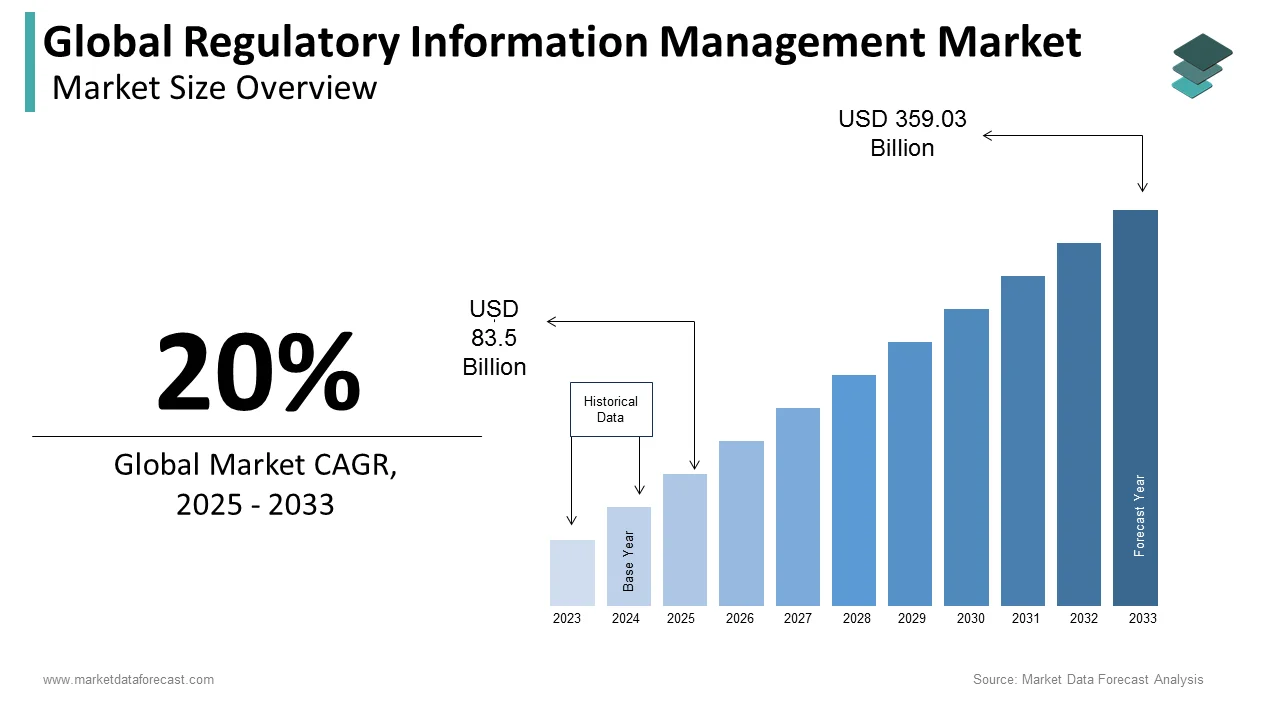
Regulatory Information Management (RIM) is the discipline of managing global regulatory data, submissions, and compliance documents for products. These systems centralize product information, streamline submission processes, and ensure adherence to global health authority requirements such as those from the Food and Drug Administration and the European Medicines Agency. The market is driven by the increasing complexity of drug development and the need for efficient lifecycle management. Under regulatory mandates overseen by the European Medicines Agency and the European Commission, 100% of marketing authorization applications across all European procedural pathways must be submitted digitally via the standardized electronic Common Technical Document (eCTD) format. Although thousands of minor regulatory filings (such as generics and biosimilars) occur annually, tracking data indicates that global regulators approve approximately 100 to 150 novel, unique new medicines each year, which still requires highly meticulous lifecycle data management. Furthermore the average time to approve a new drug remains around 12 months in major markets according to the Pharmaceutical Research and Manufacturers of America, highlighting the pressure on companies to accelerate processes without compromising accuracy. Highlighting the profound growth in global research data, the official ClinicalTrials.gov registry now reports more than 588,000 registered studies worldwide, highlighting an exponentially expanding footprint of complex clinical trials data requiring life-cycle management. These factors underscore the critical role of regulatory information management systems in ensuring patient safety, maintaining market access and reducing the administrative burden on pharmaceutical and medical device manufacturers operating in a highly regulated global environment.
MARKET DRIVERS
Increasing Complexity of Global Regulatory Frameworks Drives Adoption of Centralized Solutions
The escalating complexity of global regulatory frameworks is the main reason behind the growth of the regulatory information management market. This compels organizations to adopt centralized digital solutions to maintain compliance across multiple jurisdictions. Life sciences companies must navigate a labyrinth of varying requirements from different health authorities including the Food and Drug Administration in the United States, the European Medicines Agency in Europe and the Pharmaceuticals and Medical Devices Agency in Japan. According to the International Council for Harmonisation of Technical Requirements for Pharmaceuticals for Human Use, the adoption of unified guidelines has increased, but local variations still require significant customization and tracking. Research notes that approximately three-quarters of biopharmaceutical executives cite the fragmentation of disparate regulatory data sources as a critical internal obstacle, directly impacting the operational timeline required to secure market approvals.The introduction of new regulations such as the European Union Medical Device Regulation, has further intensified the need for robust data management systems capable of handling extensive technical documentation. According to scope of practice research compiled by the Regulatory Affairs Professionals Society (RAPS), manual data entry and complex documentation formatting occupy over half of the working hours for roughly 60% of regulatory professionals, restricting the time available for high-level regulatory strategy. By implementing regulatory information management systems, companies can automate data collection ensure consistency, and reduce the risk of non-compliance, which can result in costly penalties or product recalls. This operational efficiency is crucial for maintaining competitive advantage in a fast paced industry where time to market directly impacts revenue potential.
Rising Volume of New Drug Approvals and Clinical Trials Accelerates Demand for Efficiency
The rising volume of new drug approvals and clinical trials significantly fuels the expansion of the regulatory information management market. This creates an urgent need for efficient data handling and submission processes. As the pharmaceutical industry continues to innovate with novel therapies, including biologics and gene therapies the amount of data generated during development and review phases has grown exponentially. According to performance metrics published by the US Food and Drug Administration (FDA), the agency approved 55 entirely novel small-molecule drugs and therapeutic biologics in 2023 alone, managing an extensive operational volume of broader annual lifecycle applications and modifications. Each application requires thousands of pages of structured data that must be accurately compiled, formatted and submitted in specific electronic formats such as eCTD. National database tracking from the ClinicalTrials.gov registry indicates that the cumulative volume of global clinical studies has blown past the 500,000 mark, requiring biopharmaceutical companies to handle vast quantities of dynamic protocol amendments, localized safety updates, and ongoing efficacy data streams. Manual handling of such vast quantities of information is prone to errors and inefficiencies, which can delay approval timelines. A study by the Tufts Center for the Study of Drug Development found that regulatory delays cost companies approximately 1 million dollars per day in lost revenue. Regulatory information management systems address these challenges by automating document assembly, validating data integrity and facilitating seamless communication with health authorities. This capability enables companies to accelerate their submission cycles, reduce operational costs and bring life-saving treatments to patients faster thereby driving sustained demand for advanced regulatory technology solutions.
MARKET RESTRAINTS
High Implementation Costs and Resource Intensity Limit Adoption Among Small Enterprises
The high implementation costs and resource intensity associated with RIM systems slow down the growth of the regulatory information management market. This limits adoption among small and medium-sized enterprises. Deploying these sophisticated platforms requires substantial upfront investment in software licenses hardware infrastructure and specialized personnel training. Sources confirm that the total cost of ownership (TCO) for enterprise-level regulatory software typically spans $500,000 to $2 million depending on system scale, data-migration complexities, and organizational scope. For smaller biotechnology firms and generic drug manufacturers with limited budgets these expenses represent a considerable financial burden that may outweigh the perceived benefits. Additionally the integration of new systems with existing legacy databases often involves complex technical challenges requiring external consultants and extended downtime. A study confirms that roughly 45% of small or pre-commercial life sciences organizations frequently defer or delay migrating to unified, validated regulatory software platforms due to restrictive upfront budget constraints. The ongoing maintenance and upgrade costs further strain financial resources particularly when regulatory standards evolve frequently requiring continuous system updates. Moreover the scarcity of skilled professionals who can operate and optimize these systems adds to the operational complexity and cost. As a result many smaller players continue to rely on manual processes or basic spreadsheet tools which although less efficient are more affordable. This financial barrier restricts market penetration and slows down the overall digitization of regulatory affairs within the broader life sciences sector.
Data Security Concerns and Privacy Regulations Create Compliance Hesitancy
Concerns regarding data security and stringent privacy regulations are major hurdles for the regulatory information management market. This creates hesitancy among organizations to migrate sensitive data to cloud based platforms. Regulatory submissions contain highly confidential intellectual property clinical trial data and patient information which makes them attractive targets for cyberattacks. According to the IBM Cost of a Data Breach Report the healthcare industry experienced the highest average cost of a data breach at 10.93 million dollars in 2023 underscoring the severe financial and reputational risks involved. The implementation of strict privacy laws such as the General Data Protection Regulation in Europe and the Health Insurance Portability and Accountability Act in the United States imposes rigorous requirements on data storage transmission and access control. Research from the Ponemon Institute and healthcare IT security assessments highlights that nearly two-thirds of life sciences executives cite data security and continuous regulatory validation compliance as primary hurdles to adopting cloud-based enterprise networks. Fear of non compliance with these regulations leads some companies to prefer on premise solutions which offer greater control but lack the scalability and accessibility of cloud systems. Additionally the complexity of ensuring cross border data transfers comply with varying international laws adds another layer of difficulty. Vendors must invest heavily in encryption identity management and audit trails to reassure clients which increases solution costs. These concerns will continue to hinder the widespread adoption of modern regulatory information management technologies, particularly among risk-averse organizations. This will remain the case until robust and universally accepted security standards are established.
MARKET OPPORTUNITIES
Integration of Artificial Intelligence and Machine Learning Offers Automation Opportunities
The integration of artificial intelligence and machine learning into RIM systems paves the way for the growth of the regulatory information management market. This enables advanced automation and predictive analytics capabilities. These technologies can analyze vast amounts of regulatory data to identify patterns predict approval outcomes and automate repetitive tasks such as document classification and metadata tagging. According to sources artificial intelligence has the potential to automate up to 30 percent of current regulatory affairs activities freeing up professionals to focus on strategic decision making. AI driven tools can also monitor global regulatory changes in real time alerting companies to new requirements and ensuring timely compliance. Industry adoption metrics compiled across organizations like ISPE indicate that utilizing generative AI and smart workflow automation can reduce initial clinical and technical submission dossier preparation timelines by up to 40%. Furthermore machine learning algorithms can enhance data quality by detecting inconsistencies and errors before submission thereby reducing the likelihood of queries from health authorities. The ability to generate intelligent insights from historical submission data allows companies to optimize their strategies and improve success rates. As natural language processing technologies advance they will enable more intuitive user interfaces and automated report generation. These innovations not only improve operational efficiency but also create new revenue streams for vendors offering value added analytical services positioning AI enhanced regulatory information management as a key differentiator in the competitive landscape.
Expansion into Emerging Markets with Developing Regulatory Infrastructures Creates New Revenue Streams
The proliferation into emerging markets with developing regulatory infrastructures offers lucrative opportunities for RIM providers seeking to diversify their customer base and drive long term growth, which is anticipated to drive the expansion of the regulatory information management market. Countries in Asia Pacific Latin America and the Middle East are increasingly strengthening their regulatory frameworks to align with international standards such as those set by the International Council for Harmonisation. Financial indicators from the World Bank reveal that healthcare infrastructure expenditures in low- and middle-income countries expand by roughly 6% annually, creating a strong market opportunity for integrating digital regulatory infrastructures. As local health authorities in nations like China India and Brazil mandate electronic submissions and stricter compliance measures the demand for robust regulatory information management systems is rising. The Chinese National Medical Products Administration reported a 20 percent increase in new drug applications in 2023 reflecting a booming pharmaceutical sector that requires efficient data management solutions. Local manufacturers and multinational corporations operating in these regions need scalable platforms that can handle multi jurisdictional requirements and local language support. Partnerships with regional distributors and consulting firms can facilitate market entry and build trust with local stakeholders. Additionally government initiatives to digitize healthcare records and streamline approval processes provide further impetus for adoption. Vendors can capture significant market share by tailoring solutions to meet the specific needs of emerging economies. This approach helps establish a strong presence in high-growth regions before the market becomes saturated.
MARKET CHALLENGES
Interoperability Issues with Legacy Systems Hinder Seamless Data Exchange
Interoperability issues with legacy systems are significant obstacles for the regulatory information management market. This hinders seamless data exchange and integration across different organizational functions. Many life sciences companies operate with outdated IT infrastructure that lacks the flexibility to connect with modern regulatory software platforms. System health surveys published by HIMSS and ecosystem research reveal that a clear majority of healthcare and life sciences networks struggle with internal data fragmentation, with incompatible legacy infrastructure leaving massive data stores underutilized. This fragmentation prevents the smooth flow of information between research and development quality assurance and regulatory affairs departments leading to duplicated efforts and data inconsistencies. The lack of standardized data formats and application programming interfaces further complicates integration efforts requiring custom development work that is time consuming and expensive. A report by the Journal of Validation Technology noted that integration projects often exceed their initial budgets by 30 percent due to unforeseen technical complexities. Additionally frequent updates to regulatory information management software can break existing connections with legacy systems causing operational disruptions. Companies must invest in middleware solutions or undertake comprehensive system overhauls to achieve true interoperability which may not be feasible for all organizations. Until industry wide standards for data exchange are widely adopted and enforced these technical barriers will continue to impede the full realization of benefits from regulatory information management investments.
Shortage of Skilled Regulatory Professionals Impacts Effective System Utilization
The shortage of skilled regulatory professionals is a major challenge for the regulatory information management market. This impacts the effective utilization and optimization of these sophisticated systems. Operating regulatory information management software requires a unique blend of technical expertise and deep understanding of regulatory science which is scarce in the current labor market. Strategic workforce tracking from the Regulatory Affairs Professionals Society (RAPS) highlights an ongoing talent deficit, with market demand for specialized compliance managers continuously outstripping the qualified talent pool by double digits annually. This talent gap means that even when companies invest in advanced tools they may lack the personnel to fully leverage their capabilities leading to underutilization and suboptimal returns on investment. Training existing staff on new systems is resource intensive and time consuming with many employees resisting change due to comfort with familiar manual processes. General training benchmarks from the Association for Talent Development (ATD) and life sciences onboarding studies confirm that the complexity of specialized software workflows requires an average of six months for a new professional to gain independent operational proficiency. High turnover rates in the industry further exacerbate the problem as institutional knowledge is lost when experienced professionals leave. Without adequate staffing and expertise companies struggle to maintain data integrity manage submissions efficiently and respond promptly to regulatory queries. Addressing this challenge requires collaborative efforts between educational institutions industry associations and software vendors to develop comprehensive training programs and certification courses that build a competent workforce capable of driving digital transformation in regulatory affairs.
REPORT COVERAGE
| REPORT METRIC | DETAILS |
| Market Size Available | 2025 to 2034 |
| Base Year | 20255 |
| Forecast Period | 2026 to 2034 |
| Segments Covered | By By Type, Application, and Region. |
| Various Analyses Covered | Global, Regional and Country-Level Analysis, Segment-Level Analysis, Drivers, Restraints, Opportunities, Challenges; PESTLE Analysis; Porter’s Five Forces Analysis, Competitive Landscape, Analyst Overview of Investment Opportunities |
| Regions Covered | North America, Europe, Asia Pacific, Latin America, the Middle East, and Africa |
| Market Leaders Profiled | Acuta LLC, Parexel, MasterControl, Sparta Systems, Veeva Systems, Computer Science Corp (CSC), Aris Global, Ennov, Amplexor, Samarind, and Dovel Technologies, and Others. |
SEGMENTAL ANALYSIS
By Type Insights
The software segment dominated the regulatory information management market and accounted for a 65.2% share in 2025. This dominance of the segment was driven by its ability to automate complex submission processes and centralize critical regulatory data. Life sciences companies increasingly rely on specialized platforms to manage the electronic Common Technical Document format which is mandated by major health authorities globally. Under statutory regulations enforced by the U.S. FDA, 100% of new drug and biologics applications must be submitted electronically using the eCTD framework, rendering robust publishing software an absolute prerequisite for market entry. The dominance of this segment is driven by the need for real time collaboration across geographically dispersed teams which software solutions facilitate through cloud based architectures. Data from the International Society for Pharmaceutical Engineering indicates that organizations using integrated regulatory software reduce submission preparation time by up to 40 percent compared to manual methods. Additionally software platforms offer advanced features such as automated validation checks version control and audit trails which are essential for maintaining regulatory compliance during inspections. European Medicines Agency (EMA) portal upgrade initiatives shows that centralized electronic tracking and digital submission templates significantly reduce administrative intake and internal data processing times, accelerating regional compliance review logistics. Furthermore the scalability of software allows companies to manage increasing volumes of data from clinical trials and post market surveillance without proportional increases in staff. These operational efficiencies and compliance benefits ensure that software remains the cornerstone of the regulatory information management landscape driving consistent revenue and innovation.
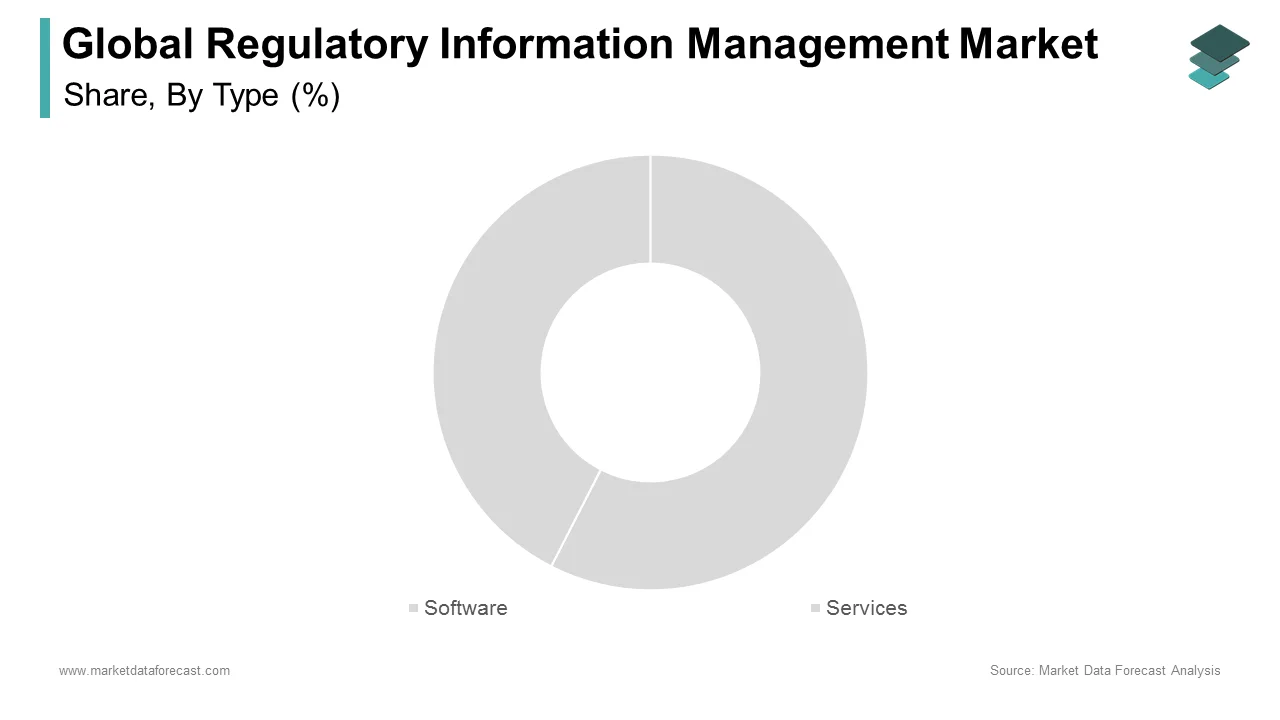
The services segment is anticipated to witness the fastest CAGR of 11.5% over the forecast period owing to the high complexity of system implementation and the need for specialized expertise. Deploying regulatory information management software requires significant customization integration with legacy systems and ongoing maintenance which many life sciences companies outsource to specialized service providers. According to Gartner approximately 60 percent of enterprise software implementations fail or exceed budgets due to lack of internal expertise creating a strong demand for external consulting and support services. Service providers offer critical functions such as data migration workflow configuration and user training which are essential for successful adoption. Talent and operational analysis compiled via the Regulatory Affairs Professionals Society (RAPS) reveals that roughly 70% of emerging or mid-sized drug developers lean heavily on third-party experts and external vendors to navigate complex global submission strategies. The increasing frequency of regulatory changes necessitates continuous updates and monitoring which service firms provide through managed services models. Additionally the shortage of skilled regulatory professionals exacerbates the need for outsourced services as companies struggle to build internal capabilities. Financial research shows that strategically outsourcing high-volume regulatory maintenance tasks can yield up to a 25% reduction in internal operational costs while driving higher compliance accuracy. Regulatory landscapes are becoming more complex, and technology continues to evolve. Therefore, the reliance on expert services will accelerate, making this segment the primary growth engine in the market.
By Application Insights
The pharmaceutical segment led the regulatory information management market and captured 43.8% share in 2025. This leading position of the segment was attributed to the high volume of drug approvals extensive lifecycle management requirements and stringent regulatory oversight. Large pharmaceutical companies manage portfolios containing hundreds of products each requiring regular submissions for renewals variations and safety updates. Annual tracking indicators published by PhRMA and biopharma economic assessments indicate that the broader U.S. pharmaceutical industry reinvested roughly $96 billion to over $100 billion in R&D in 2023, expanding the pipeline of complex compounds entering the review pipeline. The complexity of managing data across multiple jurisdictions drives the adoption of comprehensive regulatory information management systems. Data from the Food and Drug Administration shows that the agency approved 55 new drugs in 2023 each requiring thousands of pages of structured documentation. Additionally the expiration of patents forces companies to file numerous defensive submissions and manage generic competition which increases the administrative burden. Industry structural assessments align with data from platforms like EFPIA, showing that tier-one global pharmaceutical companies employ an average of 200 regulatory affairs specialists worldwide to coordinate international submissions via digital tracking software. The need for rapid time to market to maximize revenue before patent expiry further incentivizes investment in advanced software solutions. These factors combined ensure that the pharmaceutical industry remains the largest consumer of regulatory information management solutions driving the majority of market demand and innovation.
The biotechnology segment is likely to experience the fastest CAGR of 12.8% from 2026 to 2034 due to the surge in novel therapies such as gene therapies cell therapies and biologics. Unlike traditional small molecule drugs these complex treatments require specialized regulatory pathways and extensive data management due to their unique manufacturing and safety profiles. According to the Biotechnology Innovation Organization there are over 8000 biotech companies globally many of which are startups lacking internal regulatory infrastructure and relying on external solutions. The rapid pace of innovation in biotechnology necessitates agile regulatory strategies that can adapt to evolving scientific understanding and regulatory guidance. Data from the Clinical Trials Transformation Initiative indicates that biologic trials generate 10 times more data than traditional trials requiring robust management systems to handle the complexity. Furthermore the rise of personalized medicine means that each treatment may have unique regulatory requirements increasing the need for flexible and scalable information management tools. The European Medicines Agency has introduced specific frameworks for advanced therapy medicinal products which drive the adoption of specialized regulatory software. This dynamic environment positions biotechnology as the most rapidly expanding application segment.
REGIONAL ANALYSIS
North America Regulatory Information Management Market Analysis
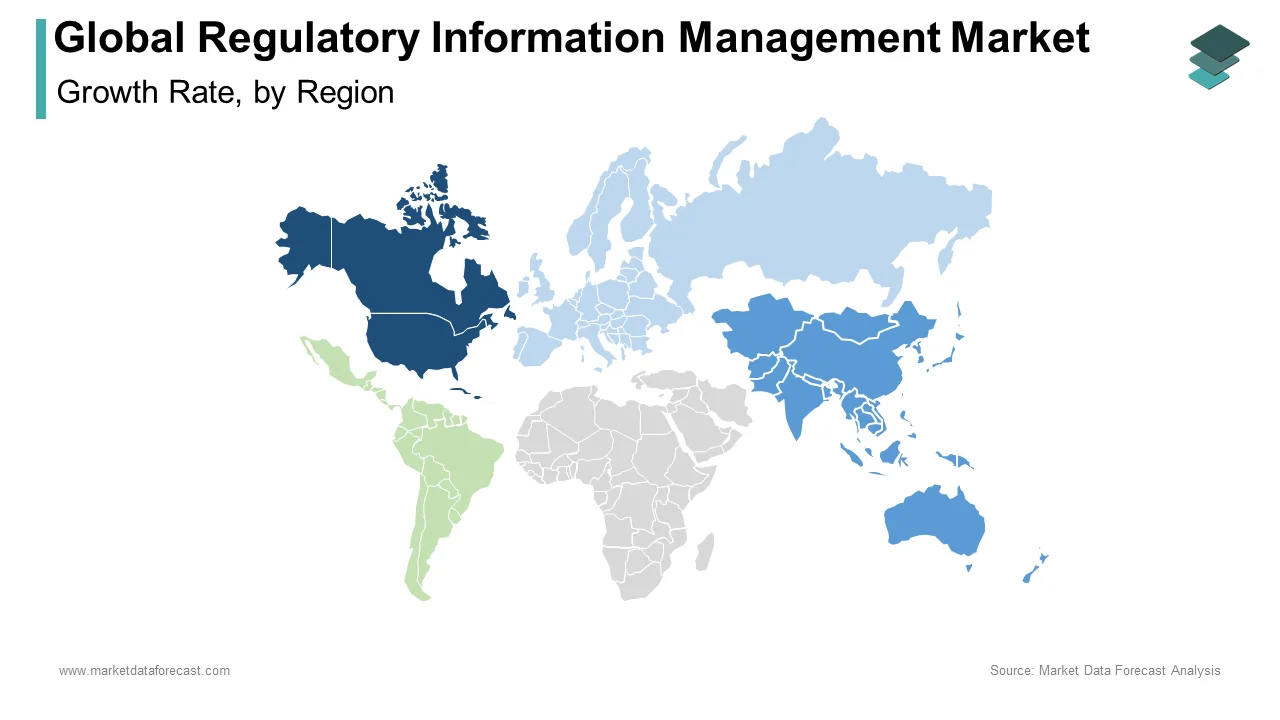
North America outperformed other regions in the global regulatory information management market and held a 40.4% share in 2025 because of stringent regulatory requirements and high research and development investment. The United States serves as the primary contributor with the Food and Drug Administration enforcing rigorous standards for drug approval and post market surveillance. According to data tracking from PhRMA and SelectUSA, biopharmaceutical firms in the U.S. spent approximately $96 billion to over $100 billion on R&D in 2023, generating a vast amount of regulatory data requiring meticulous management. The presence of major life sciences companies and regulatory technology vendors in the region fosters a mature market ecosystem. While the United States remains a premier global hub for clinical research, A study shows the U.S. accounts for roughly 18% to 21% of global clinical trial activity, driving a substantial demand for efficient submission and management tools. Additionally the adoption of electronic common technical document formats is widespread with nearly all submissions being digital. The region benefits from advanced IT infrastructure and a highly skilled workforce capable of implementing complex regulatory systems. Government initiatives to modernize healthcare data exchange further support market growth. The competitive landscape encourages continuous innovation with vendors launching AI driven solutions to meet the needs of sophisticated clients. These structural advantages ensure that North America remains the dominant force in the global regulatory information management market.
Europe Regulatory Information Management Market Analysis
Europe was positioned second in the global regulatory information management market and captured a 30.7% share in 2025. This position of the region’s market was supported by harmonized regulations and ambitious digital health initiatives. The European Medicines Agency plays a central role in standardizing regulatory processes across member states facilitating the adoption of unified information management systems. According to the European Commission the implementation of the Medical Device Regulation has increased the demand for robust data management solutions to handle extensive technical documentation. The region is also a leader in digital health with countries like Germany and France investing heavily in electronic health records and digital submission platforms. regional health reports from WHO Europe show that Northern Europe and the Nordic countries are global frontrunners, with 100% of these nations utilizing comprehensive digital systems for patient health records integrated into health network workflows. The General Data Protection Regulation imposes strict data privacy requirements driving the adoption of secure and compliant regulatory software. Additionally the presence of major pharmaceutical hubs in Switzerland and the United Kingdom contributes to steady demand. The European Union’s Horizon Europe program funds research into regulatory science fostering innovation in information management technologies. These regulatory and technological factors ensure that Europe remains a key market for advanced regulatory solutions with a focus on compliance and data security.
Asia Pacific Regulatory Information Management Market Analysis
Asia Pacific remains the fastest-expanding region in the global regulatory information management market due to regulatory reforms and expansion of pharmaceutical manufacturing. Countries such as China India and Japan are strengthening their regulatory frameworks to align with international standards driving the adoption of digital submission tools. According to annual registry data from the Chinese National Medical Products Administration (NMPA), drug registration applications surged by approximately 20% in 2023, reflecting a rapidly growing biopharmaceutical sector that heavily relies on automated and efficient data management. India is becoming a global hub for generic drug production with the Central Drugs Standard Control Organization mandating electronic submissions for certain categories. Data from the Asian Development Bank shows that healthcare spending across developing Asia-Pacific nations is expanding by roughly 8% annually, driving critical capital investments toward modernizing regulatory infrastructure. The presence of numerous clinical research organizations conducting trials for global sponsors further boosts demand. Local governments are investing in digital infrastructure to streamline approval processes and attract foreign investment. The rise of local biotech startups also contributes to market growth as they seek scalable solutions to navigate complex regulatory landscapes. These dynamic economic and regulatory trends position Asia Pacific as the most influential region for future expansion in the regulatory information management industry.
Latin America Regulatory Information Management Market Analysis
Latin America grew steadily in the regulatory information management market owing to economic volatility yet increasing healthcare access and regulatory modernization efforts. Brazil and Mexico are the primary markets in the region with agencies like ANVISA and COFEPRIS working to digitize submission processes and improve transparency. According to the Pan American Health Organization, public health expenditures in Latin America have faced post-pandemic contraction and budgetary constraints rather than steady annual growth, compelling health authorities to look at cost-saving regulatory technology to optimize tighter budgets. The region faces challenges related to infrastructure and skilled workforce availability which slows down the pace of digital transformation. However multinational pharmaceutical companies operating in the region are driving demand for global standard compliance tools. Data from the Inter-American Development Bank suggests that public health initiatives are increasingly relying on digital data for decision making. The growing prevalence of chronic diseases drives local drug production and imports requiring efficient regulatory oversight. While budget constraints limit the adoption of premium solutions there is a rising interest in cloud based platforms that offer lower upfront costs. Partnerships with global vendors and local distributors help navigate regulatory complexities. These factors indicate a market with potential for gradual expansion as economic stability improves and regulatory frameworks mature.
Middle East and Africa Regulatory Information Management Market Analysis
The Middle East and Africa region is likely to expand notably in the regulatory information management market from 2026 to 2034 due to infrastructure development and efforts toward regulatory harmonization. Countries such as Saudi Arabia and South Africa are leading the way with investments in healthcare systems and digital transformation initiatives. The Saudi Food and Drug Authority has implemented electronic submission systems to streamline approvals and enhance transparency. In Africa the African Medicines Agency aims to harmonize regulations across the continent which will create demand for standardized information management solutions. Data from the African Union indicates that local pharmaceutical production is increasing reducing reliance on imports and requiring robust regulatory oversight. However limited IT infrastructure and funding remain barriers to widespread adoption. International aid and partnerships with global health organizations are helping to bridge these gaps. The growing burden of infectious and non communicable diseases drives the need for faster drug approvals. As regulatory capacities strengthen and digital literacy improves these regions offer long term growth potential for vendors willing to invest in localized solutions and capacity building.
COMPETITIVE LANDSCAPE
The competition in the regulatory information management market is characterized by intense rivalry among established software vendors and emerging technology providers who compete on functionality ease of use and integration capabilities. Major players leverage their extensive domain expertise and global presence to offer comprehensive suites that cover the entire regulatory lifecycle. However niche competitors often differentiate themselves through specialized features such as advanced analytics or superior user interfaces tailored to specific therapeutic areas. Price competition is moderate as buyers prioritize compliance and reliability over cost but total cost of ownership remains a key decision factor. The shift toward cloud based solutions has lowered barriers to entry allowing agile startups to challenge incumbents with innovative artificial intelligence driven tools. Intellectual property protection and patent portfolios play a crucial role in maintaining competitive advantages. Collaborations with regulatory bodies and industry consortia help vendors stay ahead of changing requirements. Ultimately success depends on delivering measurable value through automation accuracy and seamless interoperability with existing enterprise systems.
KEY MARKET PLAYERS
Companies dominating the global regulatory information management market profiled in this report are
- Acuta LLC
- Parexel
- MasterControl
- Dassault Systèmes SE
- Sparta Systems
- Veeva Systems
- Computer Science Corp (CSC)
- Aris Global
- Ennov
- Amplexor
- Samarind
- Dovel Technologies
TOP PLAYERS IN THE MARKET
- Veeva Systems Inc is a leading provider of cloud based software for the global life sciences industry with its Veeva Vault RIM solution serving as a cornerstone for regulatory information management. The company focuses on unifying regulatory data across the product lifecycle to enhance collaboration and submission efficiency. Veeva has recently expanded its platform capabilities by integrating artificial intelligence tools that automate document classification and metadata extraction. Strategic partnerships with major health authorities facilitate seamless electronic submissions and real time status tracking. The corporation invests heavily in user experience design ensuring intuitive interfaces that reduce training time for regulatory professionals. By offering a fully validated cloud infrastructure Veeva ensures data security and compliance with global standards. These continuous innovations and customer centric approaches strengthen its position as a preferred partner for pharmaceutical and biotechnology companies seeking digital transformation in regulatory affairs.
- Dassault Systèmes SE contributes significantly to the regulatory information management market through its Medidata suite and 3DEXPERIENCE platform which integrate clinical and regulatory data management. The company leverages its expertise in digital twin technology to simulate regulatory outcomes and optimize submission strategies. Dassault Systèmes has recently focused on enhancing interoperability between clinical trial data and regulatory submissions reducing manual data entry errors. The acquisition of specialized analytics firms has bolstered its ability to provide predictive insights for regulatory planning. Their solutions support complex global submissions by automating the assembly of electronic common technical documents. The company also emphasizes sustainability by enabling paperless regulatory processes. Life sciences organizations can accelerate their time to market by leveraging Dassault Systèmes, which combines scientific depth with technological innovation. This approach ensures rigorous compliance standards are met across diverse international jurisdictions.
- ArisGlobal LLC is a prominent player in the regulatory information management sector known for its LifeSphere RIM platform which offers end to end regulatory operations support. The company specializes in helping organizations manage product registrations labeling and commitments through a unified digital environment. ArisGlobal has recently invested in advanced analytics and machine learning features that provide actionable insights into regulatory intelligence and competitive landscapes. The platform supports seamless integration with other enterprise systems ensuring data consistency across departments. Strategic expansions into emerging markets have allowed ArisGlobal to cater to a broader client base including generic manufacturers and medical device companies. The company prioritizes customer success through comprehensive training programs and dedicated support teams. ArisGlobal empowers life sciences firms to navigate complex regulatory changes efficiently. By focusing on agility and scalability, the platform ensures continuous compliance throughout the product lifecycle.
TOP STRATEGIES USED BY KEY MARKET PARTICIPANTS
Key players in the regulatory information management market primarily focus on cloud migration and artificial intelligence integration to enhance operational efficiency. Companies invest heavily in developing scalable platforms that support remote collaboration and real time data access for global teams. Strategic acquisitions of niche technology firms allow vendors to expand their feature sets and address specific regulatory needs such as labeling or intelligence. Partnerships with health authorities facilitate smoother electronic submission processes and ensure compliance with evolving standards. Customer success initiatives including training and consulting services help clients maximize value from their investments. Continuous innovation in user interface design improves adoption rates among regulatory professionals. These combined strategies foster long term relationships and drive sustainable growth in a highly specialized and regulated industry landscape.
MARKET SEGMENTATION
This research report on the global regulatory information management market has been segmented and sub-segmented based on the type, application, and region.
By Type
- Software
- Services
By Application
- Pharmaceutical Industry
- Biotechnology
- Clinical research organizations
By Region
- North America
- Europe
- Asia Pacific
- Latin America
- Middle East and Africa