- Product Description Description
- Table of Contents TOC
- List of Table & Figure LOT
- Get Free Sample PDF Sample PDF
Market Size, 2025
$21.8 BnMarket Estimate, 2026
$25.42 BnMarket Forecast, 2034
$86.84 BnCAGR, 2026–2034
16.6%Global Accountable Care Solutions Market Report Summary
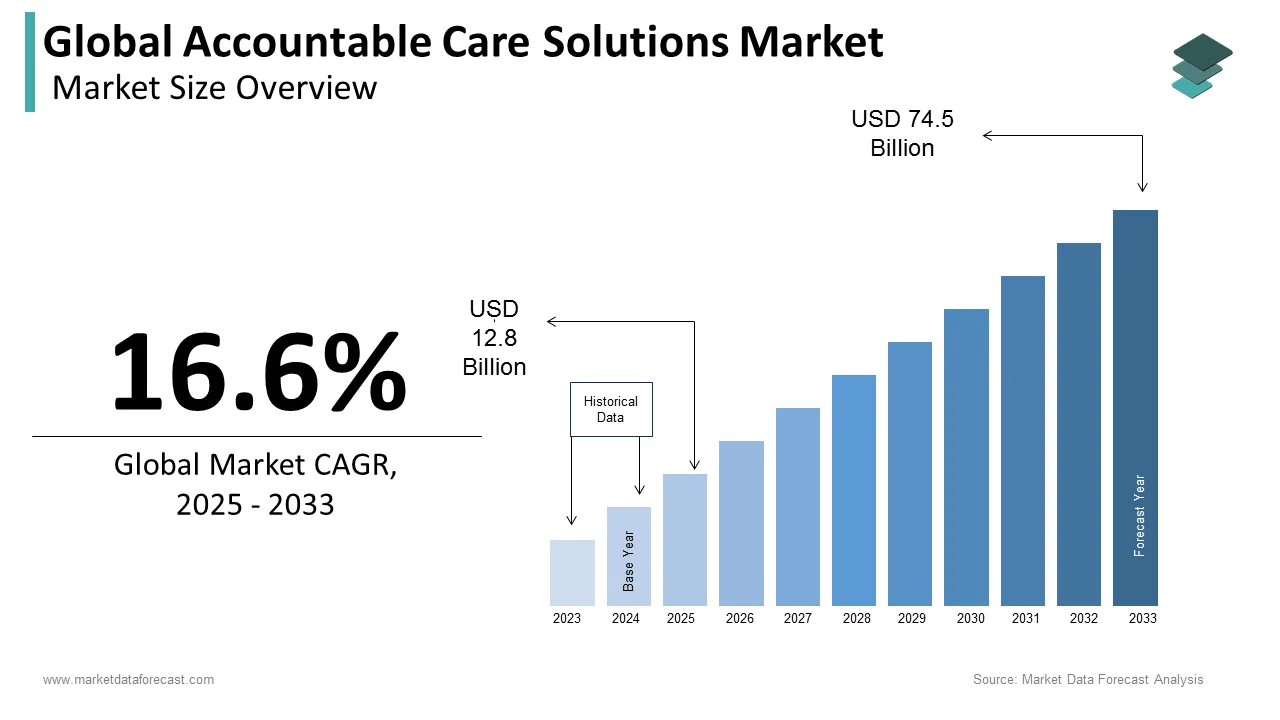
The global accountable care solutions market was valued at USD 21.8 billion in 2025 and is projected to grow from USD 25.42 billion in 2026 to USD 86.84 billion by 2034, registering a CAGR of 16.6% from 2026 to 2034. Market growth is driven by the increasing shift toward value-based healthcare models, rising demand for coordinated patient care, and growing adoption of healthcare IT solutions that improve clinical outcomes while reducing costs. Accountable care solutions enable healthcare providers, payers, and organizations to manage patient populations more effectively through data analytics, care coordination, and performance management tools. The expansion of digital health infrastructure, interoperability initiatives, and population health management programs is further accelerating market growth worldwide.
Key Market Trends
- Growing adoption of value-based care and population health management models.
- Increasing demand for data-driven healthcare decision-making and care coordination platforms.
- Rising implementation of cloud-based healthcare management solutions.
- Expansion of interoperability and healthcare information exchange initiatives.
- Increasing focus on improving patient outcomes while reducing healthcare costs.
Segmental Insights
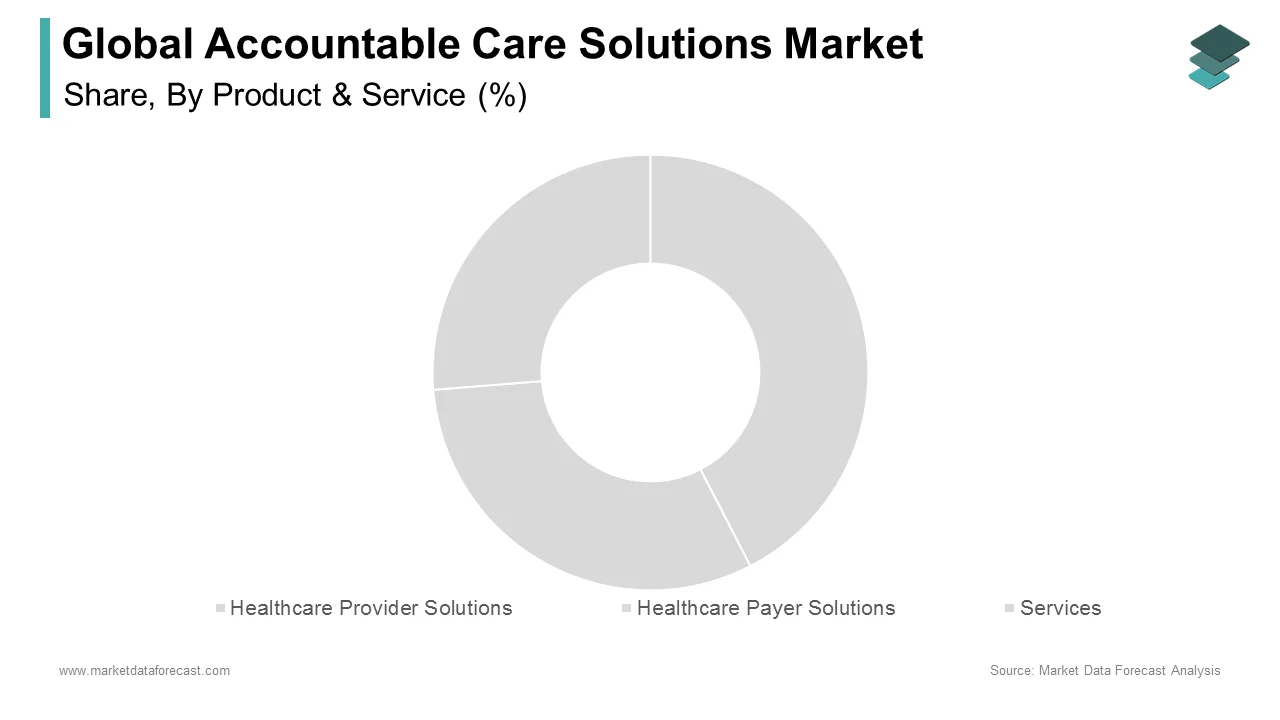
Based on product and service, the healthcare provider segment dominated the global accountable care solutions market by accounting for 53.2% share in 2025, driven by increasing adoption of care coordination platforms, clinical analytics tools, and patient management solutions among healthcare providers.
Based on delivery mode, the web and cloud-based segment held the dominant share of the market in 2025, supported by its scalability, lower total cost of ownership, ease of deployment, and ability to facilitate seamless access to healthcare data across multiple care settings.
Regional Insights
The global accountable care solutions market is witnessing significant growth across major regions, supported by healthcare digitalization initiatives, growing emphasis on value-based care, and increasing investments in healthcare IT infrastructure.
-
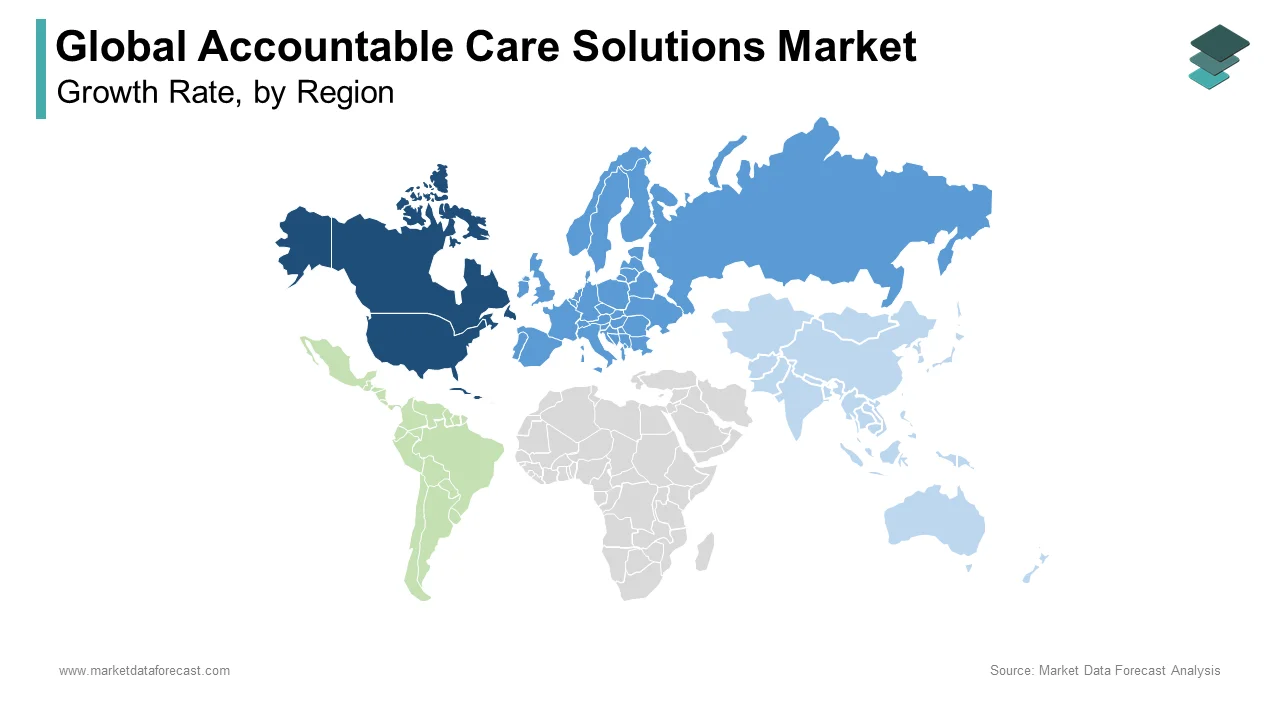
North America dominated the global market in 2025 with 48.3% share, driven by widespread adoption of accountable care organizations (ACOs), advanced healthcare IT systems, and supportive reimbursement models focused on value-based healthcare delivery.
-
Europe ranked second by accounting for 24.1% share in 2025, supported by robust government initiatives promoting digital health transformation, integrated care delivery, and cross-border healthcare coordination.
-
Asia-Pacific is projected to register the fastest growth during the forecast period, driven by rapid healthcare system modernization, increasing healthcare expenditures, and growing government investments in digital health infrastructure and care management solutions.
Competitive Landscape
The global accountable care solutions market is characterized by strong competition among healthcare IT providers, technology companies, and healthcare service organizations focusing on population health management, care coordination, and clinical analytics solutions. Market participants are emphasizing cloud-based platform development, interoperability enhancements, artificial intelligence integration, and strategic partnerships to strengthen market positioning. Mergers, acquisitions, and investments in value-based healthcare technologies continue to shape competitive dynamics across the industry.
Prominent companies operating in the global accountable care solutions market include Cerner Corporation, IBM Corporation, Allscripts Healthcare Solutions, Inc., UnitedHealth Group, Aetna, Inc., Epic Systems Corporation, and McKesson Corporation.
Global Accountable Care Solutions Market Size
The global accountable care solutions market was worth US$ 21.8 billion in 2025 and is anticipated to reach a valuation of US$ 86.84 billion by 2034 from US$ 25.42 billion in 2026, and it is predicted to register a CAGR of 16.6% during the forecast period 2026 to 2034.
The accountable care solutions align financial incentives with quality outcomes. These integrated platforms enable providers, payers, and patients to collaborate effectively, while managing population health through data-driven insights. The core objective involves shifting from volume-based reimbursement models to value-based care structures, where providers assume responsibility for patient outcomes across the care continuum. In Europe, the adoption of such solutions is gaining momentum as healthcare systems grapple with aging demographics and rising chronic disease prevalence. As per the World Health Organization, the proportion of people aged 60 years and older in Europe is projected to reach 25% by 2030, creating unprecedented pressure on existing healthcare infrastructure. This demographic shift necessitates coordinated care approaches that accountable care solutions facilitate through advanced analytics and interoperable health information systems. Furthermore, the European Commission has emphasized digital health transformation as a priority, with initiatives aimed at improving cross-border healthcare coordination. According to Eurostat, healthcare expenditure in the European Union accounted for 9.9% of gross domestic product in 2022, highlighting the economic imperative for efficient care delivery models. The integration of artificial intelligence and machine learning capabilities within these solutions enables predictive risk stratification and personalized care planning. Such technological advancements support clinical decision-making while reducing unnecessary hospital admissions and emergency department visits. The market encompasses software platforms, consulting services, and managed care arrangements designed to optimize resource utilization and enhance patient satisfaction across diverse healthcare settings.
MARKET DRIVERS
Rising Prevalence of Chronic Diseases Driving Integrated Care Adoption
The escalating burden of chronic conditions for accountable care solutions deployment across healthcare systems is fuelling the growth of the accountable care solutions market. The urgent need for coordinated management strategies that transcend traditional siloed care approaches. Accountable care solutions enable continuous monitoring and proactive intervention for patients with multiple comorbidities, thereby reducing complication rates and associated healthcare costs. The International Diabetes Federation indicates that 61 million adults in Europe were living with diabetes in 2021, with projections suggesting this number will rise to 68 million by 2030. Managing a vast patient population requires sophisticated data aggregation capabilities that identify high-risk individuals and facilitate timely clinical interventions. Healthcare providers utilizing accountable care frameworks report significant improvements in medication adherence and lifestyle modification compliance among chronic disease patients. These solutions integrate electronic health records with remote patient monitoring devices by creating comprehensive patient profiles that inform personalized treatment plans. The financial implications are substantial as fragmented care for chronic conditions often results in redundant testing and preventable hospitalizations. The ability to track patient progress across multiple care settings ensures continuity and reduces the likelihood of adverse events stemming from communication gaps between specialists and primary care physicians.
Government Initiatives Promoting Value-Based Healthcare Models
Policy mandates and regulatory frameworks established by the government significantly accelerate the adoption of accountable care solutions is accelerating the growth of the accountable care solutions market. The European Union has consistently advocated for healthcare system sustainability through digital transformation and outcome-oriented payment models. Several member states have implemented pilot programs linking provider reimbursement to quality metrics rather than service volume. Germany introduced mandatory disease management programs for chronic conditions in 2004, which have since evolved into sophisticated accountable care arrangements involving over 7 million enrolled patients. The United Kingdom National Health Service has committed to expanding integrated care systems across England, with 42 statutory integrated care boards operational as of 2023. These entities utilize accountable care principles to coordinate services across primary, secondary, and social care sectors. France launched its Ma Sante 2022 strategy by allocating 1.5 billion euros toward digital health infrastructure that supports care coordination and population health management. Such governmental investments create favorable environments for solution providers offering analytics platforms and care management tools. Regulatory requirements for interoperability and data sharing further compel healthcare organizations to adopt standardized accountable care frameworks. The European Health Data Space regulation aims to establish secure mechanisms for health data exchange, facilitating the seamless flow of information necessary for effective accountable care operations. Public funding mechanisms often prioritize projects demonstrating measurable improvements in patient outcomes and cost efficiency, thereby encouraging widespread implementation of these solutions.
MARKET RESTRAINTS
High Implementation Costs Restraining Market Penetration
The substantial upfront investment requirements, particularly for smaller healthcare providers and rural facilities is hindering the growth of the accountable care solutions market. The initial capital expenditure encompasses software licensing, hardware infrastructure upgrades, staff training, and workflow redesign processes that can strain limited organizational budgets. The small and medium-sized healthcare practices often lack the financial reserves necessary to implement comprehensive care coordination platforms. These expenses include integration with legacy electronic health record systems, which frequently require extensive middleware development and data migration efforts. Ongoing maintenance costs further compound financial pressures, with annual support fees typically representing 15 to 20% of initial investment values. Smaller clinics serving underserved populations face particular challenges as they operate on thinner margins and have limited access to capital financing options. The return on investment timeline extends beyond 3 to 5 years in many cases, deterring organizations seeking immediate financial benefits. Additionally, the complexity of configuring performance metrics and risk adjustment methodologies demands specialized expertise that may necessitate hiring external consultants. These professional services add considerable expense to implementation projects while extending deployment timelines. Healthcare administrators must balance these substantial costs against uncertain revenue streams from shared savings arrangements, creating hesitation among decision makers.
Data Privacy Concerns and Regulatory Compliance Complexities
The stringent data protection regulations and privacy concerns are certainly impeding the growth of the accountable care solutions market. The General Data Protection Regulation imposes rigorous requirements on health data processing, consent management, and cross-border data transfers that complicate solution architecture and operational workflows. These regulations create apprehension among providers regarding liability exposure when sharing patient information across multiple stakeholders within accountable care networks. The requirement for explicit patient consent before data aggregation and analysis adds administrative burdens that slow implementation timelines and increase operational costs. Different member states interpret GDPR provisions variably, resulting in fragmented compliance requirements that hinder standardized solution deployment across borders. Healthcare institutions must invest heavily in encryption technologies, access control mechanisms, and audit trail systems to meet regulatory expectations. The complexity of anonymizing and pseudonymizing data while maintaining clinical utility presents technical challenges that solution vendors struggle to address comprehensively. Patient trust remains fragile as high-profile data breaches continue to occur despite enhanced security measures. This awareness translates into reluctance to participate fully in care coordination initiatives that depend on comprehensive data sharing. Legal uncertainties surrounding secondary data use for population health analytics further constrain innovation and limit the scope of predictive modeling capabilities within accountable care frameworks.
MARKET OPPORTUNITIES
Expansion of Remote Patient Monitoring Technologies Creating New Avenues
The proliferation of remote patient monitoring devices and wearable health technologies to enhance care delivery effectiveness is certainly to create new opportunities for the growth of the accountable care solutions market. These devices generate continuous streams of physiological data, including heart rate, blood pressure, glucose levels, and activity patterns, that accountable care platforms can analyze to identify early warning signs of clinical deterioration. Integration of Internet of Things-enabled sensors with care management software enables real-time alerts to clinical teams, facilitating timely interventions that prevent hospital admissions. Elderly patients with chronic conditions benefit particularly from remote monitoring capabilities that allow them to remain in home environments while receiving professional oversight. The European Innovation Partnership on Active and Healthy Ageing promotes such technologies as essential components of sustainable care models for aging populations. Accountable care solutions leveraging remote monitoring data demonstrate improved medication adherence rates and reduced emergency department utilization among enrolled patients. Reimbursement policies increasingly recognize remote monitoring services, with several European countries introducing specific billing codes for telemonitoring activities. This financial recognition encourages provider participation and accelerates technology adoption. The emergence of artificial intelligence algorithms with remote monitoring data enables predictive analytics that identify patients at the highest risk for adverse events.
Growing Emphasis on Preventive Care and Population Health Management
The strategic shift toward preventive care and comprehensive population health management is expected to escalate the growth of the accountable care solutions market. European healthcare systems increasingly recognize that investing in prevention yields superior long-term outcomes compared to treating advanced disease stages. As per the World Health Organization Regional Office for Europe, preventive interventions could avoid up to 80% of premature heart disease, stroke, and type 2 diabetes cases through lifestyle modifications and early detection programs. Accountable care platforms facilitate systematic identification of at-risk populations through advanced risk stratification algorithms that analyze demographic, clinical, and social determinants of health data. These insights enable targeted outreach campaigns promoting vaccination, screening, and behavioral change initiatives that reduce disease incidence and severity. Employers and insurance providers show growing interest in wellness programs integrated with accountable care frameworks, recognizing the potential for reduced absenteeism and lower claims costs. Accountable care solutions support these programs by tracking participant engagement, measuring health metric improvements, and correlating outcomes with healthcare utilization patterns. Community-based organizations partner with healthcare providers through accountable care networks to address social factors influencing health, such as housing stability, food security, and transportation access. Digital health literacy programs accompanying accountable care implementations empower patients to take active roles in managing their health by creating sustainable behavior changes that reduce long-term healthcare dependency and associated costs.
MARKET CHALLENGES
Interoperability Challenges Hindering Seamless Data Exchange
The persistent interoperability issues among disparate healthcare information systems are likely to be a challenge for the growth of the accountable care solutions market. Despite regulatory mandates promoting data standardization, healthcare organizations utilize numerous electronic health record platforms employing different data formats, coding systems, and communication protocols. Many healthcare providers in the European Union can exchange patient data electronically with external organizations reliably. This fragmentation impedes the comprehensive data aggregation necessary for accurate risk assessment and care coordination within accountable care networks. Clinical information trapped in isolated systems prevents providers from obtaining complete patient histories, leading to duplicate testing, medication errors, and suboptimal treatment decisions. The lack of universal adoption of standards such as Fast Healthcare Interoperability Resources creates technical barriers requiring custom interface development for each system connection. These integration efforts consume substantial resources and extend implementation timelines while introducing potential points of failure. Semantic interoperability challenges arise when identical clinical concepts are represented differently across systems, complicating data interpretation and analytics accuracy. Healthcare information exchanges established in various European countries operate with varying degrees of success, often limited by inconsistent participation rates and incomplete data submission. Solution vendors face difficulties developing platforms that accommodate diverse technical environments while maintaining performance and usability standards. The absence of a mature health information exchange infrastructure in certain regions further restricts accountable care model scalability.
Workforce Shortages and Change Management Resistance
The acute shortages of qualified healthcare professionals, combined with resistance to workflow changes, present formidable challenges to the successful implementation of accountable care solutions across Europe. The World Health Organization projects a shortfall of 18 million health workers globally by 2030, with European countries experiencing particular deficits in primary care physicians, nurses, and allied health professionals. This workforce crisis limits the human capacity necessary to execute care coordination activities inherent in accountable care models, regardless of technological sophistication. Existing staff members already operate under significant pressure, and making additional responsibilities related to data entry, care plan documentation, and performance metric tracking burdensome and potentially counterproductive. Change management complexities emerge when introducing new technologies and processes that disrupt established clinical routines and professional autonomy perceptions. Physicians often resist accountable care requirements perceived as administrative intrusions, compromising clinical judgment and patient relationship dynamics. Training requirements for accountable care platforms demand considerable time investments that compete with direct patient care responsibilities by creating opportunity costs that organizations struggle to justify. The multidisciplinary collaboration essential for accountable care success requires cultural shifts, breaking down traditional hierarchical structures and specialty silos that have characterized European healthcare delivery for decades. Leadership commitment varies considerably across institutions, with some organizations failing to provide adequate support resources and incentive structures necessary for sustained adoption.
REPORT COVERAGE
| REPORT METRIC | DETAILS |
| Market Size Available | 2025 to 2034 |
| Base Year | 2025 |
| Forecast Period | 2026 to 2034 |
| Segments Covered | Products and Services, Delivery Mode, End-User, and Region. |
| Various Analyses Covered | Global, Regional and Country-Level Analysis, Segment-Level Analysis, Drivers, Restraints, Opportunities, Challenges; PESTLE Analysis; Porter’s Five Forces Analysis, Competitive Landscape, Analyst Overview of Investment Opportunities |
| Regions Covered | North America, Europe, Asia Pacific, Latin America, the Middle East, and Africa |
| Market Leaders Profiled | |
SEGMENTAL ANALYSIS
By Product & Services Insights
The healthcare provider segment was the largest by holding 53.2% of the accountable care solutions market share in 2025. Hospitals and physician groups are legally and contractually obligated to meet specific quality benchmarks under value-based payment models, necessitating advanced analytical tools. As per the American Hospital Association, approximately 72% of US hospitals participate in alternative payment models that require rigorous data tracking and population health management capabilities. This widespread participation drives substantial demand for software platforms that integrate electronic health records with claims data to identify care gaps and reduce unnecessary utilization. The Centers for Medicare and Medicaid Services reported that accountable care organizations generated over 1.8 billion dollars in shared savings for providers in 2021, reinforcing the financial viability of these investments. Providers utilize these solutions to coordinate care across multiple specialties by ensuring that patients with chronic conditions receive timely interventions that prevent costly emergency department visits. The complexity of managing large patient panels requires automated risk stratification algorithms that prioritize high-need individuals for intensive case management. Furthermore, regulatory reporting requirements mandate detailed documentation of quality metrics, which manual processes cannot efficiently handle at scale. The integration of telehealth services into provider workflows has further increased reliance on digital platforms that support remote monitoring and virtual consultations.
The healthcare payer segment is likely to register the fastest CAGR of 15.3% throughout the forecast period with the insurance companies shifting from passive claims processors to active partners in care delivery to control rising medical costs. As per Deloitte, nearly 60% of commercial health plans now offer contracts that share financial risk with providers by requiring sophisticated analytics to monitor performance and predict future liabilities. Payers leverage accountable care solutions to analyze vast datasets, identifying patterns of fraud, waste, and abuse, while optimizing network design based on cost-effectiveness and quality outcomes. The transition to capitated payment models necessitates accurate actuarial modeling, which these platforms provide through machine learning algorithms assessing population health trends. Insurance organizations use these tools to develop targeted wellness programs that engage members in preventive care activities, reducing long term claim frequencies for chronic diseases. This contractual evolution mandates greater transparency and real-time data exchange between payers and providers, fueling demand for interoperable platforms. Payers also utilize these solutions to enhance member experience through personalized health recommendations and care navigation services that improve adherence to treatment plans.
By Delivery Mode Insights
The web and cloud-based delivery mode segment is expected to hold a dominant share of the accountable care solutions market in 2025 due to its superior scalability, lower total cost of ownership, and ease of deployment. Healthcare organizations increasingly prefer cloud infrastructure to avoid the substantial capital expenditures associated with maintaining on-premises servers and dedicated IT staff. As per International Data Corporation, over 70% of healthcare applications in North America and Europe are now hosted in cloud environments, reflecting a decisive shift away from legacy systems. Cloud platforms enable seamless updates and feature enhancements without disrupting clinical workflows by ensuring users always access the most current security protocols and analytical tools. The subscription-based pricing model aligns with operational budgets, allowing organizations to scale resources up or down based on patient volume fluctuations without significant financial penalties. Interoperability is significantly enhanced in cloud environments, facilitating secure data exchange across disparate healthcare systems and supporting coordinated care initiatives essential for accountable success. Remote accessibility allows clinicians and administrators to view critical dashboards from any location, supporting mobile workforces and telehealth integration. Enhanced security measures implemented by major cloud providers often exceed what individual healthcare facilities can achieve independently, addressing privacy concerns effectively.
The on-premises segment is expected to register the fastest CAGR of 5.9% from 2026 to 2034. On-premises solutions offer deterministic performance characteristics essential for real-time clinical decision support systems, where network latency could compromise patient safety. Organizations handling highly sensitive research data or participating in national security-related health initiatives often require physical isolation of data from public cloud environments. Customization capabilities exceed cloud alternatives by allowing complex healthcare networks to tailor workflows precisely to unique operational requirements without vendor-imposed constraints. Integration with existing mainframe systems and specialized medical devices proves more straightforward when both reside within the same secure network infrastructure. Disaster recovery planning for on-premises systems provides organizations with complete autonomy over backup schedules and restoration procedures. While initial costs remain higher, the total cost of ownership becomes competitive over extended periods for institutions with established data center facilities and dedicated technical teams capable of managing complex infrastructure requirements independently.
REGIONAL ANALYSIS
North America Accountable Care Solutions Market Analysis
North America was the top performer in the global accountable care solutions market by holding 48.3% of the share in 2025, with the well-established regulatory frameworks and widespread adoption of value-based payment models across the United States and Canada. The United States Centers for Medicare and Medicaid Services continues to expand accountable care organization participation, with over 500 active ACOs serving millions of beneficiaries nationwide. Private insurers, including UnitedHealth Group and Anthem, have aggressively implemented value-based contracts, driving sustained demand for sophisticated analytics platforms among provider networks. The Affordable Care Act provisions established foundational incentives for care coordination and quality improvement, creating lasting market momentum. Canada follows similar trends through provincial health authorities implementing integrated care models to address aging populations and rising chronic disease prevalence. Technological innovation hubs in Silicon Valley and Boston foster continuous advancement in artificial intelligence and predictive analytics by enhancing solution capabilities. High healthcare expenditure levels justify investment in efficiency-improving technologies, while competitive market dynamics encourage continuous product development. Provider consolidation through mergers and acquisitions creates larger entities with resources to implement comprehensive accountable care systems.
Europe Accountable Care Solutions Market Analysis
Europe's accountable care solutions market was ranked second by holding 24.1% of the market share in 2025, with robust government support for digital health transformation and cross-border healthcare coordination. The European Commission Digital Single Market strategy promotes interoperable health data systems, facilitating the adoption of standardized care management platforms across member states. Germany leads regional adoption through its mandatory disease management programs and integrated care contracts that involve millions of patients in structured care pathways. The United Kingdom National Health Service's expansion of integrated care systems creates substantial opportunities for solutions enabling coordination between primary, secondary, and social care sectors. Aging demographics drive urgency for efficient care models, with the proportion of citizens aged 65 and older projected to reach 30% by 2050, according to United Nations estimates. Strict data protection regulations under GDPR shape solution architecture, favoring vendors offering robust privacy controls and consent management features. Public healthcare systems emphasize cost containment through preventive care and reduced hospital admissions by aligning perfectly with accountable care objectives. Cross-border healthcare directives encourage the development of solutions supporting international patient mobility and continuity of care. Collaborative research initiatives among European universities and healthcare institutions foster innovation in population health analytics and personalized medicine approaches tailored to diverse genetic and environmental factors influencing health outcomes.
Asia Pacific Accountable Care Solutions Market Analysis
The Asia Pacific accountable care solutions market growth is expected to grow at the fastest CAGR in the coming years, with the rapid healthcare system modernization and increasing government investments in digital infrastructure. Countries, including Japan, Singapore, and South Korea, lead adoption through national health insurance reforms emphasizing quality metrics and cost efficiency. Japan super aging society necessitates innovative care coordination models, with the government implementing community-based integrated care systems serving millions of elderly citizens. China's Healthy China 2030 initiative promotes hierarchical diagnosis and treatment systems requiring sophisticated referral management and population health tools. India Rising middle class populations increase demand for quality healthcare services, prompting private providers to adopt advanced care management platforms, differentiating their offerings.
COMPETITIVE LANDSCAPE
The competitive landscape of the accountable care solutions market is characterized by intense rivalry among established health information technology vendors and emerging digital health startups. Large corporations leverage their extensive customer bases and comprehensive product portfolios to maintain dominance, while smaller firms innovate with niche analytical tools and specialized care management features. Differentiation occurs primarily through superior user interface design, advanced predictive analytics capabilities, and seamless interoperability with existing electronic health record systems. Companies compete aggressively on pricing models, offering flexible subscription options to attract budget-constrained healthcare organizations. Strategic partnerships with insurance providers and government agencies create significant barriers to entry for new competitors seeking market penetration. The rapid evolution of regulatory requirements forces continuous adaptation and investment in compliance features. Innovation in artificial intelligence and machine learning technologies serves as a key battleground where vendors strive to demonstrate superior clinical outcome improvements. Customer support quality and implementation speed critically influence purchasing decisions as healthcare providers seek minimal disruption during technology transitions.
KEY MARKET PARTICIPANTS
Some of the companies that are playing a dominating role in the global accountable care solutions market include
- Cerner Corporation
- IBM Corporation
- Allscripts Healthcare Solutions Inc
- UnitedHealth Group
- Aetna, Inc.
- Allscripts Healthcare Solutions, Inc.
- Epic Systems Corporation
- McKesson Corporation
TOP PLAYERS IN THE MARKET
- Allscripts Healthcare Solutions Inc provides comprehensive electronic health record and population health management platforms that support accountable care initiatives globally. The company focuses on interoperability and data analytics to help healthcare providers manage patient populations effectively. Recent strategic actions include enhancing its cloud-based infrastructure to improve accessibility and scalability for large health systems. Allscripts has integrated advanced artificial intelligence capabilities into its solutions to enable predictive risk stratification and personalized care planning. These technological advancements allow clinicians to identify high-risk patients early and intervene proactively.
- Cerner Corporation, now part of Oracle, delivers robust health information technology solutions designed to optimize care coordination and financial performance. The integration with Oracle Cloud Infrastructure significantly enhances data processing capabilities and analytical depth for accountable care programs. Cerner focuses on creating unified platforms that connect clinical, operational, and financial data streams for holistic population health management. Recent developments include expanding its remote patient monitoring integrations and strengthening cybersecurity measures to protect sensitive health information. The company works closely with government agencies and private insurers to develop standardized metrics for quality reporting and shared savings calculations. This strategic alignment enables healthcare organizations to achieve better patient outcomes while reducing overall costs through efficient resource utilization and evidence-based clinical decision support tools embedded within daily workflows.
- Epic Systems Corporation dominates the electronic health record landscape and extends its influence into accountable care through integrated population health modules. The company emphasizes seamless connectivity between different care settings to ensure continuity and reduce fragmentation. Epic's recent initiatives focus on enhancing its Care Everywhere network to facilitate secure health information exchange across disparate systems. The platform includes sophisticated analytics dashboards that track quality metrics and financial performance in real time for accountable care organizations. Epic collaborates extensively with academic medical centers to refine clinical pathways and improve care coordination protocols. Its user-centric design philosophy ensures high adoption rates among clinicians, minimizing resistance to new workflows. The company continues to invest heavily in natural language processing and predictive modeling features that help providers manage complex patient populations more effectively while adhering to evolving regulatory requirements and value-based payment structures.
TOP STRATEGIES USED BY KEY MARKET PARTICIPANTS
Key players in the accountable care solutions market primarily employ strategic acquisitions to expand their technological capabilities and broaden their service offerings. Companies frequently purchase specialized analytics firms or remote monitoring startups to integrate advanced features into their existing platforms. Partnerships with major cloud infrastructure providers represent another critical strategy enabling scalable and secure data storage solutions. Organizations also focus heavily on research and development to incorporate artificial intelligence and machine learning algorithms that enhance predictive accuracy. Collaborative alliances with healthcare providers and payers help tailor solutions to specific workflow needs and regulatory requirements. Geographic expansion into emerging markets allows vendors to tap into the growing demand for digital health infrastructure. Continuous product innovation through regular software updates ensures compliance with changing healthcare regulations and maintains a competitive advantage. Customer retention strategies emphasize superior technical support and training programs to maximize user adoption and satisfaction levels across diverse healthcare environments.
MARKET SEGMENTATION
This research report on the global accountable care solutions market has been segmented and sub-segmented based on the products and services, delivery mode, end-user, and region.
By Product & Service
- Healthcare Provider Solutions
- EHR
- Healthcare Analytics
- RCM
- Patient Engagement Solutions
- Population Health Management (PHM) Solutions
- Care Management Solutions
- HCIT Integration Systems
- HIE
- CDSS
- Healthcare Payer Solutions
- Claims Management Solutions
- Payment Management Solutions
- Provider Network Management Solutions
- Other Payer Solutions
- Services
- Support and Maintenance Services
- Implementation Services
- Consulting Services
- Training & Education Services
By Delivery Mode
- Web & Cloud
- On-Premises
By End User
- Healthcare Providers
- Healthcare Payers
By Region
- North America
- Europe
- Asia Pacific
- Latin America
- Middle East and Africa