- Product Description Description
- Table of Contents TOC
- List of Table & Figure LOT
- Get Free Sample PDF Sample PDF
Market Size, 2025
$28.34 BnMarket Estimate, 2026
$31.24 BnMarket Forecast, 2034
$68.14 BnCAGR, 2026–2034
10.24%Executive Summary: Global Scar Treatment Market
- Market Scope: Comprehensive global scar treatment market analysis covering treatment modalities, therapeutic categories, regional leadership frameworks, and clinical adoption hurdles.
- Market Valuation: Valued at USD 28.34 billion (2025), estimated at USD 31.24 billion (2026), and projected to reach USD 68.14 billion by 2034, registering a robust CAGR of 10.24% (2026–2034).
- Primary Growth Drivers: Increasing number of surgical procedures and traumatic injuries, rising awareness of the psychological impact of scarring, growing demand for aesthetic treatments, and advancements in laser-based and regenerative scar therapies. Key challenges include high treatment costs and limited cosmetic insurance reimbursement.
Key Market Segment Metrics (2026–2034)
| Category | Leading Segment (2025 Position) | Fastest-Growing Segment |
|---|---|---|
| By Treatment Type | Topical Treatments and Gel Sheets (led market share owing to widespread accessibility and non-invasive application) | Laser Treatments and Injectables (driven by advanced energy-based tech and regenerative aesthetics) |
| By Region | North America (held the largest global share, backed by high healthcare expenditure and advanced dermatology infrastructure) | Asia Pacific (projected to witness the fastest growth due to expanding healthcare infrastructure and rising medical tourism) |
Major Market Players & Market Structure
Market Structure: Highly competitive medical aesthetics and dermatology landscape characterized by continuous innovation in fractional laser systems, RF microneedling, regenerative medicine, silicone-based scar products, and minimally invasive treatment technologies.
Key Companies: Oculus Innovative Sciences Inc., Smith & Nephew PLC, Nutramarks Inc., Merz Inc., Enaltus LLC, CCA Industries Inc., Cynosure Inc., Syneron Medical Ltd., Mölnlycke Health Care, Avita Medical Limited, Pacific World Corporation, Shanghai Fosun Pharmaceuticals Ltd., Valeant Pharmaceuticals International Inc., and Beijing Toplaser Technology Company Limited.
Global Scar Treatment Market Size
The global scar treatment market size was valued at USD 28.34 billion in 2025. The size of the global scar treatment market is forecasted to be worth USD 68.14 billion by 2034 from USD 31.24 billion in 2026, growing at a CAGR of 10.24% between 2026 to 2034.

Scar treatment encompasses a diverse range of therapeutic interventions and products designed to improve the aesthetic appearance and functional integrity of skin following trauma, surgery, burns, or dermatological conditions. This sector includes topical agents such as silicone gels and sheets, laser therapies, injectables like corticosteroids, and surgical revision techniques. Scarring represents a significant physiological and psychological burden for patients, affecting quality of life and self-esteem. According to the American Burn Association, approximately 450,000 burn injuries receive medical treatment annually in the United States, with a substantial portion resulting in permanent scarring that requires long-term management. Furthermore, the World Health Organization estimates that road traffic accidents cause 1.19 million deaths each year, leaving many survivors with disfiguring scars that necessitate reconstructive and cosmetic interventions. The prevalence of abnormal scarring is notable; research indicates that hypertrophic scar formation occurs in 39% to 68% of surgical procedures and 33% to 91% of burn cases. As awareness of mental health impacts grows, patients are increasingly seeking effective solutions to mitigate visible marks. The integration of advanced technologies such as fractional lasers and radiofrequency devices has expanded the therapeutic arsenal, allowing for more precise and less invasive treatments. This evolving landscape reflects a shift from mere wound closure to comprehensive scar management aimed at restoring both form and function while addressing the emotional well-being of individuals affected by skin imperfections.
MARKET DRIVERS
Rising Prevalence of Surgical Procedures and Traumatic Injuries
The increasing volume of surgical interventions and traumatic injuries globally is fuelling the expansion of the scar treatment market. Every surgical incision carries the risk of scar formation, prompting patients and surgeons to prioritize post-operative care strategies that minimize visibility and discomfort. According to the Organisation for Economic Co-operation and Development, the number of elective surgeries has risen significantly in member countries, reflecting a broader trend toward procedures that require meticulous wound management. Additionally, the Centers for Disease Control and Prevention reports that unintentional injuries are a leading cause of emergency department visits in the United States, with lacerations and abrasions frequently resulting in scars that patients seek to treat. The aging population contributes to this demand, as older adults undergo more frequent surgeries for chronic conditions. Each procedure generates a potential candidate for scar therapy, whether through topical applications or laser treatments. The rise in cosmetic surgeries, including breast augmentations and abdominoplasties, which is further amplifies the need for effective scar mitigation protocols. Patients are increasingly educated about scar prevention options, leading to higher adoption rates of silicone-based products and early intervention therapies. This consistent influx of new cases ensures a steady demand for scar treatment solutions across clinical and consumer settings, driving continuous innovation and product development in the industry.
Growing Awareness of Psychological Impact and Aesthetic Concerns
The rising awareness of the psychological consequences of visible scarring drives significant demand for effective treatment options as individuals seek to restore confidence and social comfort, which is further boosting the expansion of the global scar treatment market. Scars, particularly those on exposed areas like the face and neck, can lead to anxiety, depression, and social withdrawal, affecting overall quality of life. According to the British Association of Dermatologists, patients with visible scarring often report lower scores in quality-of-life assessments comparable to those with chronic skin diseases such as psoriasis. This recognition has shifted scar management from a purely cosmetic concern to a holistic health issue addressed by healthcare providers. Social media platforms and celebrity endorsements have further normalized discussions around scar treatment, reducing stigma and encouraging individuals to seek professional help. The global beauty and personal care industry emphasizes skin perfection, influencing consumer expectations and willingness to invest in premium scar reduction products. Clinical studies support the efficacy of early intervention using silicone gel sheets, which, when used consistently, can support normal collagen production and help improve scar appearance. As mental health becomes a priority in healthcare systems, insurers and providers are increasingly covering scar revision procedures for severe cases. This cultural and clinical shift empowers patients to pursue aggressive treatment plans, fostering a robust market for both medical-grade and over-the-counter scar remedies.
MARKET RESTRAINTS
High Cost of Advanced Therapeutic Procedures
The substantial financial burden associated with advanced scar treatment modalities is a significant restraint to market growth, particularly for non-essential cosmetic procedures. Treatments such as laser therapy, fractional resurfacing, and surgical revision often require multiple sessions to achieve optimal results, leading to cumulative costs. According to the American Society of Plastic Surgeons, the average cost of laser skin resurfacing is approximately $1,829 per session, excluding anesthesia and facility fees, which are rarely covered by insurance for cosmetic indications. For patients with extensive scarring from burns or trauma, the total expense can be prohibitive, limiting access to only those with sufficient disposable income or comprehensive insurance coverage. In many developing regions, out-of-pocket payments for dermatological services remain high relative to average incomes, restricting market penetration. Additionally, topical prescription treatments such as intralesional corticosteroid injections require regular clinic visits, adding to the overall cost of care. The lack of standardized reimbursement policies for scar management creates uncertainty for patients and providers alike. Many insurance classifiers view scar treatment as elective unless functional impairment is proven, creating barriers for individuals seeking aesthetic improvement. This economic constraint forces many patients to rely on less effective over-the-counter alternatives or forego treatment entirely, thereby limiting the adoption of advanced clinical solutions and slowing the overall expansion of the specialized scar treatment sector.
Variable Efficacy and Individual Biological Responses
The inconsistent effectiveness of scar treatments due to individual biological variations is further impeding the expansion of the global scar treatment market. Scar formation is a complex biological process influenced by genetics, age, skin type, and wound location, making it difficult to predict treatment outcomes accurately. According to the Journal of Investigative Dermatology, individuals with darker skin tones are at a higher risk of developing keloids and hypertrophic scars, which are notoriously resistant to standard therapies such as silicone sheets and topical creams. This variability leads to frustration among patients who may undergo expensive and painful procedures with minimal visible improvement. The lack of universal protocols for treating different scar types means that trial and error is often required, delaying effective management. Furthermore, some treatments carry risks of side effects such as hyperpigmentation, hypopigmentation, or further tissue damage, which can worsen the aesthetic outcome. Clinical trials often show mixed results, with some patients experiencing significant improvement while others see little change. This unpredictability discourages some individuals from pursuing professional treatment, opting instead for unproven home remedies. The absence of guaranteed results undermines trust in specific brands or technologies, requiring manufacturers to invest heavily in personalized medicine approaches. Until more reliable predictive biomarkers and tailored therapies are developed, the inherent biological variability in wound healing will continue to limit the perceived value and widespread adoption of certain scar treatment modalities.
MARKET OPPORTUNITIES
Integration of Regenerative Medicine and Biologics
The emergence of regenerative medicine and biologic therapies offers a transformative opportunity for the scar treatment market by addressing the underlying biological mechanisms of wound healing. Technologies such as platelet-rich plasma, stem cell therapy, and exosome applications promote tissue regeneration rather than mere symptom suppression, potentially leading to superior aesthetic outcomes. According to the International Society for Cellular Therapy, research into mesenchymal stem cells has shown promising results in modulating inflammation and collagen deposition, reducing the likelihood of abnormal scar formation. These advanced therapies appeal to patients seeking natural and holistic solutions that enhance the body’s intrinsic healing capabilities. The growing acceptance of biologics in dermatology is supported by clinical evidence demonstrating improved skin texture and elasticity compared to traditional methods. Additionally, the development of bioengineered skin substitutes provides immediate coverage for large wounds, minimizing the initial scar burden. Regulatory agencies are increasingly approving novel biologic products, expanding the treatment arsenal available to clinicians. Partnerships between pharmaceutical companies and biotech firms are accelerating the commercialization of these innovative solutions. As production costs decrease and accessibility improves, regenerative therapies are poised to become mainstream options for severe scarring. This scientific advancement not only differentiates providers in a competitive market but also addresses the unmet needs of patients with complex or refractory scars, driving significant growth potential in the high-end segment of the industry.
Expansion of Minimally Invasive Laser and Energy-Based Devices
The rapid advancement and adoption of minimally invasive laser and energy-based devices present a substantial opportunity for growth in the scar treatment market. Technologies such as fractional carbon dioxide lasers, pulsed dye lasers, and radiofrequency microneedling offer precise targeting of scar tissue with reduced downtime and lower risk of complications compared to surgical excision. According to the American Academy of Dermatology, laser therapies have become the gold standard for treating atrophic and hypertrophic scars due to their ability to stimulate collagen remodeling and improve skin tone. The convenience of outpatient procedures allows patients to resume normal activities quickly, enhancing appeal among working professionals. Manufacturers are continuously innovating to develop devices with shorter pulse durations and better cooling systems, improving patient comfort and safety profiles. The versatility of these devices enables treatment of various scar types, including acne scars, surgical scars, and burn marks, broadening the patient base. Additionally, the integration of artificial intelligence in device operation allows for customized treatment parameters based on real-time skin analysis, enhancing efficacy. As awareness of these technologies spreads through digital marketing and patient testimonials, demand continues to rise. Clinics investing in state-of-the-art laser platforms can differentiate themselves and capture a larger share of the aesthetic medicine market. This technological evolution supports the transition from invasive surgeries to office-based procedures, driving revenue growth and expanding access to effective scar management solutions globally.
MARKET CHALLENGES
Regulatory Hurdles and Approval Complexities
Navigating the complex regulatory landscape for new scar treatment products and devices poses a significant challenge to market entry and innovation. Medical devices and pharmaceuticals used for scar management must undergo rigorous testing and approval processes by agencies such as the Food and Drug Administration in the United States and the European Medicines Agency in Europe. According to the Medical Device Coordination Group, the classification of scar treatment devices varies widely, with some considered low-risk Class I devices while others involving energy sources fall under higher-risk categories requiring extensive clinical data. This inconsistency creates uncertainty for manufacturers regarding compliance requirements and timelines. Obtaining clearance for novel biologics or combination products involves lengthy clinical trials that are costly and time-consuming, potentially delaying market launch by several years. Additionally, changing regulatory standards, such as the new European Union Medical Device Regulation, impose stricter post-market surveillance obligations, increasing the operational burden on companies. Small and medium-sized enterprises often lack the resources to navigate these complexities effectively, limiting competition and innovation. Furthermore, differences in regulatory frameworks across regions require separate submissions and adaptations, hindering global expansion. Manufacturers must balance the need for rapid innovation with strict adherence to safety and efficacy standards. Failure to comply can result in product recalls, fines, and reputational damage. These regulatory barriers slow the introduction of breakthrough therapies and increase the cost of development, ultimately impacting the availability and affordability of advanced scar treatment options for patients.
Limited Reimbursement Coverage for Cosmetic Indications
The lack of comprehensive insurance coverage for scar treatments deemed cosmetic rather than medically necessary restricts patient access and limits market potential. Most health insurance policies exclude coverage for procedures aimed solely at improving appearance, such as laser resurfacing for acne scars or minor surgical revisions. According to the Kaiser Family Foundation, out-of-pocket spending on healthcare services, including dermatological procedures, has increased significantly, placing a financial burden on consumers. Only scars causing functional impairment, such as contractures that limit movement, are typically covered, leaving a large segment of patients to bear the full cost of treatment. This disparity creates a two-tier system where effective advanced therapies are accessible primarily to wealthy individuals, while others rely on less effective, affordable options. The ambiguity in defining medical necessity leads to frequent claim denials and administrative burdens for providers who must justify treatments to insurers. This uncertainty discourages some clinicians from offering certain services due to payment risks. Additionally, the high-deductible plans common in many markets mean that even covered procedures may require substantial upfront payment from patients. This financial barrier suppresses demand for premium scar treatment products and services, limiting the growth of the market. Until reimbursement policies evolve to recognize the psychosocial impact of scarring as a valid medical concern, the market will remain constrained by affordability issues and unequal access to care.
REPORT COVERAGE
| REPORT METRIC | DETAILS |
| Market Size Available | 2025 to 2034 |
| Base Year | 2025 |
| Forecast Period | 2026 to 2034 |
| Segments Covered | By Treatment Type, Scar Type, End-User, and Region |
| Various Analyses Covered | Global, Regional & Country Level Analysis, Segment-Level Analysis; DROC, PESTLE Analysis, Porter's Five Forces Analysis, Competitive Landscape, Analyst Overview of Investment Opportunities |
| Regions Covered | North America, Europe, APAC, Latin America, Middle East & Africa |
| Market Leader Profiled | Oculus Innovative Sciences Inc., Smith & Nephew PLC, Nutramarks Inc., Merz Inc., Enaltus LLC, CCA Industries Inc., Cynosure Inc, Lumenis, Syneron Medical Ltd, Mölnlycke Health Care, Avita Medical Limited. |
SEGMENTAL ANALYSIS
By Treatment Type Insights
The topical treatments segment accounted for the largest share of the global market in 2025. The growth of the topical treatments segment in the global market is attributed to their non-invasive nature, affordability and ease of use for patients managing scars at home. This segment includes silicone gels, sheets, creams, and oils, which are widely recommended as first-line therapies for hypertrophic and keloid scars. According to the International Advisory Panel on Scar Management, silicone-based products are considered the gold standard for scar prevention and treatment, with clinical studies showing meaningful improvement in scar appearance when used consistently. The primary driver for this dominance is the high prevalence of minor surgical procedures and traumatic injuries that result in superficial scarring requiring long-term management rather than immediate intervention. The American Academy of Dermatology emphasizes the importance of early intervention using topical agents to modulate collagen synthesis and reduce inflammation. Additionally, the over-the-counter availability of many topical products allows consumers to access treatment without a prescription, lowering barriers to entry. The convenience of applying gels or sheets daily fits seamlessly into personal care routines, encouraging adherence. Furthermore, the low risk of side effects compared to invasive procedures makes topical treatments suitable for a broad demographic, including children and pregnant women. As awareness of scar management grows, patients increasingly prefer conservative approaches before considering more aggressive options, ensuring steady demand for topical solutions across global markets.
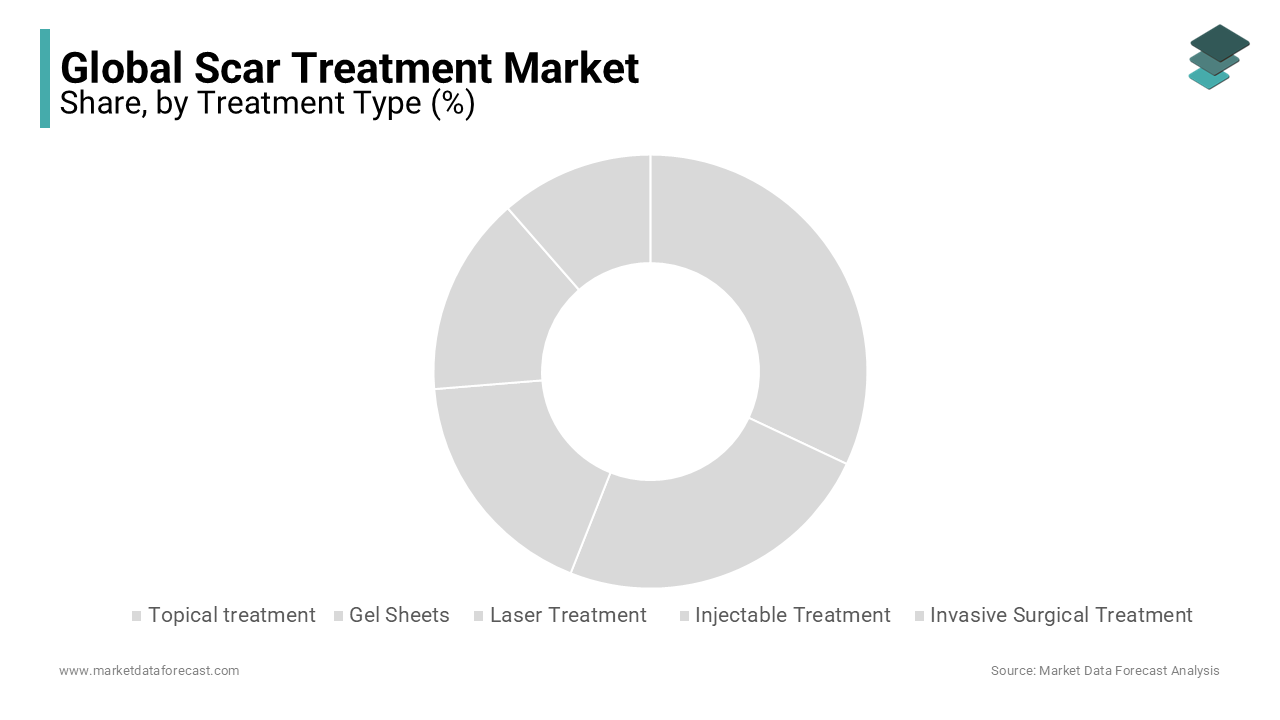
However, the laser treatment segment is the fastest-growing segment in the scar treatment market and is estimated to record a CAGR of 10.4% over the forecast period owing to the technological advancements and increasing patient preference for minimally invasive procedures. Lasers such as fractional carbon dioxide and pulsed dye lasers offer precise targeting of scar tissue, promoting collagen remodeling and improving skin texture with minimal downtime. According to the American Society for Dermatologic Surgery, laser therapies have become the preferred option for treating atrophic acne scars and surgical scars due to their superior efficacy compared to traditional methods. The primary factor fueling this growth is the rising demand for aesthetic perfection among millennials and Gen Z consumers who seek quick and effective solutions for visible imperfections. Clinical evidence supports the use of lasers for reducing scar redness and height, with studies indicating significant improvement after just three to five sessions. The integration of artificial intelligence in laser devices allows for customized treatment parameters, enhancing safety and outcomes. Additionally, the expansion of medical spas and aesthetic clinics provides greater access to these technologies outside traditional hospital settings. As costs decrease and insurance coverage for functional scar revision expands, more patients are opting for laser treatments. The ability to treat various scar types, including burn and keloid scars, further broadens the application scope, driving rapid adoption and revenue growth in this segment.
By Scar Type Insights
The post-surgical scars segment had the largest share of the European market in 2025. The dominance of post-surgical scars segment in the global market is attributed to the vast number of surgical procedures performed globally each year. Every incision carries the potential for scar formation, making post-operative care a critical component of surgical recovery. According to the Organisation for Economic Co-operation and Development, millions of surgical procedures, including cesarean sections, orthopedic surgeries, and cosmetic operations, are performed annually, creating a large base of patients requiring scar management. The primary driver for this dominance is the mandatory nature of surgical interventions for life-threatening conditions and quality-of-life improvements, which inevitably result in scarring. Hospitals and surgeons increasingly prescribe silicone sheets or gels as part of standard discharge protocols to minimize scar visibility and prevent hypertrophy. The American College of Surgeons highlights that proper wound care and early scar intervention can significantly improve patient satisfaction and psychological well-being. Additionally, the rise in elective cosmetic surgeries, such as breast augmentation and abdominoplasty, has increased awareness and willingness to invest in premium scar treatment products. Patients are educated about the importance of consistent care during the healing phase, leading to higher compliance and product usage. The predictable volume of surgical cases ensures a steady and reliable demand for scar treatment solutions specifically designed for post-operative care, solidifying this segment's market leadership.
On the other hand, the acne scars segment is estimated to register a healthy CAGR of 11.1% over the forecast period owing to the high prevalence of acne vulgaris and increasing aesthetic consciousness among young adults. Acne affects approximately 85% of individuals between the ages of 12 and 24, according to the American Academy of Dermatology, with a significant portion developing permanent scarring such as icepick, boxcar, or rolling scars. The primary factor fueling this growth is the psychological impact of facial scarring, which drives individuals to seek effective corrective treatments to restore confidence. Social media influence and the normalization of dermatological procedures have reduced stigma and encouraged early intervention. Advances in treatment modalities such as microneedling, laser resurfacing, and chemical peels offer promising results for atrophic scars, attracting a large consumer base. The availability of specialized over-the-counter products containing retinoids and alpha-hydroxy acids also contributes to market expansion by providing accessible initial care. Furthermore, the rising disposable income in emerging markets allows more individuals to afford professional dermatological services. Clinics are increasingly marketing acne scar packages combining multiple therapies for enhanced outcomes, driving revenue growth. As awareness of the long-term consequences of untreated acne increases, the demand for comprehensive scar management solutions continues to accelerate, making this segment a key area of opportunity for manufacturers and providers.
By End User Insights
The pharmacies and drug stores segment held the dominant share of the global market in 2025. The growth of the pharmacies and drug stores segment in the global market can be credited to the widespread availability of over-the-counter topical products and the trust consumers place in pharmaceutical recommendations. This channel facilitates easy access to silicone gels, sheets, and creams, which are the most commonly prescribed and purchased scar treatments. According to the National Association of Chain Drug Stores, pharmacies serve as the primary point of contact for consumers seeking self-care solutions for minor health issues, including scarring. The primary driver for this dominance is the convenience and immediacy of purchase, allowing patients to begin treatment immediately after wound closure without waiting for specialist appointments. Pharmacists play a crucial role in educating customers about proper application techniques and product selection, enhancing user confidence and adherence. Additionally, the presence of established brands in retail environments reinforces consumer loyalty and repeat purchases. The integration of beauty and wellness sections in modern pharmacies has expanded the visibility of scar care products, appealing to a broader demographic. Insurance coverage for certain prescription topical agents also drives traffic to pharmacies where claims can be processed directly. The extensive network of retail outlets ensures that scar treatment products are accessible in both urban and rural areas, supporting high-volume sales and market penetration.
However, the e-commerce segment is the fastest-growing end-user segment in the scar treatment market and is expected to exhibit a CAGR of 13.3% over the forecast period owing to the convenience of online shopping and the availability of a wide product variety. Digital platforms allow consumers to compare prices, read reviews, and access detailed product information, empowering informed purchasing decisions. According to eMarketer, global e-commerce sales in the health and beauty sector have surged as consumers increasingly prefer the privacy and comfort of buying personal care items online. The primary factor fueling this growth is the direct-to-consumer model adopted by many scar treatment brands, which offers competitive pricing and subscription services for recurring needs. Online marketplaces provide access to niche and international products that may not be available in local pharmacies, broadening consumer choice. Telemedicine integration allows patients to consult with dermatologists remotely and receive digital prescriptions for scar treatments, which can be delivered directly to their homes. Social media marketing and influencer endorsements drive traffic to e-commerce sites, creating awareness and demand for specific brands. The ability to track orders and receive automated refills enhances customer retention. As digital literacy improves and logistics networks expand, e-commerce continues to capture a larger share of the scar treatment market, particularly among younger, tech-savvy demographics.
REGIONAL ANALYSIS

REGIONAL ANALYSIS
North America Scar Treatment Market Analysis
North America held the dominant share of the global market in 2025 is poised to maintain its regional dominance over the next few years due to high healthcare spending, a heavy focus on medical innovation, high healthcare expenditure, advanced medical infrastructure, and strong consumer awareness of aesthetic treatments. The region benefits from a robust network of dermatology clinics and plastic surgery centers that offer a wide range of scar management services. According to the American Society of Plastic Surgeons, millions of reconstructive and cosmetic procedures are performed annually in the United States, generating significant demand for post-operative scar care products. The presence of major market players and innovative startups drives continuous product development and technological advancement in laser and topical therapies. Strict regulatory standards enforced by the Food and Drug Administration ensure high quality and safety of scar treatment products, fostering consumer trust. Additionally, the high prevalence of obesity and diabetes leads to increased surgical interventions and subsequent scarring, further boosting market demand. Insurance coverage for medically necessary scar revision procedures supports access to advanced treatments for a broader population. The cultural emphasis on physical appearance and youthfulness encourages individuals to invest in aesthetic improvements, driving growth in both clinical and consumer segments. With strong research and development capabilities and high disposable incomes, North America remains the dominant force in the global scar treatment market, setting trends for innovation and adoption.
Europe Scar Treatment Market Analysis
Europe occupies a significant position in the global scar treatment market due to the universal healthcare systems, stringent regulatory frameworks, and a growing focus on patient quality of life. The European Union’s Medical Device Regulation ensures high standards for scar treatment products, promoting safety and efficacy across member states. According to Eurostat, healthcare spending in Europe accounts for a substantial portion of GDP, reflecting commitment to comprehensive medical care, including reconstructive services. Countries such as Germany, France, and the United Kingdom have well-developed dermatology sectors with high utilization of laser and topical therapies for scar management. The aging population in Europe increases the incidence of surgical procedures and chronic wounds, driving demand for effective scar solutions. Additionally, the region is a leader in adopting sustainable and eco-friendly scar care products, aligning with broader environmental goals. Public awareness campaigns regarding skin health and cancer prevention have heightened interest in early scar intervention. Reimbursement policies in many European countries cover scar treatments for functional impairments, ensuring accessibility for patients. The presence of renowned research institutions fosters innovation in regenerative medicine and biologics for scar reduction. With a balanced approach to clinical excellence and patient-centric care, Europe continues to be a key market for high-quality and scientifically backed scar treatment solutions.
Asia Pacific Scar Treatment Market Analysis
Asia-Pacific is likely to remain the most rapidly growing region for scar treatments over the next few years due to massive infrastructure investment and a surging middle class. The Asia-Pacific region is the fastest-growing market for scar treatment, fueled by rising healthcare infrastructure, increasing medical tourism, and growing aesthetic consciousness. Countries such as China, India, Japan, and South Korea are witnessing significant investments in dermatology and plastic surgery facilities. According to the World Bank, healthcare expenditure in Asia has been growing rapidly as governments prioritize improving access to quality medical services. The large population base and increasing prevalence of acne and traumatic injuries create a vast addressable market for scar treatment products. In China, the booming beauty industry and social media influence drive demand for advanced laser treatments and premium topical products. India is becoming a hub for affordable cosmetic surgeries, attracting international patients who require post-operative scar care. Japan’s advanced technological landscape supports the adoption of innovative scar management devices and biologics. Additionally, the rising middle class in Southeast Asia is increasing spending on personal care and aesthetic procedures. Government initiatives to improve burn care and trauma management further support market growth. With a young demographic and increasing disposable incomes, the Asia-Pacific region presents immense opportunities for scar treatment manufacturers seeking expansion in both clinical and consumer segments.
Latin America Scar Treatment Market Analysis
Latin America is anticipated to experience gradual expansion in its scar treatment market over the next few years as aesthetic procedures become more standardized in private clinics. Latin America represents an emerging segment in the scar treatment market with gradual growth driven by increasing aesthetic procedures and improving healthcare access. Brazil, Mexico, and Argentina are the largest markets in the region, known for their high rates of cosmetic surgeries such as liposuction and breast augmentation. According to the International Society of Aesthetic Plastic Surgery, Latin America consistently ranks among the top regions for per-capita cosmetic procedures, creating sustained demand for post-surgical scar management. The cultural emphasis on physical appearance drives individuals to invest in high-quality scar treatment products and laser therapies. Private healthcare providers are expanding their offerings to include advanced dermatological services catering to a growing middle class. However, economic volatility and currency fluctuations pose challenges for import-dependent markets, affecting the affordability of premium products. Local manufacturing of basic topical agents helps mitigate costs, but advanced technologies remain largely imported. Increasing awareness of skin health and scar prevention through digital media is encouraging earlier intervention. As healthcare infrastructure improves and economic stability returns, Latin America offers promising growth potential for scar treatment providers who can offer cost-effective and accessible solutions tailored to the regional aesthetic preferences.
Middle East and Africa Scar Treatment Market Analysis
The Middle East and Africa are expected to see a rise in demand for high-end scar treatment services over the next few years as medical tourism and wellness infrastructure expand. The Middle East and Africa region presents diverse opportunities in the scar treatment market, driven by high spending on aesthetic procedures in the Gulf states and increasing healthcare development in Africa. Countries in the Gulf Cooperation Council, such as Saudi Arabia and the United Arab Emirates, have a strong culture of beauty and wellness, driving demand for premium scar treatment products and laser therapies. According to the World Health Organization, improvements in trauma care and surgical accessibility are creating a larger need for post-procedural scar management. The region's investment in advanced medical centers of excellence is attracting patients seeking sophisticated dermatological treatments. While some markets in Africa remain focused on addressing basic wound care needs, there is a clear trend toward integrating scar management solutions as healthcare standards rise. The extreme climate in many parts of this region also necessitates specialized skincare and scar protection, further driving the topical treatment segment. As economic diversification continues and the focus on healthcare quality increases, the Middle East and Africa are positioned for a steady increase in both demand and awareness for effective scar treatment solutions.
COMPETITIVE LANDSCAPE
The competition in the scar treatment market is intense and characterized by the presence of established pharmaceutical companies specialized medical device manufacturers and emerging biotech firms who vie for dominance through innovation and brand recognition. Major competitors leverage their extensive clinical data and regulatory approvals to offer credible and effective solutions for various scar types. The market sees frequent collaborations between device manufacturers and dermatology clinics to promote integrated treatment approaches combining lasers and topical agents. Price competition is significant particularly in the over the counter segment where numerous brands offer similar silicone based products. However differentiation through superior formulation ease of use and clinical proof helps premium suppliers maintain higher margins. The rise of minimally invasive procedures has intensified competition as companies race to provide complementary products that enhance post procedural outcomes. Regulatory compliance across different regions adds complexity requiring companies to maintain robust quality assurance systems. Supply chain resilience for raw materials such as medical grade silicone has become a key competitive advantage. Companies that successfully balance scientific credibility with consumer accessibility and strong clinical support are best positioned to thrive in this dynamic and growing market sector.
KEY MARKET PLAYERS
Some of the companies that are playing a dominating role in the Global Scar Treatment Market include
- Oculus Innovative Sciences Inc.
- Smith & Nephew PLC
- Nutramarks Inc.
- Merz Inc.
- Enaltus LLC
- CCA Industries Inc.
- Cynosure Inc.
- Lumenis
- Syneron Medical Ltd
- Mölnlycke Health Care
- Avita Medical Limited
- Pacific World Corporation
- Shanghai Fosun Pharmaceuticals Ltd
- Valeant Pharmaceuticals International Inc.
- Beijing Toplaser Technology Company Limited
Top Players in the Global Scar Treatment Market
Merz Pharma GmbH and Co KGaA
Merz Pharma is a leading global specialist in aesthetics and regenerative medicine with a strong portfolio of scar treatment solutions. The company offers advanced injectable treatments and topical products designed to improve skin texture and reduce scar visibility. Merz strengthens its market position through strategic acquisitions and partnerships that expand its dermatological capabilities. Recent actions include investing in research and development for novel biologics and energy based devices that target fibrotic tissue. The company focuses on educating healthcare professionals about comprehensive scar management protocols to enhance clinical outcomes. By leveraging its global distribution network and scientific expertise Merz delivers innovative solutions that address both functional and aesthetic concerns. Its commitment to quality and patient safety ensures that Merz remains a trusted partner for clinicians seeking effective scar revision therapies worldwide.
Smith and Nephew plc
Smith and Nephew is a prominent player in the scar treatment market known for its advanced wound care and silicone based scar management products. The company provides a wide range of silicone gel sheets and dressings that are clinically proven to prevent and treat hypertrophic and keloid scars. Smith and Nephew strengthens its position by integrating digital health tools that monitor wound healing progress and optimize treatment adherence. Recent initiatives include expanding its product line with breathable and discreet silicone technologies that improve patient comfort and compliance. The company collaborates with healthcare providers to develop evidence based guidelines for scar prevention and management. By focusing on innovation and clinical efficacy Smith and Nephew delivers reliable solutions that support optimal healing outcomes. Its strong brand reputation and global presence ensure that it remains a key contributor to the advancement of scar care standards in hospitals and home settings.
Johnson and Johnson Services Inc
Johnson and Johnson is a major contributor to the scar treatment market through its consumer health and medical device divisions. The company offers well known over the counter scar reduction products including silicone gels and sheets under established brands. Johnson and Johnson strengthens its market position by leveraging its extensive retail distribution channels and marketing expertise to reach a broad consumer base. Recent actions include launching new formulations with enhanced absorption and ease of use to meet evolving consumer preferences. The company invests in clinical studies to validate the effectiveness of its products and build consumer trust. Additionally Johnson and Johnson collaborates with dermatologists to promote early intervention strategies for scar management. By combining scientific rigor with accessible consumer products Johnson and Johnson empowers individuals to take control of their scar care journey. Its commitment to innovation and quality ensures continued leadership in providing effective and affordable scar treatment solutions globally.
Top Strategies Used by Key Market Participants
Key players in the scar treatment market employ several strategic approaches to maintain competitiveness and drive growth. Product innovation is a primary strategy where companies develop advanced silicone technologies and biologic therapies to improve efficacy and patient comfort. Strategic partnerships with healthcare providers and research institutions allow firms to co develop evidence based treatment protocols and expand clinical validation. Geographic expansion is another critical approach enabling companies to enter emerging markets with growing demand for aesthetic and reconstructive care. Additionally companies focus on digital engagement by offering online consultation platforms and educational resources to enhance patient awareness and adherence. Sustainability initiatives are increasingly important as manufacturers adopt eco friendly packaging and materials to align with environmental goals. These strategies collectively help market participants adapt to changing consumer preferences and regulatory requirements while delivering value to customers.
RECENT MARKET HAPPENINGS
- In 2021, SkinCeuticals launched a new gel solution, the latest innovation of Advanced Scar Control. This is designed to help improve the appearance of new and recent scars. It also helps improve the appearance and texture of minor cuts, shaving mishaps, post-op surgery scars, scrapes, and scars.
- In 2021, Pharmaxis started clinical trials to manufacture a cream that can stop scars from forming after trauma, especially for burn injuries.
- In December 2020, Sonoma Pharmaceuticals agreed with Crown Laboratories, Inc. to launch Microcyn technology-based dermal sprays and gels that target itch and pain under Sama.
- In June 2020, Bausch Health Companies Inc. launched an ARAZLO™ (tazarotene) Lotion, approved by U.S. Food and Drug Administration. It is the first tazarotene acne treatment available in a lotion formulation.
- In 2019, Dermatix® launched its new acne scar care, Dermatix® Acne Scar. It helps in the acne-healing process.
MARKET SEGMENTATION
This research report on the global scar treatment market has been segmented and sub-segmented into the following categories.
By Treatment Type
- Topical treatment
- Creams
- Oils
- Gels
- Gel Sheets
- Surface Treatment
- Dermabrasion
- Chemical Peeling
- Cryosurgery
- Laser Treatment
- Injectable Treatment
- Tissue Fillers
- Steroid Injections
- Invasive Surgical Treatment
By Scar Type
- Keloid and Hypertrophic Scars
- Contracture Scars
- Acne Scars
- Stretch Scars
- Post-Surgical Scars
By End User
- Hospitals
- Private Clinics
- Pharmacies & Drug Stores
- E-Commerce
By Region
- North America
- Europe
- Asia Pacific
- Latin America
- Middle East and Africa