- Product Description Description
- Table of Contents TOC
- List of Table & Figure LOT
- Get Free Sample PDF Sample PDF
Market Size, 2025
$1.97 BnMarket Estimate, 2026
$2.15 BnMarket Forecast, 2034
$4.24 BnCAGR, 2026–2034
8.9%Executive Summary: Global Seed Coating Market
- Market Scope: Comprehensive global evaluation of the seed coating industry, encompassing additive types, active ingredients, coating processes, crop applications, and regional market landscapes.
- Market Valuation: Valued at USD 1.97 billion in 2025, reaching USD 2.15 billion in 2026, and projected to expand to USD 4.24 billion by 2034, registering a strong CAGR of 8.9% (2026–2034).
- Primary Growth Drivers: Rising demand for high-quality, high-yield seeds; enhanced protection against pests, soil-borne diseases, and seed infections; widespread adoption of hybrid and genetically advanced crops; and government support for sustainable agricultural modernization. Market restraints include stringent regulatory frameworks on chemical-based coatings, environmental compliance, and rising raw material costs.
Key Market Segment Metrics (2026–2034)
| Category | Leading Segment (Base Position) | Fastest-Growing Segment |
|---|---|---|
| By Additive | Polymers (held the largest share due to superior nutritional enhancement, fluidity, and visual appeal) | Biodegradable Polymers & Colorants (scaling rapidly under strict environmental mandates) |
| By Active Ingredient | Protectants (dominated through essential fungicidal, bactericidal, and insecticidal seed defenses) | Phytoactive Promoters (driven by precision growth regulation needs) |
| By Crop Type | Cereals & Grains (captured a major portion anchored by large-scale staple food production) | Oilseeds & Pulses (growing steadily due to rising food and feed industry processing demands) |
| By Region | North America (maintains leadership backed by advanced agricultural infrastructure and trade support systems) | Asia-Pacific (projected to record high growth velocity supported by agritech adoption in China, India, and Australia) |
Major Market Players & Market Structure
Market Structure: Highly competitive landscape featuring global life-science leaders, chemical manufacturing corporations, and specialized agricultural technology providers focusing on eco-friendly seed treatment innovations.
Key Companies: BASF SE, Bayer, Clariant AG, Croda International PLC, Sensient Technologies, BrettYoung Seeds Limited, Precision Laboratories LLC, Germain Seed Technology, Inc., and Centor Oceania.
 Download Free Sample Report
Global Seed Coating Market Size
The global seed coating market was valued at USD 1.97 billion in 2025 and is anticipated to reach USD 2.15 billion in 2026 from USD 4.24 billion by 2034, growing at a CAGR of 8.9% during the forecast period from 2026 to 2034.
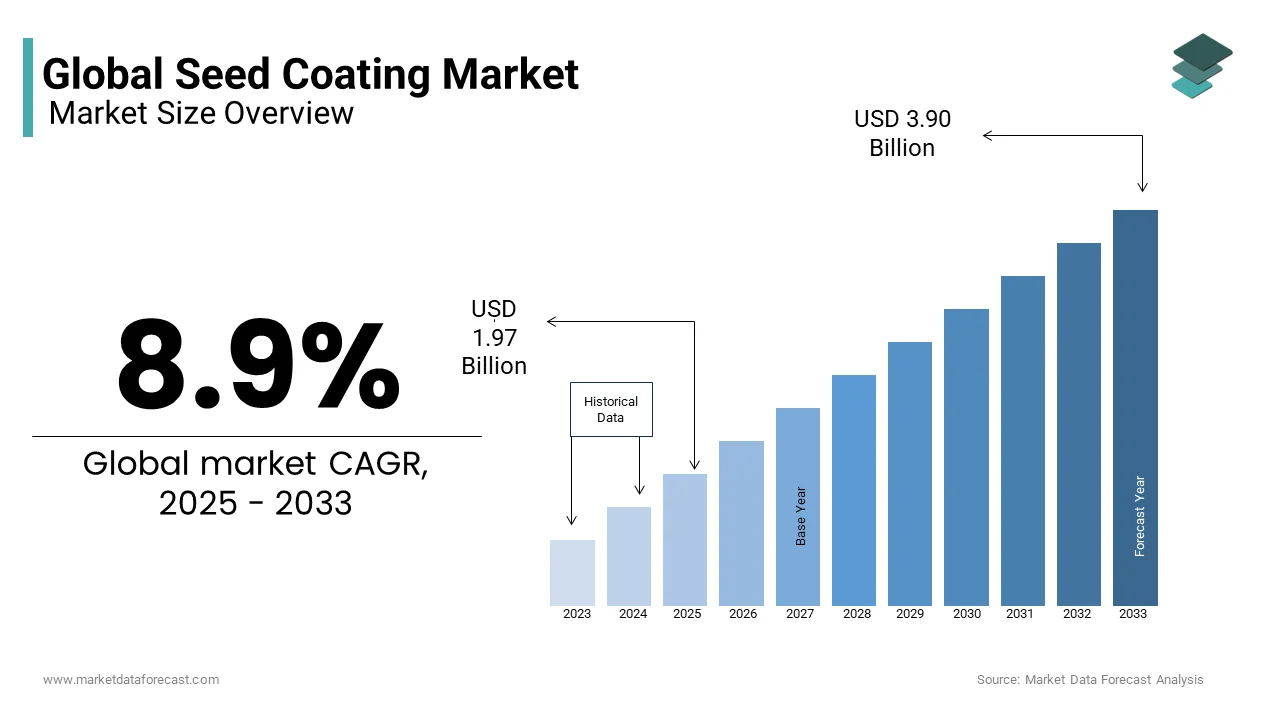
Increasing demand for quality seed, greater protection against pests and diseases, easy handling, and fluidity in seeders are the key factors expected to drive this market growth.
Seed coating is called seed treatment, a process in which the seed comes into direct contact with chemicals and expels fertilizers and plant protection products to improve the efficiency of the seed. Seed coating is a process in which seeds are directly coated with various materials such as fertilizers, repellants, crop protection chemicals, plant growth regulators, and the like, providing both aesthetic and environmental benefits. With increasing investments in agriculture, the use of modern technologies and the awareness of farmers about the use of genetically modified seeds and hybrid seeds are increasing.
MARKET TRENDS
The world market for seed coatings is developing strongly. The market is experiencing strong adoption, seed treatment, and brand differentiation at unprecedented levels. Therefore, the market is expected to continue its strong growth during the forecast period. The global market for seed coating materials is expected to be specialized in North America and Europe. Currently, these two regions are the main contributors to the global market for seed coating materials. As a result, competition in the sector is likely to become fiercer, and more mergers are expected.
MARKET DRIVERS
Increased support from various government and environmental agencies for agricultural development in emerging countries is supposed to boost the market during the forecast period. The seed coating market is driven by agriculture, rapidly and profitably supplying crops. It also leads to a rapid multiplication of various crops. In addition, the seed coating material provides a high yield and a wide range of agricultural products, minimizes the sowing rate, and more. Due to these various advantages, the seed coating market is foreseen to register healthy growth during the forecast period. The market is driven by the adoption of genetically advanced crops, the further introduction of hybrid varieties, the injection of modern agricultural knowledge into traditional communities, etc. A better understanding of the potential commercial potential of seeds is also prompting farmers and suppliers to value coating materials.
Strict rules regarding the practice of seed coating act as a means to hinder this business growth.
MARKET OPPORTUNITIES
In addition to supporting innovative agricultural methods, sustainable agriculture is also promoted in several developing countries. Emerging countries offer alternatives through sustainable agriculture, as well as low-capital investment opportunities. This growth is particularly observed in developing regions, where agriculture is the main contributor to the overall economy.
MARKET CHALLENGES
Seed infections and environmental change are just a few of the challenges faced by farmers that could reduce crop yields during the outlook period. Seed diseases and a volatile environment are some of the main challenges faced by farmers that reduce crop yields.
REPORT COVERAGE
| REPORT METRIC | DETAILS |
| Market Size Available | 2025 to 2034 |
| Base Year | 2025 |
| Forecast Period | 2026 to 2034 |
| CAGR | 8.9% |
| Segments Covered | By Additives, Process, Active Ingredients, Crop Type, and Region |
| Various Analyses Covered | Global, Regional & Country Level Analysis, Segment-Level Analysis, DROC, PESTLE Analysis, Porter’s Five Forces Analysis, Competitive Landscape, Analyst Overview of Investment Opportunities |
| Regions Covered | North America, Europe, APAC, Latin America, Middle East & Africa |
| Market Leaders Profiled | BASF SE (Germany), Bayer (Germany), Clariant AG (Switzerland), Croda International PLC (UK), Sensient Technologies (US), BrettYoung Seeds Limited (Canada), Precision Laboratories LLC (US), Germain Seed Technology, Inc (US), and Centor Oceania (Australia). |
SEGMENTAL ANALYSIS
By Additives Insights
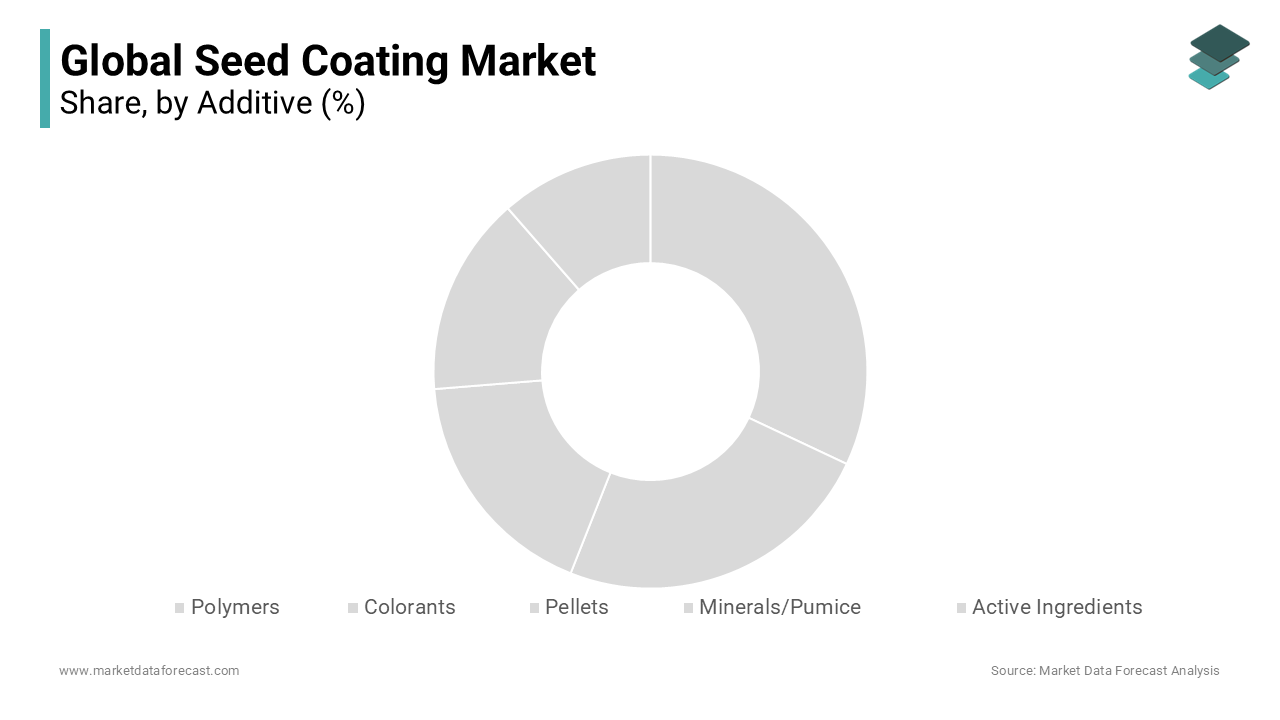
The polymers segment represented the largest market share, followed by the granules and colorants segments. Polymers are widely used due to their functional qualities of enhancing the nutritional value of seeds and their appearance.
By Active Ingredient Insights
The increasing incidence of soil-borne pests and diseases is one of the main factors expected to drive the growth of the protectants market.
By Crop Insights
The grain and cereals segment is also expected to be the fastest-growing crop type on the world market. The trend to use coated seeds is increasing on a large scale in areas with extensive production and cultivation of grains, oilseeds, legumes, and vegetables.
REGIONAL ANALYSIS
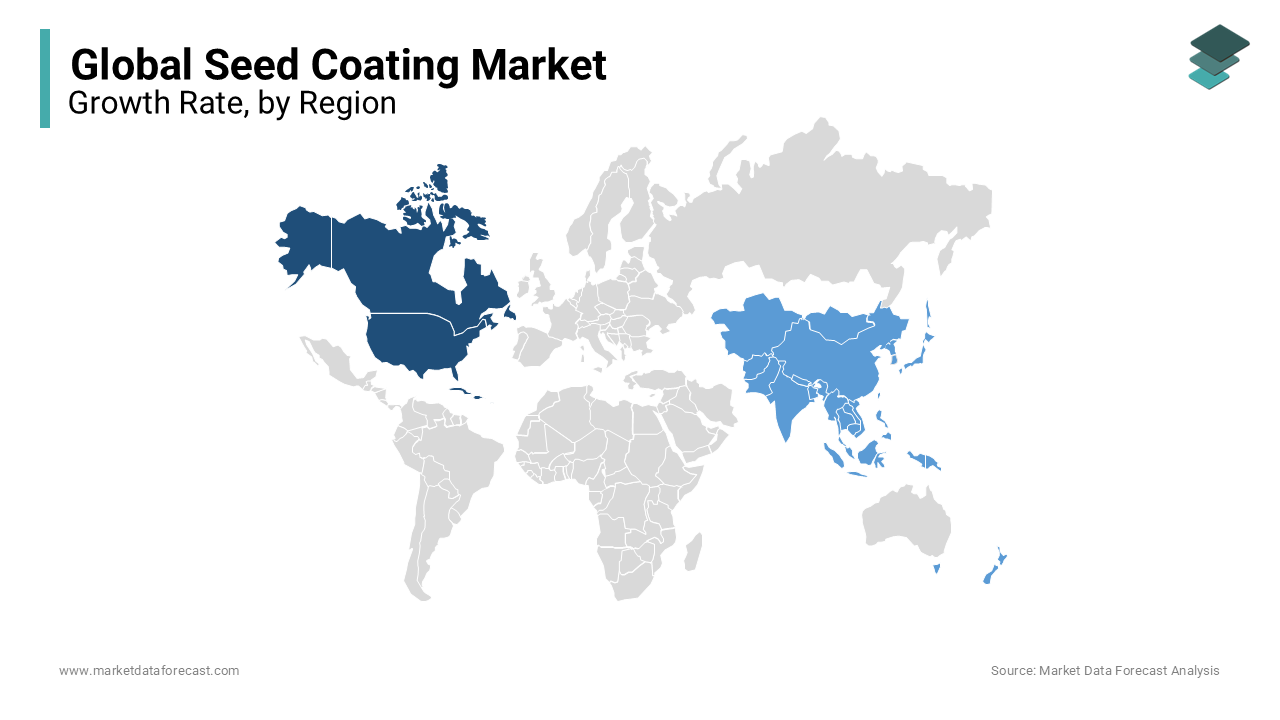
The North American and European regions are experiencing growing demand for cereals, oilseeds, and legumes that are used primarily in the food and feed industries. Favorable prices and trade support systems encouraged the import and export of grains and oilseeds to the United States. The employment of seed coatings is known to be a hedging technique and can be seen as safe funding that has resulted in escalated sales of coated seeds in the North American industry. The main manufacturers of food processing industries for grains, oilseeds, and legumes are focused on meeting consumer demand, which is shifting towards the consumption of health-enriching food products in the North America region. However, European countries are experiencing high demand for biodegradable seed coatings due to European Union (EU) regulations on chemical-based seed coatings, resulting in the accumulation of degradable residues in soil.
The stringent rules of coatings and the rise in the price of raw materials are factors that incentivize makers to decrease production costs, impacting the final cost of seed coating materials in the industry. North America is supposed to maintain its dominant position in the world market. The North American seed coating materials market is expected to have the largest market share between 2021 and 2026, followed by Europe. Increased demand for ready-to-eat foods and soft drinks, and the growing influx of healthy products, are likely to boost these regional markets. The Asia-Pacific seed coating market is foreseen to record the fastest growth in 2022 - 2027. Increased disposable income, changes in lifestyles, as well as rising expectations of living standards, and growing awareness of modern technologies are estimated to drive the market. The seed coating materials market in South America is also expected to make significant gains, driven by increased innovations in Brazil.
COMPETITIVE LANDSCAPE
KEY MARKET PLAYERS
Some of the key players identified in the global seed coating market include
- BASF SE (Germany)
- Bayer (Germany)
- Clariant AG (Switzerland)
- Croda International PLC (UK)
- Sensient Technologies (US) BrettYoung Seeds Limited (Canada)
- Precision Laboratories LLC (US)
- Germain Seed Technology, Inc (US)
- Centor Oceania (Australia).
RECENT MARKET NEWS
- Precision Laboratories launches a new seed coating polymer. The new seed-coating polymer improves seed uniformity and treatment distribution. The minimal dust removal feature provides increased safety for the operator and the environment, as well as process efficiency.
- BASF launched a new fungicidal seed treatment for Australian canola growers to control blackleg. Results from trials conducted over five consecutive years show that ILeVO offers more effective protection against black leg, with significantly better management of early leaf infections, less plant lodging, and internal stem infections compared to the current industry standard product.
MARKET SEGMENTATION
This research report on the global seed coating market is segmented and sub-segmented based on the Additives, Processes, Active Ingredients, Crop Type, and Region.
By Additive
- Polymers
- Colorants
- Pellets
- Minerals/Pumice
- Active Ingredients
By Process
- Film Coating
- Encrusting
- Pelleting
By Active Ingredient
- Protectant
- Phytoactive Promoters
By Crop Type
- Cereals & Grains
- Oilseeds & Pulses
- Vegetables
- Flowers & Ornamentals
By Region
- North America
- Europe
- Asia Pacific
- Latin America
- Middle East And Africa