- Product Description Description
- Table of Contents TOC
- List of Table & Figure LOT
- Get Free Sample PDF Sample PDF
Market Size, 2025
$113.1 BnMarket Estimate, 2026
$123.4 BnMarket Forecast, 2034
$241.6 BnCAGR, 2026–2034
8.8%Global Self-Administered Drugs Market Size
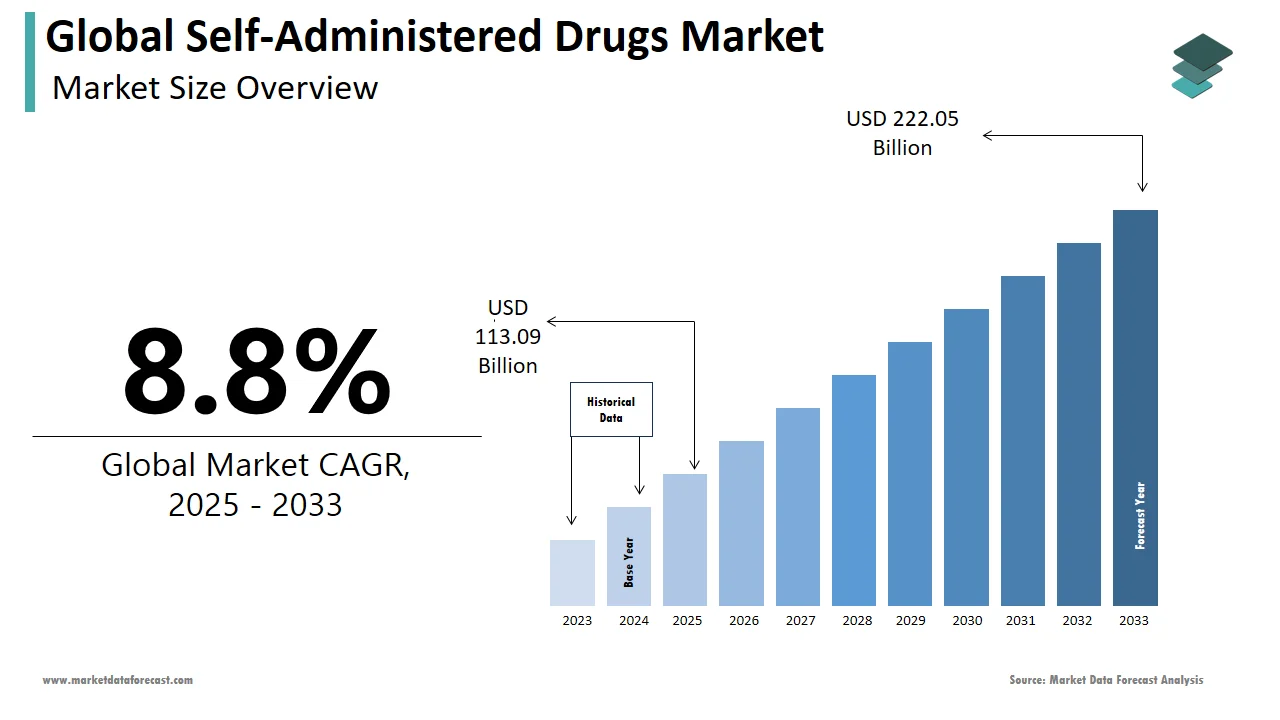
The size of the global self-administered drugs market was worth USD 113.09 billion in 2025. The global market is anticipated to grow at a CAGR of 8.8% from 2026 to 2034 and be worth USD 241.59 billion by 2034 from USD 123.4 billion in 2026.
MARKET DRIVERS
The growing incidences of chronic diseases and diabetes and rising demand to provide convenience for users by delivering effective drugs and devices primarily drive the growth of the global self-administered drugs market.
The increase in people who come for treatment and don’t stay overnight and their medical services are regarded to boost the global self-administered drugs market growth. Growing incidences of persisting for a long time or continuously recurring diseases drive the market growth majorly. The rise in demand for preceding something without difficulty for the users by delivering effective drugs and devices supports the market growth. People who are looking at repetitive medical treatment in hospitals decide to administer drugs by themselves to curb expenses, which will offer tremendous growth opportunities for the manufacturers to prepare such drugs during the forecast period. Increasing support from the government in investments and ensuring quality products, even in rural areas at lower costs, merely leverage growth opportunities for the market. People's interest in self-medication globally is also fuelling the growth of the Global Self-Administered Drugs Market.
MARKET RESTRAINTS
The lack of proper awareness of self-medication among many people is slowly restricting the self-administered drug market.
Frequent changes in economic strategies are negatively impacting the growth of the self-administered drugs market. Significantly less or no amount to be repaid when it is spent or lost for self-administered drugs and the rise in the number of cases having side effects caused by not administering a controllable dose of drugs restrain the market growth. A strict person who takes care of a child or elder who is paid or a family member can consider safety, which may also hinder growth. Also, side effects due to not taking medicines properly or dying to high doses and leakage of raw materials in the implant of blood are factors that restrain the market growth. Challenges such as an increase in discussion aimed at reaching an agreement and power and being important on high products at low cost are forcing significant changes in the self-administered drug supply chain.
REPORT COVERAGE
| REPORT METRIC | DETAILS |
| Market Size Available | 2025 to 2034 |
| Base Year | 2025 |
| Forecast Period | 2026 to 2034 |
| Segments Covered | By Product Type, Application, and Region. |
| Various Analyses Covered | Global, Regional, and Country-Level Analysis, Segment-Level Analysis, Drivers, Restraints, Opportunities, Challenges; PESTLE Analysis; Porter’s Five Forces Analysis, Competitive Landscape, Analyst Overview of Investment Opportunities |
| Regions Covered | North America, Europe, Asia Pacific, Latin America, Middle East & Africa |
| Market Leaders Profiled | Abbott Laboratories, Bristol-Myers Squibb, Gilead Sciences, Novartis AG, Eli Lilly Company., and Others. |
SEGMENTAL ANALYSIS
By Product Type Insights
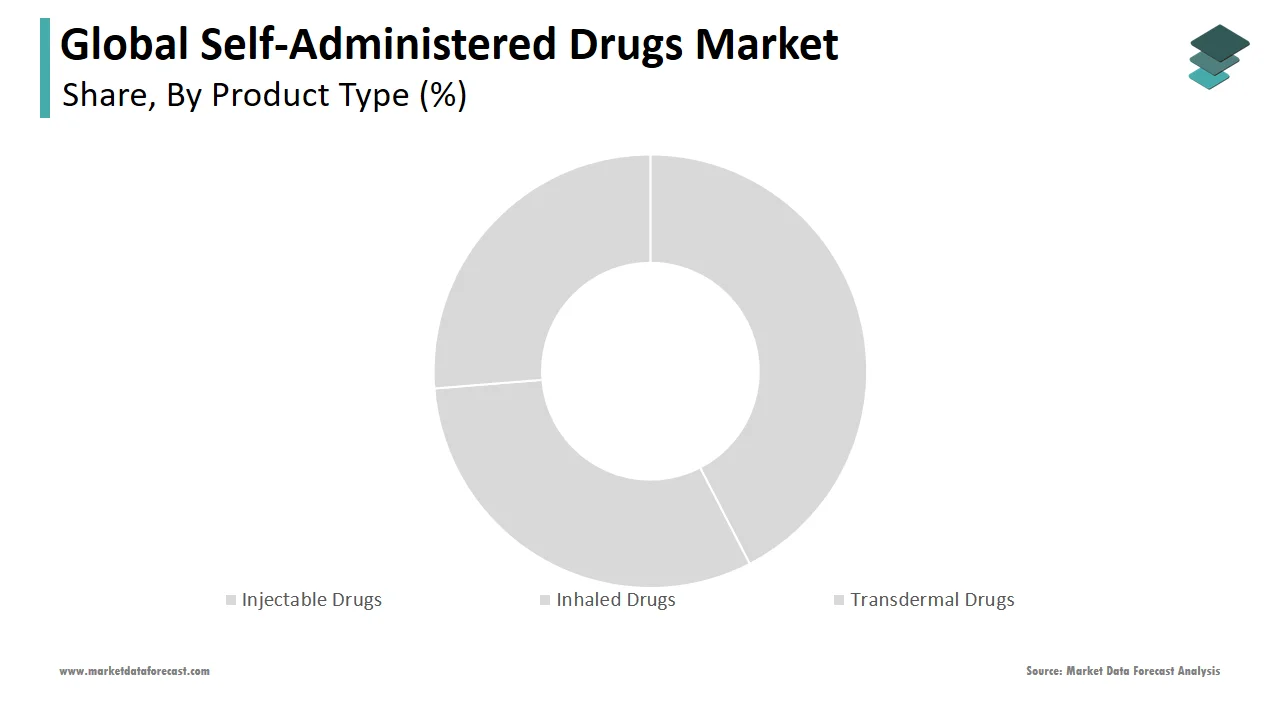
The injectable segment is expected to dominate the self-administered drugs market growth globally based on product type analysis. A growing number of diabetic patients owes to lifestyle changes, and the increasing stress of cost containment among the patients will augment the necessity for self-administering injectable drugs globally. The stimulating patient tendency for drug delivery at homes with great comfort is driving the injectable market. Growing demand for self-injection devices, a common increase in chronic diseases, maximizing patient compliance and decreasing the frequency of dosage administration.Inhaled drugs are the next product analysis of injectable drugs due to the growing number of chronic diseases in the segment globally. Growing innovations in technology are likely to influence market growth in the region.
By Application Insights
Based on the application analysis, the cardiovascular segment is leading the self-administered drugs in the market. Factors like stimulating demand for minimally invasive surgical procedures and a rise in the number of cardiac-related problems propel the market's growth rate. Cardiovascular is forecasted due to lifestyle changes and obesity with a quick growth rate in the upcoming years.Osteoporosis is predicted to boost the market after cardiovascular due to increasing ubiquity in women leading to the quick acquisition of self-administered osteoporosis drugs. Two hundred million people have osteoporosis across the globe, according to the International Osteoporosis Foundation. Teriparatide is an efficient drug for osteoporosis and can be self-injected, and the growing focus of pharma companies on developing new drugs and stimulating the risk of bone disorders is expanding the segment growth globally.
REGIONAL ANALYSIS
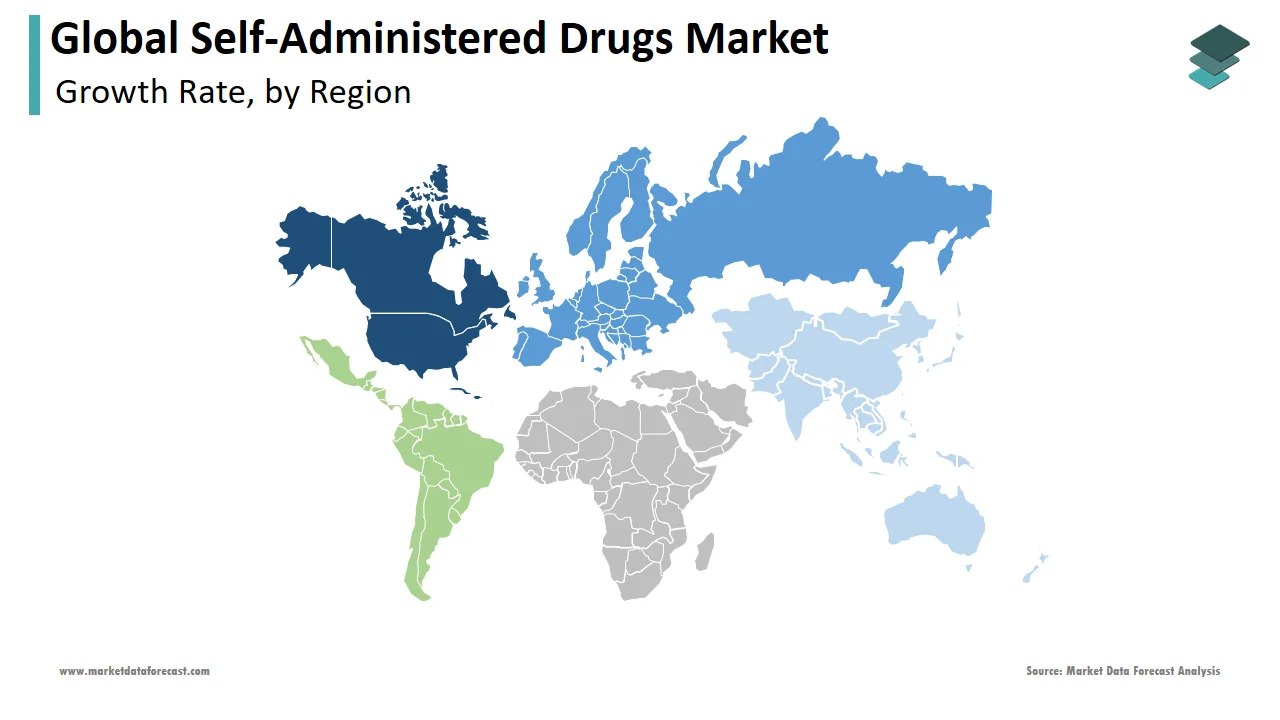
North America is ruling the self-administered drugs market and is expected to hold the market's largest share during the forecast period. The region is driven by a moving patient population from low to high-income countries. The U.S is accounted to hold a considerable share in terms of revenue during the analysis period. Rising cancer, bone disorders, diabetes, and other illnesses produce a strong necessity for the self-administered drug market. Canada is witness to promising growth over the period.
Europe is accounted to have the second-largest leading market after North America over the period. A substantial patient population with diabetes is anticipated to surge the demand for self-administered drugs driving the market.
The self-administered drugs market in Asia-Pacific is projected to have the quickest growth and significant growth rate over the analysis period. Common increases in chronic diseases, particularly in older adults, and lifestyle changes in people motivate them to choose outpatient services. Government insurance organizations are accelerating the growth in the market during the analysis period.
The market in self-administered drugs in Latin America and the Middle East & Africa regions is anticipated to grow considerably. Due to growth in the market perception of the key participants in these regions, the availability of products and drugs propels market growth. Latin American countries are experiencing rapid growth and tend to escalate chronic diseases involving diabetes and osteoporosis.
KEY MARKET PARTICIPANTS
Some of the key market participants leading the global self-administered drugs market profiled in the report are
- Abbott Laboratories
- Bristol-Myers Squibb
- Gilead Sciences
- Novartis AG
- Eli Lilly Company
GLOBAL SELF-ADMINISTERED DRUGS MARKET NEWS
- On February 19, 2020, Abbott picked up Key Approval for ICD Technology. Abbott Laboratories won the CE mark for their new Gallant Implantable cardioverter-defibrillator (ICD) and CRT-D devices.
- On February 4, 2020, Bristol-Myers Squibb and another drug development BioMotiv launched Anteros Pharmaceutical company, a biotech company focusing on drug development of connective tissue and other inflammatory diseases.
- On January 28, 2020, Eli Lilly Donated Insulin KwikPens to Support Free Clinics in the U.S. The Indianapolis-based company has announced that the Kwikpen donations will support the people with lower-income living with diabetes who qualify for free clinic services.
- On January 27, 2020, Eli Lilly & Co. (LLY) announced FDA approval for a triple-combination tablet with Jardiance for adults with type 2 diabetes. The U.S FDA has approved Trijardy XR to lower the blood sugar levels in adults with type-2 diabetes and diet and exercise.
- On January 31, 2020, Eli Lilly launched its new pill for migraine victims.
MARKET SEGMENTATION
This research report on the global self-administered drugs market has been segmented and sub-segmented based on the product, application, and region.
By Product Type
- Injectable Drugs
- Inhaled Drugs
- Transdermal Drugs
By Application
- Cardiovascular
- Diabetes
- Osteoporosis
- Pain Management
- Hormone Replacement
- Others
By Region
- North America
- Europe
- Asia Pacific
- Latin America
- The Middle East and Africa