- Product Description Description
- Table of Contents TOC
- List of Table & Figure LOT
- Get Free Sample PDF Sample PDF
Market Size, 2025
$2.61 BnMarket Estimate, 2026
$3.09 BnMarket Forecast, 2034
$11.81 BnCAGR, 2026–2034
18.26%Global Smart Textiles Market Summary
The global smart textiles market was valued at USD 2.61 billion in 2025, is anticipated to reach USD 3.09 billion in 2026, and is projected to expand significantly to USD 11.81 billion by 2034, growing at a CAGR of 18.26% from 2026 to 2034. The growth of the global smart textiles market is attributed to increasing adoption of wearable technology, rising demand in healthcare monitoring applications, growing use in defense and military textiles, and expanding applications in sports, fashion, and automotive industries.
Key Market Trends
- Rising integration of IoT-enabled wearables and e-textiles for real-time monitoring.
- Strong adoption of smart textiles in healthcare for patient tracking and chronic disease management.
- Increasing use in military and defense applications for soldier performance and safety monitoring.
- Growing popularity of sports and fitness wearables powered by smart textile innovations.
- Expanding development of conductive fibers and nanotechnology for enhanced fabric performance.
Segmental Insights
- Based on type, the wearable smart textiles segment dominated the market in 2025, reflecting their broad adoption across healthcare, sports, and lifestyle applications.
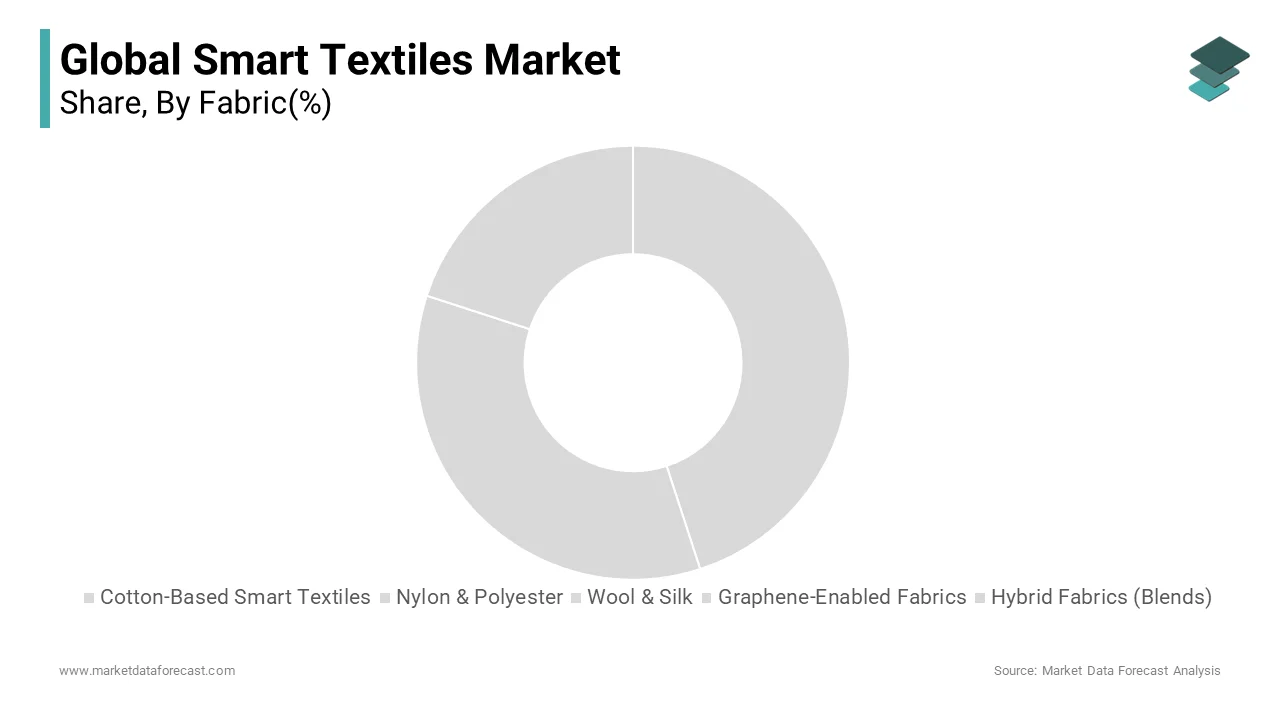
- Based on fabric, the nylon and polyester-based smart textiles segment led the market with 52.7% share in 2025, driven by durability, flexibility, and cost-effectiveness.
- Based on application, the sensing segment held the largest market share in 2025, highlighting the demand for real-time physiological monitoring and environmental sensing.
Regional Insights
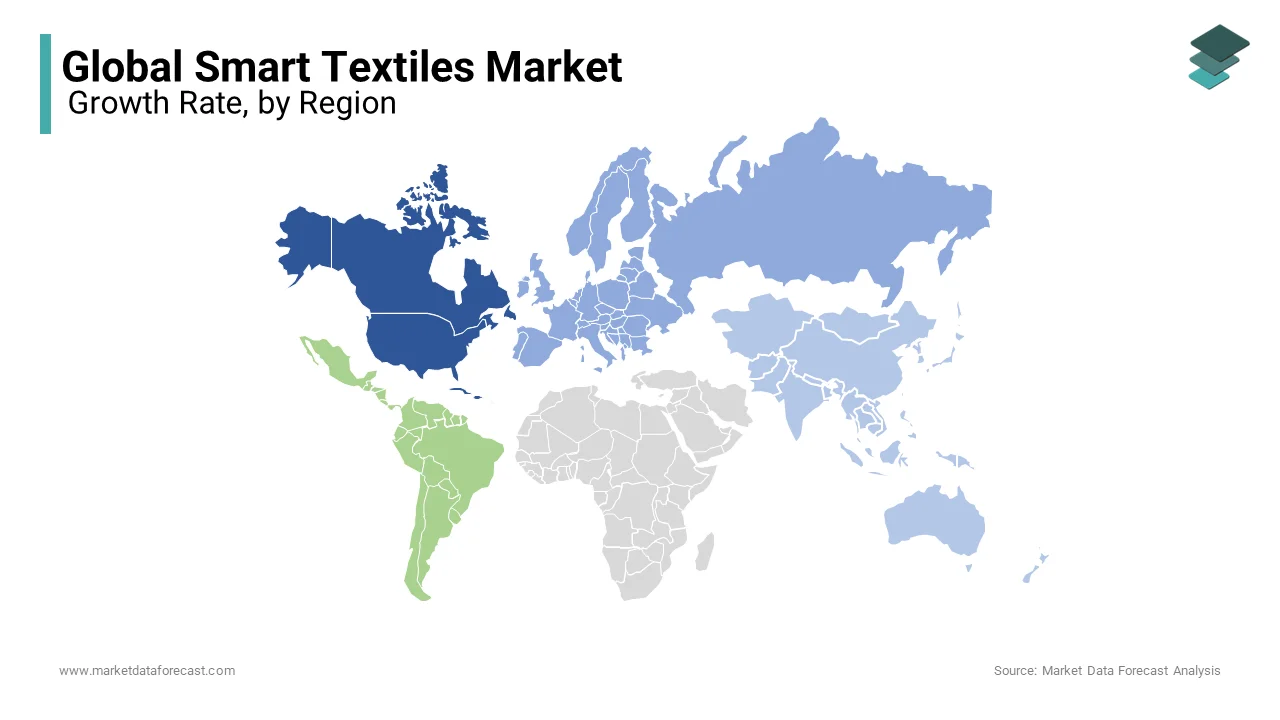
- North America was the top-performing region in the global smart textiles market, accounting for 35.1% share in 2025, driven by advanced healthcare systems, strong adoption of wearable technology, and investments in defense applications.
- Europe maintains a strong position with innovation in sportswear and military-grade textiles.
- Asia-Pacific is expected to witness the fastest growth, fueled by industrialization, rising consumer demand, and adoption of connected wearables.
- Latin America is experiencing growing adoption in healthcare and sports applications.
- Middle East & Africa are gradually emerging with applications in defense and smart infrastructure.
Competitive Landscape
Key players in the global smart textiles market include DuPont (U.S.), Jabil Inc. (U.S.), Gentherm (U.S.), AiQ Smart Clothing (Taiwan), Sensoria (U.S.), Alphabet (U.S.), Interactive Wear (Germany), Outlast Technologies GmbH (Germany), Adidas (Germany), and Hexoskin (Canada). These companies are focusing on product innovation, partnerships in healthcare and defense, and advancements in fabric technologies to strengthen their market presence.
 Download Free Sample Report
Global Smart Textiles Market Size
The global textiles market size was valued at USD 2.61 billion in 2025 and is anticipated to reach a valuation of USD 3.09 billion in 2026 and USD 11.81 billion by 2034, growing at a CAGR of 18.26%, from 2026 to 2034.
Smart textiles are advanced fabric systems engineered with embedded electronics, sensors, or responsive materials that enable dynamic interaction with environmental or physiological stimuli. These textiles can monitor vital signs, regulate temperature, detect movement, or even generate energy, transforming garments into functional interfaces for health, safety, and performance enhancement. They are increasingly deployed in medical wearables, athletic apparel, military gear, and industrial workwear, where real-time data collection and adaptive responses are important. According to the study, millions of people globally suffer from diabetes, creating a growing need for non-invasive glucose monitoring through wearable textiles. As per the study, occupational heat stress contributes to numerous cases of illness annually in the United States, prompting demand for thermoregulating fabrics in protective clothing. These functional imperatives, rather than aesthetic or comfort-driven needs, are redefining textile innovation, which positions smart fabrics as essential components in healthcare, defense, and human-machine integration.
MARKET DRIVERS
Rising Demand for Remote Health Monitoring and Chronic Disease Management
The escalating global burden of chronic diseases is propelling the growth of the smart textiles market. With cardiovascular diseases responsible for millions of deaths annually, as per the study, continuous physiological monitoring has become essential for early intervention and preventive care. Smart garments embedded with electrocardiogram (ECG) sensors, respiratory rate detectors, and motion trackers enable real-time patient surveillance outside clinical settings. According to research, a portion of adults in the United States live with at least one chronic condition, fueling demand for non-invasive, wearable diagnostics. Companies have developed textile-based ECG vests that achieve clinical-grade accuracy. Apart from these, post-pandemic telehealth expansion has institutionalized remote monitoring, which makes smart textiles an important enabler of scalable, cost-effective care delivery.
Advancements in Military and First Responder Protective Gear
The integration of smart textiles into defense and emergency response equipment is accelerating due to the need for enhanced situational awareness and personnel safety, which bolsters the rise of smart textiles. Modern combat and rescue operations require real-time monitoring of vital signs, environmental exposure, and physical strain. According to the study, a portion of military fatalities in combat zones occur within the first hour, often due to undetected injuries or heat stress, emphasizing the need for immediate physiological feedback. Similarly, as per the research, a portion of firefighter deaths are linked to cardiac events during operations, prompting the adoption of biometric-monitoring turnout gear in Germany and France. These applications are driving investment in durable, washable, and flexible textile electronics capable of withstanding extreme conditions while delivering mission-essential data.
MARKET RESTRAINTS
Limited Wash Durability and Long-Term Reliability of Embedded Electronics
A major impediment to the widespread adoption of smart textiles is the degradation of electronic components during repeated washing and mechanical stress, which impede the smart textiles. Most conductive fibers, sensors, and interconnections lose functionality after 20–30 wash cycles, far below the lifespan expected of conventional apparel. According to a study, a portion of commercially available smart garments exhibit signal drift or complete sensor failure after a number of domestic washes. The integration of rigid microelectronics into flexible fabrics creates weak points prone to delamination or short-circuiting. In healthcare settings, where hygiene is paramount, this limitation restricts reusability and increases operational costs. Consumer and institutional trust in long-term performance will remain constrained until encapsulation techniques, flexible circuits, and textile-integrated power sources achieve industrial-grade durability.
High Production Costs and Lack of Scalable Manufacturing Infrastructure
The prohibitively high cost of production limits their accessibility and commercial scalability, hampering the expansion of the smart textiles market. Integrating sensors, conductive yarns, and microcontrollers into fabrics can increase production costs compared to standard textiles, according to a study. A single smart athletic shirt with biometric monitoring can retail, placing it beyond the reach of mass-market consumers. The absence of standardized, high-volume manufacturing processes further exacerbates expenses. Most production remains artisanal or semi-automated, with companies like Myant and Sensora relying on small-batch fabrication. Apart from these, sourcing specialized materials such as silver-coated nylon or piezoelectric fibers involves complex supply chains with limited suppliers. These economic and infrastructural barriers prevent economies of scale, which hinder penetration into mainstream apparel, healthcare, and industrial markets despite strong functional demand.
MARKET OPPORTUNITY
Expansion of Athlete Performance and Injury Prevention Wearables
The sports and fitness sector provides significant opportunities for the growth of the smart textiles market. It is driven by the increasing focus on performance optimization and injury prevention. Professional and amateur athletes alike are adopting wearable garments that track biomechanics, muscle activation, and fatigue levels in real time. According to the research, the fitness economy was expanded notably, with wearable technology accounting for a rapidly growing segment. Companies offer smart compression wear with EMG sensors that detect muscle imbalance, helping prevent overuse injuries. In elite sports, teams use smart jerseys to monitor player exertion during training, reducing injury rates, according to the research. Smart textiles are evolving from niche tools to essential equipment in athletic development and rehabilitation programs as data-driven training becomes standard.
Integration with Internet of Things (IoT) and Smart Home Ecosystems
Increasingly becoming nodes within broader Internet of Things (IoT) networks is setting up new opportunities for the smart textiles market. These are providing new applications in home automation, elderly care, and workplace safety. Textiles embedded with burden, motion, or temperature sensors can communicate with smart home systems to trigger climate control, lighting, or emergency alerts. According to the study, billions of IoT devices were in use globally, with wearables and smart fabrics representing one of the fastest-growing categories. These systems have reduced nighttime response times in nursing homes, as per the research. Similarly, in industrial environments, smart workwear from companies can detect falls or hazardous gas exposure and automatically signal emergency systems, enhancing worker safety in real time.
MARKET CHALLENGES
Interoperability and Standardization Gaps Across Platforms
The absence of universal standards for data formats, connectivity protocols, and device integration challenges the expansion of the smart textiles market. Different manufacturers use proprietary software, wireless protocols (Bluetooth, Zigbee, LoRa), and data encryption methods, which prevent seamless communication between garments and external systems. According to research, a portion of healthcare providers reported difficulties integrating data from multiple wearable brands into electronic health records. In sports analytics, coaches often receive fragmented insights because smart garments from different vendors cannot share data on a unified dashboard. The lack of certification for sensor accuracy further weakens trust. Thus, scalability and cross-sector adoption remain hindered due to the lack of harmonized technical frameworks, which hinders the potential for smart textiles to function as reliable and interoperable components of digital ecosystems.
Data Privacy and Cybersecurity Vulnerabilities in Connected Fabrics
Cyber threats and privacy concerns are degrading the growth of the smart textiles market. Garments that monitor heart rate, sleep patterns, or location continuously generate personal information that, if intercepted, could be exploited for identity theft or surveillance. According to the study, a portion of wearable devices had inadequate data encryption, and some lacked secure firmware updates. In addition, as per the research, Bluetooth signals from a commercial smart shirt could be intercepted from meters away, exposing real-time health data. Regulatory frameworks like the EU’s General Data Protection Regulation impose strict requirements on biometric data handling, but compliance varies widely among manufacturers. Consumers remain hesitant. Widespread consumer and institutional adoption will face persistent resistance until robust cybersecurity protocols and transparent data governance are embedded into smart textile design.
REPORT COVERAGE
| REPORT METRIC | DETAILS |
| Market Size Available | 2025 to 2034 |
| Base Year | 2025 |
| Forecast Period | 2026 to 2034 |
| CAGR | 18.26% |
| Segments Covered | By Fabric, Type, Form, Application, and Region |
| Various Analyses Covered | Global, Regional, & Country Level Analysis; Segment-Level Analysis; DROC, PESTLE Analysis; Porter’s Five Forces Analysis; Competitive Landscape; Analyst Overview of Investment Opportunities |
| Regions Covered | North America, Europe, APAC, Latin America, Middle East & Africa |
| Market Leaders Profiled | Horizon Yacht, Johnson Yacht, Azimut Benetti, Ferretti S.p.A., Sunseeker, Fincantieri Yachts, Oceanco Yacht, Ocean Alexander, Heysea Yachts Company Limited, Gulf Craft Inc., Sanlorenzo Asia, PALM BEACH MOTOR YACHTS, Grand Banks Yachts, Riviera Australia Pty. Ltd., Superyacht Australia. |
SEGMENTAL ANALYSIS
By Type Insights
The wearable smart textiles segment held the leading share of the global smart textiles market in 2025. The dominance of the wearable smart textiles segment is majorly attributed to the surge in health-monitoring garments and performance-enhancing athletic wear. The integration of biometric sensors into clothing enables continuous, non-invasive tracking of heart rate, respiration, muscle activity, and body temperature, which is important for chronic disease management and elite sports training. According to the research, millions of Americans suffer from cardiovascular conditions, fueling demand for ambulatory monitoring solutions. Companies have developed medical-grade smart shirts that transmit real-time ECG data to physicians, reducing hospital readmissions, as per the study. Apart from these, the rise of telehealth has institutionalized remote patient monitoring, which makes wearable textiles a functional necessity rather than a novelty.
The active smart textiles segment is expected to exhibit a noteworthy CAGR of 14.7% from 2025 to 2033 due to its response to stimuli by changing color, generating heat, or delivering electrical stimulation. This responsiveness is driving adoption in therapeutic and adaptive apparel. For example, heated garments using conductive carbon nanotube fibers are increasingly used in cold-weather workwear and rehabilitation therapy. According to a study, the number of workers who suffer from severe cold stress annually is prompting industries like construction and utilities to adopt thermoregulating uniforms. In healthcare, companies like Myant have developed smart garments that deliver low-level electrical stimulation to prevent muscle atrophy in bedridden patients. These dynamic functionalities are expanding the application scope beyond monitoring into active intervention and environmental adaptation.
By Fabric Insights
In 2025, the nylon and polyester-based smart textiles segment led the smart textiles market by occupying a share of 52.7% in the global market. Their superior mechanical strength, durability, and compatibility with electronic integration are largely propelling the prominence of the nylon and polyester-based smart textiles segment in the global market. Unlike natural fibers, synthetic textiles offer low moisture absorption, high tensile resilience, and thermal stability. These are essential for embedding conductive threads and microelectronics that must withstand repeated stress and washing. According to the study, a portion of first responder protective gear in the U.S. is made from flame-resistant aramid-polyester blends, now being upgraded with biometric sensors. In athletic wear, polyester fabrics constitute a portion of performance apparel, as per a study, providing an ideal base for integrating moisture-wicking and sensor-laden smart garments. Apart from these, the scalability of polyester production ensures cost-effective manufacturing of smart textiles at commercial volumes, which strengthens its position as the foundational substrate for advanced functional fabrics.
The cotton segment is on the rise and is expected to be the fastest-growing segment in the global market by witnessing a CAGR of 13.2% from 2025 to 2033. Factors like the rising consumer demand for breathable, skin-friendly, and sustainable smart garments, particularly in healthcare and everyday wear, are accelerating the expansion of the cotton segment in the global market. Cotton’s natural comfort and biocompatibility make it ideal for long-term wear in medical monitoring applications. According to the research, millions of adults live with diabetes globally, creating a vast potential market for such innovations. Apart from these, as per the research, a portion of consumers prefer natural fibers in wearable devices, accelerating R&D in conductive cotton treatments. Companies have commercialized silver-coated cotton yarns that maintain conductivity after 50 washes, overcoming historical durability barriers and unlocking scalable adoption in consumer health and wellness apparel.
By Application Insights
The sensing segment dominated the smart textiles market by capturing a significant share in 2025. The vital need for real-time physiological and environmental monitoring across healthcare, defense, and industrial safety is primarily driving the growth of the sensing segment in the global market. Smart garments equipped with ECG, EMG, temperature, and motion sensors enable continuous health tracking, which is vital for managing chronic conditions and preventing occupational injuries. According to the research, sudden cardiac death accounts for a large number of out-of-hospital cardiac arrests annually in the U.S., many of which could be mitigated through early detection via wearable sensors. In professional sports, teams like FC Barcelona use sensing-enabled compression wear to monitor athlete fatigue, which reduces soft-tissue injuries, as per the research. These life-important applications ensure that sensing remains the primary driver of smart textile innovation and deployment.
The energy harvesting segment is likely to experience the fastest CAGR of 16.3% from 2025 to 2033 due to factors such as the need to power embedded electronics without relying on external batteries, which add weight, reduce comfort, and require frequent recharging. Innovations in piezoelectric, thermoelectric, and photovoltaic textiles now enable fabrics to generate electricity from movement, body heat, or ambient light. Apart from these, companies have commercialized solar-reactive jackets capable of charging mobile devices. Thus, energy-harvesting textiles are transitioning from lab prototypes to viable commercial solutions because miniaturized electronics demand less power, which enables truly autonomous wearable systems.
REGIONAL ANALYSIS
North America Market Analysis
North America outperformed other regions in the smart textiles market in 2025 by accounting for 35.1% of the global market. The domination of North America in the global market is primarily credited to the strong R&D infrastructure and early adoption in defense, healthcare, and sports technology. The United States is the primary engine, hosting leading innovators such as Google (through Project Jacquard), IBM, and Hexoskin, which have pioneered sensor-integrated apparel for military and medical use. The U.S. allocated funds for smart uniform development, including biometric monitoring and energy-harvesting textiles, as per the study. In healthcare, the FDA has cleared smart textile-based medical devices since 2020. These institutional adoptions, combined with a robust venture capital ecosystem, position North America at the forefront of functional textile innovation.
Europe Market Analysis
Europe is the next prominent region in the smart textiles market with a 28.5% share of the global market in 2025. Its emphasis on sustainability, regulatory prominence, and cross-sector collaboration is significantly contributing to the expansion of Europe in the global market. Countries like Germany, France, and the Netherlands are investing heavily in smart textile R&D through EU-funded programs such as Horizon Europe, which allocated funds to wearable health technologies. The European Commission’s Green Deal and Digital Product Passport initiative are driving demand for traceable, recyclable smart fabrics. According to the study, a portion of European smart textile projects focus on healthcare applications, supported by universal healthcare systems that value preventive monitoring. This policy-driven, human-centric approach ensures Europe remains a key hub for ethical and sustainable smart textile development.
Asia-Pacific Market Analysis
Asia-Pacific is expected to be the fastest-growing region in the smart textiles market. Factors such as the strong manufacturing ecosystems, rising domestic demand, and rapid closing of the innovation gap through industrial scale and government-backed technology initiatives are majorly propelling the smart market growth in the Asia Pacific. China, Japan, and South Korea are leading the charge, with China’s Ministry of Industry and Information Technology designating smart textiles as a strategic priority in its Five-Year Plan. The country has established smart textile industrial parks. In Japan, where a portion of the population is aged 65 or older, companies have launched smart bedding and adult garments with fall-detection and vital-sign monitoring, reducing caregiver response times, as per the research. South Korea’s LG and Samsung are integrating flexible OLEDs and sensors into fashion wearables. Apart from these, India’s Defense Research and Development Organization has tested smart uniforms for soldiers in high-altitude regions, monitoring oxygen saturation and core temperature. Hence, the Asia-Pacific is evolving into a full-spectrum player in smart textile development.
Latin America Market Analysis
Latin America is moving ahead steadfastly in the smart textiles market, with Brazil and Mexico emerging as regional pioneers despite limited industrial infrastructure. Brazil’s National Institute of Metrology has collaborated with universities to develop low-cost smart textiles for telemedicine in remote Amazon communities, where access to healthcare is limited. Mexico’s aerospace and automotive sectors are adopting smart workwear with fatigue and posture sensors to improve worker safety, aligning with ILO guidelines on occupational health. According to a study, there has been a reduction in industrial injuries at plants using smart uniforms. Thus, rising digital health investments and industrial modernization are creating niche opportunities for scalable smart textile deployment despite adoption being fragmented.
Middle East and Africa Market Analysis
The Middle East and Africa are predicted to expand in the smart textiles market over the forecast period, owing to their focus on urban innovation and health equity. This is creating a conducive environment for smart textile experimentation and pilot deployment. Also, strategic investments are laying the foundation for future growth. The United Arab Emirates leads the region, with Dubai’s Smart City initiative promoting wearable technology integration in public safety and healthcare. The Dubai Police Force introduced smart uniforms embedded with GPS and stress-level sensors, enhancing officer safety during operations. In Saudi Arabia, Vision 2030 includes funding for health tech innovation, with King Abdullah University of Science and Technology (KAUST) developing solar-powered smart fabrics for desert operations.
COMPETITIVE LANDSCAPE
The competition in the smart textiles market is evolving beyond traditional textile manufacturers into a multidisciplinary arena where material scientists, electronics engineers, healthcare providers, and tech giants converge. Unlike conventional markets driven by aesthetics or cost, this space is defined by functional performance, regulatory compliance, and system integration. Incumbent textile firms compete with tech startups and industrial conglomerates, each bringing distinct capabilities, be it scalable fiber production, miniaturized sensors, or cloud-based analytics. Differentiation hinges on reliability, durability, and real-world applicability rather than novelty alone. The absence of universal standards fosters fragmentation, allowing niche players to dominate specific verticals such as medical monitoring or defense wearables. Geopolitical priorities, such as aging populations in Japan or defense modernization in India, are shaping regional demand patterns.
KEY MARKET PLAYERS
A few of the dominating players in the global smart textiles market include
- DuPont (US)
- Toray Industries, Inc.
- Jabil Inc. (US)
- Gentherm (US)
- AiQ Smart Clothing (Taiwan)
- hyosung Advanced Materials
- Sensoria (US) Alphabet (US)
- Koninklijke Ten Cate
- Interactive Wear (Germany)
- Outlast Technologies GmbH (Germany)
- Adidas (Germany)
- Hexoskin (Canada)
- Alphabet (US)
- Interactive Wear (Germany)
- Outlast Technologies GmbH (Germany)
- Adidas (Germany)
- Hexoskin (Canada)
Top Players In The Market
Toray Industries, Inc.
Toray Industries has established a leading position in the Asia-Pacific smart textiles market through its advanced material science and integration of functional fibers into performance apparel and medical wearables. The Japanese multinational has developed proprietary conductive and sensor-embedded fabrics used in health-monitoring garments, collaborating with hospitals and tech firms across Japan, South Korea, and Southeast Asia. Toray Industries has a significant presence in India, with its subsidiary operating a technical textile unit in Sri City, Andhra Pradesh. Apart from these, Toray’s collaboration with Panasonic on smart clothing. Its focus on scalable textile electronics positions Toray at the intersection of healthcare innovation and industrial manufacturing in the region.
Hyosung Advanced Materials
Hyosung Advanced Materials has emerged as a key enabler of smart textile production in the Asia-Pacific by supplying high-performance spandex and polyurethane-based fibers engineered for stretchable electronics and wearable integration. The South Korean company’s Creora Smart spandex line is designed to maintain elasticity and durability when combined with conductive inks and sensors, making it ideal for fitness and medical wearables. Hyosung is shaping the foundational layer of next-generation smart apparel across Asia by focusing on material compatibility with electronic components and supporting regional manufacturing ecosystems.
Koninklijke Ten Cate (Teijin Group – subsidiary integration)
Although Ten Cate was fully integrated into the Teijin Group in 2022, its legacy in advanced protective textiles continues to influence smart textile innovation across the Asia-Pacific. The combined entity leverages Ten Cate’s expertise in high-strength, sensor-integrated fabrics for defense, industrial safety, and aerospace applications. Teijin is redefining performance textiles beyond wearables into infrastructure and operational safety domains across the region by embedding intelligence into ultra-durable materials.
Top Strategies Used By The Key Market Participants
Key players in the smart textiles market are advancing through vertical integration, strategic alliances, and application-specific innovation rather than broad consumer branding. Companies are investing in material-level R&D to develop inherently conductive, durable, and wash-stable fibers that can seamlessly host electronics. Partnerships with healthcare institutions, defense agencies, and sports organizations enable co-development of purpose-built garments with validated clinical or operational utility. Firms are also establishing regional innovation hubs in Asia and Europe to align with local regulatory frameworks and manufacturing ecosystems. Intellectual property expansion, particularly in fiber electronics, energy-harvesting weaves, and sensor integration, is a core focus, with leading companies filing several patents annually. Apart from these, players are shifting from standalone products to integrated service models, offering data analytics platforms that interpret biometric outputs from smart garments. Sustainability is increasingly embedded through recyclable conductive materials and low-impact production processes, which ensure compliance with tightening environmental regulations while maintaining technical performance.
MARKET SEGMENTATION
This research report on the global smart textiles market is segmented and sub-segmented into the following categories.
By Fabric Type
- Cotton-Based Smart Textiles
- Nylon & Polyester
- Wool & Silk
- Graphene-Enabled Fabrics
- Conductive Polymer Fibers
- Hybrid Fabrics (Blends)
By Form
- Wearable Smart Textiles
- Non-Wearable Smart Textiles
By Type
- Passive Smart Textiles
- Passive Smart Textiles Are Mainly Used In Military & Protection
- Active/Ultra-Smart Textiles
- Active Smart Textiles Can Sense Environmental Stimuli And React Accordingly
By Application
- Sensing
- Sensing Applications Dominate Smart Textiles Market
- Energy Harvesting And Thermoelectricity
- Rising Focus On Integration Of Energy Harvesting Capabilities
- Luminescence & Aesthetics
- Rising Interest In Display-Embedded Clothing To Drive Market
- Other Applications
By End-User
- Military & Protection
- Healthcare
- Sports & Fitness
- Fashion & Entertainment
- Automotive
- Other End-User Industries
By Country
- North America
- Europe
- Asia-Pacific
- Latin America
- Middle East and Africa