- Product Description Description
- Table of Contents TOC
- List of Table & Figure LOT
- Get Free Sample PDF Sample PDF
Market Size, 2025
$12.92 BnMarket Estimate, 2026
$14.98 BnMarket Forecast, 2034
$48.94 BnCAGR, 2026–2034
15.95%Executive Summary: Smart Toys Market
- Market Scope: Comprehensive global smart toys industry analysis covering interfacing device categories, technology platforms, distribution channels, regional leadership frameworks, strategic corporate developments, and competitive landscapes.
- Market Valuation: Valued at USD 12.92 billion (2025), estimated at USD 14.98 billion (2026), and projected to reach USD 48.94 billion by 2034, registering a strong CAGR of 15.95% (2026–2034).
- Primary Growth Drivers: Rising middle-class disposable incomes, technological advancements in AI and IoT integration, increasing demand for educational interactive play, augmented reality/voice recognition adoption, and parental preference for STEM-focused learning tools. Restraints include high manufacturing costs and strict data privacy compliance challenges.
Key Market Segment Metrics (2026–2034)
| Category | Leading Segment (2025 Position) | Fastest-Growing Segment |
|---|---|---|
| By Interfacing Device / Type | Smartphone-connected toys (leading interfacing device segment) | AI-driven interactive robots and educational STEM kits |
| By Technology | Wi-Fi-enabled products (dominate the technology category for cloud connectivity) | Edge-AI and Bluetooth-enabled smart toy ecosystems |
| By Distribution Channel | Online stores (serve as primary distribution channel accounting for majority sales volume) | D2C brand e-commerce websites and specialized digital platforms |
| By Region / Geography | North America (dominant region due to early tech adoption and retail infrastructure) | Asia-Pacific (fastest-growing market fueled by urbanization and digital literacy) |
Major Market Players & Market Structure
Market Structure: Highly dynamic global smart play and ed-tech ecosystem characterized by strategic AI partnerships, augmented reality storytelling integrations, hybrid physical-digital tracking platforms, and screen-free sensor-driven innovations.
Key Companies: Lego Group, Mattel Inc., Leapfrog Enterprises, Inc., Pillar Learning, and Sega Toys Co. Ltd.
Global Smart Toys Market Size
The global smart toys market was worth USD 12.92 billion in 2025. The global market is predicted to reach USD 14.98 billion in 2026 and USD 48.94 billion by 2034, growing at a CAGR of 15.95% from 2026 to 2034.

Smart toys are high-tech playthings equipped with digital features like internet connections, sensors, microphones, cameras, or artificial intelligence to interact directly with a child. These connected devices transcend traditional static play by utilising voice recognition, computer vision, and machine learning algorithms to create personalized developmental experiences that evolve alongside a child's cognitive growth. As per Eurostat, only 2.3% of individuals across the European Union reported using an internet-connected toy such as a robot toy or doll, though usage peaks at 4% specifically within the 35 to 44 age cohort managing active family households. According to the European Commission, institutional backing is actively driving regional technology integration through the Digital Education Action Plan, which formalises screen-balanced digital tools for children as an explicit early childhood policy priority. Furthermore, as per the Council of the European Union, strict regulatory updates under the EU Age-Appropriate Design Code require active implementation of enhanced data-privacy frameworks to govern the domestic manufacture and retail of smart play items. The evolution signifies that contemporary smart toys function as sophisticated developmental interfaces balancing entertainment value with pedagogical outcomes while navigating complex privacy, safety, and ethical considerations unique to vulnerable user populations across European markets.
MARKET DRIVERS
Parental Demand for Educational Technology Integration
Modern parents increasingly seek play experiences that combine entertainment with measurable developmental outcomes and ultimately propel the smart toys market. This trend is driving demand for toys that embed structured learning within engaging interactive formats. According to the OECD, an innovative domain called Learning in the Digital World is actively reshaping global education evaluation by assessing how young learners use interactive digital tools to solve problems. As per the LEGO Foundation, regional education and learning initiatives actively deployed play-based frameworks and non-commercial Play Boxes to reach over 2.1 million children across 27 countries to build essential social and emotional skills. Smart toys addressing specific developmental milestones, including language acquisition, numeracy, logical reasoning and emotional regulation, align with parental aspirations for school readiness in increasingly competitive educational landscapes. According to the European Commission, the official Digital Education Action Plan 2025-2030 actively mandates the strategic integration of personalised artificial intelligence learning tools alongside formalised public procurement guidelines for AI-enabled services across the region. As per Montessori Europe, collaborative pedagogical programs highlight traditional play-based methodologies and tactile wooden materials to foster child-centred development over structured digital entertainment options. This convergence of educational anxiety, evidence-seeking behaviour and institutional endorsement creates powerful structural demand, ensuring sustained market growth driven by parental investment in human capital development rather than discretionary entertainment spending alone.
Advancements in Child Safe Artificial Intelligence
Recent breakthroughs in edge computing and privacy-preserving AI enable sophisticated interactivity without cloud dependency or personal data transmission, which in turn fuels the expansion of the smart toys market. These advancements address historical barriers to smart toy adoption rooted in legitimate safety concerns. According to the IEEE Standards Association, the newly launched Responsible AI for Children product certification framework under the IEEE CertifAIEd suite actively enables organisations to evaluate the ethical design, child dignity, and safety of algorithmic solutions. As per the European Union, active consumer hardware metrics track that only 2.3% of individuals across domestic households utilise internet-connected consumer electronics such as smart robot toys or interactive dolls. These technical advances allow responsive, personalized experiences previously requiring constant internet connection and server-side data storage, fundamentally transforming risk profiles. According to the European Data Protection Board, the official EDPB-EDPS Joint Opinion 1/2026 actively establishes a harmonised regulatory baseline across member states for the simplified implementation of rules concerning artificial intelligence. Parents who previously rejected connected toys due to privacy fears now reconsider as tangible safety improvements become verifiable through independent testing and certification marks. This technological maturation unlocks previously constrained demand segments, expanding the addressable market beyond early adopters to include privacy-conscious mainstream families seeking balanced technology integration for child development.
MARKET RESTRAINTS
Persistent Data Privacy and Security Vulnerabilities
These toys continue to face significant consumer scepticism despite technological improvements, which restricts the growth of the smart toys market. This reaction comes from a documented history of security breaches, unauthorised data collection, and poor transparency regarding children's data. As per the European Union Agency for Cybersecurity, active connected-device security threat frameworks target the rapid weaponisation of vulnerabilities within days of public disclosure, accelerating the enforcement of timely hardware patch requirements across regional consumer product networks. According to the UK Office for Product Safety and Standards, targeted enforcement programs actively address consumer safety risks posed by AI-enabled connected toys to ensure compliance with domestic product regulations and protect children from unexpected digital outputs. High-profile incidents, including voice recording leaks, location tracking exposure and account takeover attacks, have created a lasting trust deficit among European parents who prioritise child safety over feature richness. As per the European Parliament, updated regional legislation mandates the implementation of strict Digital Product Passports to actively reduce the circulation of non-compliant, unsafe toys across online marketplaces and physical points of sale. Recovery from reputational damage requires sustained investment in security architecture, third-party audits, and transparent communication strategies that many mid-tier manufacturers cannot afford. This persistent vulnerability landscape suppresses adoption velocity, particularly among risk-aware demographics, limiting market expansion despite genuine product improvements and educational value propositions.
Screen Time Anxiety and Developmental Concerns
Growing scientific debate about technology use for young children creates headwinds for the adoption of these toys, which further hinders the expansion of the smart toys market. Parents, educators, and health professionals question whether interactive digital play supports or undermines healthy development. According to the World Health Organisation, official sedentary media guidelines state that children under 2 years of age should engage in zero recreational screen time, while children aged 2 to 4 should be limited to a maximum of one hour daily to support healthy brain development. As per Eurostat, active household adoption of internet-connected consumer electronics remains highly concentrated, with only 2.3% of individuals across the European Union reporting real-world usage of interactive smart robot toys or connected dolls. According to a review published in Big Data & Society, contemporary academic documentation actively evaluates the sociotechnical complexities of artificial intelligence in children's devices, exploring the balance between educational interactive functionalities and cognitive child development. Parental guilt around technology use amplified by media coverage and expert warnings creates purchase hesitation even when individual products demonstrate benefits. Manufacturers face a difficult positioning challenge balancing engagement features with developmental appropriateness while countering the narrative that all digital play is inherently inferior to analogue alternatives. This cultural and scientific ambivalence constrains market growth by limiting acceptable use contexts and age ranges regardless of technological sophistication or educational intent.
MARKET OPPORTUNITIES
Therapeutic and Special Needs Application Expansion
Smart toys incorporating biosensors, adaptive feedback, and therapeutic protocols offer a significant opportunity to serve neurodivergent children and those with developmental disabilities, which is expected to accelerate the growth of the global market. This technology can bridge gaps where traditional interventions face accessibility, cost, or stigma barriers. According to the World Health Organisation, regional public healthcare frameworks actively prioritise pediatric digital health transformations to streamline clinical interventions and address rising child well-being demands across member states. As per the World Health Organisation, the final progress report on the European Framework for Action on Mental Health actively scales up financial investments to dismantle structural service barriers and expand accessible mental health services for youth. Devices designed for sensory processing disorders, ADHD and anxiety incorporate calming haptic feedback, biofeedback-guided breathing exercises and predictable interaction patterns that reduce overwhelm while building self-regulation skills. According to the European Parliament, strict new toy safety regulations actively target chemical, physical, and digital vulnerabilities in connected items to block non-compliant inventory from entering the European internal market. The medicalisation pathway transforms smart toys from discretionary consumer goods into clinically validated health technologies, unlocking B2B2C distribution channels and sustainable reimbursement models. Convergence of clinical evidence, regulatory acceptance, and payer willingness creates a powerful growth vector, expanding the addressable market beyond typical toy buyers to include healthcare providers, schools and families seeking accessible, evidence-based developmental support.
Intergenerational Play and Family Connection Facilitation
Developing connected toys for remote family engagement unlocks potential for the smart toys market. This is driven by recent demographic and post-pandemic trends. As per Eurostat, demographic structural shifts indicate that 23.4% of households across the European Union contain children, actively modifying long-term domestic consumer demand for household play and educational technologies. According to the Oxford Internet Institute, active digital parenting documentation evaluates the rise of the algorithmic child, focusing on how connected household devices harvest pediatric data and reshape traditional family play structures. Devices enabling collaborative storytelling, remote game playing, and shared creative projects address the loneliness epidemic affecting elderly populations while providing children with valued elder mentorship and cultural transmission opportunities. Smart toys incorporating multilingual capabilities and cultural heritage content strengthen identity formation for diaspora families, maintaining connections across linguistic and national boundaries. As per Eurostat, real-world consumer hardware metrics show that only 2.3% of individuals throughout the European Union actively utilize internet-connected consumer electronics such as smart robot toys or interactive dolls. The positioning transforms smart toys from solitary consumption items into relationship infrastructure, creating an emotional value proposition that justifies premium pricing and reduces sensitivity to screen time concerns by framing technology as an enabler of human connection rather than a replacement for it.
MARKET CHALLENGES
Rapid Obsolescence and Sustainability Contradictions
These toys struggle to balance rapid technology lifecycles with the need for long-lasting physical durability, which challenges the growth of the smart toys market. This friction causes consumer frustration and sustainability issues that threaten the market's long-term viability. As per the European Environment Agency, regional collection, treatment, and recycling frameworks actively prioritise electrical and electronic equipment at the end of their life to increase resource efficiency and recover critical raw materials. According to Zero Waste Europe, active domestic updates regarding the implementation of end-of-waste criteria focus on achieving a toxic-free circular economy by standardizing the chemical safety rules governing consumer goods. Parents express growing resentment toward planned obsolescence models where expensive purchases become e-waste within a few years while comparable traditional toys remain functional across multiple children. Manufacturers struggle to balance rapid innovation cycles demanded by tech-savvy consumers with longevity expectations inherent to the toy category and environmental responsibility commitments. As per the European Parliament, active regional sustainability mandates enforce strict supply chain background checks for European importers of rare earth minerals to prevent human rights abuses and avoid supporting armed conflicts. Smart toys face regulatory penalties, consumer backlash, and reputational damage that limit their growth. This happens unless companies rethink modular, upgradable, and serviceable designs, despite the toys having genuine educational and social value.
Ethical AI Governance and Algorithmic Bias Risks
The integration of artificial intelligence in children's products raises profound ethical questions regarding manipulation susceptibility, bias amplification, and commercial exploitation, which constrain the expansion of the smart toys market. Current regulatory frameworks inadequately address these issues, creating uncertainty for responsible innovation. According to the Council of Europe, the official Artificial Intelligence and Education initiative actively establishes regional multi-stakeholder consultations to develop an updated pedagogical framework governing AI literacy. As per AlgorithmWatch, official positioning on upcoming AI Act implementation guidelines actively demands explicit clarification regarding prohibitions on biometric categorisation based on gender identity and ethnicity. According to the European Commission, the active rollout of implementation guidelines under the EU AI Act establishes a formalised legal baseline for the classification, restriction, and monitoring of high-risk artificial intelligence applications. Academic researchers, civil society organisations, and parent advocacy groups increasingly demand algorithmic transparency, third-party auditing and child impact assessments that exceed current industry self-regulation practices. Failure to proactively address ethical concerns risks regulatory intervention, consumer boycotts and loss of social license to operate in sensitive domains involving minors. Balancing commercial viability, developmental appropriateness and ethical integrity remains an unresolved challenge constraining responsible market expansion until governance frameworks mature and stakeholder trust solidifies through demonstrable accountability mechanisms.
REPORT COVERAGE
| REPORT METRIC | DETAILS |
| Market Size Available | 2025 to 2034 |
| Base Year | 2025 |
| Forecast Period | 2026 to 2034 |
| Segments Covered | By Interfacing Devices, Technology, Distribution Channel, and Region. |
| Various Analyses Covered | Global, Regional, and Country-Level Analysis, Segment-Level Analysis, Drivers, Restraints, Opportunities, Challenges; PESTLE Analysis; Porter’s Five Forces Analysis, Competitive Landscape, Analyst Overview of Investment Opportunities |
| Countries Covered |
|
| Market Leaders Profiled | Lego Group, Mattel Inc., Hasbro Inc, Leapfrog Enterprises, Inc., Pillar Learning, VTech Holdings Limited, and Sega Toys Co. Ltd. |
SEGMENTAL ANALYSIS
By Interfacing Device Insights
The smartphone-connected segment maintained dominance in the smart toys market and accounted for a substantial share in 2025. This dominance was driven by near-universal parental smartphone ownership, which created no additional hardware barriers for smart toy activation and management. According to Eurostat, approximately 98% of young people across the European Union utilise the internet on a daily basis, actively driving the rapid adoption of digital tools and online connectivity platforms within modern domestic settings. As per the LEGO Group, global parental data indicates that caregivers spend an average of 8.03 hours per week independently on digital devices like phones or tablets, actively competing with dedicated family play schedules. The ubiquity enables manufacturers to design lower-cost toys leveraging existing parental infrastructure for processing, display, and connectivity functions, reducing bill of materials and retail price points significantly. App store ecosystems provide standardised distribution channels for companion applications, reducing development costs and ensuring cross-platform compatibility. Organizations recognize that smartphone connectivity maximises addressable market by eliminating friction points associated with specialised hardware adoption, solidifying this segment’s dominance through infrastructure leverage rather than technological superiority alone across diverse European consumer demographics.
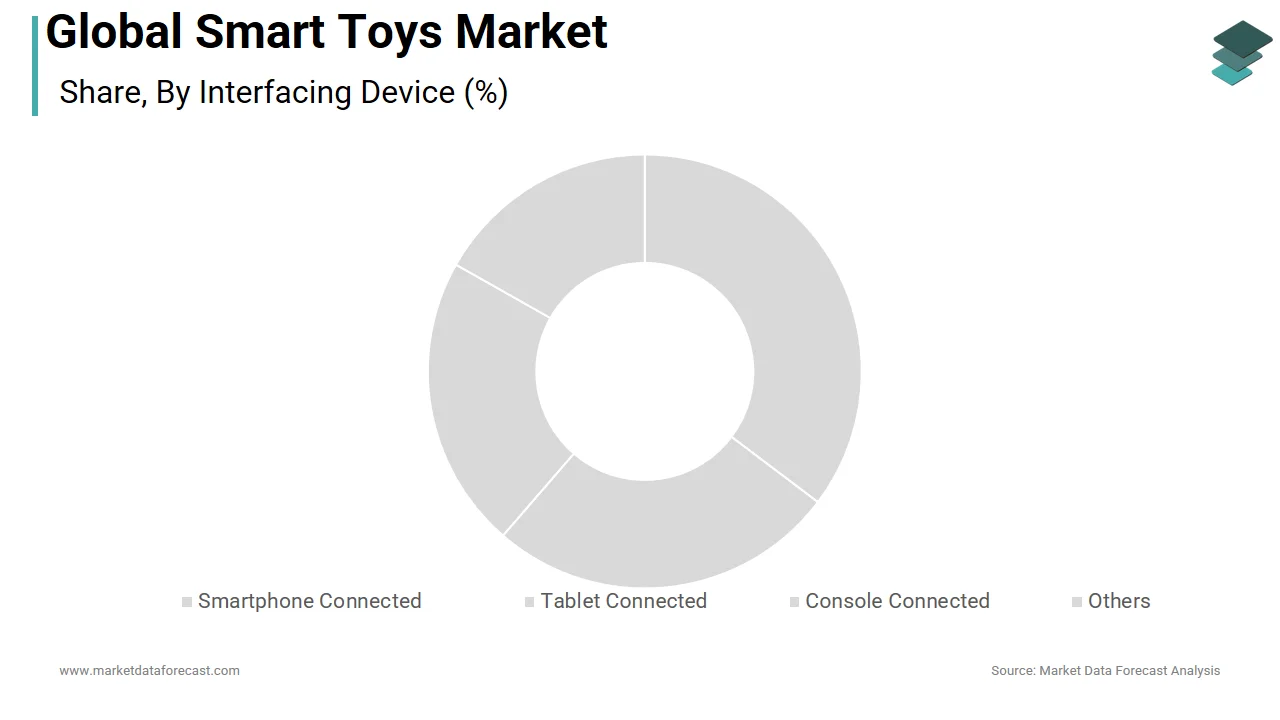
The dominance of smartphone-connected toys goes beyond hardware accessibility and comes from mature companion app ecosystems. They provide continuous content updates, parental controls, and community features that keep players engaged long after the initial purchase. According to Eurostat, internet-connected televisions represent the leading domestic smart device segment, with 58% of individuals across European households actively using them for household entertainment applications. As per Eurostat, approximately 60% of young individuals across European regions actively engaged with generative artificial intelligence tools within a brief three-month observation period to support digital output creation. These applications serve as direct marketing channels for cross-selling accessories, expansion packs, and premium subscriptions, creating recurring revenue streams unavailable to console- or tablet-dependent alternatives. Push notification capabilities enable timely reengagement prompts, seasonal content releases, and safety communications, maintaining top-of-mind awareness without requiring active discovery efforts. App analytics provide manufacturers with granular usage data, informing product development, personalisation algorithms, and inventory forecasting with precision impossible through offline sales channels alone. This software-defined value extension transforms smartphones from mere connection interface into an ongoing relationship platform, ensuring sustained dominance through ecosystem lock-in effects and continuous value delivery that specialised devices cannot match economically or experientially.
The Tablet Connected segment is predicted to witness the highest CAGR of 24.6% from 2026 to 2034, due to widespread tablet deployment in early childhood education settings, creating institutional demand spillover into home environments. According to the European Commission, the official Digital Education Monitor framework actively equips local academic institutions with formalised digitisation insights to assess, compare, and standardise school technology capabilities regionally. As per Eurostat digital skill metrics, over 70% of young women and men across the European Union have successfully attained at least basic digital competency through ongoing educational development programs. Larger screen sizes, superior touch responsiveness, and longer battery life make tablets more suitable than smartphones for extended group play sessions, detailed visual content, and multi-user interactions common in educational contexts. Parents observing positive school experiences seek continuity at home, driving consumer adoption aligned with institutional choices. According to the European Commission, regional funding systems prioritise broad digital transition frameworks to ensure equal access to modern communication infrastructures and interactive equipment within public schools. The convergence of educational validation policy support and experiential continuity creates powerful structural tailwinds, ensuring the tablet-connected segment maintains an exceptional growth trajectory as a bridge between formal learning and domestic play environments.
The swift expansion of this segment gains further momentum from its superior capacity for delivering rich, multimodal educational content that justifies its premium positioning and differentiated value propositions versus smartphone alternatives. As per Eurostat, approximately 70% of individuals across European domestic markets actively deploy internet-connected things, showcasing a pervasive shift toward smart home automation. According to the European Commission, specialised automation and artificial intelligence components are transforming regional supply chains, shifting traditional market demand toward highly integrated physical-digital systems across public and private channels. Larger displays accommodate complex visualisations, maps, coding interfaces, and creative tools impractical on phone screens, expanding applicable age ranges and use cases from simple companion apps to comprehensive learning platforms. As per Eurostat, only 41% of young web users across European member states actively double-check the reliability of content found online, marking a significant behavioural shift in data consumption. Content developers prioritise tablet optimization, recognizing a superior canvas for showcasing intellectual property and educational methodology. This content richness advantage transforms tablets from an alternative interface into a preferred medium for premium smart toy experiences, ensuring sustained growth through value differentiation that appeals to education-focused families willing to invest in quality developmental tools.
By Technology Insights
The Bluetooth segment led the Smart Toys market and accounted for a significant share in 2025. This leading position of the segment was attributed to an optimal balance of power efficiency, universal device compatibility, and adequate bandwidth for typical smart toy communication requirements. According to the Bluetooth Special Interest Group, global hardware deployments exceed five billion product shipments annually, actively cementing short-range wireless protocols as the primary cross-device connection standard for consumer hardware networks. As per the Fraunhofer Institute for Integrated Circuits, active neuromorphic hardware research and low-power edge computing architectures prioritise localised data processing to optimise energy efficiency across domestic smart platforms. Adequate bandwidth supports voice audio sensor data and control signals sufficient for the majority of smart toy use cases while avoiding the complexity, cost, and security exposure of full IP networking. The technology’s maturity ensures stable interoperability across device generations, operating systems, and geographic regions, reducing support costs and return rates associated with connectivity failures. Manufacturers benefit from royalty-free licensing, abundant chipset suppliers, and extensive developer tools accelerating time to market and reducing unit costs. This combination of technical adequacy, economic efficiency, and user friendliness solidifies Bluetooth dominance as the default choice for mainstream smart toys where advanced networking capabilities are unnecessary overhead rather than value-adding features.
The prominence of this segment is further reinforced by a streamlined regulatory compliance pathway compared to Wi-Fi and cellular technologies, reducing certification costs, time to market, and legal risk for manufacturers operating across multiple European jurisdictions. According to the European Union, official harmonised security standards EN 18031-1 and EN 18031-2 under the Radio Equipment Directive actively mandate that all wireless-connected products meet strict regional cybersecurity baselines to guarantee market access. As per the European Union Agency for Cybersecurity, new cybersecurity mandates applied through regional legal directives eliminate regulatory discrepancies by forcing all radio-transmitting and internet-connected devices to undergo strict privacy risk testing before commercial distribution. National market surveillance authorities demonstrate greater familiarity with Bluetooth compliance verification, creating a predictable enforcement environment versus emerging technologies where interpretation varies across member states. According to Eurostat, only 2.3% of individuals throughout the European Union actively utilise internet-connected consumer items such as smart interactive robot toys or connected dolls. Manufacturers recognise that Bluetooth minimises regulatory uncertainty, enabling faster iteration and broader geographic distribution with a consistent compliance posture. This administrative efficiency advantage compounds technical benefits, ensuring Bluetooth maintains disproportionate market share as the path of least resistance for compliant smart toy development across the fragmented European regulatory landscape.
The Near Field Communication (NFC) segment is estimated to register the fastest CAGR of 31.8% during the forecast period, owing to its unique ability to create intuitive, tangible interactions between physical toys and digital content without screens, batteries, or complex setup procedures. As per the European Commission, domestic market trends illustrate a severe concentration in short-range smart automation deployments, with real-world consumer hardware integration peaking within households managed by individuals aged 35 to 44. According to Eurostat, daily smartphone and online data access continues to expand rapidly across member states, driving over 98% of young European citizens to engage with connected communication platforms regularly. The frictionless interaction model aligns with Montessori and Reggio Emilia pedagogical principles emphasising sensory motor learning and child agency, gaining traction in European early childhood education circles. Publishers and IP holders embrace NFC as an anti-piracy mechanism and a collectable authentication tool, creating secondary market value and brand protection benefits unavailable to purely digital content. As per the European Parliament, strict hardware rules ban harmful chemical substances and strengthen the mechanical integrity parameters required for toy manufacturing to eliminate physical safety risks for younger demographics. The convergence of usability pedagogy, economics, and IP strategy creates powerful structural demand, ensuring NFC maintains an exceptional growth trajectory as an enabler of phygital play experiences that feel magical rather than technical to young users.
Growth in this sector is propelled by alignment with resurgent collectable culture and phygital play trends, where physical objects serve as keys to expanding digital universes, creating sustainable engagement loops. According to Eurostat information indicators, over 70% of young individuals across regional populations have attained intermediate or advanced digital competencies, accelerating the commercial demand for complex, interactive hardware systems. As per Eurostat online safety metrics, approximately 60% of young European users actively deploy customizable settings and user interface profiles on internet platforms to create personalised output experiences. Limited edition NFC-tagged items create scarcity and exclusivity, driving secondary market activity and community building around collection completion goals that sustain interest beyond initial novelty. According to Europol, joint law enforcement actions under Operation LUDUS actively seized 8.2 million packages of counterfeit, dangerous toys to protect regional distribution channels from intellectual property violations. Brand owners gain direct consumer relationships through NFC-triggered registration, enabling first-party data collection and ongoing communication independent of retail intermediaries. This ecosystem effect transforms NFC from a simple connectivity protocol into foundational infrastructure for next-generation collectable play, ensuring sustained growth through cultural resonance and commercial viability that pure digital or pure physical alternatives cannot replicate independently.
By Distribution Channel Insights
In 2025, the Online Stores segment held the majority share in the Smart Toys market because of superior product discovery capabilities, comprehensive assortment, and detailed information access essential for complex technology purchase decisions. According to Eurostat, 72% of internet users across the European Union actively use digital platforms to search for information about goods and services before making a purchase decision. As per Eurostat, the age groups of 25–34 and 35–44 years old remain the largest demographic contributors to e-commerce, actively driving online retail volume across the region. Online retailers offer vastly broader selection than physical stores constrained by shelf space, enabling niche, innovative, and international products to reach consumers without traditional retail gatekeeping barriers. Dynamic pricing, personalised recommendations, and targeted promotions optimise conversion while subscription options and bundle deals increase average order values. Direct-to-consumer brands bypass wholesale margins entirely, enabling competitive pricing and direct customer relationships. This combination of informational superiority, assortment breadth, and economic efficiency solidifies online dominance as the primary channel for considered technology purchases where confidence depends on thorough pre-purchase evaluation rather than tactile inspection.
The leading position of this segment is bolstered by integration with post-purchase content ecosystems, community platforms, and support resources that extend value beyond the point-of-sale, creating channel stickiness independent of price competition. According to Eurostat, 36% of online consumers actively search for product safety data before finalising transactions to evaluate compliance features. As per Eurostat, 78% of active internet users throughout the European Union purchase or order goods and services online, showcasing widespread household reliance on digital sales infrastructure. Manufacturer-owned e-commerce sites leverage purchase history for personalised accessory recommendations, firmware update notifications, and exclusive content previews, creating ongoing engagement touchpoints that reinforce brand direct relationships. Subscription management, renewal reminders, and expansion pack bundling occur seamlessly within the same interface used for initial purchase, reducing friction for recurring revenue capture. User-generated content, including unboxing videos, modification guides, and play ideas, serves as authentic social proof influencing subsequent buyers in a virtuous cycle. This post-purchase value integration transforms online channels from mere distribution pipes into ongoing service platforms, ensuring sustained dominance through ecosystem effects that physical retail cannot replicate structurally.
The Speciality Stores segment is anticipated to witness the fastest CAGR of 22.4% between 2026 and 2034. This rapid expansion of the segment is propelled by curated experiential retail formats that address trust deficits and complexity barriers inherent in the smart toy category through hands-on demonstration, expert guidance, and community building. According to Eurostat, internet-connected televisions dominate the domestic smart device market, with 58% of citizens across European households actively using them for home entertainment applications. As per Eurostat, real-world consumer hardware metrics show that only 2.3% of individuals across the European Union actively use connected consumer items such as smart robot toys or interactive dolls. Physical interaction with functioning prototypes addresses screen time anxiety by allowing parents to assess actual engagement quality versus marketing claims, building confidence that static images and videos cannot convey. Staff training programs certified by manufacturers ensure accurate technical guidance and troubleshooting support, reducing post-purchase frustration and negative reviews. Community events, workshops, and maker spaces transform stores into destinations, fostering brand affinity and word-of-mouth advocacy. This experiential differentiation creates a defensible niche against online price competition, ensuring sustained growth through service value that commoditised channels cannot replicate.
Multiple factors accelerate this growth, including strategic partnerships with schools, therapists, and educational institutions, creating B2B2C distribution pathways that validate products and drive informed consumer purchases through trusted professional endorsement. According to the European Commission, specialised automation and digital education transformations are altering regional resource distribution, moving institutional demand toward physical-digital equipment systems across public distribution channels. As per Eurostat, 75% of young European citizens successfully attain basic digital skills through regional curriculum updates and interactive educational systems. Institutional bulk purchasing for classroom use provides baseline revenue stability while generating authentic testimonials and case studies that influence consumer decisions more effectively than paid advertising. Speciality retailers hosting teacher training sessions and parent education workshops position themselves as knowledge hubs rather than mere vendors, building long-term community relationships that transcend individual transactions. This institutional integration transforms speciality stores from an optional premium channel into essential infrastructure for evidence-based smart toy adoption, ensuring sustained growth through credibility transfer and professional validation that pure commercial channels lack.
REGIONAL ANALYSIS
North America Smart Toys Market Analysis
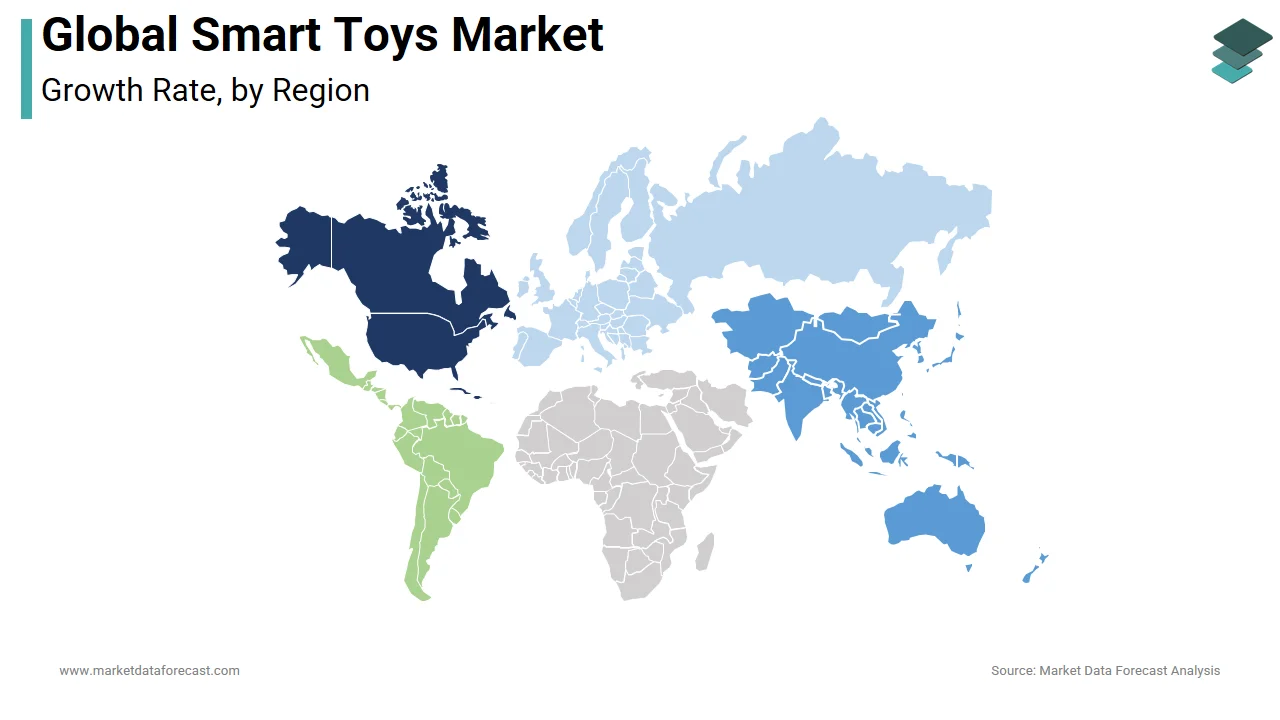
North America was the top performer in the global Smart Toys market and accounted for a 36.5% share in 2025. This dominance of the region in the global market was driven by early technology adoption, a mature venture capital ecosystem supporting innovation, concentrated tech industry talent pools, and cultural acceptance of technology-integrated parenting practices. As per the Federal Trade Commission, the Children's Online Privacy Protection Act imposes comprehensive federal requirements on operators of websites or online services directed to children under 13 years of age. According to the U.S. Bureau of Economic Analysis, the total value added of the digital economy accounted for over 10 per cent of U.S. gross domestic product in recent economic account measurements. Canadian organisations leverage bilingual English-French smart toy development, serving the domestic market while providing a testing ground for European expansion. The region hosts major platform companies and toy manufacturers whose proximity enables rapid prototyping, user testing, and iterative development cycles unavailable elsewhere. According to sources, United States toy industry retail sales returned to growth in 2025, driven by an expansion in collectables, trading cards, and licensed properties. Mature app ecosystems and voice assistant penetration accelerate feature adoption and content consumption. This combination of cultural receptivity, capital availability, and innovation density solidifies North America as an undisputed global leader, serving as a trendsetter and proving ground for concepts subsequently adapted to other regional contexts.
Europe Smart Toys Market Analysis
Europe was positioned second in the global Smart Toys market and captured a share of 28.9% in 2025. This growth of the European market was fuelled by stringent regulatory frameworks, including GDPR-K (GDPR Kids), the EU AI Act, and toy safety directives. These mandates set specific privacy, security, and developmental appropriateness standards, creating non-discretionary, compliance-driven demand distinct from the North American entertainment focus. According to research, the European toy landscape sees major revenue concentration within the top five European economies, consisting of Germany, France, the United Kingdom, Italy, and Spain. As per Eurostat, 70% of European Union citizens aged 16 to 74 reported utilising internet-connected smart devices, or the Internet of Things, within household environments. European manufacturers prioritise device processing data minimisation and third-party safety certifications as competitive differentiators responding to parental privacy concerns amplified by historical breaches and regulatory enforcement. As per the European Commission, the Digital Education Action Plan outlines strategic priorities for digital transformation in education and training across member nations. According to PwC, 61% of global investors surveyed expect the technology sector to attract the highest level of capital investment over the next three years. This unique combination of safety consciousness, educational prioritisation, and public funding positions Europe as a sophisticated, differentiated market where compliance capability equals competitive advantage rather than cost burden.
Asia Pacific Smart Toys Market Analysis
Asia-Pacific is the fastest-growing region in the global smart toys market due to manufacturing ecosystem proximity, rising middle-class affluence, government STEM education initiatives, and cultural adaptation of Western concepts. China, Japan, South Korea, India, and Australia represent diverse submarkets with distinct characteristics yet share common momentum toward technology-integrated child development. Chinese smart toy market grows at unprecedented scale, supported by a domestic manufacturing base enabling rapid iteration, cost optimisation, and supply chain resilience unavailable to Western competitors. As per the Ministry of Industry and Information Technology, China's electronic information manufacturing industry reports steady expansion in large-scale output, including integrated circuits and smartphones. Japanese organisations focus on an ageing society, intergenerational play and kawaii aesthetic localisation, creating culturally resonant products distinct from Western designs. Indian market expands through affordable price points, vernacular language support and rural distribution innovation, addressing previously underserved demographics. According to sources, rapid digital consumer transitions and digital infrastructure expansion are driving major growth across India's technology platforms and retail ecosystems. Southeast Asian nations leverage manufacturing bases and young demographics for both production and consumption. This combination of supply chain advantage, demographic dividends and cultural localisation positions Asia Pacific as a future growth engine, reshaping global smart toy geography through speed, scale and contextual relevance that Western incumbents struggle to match.
Middle East and Africa Smart Toys Market Analysis
The Middle East and Africa region maintains a noteworthy share of the global smart toys market owing to youthful population structures, sovereign-wealth-funded education modernisation, and expatriate family consumption. As per the Communications, Space and Technology Commission, internet penetration in the Kingdom of Saudi Arabia reached 99.6% while the usage of advanced digital infrastructure continues to scale. According to the Communications, Space and Technology Commission, AI tool adoption rates among domestic users in Saudi Arabia more than doubled year over year, demonstrating accelerated technological integration. As per the Ministry of Communications and Information Technology, Saudi Arabia is actively expanding its digital infrastructure by scaling up massive data-centre compute capacity. South Africa serves as a regional hub for pan-African distribution, leveraging relatively mature retail infrastructure and multilingual content development capabilities. According to PwC, mobile-first internet demand is accelerating rapid digital ad spending growth across major African economic markets like Kenya and Nigeria. North African nations Egypt, Morocco Tunisia pursue francophone and Arabophone smart toy localisation, creating niche opportunities distinct from Anglophone global offerings. Sub-Saharan markets leapfrog to mobile-first smart toys, bypassing fixed broadband limitations. Development finance institutions fund edtech capacity building, creating foundational demand. This region’s growth narrative centres on human capital development and economic diversification, distinguishing its adoption drivers from mature entertainment-focused markets and creating unique vendor requirements around localisation, affordability and curricular alignment.
Latin America Smart Toys Market Analysis
Latin America grew moderately in the global smart toys market. Growth remains subject to economic fluctuations, yet structural drivers like mobile adoption, edtech policy, and fintech-enabled payments provide significant acceleration. As per the International Trade Administration, Brazil's technology market leads South America in overall information technology investment, driven by enterprise cloud adoption and digital business transformation. According to the Ministry of Education of Brazil, public education systems emphasise nationwide baseline curriculum competencies through the deployment of the Base Nacional Comum Curricular framework. According to Fundação Getulio Vargas, specialised professional education and executive training programs are expanding through hybrid and distance-learning institutional frameworks to boost socioeconomic development. Mexican market leverages proximity to US supply chains and a growing middle class for cross-border product flows and local adaptation. Chilean education reform and digital inclusion programs drive public sector procurement, creating baseline demand independent of consumer spending cycles. According to the Chilean Economic Development Agency, national innovation initiatives prioritise funding for early-stage technology startups and digital entrepreneurship ecosystems to drive economic diversification. Colombian fintech expansion enables instalment payments, making premium smart toys accessible to cash-constrained families. Regional trade agreements and Mercosur digital agenda promote cross-border e-commerce, reducing distribution fragmentation. Currency fluctuations and inflation create headwinds yet also increase demand for durable multifunctional products perceived as educational investments rather than disposable entertainment. Latin American smart toy growth reflects pragmatic adaptation to local conditions, emphasising educational justification, payment flexibility and mobile-first design rather than pure entertainment narratives prevalent in other regions, creating distinctive market dynamics requiring tailored approaches around affordability, localisation, and institutional partnerships.
COMPETITIVE LANDSCAPE
Competition in the Smart Toys market exhibits intense multidimensional rivalry among established toy manufacturers, technology companies, educational specialists, and direct-to-consumer startups, each pursuing distinct value propositions and target demographics within a fragmented global landscape. Traditional toy giants leverage brand heritage, manufacturing scale, and retail distribution networks to defend positions while tech entrants disrupt through superior artificial intelligence capabilities, software ecosystems, and data-driven personalization, attracting digitally native parents seeking cutting-edge developmental tools for children. Competitive differentiation increasingly centers on safety credentials, educational validation, and phygital balance rather than feature richness alone as parental skepticism toward screen time and data collection intensifies following high-profile incidents and regulatory enforcement actions across multiple jurisdictions. Pricing model innovation, including subscription content, freemium app tiers and bundled hardware services, intensifies competition for family attention and wallet share previously captured through simple unit sales transactions. Geographic expansion, particularly in Asia Pacific and Latin America, creates new battlegrounds where local players challenge global incumbents through cultural adaptation, vernacular content and affordable price points tailored to emerging middle-class aspirations and educational priorities. Talent acquisition wars for child development experts, AI ethicists, and safety engineers constrain innovation velocity and increase operational costs across all competitors, limiting entry barriers. Customer retention emerges as a critical success factor as switching costs remain low and alternatives proliferate, forcing vendors to demonstrate continuous value realization through measurable developmental outcomes and sustained engagement rather than relying on initial novelty or brand loyalty alone for sustainable competitive advantage in this rapidly evolving and socially scrutinized domain.
KEY MARKET PLAYERS
The leading companies operating in the global smart toys market include:
- Lego Group
- Mattel Inc.
- Hasbro Inc.
- LeapFrog Enterprises, Inc.
- Pillar Learning
- VTech Holdings Limited
- Sega Toys Co. Ltd.
TOP PLAYERS IN THE MARKET
- LEGO Group significantly influences the global Smart Toys landscape through its LEGO Education and SPIKE Prime ecosystems that integrate physical construction with block-based coding and sensor-driven interactivity for STEM learning. The company strengthens its position by embedding artificial intelligence modules within companion apps, enabling adaptive lesson progression while maintaining strict COPPA and GDPR Kids compliance through on-device data processing. Recent initiatives focus on expanding multilingual voice recognition and inclusive design features, ensuring accessibility across diverse learner profiles and linguistic backgrounds. LEGO invests heavily in educator certification programs and curriculum alignment, validating products as pedagogical tools rather than mere entertainment, creating institutional adoption channels that reinforce consumer trust. This dual positioning as both play brand and educational resource establishes defensible competitive advantage through evidence-based efficacy claims and cross-generational brand loyalty, enabling sustained relevance amid rapid technological change and evolving parental expectations regarding screen time quality versus quantity tradeoffs worldwide without relying on market share metrics to demonstrate leadership.
- Hasbro Inc advances the Smart Toys market through its Furby and Playskool interactive lines, incorporating voice recognition, emotion detection, and adaptive storytelling technologies designed to foster social-emotional development alongside entertainment value. The company recently enhanced edge computing capabilities, eliminating cloud dependency for core features addressing persistent parental privacy concerns while maintaining responsive interactive experiences through dedicated AI chipsets. Hasbro focuses on intellectual property leverage, integrating beloved characters from Marvel, Disney, and Sesame Street into smart platforms, creating emotional connection points that differentiate offerings from generic competitors. Strategic partnerships with child psychologists inform product design, ensuring age appropriateness and therapeutic validity beyond marketing claims. By balancing nostalgia-driven character appeal with contemporary technology integration, Hasbro bridges generational preferences, enabling grandparents and parents to engage meaningfully with children through shared cultural touchpoints enhanced by intelligent interactivity. This strategy creates sustainable differentiation through emotional resonance and trusted brand heritage that pure technology players cannot replicate quickly, ensuring continued market relevance across diverse family demographics globally without referencing commercial volume statistics.
- VTech Holdings Limited contributes substantially to the global Smart Toys ecosystem through its comprehensive portfolio of connected learning toys spanning infant, toddler, and preschool segments with integrated voice assistant curriculum content and parental monitoring capabilities. The company recently strengthened its market position by launching the proprietary Kidizone platform, featuring offline-capable AI tutoring, adaptive difficulty adjustment, and progress tracking without requiring constant internet connectivity, addressing both privacy concerns and connectivity limitations in emerging markets. VTech emphasizes vertical integration, controlling hardware, software, and content development, enabling rapid iteration, cost optimization, and consistent quality assurance across price points. Recent enhancements focus on multilingual support and cultural localization for European, Asian, and Latin American markets, reflecting commitment to contextual relevance over standardized approaches. By serving the full developmental spectrum from birth through early elementary with a coherent product ecosystem, VTech creates customer lifetime value through brand continuity and progressive skill scaffolding. This comprehensive coverage strategy builds defensible scale advantages and supply chain efficiencies that niche competitors cannot match, ensuring sustained leadership through accessible innovation balanced with affordability and safety compliance across global markets without citing revenue or unit sales figures.
TOP STRATEGIES USED BY KEY MARKET PARTICIPANTS
Key players in the Smart Toys market prioritize child safety and privacy compliance as foundational strategic imperatives, investing in on-device processing, third-party security certifications, and transparent data practices to rebuild parental trust eroded by historical breaches and regulatory scrutiny across jurisdictions. Vendors aggressively pursue educational validation through partnerships with academic institutions, child development experts and curriculum authorities, generating evidence-based efficacy claims that justify premium pricing and differentiate products from unvalidated entertainment alternatives in increasingly discerning parent markets seeking developmental outcomes. Strategic intellectual property licensing and character integration create emotional connection points, leveraging established cultural franchises to reduce adoption friction and enable cross-generational engagement that pure technology products lack inherently. Phygital play design combining tangible physical interaction with digital augmentation addresses screen time anxiety while preserving developmental benefits of hands-on exploration and sensory-motor learning essential for early childhood cognitive growth. Subscription and content update models extend product lifecycle and create recurring revenue streams, transforming one-time toy purchases into ongoing service relationships with continuous value delivery beyond initial sale. Geographic and cultural localization, including multilingual support, region-specific curriculum alignment, and affordable price point variants, expand addressable markets beyond Western affluent demographics to include emerging middle-class families. These interconnected strategies collectively shape competitive dynamics, defining success factors in the contemporary Smart Toys landscape where sustainable advantage requires balancing technological sophistication, developmental appropriateness, safety compliance, and cultural relevance simultaneously across diverse stakeholder expectations and regulatory environments worldwide.
MARKET SEGMENTATION
The global Smart Toys market is segmented based on interfacing devices, technology, distribution channel, and region.
By Interfacing Device
- Smartphone Connected
- Tablet Connected
- Console Connected
By Technology
- Wi-Fi
- Bluetooth
- NFC
- RFID
By Distribution Channel
- Online Stores
- Specialty Stores
- Specialty Stores
By Region
- North America
- Europe
- Asia-Pacific
- Latin America
- The Middle East and Africa