- Product Description Description
- Table of Contents TOC
- List of Table & Figure LOT
- Get Free Sample PDF Sample PDF
Market Size, 2025
$377.97 MnMarket Estimate, 2026
$409.11 MnMarket Forecast, 2034
$771 MnCAGR, 2026–2034
8.24%Executive Summary: SPF Eggs Market
- Market Scope: Comprehensive global Specific Pathogen Free (SPF) eggs market analysis covering application verticals, biomedical research usage, regional leadership frameworks, and vaccine production metrics.
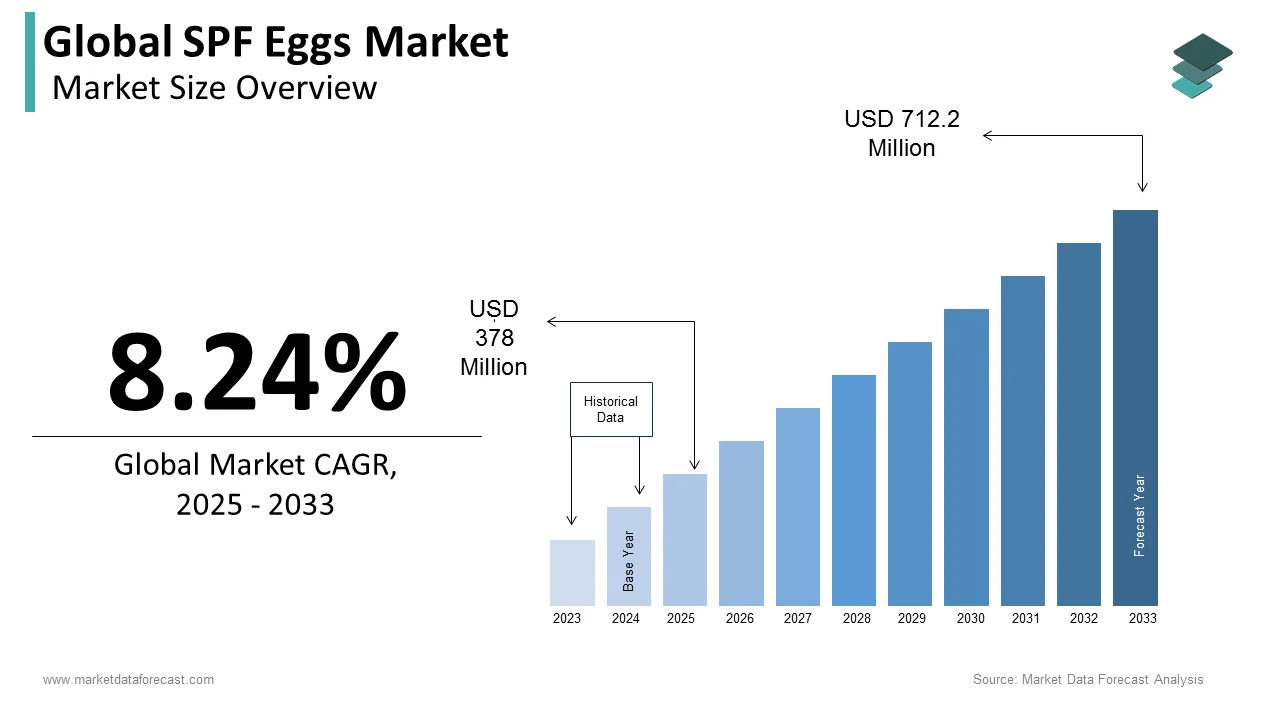
- Market Valuation: Valued at USD 377.97 million (2025), estimated at USD 409.11 million (2026), and projected to reach USD 771.00 million by 2034, registering a robust CAGR of 8.24% (2026–2034).
- Primary Growth Drivers: Rising vaccine production, biomedical research, biotechnology expansion, and increasing demand for contamination-free research materials. Key biomedical and public health highlights include millions of SPF eggs used annually for influenza vaccine production (~170 million flu vaccine doses produced annually in the U.S. at a ratio of approximately one SPF egg per vaccine dose), alongside 70%–85% of flu-related deaths occurring among individuals aged 65 and older.
Key Market Segment Metrics (2026–2034)
| Category | Leading Segment (2025 Position) | Fastest-Growing Segment |
|---|---|---|
| By Application / Use | Human & Veterinary Vaccine Production (dominated core commercial volume for influenza and viral vaccines) | Advanced Biomedical Research, Virology, & Immunology Diagnostics |
| By End User / Industry | Pharmaceutical & Biotechnology Corporations (retaining primary procurement share) | Contract Research Organizations (CROs) & Academic Vaccine Labs |
| By Distribution Channel | Direct B2B Supply Contracts with Biopharma Manufacturers | Specialized Cold-Chain Bio-Logistics Distribution Networks |
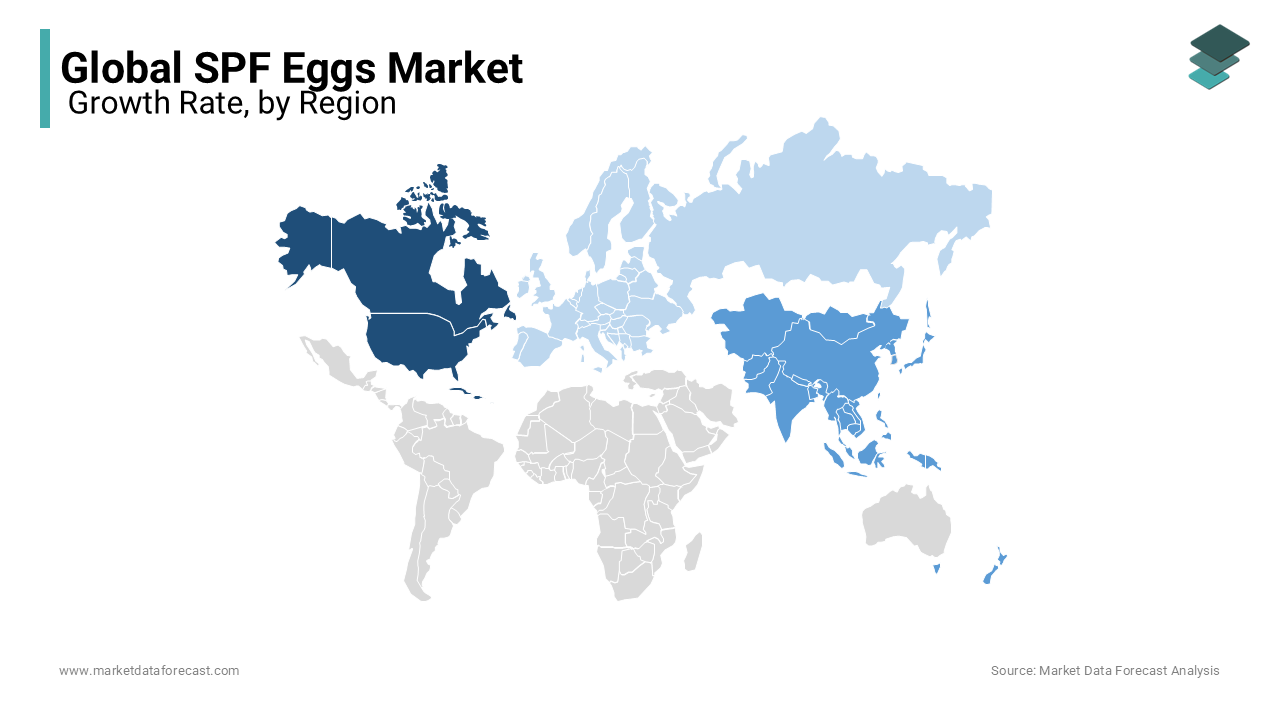
| By Region / Country | North America (led the global market, supported by U.S. biopharma infrastructure), followed by Europe | Asia-Pacific (projected to register the highest CAGR, led by investments in China, India, and South Korea, where the regional biotech market grows >12% annually) |
Major Market Players & Market Structure
Market Structure: Highly specialized and tightly regulated global life-sciences supply landscape featuring specialized biological producers competing intensely on strict pathogen-free biosecurity standards, flock health management, traceability, high hatchability rates, and specialized cold-chain logistics.
Key Companies: Valo BioMedia GmbH, Charles River, Jinan Spafas Poultry Co. Ltd, Couvoir de Cerveloup, ALPES, RM Group, Venkateshwara Hatcheries Pvt Ltd, Razi Vaccine and Serum Research Institute, and Immunetic Lifesciences Private Limited.
 Download Free Sample Report
Global SPF Eggs Market Size
The size of the global SPF Eggs market was worth USD 377.97 million in 2025. The global market is anticipated to grow at a CAGR of 8.24% from 2026 to 2034 and be worth USD 771 million by 2034 from USD 409.11 million in 2026.
What Are SPF Eggs?
SPF (Specific Pathogen-Free) eggs are produced in biosecure environments and are free from a range of pathogens such as Avian Influenza, Marek’s disease, and Newcastle disease. These eggs are vital in:
- Human and veterinary vaccine production
- Disease diagnosis in laboratories
- Biomedical and biotechnology research
The Specific Pathogen-Free (SPF) eggs market is growing rapidly due to their importance in research and vaccine production. SPF eggs are specially raised to be free from specific harmful pathogens, which makes them ideal for creating vaccines, especially for diseases like the flu. Because of their purity, they are also used in scientific studies where contamination could affect results. Producing SPF eggs requires strict biosecurity measures to keep the eggs free from any pathogens. This careful production process results in higher prices compared to regular eggs. The largest markets for SPF eggs are in developed regions like North America and Europe, where pharmaceutical and biotech industries are well established. However, countries in the Asia-Pacific region are also increasing their demand as they invest more in medical research and biotechnology. The advancements in biotechnology, a rise in vaccine production, and a need for reliable, pathogen-free materials are contributing to the expansion of the SPF eggs market. However, the market faces challenges like high production costs and strict regulations.
MARKET TRENDS
-
Rising Demand from Vaccine Production and Research
SPF eggs are essential in vaccine production, particularly for influenza vaccines, which rely on pathogen-free eggs to prevent contamination. Each year, millions of SPF eggs are used globally to produce flu vaccines; for example, the CDC estimates that around 170 million doses of flu vaccine are produced annually in the U.S. alone. The COVID-19 pandemic further highlighted the importance of SPF eggs in R&D for infectious diseases, driving increased demand. This growth trend is expected to continue as more countries invest in vaccine infrastructure, especially in regions like Asia-Pacific, which is expanding its biotech and pharma industries.
-
Growth in Asia-Pacific Markets
The Asia-Pacific region is rapidly emerging as a key market for SPF eggs, driven by increased investments in medical research and biotechnology. Countries such as China, India, and South Korea are ramping up vaccine production and research facilities, creating new demand for SPF eggs. According to the Asian Development Bank, the biotechnology market in Asia is projected to grow by over 12% annually and fuels the demand for SPF eggs as these nations prioritize health security and vaccine self-sufficiency. This trend is expected to reshape the global SPF eggs market, with the share of the Asia-Pacific projected to increase significantly over the next decade.
Market Dynamics
Key Drivers
- The use of SPF eggs in the production of vaccines is majorly propelling the growth of the global SPF Eggs market.
The growing preference for the innovative production of eggs among people, especially in urban areas, is ascribed to creating lucrative growth opportunities for the SPF eggs market. Evolving modern technology in producing eggs is stabilizing from harmful diseases, which are likely to promote growth opportunities in the coming years. Swiftly changing consumer preferences to adopt a healthy lifestyle are driving the demand for SPF eggs.
The egg is the most common ingredient in many bakery food items, and the prominence of seeking ethically baked food products is driving the growth rate of the market. Stringent government actions over the labeling of ingredients in a more appropriate way also promote the market’s growth rate in the foreseen years. Eggs are now becoming more popular as regular diet options, whereas the rising demand to produce a greater number of eggs to feed the growing world’s population is another factor that creates scope for the market growth rate in the forecast period.
Launching an innovative style of packaging for SPF eggs to reach a high number of audiences, especially through online stores, is also to accelerate the market growth. Online stores are now the trend for buying any kind of groceries. People’s choice towards selecting the number of eggs wanted but not with the fixed packaging sizes, is expected to fuel the growth rate of the SPF eggs market during the forecast period.
- Increasing Vaccine Production
SPF eggs play a critical role in vaccine manufacturing, especially for seasonal influenza vaccines, which rely on pathogen-free eggs to ensure vaccine safety. For instance, producing just one flu vaccine dose requires approximately one SPF egg, meaning hundreds of millions of SPF eggs are used globally every flu season. Each egg must meet strict pathogen-free standards, reducing contamination risks and ensuring vaccine purity. This demand continues to grow as the global population ages; older adults are especially vulnerable to influenza, with 70-85% of flu-related deaths occurring among people aged 65 and older, intensifying the demand for SPF-based vaccines.
-
Growth in Biomedical and Laboratory Research
SPF eggs are vital in scientific research that requires contamination-free environments, such as in virology and immunology studies. These eggs allow researchers to study viruses and bacteria safely and accurately, as even minor contamination can distort experimental results. The World Health Organization (WHO) reports that about 2 million deaths annually are linked to infections caused by antimicrobial-resistant pathogens, underscoring the need for precise, pathogen-free research inputs. Using SPF eggs helps produce more reliable data in the fight against drug-resistant infections, as studies can progress without the interference of external pathogens.
-
Expansion of Biotechnology in Emerging Markets
Countries in Asia and Latin America are investing heavily in biotechnology, fueling demand for SPF eggs in these regions. As biotech research requires contamination-free specimens, SPF eggs provide a controlled environment for drug and therapy testing. For example, in gene therapy research, contamination-free environments are essential since only 1 in 5,000 children worldwide have access to gene therapies for rare diseases. SPF eggs ensure accurate testing, supporting the broader goal of accessible and safe gene therapy solutions. This trend is expected to accelerate as these markets continue to develop advanced medical and pharmaceutical research capabilities.
Market Challenges
- High Production Costs
Producing SPF eggs involves stringent biosecurity measures, specialized facilities, and rigorous pathogen-free testing, making it a costly process. SPF eggs are typically raised in isolated, controlled environments to prevent contamination, significantly increasing labor, maintenance, and healthcare costs compared to conventional eggs. According to projections, SPF eggs can cost up to ten times more than regular eggs due to these factors. The high production costs limit affordability and accessibility, especially in lower-income markets, making it challenging to scale SPF egg production globally to meet rising demand.
- Limited Supply Chain and Production Capacity
The SPF egg market is limited by a small number of suppliers, with only a few facilities worldwide capable of maintaining the strict conditions needed for SPF egg production. For instance, in North America, only a handful of farms meet the biosecurity standards required, creating supply bottlenecks during high-demand periods, such as flu season. Any disruption, whether from disease outbreaks or supply chain issues, can lead to significant shortages. This reliance on a restricted supply network makes the market vulnerable to fluctuations, limiting the ability of biotech and pharmaceutical industries to scale vaccine and research operations smoothly.
- Strict Regulatory Compliance
SPF egg production must adhere to rigorous regulatory standards to ensure pathogen-free quality, which varies across regions. Regulatory bodies like the USDA in the United States and EMA in Europe impose strict biosecurity, handling, and testing protocols, requiring regular inspections and certifications. Compliance with these standards is resource-intensive and can delay production timelines and increase costs. Moreover, cross-border regulatory differences complicate international supply, as SPF eggs must meet diverse standards in different countries. This regulatory complexity makes it challenging for new players to enter the market and contributes to higher overall costs and limited availability.
REPORT COVERAGE
| REPORT METRIC | DETAILS |
| Market Size Available | 2025 to 2034 |
| Base Year | 2025 |
| Forecast Period | 2026 to 2034 |
| Various Analyses Covered | Global, Regional & Country Level Analysis, Segment-Level Analysis, Drivers, Restraints, Opportunities, Challenges, PESTLE Analysis, Porter’s Five Forces Analysis, Competitive Landscape, Analyst Overview on Investment Opportunities |
| Regions Covered | North America, Europe, Asia Pacific, Latin America, Middle East & Africa |
| Market Leaders Profiled | GmbH, Charles River, Jinan Spafas Poultry Co. Ltd, Couvoir de Cerveloup, ALPES, RM Group |
REGIONAL ANALYSIS
-
North America Dominates the SPF Eggs Market Worldwide
North America is leading with the dominant share of the increasing popularity of producing eggs using in-vitro fertilization. North America holds a significant share of the global SPF eggs market due to its well-established pharmaceutical and biotechnology industries, particularly in the United States. The region is expected to maintain a strong market position throughout the forecast period. The U.S. leads this market, driven by high vaccine demand and robust R&D activities, especially in vaccine production, where SPF eggs are essential. Canada also contributes, albeit on a smaller scale. The COVID-19 pandemic accelerated demand, which highlighted the capacity of North America to meet global vaccine needs and this demand is expected to remain steady. The presence of a high number of research centers and laboratories in the most developed countries, such as the US and Canada, is an additional factor in promoting the growth rate of the North American market. Continuous research and development activities to produce high-quality eggs by overcoming the challenges of rising concern over infectious diseases in poultry can also add fuel to the North American SPF eggs market’s growth rate. High disposable income and growing awareness of the importance of leading a healthy lifestyle by choosing only healthy-based food products are additionally outraging the growth rate of the SPF eggs market.
- Asia-Pacific: Fastest-growing, led by China and India’s vaccine investment.
Asia Pacific is projected to have the highest CAGR by the end of 2033 owing to the rising population in the emerging countries. The growing concern about food insecurity and the need to produce high quantities of food through various innovative technologies to battle the concerns are majorly escalating the growth rate of the market in this region. China is a major country that effectively and innovatively produces SPF eggs. For many long years, China has been the world’s largest producer of eggs, with the availability of a high quantity of chicken and the rapid adoption of advanced technology gearing up the growth rate of the market. The rise of biotechnology, increased investments in vaccine production and expanding research facilities across countries like China, India, and South Korea are key factors driving the SPF eggs market in Asia-Pacific. Especially, China has ramped up its SPF egg production capabilities, while India is investing heavily in vaccine research, these factors are contributing to the expansion of SPF eggs market in this region. As these countries focus on health security and self-sufficiency, the share of the Asia-Pacific region in the global SPF eggs market is expected to increase. It is also expected that Asia-Pacific region will become a potential future leader in the global market by the end of the decade.
- Europe: Strong regulatory backing, especially in Germany, UK, and France.
Europe is following North America in ruling the largest share of the SPF eggs market, with the popularity of maintaining good health by regularly consuming eggs on a daily basis. The demand for egg production rate is rapidly increasing in the UK, which is likely to create growth opportunities for the market in the foreseeable years. Europe is another key player in the global market and is likely to account for a notable share of the worldwide market over the forecast period. Countries like Germany, the UK, and France lead due to their advanced biomedical research and vaccine development sectors. The emphasis of the European Union on health security and biotech innovation boosts demand for SPF eggs, particularly as Europe seeks vaccine self-sufficiency to avoid dependency on external suppliers. The European Medicines Agency (EMA) regulates stringent biosecurity standards, which is positioning Europe as a leader in high-quality SPF egg production. The SPF eggs market growth is expected to be stable, supported by ongoing investments in medical research.
- Latin America: Emerging market, with Brazil and Mexico leading investments.
Latin America holds a smaller share in the global SPF eggs market. Brazil and Mexico lead the regional market due to their growing pharmaceutical and vaccine production sectors. These countries are gradually investing in biotech infrastructure to reduce dependency on imports. However, the region faces challenges such as economic instability and lower R&D funding compared to North America and Europe. Despite this, government initiatives to improve healthcare infrastructure in Latin America are expected to drive steady demand growth for SPF eggs.
- Middle East & Africa: Smallest share, but growing interest in local production.
The Middle East and Africa currently have the smallest share in the SPF eggs market. South Africa and the UAE are the primary contributors, as they work to establish a foundation in vaccine production and medical research. While overall demand in the region is low compared to others, increasing investments in healthcare infrastructure and research capabilities are expected to boost demand gradually. Limited domestic production and high import dependency pose challenges, but efforts to improve healthcare self-sufficiency may increase the region’s participation in the SPF eggs market over time.
KEY MARKET PARTICIPANTS
Companies playing a key role in the global SPF eggs market profiled in this report are Valo BioMedia GmbH, Charles River, Jinan Spafas Poultry Co. Ltd, Couvoir de Cerveloup, ALPES, RM Group, Venkateshwara Hatcheries Pvt Ltd, Razi Vaccine and Serum Research Institute, and Immunetic Lifesciences Private Limited.