- Product Description Description
- Table of Contents TOC
- List of Table & Figure LOT
- Get Free Sample PDF Sample PDF
Market Size, 2025
$51.32 BnMarket Estimate, 2026
$54.76 BnMarket Forecast, 2034
$92 BnCAGR, 2026–2034
6.70%Executive Summary: Global Spinach Seeds Market
- Market Scope: Comprehensive global analysis of the spinach seeds market covering packaging types, farming applications, regional performance dynamics, and agricultural technologies.
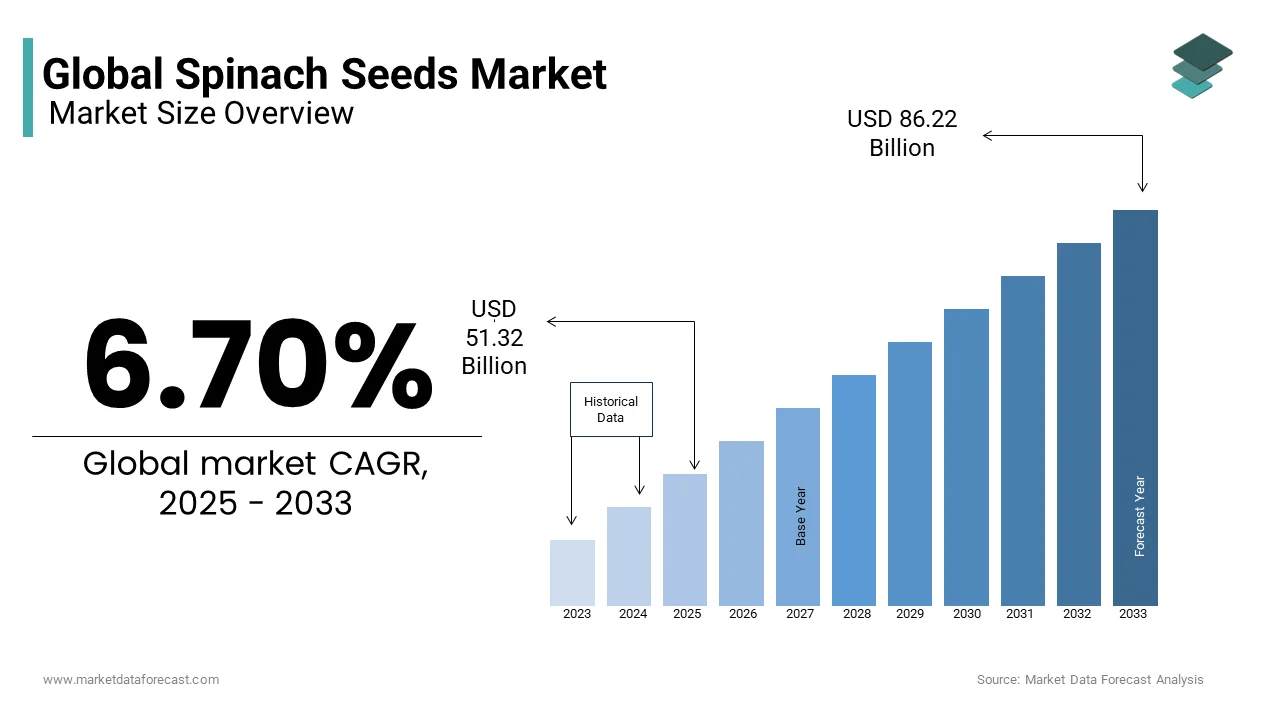
- Market Valuation: Valued at USD 51.32 billion (2025), estimated at USD 54.76 billion (2026), and projected to reach USD 92.00 billion by 2034, registering a solid CAGR of 6.70% (2026–2034).
- Primary Growth Drivers: Growing consumer demand for organic spinach products, technological advancements in hybrid and genetic seed modifications, and the global expansion of vertical farming and urban agriculture.
Key Market Segment Metrics (2026–2034)
| Category | Leading Segment (2025 Position) | Fastest-Growing Segment |
|---|---|---|
| By Package Type | Loose Spinach Seeds (held 60.6% market share in 2025 due to cost-effectiveness and traditional farming compatibility) | Bagged Spinach Seeds (projected at an 8.5% CAGR driven by shelf-life protection and reduced wastage) |
| By Application | Farmland (captured 70.8% market share in 2025 across large-scale commercial agricultural operations) | Greenhouse (estimated at a 12.4% CAGR due to year-round production and urban farming growth) |
| By Region | North America (dominated with 26.6% market share in 2025) | Asia-Pacific (lucrative market propelled by massive production in China and India) |
Major Market Players & Market Structure
Market Structure: A highly competitive global sector driven by major agricultural biotechnology and seed breeding companies focusing on climate resilience, hybridization, and organic certification compliance.
Key Companies: Emerald Seed Company, High Mowing Seeds, Krishidhan Seeds Pvt. Ltd., Baker Creek Heirloom Seed Co., Sakata Seed Corporation, Takii & Co., Ltd., Bayer Crop Science AG, Advanta Hybrid Seeds, Monsanto Seeds, and Syngenta Crop Protection.
Global Spinach Seeds Market Size
The global spinach seeds market size was valued at USD 51.32 billion in 2025 and is anticipated to reach USD 54.76 billion in 2026 to reach USD 92 billion by 2034, growing at a CAGR of 6.70% during the forecast period from 2026 to 2034.
Spinach is scientifically known as Spinacia oleracea and is a versatile vegetable celebrated for its high iron, calcium, and antioxidant content, which is making it a staple in health-conscious diets worldwide. According to the Food and Agriculture Organization (FAO), spinach production has witnessed consistent growth over the past decade, with global output surpassing 28 million metric tons annually as of 2022. This surge is attributed to the rising awareness of dietary health benefits and the integration of spinach into processed food products such as frozen meals and baby foods.
The spinach seeds market is also influenced by advancements in seed technology, including hybridization and genetic modification, which enhance yield, disease resistance, and adaptability to diverse climatic conditions. As per the United States Department of Agriculture (USDA), approximately 75% of spinach seeds sold globally are hybrids, reflecting the industry's shift toward high-performance varieties. Furthermore, the growing trend of urban farming and vertical agriculture has expanded the scope of spinach cultivation, particularly in metropolitan areas where space is limited.
MARKET DRIVERS
Growing Demand for Organic Spinach Products
According to the Organic Trade Association, the organic food sales in the U.S. reached USD 60 billion in 2022, with organic spinach emerging as one of the fastest-growing categories. This surge is fueled by heightened consumer awareness regarding the health and environmental benefits of organic produce. Spinach seeds tailored for organic farming are witnessing unprecedented demand, as they comply with stringent certification standards that prohibit synthetic pesticides and fertilizers. The USDA reports that organic spinach acreage in the United States alone increased by 15% between 2020 and 2022. Germany and France accounts for more than 40% of global organic spinach consumption, which is further amplifying the need for premium-quality organic spinach seeds. This trend is not only reshaping consumer preferences but also incentivizing seed manufacturers to invest in research and development for organic seed varieties. The alignment of organic spinach production with sustainable agricultural practices positions it as a cornerstone of modern agribusiness, ensuring long-term profitability and ecological balance.
Advancements in Seed Technology
According to the International Seed Federation, investments in seed biotechnology have surged by 30% over the past five years, with spinach seeds benefiting significantly from innovations such as hybridization and CRISPR gene-editing techniques. These advancements enable the development of spinach varieties with enhanced traits, including drought tolerance, pest resistance, and higher nutritional value. For instance, according to the FAO, hybrid spinach seeds can increase crop yields by up to 25% compared to traditional varieties, which is making them highly attractive to commercial farmers. Additionally, the adoption of genetically modified spinach seeds in regions like North America has led to a 10% reduction in pesticide usage, as reported by the Environmental Protection Agency. Such technological breakthroughs not only address the challenges posed by climate change but also cater to the rising demand for high-yield crops capable of feeding an expanding global population. By bridging the gap between innovation and agriculture, these advancements serve as a catalyst for the spinach seeds market’s exponential growth.
MARKET RESTRAINTS
Climate Change and Unpredictable Weather Patterns
According to the Intergovernmental Panel on Climate Change (IPCC), erratic weather conditions, including prolonged droughts and unseasonal rainfall, have adversely impacted spinach cultivation across key producing regions. Spinach, being a cool-season crop, thrives optimally in temperatures ranging from 15°C to 20°C. However, the FAO estimates that rising global temperatures have reduced spinach yields by approximately 12% over the past decade, particularly in tropical and subtropical regions. For example, India, one of the largest spinach producers, experienced a 15% decline in spinach acreage during the 2021-2022 season due to prolonged heatwaves. Such climatic uncertainties not only disrupt seed germination rates but also increase the risk of crop failure, thereby deterring farmers from investing in spinach seeds. Furthermore, extreme weather events pose logistical challenges for seed distributors, leading to supply chain disruptions and price volatility. These factors collectively impede the growth of the spinach seeds market, necessitating adaptive strategies to mitigate climate-related risks.
High Initial Costs of Advanced Seed Varieties
According to the USDA Economic Research Service, the cost of hybrid and genetically modified spinach seeds is nearly three times higher than that of conventional varieties, creating affordability barriers for small-scale farmers. While advanced seed technologies offer superior performance, their adoption remains limited in developing regions due to financial constraints. For instance, the World Bank reports that only 20% of African farmers utilize hybrid seeds, primarily due to the lack of access to credit facilities and subsidies. Additionally, the initial investment required for infrastructure upgrades, such as irrigation systems and greenhouses, further exacerbates the financial burden. This economic disparity not only widens the gap between large-scale agribusinesses and smallholder farmers but also stifles market penetration in low-income regions. Consequently, the high costs associated with cutting-edge spinach seeds act as a significant restraint, hindering the market’s inclusive growth potential.
MARKET OPPORTUNITIES
Expansion of Vertical Farming and Urban Agriculture
According to the World Health Organization, urban populations are projected to account for 68% of the global population by 2050, which is driving the adoption of vertical farming and urban agriculture. Spinach, with its compact growth habit and high nutritional value, is ideally suited for indoor cultivation systems. As per the estimations of the USDA, vertical farms can produce up to 10 times more spinach per square meter compared to traditional open-field farming. Furthermore, according to the European Commission, urban farming initiatives in cities like Amsterdam and Singapore have resulted in a 20% increase in local spinach production over the past three years. This trend presents a lucrative opportunity for spinach seed manufacturers to develop specialized varieties optimized for controlled environments. By capitalizing on the growing demand for locally grown produce, the spinach seeds market can establish itself as a key player in the urban agriculture revolution, fostering sustainability and food security.
Rising Adoption of Plant-Based Diets
According to the Good Food Institute, the U.S. retail plant-based food market was worth $8.1 billion in 2023 and this market is expected to grow at a healthy CAGR over the forecast period. Spinach, being a nutrient-dense leafy green, plays a pivotal role in plant-based diets, which is driving demand for high-quality seeds. As per the reports of the FAO, spinach consumption in North America and Europe has increased by 18% over the past five years owing to the popularity of veganism and flexitarian lifestyles. Additionally, as per the USDA, spinach is a primary ingredient in over 60% of plant-based meal kits, further boosting its market relevance. This dietary shift not only enhances the visibility of spinach but also encourages seed companies to innovate and cater to niche markets. By aligning with the plant-based movement, the spinach seeds market can tap into a rapidly expanding consumer base, ensuring sustained growth and profitability.
MARKET CHALLENGES
Pest and Disease Vulnerability
According to the FAO, spinach crops are susceptible to over 20 types of pests and diseases, including downy mildew and aphid infestations, which collectively result in annual yield losses of up to 30%. The USDA highlights that traditional spinach varieties lack adequate resistance mechanisms, necessitating frequent pesticide applications that increase production costs and environmental impact. For instance, in China, the world’s largest spinach producer, pest-related damages accounted for a 25% reduction in spinach yields during the 2021-2022 season. Furthermore, the emergence of new pathogens due to climate change exacerbates the challenge, requiring continuous research and development efforts to breed resistant varieties. This ongoing battle against pests and diseases not only strains farmers’ resources but also undermines the stability of the spinach seeds market, demanding innovative solutions to ensure crop resilience.
Regulatory Hurdles and Certification Delays
According to the European Food Safety Authority, stringent regulatory frameworks governing seed certification and import-export procedures often delay market entry for new spinach seed varieties. For example, the USDA reports that obtaining organic certification for spinach seeds can take up to two years, discouraging smaller players from entering the market. Additionally, trade restrictions imposed by governments to protect domestic agriculture further complicate international seed distribution. The World Trade Organization notes that non-tariff barriers have led to a 10% decline in global spinach seed exports over the past three years. These regulatory challenges not only hinder market expansion but also create uncertainty for stakeholders, emphasizing the need for streamlined policies to facilitate seamless operations.
REPORT COVERAGE
| REPORT METRIC | DETAILS |
| Market Size Available | 2025 to 2034 |
| Base Year | 2025 |
| Forecast Period | 2026 to 2034 |
| CAGR | 6.70% |
| Segments Covered | By Package Type, Application and Region |
| Various Analyses Covered | Global, Regional & Country Level Analysis, Segment-Level Analysis, DROC, PESTLE Analysis, Porter’s Five Forces Analysis, Competitive Landscape, Analyst Overview on Investment Opportunities |
| Regions Covered | North America, Europe, APAC, Latin America, Middle East & Africa |
| Market Leaders Profiled | Emerald Seed Company, High Mowing Seeds, Krishidhan Seeds Pvt. Ltd., Baker Creek Heirloom Seed Co., Sakata Seed Corporation, Takii & Co., Ltd., Bayer Crop Science AG, Advanta Hybrid Seeds, Monsanto Seeds, and Syngenta Crop Protection and Others. |
SEGMENT ANALYSIS
By Package Insights
The loose spinach segment dominated the market by holding 60.6% of the global market share owing to their widespread use in traditional farming practices. Farmers prefer loose seeds due to their cost-effectiveness and ease of handling, particularly in large-scale operations. According to the FAO, loose seeds account for over 70% of spinach cultivation in Asia, where manual sowing remains prevalent. This segment’s prominence is further reinforced by its compatibility with conventional planting equipment, reducing operational complexities. Additionally, the affordability of loose seeds makes them accessible to smallholder farmers, contributing to their sustained dominance in the market.
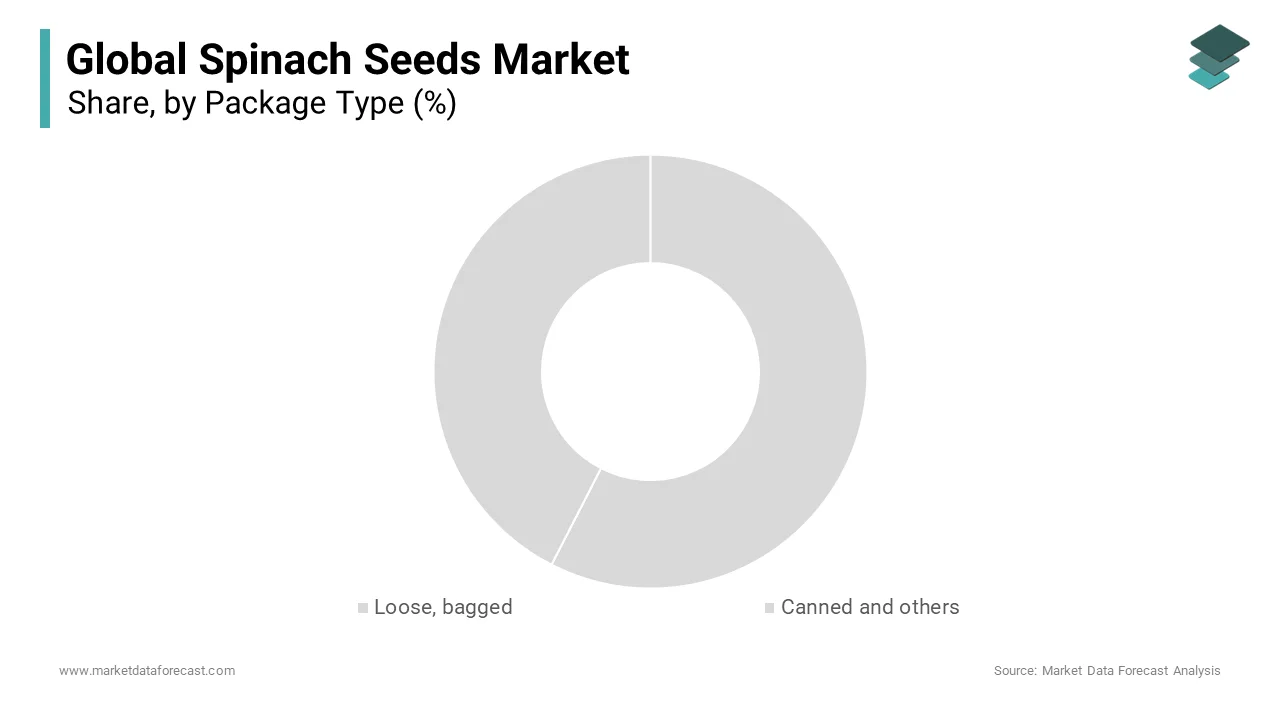
The bagged spinach seeds segment is projected to grow at a CAGR of 8.5% over the forecast period. The convenience and improved shelf life of bagged spinach seeds are driving the growth of the segment in the global market. As per the USDA, bagged seeds reduce wastage by 15% compared to loose variants, which is appealing to environmentally conscious consumers. Furthermore, advancements in packaging technology have enhanced seed viability, making bagged options increasingly popular among greenhouse growers.
By Application Insights
The farmland segment accounted for the largest share of 70.8% of the global market share in 2025 owing to its central role in commercial spinach production. According to the reports of the USDA, large-scale farmland operations in North America and Europe rely heavily on high-yield spinach seeds to meet processing demands. The scalability and ability of farmlands to integrate advanced farming technologies to ensure consistent supply chains for fresh and processed spinach products are further boosting the expansion of the segment in the global market.
The greenhouse segment is estimated to expand at a CAGR of 12.4% over the forecast period owing to its ability to provide year-round production. As per the USDA, greenhouse-grown spinach exhibits a 30% higher yield compared to open-field methods, which is making it an attractive option for urban farming initiatives. The transformative potential of greenhouse cultivation in addressing food security challenges is fuelling the growth of the segment in the global market.
REGIONAL ANALYSIS
North America Market Analysis
North America captured the leading share of 26.6% of the global market share in 2025. The domination of North America in the global market is driven by technological advancements and high consumer demand for organic produce. The emphasis of North America on sustainable agriculture has positioned it as a leader in hybrid seed adoption.

Europe Market Analysis
Europe accounts for a notable share of the global spinach seeds market, with Germany and France leading in organic spinach production. Stringent regulatory frameworks ensure high-quality seeds, bolstering regional dominance.
Currently, Asia Pacific is the most lucrative market for spinach seeds globally. The extensive farmland operations of China and India, growing urbanization and dietary shifts are propelling the spinach seeds market in this region.
Latin America holds a notable share of the global market, with Brazil emerging as a key player due to favorable climatic conditions and increasing export opportunities.
The spinach seeds market in Middle East and Africa is projected to grow at a steady CAGR over the forecast period, with South Africa leading in greenhouse cultivation. Investments in agricultural infrastructure drive steady growth.
KEY MARKET PLAYERS
Major companies in the spinach seeds market are
- Emerald Seed Company
- High Mowing Seeds
- Krishidhan Seeds Pvt. Ltd.
- Baker Creek Heirloom Seed Co.
- Sakata Seed Corporation
- Takii & Co., Ltd.
- Bayer Crop Science AG
- Advanta Hybrid Seeds
- Monsanto Seeds
- Syngenta Crop Protection.
MARKET SEGMENTATION
This research report on the global spinach seeds market is segmented and sub-segmented based on Package Type, Application Type.
By Package Type
- Loose, bagged
- Canned and others
By Application
- Farmland
- Greenhouse
- Others
By Region
- North America
- Europe
- Asia-Pacific
- Latin America
- Middle-East & Africa