- Product Description Description
- Table of Contents TOC
- List of Table & Figure LOT
- Get Free Sample PDF Sample PDF
Market Size, 2025
$3.27 BnMarket Estimate, 2026
$3.35 BnMarket Forecast, 2034
$4.07 BnCAGR, 2026–2034
2.46%Global Sulfur Coated Urea Market Report Summary
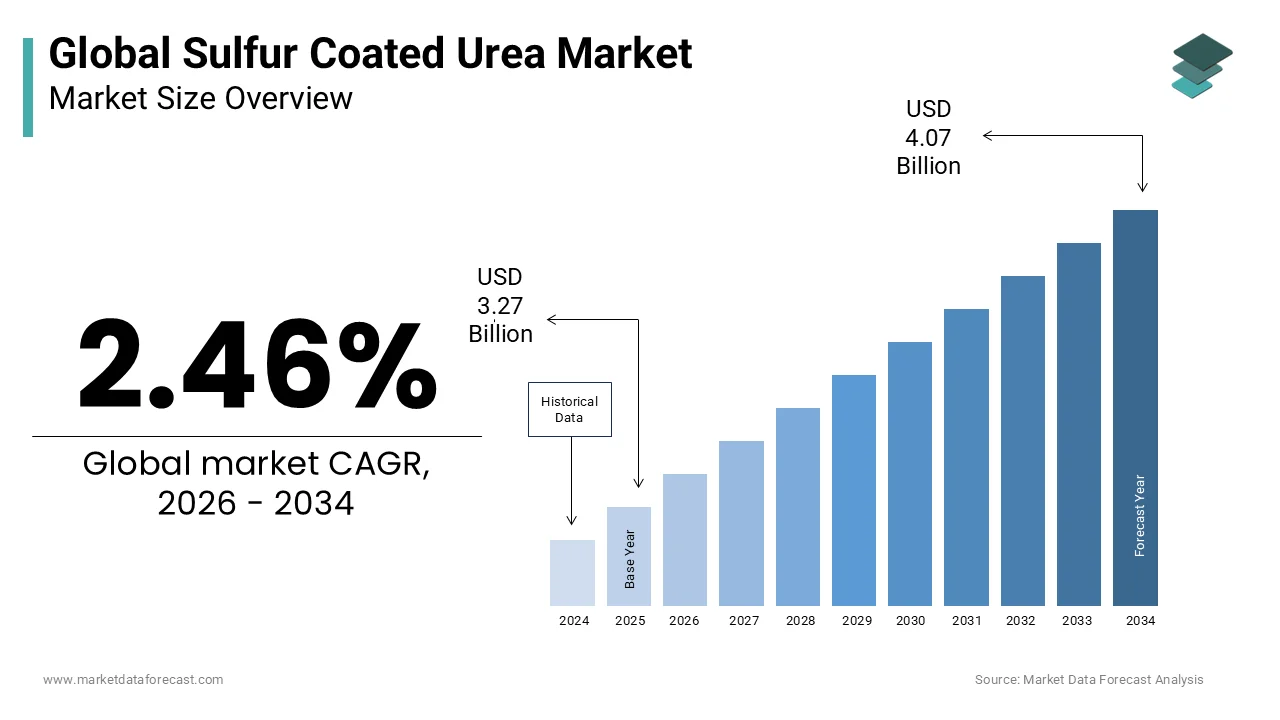
The global sulfur coated urea market was valued at USD 3.27 billion in 2025 and is expected to grow from USD 3.35 billion in 2026 to USD 4.07 billion by 2034, registering a CAGR of 2.46% during the forecast period. Market growth is driven by increasing demand for controlled-release fertilizers, rising emphasis on improving nutrient use efficiency, growing adoption of sustainable agricultural practices, and the need to enhance crop yields while minimizing environmental impact. The market is also benefiting from increasing awareness regarding soil health management and precision farming techniques.
Key Market Trends
-
Growing adoption of controlled-release fertilizers is driving market growth.
-
Increasing focus on improving fertilizer efficiency and reducing nutrient losses is boosting market expansion.
-
Rising demand for sustainable and environmentally friendly agricultural inputs is supporting industry development.
-
Expansion of precision agriculture practices is enhancing market opportunities.
-
Growing need to improve crop productivity and soil fertility is influencing market advancement.
Segmental Insights
- The polymer sulfur coated urea segment dominated the global sulfur coated urea market and accounted for 62.6% of the market share in 2025. The segment's leadership is attributed to its superior nutrient release control, enhanced fertilizer efficiency, and ability to reduce nitrogen losses.
- The farming segment held the largest share of the global sulfur coated urea market and captured 58.4% of the market share in 2025. Growth of this segment is driven by increasing fertilizer usage across crop cultivation, the need for higher agricultural productivity, and rising demand for efficient nutrient management solutions.
Regional Analysis
- North America led the global sulfur coated urea market and accounted for 32.6% of the global market share in 2025. The region's dominance is supported by advanced agricultural practices, widespread adoption of specialty fertilizers, strong awareness of sustainable farming methods, and increasing investments in precision agriculture technologies.
Competitive Landscape
The global sulfur coated urea market is moderately competitive, with companies focusing on product innovation, controlled-release fertilizer technologies, strategic partnerships, and expansion of agricultural input portfolios. Manufacturers are increasingly investing in research and development to improve nutrient efficiency and support sustainable farming practices. Major players operating in the global sulfur coated urea market include Syngenta AG, Agrium Inc., Sun Agro, Andersons, Inc., Koch Industries Inc., Haifa Chemicals Ltd, Israel Chemicals Ltd, Harrell’s LLC, J.R. Simplot Company, Yara International ASA, Advert, and Turf Care.
Global Sulfur Coated Urea Market Size
The global sulfur coated urea market size was valued at USD 3.27 billion in 2025, and the global market size is expected to reach USD 4.07 billion by 2034 from USD 3.35 billion in 2026. The market's promising CAGR for the predicted period is 2.46%.
Sulfur Coated Urea (SCU) is a controlled-release nitrogen fertilizer. It works by applying a physical barrier, elemental sulfur, over conventional urea granules. This coating slows down water penetration and urea dissolution, providing a steady, gradual supply of nitrogen that aligns with crop demands. The manufacturing process involves enveloping standard urea granules with a layer of elemental sulfur followed by a protective wax sealant. This physical barrier regulates the dissolution rate of the nitrogen core ensuring a gradual release that closely aligns with the nutritional uptake patterns of growing plants. The fundamental purpose of this agricultural input is to mitigate the environmental losses associated with conventional fertilizers such as volatilization leaching and denitrification. According to the Food and Agriculture Organization of the United Nations global food production must increase by 60 percent by 2050 to meet the dietary demands of a growing population which necessitates highly efficient nutrient management systems. As per the International Fertilizer Association traditional nitrogen fertilizers exhibit a use efficiency of merely 30 to 50 percent meaning vast quantities of applied nutrients never reach the crop roots. Furthermore agricultural soils worldwide are increasingly depleted of essential secondary macronutrients. According to sources, widespread sulfur deficiencies present a severe limit to global farmland yield potential. This essential macronutrient serves as a core component for chlorophyll synthesis, enzymatic activation, and the amino acid pathways required for robust plant protein composition. This product integrates sulfur directly into the fertilizer matrix to deliver a dual nutritional benefit. Consequently, it supports both robust vegetative growth and improved grain quality without overwhelming the soil ecosystem with excessive soluble nitrogen.
MARKET DRIVERS
Escalating Sulfur Depletion Across Global Arable Lands
Escalating sulfur depletion across global arable lands significantly accelerates the adoption of dual nutrient fertilizers, which boosts the growth of the sulfur coated urea market. Modern agricultural practices that focus on high yield crop varieties have dramatically increased the removal of secondary nutrients from the soil profile. Historically atmospheric deposition from industrial emissions provided adequate sulfur to crops but stringent environmental regulations have drastically reduced these natural inputs. According to historical industry data archived from global agronomic institutes and updated by The Mosaic Company, roughly 35% to 40% of global agricultural soils exhibit some degree of sulfur deficiency, which acts as a primary limiting factor for crop productivity and optimal nitrogen use efficiency. Sulfur is a critical component of certain amino acids and vitamins meaning its absence directly impairs protein synthesis and overall plant health. When farmers apply Sulfur Coated Urea they simultaneously address nitrogen requirements and correct sulfur deficits in a single application. As documented in field trials managed by the United States Department of Agriculture (USDA), corn and wheat yields can experience significant declines ranging between 5% and 15% in verified sulfur-deficient soils when compared to fields receiving balanced sulfur nourishment. The dual action of this fertilizer ensures that as the urea core slowly releases nitrogen the sulfur coating gradually oxidizes into sulfate providing a continuous secondary nutrient supply. This synchronized nutrient delivery perfectly matches the physiological demands of intensive cropping systems making it an indispensable tool for modern agronomists seeking to maximize both crop tonnage and nutritional quality.
Strict Governmental Mandates Aimed at Reducing Agricultural Nutrient Pollution
Strict governmental mandates aimed at reducing agricultural nutrient pollution strongly propel the transition toward enhanced efficiency fertilizers and the expansion of the sulfur coated urea market. Conventional urea application frequently results in substantial nitrogen losses through volatilization and leaching which subsequently contaminates groundwater and causes severe eutrophication in sensitive surface water bodies. According to water quality statistics compiled by the European Environment Agency (EEA), diffuse pollution from agricultural runoff accounts for more than 60% of the total nitrogen inputs found in European freshwater bodies, which continues to drive intensive regional policy updates. To comply with directives like the Nitrates Directive and the Farm to Fork Strategy which aims to reduce nutrient losses by 50 percent farmers must adopt precision agriculture technologies and controlled release products. Sulfur Coated Urea mitigates these environmental risks by physically restricting the rapid dissolution of urea thereby keeping nitrogen in the root zone for a longer duration. To achieve the ecological targets outlined in the EU Nitrates Directive and the Farm to Fork Strategy's goal to slash nutrient losses by 50%, European administrative frameworks rely heavily on agricultural subsidies and eco-schemes to accelerate the voluntary integration of precision farming technologies and enhanced-efficiency fertilizers. By utilizing these advanced coated fertilizers agricultural operators can significantly lower their total nitrogen application rates while successfully maintaining optimal crop yields. This regulatory pressure forces the agricultural sector to abandon inefficient traditional fertilizers in favor of environmentally sustainable alternatives that protect aquatic ecosystems while ensuring food security.
MARKET RESTRAINTS
Substantial Manufacturing Expenses and Elevated Retail Prices
The substantial manufacturing expenses and elevated retail prices of coated fertilizers severely limit their widespread adoption among smallholder farmers, which slows down the growth of the sulfur coated urea market. The production of Sulfur Coated Urea requires specialized processing equipment including rotating drums heating systems and precise wax application machinery which significantly increases capital expenditure for manufacturing facilities. According to manufacturing and market pricing benchmarks tracked by organizations like the International Fertilizer Development Center (IFDC), specialized enhanced-efficiency fertilizers often carry a retail price premium 2 to 5 times higher than conventional commodity fertilizers due to advanced coating materials and complex processing requirements. This price premium is directly passed on to the end users making the product economically unviable for farmers who are operating on extremely thin profit margins. As per the World Bank approximately 80 percent of farms globally are smaller than 2 hectares and these smallholder operations rarely possess the financial liquidity to invest in premium agricultural inputs. Furthermore the return on investment for controlled release products is not always immediately visible since the benefits manifest primarily through long term soil health and gradual yield improvements rather than instant vegetative responses. Consequently highly price sensitive agricultural markets particularly in developing regions across Africa and Asia continue to rely heavily on inexpensive uncoated urea despite its inherent inefficiencies. The high initial financial barrier remains a formidable obstacle preventing the mass market penetration of these technologically advanced fertilizer solutions.
Physical Degradation of the Protective Sulfur Layer
Physical degradation of the protective sulfur layer during transportation and mechanical application compromises the controlled release functionality of the product, which hampers the expansion of the sulfur coated urea market. The efficacy of Sulfur Coated Urea relies entirely on the integrity of the outer sulfur and wax barrier which regulates the diffusion of water into the urea core. However the physical handling of these granules subjects them to significant mechanical stress including severe abrasion impact and compression. According to the American Society of Agricultural and Biological Engineers excessive handling and pneumatic transport can cause up to 15 percent of the coated granules to fracture or chip before they even reach the soil. When the protective layer is compromised the underlying urea is exposed directly to soil moisture resulting in a rapid uncontrolled release of nitrogen that mimics the behavior of conventional fertilizers. As per the University of Illinois Extension damaged granules can lose their extended release properties entirely leading to localized nutrient burn and increased volatilization losses. Farmers utilizing high speed pneumatic seeding equipment or extensive bulk blending operations frequently exacerbate this issue as the granules collide violently within the machinery. This inherent physical fragility necessitates extremely careful logistical management and specialized application equipment which adds further complexity and cost to the supply chain thereby discouraging widespread commercial utilization.
MARKET OPPORTUNITIES
Rapid Expansion of Digital Farming Tools and Variable Rate Application Systems
The rapid expansion of digital farming tools and variable rate application systems creates unprecedented avenues for optimizing coated fertilizer placement and dosage, which propels the growth of the sulfur coated urea market. Modern precision agriculture relies heavily on detailed soil mapping satellite imagery and advanced yield monitors to identify spatial variability within individual fields. According to the Association of Equipment Manufacturers over 60 percent of large scale farms in North America currently utilize some form of precision technology to manage their crop inputs. By integrating Sulfur Coated Urea into these digital ecosystems agronomists can precisely target specific zones of a field that require extended nitrogen release while actively avoiding overapplication in areas with sufficient residual nutrients. As per the American Society of Agronomy variable rate technology can improve overall fertilizer use efficiency by up to 25 percent when combined with enhanced efficiency products. The controlled release characteristics of sulfur coated granules perfectly complement the data driven decision making of modern farm management software allowing operators to synchronize nutrient availability with precise crop growth stages. Furthermore the integration of Internet of Things soil sensors can provide real time data on soil moisture and temperature enabling farmers to predict the exact dissolution rate of the coating. This technological convergence transforms Sulfur Coated Urea from a standard agricultural input into a highly calibrated smart nutrient delivery system maximizing both economic returns and environmental stewardship.
Expanding Cultivation of Premium Horticultural Crops and Professional Sports Turfs
The expanding cultivation of premium horticultural crops and the maintenance of professional sports turfs offer highly lucrative niches for specialized nutrient products, which is anticipated to accelerate the expansion of the sulfur coated urea market. High value crops such as vineyards orchards and greenhouse vegetables require meticulous nutrient management to ensure superior aesthetic quality taste and shelf life. According to the United States Department of Agriculture (USDA) Economic Research Service, the domestic production of fruits and tree nuts generates around $28 billion to $33 billion in annual farm cash receipts, representing a high-value specialty crop sector that justifies intensive investment in premium input technologies. Similarly the massive global sports turf management industry which includes golf courses professional stadiums and municipal parks demands flawless grass aesthetics and extreme durability. As per the Golf Course Superintendents Association of America maintaining optimal turf quality requires frequent but carefully controlled nitrogen applications to prevent excessive rapid growth that necessitates constant mowing. Sulfur Coated Urea provides the perfect solution for these sensitive environments by delivering a steady slow release of nitrogen that prevents the sudden flush of growth associated with conventional soluble fertilizers. Furthermore the secondary sulfur nutrition enhances the color and stress tolerance of the turf. The willingness of commercial growers and turf managers to pay a premium for products that guarantee consistent high quality results without the risk of fertilizer burn makes this segment an exceptionally profitable growth vector for manufacturers.
MARKET CHALLENGES
Heavy Reliance on Soil Microbial Activity and Moisture Levels
The heavy reliance on soil microbial activity and moisture levels to activate the coating creates significant unpredictability in nutrient availability across different climatic zones, which challenges the growth of the sulfur coated urea market. The degradation of the wax sealant and the subsequent oxidation of elemental sulfur into plant available sulfate are highly dependent on specific environmental triggers. Soil science benchmarks from global crop nutrition networks demonstrate that the biological oxidation rate of elemental sulfur can vary tenfold depending on seasonal soil temperatures, moisture dynamics, and the baseline population of native sulfur-oxidizing microorganisms. In unusually cold or excessively dry conditions the conversion of the sulfur coating into usable sulfate is severely delayed potentially causing a temporary sulfur deficiency during critical early growth stages. Conversely in extremely warm and wet environments the coating may degrade too rapidly leading to a premature release of the urea core. As per the Rothamsted Research institute in the United Kingdom unpredictable weather patterns driven by climate change are making it increasingly difficult for agronomists to accurately model the release kinetics of coated fertilizers. This environmental sensitivity means that a product performing exceptionally well in one geographic region might completely fail to deliver the promised extended release benefits in another. Manufacturers face the immense challenge of formulating versatile coating thicknesses and wax blends that can withstand highly variable global weather conditions without compromising the fundamental controlled release mechanism.
Navigating the Intricate and Fragmented Global Regulatory Landscape
Navigating the intricate and fragmented global regulatory landscape for new fertilizer additives significantly delays product innovation and commercialization timelines, which holds back the expansion of the sulfur coated area market. To improve the durability and release profiles of Sulfur Coated Urea manufacturers frequently experiment with novel polymers synthetic resins and advanced chemical sealants. However introducing any completely new chemical substance into agricultural soils triggers rigorous environmental and toxicological evaluations by various governmental bodies. According to the European Chemicals Agency the registration evaluation authorization and restriction of chemicals process can take anywhere from 2 to 5 years to complete requiring extensive ecotoxicity studies and environmental fate assessments. As per the United States Environmental Protection Agency new fertilizer additives must undergo comprehensive reviews under the Toxic Substances Control Act to ensure they do not accumulate in the food chain or contaminate aquatic systems. The lack of harmonized international standards means that a coating material approved in one country might be strictly prohibited in another forcing companies to develop region specific formulations. This regulatory fragmentation imposes massive compliance costs and creates significant uncertainty for research and development investments. Consequently many smaller fertilizer manufacturers are completely deterred from innovating new coating technologies preferring instead to rely on older established formulations which limits the overall technological advancement and efficiency improvements within the global Sulfur Coated Urea industry.
REPORT COVERAGE
| REPORT METRIC | DETAILS |
| Market Size Available | 2025 to 2034 |
| Base Year | 2025 |
| Forecast Period | 2026 to 2034 |
| CAGR | 2.46% |
| Segments Covered | By Application, Type, End-user, and Region |
| Various Analyses Covered | Global, Regional, & Country Level Analysis; Segment-Level Analysis; DROC, PESTLE Analysis; Porter’s Five Forces Analysis; Competitive Landscape; Analyst Overview of Investment Opportunities |
| Regions Covered | North America, Europe, APAC, Latin America, Middle East and Africa |
| Market Leaders Profiled | Syngenta AG, Agrium Inc, Sun Agro, Andersons, Koch Industries Inc, Haifa Chemicals Ltd, Israel Chemicals Ltd, Harrell’s LLC, R. Simplot Company, Yara International ASA, Advert, Turf Care, and Others |
SEGMENTAL ANALYSIS
By Type Insights
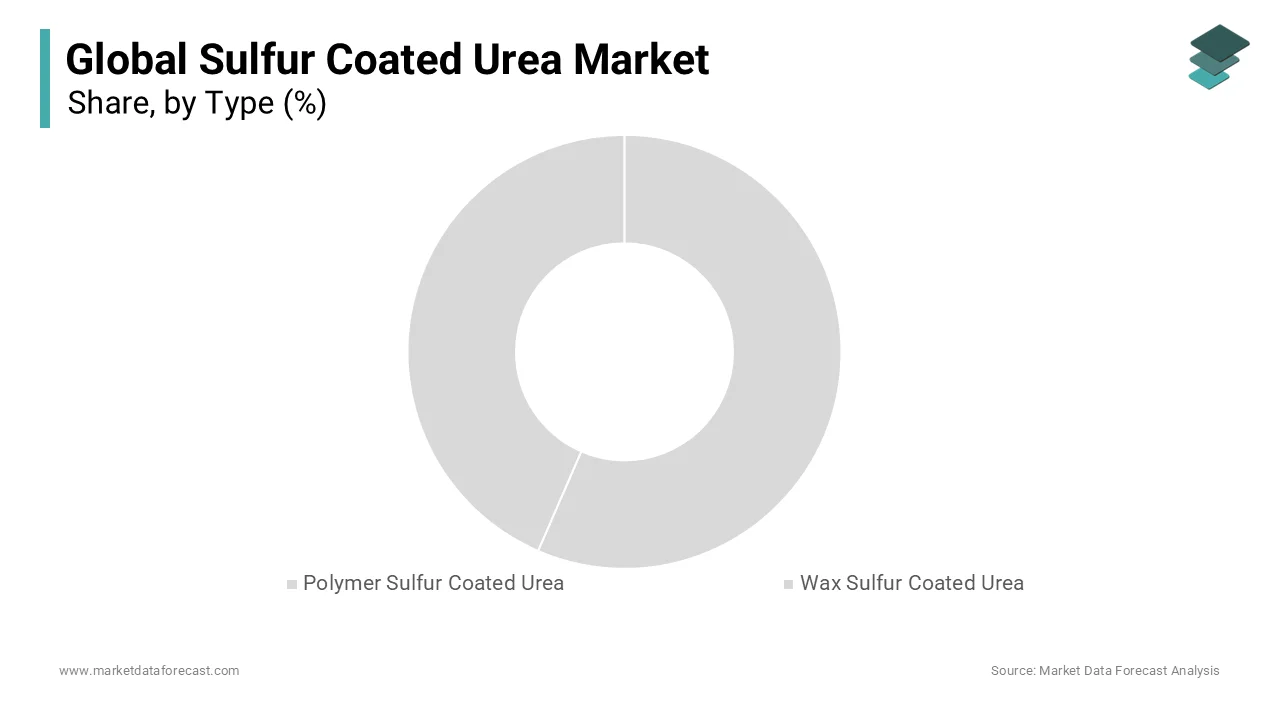
The polymer sulfur coated urea segment dominated the global sulfur coated urea market and accounted for a 62.6% share in 2025. This dominance of the segment is mainly propelled by its exceptional ability to deliver highly precise and predictable nutrient release profiles that align perfectly with crop uptake patterns. Unlike traditional wax sealants which can exhibit inconsistent degradation rates depending on fluctuating soil temperatures and moisture levels polymer coatings offer a remarkably stable diffusion barrier. As documented in technical literature compiled by the International Fertilizer Association (IFA), next-generation enhanced-efficiency fertilizers like polymer-coated urea optimize nitrogen recovery and plant uptake, providing a significant boost in nitrogen use efficiency (NUE) over conventional uncoated urea formulations. This predictability is absolutely critical for modern agronomists who rely on exact mathematical models to optimize crop yields and minimize environmental impact. Field research managed by the United States Department of Agriculture (USDA) shows that synchronizing soil nutrient availability with critical plant growth phases plays a significant role in improving overall grain quality and increasing protein content in major cereal crops. The polymer layer acts as a selective membrane that allows water to slowly penetrate and dissolve the urea core without completely breaking down until the end of the growing season. This sophisticated release mechanism prevents the sudden spikes in soil nitrogen concentration that typically cause root burn and excessive vegetative growth. Consequently commercial farming operations are increasingly willing to invest in these technologically advanced products to guarantee consistent agronomic results and maximize their return on investment.
Furthermore, a main point supporting this segment's top position is its outstanding physical resilience which allows it to withstand the severe mechanical stresses associated with modern agricultural logistics and application machinery. The journey from manufacturing facility to the farm field involves extensive bulk blending pneumatic conveying and high speed mechanical spreading all of which subject fertilizer granules to immense friction impact and compression. According to the American Society of Agricultural and Biological Engineers conventional wax coatings can suffer up to 20 percent physical degradation during standard pneumatic transport leading to premature nutrient release and significant financial losses for the end user. In stark contrast the robust polymer encapsulation maintains its structural integrity even under the most aggressive handling conditions ensuring that the controlled release properties remain completely intact upon reaching the soil. As per the University of Illinois Extension maintaining granule integrity is essential because any micro fractures in the coating will cause the underlying urea to dissolve rapidly completely defeating the purpose of purchasing a premium enhanced efficiency product. This mechanical superiority gives polymer based formulations a distinct competitive advantage particularly among extensive commercial farming enterprises that utilize automated high speed application equipment and demand absolute reliability from their agricultural inputs.
The wax sulfur coated urea segment is estimated to register the fastest CAGR of 7.9% over the forecast period. This rapid expansion of the segment is propelled by its inherent cost effectiveness which makes it highly attractive to farmers in developing and emerging agricultural economies. While polymer coatings offer superior precision the raw materials and specialized manufacturing processes required for polymer encapsulation result in a significant price premium that is often prohibitive for price sensitive markets. According to the World Bank smallholder farmers who operate on extremely narrow profit margins account for a vast majority of agricultural production in regions across Asia and Africa and they require affordable enhanced efficiency solutions. Wax based sealants utilize naturally derived or inexpensive synthetic hydrocarbons which dramatically reduces the overall production cost of the final fertilizer product. As per the Food and Agriculture Organization of the United Nations providing affordable controlled release fertilizers to limited operators can increase regional crop yields by up to 25 percent while simultaneously reducing the total volume of fertilizer required. This economic accessibility allows wax sulfur coated urea to penetrate rapidly into massive untapped rural markets where the primary barrier to adoption has historically been the prohibitive upfront cost of advanced agricultural technologies.
The accelerating adoption of wax sulfur coated urea is also strongly driven by its highly favorable environmental degradation profile which aligns perfectly with increasingly stringent global sustainability mandates and organic farming principles. Modern environmental regulators and ecological scientists are placing intense scrutiny on the accumulation of synthetic microplastics and persistent polymers in agricultural soils prompting a massive shift toward naturally degradable materials. According to the European Environment Agency the accumulation of persistent synthetic coating residues in arable lands poses a significant prolonged threat to soil microbial biodiversity and overall ecosystem health. Wax sealants particularly those derived from natural petroleum or botanical sources readily break down into harmless organic compounds through natural microbial oxidation leaving zero toxic residue in the soil matrix. As per the United Nations Environment Programme the transition toward fully biodegradable agricultural inputs is essential for achieving global soil restoration targets and preventing the silent pollution of subterranean water aquifers. This intrinsic environmental compatibility makes wax coated variants highly desirable among eco conscious growers and organic certification bodies who demand agricultural inputs that support crop nutrition without compromising the fundamental biological integrity of the soil ecosystem for future generations.
By Application Insights
The farming application segment led the global market and captured a 58.4% share in 2025. This leading position of the segment was attributed to the sheer magnitude of global acreage dedicated to intensive row crop cultivation such as corn wheat and soybeans. These staple crops form the foundational basis of the global food supply chain and require massive quantities of nitrogen to achieve commercially viable yields making them the largest consumers of enhanced efficiency fertilizers. According to historical statistical baselines updated by the Food and Agriculture Organization (FAO), global land area under active cereal cultivation covers approximately 700 million to 750 million hectares worldwide, demanding continuous nutrient management strategies to sustain global grain yields. As per the United States Department of Agriculture a single hectare of high yield corn can remove up to 200 kilograms of nitrogen from the soil profile during a single growing season highlighting the immense nutritional demand of broadacre farming operations. Because the financial viability of these massive agricultural enterprises hinges entirely on maximizing yield per hectare while minimizing input costs farmers are aggressively adopting controlled release products to ensure optimal nutrient availability. The vast geographical footprint of row crop farming guarantees a continuous and massive baseline demand that inherently secures the dominant market position of this specific application segment.
The overwhelming dominance of the farming application segment is further solidified by the urgent and critical need to mitigate severe nitrogen leaching and volatilization issues that are inherently associated with broadacre agricultural practices. Conventional surface broadcasting of uncoated urea on vast open fields frequently results in substantial nutrient losses due to rapid evaporation and deep soil perpercolation which not only wastes expensive inputs but also causes severe environmental contamination of adjacent water bodies. According to the European Environment Agency agricultural runoff from broadacre farms is responsible for over 60 percent of the nitrate pollution found in vulnerable freshwater ecosystems triggering strict regulatory penalties for non compliant operators. To combat these severe environmental externalities extensive farming operations are mandated to adopt best management practices which heavily favor the use of controlled release fertilizers. As per the Environmental Protection Agency in the United States implementing enhanced efficiency products in row crop farming can reduce nitrogen leaching by up to 40 percent effectively protecting vital groundwater reserves. By physically restricting the rapid dissolution of the nitrogen core, these specialized coatings ensure that nutrients remain securely in the root zone for active crop absorption. Consequently, this targeted delivery simultaneously improves farm profitability and ensures strict compliance with modern environmental regulations.
The greenhouse application segment is anticipated to witness the fastest CAGR of 8.6% over the forecast period. This quick surge of the segment is fuelled by the extremely high intensity cultivation methods employed within controlled environment agriculture. Greenhouse operations are designed to maximize spatial efficiency and crop turnover meaning plants are grown in highly concentrated volumes often utilizing soilless substrates or hydroponic systems where nutrient management must be flawlessly precise. Research indexed by the American Society for Horticultural Science (ASHS) indicates that due to high-density planting configurations and rapid crop turnover, commercial indoor cultivation can increase localized nutrient demand per square meter by up to 300% when compared to typical open field configurations. In these highly controlled environments any fluctuation in nutrient availability or sudden spikes in soil salinity from rapid fertilizer dissolution can instantly devastate the entire crop cycle resulting in catastrophic financial losses. Crop nutrition profiles evaluated by the United States Department of Agriculture (USDA) show that greenhouse tomato and pepper operations require highly controlled fertilizer systems that can adjust to dynamic, phase-specific daily uptake rates, utilizing precision liquid fertigation or targeted multi-stage release technologies. The ability of sulfur coated products to deliver a steady uninterrupted stream of essential nutrients makes them absolutely indispensable for maintaining the rigorous quality standards and continuous production schedules demanded by the modern greenhouse industry.
The extraordinary growth trajectory of the greenhouse segment is further amplified by the rapid and unprecedented global expansion of controlled environment agriculture facilities driven by increasing urbanization and the urgent need for localized food security. Governments and private investors worldwide are heavily subsidizing the construction of advanced greenhouse complexes to reduce reliance on imported produce and mitigate the risks associated with unpredictable outdoor weather patterns and climate change. According to the International Society for Horticultural Science the total global area dedicated to advanced greenhouse cultivation has expanded by over 15 percent in the last 5 years alone with massive new facilities opening across Europe and North America. These modern facilities are specifically designed to operate at peak resource efficiency utilizing advanced climate control systems and precision irrigation networks. As per the World Bank investments in protected agriculture infrastructure are critical for ensuring sustainable urban food supplies as the global population increasingly migrates toward major metropolitan centers. This massive influx of capital into greenhouse construction directly translates into a surging demand for premium agricultural inputs that are perfectly compatible with automated fertigation systems. Consequently the proliferation of these advanced growing environments provides a powerful and sustained tailwind propelling the rapid adoption of advanced coated fertilizers.
REGION ANALYSIS
North America Sulfur Coated Urea Market Analysis
North America outperformed other region in the sulfur coated urea market and held a 32.6% share in 2025. Its exceptionally advanced agricultural infrastructure and stringent environmental regulations have contributed to the dominance of the region’s market. The regional market has a high concentration of extensive commercial farming operations that possess the financial capacity to invest heavily in premium enhanced efficiency technologies to optimize their massive crop yields. According to reports tracked by the United States Department of Agriculture (USDA), precision nutrient management practices continue to expand across large grain farms, which supports the broader adoption of enhanced-efficiency fertilizers. Furthermore the region faces immense regulatory pressure to protect vital waterways such as the Gulf of Mexico from agricultural runoff. While Environmental Protection Agency (EPA) guidelines and state-level nonpoint source pollution frameworks encourage reduction in nutrient runoff, farmers are primarily incentivized through voluntary conservation programs and market-driven frameworks like the 4R Nutrient Stewardship framework to transition toward products that optimize nutrient uptake and minimize environmental loss. This unique combination of technological readiness financial capability and strict environmental compliance ensures that North America remains a highly lucrative and continuously evolving hub for advanced agricultural inputs.
Europe Sulfur Coated Urea Market Analysis
Europe was positioned second in the global market and captured a 28.3% share in 2025. This growth of the European market was supported by its aggressive sustainability initiatives and strong emphasis on high value horticultural production. The regional agricultural sector operates under some of the most stringent environmental directives in the world specifically the Farm to Fork Strategy which mandates a drastic reduction in nutrient losses and overall chemical fertilizer usage. According to data from the European Environment Agency (EEA), agricultural intensification has led to soil nutrient imbalances, prompting the evaluation of more efficient fertilization solutions. To align with the European Union's Green Deal objectives, the adoption of enhanced-efficiency and controlled-release fertilizers is promoted to help reduce nitrogen leaching and greenhouse gas emissions. Additionally Europe boasts a massive and highly sophisticated greenhouse industry particularly in countries like the Netherlands and Spain which demands perfectly calibrated nutritional solutions for intensive crop cultivation. : As outlined by the European Commission's Common Agricultural Policy (CAP) framework, progressive financing schemes and agri-environmental subsidies are utilized to lower the financial constraints of adopting sustainable technological innovations in agriculture. These incentives focus on holistic nutrient management and precision farming rather than explicitly subsidizing premium coated commercial formulations. This strong regulatory push combined with a thriving high value crop sector ensures that the European market remains a critical driver of global innovation and demand for environmentally responsible agricultural technologies.
Asia Pacific Sulfur Coated Urea Market Analysis
Asia Pacific is a rapidly accelerating region in the sulfur coated urea market due to the urgent need to ensure food security for a massive and continuously growing population. The regional landscape is dominated by immense agricultural sectors in countries like China and India where the sheer scale of rice wheat and corn production requires vast quantities of nutritional supplements to maintain adequate domestic supplies. According to the Food and Agriculture Organization of the United Nations the escalating degradation of soil health across the region due to decades of excessive conventional fertilizer use is prompting a major shift toward more sustainable and efficient nutrient management practices. Furthermore the rapid expansion of the middle class is driving an unprecedented surge in demand for premium fruits and vegetables which inherently requires more sophisticated nutritional inputs. This convergence of food security imperatives government policy shifts and changing dietary patterns positions the Asia Pacific region as a critical engine for future volume growth.
Latin America Sulfur Coated Urea Market Analysis
Latin America holds a significant position in the global market owing to its status as a global powerhouse for export oriented commercial agriculture. The region is home to vast tracts of highly productive arable land particularly in Brazil and Argentina which serve as critical suppliers of soybeans corn and sugarcane to international markets. : As evaluated by the Inter-American Institute for Cooperation on Agriculture (IICA), agri-food export networks serve as critical economic drivers across Latin America and the Caribbean. To build long-term operational resilience against climate volatility, regional agricultural producers are progressively integrating advanced agtech, precision water management, and biological solutions. As per the United States Department of Agriculture the increasing frequency of extreme weather events and prolonged droughts in the region is making nutrient retention even more critical as farmers cannot afford to lose expensive inputs to volatilization during dry spells. Additionally the expanding cultivation of premium crops such as coffee and citrus fruits requires meticulous nutrient management to meet strict international quality standards. This strong focus on export competitiveness and the need to mitigate climate related risks ensures that Latin America remains a vital and growing market for advanced agricultural solutions.
Middle East and Africa Sulfur Coated Urea Market Analysis
The Middle East and Africa region is anticipated to expand notably in the global market during the forecast period due to a strong focus on overcoming severe environmental constraints and achieving regional food self sufficiency. The regional agricultural sector faces immense challenges including extreme heat chronic water scarcity and highly degraded sandy soils that struggle to retain conventional soluble nutrients. According to the World Bank the urgent need to reduce reliance on expensive food imports is prompting governments across the region to heavily invest in advanced agricultural technologies that can maximize crop yields under highly adverse climatic conditions. Furthermore, the rapid development of advanced greenhouse facilities in the Gulf states to produce fresh local vegetables is creating a new niche demand for premium nutritional products. This intense focus on overcoming severe environmental limitations and securing domestic food supplies provides a unique and compelling growth narrative for the region.
COMPETITIVE LANDSCAPE
The competitive landscape of the global industry is characterized by a dynamic interplay between massive multinational chemical corporations and specialized niche manufacturers focusing exclusively on enhanced efficiency products. Market leaders leverage their immense capital resources extensive global distribution networks and deep agronomic expertise to maintain a dominant presence across major agricultural regions. These established entities continuously invest heavily in research and development to engineer sophisticated coating technologies that deliver unparalleled precision in nutrient release and superior mechanical durability. Conversely smaller specialized companies compete by offering highly customized formulations tailored to specific regional soil conditions and unique crop requirements. The rivalry is further intensified by the rapid influx of advanced digital farming tools which compel traditional fertilizer manufacturers to integrate software solutions with their physical products to provide comprehensive crop management systems. Price competition remains a significant factor particularly in emerging markets where cost sensitivity is high prompting companies to develop more affordable variants without compromising environmental performance. Escalating regulatory scrutiny regarding agricultural runoff and greenhouse gas emissions is forcing all market participants to continuously innovate and prove the ecological benefits of their products. Success in this arena depends on a corporate ability to seamlessly combine material science with agronomic insights.
KEY MARKET PLAYERS
The major key players in the global sulfur coated urea market are
- Syngenta AG
- Agrium Inc.
- Sun Agro
- Andersons, Inc.
- Koch Industries Inc.
- Haifa Chemicals Ltd
- Israel Chemicals Ltd
- Harrell’s LLC
- J.R. Simplot Company
- Yara International ASA
- Advert
- Turf Care
Top Players in the market
- Nutrien Limited stands as a formidable entity within the global agricultural sector leveraging its extensive production capabilities and vast distribution networks to deliver advanced nutritional solutions to farmers worldwide. The company is deeply involved in developing enhanced efficiency products focusing on formulations that maximize crop yield while minimizing environmental impact. By integrating its massive retail network with proprietary agronomic insights the company provides tailored nutrient management plans that optimize fertilizer performance across diverse climatic conditions. Recently the organization has significantly expanded its research initiatives to engineer next generation coating technologies that offer greater precision in nutrient release. Furthermore they have forged strategic partnerships with regional agricultural cooperatives to educate growers on the extended economic benefits of adopting controlled release products thereby solidifying their influence across major global farming regions.
- Yara International ASA is a globally recognized pioneer in crop nutrition dedicating substantial resources to the advancement of sustainable agricultural practices and innovative fertilizer technologies. The company actively contributes to the global landscape by offering a comprehensive portfolio of specialized products designed to address specific soil deficiencies and crop requirements. Their involvement extends beyond mere manufacturing as they deploy advanced digital farming tools to help agronomists precisely calculate the optimal application rates for enhanced efficiency products. To strengthen their market position the company recently inaugurated an advanced production facility dedicated exclusively to manufacturing premium coated fertilizers ensuring a reliable logistics network for high demand regions. Additionally they have launched extensive global educational campaigns aimed at demonstrating how controlled release technologies can significantly reduce greenhouse gas emissions from agricultural soils aligning their commercial objectives with global climate action goals.
- ICL Group Limited plays a crucial role in shaping the future of global agriculture through its relentless focus on developing specialty crop nutrition solutions that address the complex challenges of modern farming. The company is heavily invested in the production of advanced coated fertilizers utilizing proprietary technologies that ensure optimal nutrient availability throughout the entire crop growth cycle. Their contribution to the global market is characterized by a strong emphasis on sustainability and resource efficiency providing products that significantly reduce the environmental footprint of intensive agriculture. Recently the organization executed a major strategic acquisition of a specialized agricultural technology firm to integrate advanced soil sensing capabilities with their existing nutritional portfolio. This move allows them to offer highly customized nutrient management solutions that adapt in instantaneous response to changing soil conditions. Furthermore they have heavily invested in expanding their manufacturing capacity in emerging markets to make their premium products more accessible to a broader base of international growers.
Top strategies used by the key market participants
The key participants in the global landscape predominantly rely on strategic partnerships and collaborative research initiatives to accelerate product innovation and expand their geographical reach. By forming alliances with leading agricultural universities and specialized technology firms these companies can rapidly develop next generation coating materials that offer superior nutrient release profiles and enhanced environmental compatibility. Another major strategy involves the aggressive expansion of digital agronomy services which allows companies to bundle their physical products with advanced software platforms that provide farmers with precise application recommendations. This holistic approach not only increases customer loyalty but also ensures that the products are utilized at maximum efficiency. Furthermore industry leaders are heavily investing in localized manufacturing facilities within emerging agricultural regions to reduce logistical costs and mitigate distribution network disruptions. By establishing a strong local presence these companies can better understand regional agronomic challenges and tailor their product offerings to meet the specific needs of diverse farming communities thereby securing a sustainable competitive advantage in a rapidly evolving global marketplace.
MARKET SEGMENTATION
This research report on the global sulfur coated urea market has been segmented and sub-segmented based on type, application, end-user, and region.
By Type
- Polymer Sulfur Coated Urea
- Wax Sulfur Coated Urea
By Application
- Horticulture
- Greenhouses
- Turf
- Golf Courses
- Nurseries
- Professional Care Of Lawns
- Farming
By Region
- North America
- Latin America
- Europe
- Asia Pacific
- Middle East & Africa