- Product Description Description
- Table of Contents TOC
- List of Table & Figure LOT
- Get Free Sample PDF Sample PDF
Market Size, 2025
$1.31 BnMarket Estimate, 2026
$1.37 BnMarket Forecast, 2034
$1.93 BnCAGR, 2026–2034
4.4%Global Sunflower Seeds Market Size, Share, Trends & Forecast (2026–2034)
- Market Scope: Comprehensive global sunflower seeds market analysis covering seed types, application segments, distribution channels, regional leadership frameworks, and agricultural commodity drivers.
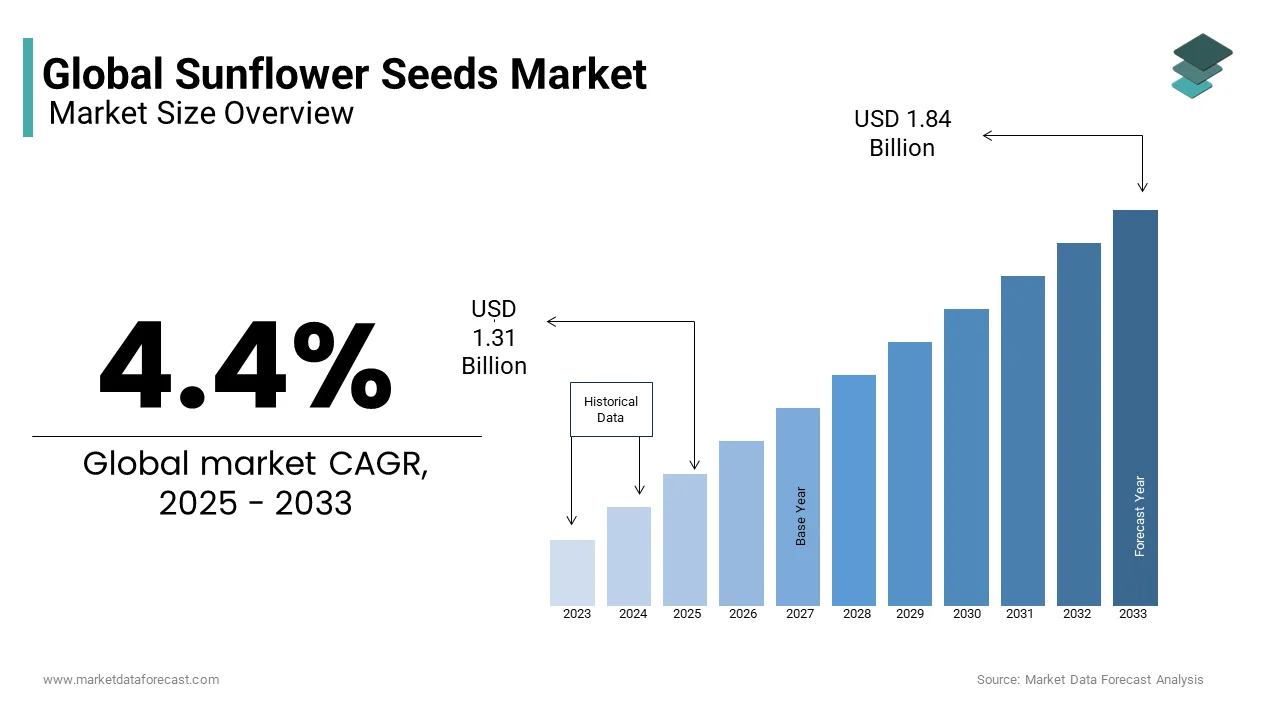
- Market Valuation: Valued at USD 1.31 billion in 2025, estimated at USD 1.37 billion in 2026, and projected to reach USD 1.93 billion by 2034, registering a steady CAGR of 4.4% from 2026 to 2034.
- Primary Growth Drivers: Rising consumer preference for plant-based protein sources, expansion of sunflower oil usage in commercial food processing, and growing demand for organic and non-GMO certified food products.
Global Sunflower Seeds Market Segment Metrics (2026–2034)
| Category | Leading Segment (2025 Position) | Fastest-Growing Segment |
|---|---|---|
| By Type | Oilseed type (holding the majority share as primary raw material for vegetable oil) | Non-oilseed / Confectionery type (growing due to direct human consumption) |
| By Colour | Black sunflower seeds (dominated due to superior oil content for extraction) | Striped sunflower seeds (expanding due to healthy snacking popularity) |
| By Application | Edible Oil (leading share as a staple household and food-service ingredient) | Snacks (anticipated to witness rapid growth from convenient eating habits) |
| By Region | Europe (dominated with a 34.9% share in 2025, led by Eastern production) | Asia-Pacific (fastest-growing region due to expanding population and dietary shifts) |
Major Sunflower Seeds Market Players & Competitive Landscape
Market Structure: Highly competitive global agricultural commodity landscape driven by high-oleic innovations, organic certifications, geopolitical supply chain adaptations, and dual utility across human nutrition and livestock feed.
Key Market Players: Advanta Seeds, Groupe Limagrain, Syngenta AG, Nuziveedu Seeds, Pannar Seeds, Kenkko Corporation, Conagra Foods Inc., DuPont, GIANT Snacks Inc., Sakata Seed America, American Meadows, Mahyco Seeds Company Ltd., Nuseeds, and Others.
Global Sunflower Seeds Market Size
The global sunflower seeds market size was valued at USD 1.31 billion in 2025 and is anticipated to reach USD 1.37 billion in 2026, from USD 1.93 billion by 2034, growing at a CAGR of 4.4% during the forecast period from 2026 to 2034.
Sunflower seeds are the edible, teardrop-shaped fruits of the sunflower plant (Helianthus annuus). Tucked inside a hard, black-and-white striped shell (hull), the creamy-white seeds are known for their firm yet tender texture and mildly nutty flavor. These seeds are prized for their high content of vitamin E selenium and healthy unsaturated fats making them a staple in health conscious diets. Beyond direct consumption sunflower seeds are a primary raw material for vegetable oil production which is essential for culinary and industrial applications. In Europe the crop holds significant agricultural importance particularly in Eastern regions where climatic conditions favor robust yields. As documented by the Food and Agriculture Organization of the United Nations, global sunflower seed production reached record highs of approximately 58 million metric tons in peak recent harvest seasons, emphasizing its critical role in global food security. The geopolitical landscape has heavily influenced supply chains with major producing nations adjusting export policies to manage domestic availability. Consumers increasingly prefer non genetically modified and organic varieties driving shifts in farming practices toward sustainable agriculture. The versatility of sunflower seeds allows their integration into diverse food products including breads cereals and confectionery items. Furthermore the byproduct known as sunflower meal serves as a high protein animal feed supporting the livestock industry. This dual utility ensures steady demand across both human nutrition and agricultural sectors. Regulatory frameworks regarding pesticide residues and labeling transparency continue to shape market dynamics encouraging producers to adopt cleaner farming methods. The interplay between dietary trends and agricultural output defines the current trajectory of this essential commodity market.
MARKET DRIVERS
Rising Consumer Preference for Plant Based Protein Sources
The global shift toward plant-based diets significantly drives demand for these seeds, which accelerates the growth of the sunflower seeds market. This is because these nutrient-dense seeds provide an affordable and accessible source of vegan protein. Health conscious consumers actively seek alternatives to animal proteins due to concerns about cholesterol levels and environmental sustainability associated with livestock farming. According to data from the International Food Information Council, a significant and growing portion of consumers actively prioritize plant-based protein in their diets, expanding the market for nutrient-rich options like seeds. Sunflower seeds provide approximately 21 grams of protein per 100 grams making them an attractive addition to vegetarian and vegan meal plans. They are also rich in essential amino acids fiber and minerals such as magnesium and zinc which support overall metabolic health. The convenience of snacking on roasted or raw seeds fits seamlessly into busy lifestyles while providing sustained energy release. Food manufacturers respond to this trend by incorporating sunflower seeds into protein bars granola mixes and plant based meat analogs to enhance texture and nutritional profiles. Retailers expand their offerings of bulk and packaged sunflower seeds to meet rising consumer interest in whole food ingredients. Nutritionists frequently recommend sunflower seeds for heart health due to their ability to lower bad cholesterol levels through phytosterol content. This scientific backing reinforces consumer confidence and encourages regular consumption. The affordability of sunflower seeds compared to nuts like almonds or walnuts makes them accessible to a broader demographic further accelerating adoption across various income groups.
Expansion of Sunflower Oil Usage in Food Processing Industries
The extensive use of sunflower oil in commercial food processing further propels the expansion of the sunflower seeds market. This is due to its favorable chemical properties and neutral flavor profile. Sunflower oil is highly valued for its high smoke point and stability during frying which makes it ideal for manufacturing snack foods frozen meals and baked goods. Data from the United States Department of Agriculture positions sunflower oil as one of the world's primary vegetable oils, seeing elevated demand in consumer markets that actively substitute away from palm or soybean oils. Food processors prefer high oleic sunflower oil because it contains higher levels of monounsaturated fats which improve shelf life and reduce the need for hydrogenation. This characteristic aligns with regulatory pressures to eliminate trans fats from processed foods in many countries including the United States and members of the European Union. The growing demand for clean label products prompts manufacturers to replace partially hydrogenated oils with high quality sunflower oil. Additionally the mild taste of sunflower oil does not overpower other ingredients allowing the natural flavors of food products to remain prominent. Industrial buyers secure long term contracts with seed suppliers to ensure consistent quality and volume for their production lines. The versatility of sunflower oil extends beyond frying to include salad dressings margarine and mayonnaise production. This broad application base ensures steady industrial demand for sunflower seeds regardless of fluctuations in retail snack consumption. The push for healthier cooking oils in institutional catering and fast food chains further bolsters the requirement for premium sunflower seed varieties.
MARKET RESTRAINTS
Vulnerability to Climate Change and Weather Variability
Climate change is a substantial restraint to the sunflower seeds market. This introduces unpredictability in crop yields and quality due to extreme weather events. Sunflowers are sensitive to temperature fluctuations and water stress during critical growth stages such as flowering and seed filling. According to the Intergovernmental Panel on Climate Change rising global temperatures and altered precipitation patterns have increased the frequency of droughts in major producing regions like Ukraine and Russia. These weather anomalies can lead to significant reductions in harvest volumes causing supply shortages and price volatility. Severe cyclical droughts have occasionally reduced sunflower crop yields by up to 30% in heavily impacted localized zones, causing localized disruptions and forcing adaptations in crop management. Heatwaves during the pollination period can result in poor seed set and lower oil content diminishing the economic value of the harvest. Farmers face increasing costs for irrigation and climate adaptation technologies which strain profit margins especially for smallholder growers. The uncertainty of weather patterns complicates planning for processors and exporters who rely on predictable supply chains. Insurance premiums for agricultural risks have risen making it more expensive to cultivate sunflowers in vulnerable zones. Additionally changing pest and disease dynamics linked to warmer climates require additional pesticide applications which may conflict with consumer preferences for organic and residue free products. These environmental challenges threaten the long term stability of sunflower production necessitating investment in drought resistant varieties and sustainable farming practices to mitigate risks.
Geopolitical Instability Disrupting Global Supply Chains
Geopolitical tensions in key producing regions create significant disruptions in the global sunflower seeds market. This affects availability and trade flows. Ukraine and Russia collectively account for over 50 percent of global sunflower oil exports according to the United States Foreign Agricultural Service making the market highly susceptible to regional conflicts. Trade restrictions export bans and logistical bottlenecks arising from political instability hinder the movement of seeds and oil to international markets. Ports and transportation infrastructure in conflict zones often face damage or closure delaying shipments and increasing freight costs. Importing countries experience sudden supply gaps leading to price spikes and inflation in food products that rely on sunflower oil. Buyers are forced to seek alternative sources such as Argentina or the European Union but these regions may not have sufficient surplus capacity to fully compensate for the shortfall. The uncertainty surrounding trade policies causes hesitation among investors and processors who fear sudden changes in tariff structures or embargoes. Sanctions imposed on specific entities further complicate financial transactions and insurance coverage for agricultural commodities. This instability erodes trust in long term supply contracts prompting buyers to diversify their sourcing strategies which may involve switching to other vegetable oils entirely. The ripple effects extend to downstream industries including food manufacturing and retail where cost increases are passed on to consumers. Resolving these geopolitical issues requires diplomatic efforts and the development of more resilient and diversified global supply networks to ensure food security.
MARKET OPPORTUNITIES
Development of High Oleic Sunflower Varieties
The advancement of high-oleic sunflower varieties offers a major opportunity for the growth of the sunflower seed market. This addresses health concerns and expands industrial applications. High oleic sunflowers contain elevated levels of monounsaturated fats similar to olive oil which are associated with improved cardiovascular health and reduced inflammation. According to the National Sunflower Association, specialized high-oleic sunflower varieties offer superior oxidative stability, making them ideal for high-temperature cooking and extending the shelf life of processed foods. Food manufacturers are increasingly adopting high oleic sunflower oil to replace partially hydrogenated oils and meet clean label demands without compromising performance. This shift creates a premium segment within the sunflower market where growers can command higher prices for certified high oleic seeds. Breeding programs continue to enhance yield potential and disease resistance in these varieties making them more attractive to farmers seeking profitability. The nutritional benefits appeal to health conscious consumers who read labels carefully and prioritize heart healthy fats in their diets. Retailers can differentiate their product offerings by highlighting the health advantages of high oleic sunflower products. Furthermore the industrial sector benefits from reduced need for antioxidants and preservatives lowering production costs. Collaborations between seed breeders and food companies accelerate the commercialization of new varieties tailored to specific end uses. This innovation drives value addition throughout the supply chain from farm to fork. The demand for high oleic sunflower products is expected to rise significantly as awareness of the benefits of monounsaturated fats grows. Consequently, this growth will offer lucrative opportunities for stakeholders.
Growth in Organic and Non GMO Certification Segments
The expanding market for organic and non-genetically modified organism certified sunflower seeds paves the way for producers to capture premium pricing and loyal customer bases, which is likely to drive the growth of the sunflower seeds market. Consumers are increasingly wary of synthetic pesticides and genetic modification driving demand for transparently sourced agricultural products. The Research Institute of Organic Agriculture (FiBL) show steady long-term growth in global organic food sales, with certified oilseeds, particularly soybeans and sunflower seeds, representing an expanding market segment. Organic sunflower seeds are cultivated without synthetic fertilizers or pesticides appealing to environmentally conscious shoppers who prioritize sustainability. Certification bodies provide verified labels that build trust and allow brands to justify higher price points. Retailers dedicate shelf space to organic snacks and baking ingredients creating visibility for certified sunflower products. The non GMO project verification has become a standard expectation for many consumers influencing purchasing decisions across multiple categories. Farmers transitioning to organic practices benefit from government subsidies and technical support in some regions reducing initial barriers. The premium nature of organic sunflower oil also attracts high end culinary markets and specialty food manufacturers. Export opportunities exist in regions with strict regulations on genetically modified crops such as the European Union. By aligning with these values producers can differentiate themselves in a crowded market. The trend toward clean eating supports long term growth in this segment as consumers associate organic certification with higher quality and safety. Investing in certification processes enables companies to access niche markets and build brand equity based on integrity and environmental stewardship.
MARKET CHALLENGES
Fluctuation in Input Costs and Production Expenses
Volatility in input costs is a major challenge for seed producers in the sunflower seeds market. This impacts profitability and plants decisions. Prices for essential inputs such as fertilizers fuel and labor have risen sharply in recent years due to global economic conditions and supply chain disruptions. According to the World Bank fertilizer prices experienced unprecedented spikes affecting agricultural budgets worldwide. Sunflower farming requires significant amounts of nitrogen and phosphorus for optimal growth and yield making producers vulnerable to these cost increases. Higher fuel prices elevate expenses for machinery operation transportation and irrigation further squeezing margins. Small and medium sized farmers often lack the financial reserves to absorb these shocks leading to reduced acreage or lower investment in crop protection measures. The inability to pass on all cost increases to buyers due to competitive market pressures exacerbates the financial strain. Fluctuating currency exchange rates also affect the cost of imported inputs and the competitiveness of exports. Producers must constantly adjust their financial planning to manage these uncertainties which can distract from operational efficiency. Access to credit becomes more difficult and expensive during periods of high inflation limiting expansion capabilities. The pressure to maintain yields despite cost constraints may lead to unsustainable farming practices that degrade soil health over time. Addressing this challenge requires efficient resource management adoption of precision agriculture technologies and collective bargaining power through cooperatives. Without stable input costs the long term viability of sunflower cultivation remains at risk for many growers.
Stringent Regulatory Compliance and Quality Standards
Navigating complex and varying regulatory requirements across different markets is a serious hurdle for exporters and processors, which holds back the expansion of the sunflower seeds market. Each country has specific standards regarding pesticide residues heavy metals and mycotoxin levels which must be strictly met to avoid rejection of shipments. Under regulations reviewed by the European Food Safety Authority, maximum residue limits for pesticides are strictly monitored and regularly revised, requiring continuous compliance and operational adaptation from global producers targeting the European market. Compliance involves rigorous testing documentation and certification processes that add time and cost to the supply chain. Failure to meet these standards can result in costly recalls loss of market access and damage to brand reputation. The lack of harmonization between international regulations creates confusion and inefficiency for global traders. For instance standards in Asia may differ significantly from those in Europe or North America requiring separate production batches or handling procedures. Traceability requirements mandate detailed record keeping from farm to final product increasing administrative burdens. Small producers often struggle to afford the necessary laboratory testing and compliance infrastructure putting them at a disadvantage. Changes in regulations can occur with little notice forcing rapid adjustments in farming practices. The threat of non compliance discourages entry into new markets and limits growth opportunities. Companies must invest in robust quality assurance systems and stay informed about regulatory developments to maintain competitiveness. This ongoing burden diverts resources from innovation and marketing efforts challenging the overall agility of the sunflower seeds market.
REPORT COVERAGE
| REPORT METRIC | DETAILS |
| Market Size Available | 2025 to 2034 |
| Base Year | 2025 |
| Forecast Period | 2026 to 2034 |
| CAGR | 4.4% |
| Segments Covered | By Type, Application, Distribution Channel, and Region. |
| Various Analyses Covered | Global, Regional, & Country Level Analysis; Segment-Level Analysis; DROC, PESTLE Analysis; Porter’s Five Forces Analysis, Competitive Landscape; Analyst Overview of Investment Opportunities |
| Regions Covered | North America, Europe, APAC, Latin America, Middle East & Africa |
| Market Leaders Profiled | Advanta Seeds, Groupe Limagrain, Syngenta AG, Nuziveedu Seeds, Pannar Seeds, KENKKO CORPORATION, CONAGRA FOODS INC., Dupont, GIANT Snacks Inc., Sakata seeds America, American Meadows, Mahyco seeds company Ltd., Nuseeds, and Others. |
SEGMENT ANALYSIS
By Colour Insights
The black sunflower seeds segment dominated the global market and accounted for a substantial share in 2025. This dominance of the segment was mainly driven by its superior oil content which makes them the preferred choice for edible oil extraction. These seeds typically contain between 40 and 50 percent oil by weight which is significantly higher than other varieties such as striped or white seeds. Data from the United States Department of Agriculture indicates that black oilseed variations represent the vast majority of cultivated sunflower acreage worldwide due to their high oil extraction efficiency rather than raw crop volume per hectare. The deep black hull indicates a thin shell that is easy to process mechanically reducing waste and increasing efficiency in industrial crushing facilities. Food manufacturers and oil refineries prioritize black seeds because they produce a light colored neutral tasting oil that is versatile for cooking frying and salad dressings. The high oleic variants of black seeds are particularly valued for their stability and health benefits driving premium pricing in specialized markets. Agricultural extension services in major producing countries like Russia and Ukraine recommend black hybrids for their drought resistance and adaptability to diverse soil conditions. This agronomic advantage ensures consistent supply volumes even in challenging climatic years. The dominance of black seeds is further reinforced by established supply chains and processing infrastructure designed specifically for this variety. Consumers indirectly support this segment through their high consumption of sunflower oil which accounts for a substantial portion of global vegetable oil intake. The economic efficiency of growing and processing black seeds ensures they remain the backbone of the sunflower industry.
The striped sunflower seeds segment is estimated to register the fastest CAGR of 6.8% during the forecast period. This growth is propelled by the rising popularity of sunflower seeds as a healthy snack option particularly in North America and Europe where consumers prefer larger kernels with distinctive appearances. Striped seeds have thicker shells and larger kernels compared to black oilseeds making them ideal for roasting salting and direct consumption. The visual appeal of striped seeds enhances their marketability in retail packaging attracting customers who associate the pattern with traditional and natural qualities. Flavor innovations such as dill barbecue and sea salt coatings are predominantly applied to striped varieties creating diverse product lines that cater to varying taste preferences. Social media trends promoting mindful snacking and protein rich diets have boosted the visibility of striped sunflower seeds among health conscious demographics. Retailers expand shelf space for premium striped seed products including organic and non genetically modified options which command higher margins. The convenience of ready to eat formats aligns with busy lifestyles while providing essential nutrients like vitamin E and magnesium. Growers are responding to this demand by planting more confectionery grade striped hybrids that offer better kernel size and uniformity. This shift from purely industrial use to direct consumer engagement drives the accelerated expansion of the striped segment.
By Application Insights
The edible oil application segment led the sunflower seeds market and captured a significant share in 2025 because sunflower oil is a staple ingredient in households and food service industries worldwide. Its high smoke point makes it suitable for frying baking and sautéing while its neutral flavor does not alter the taste of dishes. According to the Food and Agriculture Organization sunflower oil ranks among the top four most consumed vegetable oils globally due to its balance of affordability and nutritional value. The oil is rich in polyunsaturated fats and vitamin E which are associated with heart health and antioxidant protection appealing to health aware consumers. Food processors utilize sunflower oil extensively in the production of margarine mayonnaise salad dressings and canned goods because it remains stable during storage and processing. The transition away from trans fats has further boosted demand for high oleic sunflower oil which offers similar stability to hydrogenated oils without the health risks. Major fast food chains and restaurant groups have adopted sunflower oil for frying operations to meet consumer expectations for healthier cooking methods. Government dietary guidelines in many countries recommend replacing saturated fats with unsaturated alternatives supporting the continued growth of this segment. The widespread availability of sunflower oil in supermarkets and grocery stores ensures consistent demand regardless of economic fluctuations. Production capacity for sunflower oil continues to expand in key regions to meet rising global consumption ensuring that this application remains the primary driver of seed utilization.
The snacks application segment is anticipated to witness the fastest CAGR of 7.2% during the forecast period owing to the global shift toward nutritious and convenient eating habits. Consumers are increasingly replacing unhealthy processed snacks with whole food options that provide sustained energy and essential nutrients. Roasted and seasoned sunflower seeds are marketed as guilt free indulgences that satisfy cravings while delivering fiber minerals and healthy fats. The rise of keto paleo and vegan diets has further propelled the popularity of sunflower seeds as they fit seamlessly into these dietary frameworks. Product innovation plays a crucial role in this growth with manufacturers introducing novel flavors functional ingredients and portable packaging formats. Single serve packs cater to on the go consumption appealing to students office workers and athletes. Retail data indicates that premium snack brands featuring organic or non genetically modified sunflower seeds are outperforming conventional options in terms of revenue growth. Social media influencers and nutritionists frequently endorse sunflower seeds for their brain boosting and heart healthy properties enhancing consumer perception. The expansion of e commerce platforms allows niche snack brands to reach wider audiences facilitating rapid market penetration. This dynamic environment encourages continuous product development and marketing efforts that sustain the high growth trajectory of the snacks segment.
By Type Insights
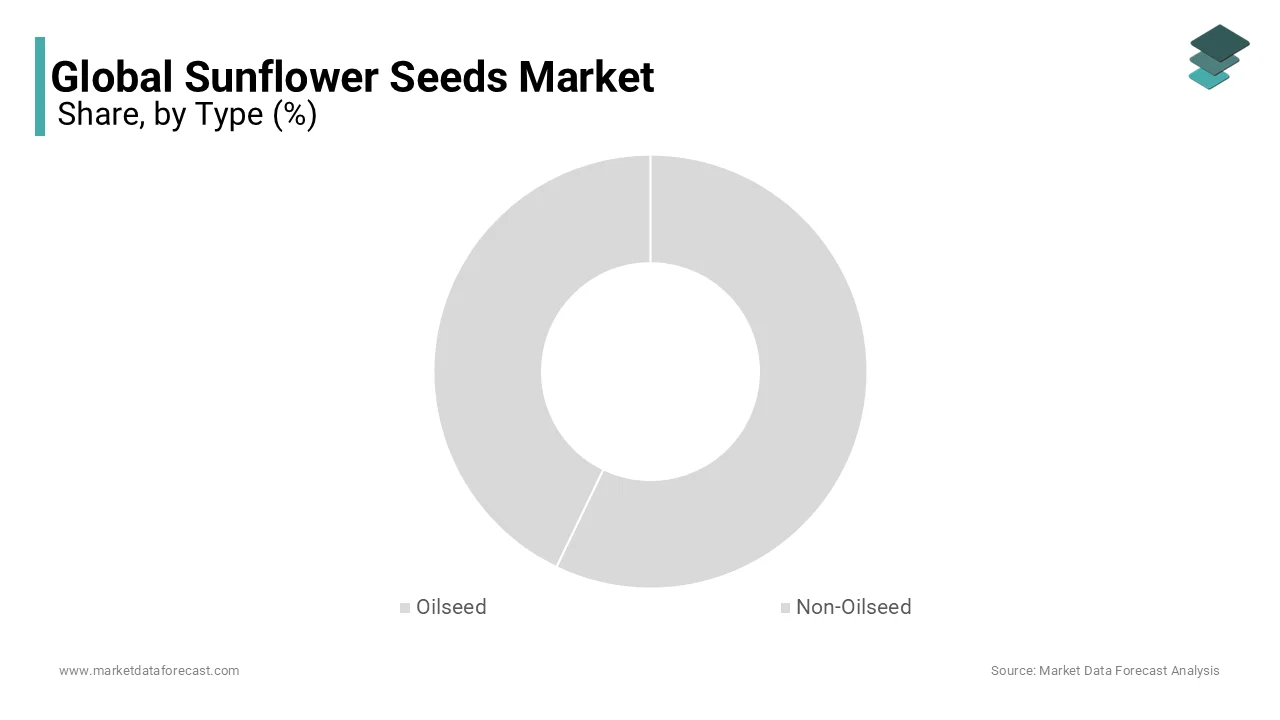
The oilseed type segment held the majority share of the sunflower seeds market in 2025. This supremacy of the segment was supported by the fact that it serves as the primary raw material for the global vegetable oil industry. Oilseed varieties are specifically bred to maximize oil extraction efficiency yielding between 40 and 50 percent oil content which is economically viable for large scale crushers. According to the International Sunflower Association over 90 percent of global sunflower production is dedicated to oil extraction reflecting the immense industrial demand for this commodity. The resulting sunflower meal is also a valuable byproduct used in animal feed creating a dual revenue stream for processors and farmers. Industrial buyers require consistent quality and volume which oilseed hybrids provide through standardized agricultural practices and high yield potential. The versatility of sunflower oil in food manufacturing cosmetics and biofuel applications ensures steady demand regardless of seasonal variations in snack consumption. Major producing countries prioritize oilseed cultivation to support their export economies and domestic food security needs. Infrastructure investments in crushing plants and refining facilities are concentrated around oilseed production hubs reinforcing its market leadership. The cost effectiveness of producing oil from sunflowers compared to other oil crops like olives makes it a preferred choice for budget conscious consumers and manufacturers. Regulatory support for renewable energy sources also boosts demand for sunflower oil in biodiesel production adding another layer of industrial utility. This multifaceted industrial application base secures the oilseed type as the cornerstone of the sunflower market.
The non-oilseed or confectionery type segment is likely to experience the fastest CAGR of 6.5% over the forecast period due to increasing direct human consumption. These seeds are characterized by larger kernels and thicker striped shells making them ideal for roasting and snacking rather than oil extraction. Consumers appreciate the crunchy texture and nutty flavor of non oilseed varieties which enhance the sensory experience of eating. The rise of health consciousness has led to greater awareness of the nutritional benefits of whole seeds including their high fiber and protein content. Retailers are responding by offering a wider variety of flavored and seasoned non oilseed products catering to diverse palates. Organic and non genetically modified certifications are more common in this segment appealing to environmentally and health conscious shoppers. The growth of e commerce has facilitated the distribution of specialty non oilseed brands that were previously limited to local markets. Agricultural researchers are developing new confectionery hybrids with improved disease resistance and larger kernel sizes to meet quality standards. This focus on quality and consumer preference drives the accelerated growth of the non-oilseed segment distinguishing it from the bulk-oriented oilseed market.
REGIONAL ANALYSIS
Europe Market Analysis
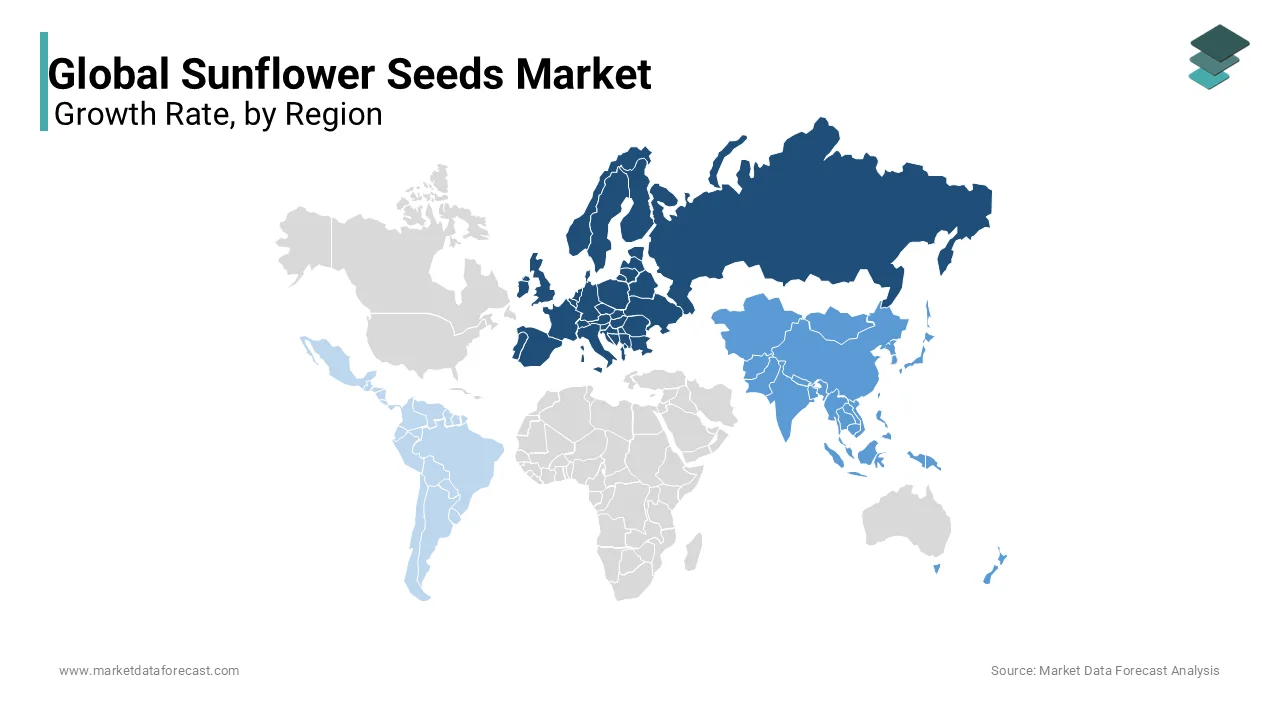
Europe dominated the global sunflower seeds market and occupied a 34.9% share in 2025. This dominance of the European market was driven by major producing countries such as Ukraine Romania and Bulgaria which possess ideal climatic conditions and extensive agricultural land dedicated to sunflower cultivation. According to Eurostat, the European Union is a net importer of sunflower seeds and oil, though individual member states leverage advanced farming technologies to serve as major internal regional exporters. The region strong demand for healthy cooking oils drives domestic consumption while surplus production supports global trade. Regulatory frameworks in Europe emphasize sustainability and non genetically modified crops influencing farming practices and product quality. The war in Ukraine has disrupted supply chains but also spurred investment in alternative producing regions within the EU to ensure food security. Consumers in Western Europe increasingly prefer organic and high oleic sunflower products pushing producers to adopt premium standards. The presence of major crushing and refining facilities in ports like Rotterdam and Constanta facilitates efficient export logistics. Government subsidies under the Common Agricultural Policy support sunflower farmers encouraging stable production levels. The cultural integration of sunflower oil in Mediterranean and Eastern European cuisines ensures consistent domestic demand. Research institutions in Europe lead in developing drought resistant and high yielding hybrids contributing to global agricultural advancements. This combination of production capacity technological expertise and regulatory support solidifies Europes dominant position in the global sunflower seeds market.
Asia Pacific Market Analysis
The Asia Pacific is the fastest growing region in the global sunflower seeds market due to a large and expanding population alongside shifting dietary preferences toward healthier fats. Countries such as China India and Australia are increasing their sunflower cultivation areas to reduce dependence on imported vegetable oils. As documented by the Food and Agriculture Organization and market reports, sunflower seed imports in parts of Asia have risen significantly, driven by rapidly expanding consumer demand for healthier oils that outpaces local agricultural output. The growing middle class in emerging economies has greater purchasing power for premium cooking oils and healthy snacks fueling market expansion. Urbanization leads to changes in eating habits with increased consumption of processed foods that utilize sunflower oil for frying and baking. Government initiatives in countries like India promote oilseed self sufficiency through minimum support prices and technical assistance to farmers. The awareness of health benefits associated with unsaturated fats is spreading through public health campaigns and media influence. Retail modernization in Asia Pacific improves access to packaged sunflower seeds and oil products in supermarkets and convenience stores. The region diverse culinary traditions incorporate sunflower oil in various dishes enhancing its acceptance among local populations. Investment in processing infrastructure by multinational companies strengthens the supply chain and ensures product availability. The potential for further market penetration remains high as per capita consumption of vegetable oils in Asia is still lower than in Western countries indicating significant room for growth.
North America Market Analysis
North America holds a significant position in the global sunflower seeds market because of advanced agricultural technology and a robust culture of healthy snacking. The United States and Canada are major producers of both oilseed and confectionery varieties leveraging precision farming techniques to maximize yields and quality. Also, the United States Department of Agriculture indicates that North American sunflower production achieves exceptionally high efficiency and record yields, though the crop is primarily processed to satisfy robust domestic market demand rather than global export markets. The region is a leader in developing high oleic and non genetically modified hybrids that meet specific consumer and industrial requirements. The popularity of sunflower seeds as a snack is deeply ingrained in North American culture particularly in sports and outdoor activities driving steady domestic demand. Health trends favoring plant based proteins and clean label ingredients boost sales of premium roasted and seasoned sunflower seeds. Retailers offer a wide range of sunflower products including organic and gluten free options catering to diverse dietary needs. The presence of major food processing companies ensures stable demand for sunflower oil in manufactured goods. Research universities and private firms collaborate on breeding programs to enhance disease resistance and climate adaptability. Trade agreements facilitate the export of sunflower products to neighboring regions and overseas markets. The mature market structure supports innovation in value added products ensuring continued relevance and growth in the competitive global landscape.
COMPETITIVE LANDSCAPE
The competition in the sunflower seeds market is intense among global agribusiness giants regional processors and emerging local brands. Large multinational corporations leverage their scale and integrated supply chains to offer competitive pricing and consistent quality to industrial buyers. They dominate the edible oil segment through extensive processing networks and established distribution channels. Regional players compete by focusing on niche markets such as organic non genetically modified or locally sourced sunflower products that appeal to specific consumer preferences. Innovation in seed genetics and sustainable farming practices serves as a key differentiator as companies strive to improve yields and reduce environmental impact. Price volatility due to weather conditions and geopolitical factors forces competitors to adopt robust risk management strategies. Brand loyalty in the snack segment is driven by flavor innovation packaging convenience and health claims. Retailers play a significant role by curating private label offerings that challenge branded products on price and quality. The market sees continuous entry of new players introducing unique value propositions such as carbon neutral certification or direct trade models. This dynamic environment requires constant adaptation and investment in technology and sustainability to maintain relevance and profitability.
KEY MARKET PLAYERS
Some of the key players identified throughout the sunflower seeds market value chain include AdSeedsSe.ed.ss
- Groupe Limagrain
- Syngenta AG
- Archer Daniels Midland Company
- Nuziveedu Seeds
- Bunge Limited
- Cargill Incorporated
- Pannar Seeds
- KENKKO CORPORATION
- CONAGRA FOODS INC
- Dupont
- GIANT Snacks Inc
- Sakat Seeds America
- American Meadows
- Mahyco Seeds Company Ltd.
- Nuseedsetc.
Top Players In The Market
- Cargill Incorporated stands as a pivotal force in the global sunflower seeds market by integrating extensive agricultural sourcing with advanced processing capabilities. The company operates numerous crushing facilities worldwide that convert raw seeds into high quality oil and protein rich meal for animal feed. Cargill recently invested in expanding its sustainable sourcing programs to ensure traceability and environmental responsibility across its supply chain. These initiatives include partnerships with farmers to adopt regenerative agriculture practices that improve soil health and yield stability. The corporation also focuses on developing high oleic sunflower oil variants to meet growing demand from health conscious food manufacturers. By leveraging its global logistics network Cargill ensures consistent product availability even during periods of geopolitical instability. Its commitment to innovation in seed genetics and processing technology strengthens its position as a reliable supplier for both industrial and retail customers seeking premium sunflower products.
- Archer Daniels Midland Company plays a crucial role in the sunflower seeds sector through its comprehensive origination and processing infrastructure. The company sources sunflower seeds from key producing regions and processes them into edible oils and nutritional ingredients for various industries. ADM has recently enhanced its portfolio of specialty oils including high oleic sunflower oil which offers superior stability for frying and baking applications. The company actively collaborates with food and beverage manufacturers to create customized solutions that meet specific functional and nutritional requirements. ADM also emphasizes sustainability by implementing energy efficient technologies in its processing plants and reducing water usage. Its global reach allows it to navigate complex trade dynamics and provide stable supply to customers worldwide. Through continuous research and development ADM drives innovation in seed varieties and extraction methods ensuring high quality outputs. This strategic focus on value added products and operational efficiency reinforces its leadership in the competitive global sunflower market.
- Bunge Limited is a major participant in the sunflower seeds market known for its robust agribusiness operations and downstream processing capabilities. The company connects farmers to consumers by purchasing sunflower seeds and transforming them into essential cooking oils and animal feed ingredients. Bunge has recently expanded its production capacity in Europe and South America to capitalize on growing demand for vegetable oils. The firm prioritizes sustainable sourcing by working closely with suppliers to implement best practices in crop management and environmental stewardship. Bunge also invests in digital tools that enhance supply chain transparency and efficiency allowing for better risk management. Its focus on nutrition drives the development of healthier oil blends that appeal to modern consumers. By maintaining strong relationships with both growers and buyers Bunge ensures a resilient supply chain. The companys strategic investments in infrastructure and sustainability initiatives solidify its reputation as a trusted partner in the global sunflower seeds industry.
Top Strategies Used By Key Market Participants
Key players in the sunflower seeds market primarily focus on vertical integration to control supply chains from farm to final product ensuring quality and consistency. Companies invest heavily in sustainable agriculture programs to secure reliable raw material sources while meeting environmental standards. Developing high oleic and non genetically modified varieties allows firms to cater to health conscious consumers and premium market segments. Strategic expansion of processing facilities in key producing regions enhances operational efficiency and reduces logistical costs. Partnerships with local farmers provide technical support and financial incentives promoting better yields and adherence to safety protocols. Diversification into value added products such as flavored snacks and specialized oils helps brands differentiate themselves in crowded markets. Digital transformation initiatives improve traceability and data analytics enabling better decision making and risk mitigation. Mergers and acquisitions allow large corporations to consolidate market presence and access new technologies or geographic markets quickly. These combined strategies enable participants to navigate volatility and maintain competitive advantages in the global sunflower seeds landscape.
MARKET SEGMENTATION
This research report on the global sunflower seed market is segmented and sub-segmented based on Type, Application, Distribution channel, and Region.
By Type
- Oilseed
- Non-Oilseed
By Application
- Edible oil
- Bakery Products
- Confectionary
By Distribution Channel
- Supermarkets
- Online Stores
- Retail Stores
By Region
- North America
- Europe
- Asia Pacific
- Latin America
- Middle East and Africa