- Product Description Description
- Table of Contents TOC
- List of Table & Figure LOT
- Get Free Sample PDF Sample PDF
Market Size, 2025
$971.85 MnMarket Estimate, 2026
$1024 MnMarket Forecast, 2034
$1560 MnCAGR, 2026–2034
5.40%Global Terminal Tractor Market Report Summary
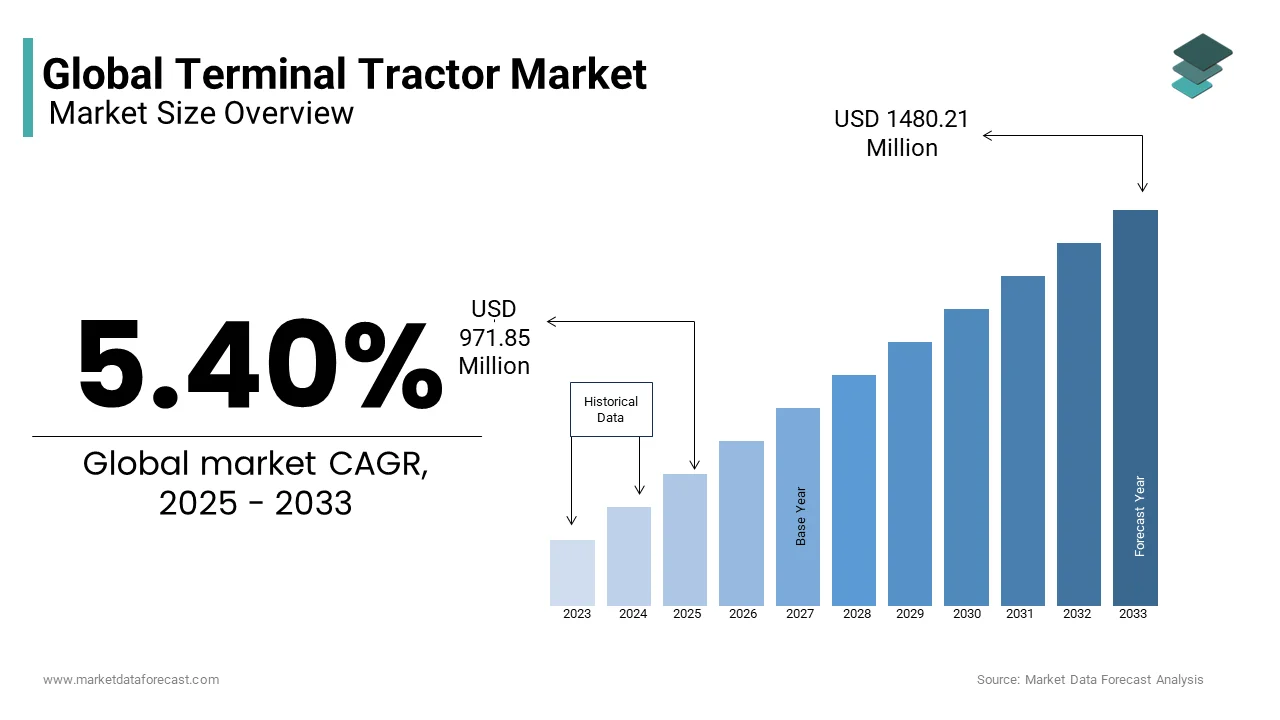
The global terminal tractor market was valued at USD 971.85 million in 2025, is estimated to reach USD 1,024.33 million in 2026, and is projected to reach USD 1,560.14 million by 2034, expanding at a CAGR of 5.40% during the forecast period from 2026 to 2034. The global terminal tractor market is witnessing steady growth as ports, freight terminals, warehouses, and intermodal logistics hubs continue to modernize cargo handling operations. Rising global trade volumes, increasing containerized freight movement, and expanding investments in port infrastructure are driving demand for high-performance terminal tractors capable of improving operational efficiency. The transition toward automated logistics, fleet electrification, and intelligent fleet management systems is further reshaping the market landscape. In addition, growing emphasis on reducing emissions, optimizing turnaround times, and enhancing supply chain productivity is encouraging logistics operators to invest in advanced terminal tractors equipped with telematics, autonomous capabilities, and energy-efficient powertrains.
Key Market Trends
- Fleet electrification is accelerating as port operators adopt battery-electric and low-emission terminal tractors to meet sustainability goals and regulatory requirements.
- Automation and autonomous vehicle technologies are transforming cargo handling operations by improving safety, productivity, and fleet utilization.
- Telematics and IoT-enabled fleet management platforms are enabling real-time vehicle monitoring, predictive maintenance, and optimized asset performance.
- Expansion of smart ports and automated logistics hubs is increasing demand for technologically advanced terminal tractors with connected capabilities.
- Continuous investments in global trade infrastructure and intermodal transportation networks are creating long-term growth opportunities for terminal tractor manufacturers.
Segmental Insights
Based on fuel type, the diesel segment accounted for the largest share of the global terminal tractor market in 2025. Diesel-powered terminal tractors continue to dominate due to their high towing capacity, operational reliability, extended working hours, and suitability for demanding port, container terminal, and industrial logistics applications.
Based on end-use industry, the logistics and transportation segment held the leading share of the global terminal tractor market in 2025. The segment's dominance is driven by rising freight volumes, expanding warehouse operations, increasing intermodal cargo movement, and growing investments in efficient material handling equipment across global supply chains.
Regional Insights
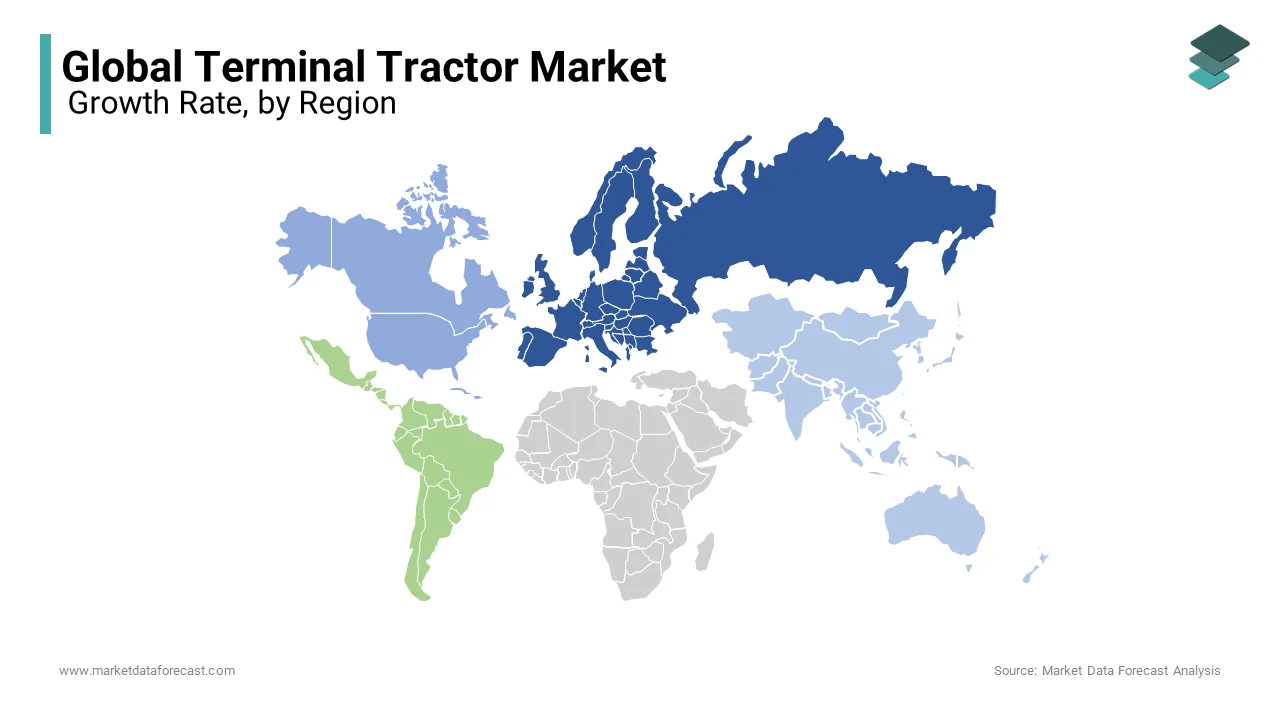
North America led the global terminal tractor market in 2025, supported by its highly developed logistics infrastructure, advanced port facilities, and widespread adoption of modern cargo handling technologies. Europe is expected to maintain steady growth as ports continue investing in sustainable transportation equipment, fleet electrification, and automated terminal operations. Asia-Pacific is projected to record the fastest growth during the forecast period, driven by rapid industrialization, expanding manufacturing capacity, large-scale port modernization projects, and increasing international trade activities. Latin America is anticipated to experience consistent market development as governments and private operators strengthen logistics infrastructure, modernize freight terminals, and improve export-oriented transportation networks.
Competitive Landscape
The global terminal tractor market is characterized by strong competition among established material handling equipment manufacturers and specialized industrial vehicle producers focused on innovation, operational efficiency, and sustainability. Leading companies are investing in electric terminal tractors, autonomous driving technologies, intelligent fleet management systems, and connected vehicle platforms to address the evolving needs of ports, logistics centers, and industrial facilities. Strategic partnerships with logistics providers, infrastructure operators, and technology companies are accelerating product development and market expansion. Manufacturers are also strengthening their global distribution networks, expanding after-sales service capabilities, and introducing low-emission solutions that comply with increasingly stringent environmental regulations. As global supply chains become more automated and sustainability-focused, continuous investment in smart mobility technologies and next-generation terminal equipment is expected to remain a key competitive differentiator.
Prominent players in the global terminal tractor market include Kalmar (Finland), Volvo, Konecranes (Finland), Hyster (U.S.), SANY (China), CVS Ferrari (Italy), Hoist Liftruck (U.S.), and other regional and international manufacturers.
Global Terminal Tractor Market Size
The global terminal tractor market size was valued at USD 971.85 million in 2025 and is anticipated to reach USD 1024.33 million in 2026 to reach USD 1560.14 million by 2034, growing at a CAGR of 5.40% during the forecast period from 2026 to 2034.
Terminal tractor are specialized heavy duty vehicles designed exclusively for short distance hauling of semi-trailers within confined logistics environments such as ports, rail yards, distribution centers, and manufacturing facilities. Also known as yard trucks or shunters, these vehicles are engineered for high frequency stop start operations, rapid coupling and decoupling, and exceptional maneuverability in tight spaces. Unlike long haul trucks, terminal tractors prioritize durability, driver visibility, and ease of entry and exit over highway speed or fuel economy over long distances. According to the International Transport Forum, global freight transport is projected to more than double by 2050, driven by rising consumption and expanding supply chains, which necessitates efficient internal logistics handling. As per the European Commission, road freight accounts for approximately 25.7% of all inland freight transport performance in the EU, creating immense pressure on intermodal hubs to optimize turnaround times. The efficiency of terminal tractors directly impacts the throughput of these critical nodes, reducing bottlenecks and demurrage costs. As e commerce accelerates the volume of parcels and goods moving through distribution networks, the role of terminal tractors becomes increasingly vital. These vehicles often operate in shifts around the clock, requiring robust construction to withstand rigorous use. The transition toward automated and electric variants is reshaping the operational landscape, aligning with broader sustainability goals while enhancing productivity. This niche yet essential segment supports the backbone of global trade by ensuring seamless transfer of cargo between different modes of transport and storage facilities.
MARKET DRIVERS
Surge in E-Commerce and Last Mile Logistics Demand
The exponential growth of e-commerce is one of the key factors fuelling the growth of the global terminal tractor market as it promotes need for faster and more efficient material handling in distribution centers. Online retail sales have transformed supply chain dynamics, requiring warehouses to process higher volumes of goods with greater speed and accuracy. According to the United Nations Conference on Trade and Development, global e commerce sales reached 26.7 trillion dollars in 2023, compelling logistics providers to expand their infrastructure and operational capabilities. Terminal tractors are essential in these facilities for moving trailers between loading docks and staging areas, ensuring that outbound shipments are prepared promptly. The rise of same day and next day delivery expectations puts immense pressure on yard operations to minimize dwell times. Facilities that rely on manual labor or inefficient equipment face bottlenecks that can delay entire supply chains. By deploying dedicated terminal tractors, companies can streamline internal movements, reduce trailer turnaround times, and increase overall throughput. As per industry insights on yard management, optimized systems can improve facility efficiency by up to 30%. Furthermore, the proliferation of fulfillment centers in urban and suburban areas increases the density of trailer movements, necessitating reliable and agile shunting solutions. As consumer demand for rapid delivery continues to grow, the reliance on terminal tractors to maintain operational fluidity in high volume distribution networks becomes indispensable, driving sustained investment in this specialized vehicle segment.
Expansion of Global Trade and Intermodal Transportation Infrastructure
The expansion of global trade volumes and the development of intermodal transportation infrastructure are further contributing to the terminal tractor market expansion. As international commerce grows, ports and rail yards handle increasing numbers of containers, requiring efficient equipment to move them between ships, trains, and trucks. According to the International Maritime Organization, global container port throughput has demonstrated steady long term growth, necessitating efficient equipment to handle increased volume. This growth places strain on port infrastructure, making the efficiency of yard operations critical to preventing congestion and delays. Terminal tractors play a pivotal role in this ecosystem by quickly positioning containers for loading and unloading, thereby maximizing the utilization of cranes and other handling equipment. As per the World Bank, efficient port operations are key to reducing trade costs and enhancing competitiveness for nations. Investments in new port terminals and rail freight corridors, particularly in emerging economies, create fresh demand for specialized shunting vehicles. Additionally, the shift toward intermodal transport, which combines rail and road freight to reduce carbon emissions, increases the complexity of yard operations. Terminal tractors facilitate the seamless transfer of trailers between rail cars and road transport, ensuring smooth connectivity. As governments invest in upgrading logistics infrastructure to support growing trade flows, the need for robust and efficient terminal tractors rises and this is supporting the backbone of global supply chains.
MARKET RESTRAINTS
High Initial Capital Investment and Maintenance Costs
The substantial initial capital investment required for acquiring terminal tractors is primarily hindering the terminal tractor market growth. Specialized terminal tractors are expensive due to their heavy duty construction, specialized components, and low production volumes compared to standard commercial trucks. According to industry analysis, the average cost of a new terminal tractor can range from 100000 to 150000 dollars, depending on specifications and technology features. For many businesses, this high upfront cost presents a barrier to entry or expansion, forcing them to rely on older, less efficient equipment or third party services. Additionally, maintenance costs for these vehicles are elevated due to the rigorous nature of their operation, which involves frequent stopping, starting, and heavy lifting. The harsh operating environment in ports and yards leads to accelerated wear and tear on brakes, transmissions, and tires. According to the American Trucking Associations, maintenance expenses remain a significant portion of total operating costs for heavy duty vehicles. Spare parts for specialized terminal tractors are often proprietary and costly, further increasing the total cost of ownership. Limited availability of skilled technicians familiar with these specific vehicles can also lead to prolonged downtime and higher repair bills. These financial burdens discourage some operators from upgrading their fleets, slowing the adoption of newer, more efficient models and restraining market growth among price sensitive segments.
Stringent Environmental Regulations and Emission Standards
Strict environmental regulations and emission standards impose significant constraints on the terminal tractor market, particularly for diesel powered models which have traditionally dominated the sector. Governments worldwide are implementing tighter limits on nitrogen oxides and particulate matter emissions to combat air pollution in urban and industrial areas. According to the European Environment Agency, non road mobile machinery including yard trucks contributes significantly to local air quality issues, prompting the enforcement of strict emission standards. Compliance with these regulations requires manufacturers to integrate complex after treatment systems such as selective catalytic reduction and diesel particulate filters, which increase vehicle complexity and cost. For operators, transitioning to compliant vehicles involves substantial capital expenditure and potential operational disruptions during the retrofitting or replacement process. As per state mandates in regions like California, regulations such as the Advanced Clean Fleets rule mandate the gradual phase out of diesel drayage trucks, forcing terminal operators to accelerate their transition to zero emission alternatives. However, the limited availability and higher cost of electric or hydrogen fueled terminal tractors pose challenges for immediate compliance. Smaller ports and yards may lack the infrastructure to support alternative fuel vehicles, such as charging stations or hydrogen refueling points. These regulatory pressures create uncertainty and financial strain for operators, slowing down fleet renewal cycles and restraining the market for traditional diesel terminal tractors while the alternative fuel ecosystem matures.
MARKET OPPORTUNITIES
Adoption of Electric and Alternative Fuel Technologies
The transition toward electric and alternative fuel technologies presents a major opportunity for the terminal tractor market, driven by corporate sustainability goals and government incentives. Electric terminal tractors offer zero tailpipe emissions, reduced noise levels, and lower operating costs due to fewer moving parts and cheaper energy sources. According to BloombergNEF, the total cost of ownership for electric medium and heavy duty vehicles is becoming increasingly competitive with diesel counterparts, especially in high utilization scenarios typical of yard operations. Many logistics companies are committing to net zero emissions targets, creating strong demand for green mobility solutions. Governments in Europe and North America are offering subsidies and tax credits for purchasing zero emission commercial vehicles, further enhancing their economic appeal. As per the European Union’s Green Deal, funding is provided for clean transport infrastructure, encouraging ports and distribution centers to electrify their fleets. Manufacturers are responding by launching robust electric terminal tractors with fast charging capabilities and sufficient battery life for multi shift operations. The quiet operation of electric vehicles also improves working conditions for drivers and reduces noise pollution in surrounding communities. As battery technology advances and charging infrastructure expands, the barrier to entry for electric terminal tractors decreases. This shift allows operators to future proof their fleets against tightening regulations while achieving significant long term savings, opening a lucrative avenue for growth in the sustainable segment of the market.
Integration of Automation and Autonomous Yard Operations
The integration of automation and autonomous technologies into terminal tractor operations offers a promising opportunity for the global terminal tractor market. Autonomous terminal tractors can operate continuously without breaks, optimizing yard throughput and reducing human error. According to the International Federation of Robotics, the adoption of service robots in logistics is accelerating, with autonomous mobile robots becoming increasingly common in warehouse environments. Extending this automation to yard operations allows for precise and predictable trailer movements, improving coordination with loading docks and rail schedules. Companies like Kalmar and Konecranes are developing automated guided vehicles and remote controlled terminal tractors that can be integrated into existing terminal operating systems. These solutions reduce the dependency on skilled drivers, a scarce resource in many regions, and lower labor costs. As per the Society of Automotive Engineers, autonomous vehicles can improve safety by eliminating risks associated with human fatigue and distraction. Furthermore, data generated by automated systems enables predictive maintenance and real time optimization of yard logistics. As artificial intelligence and sensor technologies mature, the feasibility of fully autonomous yard operations increases. Early adopters gain a competitive advantage through superior efficiency and reliability. This technological evolution opens new revenue streams for manufacturers through software licenses and service contracts, transforming the terminal tractor market from hardware focused industry to a technology driven ecosystem.
MARKET CHALLENGES
Infrastructure Limitations for Alternative Fuel Vehicles
The lack of adequate infrastructure for charging and refueling alternative fuel terminal tractors poses a significant challenge to market adoption. While electric and hydrogen fueled vehicles offer environmental benefits, their widespread deployment is hindered by the scarcity of supporting infrastructure in many logistics hubs. According to the International Energy Agency, the number of public charging points for heavy duty vehicles remains insufficient to support large scale electrification of commercial fleets. Ports and distribution centers often require substantial upgrades to their electrical grids to accommodate high power charging stations, which involves significant time and capital investment. In remote or older facilities, grid capacity may be inadequate, necessitating costly infrastructure expansions. Hydrogen refueling stations are even rarer, limiting the viability of hydrogen fuel cell terminal tractors to a few pilot projects. The uncertainty regarding infrastructure development timelines creates hesitation among operators who fear stranded assets if they invest in vehicles that cannot be reliably fueled. Additionally, the lack of standardized charging protocols and connectors across different manufacturers complicates interoperability. Without a robust and accessible infrastructure network, the transition to alternative fuels remains slow, forcing operators to stick with diesel despite regulatory pressures. This infrastructure gap represents a critical bottleneck that must be addressed through coordinated efforts between governments, utility providers, and industry stakeholders to unlock the full potential of green terminal tractors.
Shortage of Skilled Labor and Operational Expertise
The shortage of skilled labor capable of operating and maintaining modern terminal tractors presents a persistent challenge for the global market expansion. As vehicles become more technologically advanced with electronic controls and automated features, the skill set required for drivers and technicians evolves rapidly. According to the American Trucking Associations, the trucking industry faces a persistent shortage of drivers, a trend that extends to specialized roles such as terminal tractor operators. Finding personnel who can safely and efficiently maneuver these vehicles in congested yard environments is increasingly difficult. Moreover, the transition to electric and autonomous systems requires technicians with expertise in high voltage electronics and software diagnostics, skills that are in short supply in the traditional automotive repair workforce. As per the National Institute for Automotive Service Excellence, there is a recognized gap in the availability of technicians certified in advanced electrical systems, creating a bottleneck for maintenance services. This labor gap leads to increased overtime costs, higher turnover rates, and potential operational delays. Training programs often lag behind technological advancements, leaving employers to bear the burden of upskilling their workforce. The physical demands of the job and irregular shift patterns also contribute to recruitment difficulties. Without a steady pipeline of qualified personnel, logistics companies struggle to maximize the efficiency of their terminal tractor fleets, hindering productivity and growth in a sector that relies heavily on human operational expertise.
REPORT COVERAGE
| REPORT METRIC | DETAILS |
| Market Size Available | 2025 to 2034 |
| Base Year | 2025 |
| Forecast Period | 2026 to 2034 |
| CAGR | 11.42% |
| Segments Covered | By Fuel Type, Application, Industry, and Region. |
| Various Analyses Covered | Global, Regional, & Country Level Analysis; Segment-Level Analysis; DROC, PESTLE Analysis; Porter’s Five Forces Analysis; Competitive Landscape; Analyst Overview of Investment Opportunities |
| Regions Covered | North America, Europe, APAC, Latin America, Middle East & Africa |
| Market Leaders Profiled | Kalmar (Finland), Volvo, Konecranes (Finland), Hyster (US), Sany (China), CVS Ferrari (Italy), Hoist Lift ruck (US), and Others. |
SEGMENT ANALYSIS
By Fuel Insights
The diesel fuel segment occupied the highest share of the global market in 2025. The dominance of diesel fuel segment in the global market can be credited to its established infrastructure, high torque output, proven reliability in heavy duty applications, the extensive network of refueling stations available at ports, rail yards, and distribution centers globally, which ensures uninterrupted operations for fleet operators. According to the International Energy Agency, diesel remains the primary fuel for heavy duty transport, accounting for a majority of energy consumption in the sector due to its superior energy density and cost effectiveness. Terminal tractors operate in rigorous stop start cycles that demand robust engine performance, a characteristic where diesel engines excel compared to early generation alternative fuels. The lower upfront cost of diesel vehicles compared to electric or hydrogen counterparts makes them accessible for small and medium sized logistics providers. Additionally, the familiarity of maintenance crews with diesel technology reduces downtime and repair complexity. In regions with limited electrical grid capacity, such as many developing nations, diesel remains the only viable option for continuous yard operations. The long lifespan of diesel engines, often exceeding 20000 hours of operation, provides a favorable total cost of ownership for high utilization assets. Despite environmental concerns, the immediate operational reliability and economic advantages ensure that diesel continues to power the majority of terminal tractors worldwide, particularly in large intermodal hubs where efficiency and uptime are critical metrics for success.

On the other side, the electric terminal tractors segment is estimated to showcase a CAGR of 15.4% over the forecast period in the global market owing to the stringent emission regulations and corporate sustainability commitments that mandate the decarbonization of logistics operations. According to BloombergNEF, the total cost of ownership for electric heavy duty vehicles is becoming increasingly competitive with diesel models, especially in high utilization scenarios typical of yard operations where regenerative braking recovers significant energy. Governments in Europe and North America are providing substantial subsidies and tax incentives for purchasing zero emission commercial vehicles, accelerating adoption rates. For instance, the European Union’s Alternative Fuels Infrastructure Regulation mandates the deployment of charging points at major transport hubs, addressing previous range and infrastructure concerns. Electric terminal tractors offer distinct operational advantages such as reduced noise levels and lower maintenance requirements due to fewer moving parts, which appeals to operators managing urban distribution centers near residential areas. Major manufacturers like Kalmar and Terberg are launching advanced electric models with fast charging capabilities that support multi shift operations without significant downtime. As battery technology improves and costs decline, the barrier to entry lowers, encouraging more fleet operators to transition. The ability to integrate electric tractors with smart grid systems for optimized energy usage further enhances their appeal, making electricity the preferred choice for future proofing logistics fleets against evolving environmental standards.
By End-Use Industry Insights
The logistics and transportation segment captured the dominant share of the global market in 2025. The growth of the logistics and transportation segment in the global market is attributed to the massive volume of goods moving through global supply chains, the critical role of intermodal hubs and the expansion of e commerce and international trade that necessitates efficient handling of containers and trailers at ports, rail terminals, and distribution centers. According to the World Bank, global container port traffic has grown steadily, requiring robust equipment to manage the increasing flow of cargo. Logistics companies prioritize terminal tractors to minimize dwell times and maximize asset utilization, as delays in yard operations can have cascading effects on entire supply chains. The rise of just in time manufacturing and rapid delivery expectations further intensifies the need for speedy and reliable shunting services. Large third party logistics providers invest heavily in modernizing their fleets to stay competitive, driving demand for both diesel and electric terminal tractors. The standardized nature of container handling in this industry allows for efficient use of specialized equipment, making terminal tractors indispensable. Additionally, the consolidation of logistics networks into larger hubs increases the concentration of trailer movements, creating economies of scale that justify significant investments in high performance terminal tractors. This sector’s continuous growth and central role in global commerce ensure its position as the primary consumer of terminal tractor technology.
However, the food and beverages segment is the fastest growing end use segment for terminal tractors and is expected to grow at a CAGR of 10.4% over the forecast period owing to the rising demand for cold chain logistics and perishable goods transport, changing consumer preferences for fresh and imported foods that require temperature controlled storage and rapid movement through distribution networks. According to the Food and Agriculture Organization of the United Nations, global food trade has increased significantly, necessitating specialized handling facilities that maintain product integrity. Terminal tractors in this sector often operate in refrigerated yards where quick coupling and decoupling of refrigerated trailers are essential to prevent temperature fluctuations. The expansion of supermarket chains and online grocery services has led to the construction of large regional distribution centers equipped with advanced yard management systems. These facilities require efficient shunting to handle high volumes of perishable inventory with minimal delay. Electric terminal tractors are particularly favored in this segment due to their zero emissions, which help maintain air quality in enclosed or semi enclosed cold storage environments. The strict hygiene and safety standards in the food industry also drive the adoption of newer, cleaner vehicles. As the cold chain infrastructure expands globally to reduce food waste and improve access to fresh products, the demand for specialized terminal tractors in the food and beverage sector continues to accelerate.
REGIONAL ANALYSIS
North America Market Analysis
North America dominated the market with the highest share of the global market in 2025 and is poised to maintain its leadership in the terminal tractor market, with steady growth expected as logistics providers prioritize fleet modernization and high efficiency standards. The region’s market status is characterized by extensive rail networks and major ports that facilitate significant intermodal freight movement. According to the Association of American Railroads, intermodal traffic in the United States continues to show robust demand, requiring efficient yard operations to handle increasing container volumes. The adoption of electric terminal tractors is accelerating in states like California due to strict emission regulations such as the Advanced Clean Fleets rule. Major logistics hubs in Los Angeles, Chicago, and New Jersey are investing in modernizing their fleets to improve efficiency and comply with environmental standards. The presence of key manufacturers and technology providers in the region fosters innovation in automation and electrification. High labor costs also drive the adoption of semi automated and autonomous solutions to enhance productivity. The mature market structure supports steady replacement demand and upgrades to newer technologies. Additionally, the resurgence of manufacturing in North America contributes to increased industrial yard activity. The combination of regulatory pressure, technological advancement, and robust trade volumes ensures that North America remains the leading region for terminal tractor adoption and innovation.
Europe Market Analysis
Europe is expected to experience continued growth in the terminal tractor market over the next several years, largely driven by the ongoing shift toward sustainable and smart logistics. The region’s market status is shaped by the European Union’s Green Deal, which mandates significant reductions in transport emissions and promotes the use of zero emission vehicles. According to the European Environment Agency, ports and logistics hubs are under sustained pressure to reduce local air pollution, driving the transition from diesel to electric terminal tractors. Countries like Germany, the Netherlands, and Belgium are leaders in adopting electric shunting solutions, supported by government subsidies and infrastructure investments. The Port of Rotterdam, one of the busiest in Europe, has implemented ambitious plans to electrify its yard operations, setting a benchmark for other facilities. The well developed rail network in Europe facilitates intermodal transport, increasing the demand for efficient terminal tractors at rail terminals. Right to repair regulations and high labor standards also influence market dynamics, favoring durable and easy to maintain vehicles. The region’s commitment to digitalization encourages the integration of smart yard management systems with terminal tractors. As Europe continues to lead in green logistics initiatives, the market for sustainable and automated terminal tractors is expected to grow, supported by regulatory compliance and operational efficiency goals.
Asia Pacific Market Analysis
The Asia-Pacific region is likely to witness the most substantial growth in the terminal tractor market for the foreseeable future, fueled by massive ongoing investments in infrastructure and manufacturing. The region’s market status is characterized by massive investments in port expansion and logistics parks to support growing manufacturing and export activities. According to the Asian Development Bank, infrastructure spending in Asia is projected to reach 1.7 trillion dollars annually, creating substantial demand for material handling equipment including terminal tractors. China remains a global leader in trade, with major ports handling record container volumes that necessitate highly efficient yard operations. The Chinese government’s push for green logistics is accelerating the adoption of electric terminal tractors, with major ports implementing pilot projects for autonomous electric shunters. India’s growing manufacturing sector and initiatives like Make in India are boosting demand for logistics infrastructure, including modern yard equipment. Southeast Asian countries are also expanding their port capacities to capture a larger share of global trade. The region’s diverse economic landscape offers opportunities for both diesel and electric vehicles, depending on local infrastructure and regulatory environments. As supply chains continue to shift towards Asia, the demand for efficient and sustainable terminal tractors will remain strong, driving significant market growth in the coming years.
Latin America Market Analysis
Latin America is anticipated to show steady development in the terminal tractor market as regional economies focus on modernizing their logistics capacity to support export-led growth. The region’s market status is influenced by economic volatility but supported by strong demand in key export sectors such as soybeans, copper, and automobiles. According to the Economic Commission for Latin America and the Caribbean, trade volumes in the region have been showing recovery and upward trends, leading to increased activity at major ports in Brazil, Chile, and Mexico. These ports are investing in upgrading their equipment to handle larger vessels and improve turnaround times. The adoption of terminal tractors is focused on improving efficiency in congested yards where delays can significantly impact export competitiveness. While diesel remains the dominant fuel type due to cost considerations, there is growing interest in electric options in countries with abundant renewable energy resources like Brazil and Chile. Government initiatives to improve port efficiency and reduce logistics costs are encouraging private investment in modern yard equipment. The market is characterized by a mix of new purchases and refurbished units, reflecting budget constraints among some operators. As regional integration efforts strengthen and trade agreements expand, the demand for reliable terminal tractors in Latin America is expected to grow steadily, supported by ongoing infrastructure improvements.
COMPETITIVE LANDSCAPE
The competition in the terminal tractor market is characterized by a mix of established industrial manufacturers and emerging technology focused companies. Major players compete on product durability technological innovation and total cost of ownership rather than just initial purchase price. The shift toward electric and autonomous vehicles has intensified rivalry as companies race to develop compliant and efficient solutions. Price competition is moderate due to the specialized nature of the equipment but value added services such as telematics and predictive maintenance play a crucial role in differentiation. Regulatory compliance acts as a barrier to entry favoring established players with resources to navigate complex environmental standards. Collaborations between manufacturers and software firms are common to accelerate innovation in connectivity and automation. The market sees frequent product launches aimed at improving energy efficiency and reducing emissions. Customer loyalty is high in sectors like port operations where reliability is paramount. Overall the competitive landscape drives continuous improvement in technology and service quality ensuring that providers remain responsive to changing market dynamics and customer expectations for smarter cleaner logistics solutions.
KEY MARKET PLAYERS
These are some of the major key players dominating the global terminal tractor market.
- Kalmar (Finland)
- Volvo
- Terberg Group
- Kalmar Corporation
- Molyn Logistics Equipment
- Konecranes (Finland)
- Hyster (US)
- Sany (China)
- CVS Ferrari (Italy)
- Hoist Lift ruck (US)
Top Players In The Market
- Terberg Group is a leading global manufacturer of terminal tractors and yard handling equipment known for its robust and durable designs. The company serves major ports and logistics hubs worldwide with specialized vehicles that optimize yard efficiency. Recent actions include the expansion of its electric vehicle portfolio to meet growing demand for sustainable solutions. Terberg invests heavily in research and development to enhance battery technology and charging infrastructure compatibility. Their focus on modular design allows for easy customization and maintenance which appeals to diverse operational needs. By strengthening partnerships with key logistics providers Terberg ensures its products remain integral to modern supply chain operations. This strategic emphasis on innovation and sustainability reinforces their position as a preferred supplier for high performance yard equipment.
- Kalmar Corporation is a prominent provider of cargo handling solutions including advanced terminal tractors for intermodal transport. The company integrates digital technologies with heavy machinery to offer smart yard management systems. Recent initiatives involve launching autonomous terminal tractors that improve safety and operational throughput in busy ports. Kalmar collaborates with technology firms to develop artificial intelligence driven software for predictive maintenance and route optimization. Their commitment to electrification is evident in the widespread adoption of their electric shunters across European and Asian markets. By offering comprehensive service packages and remote monitoring capabilities Kalmar enhances customer retention and operational reliability. This holistic approach to hardware and software integration strengthens their competitive edge in the evolving landscape of automated logistics.
- Molyn Logistics Equipment specializes in the manufacturing of high quality terminal tractors designed for intensive yard operations. The company focuses on delivering cost effective and reliable solutions for distribution centers and freight terminals. Recent actions include upgrading production facilities to increase output capacity for electric and hybrid models. Molyn emphasizes ergonomic design and driver comfort to address labor shortage challenges in the logistics sector. They have expanded their global distribution network to provide faster support and spare parts availability to international clients. By prioritizing customer feedback in product development Molyn ensures their vehicles meet specific regional requirements and operational demands. This customer centric strategy combined with technical excellence helps them maintain a strong presence in competitive markets across North America and Europe.
Top Strategies Used By Key Market Participants
Key players in the terminal tractor market primarily focus on electrification and automation to align with global sustainability goals and efficiency demands. Companies invest significantly in developing battery electric and hydrogen fuel cell models to reduce carbon footprints and operating costs. Strategic partnerships with technology providers enable the integration of autonomous driving features and smart yard management software. Manufacturers also prioritize after sales service and maintenance contracts to build long term customer relationships and ensure vehicle uptime. Product customization allows firms to address specific needs of different industries such as cold chain logistics or heavy industrial use. Expanding global distribution networks helps companies reach emerging markets where infrastructure development is accelerating. These strategies collectively drive growth by offering innovative reliable and eco friendly solutions that meet the evolving requirements of modern logistics operations.
MARKET SEGMENTATION
This research report on the global terminal tractor market has been segmented and sub-segmented into the following categories.
By Fuel Type
- Diesel based
- Electric based
By Application
- Marine
- Airport
- Oil & Gas
- Warehouse organization & Distribution (Logistics)
By Industry
- Food &Beverages
- Inland &Marine Services
- Rail Logistics
By Region
- North America
- Europe
- Asia Pacific
- Latin America
- Middle East and Africa