- Product Description Description
- Table of Contents TOC
- List of Table & Figure LOT
- Get Free Sample PDF Sample PDF
Market Size, 2025
$10.24 BnMarket Estimate, 2026
$10.46 BnMarket Forecast, 2034
$12.35 BnCAGR, 2026–2034
2.10%Global Tinned Fruits Market Report Summary
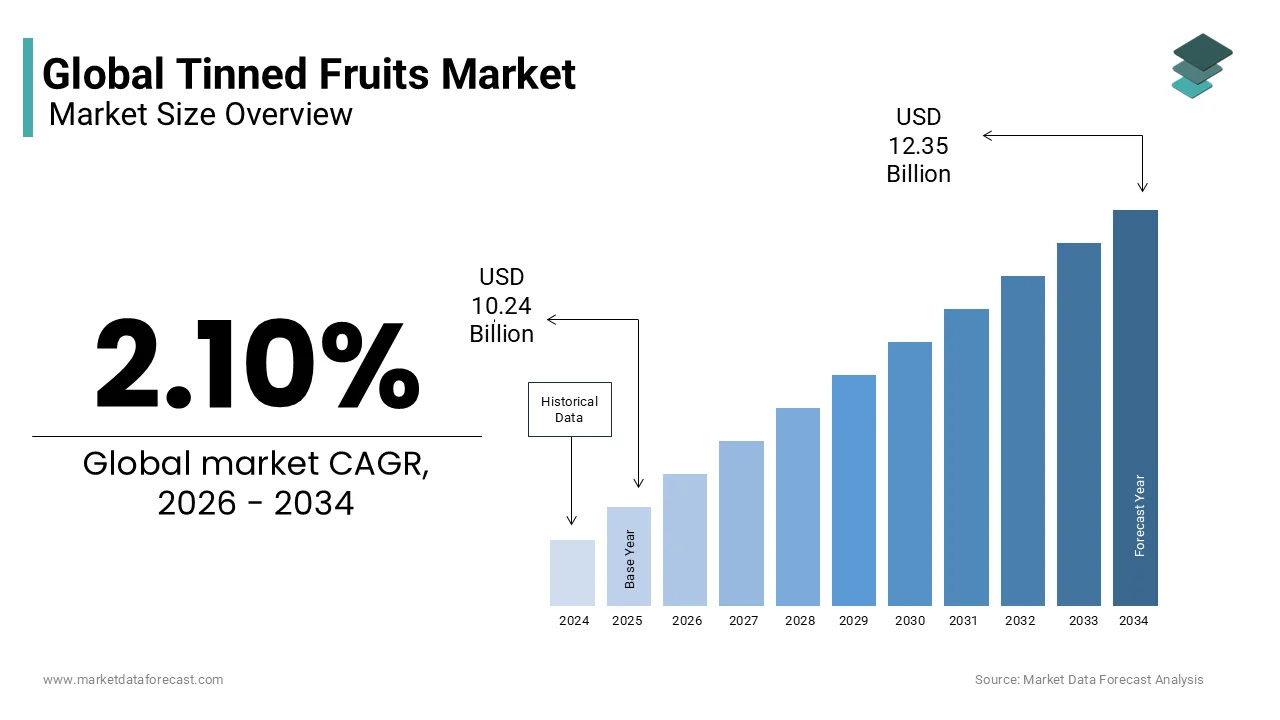
The global tinned fruits market was valued at USD 10.24 billion in 2025, is estimated to reach USD 10.46 billion in 2026, and is projected to reach USD 12.35 billion by 2034, growing at a CAGR of 2.10% during the forecast period from 2026 to 2034. The growth of the global tinned fruits market is driven by increasing demand for convenient and long shelf-life food products, rising consumption of ready-to-eat foods, and expanding retail distribution networks. Tinned fruits remain popular among consumers due to their year-round availability, ease of storage, and retained nutritional value. Additionally, growing demand from the foodservice industry, product innovation, and increasing preference for convenient fruit products are supporting market growth worldwide.
Key Market Trends
-
Rising consumer demand for convenient, ready-to-eat fruit products is driving the growth of the global tinned fruits market.
-
Increasing preference for long shelf-life foods is supporting the adoption of canned fruit products across households and foodservice sectors.
-
Growing product innovation, including reduced-sugar and preservative-free formulations, is attracting health-conscious consumers.
-
Expansion of supermarkets, hypermarkets, and online retail channels is improving product accessibility globally.
-
Increasing demand from the bakery, dessert, and food processing industries is creating new market opportunities.
Segmental Insights
-
Based on product, the yellow peaches segment dominated the global tinned fruits market in 2025. The segment's leadership is attributed to its widespread consumer preference, natural sweetness, versatility in desserts and bakery applications, and year-round availability.
-
Based on packaging, the metal packaging segment held the largest share of the global tinned fruits market in 2025. The segment's dominance is driven by its superior durability, excellent barrier properties, long shelf life, and ability to preserve fruit quality during storage and transportation.
-
Based on end user, the supermarkets segment accounted for the largest share of the global tinned fruits market in 2025. The segment's growth is supported by extensive product availability, broad brand selection, competitive pricing, and convenient shopping experiences.
Regional Insights
-
The global tinned fruits market is witnessing steady growth due to increasing demand for convenient food products, expanding retail infrastructure, and rising consumption of processed fruits.
-
North America dominated the global tinned fruits market by accounting for 34.5% of the market share in 2025. The region's leadership is supported by high consumption of packaged foods, well-established retail networks, strong food processing industries, and increasing demand for convenient fruit products.
-
Europe remains a significant market due to rising demand for premium canned fruit products, expanding foodservice applications, and growing consumer preference for convenient foods.
-
Asia Pacific is expected to witness notable growth, driven by increasing urbanization, changing dietary habits, and expanding organized retail channels.
-
Latin America is emerging as a promising market owing to growing fruit processing activities and rising demand for affordable packaged fruit products.
Competitive Landscape
The global tinned fruits market is moderately competitive, with manufacturers focusing on product quality, clean-label formulations, and expansion of distribution networks to strengthen their market positions. Companies are investing in sustainable packaging, product innovation, and strategic partnerships to meet the growing demand from retail, foodservice, and food processing industries. Key players operating in the global tinned fruits market include Seneca Foods Corporation, Del Monte, Dole Food Company, Inc., Princes Group, Coca-Cola Amatil Limited, Pinnacle Foods Inc., Rhodes Food Group, ConAgra Foods Inc., and H.J. Heinz Company.
Global Tinned Fruits Market Size
The global tinned fruits market size was valued at USD 10.24 billion in 2025, and is expected to be worth USD 12.35 billion by 2034 from USD 10.46 billion by 2026. The market is growing at a CAGR of 2.10% during the forecast period.
Tinned fruits are fruits sealed in airtight containers typically made of steel or aluminum. This sector plays a pivotal role in ensuring food security by extending the shelf life of perishable produce such as peaches, pineapples, pears, and cherries while maintaining nutritional value and flavor profiles. The industry operates at the intersection of agricultural production and industrial manufacturing, relying on advanced sterilization techniques to prevent spoilage without the need for refrigeration. According to the Food and Agriculture Organization, approximately 13.3% of the world's food production is lost during post-harvest processes, making canning a critical solution for waste reduction. As per the World Health Organization, access to preserved fruits contributes significantly to dietary diversity in regions with limited seasonal availability of fresh produce. The United States Department of Agriculture notes that canned fruits retain comparable levels of fiber and antioxidants to their fresh counterparts, addressing consumer concerns about nutritional degradation. Furthermore, the International Labour Organization highlights that the fruit processing sector provides essential employment opportunities in rural agricultural communities across developing nations. These factors underscore the strategic importance of tinned fruits in stabilizing food supply chains, supporting farmer incomes, and providing convenient, nutritious options for modern consumers facing time constraints and logistical challenges in global food distribution networks.
MARKET DRIVERS
Urbanization and Changing Lifestyle Patterns Drive Demand for Convenience Foods
Rapid urbanization and the accelerating pace of modern life are primarily fuelling the expansion of the global tinned fruits market. As populations shift from rural to urban centers, individuals face greater time pressures and reduced access to traditional cooking methods, leading to a preference for ready-to-eat or easy-to-prepare food items. According to the United Nations Department of Economic and Social Affairs, approximately 56% of the global population currently resides in urban areas, which is a figure projected to reach 68% by 2050. This demographic shift correlates with changing meal preparation habits, as reported by the American Time Use Survey, which indicates that individuals spend significant time on food preparation and cleanup daily. Tinned fruits offer an immediate solution by eliminating the need for washing, peeling, and cutting, thereby reducing kitchen labor significantly. In densely populated cities like Tokyo and New York where living spaces are compact and storage capacity is limited, the long shelf life of canned goods minimizes the frequency of grocery shopping trips. As per consumer behavior research by the European Parliament, a large portion of urban households prioritize products that offer extended usability and minimal preparation effort. Additionally, the rise of dual-income households further amplifies the need for efficient meal solutions. Retailers respond by stocking diverse varieties of tinned fruits in single-serve formats, catering to individual consumers and small families. This convergence of demographic trends and behavioral changes sustains robust demand for convenient preserved fruit options.
Supply Chain Resilience and Reduction of Food Waste Bolster Market Stability
The inherent ability of tinned fruits to mitigate supply chain disruptions and reduce post-harvest losses drives their strategic importance in the global food system, which is further contributing to the tinned fruits market growth globally. Fresh fruits are highly perishable and susceptible to damage during transportation, whereas canned variants can withstand prolonged storage and varying environmental conditions without compromising safety. According to the Food and Agriculture Organization, almost one-third of all food produced for human consumption is lost or wasted annually, with fruits and vegetables accounting for a significant proportion due to their delicate nature. Canning technology extends the shelf life of fruits from a few days to several years, allowing producers to process surplus harvests during peak seasons and distribute them throughout the year. The World Bank emphasizes that improved preservation technologies are essential for enhancing food security in developing regions where cold chain infrastructure is often inadequate. In countries like India and Brazil, recent investments in canning facilities have helped modernize the agricultural value chain and reduce post-harvest losses. Furthermore, during global crises such as pandemics or natural disasters, the stockpiling behavior of consumers favors non-perishable items. The Federal Emergency Management Agency recommends keeping a supply of canned goods for emergency preparedness, reinforcing consumer habits. This reliability ensures that tinned fruits remain a staple in household pantries and institutional feeding programs alike.
MARKET RESTRAINTS
Health Concerns Regarding Added Sugars and Syrups Restrain Consumption
Growing health consciousness and the widespread campaign against excessive sugar intake are significantly hampering the tinned fruits market expansion. Traditional canned fruits are often packed in heavy or light syrups, which substantially increase their caloric content and glycemic index, raising concerns among health-aware consumers. According to the World Health Organization, global obesity rates have nearly tripled since 1975, with excessive sugar consumption identified as a major contributing factor. Many national health agencies, including the Centers for Disease Control and Prevention, advise limiting added sugars to less than 10% of total daily calories, prompting consumers to scrutinize product labels more closely. Research on consumer purchasing behavior reveals that a large majority of shoppers actively seek to avoid products with high added sugar content. Although manufacturers have introduced water-packed or juice-packed alternatives, these options sometimes suffer from perceived inferior taste or texture compared to syrup-packed varieties. The European Food Safety Authority continues to evaluate the health impacts of processed foods, leading to stricter labeling requirements that may deter casual buyers. Additionally, the rising prevalence of type 2 diabetes in regions such as North America and the Middle East has led to dietary restrictions that limit the intake of sweetened preserved fruits. Medical professionals often recommend fresh or frozen fruits over canned versions due to better nutrient retention and lower sugar levels. This shift in medical advice and consumer preference creates a headwind for the traditional tinned fruits segment.
Environmental Scrutiny of Packaging Materials Impacts Brand Perception
Increasing environmental awareness and regulatory pressure regarding single-use packaging materials pose a substantial restraint to the growth of the Tinned Fruits Market. Steel and aluminum cans, while recyclable, require significant energy inputs for production and generate carbon emissions during the manufacturing and transportation processes. According to the United Nations Environment Programme, the global packaging industry accounts for a significant portion of total plastic and metal waste if not properly recycled. Consumers are increasingly favoring brands that demonstrate sustainable practices and minimize ecological footprints. A study by the Nielsen Company indicates that 73% of global consumers would change their consumption habits to reduce their environmental impact. The presence of bisphenol A or BPA in the epoxy linings of some metal cans has also raised health concerns, leading to calls for safer alternatives. The European Commission has implemented strict regulations on food contact materials, requiring manufacturers to invest in costly BPA-free linings which increases production costs. Furthermore, the recycling rates for metal cans vary significantly by region, with many developing nations lacking adequate waste management infrastructure, leading to landfill accumulation. The Ellen MacArthur Foundation highlights that linear consumption models are being replaced by circular economy principles, pressuring companies to redesign packaging for better reuse or biodegradability. These environmental and regulatory challenges force manufacturers to balance cost efficiency with sustainability goals, potentially limiting market expansion.
MARKET OPPORTUNITIES
Expansion into Emerging Markets Offers Untapped Growth Potential
The rising disposable incomes and evolving dietary preferences in emerging economies present a significant opportunity for the tinned fruits market. Countries in Asia Pacific, Latin America, and Africa are expected to see a steady increase in demand for processed and convenience foods over the next few years. According to the World Bank, the middle class in developing nations is expected to expand by 1 billion people by 2030, creating a vast new consumer base for branded food products. In regions where fresh fruit availability is seasonal or limited by climate conditions, tinned fruits offer a consistent and affordable source of vitamins and minerals. The Asian Development Bank notes that urbanization in Southeast Asia is driving demand for western-style desserts and baking ingredients where canned fruits like cherries and pineapples are essential components. Local manufacturers are increasingly partnering with international brands to introduce diverse fruit varieties tailored to regional tastes. For instance, the introduction of canned lychees and mangoes in China and India has gained traction among younger consumers. Government initiatives to support local agro-processing industries further facilitate market entry. The Indian Ministry of Food Processing Industries provides subsidies for setting up canning units, encouraging domestic production and reducing reliance on imports. These economic and policy drivers create a fertile ground for market players to expand their footprint and capture new customer segments in high-growth regions.
Innovation in Healthy and Organic Product Lines Attracts Premium Segment
The development of innovative product formulations such as organic, no-sugar-added and functional tinned fruits offers a lucrative opportunity for the global tinned fruits market expansion. Consumers are seeking healthier alternatives that align with clean-label trends without sacrificing convenience. According to the Organic Trade Association, sales of organic packaged foods have grown by 12% annually, driven by demand for products free from synthetic pesticides and additives. Manufacturers are responding by sourcing certified organic fruits and using natural fruit juices instead of syrups for packing. The introduction of tinned fruits fortified with vitamins or probiotics appeals to health-conscious demographics looking for functional benefits. As per the Global Nutrition Report, micronutrient deficiencies remain a public health challenge, suggesting that fortified canned fruits could play a role in addressing these gaps. Brands are also experimenting with exotic fruit blends and sustainable packaging materials to attract eco-friendly consumers. According to the Mintel Global Food and Drink Trends report, transparency and ethical sourcing as key purchase drivers, encouraging companies to highlight their supply chain practices. By positioning tinned fruits as a premium, healthy choice rather than just a budget alternative, manufacturers can command higher margins and build brand loyalty. This strategic shift allows companies to tap into the growing wellness economy and redefine the perception of canned goods in the modern marketplace.
MARKET CHALLENGES
Volatility in Raw Material and Energy Costs Threatens Profitability
Fluctuating prices of raw materials such as steel, aluminum, and fresh fruits combined with rising energy costs pose a challenge to the tinned fruits market growth. The production of metal cans is energy-intensive and dependent on global commodity markets which are subject to geopolitical tensions and supply disruptions. According to the International Energy Agency, industrial energy prices have faced volatility in recent years, affecting manufacturing costs across the food processing sector. Additionally, agricultural yields are vulnerable to climate change-induced weather events such as droughts and floods, which cause sudden spikes in fruit prices. The Intergovernmental Panel on Climate Change warns that extreme weather events will become more frequent, impacting crop stability in major fruit-producing regions like California and Southern Europe. These input cost variations make it difficult for manufacturers to maintain stable pricing strategies without eroding margins. Small and medium-sized enterprises often lack the financial reserves to absorb these shocks, leading to market consolidation. The World Trade Organization notes that trade barriers and tariffs on raw materials further exacerbate cost pressures for international suppliers. Companies must constantly adjust their procurement strategies and hedge against price risks, which adds complexity to operations. Without effective cost management mechanisms, these volatilities can lead to reduced investment in innovation and expansion, limiting long-term growth potential.
Stringent Food Safety Regulations Increase Compliance Burdens
The evolving landscape of global food safety regulations imposes significant compliance burdens on manufacturers in the tinned fruits market, which is further challenging the global market expansion. Regulatory bodies such as the Food and Drug Administration in the United States and the European Food Safety Authority continuously update standards for contaminants, additives, and labeling requirements. According to the World Health Organization, foodborne illnesses affect an estimated 600 million people annually, prompting stricter oversight of processing facilities. Manufacturers must invest in advanced testing equipment and quality control systems to detect pathogens, heavy metals, and pesticide residues, ensuring compliance with these rigorous standards. The implementation of the Food Safety Modernization Act in the US requires comprehensive preventive controls and documentation, increasing operational costs for producers. In the European Union, the General Food Law mandates traceability throughout the supply chain, requiring detailed record-keeping and auditing. Non-compliance can result in severe penalties, product recalls, and reputational damage. As per industry standards from the Global Food Safety Initiative, certification costs have risen in recent years as requirements become more complex. Smaller manufacturers often struggle to meet these requirements, leading to exit from regulated markets. Furthermore, differing regulations across countries complicate international trade, requiring companies to maintain multiple compliance protocols. These regulatory hurdles necessitate continuous investment in training and infrastructure, diverting resources from other strategic initiatives and challenging the agility of market participants.
REPORT COVERAGE
| REPORT METRIC | DETAILS |
| Market Size Available | 2025 to 2034 |
| Base Year | 2025 |
| Forecast Period | 2026 to 2034 |
| CAGR | 2.10% |
| Segments Covered | By Product, Packaging, End User, and Region. |
| Various Analyses Covered | Global, Regional & Country Level Analysis, Segment-Level Analysis, DROC, PESTLE Analysis, Porter’s Five Forces Analysis, Competitive Landscape, Analyst Overview of Investment Opportunities |
| Regions Covered | North America, Europe, APAC, Latin America, Middle East & Africa |
| Market Leaders Profiled | Seneca Foods Corporation, Del Monte, Dole Food Company, Inc., Princes Group, Coca Cola Amatil Limited, Pinnacle Foods Inc., Rhodes Food Group, ConAgra Foods Inc., and H.J. Heinz Company |
SEGMENTAL ANALYSIS
By Product Insights
The yellow peaches segment dominated the market by capturing the major share of the global market in 2025. The dominance of yellow peaches segment in the global market is attributed to their widespread culinary applications and deep-rooted consumer preference across major global markets. The fruit's firm texture allows it to withstand the canning process without becoming mushy, making it ideal for desserts, salads, and baking. According to the United States Department of Agriculture, California produces a significant majority of the processed clingstone peaches in the United States which are primarily used for canning, ensuring a consistent supply chain. The European Commission reports that peach nectar and canned halves are among the top consumed fruit products in Southern Europe, particularly in Spain and Italy where they are staple ingredients in traditional cuisine. In Asia Pacific countries like China and Japan, canned yellow peaches are considered premium gifts during festivals, driving seasonal demand spikes. The Food and Agriculture Organization notes that global peach production has been sustained at levels exceeding 24 million tons in recent years, providing ample raw material for processors. The long history of peach cultivation and processing has created standardized quality benchmarks that consumers trust. Retailers allocate significant shelf space to peach varieties due to their high turnover rates. This entrenched market position is further supported by extensive marketing campaigns by major brands that highlight the natural sweetness and nutritional benefits of yellow peaches. The combination of cultural significance, culinary utility, and reliable supply solidifies the leading status of this segment.
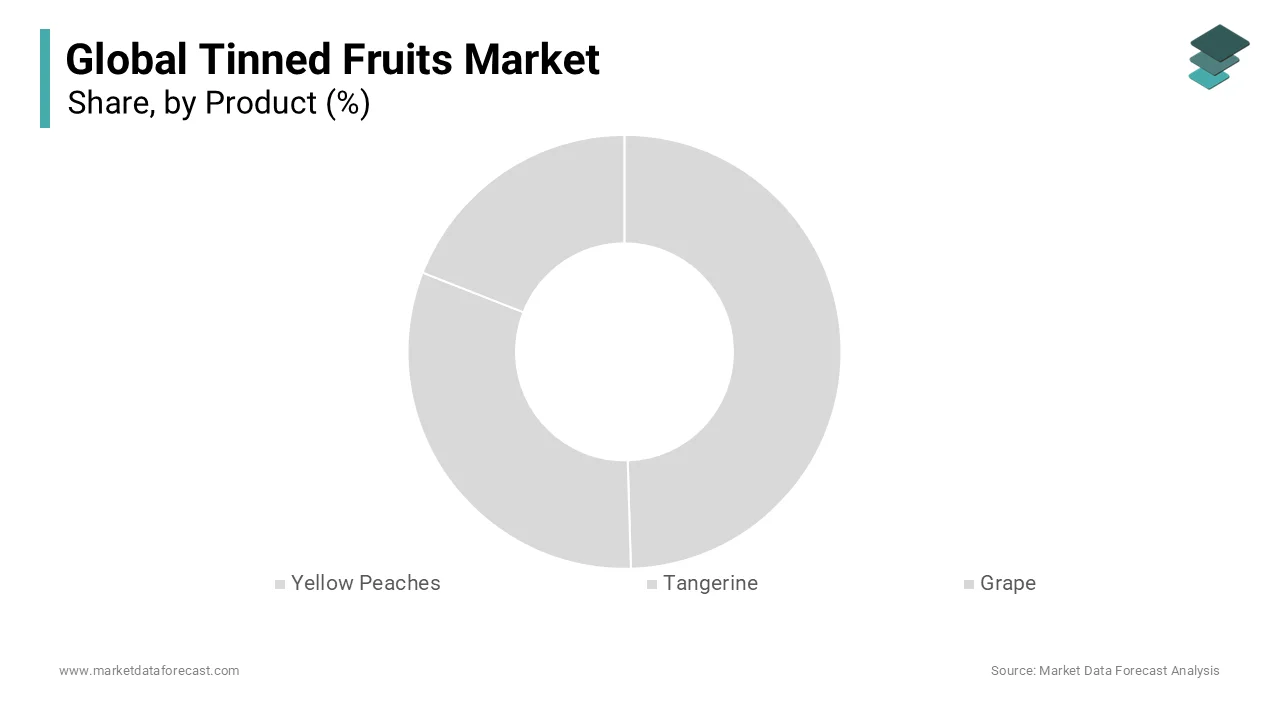
On the other side, the tangerines segment is predicted to grow at the fastest CAGR of 6.06% over the forecast period owing to the increasing consumer awareness of the health benefits of citrus fruits and the convenience of pre-peeled segments. According to the World Health Organization, citrus fruits are rich in vitamin C and antioxidants which are essential for immune system support, a factor that has gained prominence post-pandemic. The ease of consuming canned tangerine segments without the mess of peeling fresh fruit appeals to busy consumers and children. The European Food Safety Authority recognizes the high nutritional value of citrus fruits, encouraging their inclusion in daily diets. In emerging markets such as Southeast Asia, the popularity of tangerines is rising due to their affordability and availability. Data from the Chinese Ministry of Agriculture indicates that tangerine production has grown to support the processing sector. Manufacturers are introducing tangerines packed in light syrup or natural juice to cater to health-conscious buyers. The versatility of tangerine segments in salads, yogurts, and desserts also drives demand. Retailers are expanding their citrus offerings, reflecting changing consumer preferences. These health and convenience factors propel the tangerine segment to become the most dynamic area of the market.
By Packaging Insights
The metal packing segment had the leading share of the global market in 2025 due to its exceptional durability, barrier properties, and ability to preserve fruit quality for extended periods. Metal containers provide complete protection against light, oxygen, and moisture, which are primary causes of spoilage and nutrient degradation. According to the Steel Packaging Recycling Association, steel cans have a high recycling rate in many developed countries, making them an environmentally responsible choice. The Aluminum Association reports that aluminum cans are lightweight and cool quickly, reducing energy consumption during the sterilization process. These technical advantages ensure that canned fruits retain their taste, texture, and nutritional value for up to two years or more. The Food and Drug Administration recognizes metal packaging as one of the safest materials for food contact due to its inert nature. Industrial users prefer metal cans for their stackability and resistance to damage during transportation and storage. The global infrastructure for metal can recycling is well established, facilitating circular economy initiatives. Manufacturers continue to innovate with thinner gauges and BPA-free linings to address environmental and health concerns. The proven track record of metal packaging in maintaining food safety and quality ensures its continued dominance in the market.
On the other end, the glass packaging segment is estimated to record a promising CAGR of 5.5% over the forecast period owing to the premium perception of glass jars and their infinite recyclability which appeals to environmentally conscious consumers. According to the Glass Packaging Institute, glass is 100% recyclable without loss in quality or purity, making it a cornerstone of the circular economy. Consumers associate glass packaging with higher quality and purity as it does not interact with the food contents, preserving the original flavor and aroma. As per the European Container Glass Federation, glass packaging sales in the food sector have shown steady annual growth, driven by demand for sustainable options. Premium brands use glass jars to differentiate their products in the marketplace, often highlighting organic or artisanal qualities. The transparency of glass allows consumers to inspect the product before purchase, enhancing trust. Although heavier and more fragile than metal, glass packaging is gaining traction in high-end retail and specialty stores. Innovations in lightweight glass technology are reducing transportation costs and environmental impact. These factors position glass as a rapidly expanding alternative for premium tinned fruit products.
By End User Insights
The supermarkets segment held the largest share of the global market in 2025 due to their ability to offer a wide variety of brands and products under one roof, providing convenience for shoppers. Consumers prefer supermarkets for their weekly grocery needs as they can purchase tinned fruits alongside other household items, saving time and effort. According to the National Retail Federation, supermarkets account for over 50% of all food sales in the United States, reflecting their central role in food distribution. The extensive shelf space in supermarkets allows for prominent displays and promotional activities that drive impulse purchases of tinned fruits. Private label brands offered by supermarket chains provide affordable alternatives to national brands, attracting price-sensitive consumers. The consistent foot traffic in supermarkets ensures high visibility for tinned fruit products. Loyalty programs and digital coupons further incentivize purchases. Supermarkets also play a key role in educating consumers through in-store signage and sampling events. The ability to buy in bulk at competitive prices appeals to families and large households. The established supply chain relationships between supermarkets and manufacturers ensure consistent product availability. These factors combine to make supermarkets the primary channel for tinned fruit sales globally.
On the other side, the online retailing segment is the fastest-growing end-user segment in the global tinned fruits market and is estimated to record a CAGR of 10.5% over the forecast period owing to the widespread adoption of e-commerce platforms and the convenience of home delivery. According to the United Nations Conference on Trade and Development, global e-commerce sales continue to reach trillions of dollars annually, with food and grocery being one of the fastest-growing categories. Consumers appreciate the ability to compare prices, read reviews, and access a wider range of products including imported and specialty tinned fruits online. The pandemic accelerated the shift to online grocery shopping, a habit that has persisted due to its efficiency. Major retailers like Amazon and Alibaba have invested heavily in cold-chain and dry-goods logistics, ensuring timely and safe delivery of tinned products. Subscription services for pantry staples offer automated replenishment, enhancing customer retention. Mobile apps make ordering easy and accessible for tech-savvy consumers. The ability to purchase bulk quantities without physical transport constraints appeals to large families and institutions. These digital advantages drive the rapid expansion of online retailing in the tinned fruits market.
REGIONAL ANALYSIS
North America Tinned Fruits Market Analysis
North America accounted for 34.5% of the global market share in 2025 and is expected to maintain its leadership in the tinned fruits market over the next few years as premiumization and health-oriented product innovations continue to drive demand. The United States and Canada are the primary contributors with a strong culture of convenience food consumption. According to the United States Department of Agriculture, the US is a major producer and consumer of canned peaches, pears, and pineapples. The presence of large supermarket chains and robust e-commerce infrastructure facilitates easy access to tinned fruits. Health trends are shifting demand toward no-sugar-added and organic variants, prompting manufacturers to innovate. The Canadian Food Inspection Agency enforces strict quality standards, ensuring product safety and consumer trust. The region benefits from advanced processing technologies and efficient supply chains. Rising labor costs and health consciousness are influencing production methods and product formulations. The market is mature but continues to grow through premiumization and health-focused innovations. Government initiatives supporting local agriculture also impact sourcing strategies. These factors consolidate North America's position as the leading regional market.
Europe Tinned Fruits Market Analysis
Europe is likely to see steady growth as the region focuses on sustainability and high-quality food standards, with consumers increasingly favoring eco-friendly packaging and clean-label products. Countries like Spain, Italy, and Greece are major producers of canned peaches and tomatoes, while Northern Europe imports significant volumes. According to the European Commission, strict regulations on food safety and packaging sustainability drive innovation in the sector. The preference for organic and non-GMO products is higher in Europe than in other regions. The European Green Deal influences packaging choices, encouraging the use of recyclable materials. Consumer awareness of environmental issues shapes purchasing decisions, favoring brands with transparent supply chains. The region has a well-developed retail sector with a mix of supermarkets and specialty stores. Economic stability supports steady demand for premium tinned fruits. Trade agreements within the EU facilitate cross-border commerce. The focus on health and wellness drives demand for fruit packed in natural juices. These dynamics sustain Europe's strong market presence.
Asia Pacific Tinned Fruits Market Analysis
The Asia Pacific region is anticipated to experience rapid expansion as urbanization and a rising middle class drive the demand for convenient and western-style food options over the coming years. China, Japan, and Australia are key markets with increasing consumption of imported and locally produced tinned fruits. According to the Asian Development Bank, the growing middle class is driving demand for convenient and safe food options. Canned fruits are popular for gifting and festive occasions in many Asian cultures. Local production is expanding to meet domestic demand, reducing reliance on imports. Government support for agro-processing industries boosts capacity. The region faces challenges related to food safety perceptions, but international brands are building trust through quality assurance. E-commerce is rapidly expanding, reaching rural areas. The diverse climate allows for cultivation of various fruits, supporting local processing. Younger consumers are experimenting with western-style desserts using canned fruits. These factors position Asia Pacific as a high-potential growth engine.
Latin America Tinned Fruits Market Analysis
Latin America is poised for continued development as the region leverages its agricultural strengths to improve processing capacity and meet the growing demand for convenience foods in urban areas. Brazil, Chile, and Argentina are major producers of canned peaches, pineapples, and cherries. According to the Inter-American Development Bank, the region is leveraging its comparative advantage in fruit production to expand exports. Domestic consumption is growing as urbanization increases demand for convenience foods. Economic volatility affects purchasing power, but tinned fruits remain affordable staples. Local brands compete with imports on price and availability. Government policies support value addition in the agricultural sector. Infrastructure improvements are enhancing logistics and reducing post-harvest losses. The region is focusing on sustainable farming practices to meet international standards. Cultural preferences for sweet desserts drive demand for syrup-packed fruits. These dynamics support steady market development in Latin America.
Middle East and Africa Tinned Fruits Market Analysis
The Middle East and Africa are expected to see increased market penetration as improved logistics and rising consumer interest in non-perishable food items drive growth in the region. South Africa, Egypt, and Saudi Arabia are key markets with growing import and local production activities. According to the African Development Bank, food security initiatives are promoting local processing to reduce reliance on imports. Urban populations are adopting modern retail formats, increasing access to tinned fruits. Religious and cultural festivals drive seasonal demand for premium fruit products. Infrastructure challenges remain, but investments in logistics are improving distribution. International brands are entering the market, targeting affluent consumers. Local production is encouraged by government incentives to create jobs. The hot climate makes non-perishable foods like canned fruits attractive. Awareness of nutrition is rising, influencing product choices. These factors indicate long-term growth potential for the region.
COMPETITIVE LANDSCAPE
The competition in the tinned fruits market is characterized by the presence of established multinational corporations and regional producers who compete on quality price and brand reputation. Major global players leverage their extensive distribution networks and economies of scale to offer diverse product portfolios at competitive prices. These firms often engage in strategic marketing campaigns and product innovations to differentiate themselves from competitors. Meanwhile regional manufacturers compete by offering localized flavors and lower costs due to reduced logistics expenses. The market sees intense rivalry in terms of packaging sustainability and health benefits such as reduced sugar content. Companies frequently launch new varieties and organic lines to capture niche segments. Additionally the rise of private label brands by large supermarket chains adds pressure on branded manufacturers to maintain value propositions. This dynamic landscape drives continuous improvement in product quality and operational efficiency benefiting consumers through greater choice and better standards across the global tinned fruits sector.
KEY MARKET PLAYERS
Some of the key players in the global tinned fruits market are
- Seneca Foods Corporation
- Del Monte
- Dole Food Company, Inc.
- Princes Group
- Coca-Cola Amatil Limited
- Pinnacle Foods Inc.
- Rhodes Food Group
- ConAgra Foods Inc.
- H.J. Heinz Company
Top Players in the Market
- Del Monte Fresh Produce maintains a prominent position in the global tinned fruits market through its extensive portfolio of canned pineapples peaches and fruit cocktails. The company focuses on sustainable sourcing and high quality processing standards to ensure product consistency across international markets. Recently Del Monte launched new eco friendly packaging initiatives using recyclable materials to align with consumer environmental preferences. The firm has also expanded its distribution networks in Asia Pacific to capture growing demand for convenient food options. These strategic moves demonstrate its commitment to innovation and sustainability while strengthening brand loyalty among health conscious consumers and retail partners worldwide.
- Dole plc contributes significantly to the market by offering a wide range of canned tropical fruits including mandarins pineapples and fruit cups. The company emphasizes nutritional value and convenience catering to busy lifestyles and family needs. In recent developments Dole introduced organic certified tinned fruit lines to meet the rising demand for clean label products. It has invested in advanced processing technologies to enhance flavor retention and reduce sugar content in syrups. These actions help the company differentiate its offerings in a competitive landscape and appeal to premium segments. Dole continues to strengthen its supply chain resilience ensuring reliable availability of high quality tinned fruits globally.
- Chiquita Brands International plays a vital role in the tinned fruits sector with its strong presence in canned pineapples and mixed fruit products. The company leverages its established agricultural base to ensure consistent raw material quality and cost efficiency. Recently Chiquita updated its branding and packaging designs to improve shelf visibility and attract younger demographics. It has also partnered with major retailers to expand private label offerings providing affordable options for price sensitive consumers. These efforts reflect its focus on operational excellence and market responsiveness. Chiquita remains dedicated to maintaining high safety standards and supporting local communities where it sources its fruits.
Top Strategies Used by Key Market Participants
Key players in the Tinned Fruits Market primarily focus on product innovation and sustainability to enhance their competitive edge. Companies are developing healthy variants such as no sugar added and organic options to meet evolving consumer preferences. This approach addresses health concerns while maintaining convenience. Manufacturers also invest in eco friendly packaging solutions like recyclable metals and BPA free linings to reduce environmental impact. Strategic partnerships with retailers and e commerce platforms help expand distribution reach and improve accessibility. Additionally firms emphasize supply chain transparency and ethical sourcing to build consumer trust. These comprehensive strategies enable companies to strengthen their brand presence and drive growth in the global tinned fruits industry.
MARKET SEGMENTATION
This research report on the global tinned fruits market has been segmented and sub-segmented based on product, packaging, end user, and region.
By Product
- Yellow Peaches
- Tangerine
- Grape
By Packaging
- Glass Packaging
- Metal Packing
- Others
By End User
- Supermarket
- Convenience Stores
- Online Retailing
By Region
- North America
- Asia Pacific
- Europe
- Latin America
- Middle East, and Africa