Global Tire Market Size Share, Trends, and Growth Analysis Report, Segmented By Distribution Channel, Vehicle, & Region (North America, Europe, Latin America, Asia Pacific, Middle East & Africa), Industry Forecast From 2026 to 2034
Market Size, 2025
$148.41 BnMarket Estimate, 2026
$153.54 BnMarket Forecast, 2034
$201.57 BnCAGR, 2026–2034
3.46%Global Tire Market Size
The global tire market size was valued at USD 148.41 billion in 2025 and is anticipated to reach USD 153.54 billion in 2026 and USD 201.57 billion by 2034, growing at a CAGR of 3.46% during the forecast period from 2026 to 2034.
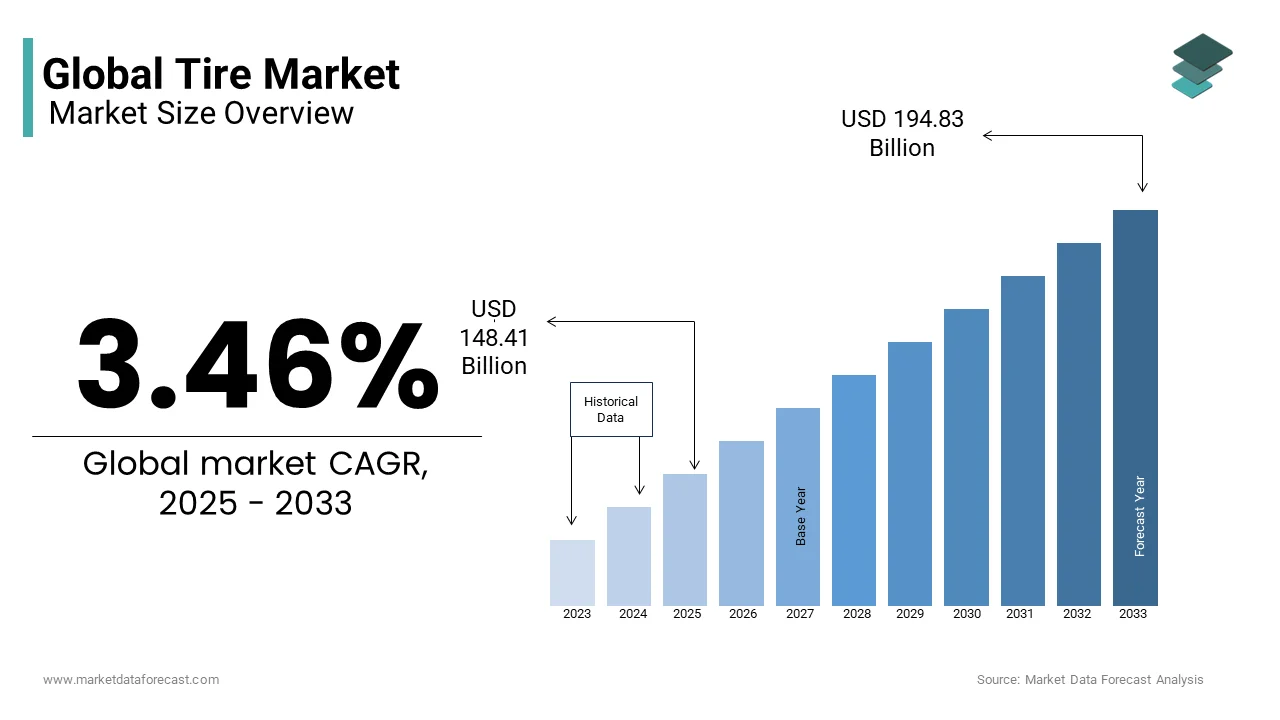
The tire is rubber based component essential for vehicle mobility safety and performance across automotive industrial and aviation sectors. These products serve as the primary interface between vehicles and road surfaces influencing traction braking efficiency fuel consumption and ride comfort. The industry operates within a complex ecosystem driven by original equipment manufacturer requirements and replacement demand from existing vehicle fleets. According to the International Organization of Motor Vehicle Manufacturers global motor vehicle production reached approximately 93.5 million units in 2023 indicating sustained industrial activity that directly correlates with original equipment tire demand. The European Tyre and Rubber Manufacturers Association emphasizes that tire longevity and performance standards are increasingly regulated to reduce environmental impact and enhance road safety. As per the United States Department of Transportation there are over 280 million registered vehicles in the United States alone creating a massive base for replacement tire consumption. Modern tire engineering integrates advanced materials such as silica and sustainable natural rubber alternatives to meet stringent rolling resistance coefficients mandated by governments worldwide. The shift toward electric vehicles introduces new technical requirements including higher load carrying capacities and noise reduction capabilities due to increased vehicle weight and absence of engine noise. Global supply chains for raw materials like natural rubber remain vulnerable to geopolitical disruptions and climate variability affecting plantation yields in Southeast Asia. Manufacturers are investing heavily in digital manufacturing technologies and smart tire solutions equipped with sensors to monitor pressure temperature and tread wear in real time. This technological evolution transforms tires from passive components into active data sources for vehicle management systems.
MARKET DRIVERS
Rising Global Vehicle Parc Fuels Replacement Demand
The expanding global vehicle parc, where every additional vehicle on the road generates consistent replacement demand throughout its operational lifecycle is primary factor bolstering the growth of the tire market. Tire wear is inevitable due to friction with road surfaces necessitating periodic replacement typically every 40000 to 60000 miles depending on driving conditions and maintenance practices. According to the International Energy Agency, the global stock of passenger cars exceeded 1.4 billion in 2023 and continues to grow particularly in emerging economies, where rising middle class incomes facilitate vehicle ownership. In countries like India and China, vehicle sales have shown robust growth with China alone accounting for over 30 million annual automobile sales in recent years as per the China Association of Automobile Manufacturers. Each new vehicle sold eventually enters the replacement cycle ensuring a steady baseline demand for aftermarket tires independent of new production fluctuations. Commercial vehicle fleets including trucks buses and delivery vans contribute significantly to this demand due to high mileage accumulation and stricter regulatory inspections requiring timely tire changes. The growth of e-commerce has expanded last mile delivery networks increasing the utilization rates of light commercial vehicles and accelerating tire wear. As per the American Trucking Associations freight tonnage in the United States continues to rise reflecting heavy usage of commercial tires. Older vehicles in developed markets also sustain demand as owners opt for cost effective replacements rather than new vehicle purchases during economic uncertainties.
Electric Vehicle Adoption Creates Specialized Product Requirements
The rapid transition toward electric mobility, as electric vehicles impose unique physical and performance demands that require specialized tire designs is additionally promoting the growth of the tire market. The electric vehicle sales surpassed 14 million units globally in 2023, representing a significant portion of total automotive sales and projecting continued double digit growth in coming years. This weight increase necessitates tires with higher load indices and reinforced sidewalls to maintain structural integrity and safety margins. Additionally, the instant torque delivery of electric motors requires tires with superior grip and traction control to prevent wheel spin and ensure efficient power transfer. Noise reduction is another critical factor since the absence of engine noise makes tire road noise more perceptible to passengers prompting manufacturers to develop acoustic foam lined tires and optimized tread patterns. As per the study, electric vehicles require tires with lower rolling resistance to maximize battery range addressing range anxiety among consumers. Major tire manufacturers are launching dedicated electric vehicle tire lines featuring compounds that balance durability with energy efficiency. The specific engineering requirements of electric vehicles create opportunities for premium priced specialized products allowing manufacturers to differentiate their offerings and capture higher margins in a rapidly evolving segment of the automotive market.
MARKET RESTRAINTS
Volatility in Raw Material Prices Constrains Profitability
The volatile prices of key raw materials, particularly natural rubber synthetic rubber carbon black and steel cord, which constitute a major portion of production costs is impeding the growth of the tire market. Natural rubber prices are highly susceptible to weather conditions disease outbreaks and geopolitical factors in major producing , such as Thailand, Indonesia, and Vietnam. According to the International Rubber Study Group, natural rubber prices fluctuated by over 20% in recent years due to supply chain disruptions and varying demand from the automotive sector. Synthetic rubber derived from petroleum feedstocks is equally vulnerable to crude oil price swings which directly impact manufacturing expenses. The outlook energy and chemical input costs remain unpredictable creating challenges for long term pricing strategies and margin stability. Tire manufacturers often struggle to pass these increased costs immediately to consumers due to competitive market pressures and long term contracts with original equipment manufacturers. This lag in price transmission squeezes profit margins and affects financial performance during periods of sharp raw material inflation. Additionally, the limited availability of sustainable alternatives to conventional raw materials restricts flexibility in sourcing. While research into guayule and dandelion rubber continues these alternatives have not yet achieved commercial scale sufficient to mitigate dependence on traditional sources.
Stringent Environmental Regulations Increase Compliance Costs
The rigorous environmental regulations imposed by governments worldwide by mandating costly changes in manufacturing processes and product formulations is also degrading the growth of the tire market. Regulatory bodies, such as the European Union and the United States Environmental Protection Agency enforce strict limits on rolling resistance wet grip and noise emissions to reduce carbon footprints and improve road safety. According to the study, the EU tyre labelling regulation requires manufacturers to meet specific performance thresholds that often necessitate expensive research and development investments in new compound technologies. Compliance with these standards requires substantial capital expenditure for upgrading production facilities and testing laboratories. These regulatory criteria while maintaining durability and cost effectiveness presents a significant engineering challenge. Furthermore, extended producer responsibility laws in various jurisdictions mandate that tire manufacturers manage the end of life disposal and recycling of their products adding logistical and financial burdens. The push for sustainable manufacturing practices also requires reductions in volatile organic compound emissions and energy consumption during production. These regulatory pressures force smaller manufacturers to consolidate or exit the market as they lack the resources to invest in compliance technologies. The complexity of navigating diverse regulatory frameworks across different regions increases administrative overhead and slows down product launch cycles.
MARKET OPPORTUNITIES
Development of Sustainable and Bio Based Materials Offers Growth Potential
The growing emphasis on sustainability and circular economy principles through the development and adoption of bio based and recycled materials is creating new opportunities for the growth of the tire market. Consumers and regulators are increasingly demanding environmentally friendly products that reduce reliance on fossil fuels and minimize waste. The company aims to produce tires made from 40% sustainable materials by 2030 and 100% by 2050, signaling a major industry shift toward green innovation. Materials such as rice husk ash sunflower oil and recycled polyester are being integrated into tire compounds to replace petroleum-based ingredients without compromising performance. The industry is investing heavily in chemical recycling technologies to recover high quality carbon black and oil from end of life tires. This closed loop approach reduces raw material costs and environmental impact while enhancing brand reputation among eco conscious consumers. Government incentives for green manufacturing and subsidies for sustainable product development further encourage investment in this area. Partnerships between tire manufacturers and agricultural sectors provide stable supplies of bio based raw materials creating new value chains. The ability to offer certified sustainable tires allows manufacturers to differentiate their products in premium segments and comply with corporate sustainability mandates of automotive clients. Innovations in airless tire technology using renewable polymers also present future opportunities for eliminating punctures and reducing maintenance waste. These advancements align with global decarbonization goals and open new revenue streams in markets prioritizing environmental stewardship.
Expansion of Smart Tire Technologies Enhances Value Proposition
The integration of Internet of Things sensors and connectivity features into tires to transform passive components into intelligent data gathering devices is also to bolster new opportunities for the expansion of the tire market. Smart tires equipped with sensors can monitor pressure temperature tread depth and load in real time transmitting data to vehicle management systems and cloud platforms. The adoption of smart tire technology improves safety by alerting drivers to potential issues before they become critical failures reducing accident risks. This capability is particularly valuable for commercial fleet operators who can optimize maintenance schedules and reduce downtime through predictive analytics. The growth of connected vehicles creates a synergistic environment where tire data enhances overall vehicle performance and autonomous driving capabilities. Manufacturers can offer subscription based services for data analytics and fleet management creating recurring revenue streams beyond initial product sales. Insurance companies are also interested in tire data for usage based insurance models that reward safe driving behaviors. The emergence of electric and autonomous vehicles accelerates the need for precise tire monitoring to ensure optimal efficiency and safety. Collaborations with technology firms enable tire manufacturers to develop advanced software platforms that process and visualize tire health data.
MARKET CHALLENGES
Supply Chain Disruptions Impact Production Stability
The persistent supply chain disruptions that affect the timely availability of raw materials and components necessary for production is a major challenge for the growth of the tire market. Geopolitical tensions trade wars and logistical bottlenecks have exposed vulnerabilities in global supply networks leading to delays and increased costs. According to the World Trade Organization, global merchandise trade volume growth has slowed due to ongoing disruptions affecting key shipping routes and port operations. The concentration of natural rubber production in Southeast Asia makes the industry vulnerable to regional political instability and labor shortages. The labor disputes in major rubber producing countries have occasionally halted exports causing temporary shortages for manufacturers. The semiconductor shortage that affected the automotive industry also indirectly impacted tire production schedules as original equipment manufacturers adjusted their output levels. Dependency on single source suppliers for critical materials like specialized chemicals and steel cord increases risk exposure when disruptions occur. Manufacturers are struggling to balance inventory levels to avoid excess holding costs while ensuring continuity of supply. The complexity of managing multi tier supply chains across different continents requires sophisticated risk management strategies that many companies are still developing. Climate change induced extreme weather events further exacerbate supply chain volatility by damaging infrastructure and disrupting transportation networks.
Intense Price Competition Erodes Profit Margins
The intense price competition driven by the presence of numerous global and regional players offering similar products leading to margin erosion is certainly a major factor to act as a barrier for the growth of the tire market. The commoditization of standard tire segments makes it difficult for manufacturers to differentiate based solely on product features forcing them to compete on price. According to industry analysis, the entry of low cost manufacturers from emerging markets has increased competitive pressure particularly in the replacement segment where brand loyalty is lower. Anti dumping duties and trade barriers provide some protection but do not fully insulate domestic manufacturers from price pressure. Original equipment manufacturers exert significant bargaining power demanding annual price reductions and favorable payment terms from tire suppliers. This dynamic squeezes profit margins for tire manufacturers who must constantly seek cost efficiencies to remain competitive. The high fixed costs of production mean that volume is critical for profitability leading to aggressive pricing strategies to maintain market share. Manufacturers must invest heavily in marketing and brand building to justify premium pricing but these efforts add to operational costs.
REPORT COVERAGE
| REPORT METRIC | DETAILS |
| Market Size Available | 2025 to 2034 |
| Base Year | 2025 |
| Forecast Period | 2026 to 2034 |
| CAGR | 3.46% |
| Segments Covered | By Distribution Channel, Vehicle, and Region |
| Various Analyses Covered | Global, Regional & Country Level Analysis, Segment-Level Analysis, DROC, PESTLE Analysis, Porter’s Five Forces Analysis, Competitive Landscape, Analyst Overview on Investment Opportunities |
| Regions Covered | North America, Europe, APAC, Latin America, Middle East & Africa |
| Market Leaders Profiled | The Michelin Group, Bridgestone Corporation, Continental AG, The Goodyear Tire and Rubber Company, Sumitomo Corporation, Pirelli Tires S.p.A., Yokohama Tire Corporation, Hankook Tire and Technology Co., Ltd., Toyo Engineering Corporation, Kumho Tyre (Australia) Pty Ltd. |
SEGMENTAL ANALYSIS
By Distribution Channel Insights
Aftermarket Segment Dominates Global Tire Demand
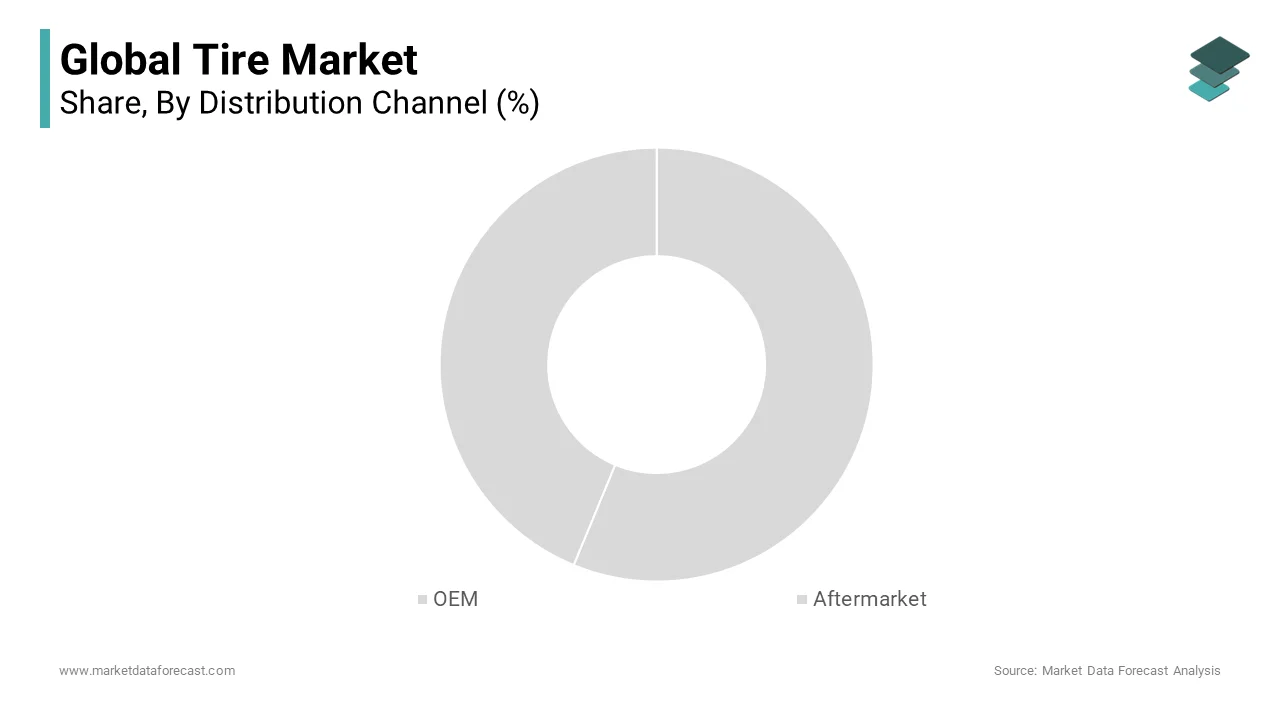
The aftermarket segment holds the leading position in the tire market due to the vast global vehicle parc and the inevitable wear and tear that necessitates regular replacement. Unlike original equipment manufacturer sales which are tied to new vehicle production cycles, aftermarket demand is driven by the existing fleet size and usage intensity. Each vehicle typically requires two to four tire replacements over its lifespan, ensuring consistent revenue streams independent of new car sales volatility. The average tire lifespan ranges from 40000 to 60000 miles, meaning millions of tires are replaced annually worldwide. Older vehicles require more frequent maintenance and tire changes, sustaining high aftermarket activity. Additionally, the rise of e commerce platforms has made it easier for consumers to purchase replacement tires directly, expanding market reach beyond traditional brick and mortar retailers. The fragmented nature of the aftermarket allows for diverse pricing strategies and brand choices, catering to various consumer segments from budget conscious buyers to premium performance enthusiasts.
OEM Segment Exhibits Steady Growth Linked to Production
The original equipment manufacturer segment demonstrates steady growth correlated with global automotive production rates is ascribed to inhibit the growth of the tire market. While smaller in volume compared to the aftermarket, OEM sales are vital for technological validation and bulk revenue generation. Major tire manufacturers compete fiercely to supply original tires for new vehicles, as this placement influences consumer perception and future replacement choices. As per the China Association of Automobile Manufacturers, China alone produced over 30 million vehicles in recent years, representing a significant portion of global OEM tire consumption. The shift toward electric vehicles has intensified competition in this segment, as automakers seek specialized tires that meet specific performance criteria, such as low rolling resistance and noise reduction. Tire companies invest heavily in research and development to meet these stringent requirements, often co developing products with automakers. This collaborative approach strengthens relationships and ensures preferential supplier status for future models. Although OEM margins are typically lower than aftermarket due to bulk purchasing power of automakers, the volume and brand visibility benefits make it an essential strategic channel.
By Vehicle Insights
The passenger cars constitute segment was the largest by holding 33.2% of the tire market share in 2025 owing to the widespread personal mobility needs and high ownership rates globally. This segment encompasses sedans, hatchbacks, SUVs, and crossovers, which represent the majority of vehicles on the road. According to the International Energy Agency, passenger cars account for over 75% of the global vehicle fleet, translating into immense demand for both original equipment and replacement tires. The popularity of SUVs and crossovers has further boosted this segment, as these larger vehicles require bigger and often more expensive tires. SUV sales have grown significantly in Europe and North America, increasing the average tire size and value per vehicle. Consumer preference for comfort, safety, and fuel efficiency drives innovation in passenger car tires, with manufacturers focusing on low rolling resistance and wet grip performance. Regulatory standards such as the European Union tyre labelling regulation mandate specific performance levels, influencing product development and purchasing decisions. The high turnover rate of passenger cars in developed markets ensures a steady flow of new vehicle sales and subsequent replacement demand. Additionally, the rise of ride sharing services in urban areas increases annual mileage for many passenger vehicles, accelerating tire wear and replacement frequency.
The electric vehicle segment is expected to witness a fastest CAGR of 12.5% during the forecast period owing to the unique physical characteristics of electric powertrains. Electric vehicles are significantly heavier than internal combustion engine vehicles due to battery packs, requiring tires with higher load carrying capacities and reinforced structures. This weight increase places greater stress on tires, leading to faster wear rates and necessitating more frequent replacements. The electric vehicles generate instant torque which demands superior traction and grip to prevent wheel spin, prompting manufacturers to develop specialized compounds. Noise reduction is another critical factor, as the absence of engine noise makes tire road noise more apparent, which is driving demand for acoustic foam lined tires. Tire manufacturers are launching dedicated electric vehicle product lines that balance durability, energy efficiency, and comfort. These specialized tires command premium prices, offering higher margins for manufacturers. The growing infrastructure for charging stations and government incentives for electric mobility further accelerate adoption, ensuring sustained growth in this niche but rapidly expanding segment.
REGIONAL MARKET ANALYSIS
Asia Pacific Market Analysis
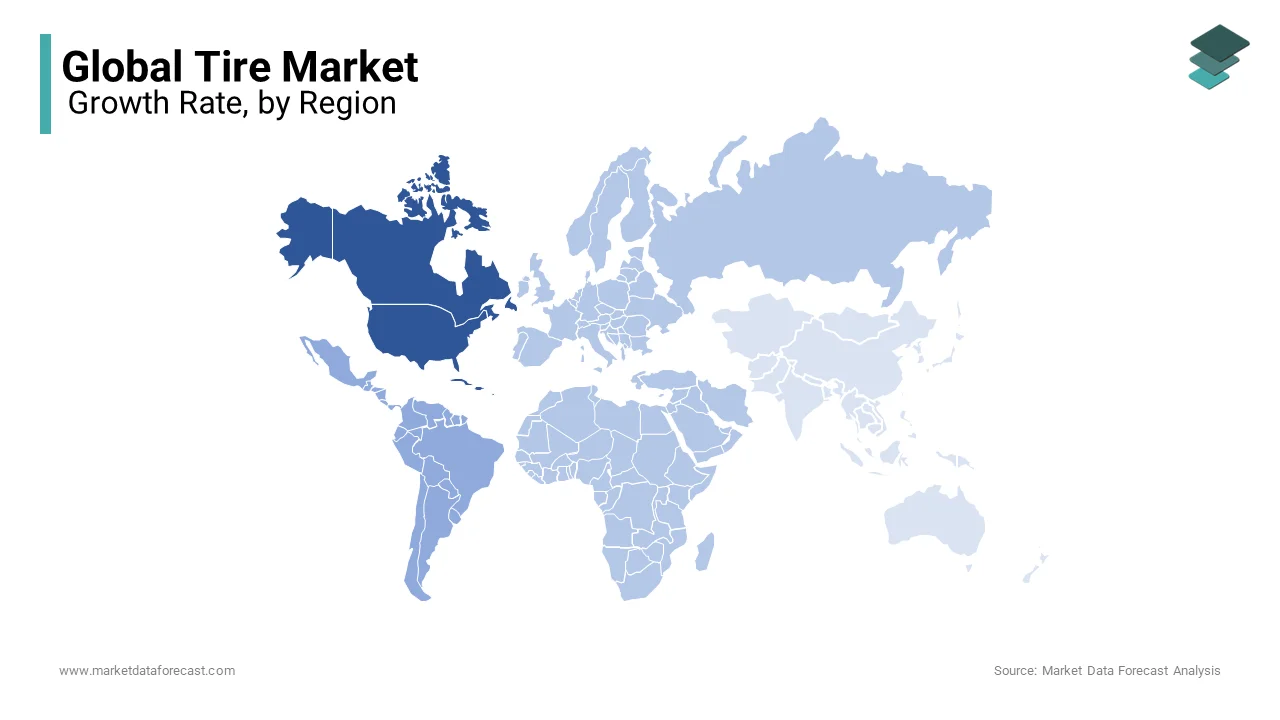
Asia Pacific was the top performer in the tire market by accounting for 45.3% of share in 2025 with the massive automotive production and expanding vehicle ownership in emerging economies. China and India are the primary growth engines, with China being the world's largest automobile producer and consumer. India’s Society of Indian Automobile Manufacturers reported robust growth in passenger and commercial vehicle sales, fueled by rising middle class incomes and infrastructure development. The region benefits from low manufacturing costs and abundant raw material supplies, particularly natural rubber from Southeast Asia. Thailand and Indonesia remain top global exporters of natural rubber, supporting local tire production hubs. Government initiatives to improve road connectivity and promote domestic manufacturing through policies like Make in India further stimulate market growth. The presence of major global tire manufacturers with local production facilities ensures competitive pricing and wide product availability. Rapid urbanization and industrialization in Southeast Asian nations like Vietnam and Thailand also contribute to increased commercial vehicle usage and tire consumption.
North America Market Analysis
North America tire market held 21.3% of share in 2025 owing to the high vehicle ownership rates and a well established replacement market. The United States dominates regional demand, with a vast vehicle parc that drives consistent aftermarket sales. The American Trucking Associations reported steady growth in freight tonnage, supporting demand for commercial vehicle tires. Canada and Mexico also contribute to regional stability, with integrated supply chains under the United States Mexico Canada Agreement facilitating cross border trade. The region is a leader in adopting advanced tire technologies, including smart tires and sustainable materials, driven by strict environmental regulations and consumer awareness. US tire manufacturers invest heavily in research and development to meet stringent fuel efficiency and safety standards. The presence of major domestic manufacturers like Goodyear and Cooper Tire alongside global players ensures a competitive landscape. Seasonal weather variations in northern regions drive demand for specialized winter and all season tires. E commerce penetration in tire sales is high, offering convenience and price transparency to consumers.
Europe Market Analysis
Europe tire market growth is likely to grow with the prominent opportunities in coming years with the stringent environmental regulations and a strong focus on sustainability and innovation. The European Union’s tyre labelling regulation mandates strict performance standards for rolling resistance, wet grip, and noise, driving continuous product improvement. Member companies are leading the transition toward sustainable materials and circular economy practices. Germany, France, and Italy are key contributors with strong automotive industries producing high end vehicles that require premium tires. As per the International Organization of Motor Vehicle Manufacturers, European vehicle production remains stable, supporting original equipment demand. Government policies promoting green mobility and carbon neutrality influence consumer preferences toward eco-friendly products. Major manufacturers like Michelin and Continental are headquartered in Europe, leveraging local expertise and innovation hubs. Trade agreements and a unified market facilitate seamless distribution across member states.
Latin America Market Analysis
Latin America tire market growth is driven by economic recovery and increasing vehicle penetration in key economies like Brazil and Mexico. Brazil is the largest market in the region, with a robust automotive industry supported by local manufacturing incentives. According to the Brazilian Association of Automotive Vehicle Manufacturers, vehicle production has rebounded post pandemic, stimulating original equipment tire demand. Mexico benefits from its proximity to the United States and integration into North American supply chains, serving as a major export hub for tires. As per the Mexican National Institute of Statistics and Geography, automotive exports continue to grow, supporting local tire manufacturing capacity. Argentina and Chile also contribute to regional demand, though economic volatility poses challenges. The aftermarket segment is significant due to poor road conditions in some areas, which accelerate tire wear and increase replacement frequency. Local manufacturers collaborate with global partners to improve technology and product quality. Government infrastructure projects aim to improve road networks, potentially reducing wear but increasing vehicle usage. Rising middle class incomes in urban centers drive passenger car sales. The region offers opportunities for expansion as formal retail channels develop and consumer awareness of tire safety improves.
Middle East and Africa Market Analysis
The Middle East and Africa tire market growth is likely to grow with the high disposable incomes and a preference for luxury and large vehicles, driving demand for premium and large diameter tires. According to the Dubai Roads and Transport Authority, vehicle registration rates remain high in the UAE and Saudi Arabia, supported by infrastructure development and tourism growth. South Africa serves as the industrial hub for Africa, with a well-developed automotive manufacturing sector supplying both local and export markets. As per the National Association of Automobile Manufacturers of South Africa, vehicle production supports original equipment tire demand. The rest of Africa presents challenges due to infrastructure limitations but offers long term potential as urbanization progresses. Extreme weather conditions in the Middle East require tires with high heat resistance and durability. Commercial vehicle demand is supported by logistics and construction activities in developing nations. Local assembly plants are emerging to reduce import dependency and cater to specific regional needs. Political stability varies across the region by affecting investment confidence.
COMPETITIVE LANDSCAPE
The tire market features intense competition among established global giants and numerous regional players vying for original equipment contracts and aftermarket dominance. Market participants differentiate themselves through technological innovation, product quality, and brand reputation in safety and performance. High barriers to entry due to capital intensive manufacturing processes and stringent regulatory requirements limit new competitors but encourage continuous improvement among existing players. Companies compete on the basis of rolling resistance, wet grip, and noise levels which are critical for compliance with environmental standards and consumer preference. Pricing pressure is significant particularly in the replacement segment where private label and budget brands challenge premium offerings. Technological adoption varies across competitors with leaders investing heavily in smart tire sensors and sustainable material research. Service quality including distribution efficiency and customer support serves as a key differentiator for retaining fleet and retail clients. Geographic reach determines the ability to serve multinational automakers requiring consistent supply across different production sites. Regulatory compliance capabilities also distinguish competitors as adherence to varying international standards becomes increasingly complex.
KEY MARKET PLAYERS
These are the market players in the tire market.
- The Michelin Group
- Bridgestone Corporation
- Continental AG
- The Goodyear Tire and Rubber Company
- Sumitomo Corporation
- Pirelli Tyre S.p.A.
- Yokohama Tire Corporation
- Hankook Tire
- Technology Co., Ltd.
- Toyo Engineering Corporation
- Kumho Tyre (Australia) Pty Ltd
Top Players In The Market
- Bridgestone Corporation stands as a global leader in tire manufacturing with a comprehensive portfolio spanning passenger car, commercial, and off highway segments. The company is deeply involved in original equipment supply chains for major automakers worldwide while maintaining a robust aftermarket presence. Bridgestone recently accelerated its sustainability initiatives by launching tires made from significantly higher%ages of renewable and recycled materials. This strategic move aligns with global decarbonization goals and strengthens its appeal to environmentally conscious consumers and regulatory bodies. The firm has also invested heavily in smart tire technologies that monitor pressure and tread wear in real time. These innovations enhance safety and operational efficiency for fleet operators. Bridgestone continues to expand its production capabilities in emerging markets to meet rising demand. Their focus on premium performance tires for electric vehicles further solidifies their competitive position in the evolving automotive landscape.
- Michelin Group is a premier innovator in the tire industry known for its technological advancements and commitment to sustainable mobility solutions. The company serves diverse sectors including aviation, agriculture, and automotive with high performance products designed for durability and efficiency. Michelin recently announced ambitious targets to produce tires using 40% sustainable materials by 2030 and 100% by 2050. This commitment drives extensive research into bio based compounds and chemical recycling technologies. The firm has strengthened its market position through strategic partnerships with technology companies to develop connected tire solutions. These digital services provide valuable data for fleet management and predictive maintenance. Michelin also focuses on expanding its service network globally to enhance customer experience and brand loyalty. Their continuous investment in research and development ensures they remain at the forefront of tire innovation and environmental stewardship.
- Continental AG is a leading technology company specializing in safe and efficient mobility solutions with a strong presence in the tire manufacturing sector. The company produces a wide range of tires for passenger cars, trucks, and buses, emphasizing safety and fuel efficiency. Continental recently expanded its production capacity for electric vehicle specific tires to address the unique demands of heavier and quieter electric powertrains. This expansion allows them to capture growing demand in the rapidly expanding electric mobility segment. The firm integrates advanced sensor technology into its tires to support autonomous driving systems and vehicle connectivity. Continental actively collaborates with automakers to co develop customized tire solutions that optimize vehicle performance. Their focus on digitalization and sustainability drives continuous improvement in product quality and environmental impact. The company maintains a strong global footprint with manufacturing facilities and research centers strategically located to serve key areas efficiently.
Top Strategies Used By Key Market Participants
Key players in the tire market employ several strategic approaches to maintain competitive advantages and drive growth. Product innovation remains a primary strategy as companies develop sustainable materials and smart tire technologies to meet evolving regulatory and consumer demands. Strategic partnerships with automakers and technology firms facilitate the co development of specialized tires for electric and autonomous vehicles. Geographic expansion into emerging markets allows participants to capture growth opportunities in regions with rising vehicle ownership and infrastructure development. Mergers and acquisitions enable firms to consolidate market presence and acquire specialized technologies or distribution networks. Investment in digital platforms enhances customer engagement and provides value added services such as predictive maintenance and fleet management. Focus on sustainability drives the adoption of circular economy practices including recycling and the use of bio based raw materials. Operational efficiency improvements through automation and lean manufacturing help mitigate cost pressures from volatile raw material prices. Brand building and marketing efforts emphasize safety performance and environmental responsibility to differentiate products in a competitive landscape.
MARKET SEGMENTATION
This research report on the global tire market is segmented and sub-segmented into the following categories.
By Distribution Channel
- OEM
- Aftermarket
By Vehicle Type
- Two-wheelers
- Passenger cars
- Light Commercial Vehicles
- Heavy Commercial Vehicle
- Aircraft Tires
- Others
By Country
- North America
- Europe
- Asia Pacific
- Latin America
- Middle East And Africa
Frequently Asked Questions
What is driving the growth of the global tire market?
Growth is mainly driven by rising vehicle production, electric vehicle adoption, and demand for eco-friendly tires.
Which tire segments are dominating the market?
Passenger vehicle tires hold a large market share, with radial tires being the most popular structure type.
How is technology impacting the tire industry?
Innovations like smart tires, airless tires, and digital monitoring are enhancing safety and performance.
What challenges does the tire industry face?
Raw material price volatility, environmental regulations, and intense market competition are key challenges.
How is sustainability influencing tire manufacturing?
There is a growing focus on recyclable materials and eco-friendly processes to meet regulatory and consumer demands.
What regions are key players in the tire market?
Asia-Pacific leads in vehicle production expansion, while Europe and North America focus on advanced technologies.
How will electric vehicles affect the tire market?
EVs require specialized tires with low rolling resistance and durability, driving innovation in tire design.
What is the market outlook for the next 5 years?
The market is expected to grow steadily, reaching over $250 billion by 2029, with a strong emphasis on sustainability and technology
Related Reports
Access the study in MULTIPLE FORMATS
Purchase options starting from
$ 2500
Didn’t find what you’re looking for?
TALK TO OUR ANALYST TEAM
Need something within your budget?
NO WORRIES! WE GOT YOU COVERED!
Call us on: +1 888 702 9696 (U.S Toll Free)
Write to us: sales@marketdataforecast.com