U.S. Vodka Market Size, Share, Trends & Growth Forecast Report By Type, Distribution Channel, and By Country (California, Washington, Oregon, New York & Rest of the United States) – Industry Analysis and Forecast, 2026 to 2034
Market Size, 2025
$8.41 BnMarket Estimate, 2026
$8.95 BnMarket Forecast, 2034
$14.68 BnCAGR, 2026–2034
6.38%U.S. Vodka Market Report Summary
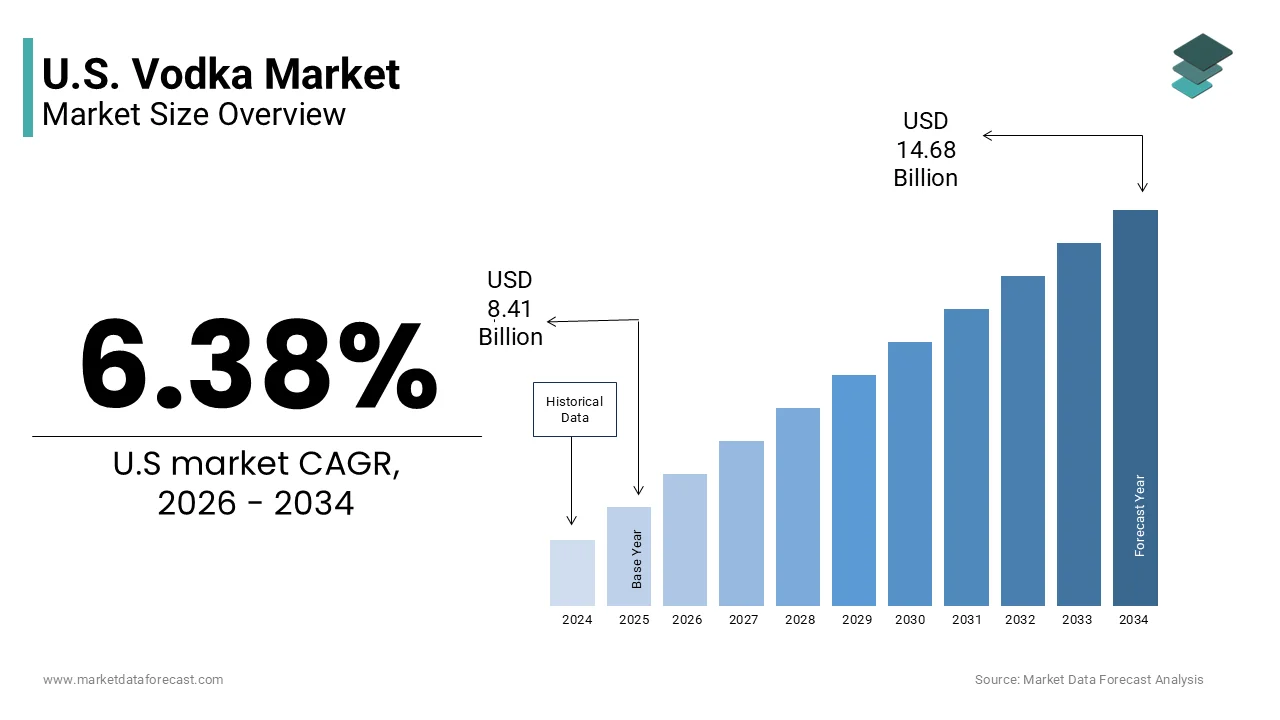
The U.S. vodka market was valued at USD 8.41 billion in 2025, is estimated to reach USD 8.95 billion in 2026, and is projected to reach USD 14.68 billion by 2034, growing at a CAGR of 6.38% during the forecast period. Market growth is driven by rising consumer demand for premium spirits, increasing popularity of cocktail culture, and expanding product innovation in flavored and craft vodka categories. Vodka remains one of the most widely consumed alcoholic beverages in the United States due to its versatility, smooth taste profile, and broad usage in mixed drinks and cocktails. The growing trend toward premiumization and artisanal spirit consumption is further supporting strong market growth.
Key Market Trends
- Rising demand for premium and craft spirits is driving market growth.
- Increasing popularity of cocktail culture and mixology is boosting vodka consumption.
- Growing consumer preference for high quality and imported vodka brands is supporting market expansion.
- Expansion of off trade retail channels and e commerce alcohol sales is enhancing product accessibility.
- Innovation in flavored variants, organic ingredients, and premium packaging is influencing market development.
Segmental Insights
- Based on type, the non flavored vodka segment accounted for the dominant share of the U.S. vodka market in 2025. This dominance is attributed to its versatility in cocktails, broad consumer appeal, and strong demand across retail and hospitality sectors.
- Based on distribution channel, the off trade retail channels segment held the leading share of the U.S. vodka market in 2025, supported by strong sales through liquor stores, supermarkets, and retail chains.
Regional Insights
- The United States is expected to maintain its leading position in the global vodka sector during the forecast period, supported by high spirits consumption, strong premium brand demand, and continuous product innovation. The country remains a major contributor to both global vodka sales volume and premium vodka trends.
Competitive Landscape
The U.S. vodka market is highly competitive, with key players focusing on premium product development, brand differentiation, and expansion of flavored and craft spirit portfolios to strengthen their market position. Companies are investing in marketing campaigns, celebrity partnerships, and innovative packaging solutions. Prominent players in the U.S. vodka market include Belvedere Ltd., Brown-Forman Corp., Fifth Generation, Inc., Pernod Ricard S.A, Sazerac Company, Inc., Bacardi Ltd., New Amsterdam Spirits Company, Diageo Plc., Beam Suntory Inc, Distell Group Holdings Ltd, and American Liquor Co..
U.S. Vodka Market Size
The U.S. vodka market size was valued at USD 8.41 billion in 2025, is estimated to reach USD 8.95 billion in 2026, and is projected to reach USD 14.68 billion by 2034, growing at a CAGR of 6.38% from 2026 to 2034.
As per the Distilled Spirits Council of the U.S., vodka remains the largest selling spirit category by volume, reflecting its entrenched position in American drinking culture. The landscape is currently undergoing a transformation driven by premiumization, where consumers are shifting away from value brands toward super premium and craft options that emphasize quality and provenance. According to the U.S. Department of Agriculture, domestic production of corn and wheat provides a robust agricultural base for grain based vodka manufacturing. Regulatory oversight by the Alcohol and Tobacco Tax and Trade Bureau ensures strict adherence to labeling and production standards, including the requirement that vodka be bottled at no less than 40% alcohol by volume. Consumer behavior is increasingly influenced by transparency in sourcing and sustainability practices. The market operates within a dynamic environment where innovation in flavor profiles and packaging plays a crucial role in differentiation. This sector continues to evolve as manufacturers address the demand for clean label products and responsible consumption initiatives.
MARKET DRIVERS
Versatility in Mixology and Cocktail Culture
The enduring versatility of vodka in mixology and its central role in contemporary cocktail culture are contributing to the U.S. vodka market growth. Vodka’s neutral flavor profile allows it to blend seamlessly with a wide variety of mixers, fruits, and herbs, which is making it the preferred base for countless classic and modern cocktails. As per the National Restaurant Association, vodka based drinks such as the Moscow Mule, Cosmopolitan, and Bloody Mary remain the top selling cocktails on bar menus across the country. This culinary flexibility appeals to both professional bartenders and home enthusiasts who value consistency and adaptability in their spirits. The rise of craft cocktail bars has further elevated the status of vodka, encouraging the use of high quality small batch varieties that offer subtle nuances. According to industry surveys, a significant majority of consumers associate vodka with social gatherings and celebrations, driving high volume sales in both on trade and off trade channels. The ability of vodka to mask the taste of alcohol while delivering a potent effect makes it particularly appealing to younger legal drinking age consumers who may find stronger flavored spirits overwhelming. Marketing campaigns often highlight the social and creative aspects of vodka consumption, reinforcing its image as a fun and accessible beverage. The continuous innovation in cocktail recipes featuring vodka ensures that the spirit remains relevant and exciting to consumers. This widespread utility in social and dining settings sustains robust demand across diverse demographic segments.
Premiumization and Craft Distillation Trends
The trend toward premiumization and the growth of craft distillation is further boosting the U.S. market expansion. Modern drinkers are increasingly educated about production methods and seek spirits that offer superior smoothness and distinct characteristics. As per the Distilled Spirits Council of the U.S., high end and super premium vodka segments have experienced consistent growth, with revenue reaching 7.2 billion dollars for the total category. This shift reflects a broader cultural movement toward mindful drinking where individuals prefer to consume less but better quality alcohol. Craft distilleries leverage local ingredients and traditional techniques to create unique products that resonate with consumers seeking artisanal experiences. According to market research, Millennials and Generation Z buyers are willing to pay higher prices for vodkas with transparent sourcing and compelling brand stories. The emphasis on organic, non-genetically modified organism, and gluten free certifications further enhances appeal to health conscious individuals. Premium vodka brands invest heavily in packaging design and storytelling to differentiate them in a crowded marketplace. The perception of premium vodka as a sophisticated and refined choice encourages its consumption neat or on the rocks rather than just as a mixer. This elevation in status allows manufacturers to command higher margins and build strong brand loyalty. The continuous introduction of limited edition and small batch releases keeps the category dynamic and engaging for enthusiasts.
MARKET RESTRAINTS
Health Consciousness and Caloric Awareness
The growing health consciousness and awareness of caloric intake is significantly hampering the expansion of the U.S. vodka market. While vodka is often perceived as a lower calorie option compared to beer or sweet wines, it is still an alcoholic beverage with empty calories that can contribute to weight gain and other health issues. As per the Centers for Disease Control and Prevention, public health initiatives actively promote moderate alcohol consumption, noting that 30% of U.S. adults consume sugar-sweetened beverages daily, which correlates with broader dietary concerns. This awareness has led to a rise in the sober curious movement where individuals choose to reduce or eliminate alcohol consumption for wellness reasons. The popularity of low alcohol and non-alcoholic beverages provides attractive alternatives for health focused consumers, diverting spending away from traditional spirits. According to market research, a growing segment of the population prefers functional beverages that offer hydration or nutritional benefits without the caloric load of alcohol. The stigma surrounding alcohol consumption in certain social and professional circles also influences purchasing behavior. Younger demographics in particular are prioritizing mental and physical well-being, which is leading to a decline in overall alcohol volume consumption. While premiumization helps offset volume declines by increasing value, the overarching trend toward moderation limits market expansion. Brands face the challenge of positioning vodka as an occasional indulgence rather than a daily staple, requiring strategic marketing that aligns with healthy lifestyle values. This shift in consumer priorities necessitates innovation in low calorie and functional offerings to maintain relevance.
Regulatory Pressure and Taxation Policies
Regulatory pressure and varying taxation policies across states impose significant constraints on the U.S. vodka market growth. Alcohol distribution and sales are subject to complex federal and state laws, including the three tier system that separates producers, distributors, and retailers. As per the Alcohol and Tobacco Tax and Trade Bureau, compliance with labeling, advertising, and reporting requirements adds operational costs and administrative burdens for manufacturers. State level regulations differ widely with some states controlling alcohol sales through government monopolies while others allow private retail. This fragmentation complicates distribution strategies and limits market access for smaller brands. High excise taxes on distilled spirits further impact pricing, making vodka less competitive compared to other beverage categories. According to economic analyses, tax increases in certain states have led to reduced sales volumes and cross border shopping where consumers purchase alcohol in lower tax jurisdictions. The legal drinking age of 21 years restricts the potential consumer base, limiting marketing opportunities and audience reach. Advertising restrictions prohibit targeting minors and impose limitations on content, hindering brand visibility. The complexity of navigating these regulatory landscapes requires significant legal and logistical resources, particularly for international brands entering the US market. These barriers increase the cost of doing business and can stifle innovation and market entry. The inconsistent regulatory framework creates uncertainty and inefficiencies that restrain overall market growth and profitability.
MARKET OPPORTUNITIES
Expansion into Flavored and Infused Variants
The expansion into flavored and infused vodka variants is a lucrative opportunity for market growth by catering to evolving consumer preferences for novelty and customization. Consumers are increasingly seeking unique and exciting flavor experiences that go beyond traditional unflavored spirits. As per industry trends, flavors such as citrus, berry, vanilla, and even exotic options like cucumber or jalapeno are gaining popularity among younger demographics. These variants appeal to consumers who enjoy experimenting with different tastes and creating personalized cocktails at home. Manufacturers can leverage this trend by launching limited edition flavors and seasonal releases that generate buzz and encourage trial. According to retail data, flavored vodkas often command higher price points and attract impulse purchases due to their vibrant packaging and appealing descriptions. The ability of flavored vodkas to simplify cocktail preparation by eliminating the need for additional mixers enhances their convenience factor. Collaborations with chefs and mixologists can help create sophisticated flavor profiles that elevate the perception of these products. Marketing campaigns that highlight the natural ingredients and absence of artificial additives resonate with health conscious buyers. The versatility of flavored vodkas in both casual and formal settings expands their usage occasions. By continuously innovating in flavor development, companies can capture new customer segments and drive repeat purchases. This strategy allows brands to differentiate themselves in a saturated market and maintain consumer interest through constant novelty.
Sustainability and Ethical Sourcing Initiatives
Sustainability and ethical sourcing initiatives is another notable opportunity for the U.S. vodka market expansion. Consumers are increasingly concerned about the environmental impact of their purchases, seeking brands that prioritize eco-friendly practices and social responsibility. As per the Environmental Protection Agency, businesses that reduce waste and greenhouse gas emissions are more likely to attract the 60% of consumers who report sustainability as an important purchasing factor. Vodka producers can implement green manufacturing processes such as water conservation, energy efficiency, and waste reduction to minimize their ecological footprint. The use of organic, locally sourced grains and potatoes appeals to environmentally conscious buyers who value transparency. According to industry reports, certifications such as carbon neutral or fair trade resonate strongly with millennial and Generation Z consumers. Brands that highlight their commitment to sustainability in marketing campaigns can build emotional connections with buyers. The adoption of recyclable or biodegradable packaging further demonstrates environmental stewardship. Collaborations with local farmers and communities support regional economies and strengthen brand narratives. The integration of ethical practices into core operations allows vodka companies to stand out in a competitive landscape. This approach not only mitigates regulatory risks but also aligns with global sustainability goals. The opportunity to lead in corporate social responsibility positions vodka brands as forward thinking and responsible choices for modern consumers.
MARKET CHALLENGES
Intense Market Saturation and Brand Differentiation
Intense market saturation and the difficulty of brand differentiation pose significant challenges to the U.S. vodka market. The low barriers to entry have resulted in a plethora of brands offering similar neutral spirits, making it difficult for new and existing players to stand out. As per industry analyses, there are over 10,000 spirit brands available across various channels, leading to consumer confusion and decision fatigue. The prevalence of private label brands from major retailers further intensifies competition by offering comparable quality at lower prices. According to retail data, shelf space is highly contested, requiring significant marketing investment to secure visibility and attract attention. Established brands face pressure from agile startups that quickly adapt to trending flavors and packaging styles, disrupting traditional market dynamics. The reliance on influencer marketing and social media endorsements has become costly and less effective as consumers become skeptical of paid promotions. Differentiating based on taste is challenging due to the neutral nature of vodka, requiring brands to focus on storytelling and heritage. Manufacturers must continuously innovate in branding and engagement to maintain relevance. The risk of brand dilution is high when companies expand too broadly without a clear value proposition. Navigating this crowded landscape requires strategic positioning and substantial resources, posing a persistent challenge for sustainable growth and market share acquisition.
Supply Chain Volatility and Raw Material Costs
Supply chain volatility and fluctuating raw material costs present major hurdles for the U.S. vodka market. The production of vodka relies heavily on agricultural commodities such as corn, wheat, and potatoes, which are subject to weather conditions and market fluctuations. As per the U.S. Department of Agriculture, extreme weather events and climate change can lead to crop failures and price spikes for essential ingredients. The reliance on single source suppliers for specialized grains increases vulnerability to supply interruptions. According to logistics reports, transportation costs have risen significantly, with domestic freight rates increasing by double-digit percentages recently. The need for high purity water and energy intensive distillation processes further adds to operational expenses. Manufacturers face the challenge of maintaining consistent product quality and availability amidst these uncertainties. Any disruption in the supply chain can lead to stockouts and lost sales opportunities, damaging brand reputation. Building resilient supply networks requires significant investment in diversification and inventory management. The complexity of managing global sourcing amidst geopolitical tensions adds another layer of risk. Addressing these logistical complexities is crucial for ensuring operational stability and meeting consumer demand in a volatile economic environment. Failure to mitigate these costs can result in reduced competitiveness and lower profitability for vodka producers.
REPORT COVERAGE
| REPORT METRIC | DETAILS |
| Market Size Available | 2025 to 2034 |
| Base Year | 2025 |
| Forecast Period | 2026 to 2034 |
| CAGR | 6.38% |
| Segments Covered | By Type, Distribution Channel, and Region. |
| Various Analyses Covered | Global, Regional and Country-Level Analysis, Segment-Level Analysis, Drivers, Restraints, Opportunities, Challenges; PESTLE Analysis; Porter’s Five Forces Analysis, Competitive Landscape, Analyst Overview of Investment Opportunities |
| Countries Covered | California, Washington, Oregon, New York, United States |
| Market Leaders Profiled | Belvedere Ltd., Brown Forman Corp., Fifth Generation, Inc., Pernod Ricard S.A, Sazerac Company, Inc., Bacardi Ltd., New Amsterdam Spirits Company, Diageo Plc., Beam Suntory Inc, Distell Group Holdings Ltd, and American Liquor Co |
SEGMENTAL ANALYSIS
By Type Insights
The non-flavored vodka segment dominated the market by capturing the largest share of the U.S. vodka market in 2025. The dominance of this segment in the U.S. market is driven by its unparalleled versatility in mixology, which makes it an indispensable ingredient in bars and homes across the nation. The neutral flavor profile of unflavored vodka allows it to blend seamlessly with a wide variety of mixers, fruits, and herbs without overpowering other ingredients. As per the National Restaurant Association, vodka remains the most requested spirit for cocktails, ensuring consistent high volume demand. This culinary flexibility appeals to both professional bartenders who require a reliable base for complex recipes and home enthusiasts who value ease of use. According to industry surveys, a significant majority of consumers prefer non flavored vodka for its ability to provide alcohol content while allowing the flavors of fresh juices and syrups to shine. The rise of craft cocktail culture has further reinforced this preference as mixologists seek high quality neutral spirits that offer smoothness and consistency. The widespread availability of non flavored vodka in various price points ensures accessibility for all demographic segments. Its role as a staple in social gatherings and celebrations drives frequent purchases and brand loyalty. The enduring popularity of classic vodka based drinks ensures that this segment maintains its leadership position despite the emergence of flavored alternatives.
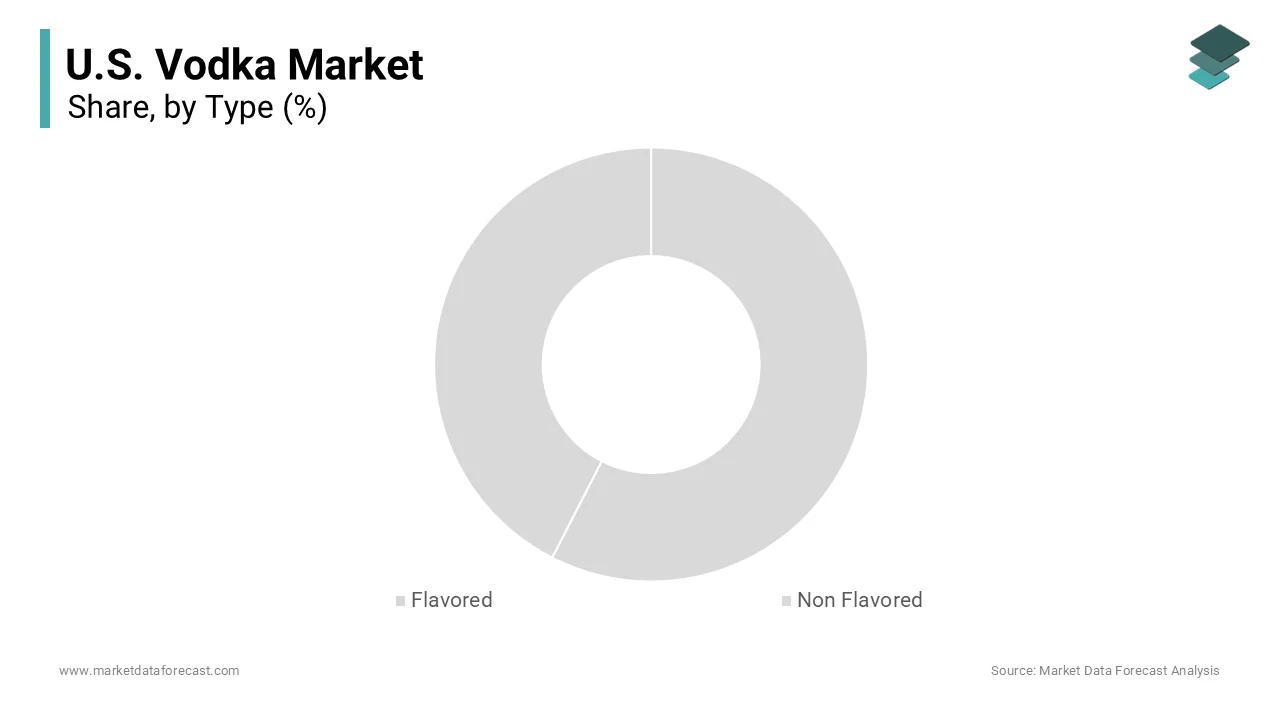
However, the flavored vodka segment is estimated to showcase the fastest CAGR of 7.4% during the forecast period in the U.S. market owing to the rising consumer demand for novelty and customization in beverage choices. Modern drinkers, particularly millennials and Generation Z, are increasingly seeking unique and exciting flavor profiles that differentiate their drinking experience from traditional options. As per market research trends, flavors such as citrus, berry, vanilla, and even exotic combinations like cucumber or jalapeno are gaining traction for their ability to offer distinct sensory experiences. These variants appeal to consumers who enjoy experimenting with different tastes and creating personalized cocktails at home without the need for additional mixers. According to industry observations, flavored vodkas simplify the cocktail making process by providing pre infused flavors that reduce preparation time and effort. The vibrant packaging and appealing descriptions of flavored products often trigger impulse purchases in retail settings. Social media platforms play a significant role in popularizing these trends as users share photos and recipes featuring colorful and creative drinks. The ability of flavored vodkas to cater to specific taste preferences allows brands to target niche markets and build dedicated followings. This continuous innovation in flavor development keeps the category dynamic and engaging, encouraging repeat purchases and trial among curious consumers.
By Distribution Channel Insights
The off-trade retail channels segment led the market and held the leading share of the U.S. vodka market in 2025. The growth of the off-trade retail channels segment in the U.S. market is attributed to the convenience of home consumption and the tendency of consumers to purchase vodka in bulk for personal use. As per the Bureau of Labor Statistics, Americans spend a significant amount of leisure time at home, where having a personal supply of alcohol allows for flexible and private consumption. The ability to buy larger bottles at lower per unit costs compared to on trade establishments makes off trade shopping economically attractive. According to retail data, bulk purchases of vodka are common among households, particularly for those who frequently entertain guests or enjoy regular evening drinks. The wide variety of brands and formats available in retail stores allows consumers to explore different options without the pressure of immediate consumption. The rise of e commerce and delivery services has further enhanced the convenience of off trade purchases, as online grocery shoppers reached 67% of the total in 2025. This accessibility is particularly important for residents in rural areas or those with limited mobility. The privacy afforded by home consumption also appeals to individuals who prefer to avoid public settings. The stability of off trade sales provides a reliable revenue stream for manufacturers and retailers, ensuring consistent product availability. The integration of loyalty programs and promotional discounts in retail channels further incentivizes purchases, reinforcing the dominance of this distribution channel.
On the other end, the on-trade hospitality venues segment is expected to register a healthy CAGR of 6.2% during the forecast period in the U.S. market owing to the resurgence of social dining and the popularity of craft cocktails. The rapid expansion of the on trade segment is primarily fueled by the resurgence of social dining and nightlife activities following periods of restriction. As per the National Restaurant Association, consumer spending on food away from home has rebounded strongly, with bars and lounges experiencing increased foot traffic. Vodka based cocktails are a staple in many establishments, offering refreshing and versatile options for social gatherings. The atmosphere of bars and clubs enhances the enjoyment of alcoholic beverages, encouraging consumers to spend more on premium drinks. According to hospitality industry reports, the demand for experiential dining has led to a rise in themed bars and lounges which specialize in craft cocktails. These venues provide a unique environment that celebrates the culture of mixing drinks, attracting enthusiasts and curious newcomers alike. The social aspect of drinking in groups drives higher consumption volumes compared to home settings. The ability of bartenders to create visually appealing and innovative cocktails adds value to the on trade experience, justifying higher price points. The return of live music events and celebrations further boosts the demand for alcoholic beverages in these settings. As consumers prioritize social interactions and experiences, the on trade channel continues to grow, offering a dynamic platform for vodka brands to engage with their audience.
COUNTRY LEVEL ANALYSIS
The United States is likely to maintain its dominance in the global vodka sector over the next few years as it remains the primary driver of both volume consumption and premium innovation. As the largest consumer of vodka globally, the country exhibits a mature and dynamic market characterized by high demand and diverse consumer preferences. The presence of major international brands and a growing number of craft distilleries contributes to a competitive and innovative landscape. The U.S. market is fundamentally driven by its large consumer base and the deep integration of vodka into American culture and social life. As per the Distilled Spirits Council of the U.S., vodka is the largest selling spirit category by volume, reflecting its widespread acceptance and popularity. The versatility of vodka in cocktails and its neutral flavor profile have made it a staple in American drinking habits. According to demographic data, the diverse population of the U.S. includes many communities with strong ties to vodka producing regions, driving consistent demand. The integration of vodka into popular cocktails and social rituals ensures its relevance across generations. The availability of vodka in various forms, from standard to premium and flavored, caters to a wide range of tastes and occasions. The strong presence of vodka in both on trade and off trade channels ensures easy access for consumers. The cultural acceptance of vodka as a versatile and enjoyable spirit supports its sustained growth and market leadership. The continuous influx of immigrants from vodka producing countries also contributes to the preservation and expansion of vodka culture in the U.S.
COMPETITIVE LANDSCAPE
The competitive landscape of the U.S. vodka market is characterized by the dominance of a few multinational corporations alongside a growing number of craft and niche brands. Incumbent players leverage strong brand equity and extensive distribution networks to maintain market leadership while newer entrants differentiate through unique flavor profiles and artisanal production methods. Competition is driven by the trend toward premiumization as consumers seek high quality spirits with distinct characteristics. Price competition remains intense in the value segment but less so in the premium category where quality and heritage justify higher costs. Innovation in packaging and flavored variants serves as a key differentiator in attracting younger consumers. Marketing efforts focus on storytelling and cultural connections to build emotional resonance with buyers. The rise of health consciousness poses a challenge prompting brands to highlight natural ingredients and low calorie options. Regulatory compliance and supply chain efficiency are critical factors influencing competitiveness. Overall the market favors companies that can balance scale with authenticity while adapting to evolving consumer trends and preferences.
KEY MARKET PLAYERS
Some of the companies that are playing a dominating role in the U.S. vodka market are
- Belvedere Ltd.
- Brown-Forman Corp.
- Fifth Generation, Inc.
- Pernod Ricard S.A
- Sazerac Company, Inc.
- Bacardi Ltd.
- New Amsterdam Spirits Company
- Diageo Plc.
- Beam Suntory Inc
- Distell Group Holdings Ltd
- American Liquor Co.
Top Players in the Market
- Diageo plc maintains a formidable presence in the U.S. vodka market through its flagship brand Smirnoff which remains a cornerstone of the category. The company leverages its extensive distribution network to ensure widespread availability across retail and hospitality sectors. Recent strategic initiatives include launching innovative flavored variants and sustainable packaging solutions to appeal to modern consumers. Diageo has invested heavily in digital marketing campaigns that highlight mixology and social engagement. The corporation focuses on premiumization by expanding its ultra premium portfolio with craft inspired offerings. By emphasizing responsible drinking and community initiatives Diageo strengthens brand loyalty. These efforts aim to solidify its leadership position while adapting to evolving consumer preferences for quality and authenticity in the competitive American spirits landscape.
- Pernod Ricard SA contributes significantly to the market with its Absolut Vodka brand which is renowned for its distinctive bottle design and Swedish heritage. The company utilizes robust marketing strategies that associate the brand with art culture and creativity. Recent actions involve launching limited edition collaborations with artists and designers to enhance brand visibility. Pernod Ricard has invested in sustainable production practices including water conservation and renewable energy usage. The organization focuses on expanding its presence in the premium segment through targeted digital engagement. By leveraging its global expertise in spirits Pernod Ricard maintains strong brand recognition and drives growth. These strategies enable the company to compete effectively against established players while capturing the interest of younger demographics seeking authentic and stylish vodka options.
- Beam Suntory Inc plays a pivotal role in the U.S. vodka market with its Jim Beam and Effen vodka brands which cater to diverse consumer segments. The company focuses on promoting versatility and quality through strategic partnerships with bars and restaurants. Recent strategic moves include reformulating products to meet clean label demands and introducing new flavor profiles. Beam Suntory has strengthened its distribution channels to enhance accessibility in upscale venues and retail outlets. The organization emphasizes sustainability by supporting local communities and adopting eco friendly practices. By leveraging its expertise in spirits Beam Suntory positions its vodka brands as reliable choices for both mixing and sipping. These initiatives help the company differentiate itself in a crowded market and build a loyal customer base among value conscious and premium seekers alike.
Top Strategies Used by Key Market Participants
Key players in the U.S. vodka market primarily employ premiumization and flavor innovation strategies to sustain growth. Companies are increasingly launching super premium and craft inspired vodkas to cater to discerning consumers seeking quality and authenticity. This shift allows brands to command higher prices and differentiate themselves from value oriented competitors. Another major strategy involves expanding into flavored and infused variants to address the demand for novelty and customization. Manufacturers invest in sustainable sourcing and eco friendly packaging to appeal to environmentally conscious buyers. Strategic partnerships with bartenders and influencers enhance brand visibility and drive trial. Digital marketing campaigns focus on mixology and lifestyle engagement to connect with younger demographics. By balancing tradition with innovation key participants strengthen their market positions and adapt to changing consumer preferences effectively.
MARKET SEGMENTATION
This research report on the U.S. vodka market is segmented and sub-segmented into the following categories.
By Type
- Flavored
- Non Flavored
By Distribution Channel
- Off Trade
- On Trade
By Country
- California
- Washington
- Oregon
- New York
- Rest of the United States
Frequently Asked Questions
1.What is driving the growth of the U.S. vodka market?
The growth of the U.S. vodka market is driven by increasing demand for premium alcoholic beverages, rising cocktail culture, and growing consumer preference for flavored spirits.
2.Which type of vodka is most popular in the U.S. market?
Plain vodka remains widely consumed due to its versatility, while flavored vodka is gaining popularity among younger consumers seeking innovative drink options.
3.How is premiumization influencing the U.S. vodka market?
Premiumization is encouraging consumers to choose high quality and craft vodka brands, resulting in increased sales of premium and ultra premium products.
4.What role do flavored vodkas play in market growth?
Flavored vodkas are expanding market opportunities by attracting consumers interested in unique taste profiles and ready to mix beverages.
5.Which distribution channel dominates the U.S. vodka market?
Off trade channels such as liquor stores, supermarkets, and online retail platforms account for a major share of vodka sales in the U.S.
6.How are millennials and Gen Z influencing vodka consumption?
Millennials and Gen Z consumers are driving demand for premium, flavored, and craft vodka products through evolving social drinking habits and cocktail trends.
7.What challenges does the U.S. vodka market face?
The market faces challenges including intense competition, changing alcohol regulations, and shifting consumer preferences toward low alcohol beverages.
8.How is the cocktail culture supporting vodka demand?
The increasing popularity of cocktails such as martinis, Moscow mules, and vodka sodas is significantly supporting vodka consumption across bars and restaurants.
9.What impact does e commerce have on vodka sales?
E commerce platforms are improving product accessibility and enabling consumers to explore a wider range of vodka brands and flavors.
10.Which regions in the U.S. show high vodka consumption?
Urban regions and states with active nightlife cultures, including New York, California, and Florida, demonstrate high vodka consumption levels.
Related Reports
Access the study in MULTIPLE FORMATS
Purchase options starting from
$ 1200
Didn’t find what you’re looking for?
TALK TO OUR ANALYST TEAM
Need something within your budget?
NO WORRIES! WE GOT YOU COVERED!
Call us on: +1 888 702 9696 (U.S Toll Free)
Write to us: sales@marketdataforecast.com