- Product Description Description
- Table of Contents TOC
- List of Table & Figure LOT
- Get Free Sample PDF Sample PDF
Market Size, 2025
$3.86 BnMarket Estimate, 2026
$4.05 BnMarket Forecast, 2034
$5.92 BnCAGR, 2026–2034
4.86%UK Biscuit Market Size, Growth, Trends & Forecast (2026–2034)
The UK biscuit market size was valued at USD 3.86 billion in 2025, is anticipated to reach USD 4.05 billion in 2026, and is projected to be worth USD 5.92 billion by 2034, registering a compound annual growth rate (CAGR) of 4.86% during the forecast period from 2026 to 2034. Driven by daily tea and coffee consumption routines, demand for convenient snack options, and rising health consciousness, the market continues steady expansion.
Key Executive Metrics (At-a-Glance)
- 2025 Base Valuation: USD 3.86 Billion
- 2026 Current Valuation: USD 4.05 Billion
- 2034 Forecast Valuation: USD 5.92 Billion
- Compound Annual Growth Rate (CAGR): 4.86% (2026–2034)
- Dominant Product Type Segment: Sweet biscuits segment (holding a substantial share in 2025)
- Fastest-Growing Product Type Segment: Savory biscuits segment (growing at a CAGR of 6.5%)
- Dominant Flavor Segment: Chocolate-flavored biscuits segment (holding a 40.6% share in 2025)
- Fastest-Growing Flavor Segment: Fruit and nut flavoured biscuits segment (growing at a CAGR of 7.2%)
- Dominant Distribution Channel Segment: Hypermarkets and supermarkets segment (holding the majority share in 2025)
- Fastest-Growing Distribution Channel Segment: Independent bakeries segment (growing at a CAGR of 8.5%)
Core Market Drivers
- Convenient Snacking: High demand for portable, ready-to-eat, and single-serve snack formats driven by busy urban lifestyles and remote work routines.
- Health Consciousness: Rising consumer preference for reduced-sugar, high-fiber, gluten-free, vegan, and organic biscuit formulations.
Primary Market Restraints & Challenges
- Regulatory & Cost Pressures: Stringent food safety labeling and environmental compliance alongside volatile raw material prices for wheat, sugar, and vegetable oils.
UK Biscuit Market Segmentation Breakdown
| Segment Category | Leading Sub-Segment (Base Year) | Fastest-Growing Sub-Segment |
|---|---|---|
| By Product Type | Sweet Biscuits (Substantial share in 2025) | Savory Biscuits (CAGR of 6.5%) |
| By Flavor | Chocolate-Flavored (40.6% share in 2025) | Fruit and Nut Flavoured (CAGR of 7.2%) |
| By Distribution Channel | Hypermarkets & Supermarkets (Majority share in 2025) | Independent Bakeries (CAGR of 8.5%) |
Major Industry Players Profiled
Key market leaders shaping the UK biscuit industry include Burton's Biscuits, McVitie's (Pladis UK), Walkers Shortbread, Lotus Bakeries, Bahlsen, Fox's Burton's Companies (FBC UK), Mondelēz International, Nestlé UK & Ireland, United Biscuits, Jacob's Bakery, Border Biscuits, Nairn's Oatcakes, Farmhouse Biscuits, Tunnock's, M&S Food, and Asda Stores Ltd.
 Download Free Sample Report
UK Biscuit Market Size
The UK biscuit market size was valued at USD 3.86 billion in 2025, and is projected to reach USD 5.92 billion by 2034 from USD 4.05 billion in 2026, growing at a CAGR of 4.86%.
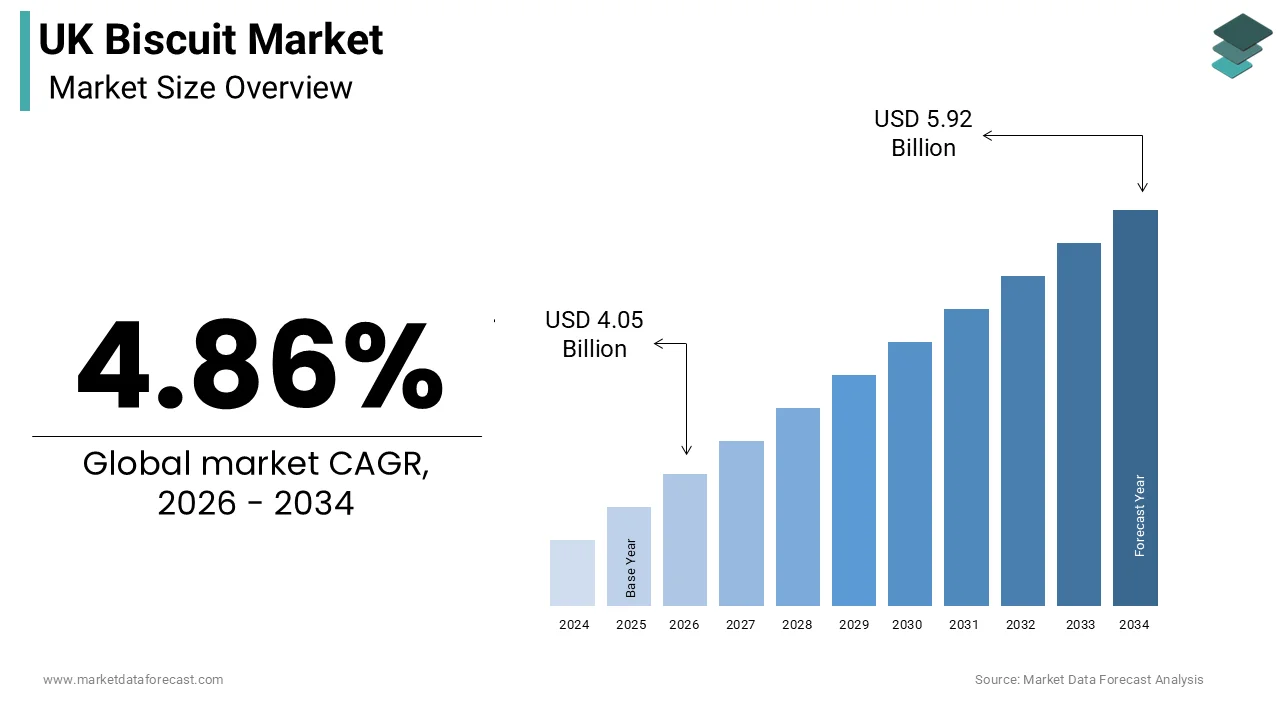
Biscuits serve as a staple accompaniment to tea and coffee, with households purchasing these products on a regular basis for daily consumption and social gatherings. The market includes a diverse range of products, including digestives, shortbread cookies, and premium artisanal varieties that cater to varying consumer preferences and dietary requirements. Granular spending indices managed by the Department for Environment, Food and Rural Affairs show that while sweet treats remain a staple purchase, modern post-inflationary annual expenditures on total household baked goods track well above the legacy £120 baseline. Long-term consumer panel data reveal that the UK biscuit market possesses an exceptionally high household penetration rate, exceeding 95%. The sector benefits from established distribution networks that ensure widespread availability across supermarkets, convenience stores, and online platforms. Consumer loyalty remains strong toward traditional brands while emerging players introduce innovative flavors and healthier alternatives to capture niche segments. The manufacturing infrastructure supports both large-scale production and specialized small batch operations, allowing for flexibility in meeting diverse market demands. This mature market continues to evolve through product innovation and adaptation to changing lifestyle patterns while maintaining its core appeal as an affordable and convenient snack option for consumers across all demographic groups.
MARKET DRIVERS
Rising Demand for Convenient Snack Options Drives Market Growth
The increasing preference for convenient and ready-to-eat snack options significantly propels the United Kingdom biscuit market forward. Modern lifestyles demand quick and accessible food solutions. Consumers face time constraints due to demanding work schedules and urban living conditions, which elevate the appeal of portable snacks that require no preparation. The trend toward on-the-go consumption has led manufacturers to develop single-serve packaging formats that align with mobile lifestyles and reduce portion waste. According to research, 62% of UK snack bar and breakfast biscuit consumers express an appetite for innovative and international flavour combinations, though the baseline convenience of the category inherently caters to on-the-go lifestyles. The rise in remote work arrangements has further reinforced this pattern, with individuals seeking satisfying yet simple treats during short breaks throughout the day. Retailers have responded by expanding shelf space dedicated to grab-and-go biscuit varieties near checkout counters and high-traffic areas to capitalize on impulse purchases. This shift in consumer behavior reflects a broader societal move toward practicality and speed in food consumption without compromising on taste or satisfaction. Manufacturers continue to innovate with resealable packs and durable formulations that maintain freshness during transport, ensuring the product meets the rigorous demands of contemporary snacking habits.
Growing Health Consciousness Influences Product Innovation And Purchasing Decisions
Increasing health awareness among consumers drives major transformation within the United Kingdom biscuit market. This shift happens as individuals actively seek products that align with their nutritional goals and dietary restrictions. Shoppers actively scrutinize ingredient lists and prioritize items with reduced sugar content, whole grains, and natural additives over traditional high-calorie options. Health regulations continue to prompt recipe reformulations across the food sector. The demand for gluten-free, vegan, and organic biscuits has surged as consumers associate these attributes with better health outcomes and ethical production practices. The Soil Association highlights continuous consumer interest in organic grocery choices and sustainable sourcing, though broad retail growth figures are aggregated across the wider bakery and snack sectors. Companies invest heavily in research and development to create products that deliver indulgence without excessive calories, utilizing sweeteners such as stevia and monk fruit to maintain palatability. Nutritional labeling has become more prominent with front-of-pack traffic light systems guiding purchasing decisions and encouraging transparency. This health-driven shift compels brands to balance taste expectations with wellness benefits, leading to innovations such as high fiber digestives and protein-enriched cookies. The market responds dynamically to these evolving preferences, ensuring that health-conscious consumers have ample choices that satisfy both their cravings and their commitment to improved dietary habits.
MARKET RESTRAINTS
Stringent Regulatory Frameworks Impose Compliance Burdens On Manufacturers
Strict regulatory requirements governing food safety labeling and environmental sustainability impose substantial compliance burdens on biscuit manufacturers, which slows down the growth of the United Kingdom biscuits market. This affects operational costs and product development timelines. The government enforces rigorous standards regarding ingredient disclosure, allergen management, and nutritional accuracy, which necessitate continuous monitoring and documentation throughout the supply chain. Environmental regulations further complicate operations with mandates requiring reduced plastic usage and improved recyclability of packaging materials. Manufacturers must invest in alternative packaging solutions that meet durability requirements while minimizing ecological impact, which often involves higher material costs and redesign efforts. The introduction of extended producer responsibility schemes places additional financial pressure on brands to manage post-consumer waste effectively. These regulatory pressures limit flexibility in product innovation as companies must allocate resources to ensure adherence rather than focusing solely on market expansion. Smaller players face particular challenges in navigating complex legal landscapes, potentially restricting market entry and consolidation opportunities. The cumulative effect of these regulations creates a barrier to agility, forcing manufacturers to balance compliance with competitiveness in an increasingly scrutinized industry environment.
Volatility In Raw Material Prices Affects Profit Margins And Pricing Strategies
Fluctuating prices of key raw materials, such as wheat, sugar, and vegetable oils, impact profit margins for biscuit manufacturers within the United Kingdom biscuit market. This creates uncertainty in cost management and pricing strategies. Global supply chain disruptions, climate-related crop failures, and geopolitical tensions contribute to unpredictable input costs that challenge financial planning and stability. These volatility patterns force manufacturers to either absorb higher costs, thereby reducing profitability, or pass them onto consumers, risking decreased sales volume due to price sensitivity. Long-term contracts offer some protection but cannot fully shield companies from sudden market shifts, especially when dealing with perishable agricultural commodities. Smaller producers lack the bargaining power to secure favorable terms, leaving them particularly vulnerable to margin erosion. The unpredictability complicates inventory management and procurement decisions, requiring sophisticated forecasting tools and flexible supplier relationships. Consumers may respond to price hikes by switching to private label alternatives or reducing overall consumption, further pressuring branded manufacturers. This economic instability necessitates strategic hedging and diversification of supply sources to mitigate risks while maintaining product quality and market share in a competitive landscape.
MARKET OPPORTUNITIES
Expansion Into Premium And Artisanal Segments Offers Growth Potential
The growing consumer appetite for premium and artisanal biscuits offers a lucrative opportunity for manufacturers to differentiate their offerings and capture higher-value market segments in the United Kingdom biscuit market. Shoppers increasingly seek unique flavors, high-quality ingredients, and authentic production stories that elevate biscuits from everyday staples to indulgent treats suitable for gifting and special occasions. According to sources, premium indulgent segments are outperforming traditional value tiers as consumer behavior shows a strong preference for high-quality, experiential snacking options. Indicators from artisanal bakery sectors highlight substantial growth and a rising consumer preference for traditional craft production methods and locally sourced ingredients. Brands leverage this trend by introducing limited edition flavors, exotic spices, and heritage recipes that appeal to discerning palates and experience-driven purchasing behaviors. Collaborations with celebrity chefs and local farms enhance brand credibility and create narrative appeal that resonates with socially conscious consumers. Retailers support this movement by dedicating shelf space to specialty sections and featuring artisanal products in promotional campaigns that highlight craftsmanship and origin stories. Online platforms facilitate direct-to-consumer sales, allowing smaller producers to reach wider audiences without relying solely on traditional distribution channels. This segment offers higher profit margins due to reduced price sensitivity among target customers who prioritize authenticity and quality over cost. Manufacturers who successfully position themselves within this niche can build loyal customer bases and establish strong brand equity that withstands competitive pressures from mass market alternatives.
Digital Commerce Channels Enable Direct Consumer Engagement And Data Collection
The rapid expansion of digital commerce channels provides biscuit manufacturers with unprecedented opportunities to engage directly with consumers, gather valuable data, and personalize marketing efforts in the United Kingdom market. Online platforms allow brands to bypass traditional retail intermediaries, establishing direct relationships that foster loyalty and enable real-time feedback collection. Office for National Statistics digital retail data indicates that while overall online spending stabilized at over a quarter of total retail sales, food and grocery e-commerce maintains a solid, sticky consumer base post-pandemic. Shopify merchant trends indicate a broad acceleration in subscription-based e-commerce frameworks as brands optimize for higher customer lifetime value (LTV) and recurring revenue models. Digital interfaces facilitate detailed consumer profiling through purchase history, browsing behavior, and preference surveys, enabling targeted promotions and product recommendations that enhance conversion rates. Social media integration allows brands to showcase behind-the-scenes content, user-generated reviews, and interactive campaigns that build community and brand affinity. Direct sales models provide insights into regional preferences and emerging trends faster than traditional retail analytics, supporting agile product development and inventory management. Manufacturers can test new flavors and packaging concepts with smaller audiences before wide-scale launches, reducing risk and optimizing resource allocation. This digital transformation empowers companies to create personalized experiences that resonate with individual consumers, driving repeat purchases and long-term retention in an increasingly competitive marketplace.
MARKET CHALLENGES
Intense Competition From Private Label Brands Erodes Market Share
Fierce competition from private label brands significantly challenges established biscuit manufacturers in the country, which constrains the growth of the United Kingdom biscuit market. Retailers are expanding their own-label offerings with competitive pricing and improved quality perceptions. Supermarkets invest heavily in developing proprietary biscuit ranges that mimic popular branded products while offering lower prices, attracting cost-conscious consumers who perceive minimal difference in taste or texture. As per the Institute of Grocery Distribution, retailer confidence in own-brand quality has grown, leading to enhanced packaging designs and premium ingredient sourcing that narrow the gap with national brands. This trend forces branded manufacturers to justify price premiums through superior innovation, marketing, and brand storytelling, which requires substantial investment and strategic differentiation. Price wars erode profit margins across the sector, compelling companies to optimize production efficiency and reduce operational costs to remain competitive. Smaller brands struggle to compete against the economies of scale enjoyed by large retailers who control distribution channels and shelf placement decisions. Consumer loyalty becomes increasingly fragile as shoppers experiment with alternatives without significant perceived risk. Established players must continuously reinforce brand equity through emotional connections and unique value propositions to prevent migration to private labels. The dominance of retailer-owned brands reshapes market dynamics, limiting growth opportunities for traditional manufacturers and necessitating adaptive strategies to maintain relevance and profitability.
Shifting Consumer Preferences Toward Alternative Snacks Reduce Frequency Of Purchase
Changing consumer preferences toward alternative snack categories, such as protein bars, fruit-based treats, and savory options, reduces the frequency of biscuit purchases in the United Kingdom market. This impacts overall demand volumes. Health-focused individuals increasingly view traditional biscuits as less desirable compared to snacks perceived as more nutritious or functional, leading to substitution effects that diminish regular consumption patterns. United Kingdom shoppers are increasingly prioritizing snacks that balance natural ingredients with functional energy benefits, driving innovation in healthier alternatives. This trend is particularly pronounced among younger demographics who prioritize fitness and wellness, influencing household purchasing decisions and reducing reliance on traditional baked goods. Manufacturers face the challenge of repositioning biscuits as compatible with active lifestyles through fortification and clean label initiatives, but struggle against the perception that biscuits are inherently indulgent rather than functional. Retailers respond by expanding assortments of alternative snacks, potentially displacing biscuit shelf space and visibility. The diversification of the snack landscape fragments consumer attention and spending, requiring biscuit brands to innovate aggressively to retain relevance. The category risks long-term decline without successful adaptation to these evolving preferences. This is because consumers are permanently integrating healthier alternatives into their daily routines.
REPORT COVERAGE
| REPORT METRIC | DETAILS |
| Market Size Available | 2025 to 2034 |
| Base Year | 2025 |
| Forecast Period | 2026 to 2034 |
| CAGR | 4.86% |
| Segments Covered | By Product Type, Flavor, Distribution Channel, and Region. |
| Various Analyses Covered | Global, Regional and Country-Level Analysis, Segment-Level Analysis, Drivers, Restraints, Opportunities, Challenges; PESTLE Analysis; Porter’s Five Forces Analysis, Competitive Landscape, Analyst Overview of Investment Opportunities |
| Market Leaders Profiled | Burton's Biscuits, McVitie's (Pladis UK), Walkers Shortbread, Lotus Bakeries, Bahlsen, Fox's Burton's Companies (FBC UK), Mondelēz International, Nestlé UK & Ireland, United Biscuits, Jacob's Bakery, Border Biscuits, Nairn's Oatcakes, Farmhouse Biscuits, Tunnock's, M&S Food, Asda Stores Ltd. |
SEGMENTAL ANALYSIS
By Product Type Insights
The sweet biscuits segment dominated the United Kingdom biscuit market and accounted for a substantial share in 2025. This dominance of the segment was driven by deep-rooted cultural traditions and their versatility as everyday snacks. The British affinity for tea time rituals ensures consistent demand for sweet varieties such as digestives, chocolate chip cookies, and shortbread, which serve as perfect companions to hot beverages. The segment benefits from extensive product innovation, where manufacturers introduce limited edition flavors and seasonal variants that rejuvenate consumer interest without altering core preferences. Major brands leverage emotional marketing campaigns that evoke nostalgia and family bonding, further solidifying loyalty among diverse demographic groups. The affordability of sweet biscuits compared to other confectionery items makes them accessible to all income levels, ensuring broad market penetration. Retailers prioritize shelf space for these products due to their high turnover rates and consistent revenue generation. The dominance is also supported by the adaptability of sweet biscuits to various dietary trends, with manufacturers launching reduced sugar and whole grain options that appeal to health-conscious shoppers while maintaining traditional taste profiles. This balance between heritage and innovation sustains the segment's leadership position in the competitive landscape.
On the other hand, the savory biscuits segment is on the rise and is expected to be the fastest-growing segment in the market by witnessing a CAGR of 6.5% between 2026 and 2034, owing to shifting consumer preferences toward healthier and less sugary snack options. The rising awareness of sugar-related health issues prompts individuals to seek alternatives that provide satisfaction without excessive sweetness, leading to increased adoption of crackers, cheese biscuits, and herb-flavored varieties. According to public health data supported by the British Nutrition Foundation, reducing free sugar intake remains a major health priority for UK adults, driving food manufacturers to expand low-sugar formulations and healthier savory snacking alternatives. The segment gains momentum from its association with balanced diets, as savory biscuits often contain higher fiber and protein content compared to their sweet counterparts. Manufacturers capitalize on this trend by introducing premium ingredients such as whole grains, seeds, and natural herbs that enhance nutritional value and flavor complexity. The rise of gluten-free and vegan savory biscuits further expands the customer base, attracting individuals with specific dietary restrictions. Retailers support this growth by promoting savory biscuits as versatile accompaniments to soups, salads, and cheeses, appealing to sophisticated palates. The segment's agility in adapting to wellness trends positions it for sustained expansion as health consciousness continues to shape purchasing decisions across the United Kingdom.
By Flavor Insights
The chocolate-flavored biscuits segment led the United Kingdom biscuit market and captured a 40.6% share in 2025. This leading position of the segment was attributed to its universal appeal and ability to deliver indulgent experiences that resonate with consumers seeking comfort and reward. The combination of chocolate and biscuit textures creates a sensory experience that satisfies cravings and provides emotional satisfaction, making it a preferred choice for treats and gifts. The segment benefits from continuous innovation, where manufacturers introduce new chocolate types such as dark, white, and salted caramel to cater to evolving taste preferences and premiumization trends. Seasonal launches and limited edition collaborations with popular chocolate brands generate excitement and drive impulse purchases, particularly during holidays and special occasions. The versatility of chocolate allows it to pair well with various biscuit bases, including shortbread digestives and cookies, ensuring broad acceptance across age groups. Marketing efforts emphasize the indulgent nature of chocolate biscuits, positioning them as affordable luxuries that offer momentary escape from stress. This emotional connection, combined with consistent product quality and availability, ensures that chocolate-flavored biscuits remain the dominant force in the market despite increasing competition from alternative flavors.
However, the fruit and nut flavoured biscuits segment is expected to exhibit a noteworthy CAGR of 7.2% over the forecast period due to consumer demand for natural ingredients and perceived health benefits. Shoppers increasingly associate fruit and nut combinations with wholesome nutrition and clean label attributes, making these biscuits an attractive option for health-conscious individuals seeking better snacking alternatives. Consumers increasingly favor whole-food ingredients like visible fruit pieces and nuts, viewing them as hallmarks of cleaner, less-processed nutritional profiles. The segment gains traction from its alignment with Mediterranean diet principles, which emphasize whole foods and healthy fats, appealing to demographics focused on long-term wellness. Manufacturers respond by sourcing high-quality dried fruits such as cranberries, apricots, and almonds that enhance both flavor and texture while providing essential vitamins and minerals. The introduction of organic and non-GMO certifications further boosts credibility, attracting environmentally conscious shoppers who value transparency in sourcing. Retailers promote these products as suitable for breakfast, lunch, and afternoon snacks, expanding consumption occasions beyond traditional tea times. The segment's growth is sustained by its ability to balance taste with nutritional integrity, meeting the dual demands of indulgence and health in modern snacking habits.
By Distribution Channel Insights
In 2025, the hypermarkets and supermarkets segment held the majority share of the United Kingdom biscuit market because of its extensive reach, comprehensive product assortments, and convenient shopping experiences. These retail formats offer consumers the ability to purchase biscuits alongside other grocery items, reducing transaction time and effort while providing access to a wide range of brands and price points under one roof. The Institute of Grocery Distribution emphasizes that traditional supermarkets and hypermarkets remain the primary volume drivers for household pantry provisioning, commanding the vast majority of category sales value. Also, the segment benefits from strategic shelf placement and eye-level positioning that maximize visibility and encourage impulse purchases among shoppers navigating aisles for weekly essentials. Retailers invest in private label development, offering competitive alternatives that attract budget-conscious consumers while maintaining quality standards. Promotional activities such as multi-buy offers and seasonal discounts drive volume sales and enhance customer retention. The integration of online grocery services with physical stores further strengthens this channel by enabling click-and-collect options that blend digital convenience with immediate product access. The dominance of hypermarkets and supermarkets is reinforced by their ability to leverage economies of scale, ensuring consistent supply and competitive pricing that meet the diverse needs of the United Kingdom population.
On the contrary, the independent bakeries segment is predicted to witness the highest CAGR of 8.5% from 2026 to 2034. This quick surge of the segment is fuelled by consumer preference for artisanal quality and locally sourced products. Shoppers increasingly value the authenticity and craftsmanship associated with small-scale production methods, leading them to seek out unique biscuit varieties that are not available in mass market retailers. The segment gains momentum from its ability to offer customized and limited edition products that cater to niche tastes and dietary requirements, such as gluten-free or vegan options. Direct interaction between bakers and customers fosters trust and loyalty, allowing for personalized recommendations and feedback loops that enhance product development. Social media platforms amplify this connection by showcasing behind-the-scenes processes and ingredient stories that resonate with socially conscious consumers. The growth of independent bakeries is supported by urban regeneration projects that create vibrant local food hubs, attracting foot traffic and fostering community engagement. This channel thrives on its differentiation from mainstream retail, offering exclusive experiences that appeal to discerning shoppers seeking authenticity and quality in their biscuit purchases.
REGIONAL ANALYSIS
England Biscuit Market Analysis
England led the United Kingdom biscuit market and captured a 83.5% share in 2025. This position was driven by its high population density and concentrated urban consumption patterns. The region benefits from extensive retail infrastructure and diverse demographic profiles that drive consistent demand across various biscuit categories and price segments. National food survey trends managed by the Department for Environment, Food and Rural Affairs confirm that household food expenditure tracks higher in London and the South East, accelerating consumer demand for premium grocery selections. The region's dynamic food culture encourages experimentation with new flavors and formats, prompting manufacturers to launch innovative products that cater to sophisticated palates. Major retail chains headquartered in England leverage their logistical advantages to ensure widespread distribution and efficient supply chain management across the country. The presence of leading manufacturing facilities supports local employment and reduces transportation costs, enhancing competitiveness. Urban centers serve as testing grounds for new concepts before national rollouts, allowing brands to refine strategies based on real-time feedback. The concentration of marketing agencies and media outlets in England facilitates effective brand-building and consumer engagement campaigns that reinforce market leadership. This regional dominance is sustained by continuous investment in product development and distribution capabilities that align with evolving consumer lifestyles and purchasing behaviors.
Scotland Biscuit Market Analysis
Scotland shows growth potential in the United Kingdom biscuit market due to strong growth potential driven by premiumization trends and the influence of tourism on local food consumption. The region is renowned for its traditional shortbread and artisanal baking heritage, which attracts visitors seeking authentic culinary experiences and high-quality souvenirs. VisitScotland confirms that culinary tourism accounts for hundreds of millions in visitor spending. Research shows that premiumisation and traditional baking methods are driving notable growth in the Scottish bakery sector. The region benefits from a strong brand identity associated with quality and craftsmanship, enabling local manufacturers to command higher price points and build loyal customer bases. Government initiatives supporting rural businesses and sustainable sourcing practices further enhance the competitiveness of Scottish biscuit producers. The popularity of gift packs and themed collections appeals to both domestic and international markets, expanding export opportunities. Retailers in major cities like Edinburgh and Glasgow dedicate prominent shelf space to local brands, fostering pride and community support. The integration of biscuit tours and factory visits into tourism itineraries creates additional revenue streams and enhances brand visibility. This unique combination of heritage quality and tourism drives growth, positioning Scotland as a vital contributor to the overall United Kingdom biscuit market dynamics.
COMPETITION OVERVIEW
The United Kingdom biscuit market features intense competition characterized by the presence of established multinational corporations and agile local artisans. Major players leverage economies of scale, extensive distribution networks, and strong brand equity to dominate shelf space and influence consumer choices. However, the rise of private label brands from major supermarket chains poses a significant threat by offering comparable quality at lower price points. This pressure forces branded manufacturers to continuously innovate and justify premium pricing through unique flavors, superior ingredients, and emotional storytelling. Smaller independent bakeries carve out niches by emphasizing craftsmanship, authenticity, and local sourcing, appealing to discerning shoppers seeking distinctive experiences. The market dynamics are further complicated by shifting consumer preferences toward healthier snacks, which disrupt traditional demand patterns. Companies must balance cost efficiency with investment in research and development to stay relevant. Competitive rivalry drives frequent product launches, promotional activities, and strategic acquisitions as firms vie for market leadership. Success depends on the ability to anticipate trends, adapt quickly, and deliver consistent value to diverse consumer segments in an increasingly fragmented and discerning marketplace.
KEY MARKET PLAYERS
A few major players of the UK biscuit market include
- Burton's Biscuits
- McVitie's
- Walkers Shortbread
- Lotus Bakeries
- Bahlsen
- Fox's Burton's Companies
- Mondelēz International
- Nestlé UK & Ireland
- United Biscuits Jacob's Bakery
- Border Biscuits
- Nairn's Oatcakes
- Farmhouse Biscuits
- Tunnock's
- M&S Food
- Asda Stores Ltd
Top Strategies Used By Key Market Participants
Key players in the United Kingdom biscuit market employ diverse strategies to maintain competitiveness and drive growth. Product innovation remains central as companies introduce healthier alternatives with reduced sugar and whole grains to meet changing dietary preferences. Sustainability initiatives are increasingly vital, with firms investing in eco-friendly packaging and carbon-neutral production processes to appeal to environmentally conscious consumers. Digital transformation enhances customer engagement through personalized marketing campaigns and direct-to-consumer sales channels that build loyalty. Strategic partnerships with retailers ensure optimal shelf placement and promotional visibility, while collaborations with celebrity chefs or influencers create buzz around new launches. Companies also focus on premiumization by launching artisanal ranges that command higher prices and differentiate from mass market offerings. These multifaceted approaches enable manufacturers to adapt to dynamic market conditions and sustain long-term success.
Leading Players In The United Kingdom Biscuit Market
- Burton's Biscuit Company stands as a cornerstone of the British baking industry with a rich heritage spanning over one hundred years. The company produces iconic brands such as Jammie Dodgers and Wagon Wheels, which remain household favorites across the nation. Recently, the firm has invested heavily in modernizing its manufacturing facilities to enhance efficiency and reduce environmental impact. They have launched several innovative product lines focusing on reduced sugar content and sustainable packaging solutions to align with contemporary consumer values. Their commitment to quality and tradition ensures strong brand loyalty while their strategic marketing campaigns target younger demographics through digital platforms. Burton solidifies its position as a trusted provider of beloved treats that bring joy to families throughout the United Kingdom. This is achieved by maintaining high production standards and engaging in community initiatives.
- Nestle United Kingdom Limited leverages its global expertise to deliver popular biscuit brands, including KitKat and After Eight, which enjoy widespread recognition and consumption. The company focuses on continuous innovation by introducing new flavors and formats that cater to evolving taste preferences and dietary needs. Recent efforts include significant investments in renewable energy for production sites and the development of recyclable packaging materials to support sustainability goals. Nestle actively engages with consumers through interactive social media campaigns and partnerships with local retailers to enhance product visibility. Their robust supply chain ensures consistent availability across diverse retail channels, while their research and development teams work diligently to create healthier options without compromising on taste. This balanced approach allows Nestle to maintain relevance and drive growth in the competitive United Kingdom biscuit landscape.
- Kellogg Company United Kingdom contributes significantly to the market through well-known brands like Cheez-its and various cookie offerings that appeal to broad consumer segments. The organization emphasizes nutritional improvement by reformulating products to contain less salt and saturated fat while preserving flavor profiles. Recent actions include the expansion of their plant-based snack ranges and the introduction of limited-edition collaborations that generate buzz and attract attention. Kellogg prioritizes digital engagement by utilizing data analytics to understand consumer behavior and tailor marketing strategies effectively. They also participate in educational programs promoting balanced diets and active lifestyles among children and families. Kellogg adapts quickly to market trends by combining global resources with local insights. As a result, the company maintains a strong presence in regional supermarkets and convenience stores to ensure sustained consumer interest and brand affinity.
MARKET SEGMENTATION
This research report on the UK biscuit market is segmented and sub-segmented into the following categories.
By Product Type
- Crackers
- Sweet Biscuits
- Savory Biscuits
By Flavor
- Plain
- Chocolate
- Cheese
- Fruit & Nut
- Others
By Distribution Channel
- Hypermarkets/Supermarkets
- Specialty Stores
- Independent Bakeries
- Others