- Product Description Description
- Table of Contents TOC
- List of Table & Figure LOT
- Get Free Sample PDF Sample PDF
Market Size, 2025
$24.25 MnMarket Estimate, 2026
$25.92 MnMarket Forecast, 2034
$44 MnCAGR, 2026–2034
6.90%Executive Summary: United Kingdom Bottled Water Market
- Market Scope: Comprehensive analysis of the United Kingdom bottled water sector, evaluating product formats, sustainable packaging transformations, manufacturing application machinery, and retail distribution dynamics.
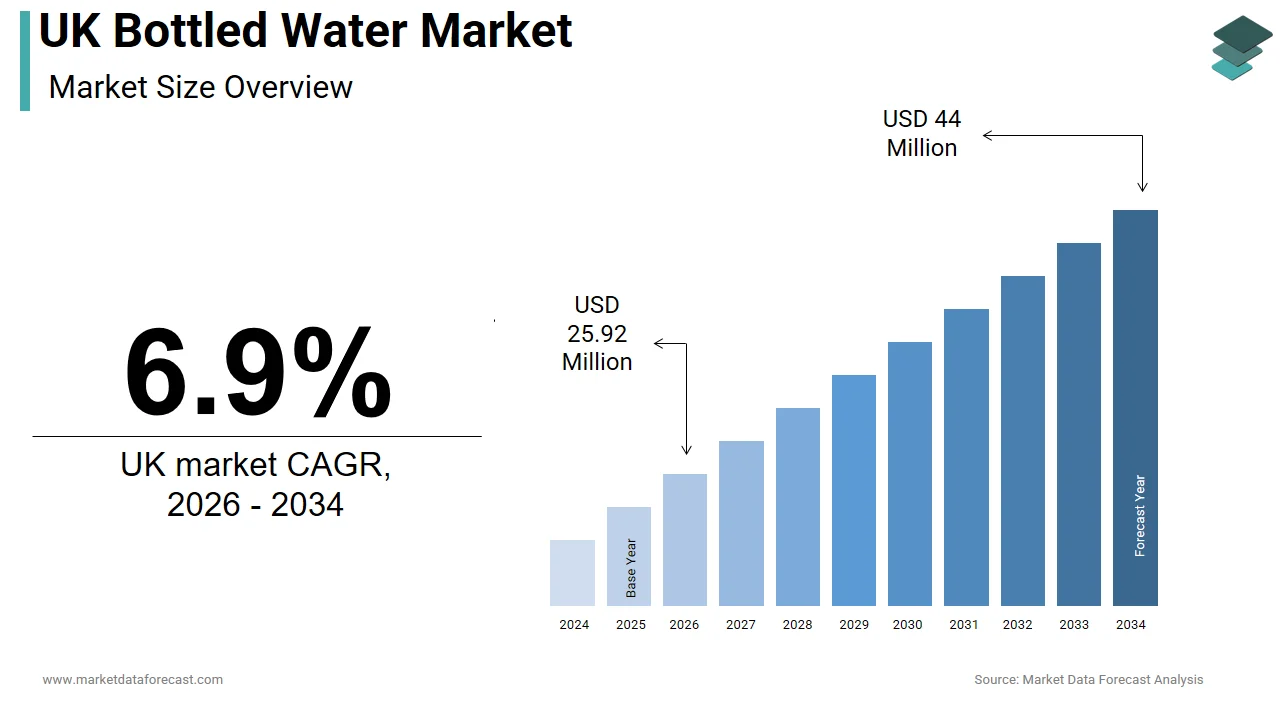
- Market Valuation: Valued at USD 24.25 million in 2025, reaching USD 25.92 million in 2026, and projected to expand to USD 44.00 million by 2034, progressing at a steady CAGR of 6.90% from 2026 to 2034.
- Primary Growth Drivers: Heightened health consciousness driving reductions in sugary drink consumption, alongside on-the-go lifestyle demands and active consumer mobility.
Key Market Segment Metrics
| Category | Leading Segment (Base Year Position) | Fastest-Growing / High-Impact Segment |
|---|---|---|
| By Product Type | Still Water (dominant baseline share of 52.1% anchored by daily hydration preferences, natural purity, and versatility) | Functional Water (high-growth segment expanding at an impressive 12.3% CAGR driven by fitness culture and wellness trends) |
| By Packaging | Plastic Bottles (largest share of 45.3% supported by PET durability, cost-effectiveness, and convenient on-the-go utility) | Aluminum Cans & Cartons (rapidly expanding at a 15.3% CAGR propelled by sustainability shifts and eco-friendly packaging demands) |
| By Application | Filler & Capper Machines (leading manufacturing segment capturing 34.2% share essential for hygiene and seal integrity) | Blow Molder Machines (high-growth machinery category advancing at an 8.4% CAGR driven by lightweighting and rPET innovation) |
Major Market Players & Market Structure
Market Structure: Competitive ecosystem featuring multinational beverage giants, specialized local spring water sources, and private-label retail brands focusing on sustainability credentials.
Key Companies: Nestlé Waters, Coca-Cola, PepsiCo, Danone, Britvic PLC, Highland Spring Ltd., San Pellegrino, Voss Water, Fiji Water, and Primo Water Corporation.
 Download Free Sample Report
UK Bottled Water Market Size
The size of the UK bottled water market was worth USD 24.25 million in 2025. The market is anticipated to grow at a CAGR of 6.90% from 2026 to 2034 and be worth USD 44 million by 2034 from USD 25.92 million in 2026.
The bottled water is a non-alcoholic beverage within the sale of packaged still and sparkling water for immediate consumption or home use. The Office for National Statistics indicates that household expenditure on non-alcoholic beverages has risen steadily, with water becoming the preferred hydrating option for millions of consumers. Public health campaigns, such as the Sugar Tax, have accelerated this shift, encouraging individuals to replace high-calorie drinks with zero-calorie alternatives. According to the British Soft Drinks Association, data over 2 billion liters of bottled water were sold in the UK recently, reflecting robust consumer demand. The extensive retail distribution networks, including supermarkets, convenience stores, and vending machines, ensure widespread accessibility. Environmental concerns regarding plastic waste have prompted industry stakeholders to innovate in packaging materials and recycling initiatives. Consumer preferences are increasingly influenced by brand provenance, with many buyers favoring locally sourced spring waters over imported brands. The rise of functional waters infused with vitamins, minerals, or electrolytes adds value to the category, appealing to fitness enthusiasts and health-focused demographics. Regulatory standards set by the Food Standards Agency ensure strict quality control and safety compliance, maintaining consumer trust.
MARKET DRIVERS
Heightened Health Consciousness And Reduction In Sugary Drink Consumption
The escalating focus on personal health and wellness, as consumers actively seek healthier hydration alternatives to sugary beverages, is accelerating the growth of the United Kingdom bottled water market. Public health initiatives led by the government and health organizations have highlighted the detrimental effects of excessive sugar intake, linking it to obesity, type 2 diabetes, and dental issues. The introduction of the Soft Drinks Industry Levy, commonly known as the sugar tax, has further incentivized manufacturers and consumers to pivot towards low or no-calorie options. The reformulation of drinks and changing consumer habits have contributed to a significant decrease in sugar purchases from soft drinks. Bottled water offers a convenient, zero-calorie solution that aligns with these dietary goals by making it an attractive choice for health-conscious individuals. The trend is particularly pronounced among younger demographics who prioritize fitness and clean eating lifestyles. Gyms, sports clubs, and wellness centers frequently promote water consumption, reinforcing its status as the optimal hydrating fluid. Additionally, the growing awareness of the benefits of proper hydration for cognitive function and physical performance drives regular consumption throughout the day. Consumers are increasingly reading labels and avoiding artificial additives, preservatives, and sweeteners, which are often present in flavored drinks but absent in pure bottled water.
Convenience and On-the-Go Lifestyle Demands
The fast-paced modern lifestyle and increasing mobility due to its unparalleled convenience and portability are other attributes promoting the growth of the United Kingdom bottled water market. Urbanization and longer commuting times mean that individuals spend more time away from home, where access to tap water may be limited or perceived as less desirable. Bottled water provides an instant, ready-to-drink solution that fits seamlessly into busy schedules, whether at work, during travel, or while engaging in leisure activities. The average commute time in the UK has increased, leading to greater reliance on portable refreshments. Retailers have responded by placing bottled water prominently in high-traffic areas, such as train stations, airports, and service stations, by ensuring easy access for consumers on the move. The proliferation of single-serve packaging formats caters specifically to this need for immediacy and ease of consumption. Furthermore, the perception of bottled water as a safer and more hygienic option compared to public water fountains or tap water in certain contexts enhances its appeal. For parents, bottled water offers peace of mind regarding purity and safety when out with children. The availability of chilled ready-to-drink options eliminates the need for preparation, making it the preferred choice for spontaneous hydration needs.
MARKET RESTRAINTS
Environmental Concerns and Plastic Waste Backlash
The growing environmental awareness and the backlash against single-use plastics by influencing consumer behavior and regulations are hindering the growth of the United Kingdom bottled water market. Campaigns by environmental groups and extensive media coverage of ocean pollution have heightened public scrutiny of plastic packaging. A significant majority of UK consumers express concern about plastic waste and are actively seeking ways to reduce their usage. This sentiment has led to a rise in the use of reusable water bottles, with many individuals opting to refill from tap sources rather than purchase single-use plastic bottles. Local authorities and businesses have implemented bans or charges on single-use plastics that further discourage consumption. The Department for Environment, Food and Rural Affairs has introduced stringent regulations aimed at reducing plastic waste, including deposit return schemes, which add complexity and cost to the bottling process. Negative perceptions associated with plastic pollution damage brand reputation and deter environmentally conscious buyers who view bottled water as wasteful. The carbon footprint associated with transporting heavy water bottles also contributes to the environmental critique, prompting some consumers to choose local tap water instead. While the industry attempts to mitigate these concerns through recycling initiatives and lighter packaging, the underlying negative sentiment remains a powerful deterrent.
Regulatory Pressures and Deposit Return Schemes
The stringent regulatory pressures and the implementation of deposit return schemes by increasing operational costs and altering consumer purchasing habits are limiting the growth of the United Kingdom bottled water market. The UK government has committed to introducing a Deposit Return Scheme for drinks containers, including plastic bottles, which requires consumers to pay a small deposit upfront that is refunded upon returning the empty container. While intended to boost recycling rates, this scheme adds friction to the purchasing process and increases administrative burdens for retailers and manufacturers. Industry estimates suggest that the initial setup costs for compliance could reach hundreds of millions of pounds across the sector, impacting profitability. The Complexity of managing reverse logistics and ensuring high return rates poses operational challenges for bottlers and distributors. Additionally, stricter labeling requirements and extended producer responsibility rules mandate greater transparency and financial contribution towards waste management, further squeezing margins. These regulatory changes create uncertainty and require significant capital investment in new infrastructure and systems. Smaller brands may struggle to absorb these costs, leading to market consolidation or exit. Consumers may also react negatively to the perceived hassle of returning bottles, potentially reducing impulse purchases.
MARKET OPPORTUNITIES
Innovation in Sustainable Packaging Solutions
The development and adoption of innovative sustainable packaging solutions to address environmental concerns and regain consumer trust are creating new opportunities for the growth of the United Kingdom bottled water market. Manufacturers are increasingly investing in research and development to create bottles made from recycled polyethylene terephthalate rPET plant-based materials, and biodegradable alternatives. This shift appeals to eco-conscious consumers who want the convenience of bottled water without the guilt associated with plastic waste. Brands that communicate their sustainability efforts effectively can differentiate themselves in a crowded market and command premium pricing. Innovations such as paper-based bottles and edible water pods are also being explored, offering novel solutions that capture media attention and early adopter interest. Partnerships with recycling organizations and investment in closed-loop systems enhance brand credibility and demonstrate corporate responsibility. Government incentives for using recycled materials further support this transition, making sustainable packaging economically viable.
Expansion of Functional and Premium Water Segments
The expansion of functional and premium water segments by catering to specific health needs and luxury preferences is additionally enhancing the growth of the United States bottled water market. Consumers are increasingly seeking added value beyond basic hydration, driving demand for waters infused with vitamins, minerals, electrolytes, and natural flavors. These functional waters appeal to fitness enthusiasts, athletes, and health-conscious individuals looking for performance enhancement or wellness benefits. The global wellness trend supports this growth with products claiming benefits such as improved digestion, enhanced immunity, or better skin health, gaining popularity. Premium natural mineral waters sourced from exclusive springs also attract affluent consumers willing to pay higher prices for perceived purity, taste, and status. Brands can leverage storytelling around source origin and extraction methods to build emotional connections with consumers. Limited edition flavors and collaborations with lifestyle brands create buzz and drive trial. The rise of home delivery subscriptions for premium and functional waters offers convenience and recurring revenue streams.
MARKET CHALLENGES
Intense Competition from Tap Water and Filtration Systems
The intense competition from tap water and advanced home filtration systems, as consumers seek cost-effective and environmentally friendly alternatives, is one of the challenges for the growth of the United Kingdom bottled water market. UK tap water is renowned for its high quality and strict safety standards, making it a viable and virtually free alternative to bottled water. The installation of under-sink filters, pitcher filters, and smart taps in households allows consumers to enjoy purified, great-tasting water without the expense and waste of single-use bottles. The growing number of households has invested in filtration systems, citing cost savings and environmental benefits as primary motivations. This trend erodes the core value proposition of bottled water, which is convenience and purity. Public water fountains and refill stations are also becoming more common in cities and public spaces, reducing the need to purchase bottled water when out and about. The perception that bottled water is merely repackaged tap water further undermines consumer willingness to pay a premium. Economic pressures and inflation make the cost difference between tap and bottled water more significant, prompting budget-conscious consumers to switch. For the bottled water industry, this structural shift represents a fundamental threat that cannot be easily countered by marketing alone.
Supply Chain Volatility and Raw Material Costs
The supply chain volatility and fluctuating raw material costs, by affecting profitability and operational stability, are another factor limiting the growth of the United Kingdom bottled water market. The production of bottled water relies heavily on petroleum-based plastics for packaging and energy for manufacturing and transportation. Global fluctuations in oil prices directly impact the cost of producing polyethylene terephthalate PET bottles, which constitute a major portion of overall expenses. Recent geopolitical tensions and supply chain disruptions have led to unpredictable spikes in material costs, making budgeting and pricing strategies difficult. Energy costs have also risen sharply, increasing the expense of blowing molding bottles and running production lines. Logistics challenges, including driver shortages and fuel price increases, add to the cost of distributing heavy water products across the country. These rising input costs squeeze margins, forcing companies to either absorb losses or pass them on to consumers through price hikes, which may dampen demand. Smaller independent brands are particularly vulnerable as they lack the economies of scale to negotiate better rates or absorb shocks. The unpredictability of supply chains also risks stockouts and service interruptions, damaging retailer relationships and brand reputation. To mitigate these risks, companies must invest in supply chain resilience and hedging strategies, but these measures require capital and expertise.
REPORT COVERAGE
| REPORT METRIC | DETAILS |
| Market Size Available | 2025 to 2034 |
| Base Year | 2025 |
| Forecast Period | 2026 to 2034 |
| Segments Covered | By Product Type, Packaging, Application, and Region. |
| Various Analyses Covered | Global, Regional, and Country-Level Analysis, Segment-Level Analysis, Drivers, Restraints, Opportunities, Challenges; PESTLE Analysis; Porter’s Five Forces Analysis, Competitive Landscape, Analyst Overview of Investment Opportunities |
| Countries Covered | United Kingdom |
| Market Leaders Profiled | Nestle Waters, Coca-Cola, PepsiCo, Danone, Fiji Water, Britvic PLC, Primo Water Corporation, Voss Water, Highland Spring Ltd, Gerolsteiner, San Pellegrino. |
SEGMENTAL ANALYSIS
By Product Type Insights
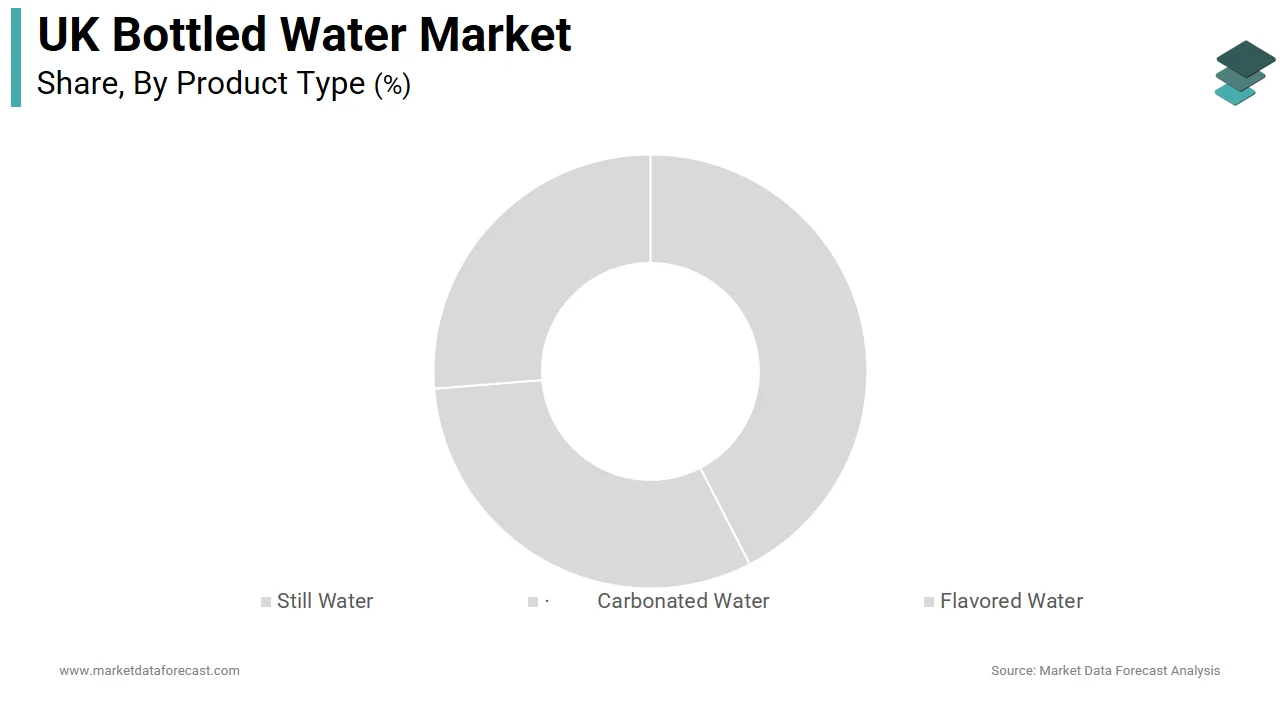
The still water segment accounted in holding 52.1% of the United Kingdom bottled water market share in 2025, with its status as the primary alternative to sugary soft drinks and tap water for daily hydration. This segment benefits from widespread consumer perception of purity and health benefits without the additives or carbonation that some individuals find uncomfortable. Major brands leverage natural spring sources and mineral content to differentiate their products, appealing to consumers seeking authenticity and quality. The versatility of still water makes it suitable for all occasions, from office consumption to sports activities, ensuring consistent demand throughout the year. Retailers prioritize shelf space for still water due to its high turnover rate and broad demographic appeal across age groups. Government health campaigns promoting water consumption over sugary beverages further reinforce the position of still water as the default healthy choice. The availability of various pack sizes from single-serve bottles to large multi-liter containers caters to diverse household needs, enhancing accessibility.
The functional water segment is expected to grow at the fastest CAGR of 12.3% during the forecast period, owing to the increasing consumer interest in health optimization and preventive wellness, driving demand for beverages with added benefits beyond basic hydration. Functional waters infused with electrolytes, vitamins, minerals, probiotics, or adaptogens appeal to fitness enthusiasts, busy professionals, and health-conscious individuals seeking convenient nutritional support. The rise of active lifestyles and gym culture has boosted sales of electrolyte-enhanced waters, which aid in recovery and performance after exercise. The younger people are particularly drawn to functional waters that offer specific benefits, such as improved focus, better digestion, or enhanced immunity. Brands innovate with clean label ingredients and natural flavors to meet consumer preferences for transparency and purity. The premium positioning of functional waters allows for higher profit margins, encouraging manufacturers to expand their product portfolios in this niche. Retailers respond by dedicating more shelf space to these value-added products, recognizing their appeal to trend-aware shoppers.
By Packaging Insights
The plastic bottles segment was the largest by holding 45.3% of the United Kingdom bottled water market share in 2025 due to their lightweight durability, cost-effectiveness, and convenience for on-the-go consumption. Polyethylene terephthalate PET is the preferred material as it is shatter-resistant and fully recyclable, making it suitable for single-serve and multi-pack formats. The British Plastics Federation indicates that PET bottles account for the vast majority of bottled water packaging owing to their efficient production processes and low transportation costs. Consumers favor plastic bottles for their portability and ease of use during travel, sports, and outdoor activities where glass or metal alternatives may be impractical. Manufacturers benefit from the scalability of plastic molding technologies, which allow for rapid production and customization of bottle shapes and sizes. The established recycling infrastructure for PET in the UK supports the continued use of plastic, although pressure mounts for higher recycled content. Retailers prefer plastic packaging due to its stackability and shelf life stability, reducing logistical complexities.
The aluminum cans and cartons segment is expected to grow at the fastest CAGR of 15.3% during the forecast period, owing to the heightened environmental awareness and consumer demand for sustainable packaging alternatives to single-use plastics. Aluminum is infinitely recyclable and has a higher recycling rate than plastic in the UK, making it an attractive option for eco-conscious brands and buyers. Premium sparkling and flavored water brands are increasingly adopting aluminum cans to differentiate their products and appeal to younger demographics who associate cans with modernity and sustainability. Cartons made from renewable plant-based materials also gain traction for their reduced carbon footprint and biodegradability. Regulatory pressures, such as plastic taxes and deposit return schemes, incentivize manufacturers to explore alternative materials that avoid levies and enhance brand image. Retailers support this shift by promoting sustainable packaging options to align with corporate social responsibility goals. The aesthetic appeal of printed aluminum cans offers superior branding opportunities compared to plastic labels, allowing for vibrant designs that stand out on shelves.
By Application Insights
The filler capper machines segment was the largest by holding 34.2% of the United Kingdom bottled water market share in 2025 due to their role in the final stages of production, ensuring hygiene and seal integrity. These machines are essential for filling bottles with water and immediately sealing them to prevent contamination and preserve quality. The high-volume nature of the bottled water industry requires fast and reliable filler capper systems capable of processing thousands of bottles per hour. The demand for rotary filler cappers remains robust, as they offer superior speed and accuracy compared to linear models. Hygiene standards mandated by the Food Standards Agency necessitate advanced sterilization features within these machines, driving investment in state-of-the-art technology. Manufacturers prioritize filler cappers that minimize product waste and ensure consistent fill levels to maintain consumer trust and regulatory compliance. The integration of smart sensors allows for real-time monitoring of performance and early detection of faults, reducing downtime and maintenance costs.
The blow molder machines segment is estimated to grow at the fastest CAGR of 8.4% during the forecast period, with the trend towards lightweighting and sustainable packaging, which requires precise and advanced molding technologies. Modern blow molders enable the production of thinner, lighter bottles using less plastic material, thereby reducing raw material costs and environmental impact. The shift towards using recycled polyethylene terephthalate rPET presents technical challenges that new generation blow molders are designed to handle, ensuring consistent quality and strength despite material variability. Manufacturers invest in electric blow molding machines, which offer greater energy efficiency and precision compared to traditional hydraulic systems, aligning with net-zero goals. The flexibility of modern blow molders allows for quick changeovers between different bottle shapes and sizes, supporting product diversification and limited edition releases. As brands innovate with unique bottle designs to stand out on shelves, the demand for versatile high-precision molding equipment increases. The ability to produce preforms and bottles on site reduces logistics costs and carbon emissions, further driving adoption of integrated blow molding solutions.
COMPETITIVE LANDSCAPE
The competitive landscape in the United Kingdom bottled water market features intense rivalry among multinational corporations, independent local brands, and private label retailers. Major players compete on brand heritage, source purity, and sustainability credentials to differentiate their offerings in a crowded place. Price competition is in the standard still water segment, where private labels offer lower cost alternatives, exerting pressure on branded margins. Innovation in functional and flavored waters provides opportunities for differentiation, allowing brands to target niche demographics with specific health or taste preferences. Environmental responsibility has become a key battleground with companies racing to adopt recyclable packaging and reduce carbon footprints to appeal to eco-conscious consumers. Distribution strength remains critical as access to prime retail shelf space and convenience channels determines visibility and sales volume. Regulatory pressures regarding plastic waste and labeling transparency raise barriers to entry, favoring established firms with resources to comply. Consumer loyalty is increasingly driven by brand values and ethical practices rather than price alone.
KEY MARKET PLAYERS
The major players in the UK bottled water market include
- Nestlé Waters
- Coca-Cola
- PepsiCo
- Danone
- Fiji Water
- Britvic PLC
- Primo Water Corporation
- Voss Water
- Highland Spring Ltd.
- Gerolsteiner
- San Pellegrino
TOP PLAYERS IN THE MARKET
- Nestle Waters UK maintains a strong presence in the market through its iconic brands such as Perrier and Buxton, which are synonymous with quality and natural purity. The company leverages its global expertise to manage sustainable sourcing from protected springs, ensuring consistent product standards. Recent strategic initiatives focus on transitioning packaging to 100% recycled polyethylene terephthalate, reducing environmental impact significantly. Nestle has invested in advanced water stewardship programs to protect local ecosystems and community water resources. The organization also expands its portfolio with functional and flavored variants to meet evolving consumer preferences for health-oriented beverages. By prioritizing circular economy principles and transparent supply chains, Nestle strengthens its brand reputation and aligns with regulatory expectations while maintaining consumer trust and loyalty across diverse demographic segments in the region.
- Britvic PLC plays a pivotal role in the UK bottled water sector by distributing popular brands like Robinsons Squash and J2O alongside premium still and sparkling waters. The company utilizes its extensive distribution network to ensure wide availability in retail outlets, hospitality venues, and vending machines. Recent actions include the launch of innovative low-sugar and no-sugar options catering to health-conscious consumers seeking healthier hydration choices. Britvic has committed to making all its packaging recyclable, reusable, or compostable by investing in new material technologies and infrastructure partnerships. The firm actively promotes water consumption through marketing campaigns that highlight hydration benefits and sustainability efforts.
- Highland Spring Ltd operates as a leading independent Scottish bottled water company known for its natural mineral water sourced from the Ochil Hills. The brand emphasizes its heritage and commitment to environmental sustainability, appealing to consumers who value provenance and ethical production. Recent strategic moves involve significant investment in lightweighting bottle designs to reduce plastic usage and carbon emissions during transportation. Highland Spring has introduced fully recyclable labels and caps, enhancing the ease of recycling for consumers. The company supports local community projects and conservation initiatives, strengthening its social license to operate. Its dedication to protecting the natural source and minimizing ecological footprint resonates with environmentally aware buyers, ensuring continued relevance and growth in the competitive UK bottled water market.
TOP STRATEGIES USED BY KEY MARKET PARTICIPANTS
Key players in the United Kingdom bottled water market employ sustainability strategies to address environmental concerns by transitioning to recycled materials and lightweight packaging. They invest in innovation to develop functional waters with added vitamins and minerals, catering to health-conscious consumers seeking enhanced benefits. Companies expand distribution channels through e-commerce platforms and subscription services offering convenience and recurring revenue opportunities. Strategic partnerships with retailers and hospitality providers ensure prominent shelf placement and visibility in high-traffic areas. Brands leverage digital marketing and social media engagement to build community and promote healthy lifestyle messages associated with their products. Compliance with regulatory standards such as plastic taxes and deposit return schemes drives operational adjustments and investment in recycling infrastructure. These multifaceted approaches enable participants to maintain competitiveness and drive growth in a market increasingly defined by environmental responsibility and health awareness.
MARKET SEGMENTATION
This research report on the UK bottled water market has been segmented and sub-segmented based on the following categories.
By Product Type
- Still Water
- Carbonated Water
- Flavored Water
Functional Water
By Packaging
- Plastic Bottle
- Others
By Application
- Filter Bottle Washers
- Fillers & Cappers
- Blow Molders
- Shrink Wrappers