- Product Description Description
- Table of Contents TOC
- List of Table & Figure LOT
- Get Free Sample PDF Sample PDF
Market Size, 2025
$3.50 BnMarket Estimate, 2026
$3.62 BnMarket Forecast, 2034
$4.80 BnCAGR, 2026–2034
3.56%UK Cider Market Report Summary
The UK cider market was valued at USD 3.50 billion in 2025, is estimated to reach USD 3.62 billion in 2026, and is projected to reach USD 4.80 billion by 2034, growing at a CAGR of 3.56% during the forecast period. Market growth is driven by strong consumer preference for cider beverages, increasing product innovation, rising demand for premium and flavored ciders, and expanding availability across retail and hospitality channels. The growing popularity of craft cider varieties and low alcohol beverage options is further supporting market expansion across the United Kingdom.
Key Market Trends
- Growing demand for premium and craft cider products is driving market growth.
- Increasing popularity of flavored and fruit infused ciders is boosting market expansion.
- Rising consumer preference for low alcohol and alternative alcoholic beverages is supporting industry development.
- Expansion of retail distribution channels and on trade sales is enhancing market opportunities.
- Innovation in product formulations and packaging formats is influencing market advancement.
Segmental Insights
- Based on product type, the sparkling cider segment accounted for 34.2% of the UK cider market share in 2025. This dominance is attributed to its refreshing taste profile, wide consumer appeal, and strong presence across retail and hospitality venues.
- Based on source, the apple segment held a significant share of the UK cider market in 2025, supported by the country's long standing cider making tradition and abundant apple cultivation.
Regional Insights
- The United Kingdom remains one of the largest cider consuming markets globally, supported by strong cultural acceptance, established production infrastructure, and continuous product innovation from domestic and international producers.
Competitive Landscape
The UK cider market is highly competitive, with manufacturers focusing on premiumization, flavor innovation, sustainable production practices, and brand differentiation to strengthen their market position. Companies continue to invest in new product development, craft offerings, and expanded distribution networks. Major players operating in the UK cider market include Heineken N.V., Carlsberg Group, Anheuser Busch InBev SA/NV, Asahi Group Holdings Ltd., C & C Group plc, Molson Coors Beverage Company, Boston Beer Corporation, Aston Manor Limited, H. Westons & Sons Limited, and Thatchers Cider Company Limited.
UK Cider Market Size
The UK cider market size was valued at USD 3.50 billion in 2025, and is projected to reach USD 4.80 billion by 2034 from USD 3.62 billion in 2026, growing at a CAGR of 3.56%.
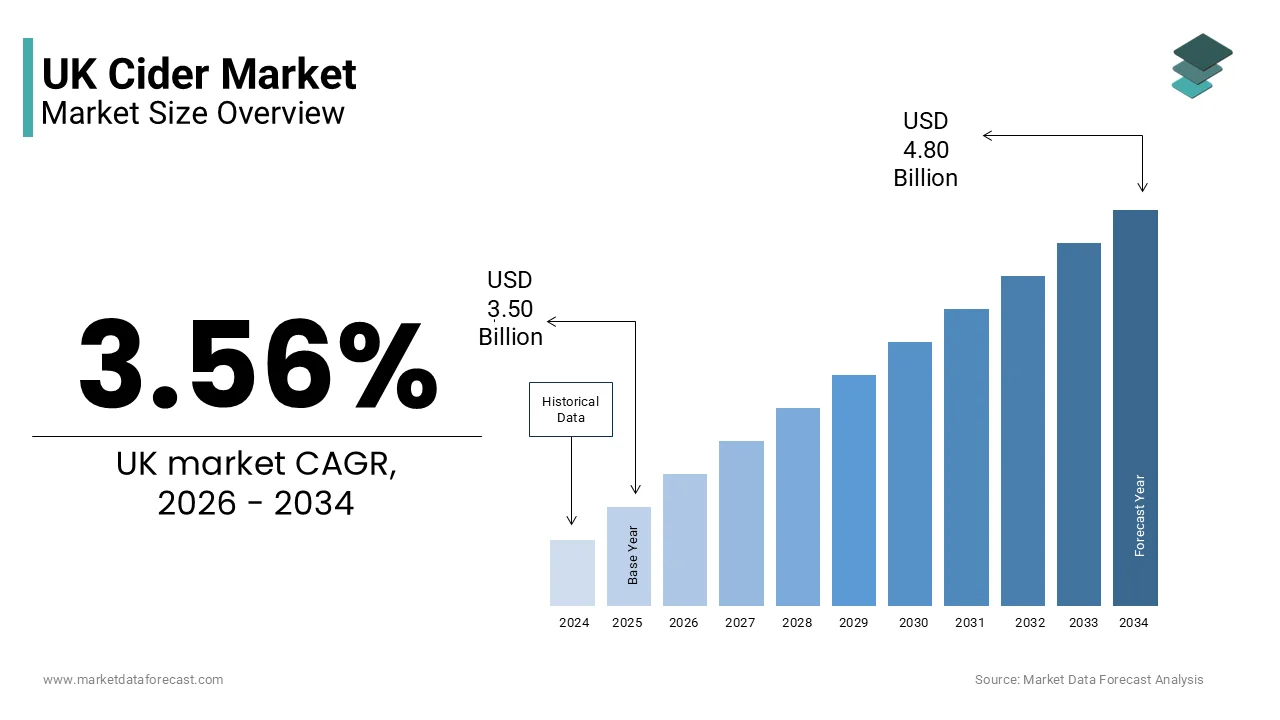
The cider is an alcoholic beverage, where apple juice into an alcoholic drink with varying levels of sweetness and carbonation. This sector is deeply rooted in British agricultural heritage, particularly in regions, such as the West Country and Kent where orchard cultivation has thrived for centuries. The production process ranges from traditional craft methods using specific cider apple varieties to large scale industrial manufacturing that ensures consistent flavor profiles for mass distribution. As per the Department for Environment Food and Rural Affairs, the United Kingdom possessed approximately 23000 hectares of commercial apple orchards in 2024 providing the essential raw material base for domestic cider production. The cultural integration of cider into social gatherings pub culture and seasonal festivals underscores its enduring popularity among consumers seeking alternatives to beer and wine. According to HM Revenue and Customs over 350 million liters of cider were cleared for home consumption in 2025 reflecting substantial consumer engagement with this beverage category. Regulatory frameworks governing alcohol content labeling and taxation, significantly influence product development and pricing strategies. The resurgence of interest in artisanal and locally sourced products has further diversified the landscape encouraging small batch producers to enter the market alongside established brands. This dynamic interplay between tradition and innovation defines the current state of the UK cider industry.
MARKET DRIVERS
Premiumization Trend Driving Consumer Preference for Craft Varieties
The shifting consumer preference toward premium and craft cider varieties, as drinkers increasingly prioritize quality authenticity and unique flavor experiences over mass produced options, which is propelling the growth of the United kingdom cider market. Modern consumers exhibit greater sophistication in their beverage choices seeking products with transparent sourcing narratives and distinctive taste profiles that reflect regional terroir. The broader movement toward supporting local businesses and sustainable agricultural practices, which resonates strongly with environmentally conscious demographics. Premium ciders often command higher price points due to the use of specialized apple varieties extended fermentation periods and minimal processing techniques that preserve natural characteristics. This proliferation of choice encourages experimentation and loyalty among consumers, who view cider as a culinary pairing rather than merely a casual drink. Producers respond by investing in branding packaging and storytelling that emphasize heritage and craftsmanship. The willingness of consumers to pay more for perceived value supports margin growth for producers who can differentiate their products effectively. This shift away from standard lager style ciders toward complex dry or sweet variants creates opportunities for innovation and niche market development across the country.
Health Consciousness Influencing Low Alcohol and Natural Product Demand
The growing health awareness among UK consumers drives demand for lower alcohol content ciders and products made with natural ingredients free from artificial additives and excessive sugars. The health consciousness influencing low alcohol and natural product demand is accelerating the growth of the United Kingdom cider market. Public health campaigns and changing lifestyle priorities encourage individuals to moderate alcohol intake, while still enjoying social drinking experiences. According to the study, 35% of UK adults reported reducing their alcohol consumption in 2025, which is citing health and wellness as primary motivations. Cider producers adapt by developing low alcohol and alcohol free variants that retain authentic flavor profiles through advanced dealcoholization technologies and careful blending techniques. The introduction of organic ciders certified by bodies such as the Soil Association appeals to consumers seeking cleaner labels and sustainable production methods. Reduced sugar formulations address concerns about calorie intake and dental health making cider more appealing to fitness oriented demographics. Retailers respond by dedicating shelf space to these innovative products and promoting them through targeted marketing campaigns. The availability of detailed nutritional information on packaging empowers consumers to make informed choices aligning with their dietary goals. This health driven transformation expands the total addressable market by attracting non-traditional cider drinkers who previously avoided the category due to perceived high sugar or alcohol content. Producers who successfully balance taste and health benefits gain competitive advantage in an increasingly discerning marketplace.
MARKET RESTRAINTS
Volatility in Apple Supply Chains Impacting Production Stability
The fluctuations in apple harvest yields due to unpredictable weather patterns and climate change effects is hindering the growth of the United Kingdom cider market. Apples are highly sensitive to environmental conditions, including late spring frosts droughts and excessive rainfall, which can drastically reduce crop volumes and affect fruit quality. According to the National Farmers Union, apple production in key growing regions declined by 15% in 2024 due to adverse weather events during the flowering season. This shortage forces producers to compete for limited raw materials driving up procurement costs and squeezing profit margins. Smaller craft producers face particular challenges as they lack the financial reserves to absorb price spikes or secure long term contracts with growers. The reliance on specific cider apple varieties which differ from eating apples limits substitution options and exacerbates supply constraints. Importing apple concentrate from other countries offers a temporary solution but compromises the authentic British provenance that many brands market heavily. This dependency on imports introduces currency exchange risks and logistical complexities. Inconsistent supply hampers production planning and inventory management leading to potential stockouts or delayed product launches.
Regulatory Taxation Policies Constraining Pricing Flexibility
The government taxation policies on alcoholic beverages, including duty rates and minimum unit pricing initiatives constrain pricing flexibility for cider producers and impact consumer affordability. The regulatory taxation policies are constraining pricing flexibility is additionally impeding the growth of the United kingdom cider market. Changes in excise duty structures, directly influence retail prices and can dampen demand particularly among price sensitive segments, such as young adults and students. This increase translates to higher shelf prices which may discourage casual consumption and shift preferences toward untaxed or lower taxed alternatives. The implementation of minimum unit pricing in certain regions further restricts the ability of producers to offer promotional discounts or budget friendly options. Producers face pressure to absorb some of the tax burden to maintain market share which erodes profitability. Complex labeling requirements related to alcohol content and health warnings add administrative burdens and compliance costs. Small independent makers struggle disproportionately with these regulatory demands due to limited legal and accounting resources. The uncertainty surrounding future tax policies discourages long term investment in capacity expansion and new product development. Producers must navigate this challenging fiscal environment by optimizing operational efficiencies and exploring premium segments where consumers are less price elastic.
MARKET OPPORTUNITIES
Expansion into International Markets Offering Growth Potential
The exporting cider to emerging international countries to diversify revenue streams and reduce dependence on domestic consumption trends, which is solely attributed in creating new opportunities for the expansion of the United Kingdom cider market. Countries in Asia North America and Europe show growing appreciation for British heritage brands and artisanal quality standards. Countries, such as China and the United States exhibit rising middle class populations with increasing disposable income and curiosity about Western alcoholic beverages. Producers can leverage the global reputation of British cider, as a premium authentic product distinct from mass produced competitors. Digital commerce platforms enable direct to consumer sales across borders bypassing traditional distribution bottlenecks. The rise of international food festivals and craft beverage exhibitions provides valuable exposure and networking opportunities for small and medium sized enterprises. Adapting packaging and flavor profiles to suit local tastes while maintaining core brand identity allows for deeper market penetration. Collaborations with international distributors who understand local regulatory landscapes accelerate market access. Success in export markets enhances brand prestige domestically and creates economies of scale that improve overall competitiveness. Strategic focus on high growth regions mitigates risks associated with saturated or declining domestic segments.
Innovation in Flavor Profiles and Sustainable Packaging Solutions
The developing innovative flavor combinations and adopting sustainable packaging materials offer avenues for differentiation and appeal to environmentally conscious consumers is also ascribed to boost the growth of the United Kingdom cider market. Experimentation with indigenous fruits herbs and spices creates unique sensory experiences that attract adventurous drinkers and generate media attention. These innovations broaden the appeal of cider beyond traditional apple purists to include wine and cocktail enthusiasts. Simultaneously, the shift toward eco-friendly packaging such as recyclable aluminum cans and lightweight glass bottles addresses consumer concerns about plastic waste and carbon footprints. Producers investing in circular economy principles enhance brand loyalty and comply with impending environmental regulations. Lightweighting initiatives reduce transportation emissions and logistics costs contributing to overall sustainability goals. Collaborative projects with recycling firms ensure proper end of life management for packaging materials. Transparent communication about sustainability efforts through labeling and digital campaigns builds trust and credibility.
MARKET CHALLENGES
Climate Change Threatening Orchard Viability and Crop Quality
The long term climate change is affecting both yield quantity and fruit quality essential for cider production, which is a major factor to pose as a challenge for the growth of the United Kingdom cider market. Rising average temperatures altered precipitation patterns and increased frequency of extreme weather events disrupt the delicate biological cycles of apple trees. These conditions stress trees making them more susceptible to pests and diseases such as apple scab and codling moth which require increased pesticide use raising production costs and environmental concerns. Shifts in suitable growing zones may force producers to relocate orchards or invest in expensive irrigation and protection infrastructure. The Royal Horticultural Society warned that traditional cider apple varieties may struggle to thrive in warmer climates necessitating research into heat resistant cultivars. This transition period involves significant risk and uncertainty as new varieties may not deliver the desired flavor profiles. Water scarcity during summer months affects fruit size and sugar content impacting the final alcohol level and taste balance of the cider. Insurance premiums for agricultural operations rise in response to heightened climate risks further straining financial resources. Adaptation strategies require long term planning and collaboration between growers researchers and policymakers to ensure the sustainability of the raw material base.
Intense Competition from Alternative Alcoholic Beverages
The intense competition from a wide array of alternative alcoholic beverages, including craft beers wines ready to drink cocktails and spirits, which vie for consumer spending and shelf space is also to limit the growth of the United Kingdom cider market. The proliferation of craft breweries has expanded consumer choice, significantly offering diverse styles and flavors that overlap with cider appeal. Ready to drink cocktails have gained popularity among younger demographics seeking convenience and novel taste experiences often marketed with vibrant branding and social media engagement. Wine consumption remains steady with increased availability of affordable imported options that compete directly with premium ciders on price and occasion. Spirits manufacturers introduce flavored variants and lower alcohol options that blur category boundaries and attract experimental drinkers. Retailers allocate limited shelf space based on turnover rates forcing cider brands to compete aggressively for visibility and promotional support. Price wars and discounting erode brand equity and profitability making it difficult for smaller producers to sustain operations. Changing social trends such as dry January and mindful drinking movements reduce overall alcohol consumption impacting all categories but particularly those perceived as less sophisticated. Failure to differentiate results in commoditization and margin pressure.
REPORT COVERAGE
| REPORT METRIC | DETAILS |
| Market Size Available | 2025 to 2034 |
| Base Year | 2025 |
| Forecast Period | 2026 to 2034 |
| CAGR | 8.13% |
| Segments Covered | By Product Type, Source, and Region. |
| Various Analyses Covered | Global, Regional and Country-Level Analysis, Segment-Level Analysis, Drivers, Restraints, Opportunities, Challenges; PESTLE Analysis; Porter’s Five Forces Analysis, Competitive Landscape, Analyst Overview of Investment Opportunities |
| Market Leaders Profiled | Heineken N.V., Carlsberg Group, Anheuser Busch InBev SA/NV, Asahi Group Holdings, Ltd., C&C Group plc, Molson Coors Beverage Company, Boston Beer Corporation, Aston Manor Limited, H. Westons & Sons Limited, Thatchers Cider Company Limited, and other regional and international market participants |
SEGMENTAL ANALYSIS
By Product Type Insights
The sparkling cider segment was the largest by accounting for 34.2% of the United Kingdom cider market share in 2025 with its widespread availability in mainstream retail channels and its alignment with social drinking occasions that favor carbonated beverages. British consumers have a longstanding cultural affinity for carbonated alcoholic beverages, which drives the dominance of sparkling cider over still variants. The sensory experience of carbonation enhances perceived refreshment particularly during warmer months and social events where light and crisp drinks are preferred. This preference is reinforced by marketing campaigns that associate sparkling cider with leisure outdoor activities and festive occasions. The production technology for carbonation is well established allowing manufacturers to maintain consistent quality at scale. Retailers prioritize sparkling SKUs due to higher turnover rates and broader demographic appeal compared to niche still ciders. Producers continue to innovate within this segment by introducing varying levels of sweetness and alcohol content to cater to diverse palates, while maintaining the core carbonated characteristic that defines consumer expectations.

The apple wine segment is swiftly emerging at a fastest CAGR of 9.5% throughout the forecast period. The rise of the craft movement has elevated apple wine from a niche product to a desirable premium beverage option for discerning drinkers seeking sophistication and authenticity. Apple wine typically undergoes a longer fermentation process resulting in higher alcohol by volume and deeper more nuanced flavors that appeal to wine enthusiasts exploring alternative fruit-based options. Consumers perceive apple wine as a gourmet product suitable for food pairing and special occasions which justifies higher price points. Independent producers emphasize terroir specific apple varieties and traditional methods to differentiate their offerings from mass produced ciders. This narrative resonates with educated consumers, who value storytelling and provenance in their purchasing decisions. The expansion of specialist wine shops and online platforms dedicated to craft beverages has improved accessibility for apple wine allowing producers to reach targeted audiences effectively. Media coverage and awards for premium apple wines further enhance credibility and attract new customers.
By Source Insights
The apple segment held a significant share of the United Kingdom cider market in 2025. The enduring popularity of apple cider stems from its centuries old tradition in British rural life, where apple orchards were central to agricultural communities and local economies. Consumers view apple cider as the genuine article associating it with heritage craftsmanship and regional pride. This perception of authenticity drives loyalty among consumers who distrust fruit flavored alternatives perceived as artificial or inferior. The Campaign for Real Ale promotes real cider made exclusively from fresh apple juice without concentrates further cementing the premium status of pure apple sources. Educational initiatives in schools and community groups teach the history of cider making fostering intergenerational appreciation for apple-based products. This cultural embedding ensures that apple cider remains the default choice for traditionalists and casual drinkers alike. The emotional resonance of apple cider with British identity provides a defensive moat against competing beverage categories and alternative fruit sources.
The fruit flavored cider segment is likely to register a fastest CAGR of 11.2% during the forecast period. Fruit flavored ciders attract younger consumers and those new to alcoholic beverages who may find traditional dry apple cider too tart or austere. The addition of fruits such as berries cherries and tropical varieties creates sweeter smoother profiles that align with contemporary taste preferences. These products often feature vibrant colors and modern packaging that resonate with social media savvy demographics seeking Instagram worthy experiences. The lower perceived bitterness makes fruit flavored cider an accessible entry point for non-traditional beer or wine drinkers. Brands leverage influencer marketing and digital campaigns to build hype around limited edition flavors driving trial and urgency. The versatility of fruit combinations allows for continuous innovation keeping the category fresh and engaging. Retailers respond by dedicating prominent shelf space to these colorful variants recognizing their ability to drive footfall and impulse buys. The success of fruit flavored cider demonstrates the importance of adaptability in meeting evolving consumer tastes.
COMPETITIVE LANDSCAPE
The United Kingdom cider market features intense competition among established multinational corporations independent craft producers and emerging boutique brands vying for consumer attention and shelf space. Large players leverage economies of scale and extensive distribution networks to dominate mainstream retail channels while smaller artisans compete through niche positioning and unique flavor profiles. Price sensitivity remains a factor as consumers balance quality perceptions with budget constraints prompting frequent promotional activities and multi buy offers. Differentiation increasingly relies on sustainability credentials organic certifications and storytelling that highlights regional heritage and traditional methods. The rise of low alcohol and sugar free variants reflects responding to health trends creating new sub segments within the broader category. Retailers exert significant influence by determining product placement and prioritizing high turnover items which pressures suppliers to maintain strong trade relationships. Innovation cycles accelerate as brands launch limited editions and seasonal flavors to generate buzz and prevent consumer fatigue. The entry of ready to drink cocktail alternatives poses additional competitive pressure requiring cider producers to emphasize distinct value propositions. Collaborative efforts between growers and manufacturers strengthen supply chain resilience against climate risks.
KEY MARKET PLAYERS
Some of the companies that are playing a dominating role in the UK cider market are
- Heineken N.V.
- Carlsberg Group
- ANHEUSER-BUSCH INBEV SA/NV
- Asahi Group Holdings, Ltd.
- C & C Group plc
- Molson Coors Beverage Company
- Boston Beer Corporation
- Aston Manor Limited
- H. Westons & Sons Limited
- Thatchers Cider Company Limited
Top Players in the Market
- Heineken UK operates as a dominant force in the British cider landscape through its ownership of the iconic Strongbow brand, which remains a household name across the nation. The company leverages extensive distribution networks to ensure widespread availability in supermarkets pubs and convenience stores throughout the country. Heineken recently invested significantly in sustainable packaging initiatives by introducing fully recyclable cans and reducing plastic usage in multipacks to align with environmental consumer expectations. The organization launched innovative flavor extensions under the Strongbow portfolio including berry and tropical fruit variants to attract younger demographics seeking diverse taste experiences. Heineken also strengthened its market position by partnering with major music festivals and sporting events to enhance brand visibility and engage directly with target audiences. These strategic efforts demonstrate the companys commitment to maintaining relevance through product innovation and responsible marketing practices, while supporting local apple growers through long term sourcing agreements that ensure quality raw materials for production.
- Carlsberg Marston’s Brewing Company holds a prominent position in the UK cider sector with its popular Old Mout Cider brand, which has gained significant traction among modern consumers. The company focuses on creating premium fruit infused ciders that appeal to health conscious drinkers looking for lower sugar and natural ingredient options. Carlsberg Marston’s recently expanded its production capabilities by upgrading facilities in Bedfordshire to increase efficiency and support growing demand for craft style offerings. The organization introduced limited edition seasonal flavors such as rhubarb and ginger to drive trial and maintain consumer interest throughout the year. Carlsberg Marston’s also engaged in collaborative marketing campaigns with lifestyle influencers to boost digital engagement and brand loyalty among millennials. These actions reflect the companys strategy to differentiate itself through quality innovation and strong brand storytelling while contributing to the local economy through employment and agricultural partnerships in key growing regions.
- Thatchers Cider stands as a leading independent family owned producer based in Somerset renowned for its commitment to traditional craftsmanship and high quality single variety ciders. The company contributes significantly to the UK market by preserving heritage apple varieties and promoting sustainable orchard management practices that benefit biodiversity. Thatchers recently launched a new range of organic ciders certified by the Soil Association to cater to the expanding demand for environmentally friendly beverages. The organization invested in visitor experience enhancements at its Somerset site, including interactive tours and tasting rooms to strengthen direct consumer connections and brand advocacy. Thatchers also expanded its export activities by entering new international markets which enhances brand prestige domestically.
Top Strategies Used by Key Market Participants
Key players in the United Kingdom cider market employ diverse strategies to maintain competitive advantages and drive growth in a mature industry. Product innovation remains central as companies introduce new flavor profiles such as berry cherry and tropical infusions to attract younger consumers and differentiate from traditional offerings. Sustainability initiatives are increasingly prioritized with investments in recyclable packaging water conservation and carbon reduction programs to meet regulatory requirements and consumer expectations. Strategic partnerships with festivals sports teams and hospitality venues enhance brand visibility and create memorable consumer experiences that foster loyalty. Digital marketing campaigns leveraging social media influencers and targeted advertising help reach specific demographics effectively. Expansion into premium and craft segments allows producers to capture higher margins and appeal to discerning drinkers seeking quality and authenticity. Supply chain optimization through direct relationships with apple growers ensures consistent raw material quality and supports local agriculture.
MARKET SEGMENTATION
This research report on the UK cider market is segmented and sub-segmented into the following categories.
By Product
- Sparkling
- Still
- Apple Wine
By Source
- Apple
- Fruit Flavored
- Perry
- Other Vegan Sources