- Product Description Description
- Table of Contents TOC
- List of Table & Figure LOT
- Get Free Sample PDF Sample PDF
Market Size, 2025
$50.74 BnMarket Estimate, 2026
$53.58 BnMarket Forecast, 2034
$82.86 BnCAGR, 2026–2034
5.60%UK Coffee Shop Market Report Summary
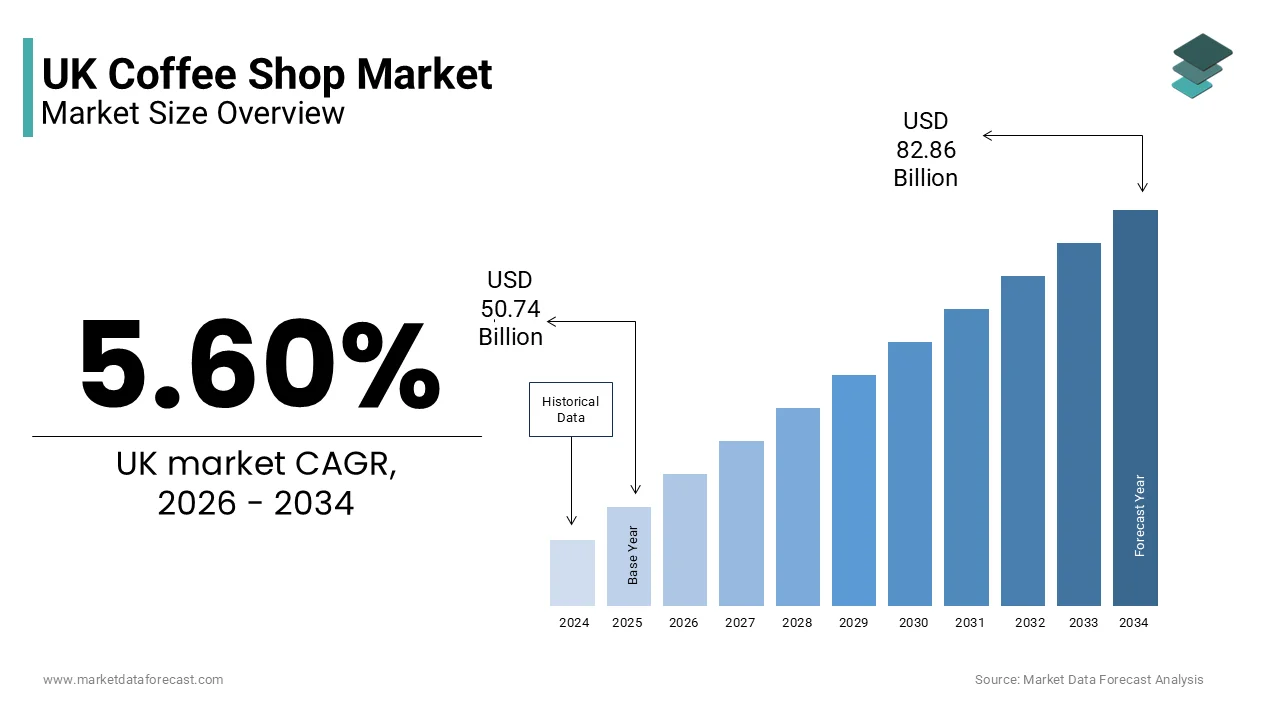
The UK coffee shop market was valued at USD 50.74 billion in 2025, is estimated to reach USD 53.58 billion in 2026, and is projected to reach USD 82.86 billion by 2034, growing at a CAGR of 5.60% during the forecast period. Market growth is driven by increasing coffee consumption, rising café culture, growing demand for premium beverages, and the expanding role of coffee shops as social and workspaces. Product innovation, specialty coffee offerings, and the growing popularity of convenient grab and go formats are further supporting market expansion across the United Kingdom.
Key Market Trends
- Growing demand for specialty and premium coffee beverages is driving market growth.
- Increasing café culture and consumer preference for social dining spaces is boosting market expansion.
- Rising adoption of mobile ordering and loyalty programs is supporting industry development.
- Expansion of plant based beverage options and sustainable sourcing practices is enhancing market opportunities.
- Growing use of coffee shops as remote working and meeting spaces is influencing market advancement.
Segmental Insights
- Based on type, the chain coffee shops segment held a significant share of the UK coffee shop market in 2025, supported by strong brand recognition, extensive store networks, and consistent customer experiences.
- Based on age group, the 25 to 39 years segment accounted for the largest share of the UK coffee shop market in 2025, driven by higher disposable incomes, professional lifestyles, and frequent café visits for both social interaction and remote work activities.
- Based on distribution channel, the away from home segment accounted for 43.2% of the UK coffee shop market share in 2025, reflecting strong consumer demand for beverages consumed at cafés, restaurants, workplaces, and other out of home locations.
Regional Insights
- The United Kingdom remains one of the largest coffee shop markets in Europe, supported by strong urbanization, evolving consumer lifestyles, and growing demand for premium coffee experiences.
Competitive Landscape
The UK coffee shop market is highly competitive, with operators focusing on menu innovation, customer experience enhancement, sustainability initiatives, and digital engagement strategies to strengthen their market position. Companies continue to invest in premium coffee offerings, loyalty programs, and store network expansion. Major players operating in the UK coffee shop market include Starbucks, Costa Coffee, Caffè Nero, Pret A Manger, Greggs, McDonald's, Dunkin', Coffee Republic, Black Sheep Coffee, and Esquires Coffee.
 Download Free Sample Report
UK Coffee Shop Market Size
The UK coffee shop market size was valued at USD 50.74 billion in 2025, and is projected to reach USD 82.86 billion by 2034 from USD 53.58 billion in 2026, growing at a CAGR of 5.60%.
The coffee shop is a vibrant and highly competitive sector within the broader hospitality industry characterized by the proliferation of specialized establishments serving brewed coffee espresso based beverages and complementary food items. The cultural significance of the coffee shop in British urban life is profound with these venues serving as third places distinct from home and office environments. As per the Office for National Statistics, the hospitality and accommodation sector employed approximately 2.4 million people in 2025 reflecting the substantial labor force underpinning coffee shop operations across the nation. The rise of remote working arrangements has further entrenched the role of coffee shops as informal offices driving demand for spaces with reliable connectivity and comfortable seating. Consumer preferences have shifted toward ethical sourcing artisanal roasting techniques and personalized service experiences. The integration of technology through mobile ordering apps and loyalty programs has transformed customer interactions enhancing convenience and data driven personalization. Regulatory frameworks concerning food safety hygiene standards and employment rights significantly influence operational protocols.
MARKET DRIVERS
Remote Work Culture Driving Demand for Functional Social Spaces
The widespread adoption of hybrid and remote working models has fundamentally altered consumer behavior creating sustained demand for coffee shops that offer conducive environments for professional activities. The remote work culture for functional social spaces is attributed in fuelling the growth of the United Kingdom coffee shop market. Individuals seeking alternatives to home offices or corporate headquarters increasingly utilize coffee shops for their ambient noise levels ergonomic seating and reliable internet connectivity. According to the Office for National Statistics, 42% of UK workers engaged in some form of remote working during 2025 generating consistent footfall throughout weekdays rather than just weekends. This shift has prompted coffee shop operators to redesign interiors with dedicated work zones power outlets and hig-speed Wi-Fi infrastructure to accommodate laptop users. These venues provide a sense of community and structure that home environments often lack. Operators respond by offering extended opening hours and quiet zones to cater to professionals requiring focused work time. The presence of other workers creates a productive atmosphere known as body doubling which enhances individual concentration. Coffee shops also benefit from increased daytime sales of premium beverages and food items as remote workers treat themselves to lunch and snacks during breaks. This trend has stabilized revenue streams for many establishments that previously relied heavily on morning rush hour traffic. The integration of booking systems for tables allows customers to reserve workspaces ensuring availability during peak periods.
Premiumization and Specialty Coffee Consumption Trends
The consumer preference for high quality ethically sourced and expertly prepared coffee is also driving the growth of the United Kingdom coffee shop market. Modern drinkers exhibit sophisticated palates seeking unique flavor profiles single origin beans and alternative brewing methods such as pour over cold brew and nitro infusions. Customers are willing to pay premium prices for transparency in supply chains direct trade relationships with farmers and sustainable farming practices. Coffee shops differentiate themselves through skilled baristas who provide educational experiences about bean origins roast levels and tasting notes. This experiential aspect transforms coffee consumption from a routine transaction into a leisure activity. Social media platforms amplify this trend as visually appealing latte art and unique presentation styles encourage sharing and discovery. Independent cafes thrive by curating distinct atmospheres and localized menus that resonate with community values. Large chains respond by introducing limited edition seasonal blends and partnering with renowned roasters to enhance credibility. The demand for dairy free alternatives such as oat almond and soy milk has also expanded menu options catering to dietary preferences and lactose intolerance.
MARKET RESTRAINTS
Escalating Operational Costs Squeezing Profit Margins
The rising costs for energy labor and raw materials are solely hindering the growth of the United Kingdom coffee shop market. Energy bills have surged due to global market volatility and domestic policy changes affecting commercial tariffs. According to the study, the price cap for non domestic energy users increased by 35% in early 2025 forcing businesses to absorb higher utility expenses or pass them on to consumers. Staff shortages exacerbate this issue as the hospitality sector struggles to recruit and retain employees amidst tight labor markets. Supply chain disruptions affect the availability and price of key ingredients, including coffee beans milk and packaging materials. Climate change impacts on coffee growing regions further threaten long term supply stability and pricing. Smaller independent cafes lack the purchasing power of large chains to negotiate favorable contracts leaving them vulnerable to cost fluctuations. Menu price increases risk alienating price sensitive customers who may reduce frequency of visits or switch to cheaper alternatives. Balancing cost recovery with customer retention requires careful strategic planning and operational efficiency improvements. Many operators delay renovation plans or new store openings to preserve cash flow creating a slowdown in market growth.
Market Saturation Intensifying Competitive Pressure
The high density of coffee shops in major UK cities and towns leads to intense competition for customers real estate and talent for new entrants and existing players, which is impeding the growth of the United Kingdom coffee shop market. Urban centers, such as London Manchester and Edinburgh feature multiple coffee outlets on single streets creating a fragmented landscape, where differentiation becomes challenging. This saturation drives up commercial rents as landlords capitalize on high demand for retail space reducing viability for smaller operators. Customer loyalty diminishes as consumers have abundant choices leading to frequent switching based on convenience promotions or novelty. Large multinational brands leverage economies of scale to sustain losses in specific locations while maintaining overall network profitability. Independent shops struggle to match marketing budgets and technological investments such as advanced mobile apps and delivery integrations. The homogenization of offerings makes it difficult for new concepts to gain traction without significant unique selling propositions. Overexpansion by major chains can lead to cannibalization of sales between nearby stores reducing overall system wide performance.
MARKET OPPORTUNITIES
Expansion into Underserved Suburban and Rural Locations
The coffee shop operators have significant opportunities to expand into suburban towns and rural areas, where competition is lower and community demand for quality social spaces remains unmet. The expansion into underserved suburban and rural locations is more likely to set up new opportunities for the growth of the United Kingdom coffee shop market. While urban areas are saturated many smaller towns lack access to specialty coffee and modern cafe experiences. The post pandemic shift toward suburban living has increased local population densities creating viable customer bases for new outlets. Operators can leverage lower rental costs and reduced labor competition in these areas to improve unit economics. Community focused marketing strategies that emphasize local partnerships and neighborhood engagement can build strong brand loyalty quickly. Drive thru facilities and outdoor seating options appeal to car dependent populations in suburban areas enhancing convenience. Digital marketing allows targeted outreach to specific postal codes optimizing customer acquisition costs. Expanding into these locations diversifies geographic risk and reduces dependence on volatile urban centers. Successful entry requires understanding local preferences and adapting menu offerings to suit regional tastes.
Integration of Technology for Enhanced Customer Experience
The adopting advanced technologies, such as artificial intelligence, mobile ordering, and personalized loyalty programs to improve operational efficiency and deepen customer relationships is additionally to leverage the growth of the United Kingdom coffee shop market. Digital tools enable seamless transactions reducing wait times and enhancing convenience for busy consumers. AI driven analytics allow operators to predict demand patterns optimize staffing levels and manage inventory more effectively reducing waste and labor costs. Personalized marketing campaigns based on purchase history increase repeat visitation and average spend per customer. The implementation of self-service kiosks can handle peak hour volumes without requiring additional staff addressing labor shortage challenges. Subscription models offering unlimited coffee for a fixed monthly fee create recurring revenue streams and lock in customer loyalty. Integration with third party delivery platforms expands reach beyond physical locations capturing home and office consumption occasions. Data collected through digital interactions provides insights into consumer preferences enabling rapid product development and menu optimization. Contactless technologies continue to be valued for hygiene reasons maintaining relevance post pandemic. Investing in robust IT infrastructure ensures reliability and security building trust with tech savvy demographics.
MARKET CHALLENGES
Supply Chain Volatility Affecting Coffee Bean Availability
The global supply chain disruptions and climate change impacts on coffee producing regions is to decline the growth of the growth of the United Kingdom coffee shop market. Extreme weather events such as droughts and frosts in Brazil, Vietnam, and Colombia, reduce harvest yields driving up global commodity prices. Logistics hurdles, including shipping delays and port congestion increase lead times and transportation costs for imported beans. Currency fluctuations between the British Pound and US Dollar affect import prices since coffee is traded globally in dollars. Dependence on specific Arabica varieties limits substitution options as Robusta beans have different flavor profiles less suited for specialty areas. Ethical sourcing requirements add complexity as operators must verify compliance with fair trade and sustainability standards across complex supply networks. Shortages of key inputs such as milk alternatives and packaging materials that further strain operations. Inability to secure consistent supply risks stockouts and customer dissatisfaction. Long term contracts with suppliers offer some stability but limit flexibility to capitalize on spot dips.
Changing Consumer Health Perceptions and Sugar Regulations
The growing health consciousness and regulatory pressures regarding sugar content, traditional coffee shop menus that rely heavily on sugary syrups pastries and flavored drinks is also to act as a challenge for the growth of the United Kingdom coffee shop market. Public health campaigns advocate for reduced sugar intake to combat obesity and diabetes influencing consumer choices. According to the Office for Health Improvement and Disparities, 40% of UK adults actively monitored their sugar consumption in 2025 leading to decreased demand for high calorie beverages. Government initiatives, such as the Soft Drinks Industry Levy have raised awareness about hidden sugars in flavored coffees and teas. Consumers increasingly seek low calorie natural sweeteners and healthier food options, such as gluten free vegan and protein rich items. Reformulating recipes to meet these demands requires research and development investments and may alter taste profiles risking customer alienation. Labeling regulations require clear disclosure of nutritional information adding administrative burdens. Failure to adapt menus risks losing health conscious demographics who represent a growing segment. Balancing indulgence with wellness requires creative menu engineering and education efforts. Marketing healthy options effectively without compromising brand identity poses communication challenges. Operators must navigate these shifting expectations while maintaining profitability as healthier ingredients often carry higher costs.
REPORT COVERAGE
| REPORT METRIC | DETAILS |
| Market Size Available | 2025 to 2034 |
| Base Year | 2025 |
| Forecast Period | 2026 to 2034 |
| CAGR | 5.60% |
| Segments Covered | By Type, Age Group, Distribution Channel, and Region. |
| Various Analyses Covered | Global, Regional and Country-Level Analysis, Segment-Level Analysis, Drivers, Restraints, Opportunities, Challenges; PESTLE Analysis; Porter’s Five Forces Analysis, Competitive Landscape, Analyst Overview of Investment Opportunities |
| Market Leaders Profiled | Starbucks, Costa Coffee, Caffè Nero, Pret A Manger, Greggs, McDonald's, Dunkin', Coffee Republic, Black Sheep Coffee, and Esquires Coffee |
SEGMENTAL ANALYSIS
By Type Insights
The chain coffee shops segment held a significant share of the United Kingdom coffee shop market in 2025 due to their extensive network of locations standardized operational models and strong brand recognition that ensure consistent customer experiences across diverse geographic regions. Major chain operators, such as Costa Coffee, Starbucks, and Pret A Manger have established ubiquitous presence in high traffic areas, including train stations airports shopping centers and city centers ensuring maximum visibility and convenience for consumers. This widespread availability creates habitual consumption patterns as customers rely on predictable quality and service standards regardless of location. The ability to offer loyalty programs through mobile applications enhances customer retention by providing rewards and personalized offers that independent shops often cannot match financially. Chains invest heavily in staff training protocols ensuring that beverage preparation and customer interaction meet uniform standards, which builds trust among consumers who value reliability. The financial backing of large corporate entities enables chains to withstand economic downturns and absorb rising operational costs more effectively than smaller competitors. Marketing campaigns with national reach reinforce brand identity and drive footfall through promotional activities and seasonal product launches.
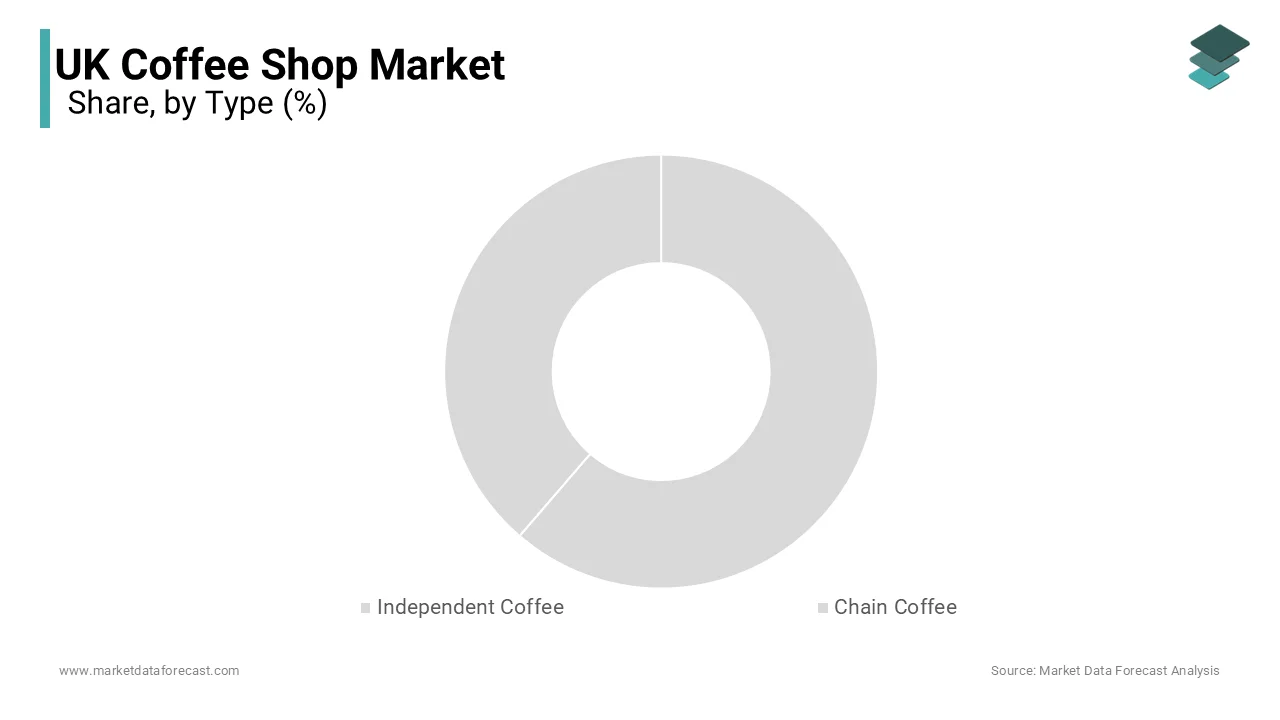
The independent coffee shops segment is likely to register a fastest CAGR of 7.8% throughout the forecast period. Consumers increasingly seek authentic and personalized experiences that reflect local culture and values driving preference for independent coffee shops over generic chain environments. Independent cafes often source beans from specific roasters or engage in direct trade relationships offering unique flavor profiles and storytelling that resonate with discerning customers. These establishments serve as community hubs hosting events such as open mic nights art exhibitions and local meetings which foster social connections and loyalty. Owners often engage directly with customers creating a welcoming atmosphere that encourages repeat visits and word of mouth recommendations. The flexibility of independent operators allows them to adapt menus quickly to local tastes and dietary preferences such as vegan or gluten free options. Social media platforms amplify this appeal as visually distinct interiors and unique latte art generate organic marketing content. Consumers perceive supporting independent businesses as a way to contribute to the local economy and preserve neighborhood character.
By Age Group Insights
The 25 to 39 years age group segment was the largest by accounting for in the UK coffee shop market driven by their high disposable income professional lifestyles and tendency to use cafes for both socializing and remote work. Individuals aged 25 to 39 are heavily represented in the workforce and increasingly adopt hybrid working models that integrate coffee shops into their daily routines as alternative workspaces. According to the Office for National Statistics, 45% of workers in this age group engaged in remote or hybrid work in 2025 creating consistent demand for cafes with reliable Wi Fi and comfortable seating. This demographic views coffee shops as productive environments that offer a change of scenery from home offices while facilitating professional networking and informal meetings. The willingness to purchase premium beverages and food items during extended stays contributes significantly to average transaction values. Employers in this age bracket often provide allowances for coworking or external work expenses further supporting spending. The need for caffeine to maintain productivity during long work hours drives regular visitation patterns particularly in morning and early afternoon periods. Coffee shops cater to this need by offering quick service options and loyalty rewards that incentivize frequent purchases. The social aspect of meeting colleagues or clients in neutral venues also reinforces usage.
The above 60 years age group segment is esteemed to witness a fastest CAGR of 6.5% during the forecast period. Retirees and older adults have more flexible schedules allowing them to visit coffee shops during off peak hours thereby smoothing demand curves for operators. Coffee shops provide essential social outlets for this group helping to combat loneliness and isolation which are prevalent issues among older adults. Regular visits become part of daily routines offering opportunities for conversation and community engagement. Many cafes introduce senior discounts or morning clubs to attract this demographic fostering a sense of belonging. The relaxed atmosphere of coffee shops appeals to older consumers who prefer quieter environments compared to bars or clubs. Accessibility improvements such as step free access and comfortable seating further encourage visitation. This segment values personal service and familiarity leading to high loyalty rates once a preferred venue is established. The trend toward active aging means older adults are more willing to spend on leisure activities including dining out.
By Distribution Channel Insights
The away from home channel segment was the largest by accounting for 43.2% of the United Kingdom coffee shop market share in 2025. Consumers primarily visit coffee shops for the convenience of ready to drink beverages and the experience of consuming them in a dedicated environment. The busy lifestyles of urban residents drive demand for quick service options such as drive thru and click and collect which minimize wait times. The sensory experience of smelling freshly brewed coffee and enjoying a warm beverage in a comfortable setting cannot be replicated by retail products. Takeaway culture has grown significantly with reusable cups becoming common reducing environmental concerns associated with single use packaging. The immediacy of satisfaction and the ability to customize drinks to exact preferences make away from home purchases highly attractive. Commuters and workers rely on this channel for their daily caffeine fix integrating it into their daily routines. The social aspect of meeting others in person further reinforces the dominance of physical stores.
The retail channel is anticipated to register a fastest CAGR of 5.2% during the forecast period. Major coffee shop chains have successfully extended their brands into retail shelves offering ground coffee beans capsules and ready to drink bottles that replicate in store flavors. Partnerships with large retailers ensure wide distribution and visibility making these products accessible to a broad audience. The convenience of purchasing familiar brands during regular grocery shopping trips drives impulse buys and trial. Ready to drink canned coffees have gained popularity among younger consumers seeking portable and convenient options for on-the-go consumption. Innovation in packaging such as nitrogen flushed bags preserves freshness and quality enhancing consumer satisfaction. Limited edition retail releases create urgency and excitement mirroring in store promotional strategies. This channel allows brands to reach customers who may not visit physical stores frequently expanding their total addressable market. The lower price point of retail products compared to cafe beverages makes them attractive for daily home consumption.
COMPETITIVE LANDSCAPE
The United Kingdom coffee shop market features intense competition among established international chains dominant domestic brands and a vibrant sector of independent artisanal cafes. Large multinational corporations leverage economies of scale extensive real estate portfolios and sophisticated marketing budgets to maintain visibility and attract volume driven customers. Domestic giants compete by emphasizing local sourcing heritage and community engagement to differentiate themselves from global counterparts. Independent shops thrive by offering unique atmospheres specialized brewing methods and personalized service that appeal to discerning consumers seeking authenticity. Price competition is fierce, particularly in urban centers where high density leads to aggressive promotional activities and loyalty incentives. The rise of remote work has intensified the battle for suitable workspace amenities. Innovation in digital ordering and delivery services has become a key differentiator as convenience increasingly drives purchasing decisions. Market saturation in major cities forces operators to focus on customer retention and experience quality rather than just expansion.
KEY MARKET PLAYERS
Some of the companies that are playing a dominating role in the UK coffee shop market are
- Starbucks
- Costa Coffee
- Caffè Nero
- Pret A Manger
- Greggs
- McDonald's
- Dunkin'
- Coffee Republic
- Black Sheep Coffee
- Esquires Coffee
Top Players in the Market
- Costa Coffee operates as the largest coffee chain in the United Kingdom with a pervasive presence on high streets and in transport hubs across the nation. The company contributes significantly to the local economy through extensive employment opportunities and partnerships with British dairy farmers for milk sourcing. Costa recently strengthened its position by accelerating the rollout of automated self-service kiosks in existing stores to reduce waiting times and improve order accuracy during peak hours. The brand also launched a comprehensive digital loyalty program integration that allows customers to earn and redeem rewards seamlessly through their mobile application. These technological enhancements aim to streamline operations and enhance customer convenience while maintaining the brand reputation for consistent quality. Costa continues to invest in store refurbishments to create modern inviting environments that encourage longer stays and social interaction among patrons.
- Starbucks UK maintains a strong foothold in the British market by leveraging its global brand recognition and commitment to ethical sourcing practices. The company actively engages with local communities through various corporate social responsibility initiatives including support for youth employment programs and environmental sustainability projects. Starbucks recently expanded its plant-based menu offerings by introducing new oat and almond milk options to cater to growing health and dietary preferences among UK consumers. The organization also enhanced its delivery capabilities by partnering with major third-party logistics providers to ensure faster and more reliable service to home and office customers. These strategic moves demonstrate the companys dedication to adapting to changing consumer trends while reinforcing its position as a premium coffee provider in a competitive landscape.
- Pret A Manger distinguishes itself in the UK coffee shop market through its unique focus on fresh organic ingredients and handmade food prepared daily in onsite kitchens. The company contributes to the sector by setting high standards for food quality and sustainability including extensive waste reduction and recycling programs. Pret recently strengthened its market position by expanding its subscription service which offers unlimited hot drinks for a fixed monthly fee thereby encouraging frequent visits and customer loyalty. The brand also introduced innovative vegan and gluten free food items to appeal to health-conscious demographics and diversify its menu appeal. These actions reflect Prets commitment to providing convenient high-quality nourishment while fostering a loyal customer base through value driven membership models and responsible business practices.
Major Strategies Used by Key Market Participants
Key players in the United Kingdom coffee shop market employ several strategic approaches to maintain competitive advantages and drive growth. Digital transformation remains a priority as companies invest in mobile applications loyalty programs and self service kiosks to enhance customer convenience and operational efficiency. Product innovation is crucial with brands regularly introducing seasonal beverages plant based alternatives and healthy food options to meet evolving consumer preferences. Sustainability initiatives help build brand equity and appeal to environmentally conscious customers. Expansion into non-traditional locations like hospitals universities and transport hubs increases accessibility and captures diverse customer segments. Strategic partnerships with delivery platforms extend reach beyond physical stores while subscription models create recurring revenue streams and foster long term customer loyalty.
MARKET SEGMENTATION
This research report on the UK coffee shop market is segmented and sub-segmented into the following categories.
By Type
- Independent Coffee
- Chain Coffee
By Age Group
- 18–24 Years
- 25–39 Years
- 40–59 Years
- Above 60
By Distribution Channel
- Retail
- Away From Home