- Product Description Description
- Table of Contents TOC
- List of Table & Figure LOT
- Get Free Sample PDF Sample PDF
Market Size, 2025
$3,524.80 MnMarket Estimate, 2026
$3,732.76 MnMarket Forecast, 2034
$5,904.70 MnCAGR, 2026–2034
5.9%UK Denim Market Size, Growth, Trends & Forecast (2026–2034)
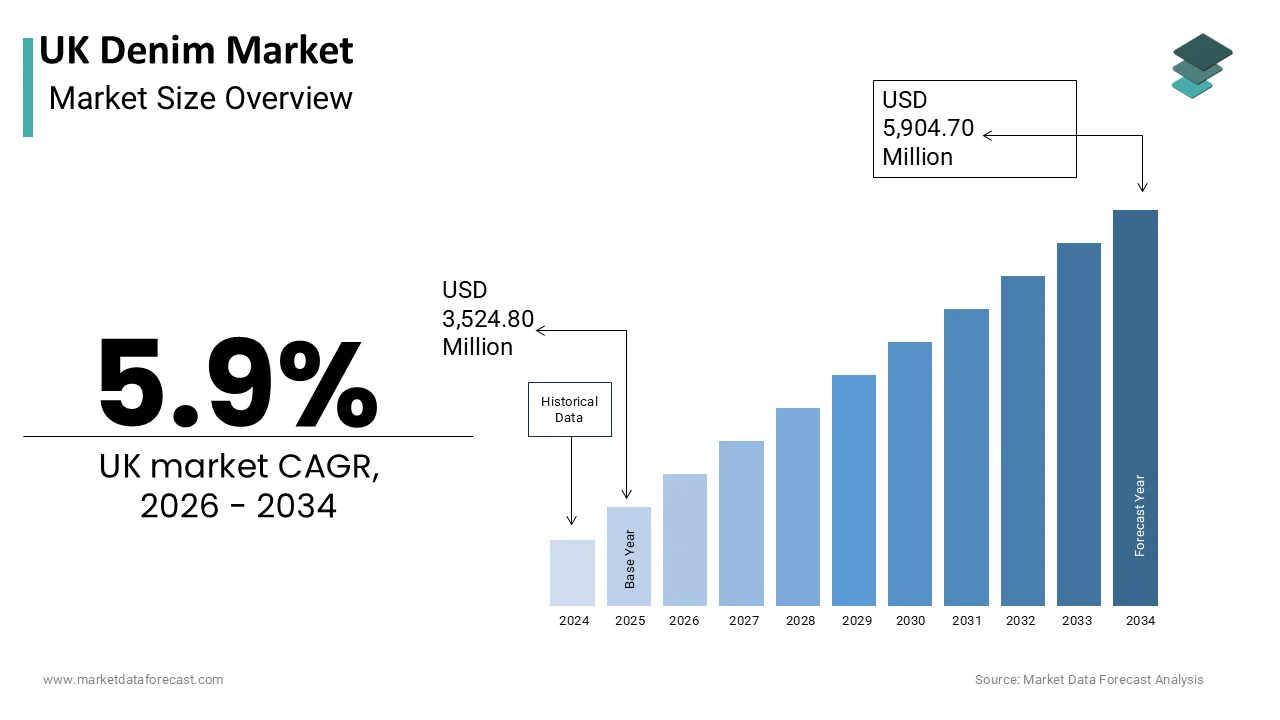
The UK denim market size was valued at USD 3,524.80 million in 2025, is anticipated to reach USD 3,732.76 million in 2026, and is projected to scale up to USD 5,904.70 million by 2034, registering a compound annual growth rate (CAGR) of 5.9% during the forecast period from 2026 to 2034. Driven by the cultural versatility of denim, post-pandemic smart casual workplace adoptions, and a growing consumer shift toward sustainable and ethical apparel production, the UK denim industry continues to expand steadily.
Key Executive Metrics (At-a-Glance)
- 2025 Base Valuation: USD 3,524.80 Million
- 2026 Current Valuation: USD 3,732.76 Million
- 2034 Forecast Valuation: USD 5,904.70 Million
- Compound Annual Growth Rate (CAGR): 5.9% (2026–2034)
- Dominant Distribution Channel: Offline Retail (holding the major market share supported by tactile evaluation and personal fitting experiences)
- Fastest-Growing Distribution Channel: Online Retail (projected to record a CAGR of 10.4%, driven by e-commerce convenience and virtual fitting innovations)
- Dominant End User Segment: Women (leading market share backed by diverse fashion trends, stylistic varieties, and high wardrobe expenditure)
- Fastest-Growing End User Segment: Men (exhibiting a CAGR of 7.2%, propelled by shifts in masculine norms, premiumization, and office smart casual trends)
Core Market Drivers
- Smart Casual Workplace Adoption: Permanent changes in professional dress codes allowing employees to wear high-quality denim trousers and jackets in office settings.
- Sustainable Production Demand: Heightened consumer and regulatory focus on eco-friendly materials, organic cotton, and waterless dyeing technologies to reduce environmental footprints.
- Cultural Versatility: Entrenched status of denim as a durable, multi-occasion wardrobe essential aligned with modern cost-per-wear investment habits.
Primary Market Restraints & Challenges
- High Environmental Impact and Economic Pressures: Resource-intensive conventional production processes combined with persistent inflationary pressures reducing discretionary spending on apparel.
UK Denim Market Segmentation Breakdown
| Segment Category | Leading Sub-Segment (2025 Base) | Fastest-Growing Sub-Segment (2026–2034) |
|---|---|---|
| By Distribution Channel | Offline Retail (dominant volume leader accounting for physical try-ons and fit assessments) | Online Retail (fastest-growing category expanding at a 10.4% CAGR) |
| By End User | Women (dominant share supported by frequent style updates and extensive variant options) | Men (fastest-growing category expanding at a 7.2% CAGR driven by premiumization and workwear trends) |
| By Country | United Kingdom (major European consumption and trendsetting hub) | United Kingdom (resilient retail market scaling through circular and digital innovations) |
Major Industry Players Profiled
Key enterprises shaping the competitive UK denim market include Levi Strauss & Co., Wrangler (Kontoor Brands, Inc.), Lee (Kontoor Brands, Inc.), Pepe Jeans London, G-Star RAW, Diesel S.p.A., H&M Hennes & Mauritz AB, Inditex S.A. (Zara), Next plc, Marks and Spencer Group plc, Gap Inc., and Superdry plc.
 Download Free Sample Report
UK Denim Market Size
The UK Denim Market is projected to grow from USD 3,524.80 million in 2025 to USD 3,732.76 million in 2026 and reach USD 5,904.70 million by 2034, registering a CAGR of 5.9% during the forecast period from 2026 to 2034.
According to the Office for National Statistics, the UK population stands at approximately 69.5 million people, providing a vast consumer base for apparel retail. As per data from the Department for Environment, Food and Rural Affairs, consumers discard an estimated 300,000 tonnes of clothing annually, highlighting the urgent need for sustainable practices within the denim lifecycle. The cultural significance of denim is evident in its adoption by diverse subcultures, ranging from punk rockers to corporate professionals who embrace smart casual dress codes. Retail landscapes have evolved to include both high street giants and independent boutiques that cater to varying tastes and ethical preferences. Consumer awareness regarding the environmental impact of traditional denim production, particularly water usage and chemical dyeing, has prompted a shift toward eco-conscious purchasing behaviors. Regulatory frameworks governed by the Competition and Markets Authority ensure fair trading practices while encouraging transparency in supply chains. The market operates at the intersection of heritage craftsmanship and modern innovation, driving continuous evolution in fabric technology, fit customization, and circular economy initiatives across the nation.
MARKET DRIVERS
Enduring Cultural Versatility and Smart Casual Workplace Adoption
The entrenched status of denim as a versatile wardrobe essential drives consistent demand in the UK market, as it seamlessly transitions between leisure and professional environments. The widespread adoption of smart casual dress codes in post-pandemic workplaces has legitimized denim wear in office settings, expanding its usage beyond weekends and informal occasions. According to the Chartered Institute of Personnel and Development, over 40% of UK employers have relaxed formal dress codes permanently, allowing employees to wear high-quality denim trousers and jackets. This shift has elevated the perceived value of premium denim brands that offer tailored fits and refined finishes suitable for business contexts. Consumers increasingly view denim as a cost-per-wear investment due to its durability and timeless appeal, which aligns with prudent spending habits during economic uncertainty. As per data from Mintel, 55% of British adults prioritize versatility when purchasing clothing, seeking items that can be styled for multiple occasions. The influence of social media and celebrity culture further reinforces denim as a fashionable choice, with influencers showcasing diverse styling options that appeal to younger demographics. Retailers respond by curating collections that balance comfort with sophistication, ensuring relevance across age groups. This cultural adaptability ensures that denim remains a non-negotiable component of the British wardrobe, sustaining steady sales volumes despite fluctuating fashion trends.
Rising Consumer Preference for Sustainable and Ethical Production
Growing environmental consciousness among UK consumers significantly propels the denim market toward sustainable practices, as shoppers actively seek brands that minimize ecological footprints and ensure ethical labor standards. Traditional denim manufacturing is resource-intensive, requiring thousands of liters of water and harmful chemicals for dyeing and finishing processes, which has drawn scrutiny from environmentally aware buyers. According to the Waste and Resources Action Programme, approximately 20% of the carbon footprint of a typical garment comes from the production phase, prompting consumers to demand transparency in supply chains. Brands that utilize organic cotton, recycled fibers, and waterless dyeing technologies gain a competitive advantage by aligning with national sustainability goals. The Fashion Revolution movement, which advocates for greater industry transparency, has gained substantial traction in the UK, with millions of participants demanding to know who made their clothes. As per data from YouGov, 62% of British consumers are willing to pay more for sustainable fashion items, including denim, that guarantee fair wages and safe working conditions. Retailers are responding by launching take-back schemes and repair services to extend product lifecycles, reducing waste. Government initiatives, such as the Extended Producer Responsibility scheme, further incentivize sustainable design. This shift toward ethical consumption drives innovation in material science and production methods, positioning sustainability as a key driver of brand loyalty and market growth.
MARKET RESTRAINTS
High Environmental Impact and Water Consumption Concerns
The significant environmental burden associated with conventional denim production is hindering the growth of the UK denim market, as regulators and consumers increasingly scrutinize the ecological costs of cotton cultivation and processing. Cotton farming requires substantial amounts of water and pesticides, contributing to soil degradation and water scarcity in sourcing regions, which conflicts with the UK’s net-zero commitments. According to the World Wildlife Fund, it takes approximately 10,000 liters of water to produce just one kilogram of cotton, which translates to roughly 7,500 liters for a single pair of jeans. This staggering figure has led to heightened criticism from environmental groups and informed consumers who are reducing their purchase frequency to mitigate personal carbon footprints. The Department for Environment, Food and Rural Affairs emphasizes the need for industries to adopt circular economy principles to reduce resource depletion. Strict regulations on chemical discharges from dyeing facilities increase compliance costs for manufacturers, potentially leading to higher retail prices that deter price-sensitive shoppers. Additionally, the complexity of recycling blended fabrics containing elastane limits the effectiveness of current recycling technologies, resulting in most denim ending up in landfills. These environmental challenges create reputational risks for brands failing to demonstrate genuine sustainability efforts. Consequently, some consumers are turning to alternative materials or second-hand markets, restraining the growth of new denim sales in the primary market.
Economic Pressure and Reduced Disposable Income
Persistent inflationary pressures and the rising cost of living in the UK constrain consumer spending on apparel, including denim, as households prioritize essential goods over discretionary fashion purchases. The erosion of disposable income has led many shoppers to extend the lifespan of their existing garments, rather than buying new items frequently. According to the Office for National Statistics, the annual inflation rate remained elevated above 4% for much of 2023 and 2024, impacting household budgets and reducing confidence in non-essential spending. As per data from the GfK Consumer Confidence Index, sentiment regarding major purchases reached historic lows, as families curtailed spending on clothing and footwear. Retailers observe a shift toward budget-friendly options and promotional discounts, as consumers become more price-sensitive and less willing to pay premiums for branded denim. The Bank of England notes that higher interest rates have increased borrowing costs, further dampening demand for financed purchases through credit agreements. This financial strain results in delayed replacement cycles, with individuals repairing or altering old jeans instead of replacing them. Manufacturers face pressure to lower prices, which can compromise quality or ethical standards. The uncertainty surrounding future income prospects leads to cautious spending behavior, limiting the overall volume and value growth of the denim market in the short to medium term.
MARKET OPPORTUNITIES
Expansion of Circular Economy and Resale Platforms
The burgeoning resale and rental market presents a significant opportunity for denim brands in the UK to engage with eco-conscious consumers and tap into the growing second-hand economy. Platforms dedicated to pre-owned fashion have gained mainstream acceptance, as shoppers recognize the value and sustainability of buying used, high-quality denim. According to a report by ThredUp, the global second-hand market is projected to grow significantly, with the UK being one of the leading adopters of resale fashion. Brands are launching their own recommerce initiatives, allowing customers to trade in old jeans for store credit, which arishen refused to refurbish or resold. This model not only generates additional revenue streams but also fosters brand loyalty and customer retention. According to the Waste and Resources Action Programme, extending the active life of clothing by just nine months can reduce carbon, waste, water, and resource footprints by around 20% to 30%. Retailers are integrating digital passports and blockchain technology to verify the authenticity and history of vintage denim pieces, enhancing consumer trust. Collaborations with online resale platforms enable brands to reach wider audiences who prioritize affordability and sustainability. By embracing circular business models, companies can differentiate themselves in a saturated market while contributing to national waste reduction targets. This strategic pivot aligns with changing consumer values and regulatory expectations, creating a robust avenue for future growth.
Innovation in Bio-Based and Recycled Materials
Advancements in material science offer substantial opportunities for the UK denim market to innovate with bio-based and recycled fabrics that reduce reliance on virgin cotton and synthetic fibers. Developers are creating alternatives using agricultural waste, such as hemp, flax, and even pineapple leaves, which require less water and pesticides to cultivate. According to the Textile Exchange, the use of preferred fibers, including recycled polyester and organic cotton, is increasing as brands seek to meet sustainability targets. Innovations in enzymatic washing and laser finishing technologies allow manufacturers to achieve desired aesthetic effects without harmful chemicals or excessive water usage. The Department for Science, Innovation and Technology supports research into sustainable textiles through funding and partnerships with universities and private sector innovators. Consumers are increasingly attracted to novel materials that offer unique textures and performance benefits, such as enhanced breathability and durability. Brands that successfully commercialize these innovations can command premium prices and attract early adopters who value exclusivity and environmental responsibility. Additionally, the development of fully recyclable denim blends addresses the challenge of end-of-life disposal, enabling closed-loop production systems. By leading in material innovation, UK brands can position themselves as global pioneers in sustainable fashion, driving industry-wide transformation and capturing market share from traditional competitors.
MARKET CHALLENGES
Complex Supply Chain Transparency and Traceability
Ensuring complete transparency and traceability across complex global supply chains poses a significant challenge for denim brands operating in the UK, as consumers and regulators demand greater accountability. The multi-tiered nature of denim production, involving cotton farming, spinning, weaving, dyeing, and garment assembly across different countries, makes it difficult to monitor labor conditions and environmental practices at every stage. According to the Modern Slavery Act, businesses with a turnover above 36 million pounds must publish annual statements detailing steps taken to prevent slavery in their operations, yet verifying compliance remains challenging. The Competition and Markets Authority has cracked down on greenwashing, penalizing brands that make unsubstantiated sustainability claims without robust evidence. As per data from the Ethical Trading Initiative, many suppliers still lack the infrastructure to provide real-time data on working hours and wages. Implementing blockchain or digital tracking systems requires substantial investment and collaboration with suppliers who may resist due to cost or privacy concerns. Failure to provide transparent information can lead to reputational damage and loss of consumer trust. Additionally, geopolitical tensions and trade barriers can disrupt supply lines, complicating efforts to maintain ethical standards. Brands must navigate these complexities while balancing cost efficiency and speed to market, creating a persistent operational hurdle in the pursuit of genuine sustainability.
Intense Competition from Fast Fashion and Ultra-Low-Cost Retailers
The UK denim market faces intense competition from fast fashion retailers and ultra-low-cost online platforms that prioritize rapid turnover and minimal pricing over quality and sustainability. These competitors leverage agile supply chains to replicate trending styles quickly and sell them at prices that traditional brands struggle to match. According to the British Retail Consortium, fast fashion accounts for a significant portion of clothing sales in the UK, with consumers increasingly accustomed to disposable fashion cycles. This price-driven competition pressures established denim brands to lower their margins, potentially compromising on material quality or ethical sourcing practices to remain competitive. The rise of social commerce and influencer marketing further accelerates trend cycles, encouraging impulse buying of cheap alternatives. As per data from Kantar Worldpanel, promotional activity has increased as retailers fight for share of wallet in a constrained economic environment. Traditional brands find it difficult to communicate the value proposition of higher-priced, durable denim when cheaper options are readily available. Additionally, the sheer volume of new styles introduced by fast fashion players creates noise in the market, making it harder for sustainable brands to stand out. This dynamic forces incumbent players to constantly innovate and justify their premium positioning, while managing the risk of brand dilution in a highly saturated and price-sensitive landscape.
REPORT COVERAGE
| REPORT METRIC | DETAILS |
| Market Size Available | 2025 to 2034 |
| Base Year | 2025 |
| Forecast Period | 2026 to 2034 |
| Segments Covered | By Distribution Channel, End User, and Region |
| Various Analyses Covered | Global, Regional and Country-Level Analysis, Segment-Level Analysis, Drivers, Restraints, Opportunities, Challenges; PESTLE Analysis; Porter’s Five Forces Analysis, Competitive Landscape, Analyst Overview of Investment Opportunities |
| Countries Covered | United Kingdom |
| Market Leaders Profiled | Levi Strauss & Co., Wrangler (Kontoor Brands, Inc.), Lee (Kontoor Brands, Inc.), Pepe Jeans London, G-Star RAW, Diesel S.p.A., H&M Hennes & Mauritz AB, Inditex S.A. (Zara), Next plc, Marks and Spencer Group plc, Gap Inc., Superdry plc. |
SEGMENTAL ANALYSIS
By Distribution Channel Insights
The offline segment dominated the market by commanding the highest share of the UK market in 2025 and is anticipated to maintain its status as the leading distribution channel for denim in the UK due to the critical importance of fit and tactile evaluation in purchasing decisions. Denim is a highly personal garment where variations in cut, stretch, and rise significantly impact comfort and aesthetics, making physical try-ons essential for most consumers. According to the British Retail Consortium, physical stores account for approximately 60% of total fashion retail sales in the UK, providing extensive networks where customers can interact with products directly. The ability to assess fabric weight, texture, and durability in person reduces the likelihood of returns, which are notoriously high for online denim purchases due to sizing inconsistencies. Major retailers, such as Marks and Spencer and Next, leverage their brick-and-mortar presence to offer professional fitting services and style advice that enhance customer confidence. As per data from Mintel, 70% of shoppers prefer buying jeans in-store to ensure the perfect fit before committing to a purchase. Additionally, immediate possession allows consumers to wear their new items without waiting for delivery, addressing impulse buying behaviors. The social experience of shopping with friends or family further drives footfall to physical locations. Trust established through face-to-face interactions and the assurance of easy in-store exchanges continue to drive volume, ensuring that offline retail remains the primary conduit for denim transactions in the UK market.
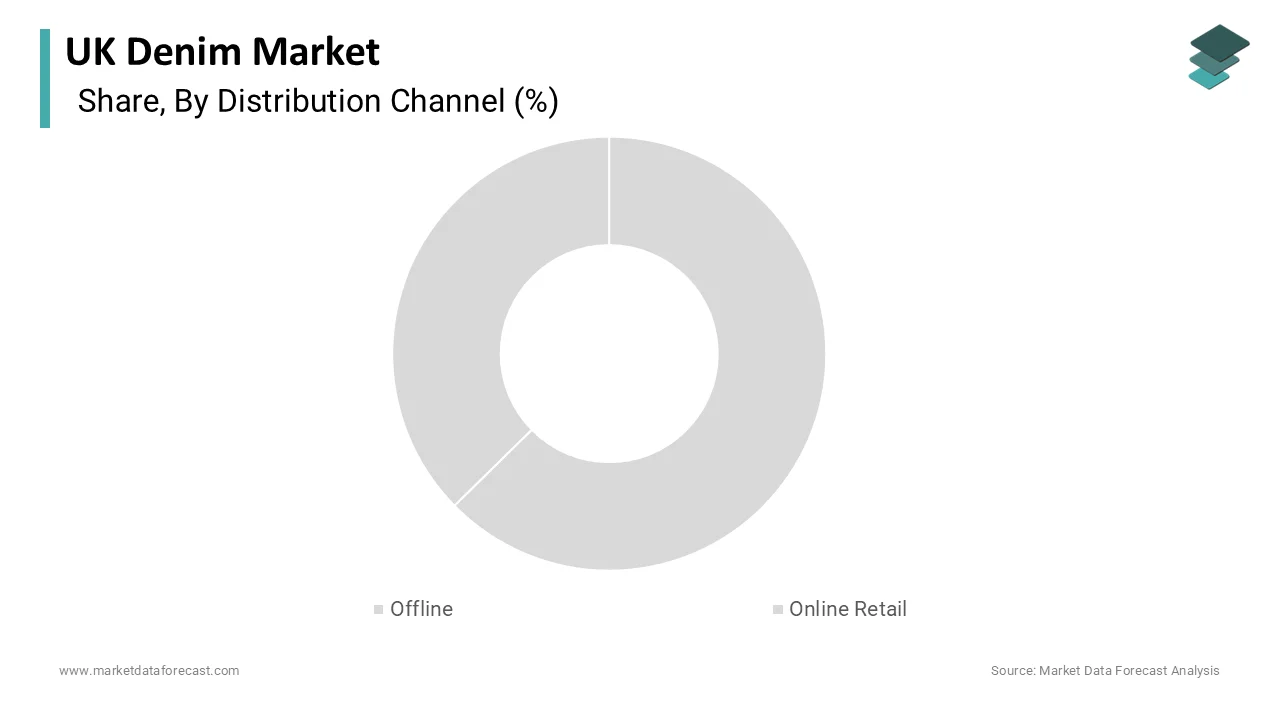
However, the online retail segment emerges as the fastest-growing distribution channel for denim in the UK and is estimated to record a CAGR of 10.4% during the forecast period in the UK denim market, owing to the convenience, wide variety, and advancements in virtual fitting technologies. The shift toward digital commerce has been accelerated by improved logistics infrastructure and the widespread adoption of flexible return policies that mitigate the risks associated with buying fitted garments remotely. According to the Office for National Statistics, online sales accounted for 27% of total retail trade in early 2024, with fashion being one of the most purchased categories due to the ease of comparing styles and prices across multiple brands. E-commerce platforms offer unlimited shelf space, allowing consumers to access niche fits, vintage styles, and international brands that may not be available in local physical stores. Innovations such as augmented reality mirrors and AI-driven size recommendation tools have significantly reduced return rates and increased consumer confidence in online denim purchases. As per data from YouGov, 45% of millennials prefer buying clothing online, citing time savings and accessibility as key factors. Next-day delivery services provided by major carriers ensure that wait times are minimal, addressing traditional drawbacks of remote shopping. Furthermore, the integration of social commerce features enables seamless purchasing from influencer recommendations. As digital literacy increases and technology bridges the fit gap, this channel continues to capture market share from traditional outlets, particularly among younger demographics who prioritize efficiency and choice.
By End User Insights
The women’s segment led the market by capturing the leading share of the UK market in 2025. The growth of the women’s segment in the UK market is attributed to the diverse fashion trends, frequent style updates, and a wide variety of cuts and washes that cater to evolving aesthetic preferences. Women’s denim encompasses an extensive range of styles, including skinny, bootcut, wide leg, and ripped variants, which encourages multiple purchases to keep up with seasonal trends. As per data from Mintel, women in the UK spend approximately 30% more on clothing than men, with denim representing a significant portion of this expenditure due to its versatility in both casual and smart casual settings. The influence of social media and celebrity culture plays a pivotal role in driving demand, as influencers showcase new styling techniques and must-have fits that resonate with female consumers. Retailers respond by launching frequent collections and limited-edition collaborations that create urgency and drive repeat visits. The normalization of denim in professional environments has further expanded usage occasions beyond weekends, increasing the frequency of purchase. According to the Office for National Statistics, women constitute over 51% of the population, providing a substantial consumer base. Additionally, the rise of inclusive sizing and body-positive marketing campaigns has broadened the addressable market, encouraging participation from diverse body types. This combination of trend sensitivity, stylistic diversity, and cultural relevance ensures that the women’s segment remains the dominant force in the UK denim landscape.
However, the men’s segment is a promising segment and is estimated to exhibit a CAGR of 7.2% during the forecast period, owing to the shifting masculine norms, increased interest in fashion, and the adoption of premium quality denim as a wardrobe staple. Modern men are increasingly viewing denim as an investment piece, prioritizing durability, fit, and brand heritage over fast fashion trends. As per a survey by Kantar Worldpanel, men’s spending on apparel has risen by 12% in recent years, with a notable shift toward higher-priced, durable goods that offer long-term value. The popularity of workwear-inspired aesthetics and raw denim has attracted a dedicated community of enthusiasts who appreciate the craftsmanship and aging process of high-quality cotton. Social media platforms have played a crucial role in educating male consumers about fit guides, fabric weights, and styling options, demystifying the purchase process. Retailers have responded by expanding their men’s sections with specialized fits, such as athletic taper and slim straight, that cater to diverse body shapes. The relaxation of corporate dress codes has also contributed to growth, as men seek comfortable yet professional-looking trousers for hybrid work environments. According to the British Fashion Council, a growing engagement among men in sustainable fashion choices leads to increased demand for ethically produced denim. This convergence of style awareness, quality focus, and workplace flexibility positions the men’s segment as the primary engine of future market expansion.
COUNTRY LEVEL ANALYSIS
UK Denim Market Analysis
The UK denim market had the major share of the European market in 2025 and is highly likely to strengthen its position as a highly resilient and advanced retail economy for the next few years, demonstrating stable progress across sustainable and digital fashion verticals. The nation serves as a trendsetter for denim styles, influencing broader European fashion directions through its vibrant street culture and established design hubs in cities like London and Manchester. According to the Office for National Statistics, the UK population exceeds 67 million people, with a high proportion of urban dwellers who are early adopters of fashion trends and sustainable practices. The country boasts a robust retail infrastructure, with a mix of historic high street brands and innovative direct-to-consumer startups that drive competition and creativity. Regulatory frameworks governed by the Competition and Markets Authority ensure fair trading practices while promoting transparency in supply chains, which aligns with growing consumer demand for ethical production. As per data from the Department for Environment, Food and Rural Affairs, national commitments focus heavily on reducing textile waste, prompting industry-wide initiatives for recycling and circularity. The UK also leads in digital retail adoption, with high internet penetration rates facilitating the growth of online denim sales. Consumer spending on apparel remains resilient despite economic fluctuations, reflecting the cultural importance of denim as a daily essential. This combination of historical significance, regulatory leadership, and consumer sophistication positions the UK as a dominant and influential force in the regional denim market.
COMPETITIVE LANDSCAPE
The UK denim market features intense competition characterized by the presence of global heritage brands, agile fast fashion retailers, and innovative direct-to-consumer startups vying for consumer attention. Established corporations leverage strong brand equity, extensive distribution networks, and substantial marketing budgets to maintain dominance,e while smaller players disrupt the status quo with niche sustainability focuses and unique design aesthetics. Competitive dynamics are shaped by the urgent need to address environmental impacts,t thus prompting rapid adoption of eco-friendly materials and transparent supply chains across the industry. Price sensitivity remains a significant factor, although premiumization trends allow differentiated products to command higher margins based on quality and ethical credentials. Retail channel conflicts arise as online platforms gain share from traditional high street stores, forcing manufacturers to optimize omnichannel strategies. Brand loyalty is increasingly fragile as consumers experiment with new alternatives offering better value or alignment with personal values. Regulatory pressures regarding waste management and labor standards further intensify competitive pressures requiring continuous adaptation. Success depends on balancing innovation, sustainability, and cost efficiency while maintaining strong retailer relationships and engaging digitally savvy consumers through compelling narratives.
KEY MARKET PLAYERS
Some of the companies that are playing a dominating role in the U.K. Denim Market include
- Levi Strauss & Co.
- Wrangler (Kontoor Brands, Inc.)
- Lee (Kontoor Brands, Inc.)
- Pepe Jeans London
- G-Star RAW
- Diesel S.p.A.
- H&M Hennes & Mauritz AB
- Inditex S.A. (Zara)
- Next plc
- Marks and Spencer Group plc
- Gap Inc.
- Superdry plc
TOP LEADING PLAYERS IN THE MARKET
- Levi Strauss & Co. maintains a dominant presence in the UK through its iconic heritage brands, including Levi’s and Dockers, which resonate deeply with consumers seeking authenticity and durability. The company actively invests in sustainable manufacturing practices such as WaterLess techniques to reduce environmental impact while maintaining product quality. Recent actions include expanding its circular economy initiatives by launching repair and resale programs in key retail locations across the nation. Levi’s leverages digital platforms to engage younger demographics through personalized marketing and virtual fitting tools. The brand collaborates with local artists and designers to create limited edition collections that celebrate British culture. By focusing on innovation in fabric technology and ethical sourcing,g Levi Strauss strengthens its reputation as a responsible industry leader. Their commitment to community engagement and environmental stewardship ensures sustained relevance and loyalty among conscious consumers in the competitive UK denim landscape.
- Next Plc plays a pivotal role in the UK denim market by offering a wide range of affordable and stylish denim options for men, women, and children through its extensive high street and online networks. The company utilizes sophisticated data analytics to predict fashion trends and optimize inventory levels, while ensuring that popular styles are readily available to customers. Recent efforts involve enhancing its digital shopping experience with improved size guides and faster delivery options to meet evolving consumer expectations. Next prioritizes sustainability by incorporating recycled materials into its denim lines and reducing packaging waste across its supply chain. The brand supports local communities through charitable partnerships and employment initiatives. By balancing trend responsiveness with operational efficiency,iency Next maintains its position as a trusted retailer for everyday fashion. Their focus on customer convenience and value drives consistent sales growth and strengthens their market position in the UK.
- andks And Spencer contributes significantly to the UK denim market by providing high-quality, durable denim garments that emphasize comfort fit and timeless style for a broad demographic. The retailer is renowned for its rigorous quality control standards and commitment to ethical sourcing, which builds strong trust with loyal customers. Recent actions include revitalizing its denim offerings with modern cuts and sustainable fabrics such as organic cotton and recycled polyester to appeal to environmentally conscious shoppers. Marks And Spencer has invested in store refurbishments to create more engaging shopping environments and expanded its online capabilities for seamless omnichannel experiences. The company actively promotes body positivity through inclusive sizing campaigns and diverse marketing imagery. By focusing on long-lasting value and responsible production, Marks and Spencer reinforces its status as a staple in British wardrobes. Their strategic emphasis on quality and sustainability ensures continued competitiveness and customer retention in the dynamic UK market.
TOP STRATEGIES USED BY KEY MARKET PARTICIPANTS
Key players in the UK denim market employ several strategic approaches to maintain competitiveness and drive growth. Product innovation remains central as companies develop sustainable fabrics and advanced fitting technologies to address environmental concerns and consumer preferences for comfort. Digital transformation initiatives include enhancing e-commerce platforms with virtual try-on tools and personalized recommendations to improve online shopping experiences. Strategic partnerships with recycling organizations enable brands to implement take-back schemes and promote circular economy principles effectively. Marketing strategies leverage social media influencers and authentic storytelling to connect with younger demographics and build brand loyalty. Retailers focus on omnichannel integration to provide seamless transitions between physical and digital shopping journeys. Supply chain transparency is prioritized to meet regulatory requirements and consumer demand for ethical production practices. These combined strategies allow market participants to navigate challenges and capitalize on opportunities in the evolving UK landscape.
MARKET SEGMENTATION
This research report on the UK denim market is segmented and sub-segmented into the following categories.
By Distribution Channel
- Offline
- Online Retail
By End User
- Women
- Men
By Country
- United Kingdom