- Product Description Description
- Table of Contents TOC
- List of Table & Figure LOT
- Get Free Sample PDF Sample PDF
Market Size, 2025
$310.68 BnMarket Estimate, 2026
$343.99 BnMarket Forecast, 2034
$776.87 BnCAGR, 2026–2034
10.72%Executive Summary: U.K. E-Commerce Market
- Market Scope: Regional analysis of the United Kingdom's e-commerce sector, detailing mobile commerce, robust logistics networks, secure payment frameworks, and digital retail categories.
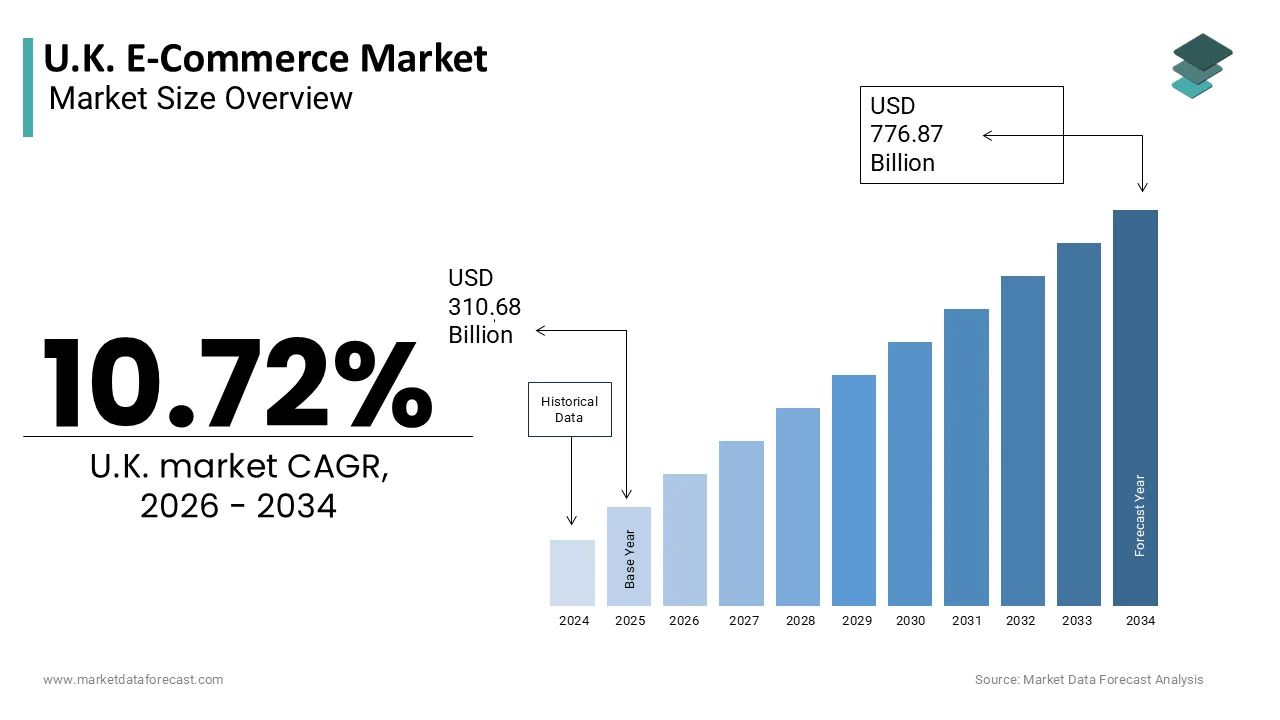
- Market Valuation: Valued at USD 310.68 billion in 2025, reaching USD 343.99 billion in 2026, and projected to expand to USD 776.87 billion by 2034, growing at a robust CAGR of 10.72% from 2026 to 2034.
- Primary Growth Drivers: High smartphone penetration facilitating mobile commerce growth, and a robust logistics infrastructure enhancing delivery efficiency nationwide.
Key Market Segment Metrics
| Category | Leading Segment (Base Position) | Fastest-Growing / High-Growth Segment |
|---|---|---|
| By Business Model And Device Type | Business to Consumer (B2C) (held the majority share in 2025, driven by high frequency of individual purchases and consumer trust) | Smartphone and Mobile Device (estimated at an 11.5% CAGR, fueled by mobile-optimized experiences and social commerce integration) |
| By Payment Method | Credit and Debit Cards (accounted for a 32.7% share in 2025, driven by universal acceptance, security, and familiar trust) | Digital Wallets (anticipated at a 15.2% CAGR, propelled by demand for faster, one-click biometric checkouts and enhanced privacy) |
| By Product Category | Fashion and Apparel (captured a 29.2% share in 2025, supported by extensive online assortments and hassle-free return policies) | Food and Beverages (projected at a 13.8% CAGR, propelled by grocery delivery convenience, subscriptions, and quick commerce) |
| By Country | United Kingdom (market leader with a 100% share, featuring sophisticated logistics and advanced payment infrastructure) | United Kingdom (key regional hub expanding via AR retail, social commerce discovery, and mobile wallets) |
Major Market Players & Industry Landscape
Market Structure: Highly competitive environment characterized by global marketplaces, omnichannel retail giants, and niche independent brands leveraging data analytics and streamlined logistics.
Key Companies: Amazon.com, Inc., eBay Inc., ASOS plc, Tesco PLC, Ocado Group plc, Marks and Spencer Group plc, Next plc, Shopify Inc., Alibaba Group Holding Limited, Rakuten Group, Inc., Zalando SE, and JD.com, Inc.
 Download Free Sample Report
U.K. E-Commerce Market Size
The U.K. E-Commerce Market is projected to grow from USD 310.68 billion in 2025 to USD 343.99 billion in 2026 and reach USD 776.87 billion by 2034, registering a CAGR of 10.72% during the forecast period from 2026 to 2034.
E-commerce (electronic commerce) is the buying and selling of goods and services over the internet. It facilitates all online commercial transactions, ranging from consumer retail (like buying shoes on Amazon UK) to digital banking, booking services, and business-to-business (B2B) suppE-commerceeges. This market is characterized by sophisticated logistics networks, an advanced payment infrastructure, es and high consumer trust in digital transactions. The ecosystem supports a diverse range of retailers from global marketplaces to niche independent brands that leverage data analytics to personalize customer experiences. As per the Office for National Statistics, over 97% of households in the United Kingdom have active internet access, providing a near-universal foundation for digital commerce and online retail engagement. The average UK adult spends over 4.5 hours daily online on digital devices, according to data published by Ofcom, creating extensive opportunities for brand engagement, multi-touchpoint marketing, and digital conversion. This environment fosters intense competition among retailers who strive to optimize supply chain efficiency and delivery speed to meet evolving consumer expectations. The regulatory framework, including consumer protection laws and data privacy regulations, ensures transparency and security while encouraging innovation. The shift towards mobile-first shopping experiences reflects changing consumer behaviors driven by convenience and accessibility. Retailers increasingly adopt omnichannel strategies that integrate physical stores with digital platforms to offer services such as click and collect and virtual try-ons. The mobile-first approach of artificial intelligence allows for dynamic pricing and personalized recommendations, enhancing user satisfaction. This technological evolution supports inclusive commerce by providing accessibility features for diverse consumer needs. The market continues to grow as businesses recognize the scalability and global reach of digital storefronts compared to traditional, brick-and-mortar operations.
MARKET DRIVERS
High Smartphone Penetration Facilitates Mobile Commerce Growth
The widespread adoption of smartphones is a fundamental factor for growth in the United Kingdom's e-commerce market. It enables consumers to shop anytime and anywhere with unprecedented convenience. Mobile devices have become the primary interface for online shopping, allowing users to browse,e compare prices, and make purchases during commutes or leisure time. According to a study, Kingdom's e-commerce mobile internet users in the United Kingdom reached approximately 58 million, accounting for roughly 84% to 85% of the total population and establishing mobile platforms as the primary channel for consumer outreach. This ubiquitous connectivity ensures that retailers can reach audiences through various touchpoints, including social media apps and dedicated shopping applications. The convenience of mobile access means that consumers interact with e-commerce platforms for extended periods, ds thereby increasing the likelihood of impulse purchases and repeat transactions. As per Ofcom's digital tracking, UK adults spend an average of over 4 hours and 20 minutes per day online, with smartphone usage heavily outpacing time spent on desktops. This behavioral shift compels retailers to prioritize mobile-optimized websites and applications that offer seamless navigation and fast loading times. The technical capabilities of modern smartphones, including high-resolution screens and secure biometric authentication, enable rich media experiences and safe transactions. Furthermore, the mobile-optimized mobile wallets and one-click payment options reduce friction at checkout, improving conversion rates. Retailers leverage location b,,ased servichigh-resolutionersonalized offers when consumers are near physical stores,,hysical stores driving foot traffic and online sales. This omnipresence of mobile technology creates a one-click foundation for sustained ecommerce expenditure,e growth, and customer engagement.
Robust Logistics Infrastructure Enhances Delivery Efficiency
The existence of a highly developed logistics and delivery network directly stimulates demand for online shopping by ensuring reliable and rapid fulfillment of orders across the country, which fuels the expansion of the United Kingdom's e-commerce market. Consumers expect fast and often free delivery, which has become a standard expectation rather than a premium service. According to the Office for National Statistics, online transactions accounted for roughly 27% of total UK retail sales in 2023, underscoring the Kingdom's reliance on optimized supply chains and logistics networks to sustain high delivery volumes. This infrastructure includes extensive warehousing facilities,s automated sorting centers, and last-mile delivery partnerships that enable same-day or next-day delivery options. The ability to track packages in real time provides customers with transparency and peace of mind, which enhances trust in online retailers. Industry performance benchmarks indicate that the UK's highly sophisticated domestic courier networks successfully deliver the majority of next-day and 48-hour deliveries, reflecting a highly sophisticated national distribution system. The rise of click and collect services allows consumers to pick up orders from convenient locations such as local shops or lockers, reducing failed delivery attempts and shipping costs. Retailers invest heavily in inventory management systems that synchronize stock levels across channels, ls ensuring accurate availability information. The consolidation of delivery routes and the use of electric vehicles for urban deliveries improve sustainability and reduce operational costs. This reliable fulfillment capability encourages consumers to purchase a wider range of product,s online including bulky items and groceries. The continuous improvement in logistics technology sustains the competitiveness of the UK ecommerce market.
MARKET RESTRAINTS
Cybersecurity Threats Undermine Consumer Trust
The increasing frequency and sophistication of cyber attacks are significant restraints to the United Kingdom's e-commerce market. These hindrances compromise consumer data and erode trust in online transactions. Shoppers are increasingly concerned about the safety of their personal and financial information when sharing details with online retailers. According to the National Cyber SecKingdom's e-commercerceC), the agency issued over 12,000 vulnerability alerts to organizations in 2023, warning of potential exposure to cyber threats that could critically impact the digital retail sector and other industries. High-profile data breaches involving major retailers result in substantial financial losses and reputational damage, which can lead to long-term customer attrition. The complexity of securing multiple touchpoints, including websites,e-commerce-mobility apps, ss andpayment gatewaysa,, requires continuous high-profile advanced security protocols. As per a survey by Digital Business Ireland, 65% of consumers stated they would stop shopping with a long-term retailer after a single data breach, highlighting the extreme fragili,, ty of consumer loyalty in the face of security failures. Phishing attacks and fraudulent websites mimic legitimate brands to steal credentials, creating confusion and hesitation among shoppers. The implementation of strong customer authentication under new regulatory standards adds friction to the checkout process, which can increase cart abandonment rates. Retailers must balance security measures with user experience to prevent frustration while maintaining protection. The cost of compliance with data protection regulations and the need for regular security audits increase operational expenses. These security challenges create barriers for smaller retailers who lack the resources to implement robust defense systems. Online fraud continues to severely restrain market expansion. The industry must eliminate this risk before consumers can feel completely secure.
Supply Chain Disruptions Impact Inventory Availability
Global supply chain vulnerabilities and logistical barriers restrict the ability of retailers to maintain consistent stock levels and meet consumer demand reliably, which hampers the expansion of the United Kingdom's e-commerce market. Dependence on international manufacturing hubs exposes retailers to delays caused by geopolitical tensions, trade disputes,s and transportation issues. According to the British Chambers of Commerce, approximately 40% of UK traders have considered or taken steps to replace their overseas suppliers (particularly in the EU) due to persistent logistical friction and regulatory costs affecting their ability to fulfill orders. These disruptions lead to stockouts, ts which frustrate customers and drive them to competitors with available inventory. The unpredictability of shipping times and rising freight costs forces retailers to hold higher safety stock levels, which ties up capital and increases storage expenses. As per data from the Chartered Institute of Procurement and Supply,y lead times for imported goods increased by an average of 15 days during peak periods, ds causing planning difficulties. The lack of visibility into upstream supply chain activities makes it challenging for retailers to communicate accurate delivery estimates to customers. Returns management becomes more complex when reverse logistics are af,fected by similar disruptions, increasing costs and processing times. Retailers struggle to balance lean inventory practices with the need for resilience against unexpected shocks. The reliance on just-in-time delivery models proves risky in volatile environments, requiring a shift towards more flexible sourcing strategies. These operational uncertainties hinder the growth potential of e-commerce businesses and affect customer satisfaction levels.
MARKET OPPORTUNITIES
Integration of Augmented Reality Enhances Shopping Experience
The adoption of augmented reality technologies offers a significant opportunity for retailers to bridge the gap between physical and digital shopping experiences, which is likely to promote the growth of the United Kingdom's domestic e-commerce market. This allows customers to visualize products in their own environment. This technology enables users to see how furniture, clothing, or cosmetics look before making a purchase, reducing uncertainty and return rates. Research published by prominent retail technology platforms indicates that merchants implementing interactive augmented reality (AR) features experience average conversion rate increases ranging between 20% and 40%, driven by elevated consumer buying confidence. The ability to virtually try on clothes or place furniture in a room provides a personalized and interactive experience that static images cannot match. As per insights from Shopify, products with 3D content show a 94 percent higher conversion rate than those without, indicating a strong consumer preference for immersive visuals. Augmented reality reduces the likelihood of returns by ensuring that products meet customer expectations regarding size, fit,t and style. This technology also enhances engagement by encouraging users to spend more time interacting with the brand and sharing their virtual experiences on social media. Retailers can leverage augmented reality to showcase product features and benefits compellingly, differentiating themselves from competitors. The decreasing cost of developing augmented reality applications makes this technology accessible to smaller brands. The integration of augmented reality with mobile apps allows for seamless usage without additional hardware requirements. This innovation transforms passive browsing into active participation, driving higher sales and customer loyalty.
Expansion of Social Commerce Channels Drives Discovery
The growing integration of shopping features within social media platforms provides a clear path for businesses within the United Kingdom's e-commerce market. This allows brands to reach consumers directly where they already spend significant amounts of time. Social commerce allows users to discover and purchase products directly through posts, stories, and live streams without leaving the app. According to data from digital market tracking surveys, nearly 44% of consumers in the United Kingdom have purchased a product after discovering it on a social platform, reinforcing the growing role of social networks like Instagram as vital engines for product discovery and conversion. This trend enables brands to leverage influencer partnerships and user-generated content to build trust and drive sales through authentic recommendations. The ability to tag products in videos and images simplifies the path to purchase, reducing friction and increasing impulse buys. Live shopping events create a sense of urgency and community, allowing retailers to engage with audiences in real time and answer questions instantly. Social media algorithms facilitate targeted advertising based on user interests and behaviors, ensuring that products are shown to relevant audiences. The viral nature of social content amplifies brand reach organically,therebyy reducing customer acquisition costs. Retailers who effectively utilize social commerce can build loyal communities and drive sustainable growth. This channel provides valuable data on consumer preferences and trends, enabling faster product development and marketing adjustments.
MARKET CHALLENGES
Last Mile Delivery Costs Strain Profit Margins
The high cost of last-mile delivery remains a major challenge for retailers in the United Kingdom's e-commerce market. Because it constitutes a significant portion of total logistics expenses, this issue directly impacts overall profitability. Consumers expect free or low-cost shipping, which forces retailers to absorb these costs or raise prices, potentially losing a competitive advantage. According to research by Capgemini, last-mile delivery accounts for up to 53% of total shipping costs, making the final leg of fulfillment the most expensive and operationally complex part of the supply chain. The fragmentation of delivery addresses in rural areas and the complexity of urban traffic further increase operational inefficiencies and fuel consumption. A study emphasizes that the hyper-complex nature of last-mile delivery drains retail profitability, making intelligent routing and first-time delivery success critical to preventing severe margin erosion. Failed deliveries require redelivery efforts, which double costs and frustrate customers, leading to negative reviews and churn. The rise of same-day delivery expectations puts additional pressure on retailers to maintain dense distribution networks and flexible courier partnerships. Environmental regulations targeting emissions from delivery vehicles necessitate investment in electric fleets, which require substantial upfront capital. Small and medium-sized enterprises struggle to negotiate favorable rates with carriers due to lower volume compared to large marketplaces. The lack of standardized delivery solutions across the industry leads to inconsistent service quality and customer experience. Retailers must continuously innovate with lockers, click and collect,ct and crowd-sourced delivery models to mitigate these costs. Balancing customer expectations with financial viability remains a persistent operational hurdle.
Regulatory Compliance Complexity Increases Operational Burden
Navigating the complex web of regulations governing online retail, including data privacy,cy consumer rights,hts and tax obligations,tions is also a significant hurdle for businesses in the United Kingdom ecommerce market. The General Data Protection Regulation and local consumer protection laws require strict adherence to data handling and transparency standards, which can be resource-intensive. Kingdom's edition, the Information Commissioner's Office (ICO) highlights that while the sheer volume of annual regulatory fines has remained steady, the financial and reputational stakes for data breaches have grown significantly under aggressive enforcement models. Retailers must implement robust consent management systems and data security measures to protect customer information and avoid legal penalties and reputational damage. As per the British Retail Consortium (BRC), the heavy administrative burden of navigating varying international regulations and customs frameworks for cross-border sales adds substantial operational overhead for expanding retail businesses. Changes in VAT rules for online sales require continuous monitoring and adjustment of pricing and accounting systems to ensure accuracy. The introduction of new packaging waste regulations mandates that retailers report and pay for the recycling of their packaging materials, also adding another layer of compliance. Keeping up with frequent legislative updates requires a dedicated legal and compliance team,s which smaller businesses may not have. Non-compliance can result in business interruptions, fines,s and loss of consumer trust. The complexity of managing returns and refunds in accordance with consumer rights laws also increases operational workload. These regulatory burdens divert resources from core business activities and innovation, slowing down growth and agility in a fast-paced market.
REPORT COVERAGE
| REPORT METRIC | DETAILS |
| Market Size Available | 2025 to 2034 |
| Base Year | 2025 |
| Forecast Period | 2026 to 2034 |
| Segments Covered | By Business Model, Payment Method, Product Category, and Region. |
| Various Analyses Covered | Global, Regional and Country-Level Analysis, Segment-Level Analysis, Drivers, Restraints, Opportunities, Challenges; PESTLE Analysis; Porter’s Five Forces Analysis, Competitive Landscape, Analyst Overview of Investment Opportunities |
| Countries Covered | United Kingdom |
| Market Leaders Profiled | Amazon.com, Inc., eBay Inc., ASOS plc, Tesco PLC, Ocado Group plc, Marks and Spencer Group plc, Next plc, Shopify Inc., Alibaba Group Holding Limited, Rakuten Group, Inc., Zalando SE, JD.com, Inc. |
SEGMENTAL ANALYSIS
By Business Model And Device Type Insights
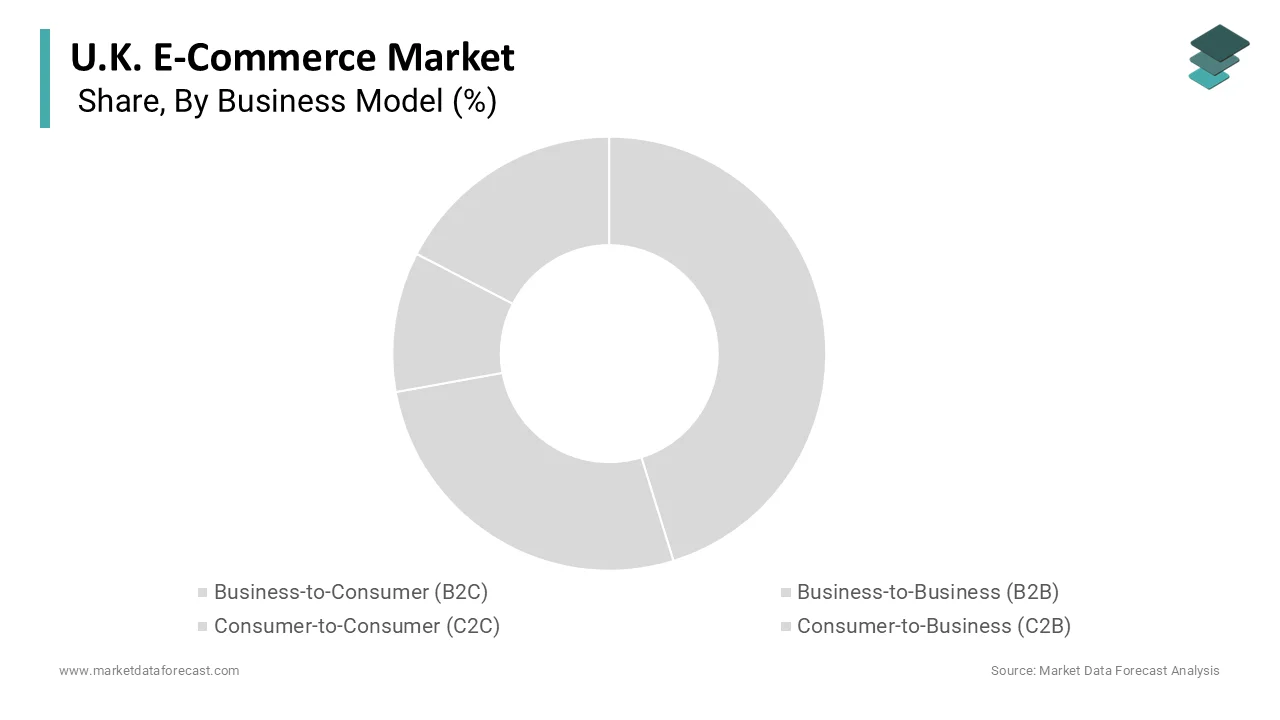
In 2025, the Business to Consumer (B2C) segment held the majority share of the United Kingdom's ecommerce market because of the high frequency of individual purchases and the widespread adoption of online shopping for daily necessities and discretionary goods. This model benefits from direct engagement with end use, rs allowing for personalized marketing and streamlined customer experiences. The strong trust that UK consumers place in online retailers is a key reason for the dominance of the B2C segment. Years of reliable service, secure payment gateways, and robust consumer protection laws have created an environment where shoppers feel safe making frequent online purchases. The high level of participation is supported by widespread digital literacy,acy which enables consumers to navigate commerce platforms with ease. Moreover, the convenience of home delivery and reinforcing policies further reinforces this confidence, encouraging repeat purchases. Consumers appreciate the ability to compare prices and read reviews, which empowers them to make informed decisions. The integration of social proof through user-generated content enhances trust in new brands. Retailers leverage this confidence by offering loyalty programs and exclusive online deals that incentivize continued engagement. The seamless experience across devices ensures that shopping can happen at any time, reducing friction. This cultural acceptance of digital commerce sustains the leadership of the B2C model in the overall market landscape.
The vast array of products available online,e coupled with intense price competition, drives consumers towards B2C platforms where they can find better deals than in physical stores. Online retailers benefit from lower overhead costs, which allows them to offer discounts and promotions that attract budget-conscious shoppers. The ability to access global brands and niche products that are not available locally expands the appeal of B2C ecommerce. Flash sales and seasonal events such as Black Friday create urgency and drive significant spikes in transaction volumes. Comparison websites and browser extensions help users find the best deals, instantly increasing pressure on retailers to remain competitive. The long tail effect allows smaller B2C sellers to thrive by catering to specific interests that large retailers may overlook. This diversity ensures that there is something for every consumer, regardless of their preferences or budget. The continuous expansion of product categories, including groceries and pharmaceuticals, further cements the dominance of the B2C segment.
The smartphone and mobile device segment is estimated to register the fastest CAGR of 11.5% from 2026 to 2034. This swift growth of the segment is fueled by the increasing reliance on mobile devices for all aspects of digital life,ife including shopping. Retailers have significantly invested in optimizing their mobile websites and developing dedicated applications that offer superior speed and usability compared to desktop versions. These improvements reduce friction and make it easier for users to browse and buy on smaller screens. Features such as one-click checkout, saved payment details, and biometric authentication streamline the purchasing process, making it faster and more secure. Push notifications allow retailers to engage users with timely offers and reminders, driving higher conversion rates. The integration of augmented reality features in mobile apps enables virtual try-ons, which enhances confidence in purchasing decisions. Mobile-first design principles ensure that content is easily readable and navigable, reducing bounce rates. The convenience of shopping on the go fits seamlessly into modern lifestyles, allowing users to make purchases during commutes or breaks. This focus on user experience ensures that mobile devices remain a channel for e-commerce growth.
The seamless integration of social media platforms with mobile e-commerce capabilities creates a powerful discovery and purchase engine that drives rapid growth in the mobile segment. Users can discover products through Instagram, TikTok, and Facebook and purchase them directly without leaving the app. This trend reduces the number of steps required to complete a transaction, minimizing drop-off rates. Influencer marketing plays a crucial role in this ecosystem by providing authentic recommendations that resonate with mobile users. Live streaming events on mobile devices create interactive shopping experiences that drive immediate sales. The viral nature of social content ensures that products reach cost-effectively and quickly. Mobile devices are the primary interface for social media, making this integration natural and intuitive. The ability to share purchases with friends further amplifies reach and builds community around brands. This synergy between social engagement and mobile convenience sustains the high growth rate of the smartphone segment.
By Payment Method Insights
The credit and debit cards segment remained dominant in the United Kingdom's e-commerce market and accounted for a 32.7% share in 2025. This dominance of the segment was driven by its universal acceptance, which established trust and familiarity among consumers. Despite the rise of alternative methods, cards continue to handle the majority of online transactions. The widespread acceptance of these cards across all e-commerce platforms ensures that they remain the default choice for most shoppers. Consumers trust card networks such as Visa and Mastercard to provide secure and reliable transaction processing. The familiarity of using cards reduces hesitation at checkout as users are accustomed to the process and security measures. Furthermore, the ability to earn rewards points, cashback, or air miles encourages users to prefer cards over other payment methods. Banks have invested heavily in securing card transactions through encryption and tokenization, which protects sensitive data. The integration of 3D Secure technology adds an extra layer of authentication without significantly impacting user experience. Most international retailers accept UK-issued cards, making them ideal for cross-border shopping. The established infrastructure for card processing ensures fast and efficient settlement for merchants. This combination of trust, convenience, and benefits sustains the leadership of cross-border credit cards.
Strong regulatory frameworks and industry security standards support the continued use of these cards by ensuring high levels of consumer protection and data security. The implementation of Strong Customer Authentication under the Revised Payment Services Directive has reduced fraud while maintaining ease of use. This regulatory backing enhances consumer confidence in using cards for online transactions. Merchants benefit from reduced chargeback risks and improved compliance with data protection laws. The clarity of regulations regarding liability for fraudulent transactions protects consumers from financial loss. Banks and card issuers continuously update their security protocols to address emerging threats, ensuring long-term viability. The transparency of card statements helps users track their spending and manage budgets effectively. This regulatory and security foundation makes cards a safe and reliable option for both consumers and businesses.
The digital wallets segment is anticipated to witness the fastest CAGR of 15.2% during the forecast period. This rapid expansion of the segment is propelled by the demand for faster and more convenient checkout experiences. Digital wallets such as Apple Pay, Google Pay, and PayPal offer unparalleled speed and convenience by allowing users to complete transactions with a single click or biometric scan. This eliminates the need to enter card details manually, which reduces friction and cart abandonment. The efficiency is particularly valuable on mobile devices, where typing can be cumbersome. In addition, the ability to store multiple payment methods and shipping addresses in one place simplifies the shopping process. Biometric authentication, such as fingerprint or face recognition, provides a secure and quick way to authorize payments. The integration of digital wallets with loyalty programs allows users to earn and redeem rewards automatically. This convenience appeals to younger demographics who prioritize speed and ease of use. Retailers benefit from higher conversion rates and reduced operational costs associated with payment processing. The growing ecosystem of compatible merchants ensures that digital wallets are widely accepted.
Digital wallets provide enhanced security and privacy features that appeal to consumers concerned about data protection and fraud. By using tokenization and device-specific numbers, digital wallets ensure that actual card details are never shared with merchants. This perception of safety drives adoption among privacy-conscious shoppers. The ability to remotely disable a digital wallet if a device is lost provides additional peace of mind. Device-specifically also off, er better privacy by limiting the amount of personal data shared with third parties. The integration of fraud detection algorithms monitors transactions in real time to identify suspicious activity. Users receive instant notifications for every transaction, allowing them to spot unauthorized charges immediately. This proactive approach to security builds trust and encourages regular use. The continuous improvement of security features ensures that digital wallets remain a preferred choice for secure online payments.
By Product Category Insights
The fashion and apparel segment led the United Kingdom's e-commerce market and captured a 29.2% share in 2025. This leading position of the segment was attributed to the high frequency of clothing purchases and the visual nature of fashion retailing. This Kingdom benefits from extensive online assortments and flexible return policies. Online fashion retailers offer an extensive range of styles, sizes,s and brands that exceed the capacity of physical stores,s allowing consumers to find exactly what they want. The ability to access global trends and niche labels drives significant traffic to fashion on e-commerce sites. Consumers greatly appreciate the convenience obrowsin gg thousands of items from the comfort of their homes. The rapid turnover of fashion collections encourages frequent visits and purchases as shoppers seek to stay current with trends. Detailed product descriptions, size guides,s and customer reviews help users make informed decisions despite the inability to try items on. The availability of inclusive sizing and diverse representation in marketing broadens the appeal of online fashion. Seasonal sales and clearance events drive volume spikes as consumers look for bargains. The visual appeal of fashion content on social media further stimulates demand and directs traffic to e-commerce platforms. This abundance of choice and accessibility sustains the leadership of the fashion category.
Generous and hassle-free return policies significantly reduce the perceived risk of buying online, where fit and feel cannot be assessed beforehand. Most major fashion retailers offer free returns and easy, hassle-free returns, which encourages consumers to order multiple items to try at home. The policy builds trust and loyalty as customers feel confident that they can exchange or refund items that do not meet their expectations. In addition, encouraging integration of automated return portals simplifies the experience for users, reducing administrative burden. Retailers view returns as part of the customer journey rather than a loss, focusing on retaining the shopper for future purchases. The ability to try before you buy virtually, through flexible returns, mimics the in-store experience. This approach reduces hesitation and increases average order values as consumers feel safe experimenting with new styles. The competitive landscape forces retailers to maintain high in-store or return services to retain market share.
The Food and Beverages segment is likely to experience the fastest CAGR of 13.8% 2026 to 2034, owing to the convenience of grocery delivery and changing consumer habits. The ability to have groceries and specialty food items delivered directly to the door offers immense convenience for busy toseholds and individuals. Subscription models for regular essentials such as coffee, snacks, and meal kits ensure consistent revenue and customer loyalty. The time saved by avoiding supermarket trips is highly valued by consumers who are willing to pay for delivery services. Moreover, the expansion of quick commerce services offering delivery within minutes meets immediate needs and drives impulse purchases. The variety of international and specialty foods available online exceeds local store offerings, attracting adventurous eaters. Automated replenishment features remind users to reorder staples, reducing the mental load of household management. The integration of recipe suggestions with ingredient lists simplifies meal planning and drives basket size. This convenience factor ensures that food and beverage e-commerce continues to grow rapidly.
Increasing health consciousness and the prevalence of specific dietary requirements drive demand for specialized food products that are often easier to find online than in brick-and-mortar stores. Consumers seek organic vegan gluten-free and allergen-friendly options, which niche online retailers cater to effectively. Online platforms provide detailed nutritional information and ingredient lists that help shoppers make informed choices. The ability to read reviews from other users with similar dietary needs, gluten-free, and allergen-friendly, retailers can stock a wider range of specialty items that may not be viable for local supermarkets due to shelf space constraints. The direct-to-consumer model allows artisanal producers to reach a national audience, expanding their market reach. Social media influencers promote healthy eating trends, which drive traffic to online food retailers. Direct-to-consumer health and specialization sustain the high growth rate of the food and beverage segment.
COUNTRY LEVEL ANALYSIS
United Kingdom E-commerce Market Analysis
The United Kingdom was the largest e-commerce market in Europe and accounted for a 24.6% share in 2025. This dominance of the UK market was driven by high digital maturity and sophisticated consumer expectations. The country serves as a benchmark for commerce, innovation, and best practices in online retail. In addition, the UK benefits from world-class digital infrastructure, including high-speed broadband and extensive 5G coverage, which supports seamless online shopping experiences. This connectivity ensures that consumers can access e-commerce platforms reliably from any location. According to the Office of Communicationswrld-classworld-classver 97% of UK premises h, ave accesshigh-speedast broadband, which enables seamless delivery of rich media and significantly faster loading times. The high penetration of smartphones and tablets ensures that mobile commerce thrives across all demographics. Data from the Office for National Statistics indicates that internet usage among older adults has increased significantly over the years, steadily expanding the digital customer base, though a notable digital skills gap still exists compared to younger demographics. The robust logistics network supported by this digital backbone ensures efficient order fulfillment and tracking. Te ch-savvy consumers expect high performance from websites and apps, driving retailers to invest in continuous optimization. The availability of secure and fast payment gateways facilitates smooth transaction initiatives to improve digital skills, further enhancing the capability of the population to engage in e-commerce. This strong technological foundation positions the UK as a leader in digital retail innovation. The integration of emerging technologies such as AI and AR is facilitated by this advanced infrastructure.
The United Kingdom operates under a comprehensive regulatory framework that protects online shoppers and fosters trust in e-commerce transactions. Laws governing consumer rights, privacy,y and fair trading ensure that businesses operate transparently and responsibly. The Competition and Markets Authority strictly enforces consumer protection laws to combat unfair digital trading practices, which helps protect consumers and maintains marketplace integrity for online shopping. The General Data Protection Regulation ensures that personal data is handled securely, reducing the risk of breaches. In addition, the existence of independent ombudsman services provides recourse for disputes, enhancing trust in the system. Retailers are motivated to maintain high standards, to avoid legal penalties and reputational damage. The clarity of regulations helps businesses navigate requirements efficiently. This protective environment encourages greater participation in e-commerce, particularly among cautious shoppers. The reputation of the UK for fair trade practices attracts international retailers and investors. This regulatory strength supports the sustained growth and se-commerce, e-commerce of the e-commerce market.
COMPETITIVE LANSCAPE
The competitive landscape of the United Kingdom's ecommerce market is characterized by intense rivalry among global giants, established domestic retailers,s and agile niche players. Amazon dominates the general merchandise sector with its vast selection and rapid delivery, while traditional supermarkets like Tesco and Sainsbury’s Kingdom's online grocery sales are driven by their omnichannel strengths. Pure play fashion retailers such as Competee fiercely compete with high street brands that have successfully transitioned to digital platforms. Competitive drive, driven by price transparency, ensuring delivery, expecensuring deliverys and personalized customer experiences. New entrants often disrupt the market with innovative business models such as subscription services or social commerce integrations. Strategic partnerships between retailers and technology-enhancing solutions to enhance operational efficiency and customer engagement. The market sees continuous investment in logistics infrastructure and digital technologies to gain a competitive edge. Consumer loyalty is increasingly fragmented, requiring brands to constantly innovate and offer unique value propositions. Regulatory compliance and sustainability practices also serve as key differentiators in this crowded marketplace. This dynamic environment ensures continuous improvement in service qualitechnologicalgi,c al adoption across the sector.
KEY MARKET PLAYERS
Some of the companies that are playing a dominating role in the U.K. E-Commerce Market include
- Amazon.com, Inc.
- eBay Inc.
- ASOS plc
- Tesco PLC
- Ocado Group plc
- Marks and Spencer Group plc
- Next plc
- Shopify Inc.
- Alibaba Group Holding Limited
- Rakuten Group, Inc.
- Zalando SE
- JD.com, Inc.
TOP LEADING PLAYERS IN THE MARKET
- Amazon UK serves as a dominant force in the British online retail landscape by offering an extensive product range and unparalleled delivery speed through an e-commerce-enabled logistics network. The company continues to invest heavily in fulfillment centers across the region to ensure same-day and next-day delivery capabilities for millions of items. Recent actions include the expansion of Amazon Fresh grocery services and the integration of artificial intelligence tools to enhance same-day and next-day recommendations. Amazon has also strengthened its position by launching new advertising solutions for sellers and improving its Prime membership benefits with exclusive content and faster shipping options. These initiatives reinforce customer loyalty and drive higher engagement levels. The company actively supports small businesses through its marketplace platform, providing them with access to a vast customer base and robust logistical support. This comprehensive ecosystem ensures Amazon remains a preferred destination for diverse consumer needs.
- Tesco PLC leverages its strong physical retail presence to dominate the online grocery sector in the United Kingdom through its seamless omnichannel strategy. The retailer offers convenient home delivery and click and collect services that integrate smoothly with its extensive store network. Recent actions involve significant investments in digital infrastructure to improve website performance and mobile app functionality for a better user experience. Tesco has expanded its Clubcard loyalty program to offer personalized discounts and rewards, which drive repeat purchases and customer retention. The company has also partnered with technology firms to automate warehouse operations and optimize supply chain efficiency. By focusing on fresh food quality and competitive pricing, Tesco maintains its leadership in the grocery segment. Its commitment to sustainability and local sourcing further enhances brand reputation among conscious consumers. These efforts ensure Tesco remains resilient against pure play e-commerce competitors.
- Sainsbury’s maintains a strong position in the UK ecommerce market by combining its supermarket expertise with innovative digital solutions and strategic partnerships. The retailer focuses on providing high-quality groceries and general merchandise through efficient online platforms and flexible delivery options. Recent actions include the enhancement of its SmartShop technology, which allows customers to shop for high-quality items using their smartphones, reducing checkout times. Sainsbury’s has also expanded its Nectar loyalty scheme integration to provide more targeted offers and insights into shopping habits. The company has invested in automated fulfillment centers to increase capacity and speed up order processing during peak periods. Partnerships with third-party delivery services ensure broader coverage and reliability for home deliveries. Sainsbury’s emphasizes product quality and ethical sourcing, which appeals to discerning shoppers. These strategicthird-party the retailer compete effectively in the rapidly evolving digital retail environment.
TOP STRATEGIES USED BY KEY MARKET PARTICIPANTS
Key players in the United Kingdom's e-commerce market employ several strategic approaches to maintain competitiveness and drive growth. Firs,t they invest heavily in artificial intelligence and data analytics to personalize customer experiences and optimize inventory management. Second, companies expand their omnichannel e-commerce by integrating physical stores with digital platforms for services like click and collect. Third-party retailers focus on enhancing last-mile delivery efficiency through automation and partnerships with logistics providers. Fourth t, they develop robust loyalty programs to retain customers and encourage repeat purchases through personalized rewards. Fifth, participants prioritize sustainability initiatives to meet customer demands for ethical and environmentally friendly shopping options. These strategies collectively enable organizations to deliver superior value and convenience while adapting to changing market dynamics and consumer preferences effectively.
MARKET SEGMENTATION
This research report on the UK e-commerce market is segmented and sub-segmented into the following categories.
By Business Model
- Business-to-Consumer (B2C)
- Business-to-Business (B2B)
- Consumer-to-Consumer (C2C)
- Consumer-to-Business (C2B)
By Payment Method
- Credit & Debit Cards
- Digital Wallets
- Bank Transfers
- Buy Now Pay Later (BNPL)
- Cash on Delivery
- Others
By Product Category
- Fashion & Apparel
- Food & Beverages
- Electronics & Media
- Personal Care & Beauty
- Home & Furniture
- Toys, Hobby & DIY
- Others
By Country
- United Kingdom