- Product Description Description
- Table of Contents TOC
- List of Table & Figure LOT
- Get Free Sample PDF Sample PDF
Market Size, 2025
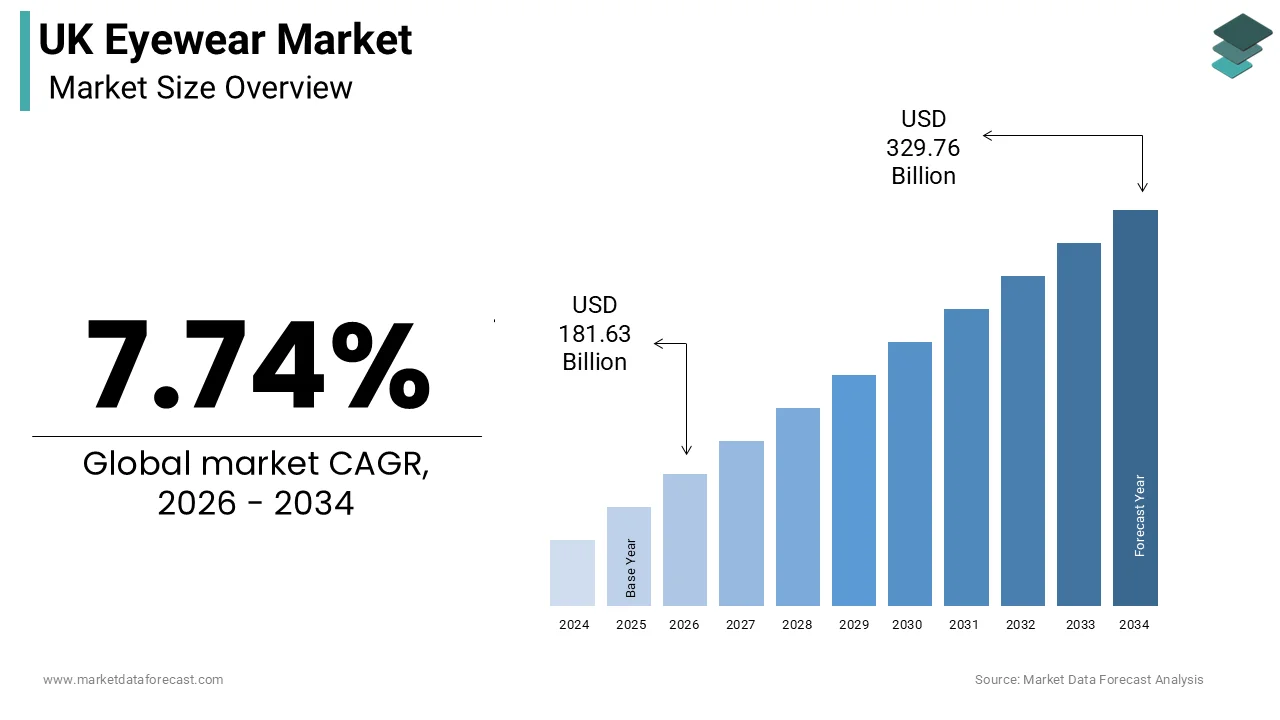
$168.58 BnMarket Estimate, 2026
$181.63 BnMarket Forecast, 2034
$329.76 BnCAGR, 2026–2034
7.74%UK Eyewear Market Report Summary
The United Kingdom eyewear market was valued at USD 168.58 billion in 2025 and is projected to reach USD 329.76 billion by 2034, growing from USD 181.63 billion in 2026 at a CAGR of 7.74% during the forecast period. Market growth is driven by the increasing prevalence of vision disorders, rising awareness of eye health, growing demand for premium eyewear, and continuous innovation in lens and frame technologies. Expanding online retail channels and increasing consumer preference for fashionable eyewear are further supporting market expansion.
Key Market Trends
- Rising demand for premium and designer eyewear products
- Increasing adoption of blue-light filtering and digital protection lenses
- Growth in sustainable and lightweight eyewear materials
- Expansion of omnichannel retail and online eyewear sales
- Increasing popularity of customized prescription eyewear and smart glasses
Segmental Insights
- Based on Product Type, the prescription glasses segment dominated the UK eyewear market in 2025 by accounting for 44.3% of the market share, driven by the increasing incidence of refractive errors, an aging population, and regular vision correction needs.
- Based on Material, the plastic frames segment held the leading share of 34.7% in 2025 due to their lightweight design, durability, affordability, and wide availability in fashionable styles.
- Based on Distribution Channel, the offline retail channels segment accounted for 23.7% of the market share in 2025, supported by personalized eye examinations, professional fitting services, and strong consumer preference for in-store purchases.
Regional Insights
- England dominated the UK eyewear market by capturing 81.4% of the market share in 2025, driven by its large population, advanced optical retail infrastructure, and high adoption of vision care products.
- Scotland is expected to witness steady growth due to public health initiatives, improved access to optical care in rural communities, and increasing awareness of preventive eye healthcare.
Competitive Landscape
- The UK eyewear market is highly competitive, with companies focusing on innovative lens technologies, premium frame collections, and omnichannel retail strategies. Market participants are investing in digital eye care solutions, sustainable materials, and personalized customer experiences to strengthen their market positions.
- Key players operating in the UK eyewear market include EssilorLuxottica, Specsavers, Boots Opticians, Vision Express, Hoya Corporation, Carl Zeiss AG, Safilo Group, Marcolin, Charmant Group, Rodenstock, CooperVision, Alcon, Bausch + Lomb, Menicon, and Cubitts.
UK Eyewear Market Size
The UK eyewear market size was valued at USD 168.58 billion in 2025, and is projected to reach USD 329.76 billion by 2034 from USD 181.63 billion in 2026, growing at a CAGR of 7.74%.
The eyewear is vision correction and protective devices, including prescription spectacles, contact lenses, and sunglasses, that serve both medical necessity and fashion expression. According to the Association of Optometrists, there are approximately 30 million people in the United Kingdom who require some form of vision correction, highlighting the fundamental demand for optical products. The regulatory framework is stringent, with the General Optical Council overseeing the registration and conduct of optometrists and dispensing opticians to ensure patient safety and professional standards. Consumer behavior is increasingly influenced by digital lifestyles, which contribute to eye strain and necessitate specialized lens coatings. Technological advancements in lens materials and frame designs continue to enhance product performance and comfort.
MARKET DRIVERS
Increasing Prevalence Of Digital Eye Strain Drives Demand For Specialized Lenses
The ubiquitous use of digital devices across work and leisure activities has led to a significant rise in digital eye strain, also known as computer vision syndrome, which is a major factor promoting the growth of the United Kingdom eyewear market. Prolonged exposure to screens emits blue light, which can disrupt sleep patterns and cause ocular discomfort, prompting consumers to seek protective measures. According to the College of Optometrists, more than 70% of adults in the United Kingdom report experiencing symptoms of digital eye strain, such as dry eyes, headaches, and blurred vision, after extended screen time. As per YouGov surveys, indicate that 45% of office workers actively look for glasses with blue light filtering capabilities when purchasing new eyewear. Employers are increasingly recognizing the impact of visual fatigue on productivity, leading to corporate wellness programs that subsidize ergonomic assessments and protective eyewear. Lens manufacturers have responded by developing advanced coatings that filter harmful high-energy visible light while maintaining color fidelity and clarity. Optometrists routinely recommend these specialized lenses during routine eye examinations, educating patients about long-term eye health benefits. The shift toward remote and hybrid work models has further entrenched screen usage in daily life, making protective eyewear a standard requirement rather than an optional accessory.
Aging Population Increases Need For Progressive And Multifocal Corrections
The demographic shift toward an older population for progressive and multifocal lenses that address age-related vision changes is also fuelling the growth of the United Kingdom eyewear market. Presbyopia, a natural loss of near focusing ability, typically begins around age 40 and affects nearly everyone as they age, requiring corrective solutions for reading and close-up tasks. According to the Office for National Statistics, the number of people aged 65 and over in the United Kingdom is projected to reach 12 million by 2030. As per the Royal National Institute for the Blind, approximately 2 million people in the United Kingdom live with sight loss, a figure expected to double by 2050 due to population growth and aging. This demographic reality ensures a steady stream of first-time wearers and existing users requiring updated prescriptions and more complex lens designs. Progressive lenses offer seamless vision correction at multiple distances, appealing to active seniors who wish to avoid switching between different pairs of glasses. Advancements in lens technology have improved the field of view and reduced peripheral distortion, making these products more comfortable and acceptable to new users.
MARKET RESTRAINTS
High Cost Of Premium Frames And Lens Upgrades Limits Accessibility
The substantial financial burden associated with purchasing high-quality frames and advanced lens technologies for many consumers is limiting the growth of the United Kingdom eyewear market. The average cost of a pair of prescription glasses with standard lenses ranges from 150 to 300 pounds, but can exceed 500 pounds for designer frames and premium coatings, such as anti-reflective or photochromic options. Many households prioritize essential expenses during periods of inflation, leading to deferred purchases or extended use of outdated prescriptions. The lack of comprehensive insurance coverage for routine eye care means that out-of-pocket expenses can be prohibitive for middle-income families who do not qualify for state support. This price sensitivity forces consumers to trade down to lower-cost retailers or online only providers, where professional fitting services may be limited. The perception of eyewear as a luxury item rather than a medical necessity exacerbates the hesitation to invest in high-quality products. Manufacturers and retailers struggle to communicate the value proposition of durable materials and superior optical clarity when faced with budget constraints.
Regulatory Complexity And Professional Requirements Hinder Online Expansion
The strict regulatory frameworks and the necessity for professional involvement in prescription verification constrain the growth of the United Kingdom's market. Unlike other consumer goods, eyewear requires accurate clinical data, including pupillary distance and specific lens parameters, which are difficult for consumers to measure accurately at home. The dispensing of prescription glasses without a valid prescription from a registered optometrist or ophthalmologist is illegal, ensuring that professional oversight remains mandatory. Consumers often face delays in obtaining their prescription details from practitioners, who may be reluctant to release data due to liability concerns or commercial interests. This friction discourages spontaneous purchases and complicates the user experience for digital natives accustomed to instant gratification. The complexity of returning ill-fitting frames or incorrect lenses adds another layer of inconvenience compared to trying on products in-store. Additionally, the risk of receiving substandard products from unregulated international sellers raises safety concerns among cautious buyers.
MARKET OPPORTUNITIES
Integration Of Teleoptometry And Remote Consultation Services
The emergence of teleoptometry and remote consultation services to expand access to care and streamline the customer journey is setting up new opportunities for the growth of the United Kingdom eyewear market. Digital platforms enable patients to undergo preliminary vision assessments and receive prescription renewals via secure video calls and automated testing tools, reducing the need for frequent in-person visits. The adoption of digital health solutions accelerated during the pandemic, with many practices integrating remote monitoring for chronic conditions, such as glaucoma. The pilot programs for virtual eye care have demonstrated high patient satisfaction rates and reduced waiting times for routine appointments. This model allows opticians to focus on complex cases while managing stable patients efficiently through digital channels. Retailers can leverage these platforms to offer home try-on services for frames combined with virtual styling advice, enhancing the online shopping experience. The data collected through digital interactions enables personalized product recommendations and timely reminders for replacements or check-ups. Integrating electronic health records with e-commerce systems facilitates seamless ordering of contact lenses and glasses directly from verified prescriptions. This hybrid approach combines the convenience of digital commerce with the safety of professional oversight, appealing to tech-savvy consumers and those with mobility issues.
Growth In Sustainable and Eco-Friendly Eyewear Products
The increasing consumer awareness of environmental issues to differentiate themselves through sustainable and eco-friendly product offerings is likely to expand the growth of the United Kingdom eyewear market. Shoppers are actively seeking alternatives to traditional plastic frames made from petroleum-based materials, favoring options crafted from recycled acetate, wood, bambo,o or biobased polymers. As per a study, 55% of United Kingdom consumers consider sustainability an important factor when purchasing personal care and fashion items, including eyewear. The innovations in biodegradable materials and circular economy models encourage the recycling of old frames. Brands that transparently communicate their supply chain ethics and carbon footprint reduction efforts build strong emotional connections with environmentally conscious demographics. Independent designers are gaining traction by offering handcrafted frames from reclaimed materials, appealing to consumers seeking unique and responsible fashion statements. Large retailers are introducing take-back schemes where customers can return old glasses for recycling in exchange for discounts on new purchases, fostering loyalty and repeat business. Certifications, such as B Corp status, enhance credibility and attract investors focused on environmental, social, and governance criteria.
MARKET CHALLENGES
Intense Competition From Low-Cost Online Retailers And Direct-To-Consumer Brands
The proliferation of low-cost online retailers and direct-to-consumer brands in traditional optical practices is expected to slow the growth of the United Kingdom eyewear market. These digital native companies bypass traditional distribution channels, offering significantly lower prices by eliminating middlemen and minimizing overhead costs. The online eyewear sales in the United Kingdom have grown steadily, with numerous startups offering prescription glasses starting from as little as 20 pound,s including basic lenses. The independent practices struggle to compete on price alone, forcing them to emphasize value-added services, such as comprehensive eye health checks and personalized fitting advice. The aggressive marketing strategies of online players, including social media advertising and influencer partnerships, capture the attention of younger demographics who prioritize affordability and convenience. This price pressure erodes profit margins for traditional retailers who must maintain physical premises and employ qualified staff. Consumers often engage in showrooming, where they try on frames in store but purchase online at a lower price, undermining the viability of brick-and-mortar locations. The perceived commoditization of eyewear makes it difficult for established brands to justify premium pricing without clear differentiation in quality or service.
Supply Chain Disruptions And Raw Material Volatility Affect Production Costs
The global supply chain disruptions and volatility in raw material prices, by affecting production timelines and cost structures for manufacturers and retailers, act as a barrier to the growth of the United Kingdom eyewear market. The industry relies heavily on imported components such as titanium acetate and specialized lens materials primarily sourced from Asia and Europe, making it vulnerable to geopolitical tensions and logistical hurdles. The shipping delays and increased freight costs have impacted the availability of stock, leading to longer lead times for both independent and chain retailers. The fluctuations in the price of crude oil affect the cost of plastic derivatives used in frame manufacturing, creating uncertainty in pricing strategies. These disruptions force companies to hold higher inventory levels, ls tying up capital and increasing storage costs. The shortage of skilled labor in manufacturing hubs further exacerbates production delays, limiting the ability to meet sudden spikes in demand. Retailers face difficulties in maintaining consistent product assortments, leading to lost sales opportunities and customer dissatisfaction. The unpredictability of supply chains complicates long-term planning and investment decisions, hindering innovation and expansion efforts. Companies must diversify their supplier base and explore local sourcing options to mitigate risks, but these transitions require time and significant resource allocation.
REPORT COVERAGE
| REPORT METRIC | DETAILS |
| Market Size Available | 2025 to 2034 |
| Base Year | 2025 |
| Forecast Period | 2026 to 2034 |
| CAGR | 7.74% |
| Segments Covered | By Product Type, Material, Distribution Channel, and Region. |
| Various Analyses Covered | Global, Regional and Country-Level Analysis, Segment-Level Analysis, Drivers, Restraints, Opportunities, Challenges; PESTLE Analysis; Porter’s Five Forces Analysis, Competitive Landscape, Analyst Overview of Investment Opportunities |
| Market Leaders Profiled | EssilorLuxottica, Specsavers, Boots Opticians, Vision Express, Hoya Corporation, Carl Zeiss AG, Safilo Group, Marcolin S.p.A., Charmant Group, Rodenstock GmbH, CooperVision, Alcon, Bausch + Lomb, Menicon Co., Ltd., Cubitts |
SEGMENTAL ANALYSIS
By Product Type Insights
The prescription glasses segment was the largest by holding 44.3% of the United Kingdom eyewear market share in 2025, with the fundamental medical need for vision correction among a significant portion of the population. The prevalence of refractive errors, such as myopia, hyperopia, and astigmatism, necessitates regular use of corrective lenses for daily activities, including reading, driving, and working. The aging population structure means that over 18% of residents are aged 65 and above, a demographic with a high incidence of presbyopia requiring multifocal or progressive lenses. This biological inevitability ensures consistent demand regardless of economic fluctuations, as vision deterioration is a natural part of aging. Furthermore, the increasing screen time associated with modern work environments has accelerated the onset of digital eye strain, prompting younger demographics to seek blue light filtering prescription lenses. The regulatory requirement for professional dispensing ensures that sales remain tied to clinical consultations, fostering trust and repeat business. Manufacturers continuously innovate with lighter materials and advanced coatings, enhancing comfort and durability, which sustains consumer willingness to invest in high-quality frames.
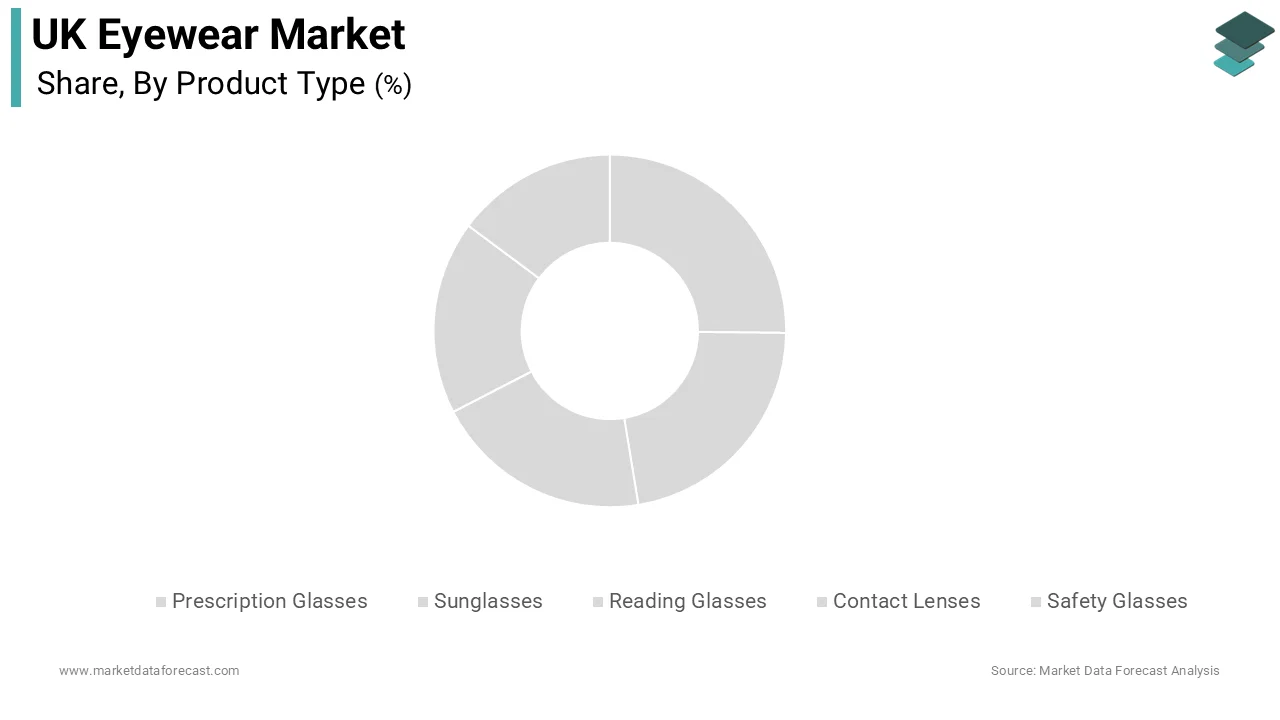
The contact lenses segment is expected to register the fastest 5.2% from 2026 to 2034, with the consumer desire for unobstructed vision and aesthetic freedom. Users prefer contacts for sports, outdoor activities, and social occasions where glasses may be inconvenient or undesirable, offering a wider field of view and compatibility with protective gear. According to the study, there are approximately 4 million contact lens wearers in the United Kingdom, with a steady increase in first-time users among teenagers and young adults. The convenience of daily disposable lenses, which require no cleaning or storage, has driven adoption rates higher as they appeal to busy lifestyles and hygiene-conscious consumers. Technological advancements in silicone hydrogel materials allow for higher oxygen permeability, reducing the risk of eye infections and enabling extended wear comfort. The rise of colored contact lenses for cosmetic purposes also contributes to growth, particularly among fashion-forward demographics seeking to enhance or change eye color temporarily. Online subscription services have simplified the purchasing process, ensuring timely replenishment and often offering competitive pricing compared to physical stores. Optometrists actively promote contacts as a viable alternative during fittings, expanding the potential user base beyond traditional glasses wearers.
By Material Insights
The plastic frames segment was the largest by accounting for 34.7% of the United Kingdom eyewear market share in 2025. Materials, such as acetate, propionate, and polycarbonate, allow manufacturers to create diverse shapes, colors, and patterns that cater to varying fashion tastes and personal styles. The plastic frames are preferred by the majority of consumers because they are lightweight, durable, and hypoallergenic, making them suitable for sensitive skin. The ability to mold plastic into intricate designs enables brands to respond quickly to trending aesthetics, keeping product lines fresh and appealing to fashion-conscious buyers. The cost-effectiveness of plastic production allows for competitive pricing strategies, making eyewear accessible to broader demographic segments, including children and budget-conscious adults. Advances in manufacturing techniques have improved the strength and flexibility of plastic frames, reducing breakage rates and enhancing longevity. Additionally, plastic materials can easily incorporate embedded logos and decorative elements, adding value without significant cost increases. The ease of repair and adjustment further supports consumer satisfaction as opticians can readily modify fit for comfort.
The metal frames segment is lucratively growing at a fastest CAGR of 4.8% from 2026 to 2034, with its association with premium quality professionalism and long-lasting durability. Materials, such as titanium, stainless steel, and aluminum, offer superior strength-to-weight ratios, allowing for sleek minimalist designs that appeal to corporate professionals and style-conscious individuals. The titanium frames are gaining popularity due to their corrosion resistance and hypoallergenic properties, making them ideal for individuals with metal sensitivities or active lifestyles. The perception of metal as a higher-end material justifies premium pricing strategies, enabling retailers to achieve better profit margins. Innovations in memory metal alloys provide flexibility and resilience, ensuring that frames return to their original shape after bending, which enhances user convenience and reduces replacement frequency. The trend toward retro and vintage styles has also revived interest in thin metal wireframes, particularly among younger demographics influenced by fashion cycles. Manufacturers leverage advanced coating technologies to prevent tarnishing and scratching, maintaining the aesthetic appeal over time.
By Distribution Channel Insights
The offline retail channels segment was the largest by holding 23.7% of the United Kingdom eyewear market share in 2025 due to the need for professional eye examinations and precise fitting services. Consumers value the ability to try on multiple frames, receive expert advice on face shape compatibility, and ensure accurate prescription measurements, which are difficult to replicate online. The immediate availability of products allows customers to walk out with their glasses or receive them quickly after laboratory processing, satisfying urgent needs. Physical stores also offer after-sales support such as adjustments, repairs, and cleaning, which builds long-term customer loyalty and encourages repeat visits. The integration of advanced diagnostic equipment in stores enhances the perceived value of the visit, transforming it into a comprehensive health check rather than a simple transaction. Major retailers invest heavily in store ambiance and staff training to create welcoming environments that encourage exploration and upselling of premium lenses and frames.
The online retail segment is likely to exhibit the fastest CAGR of 8.5% from 2026 to 2034. E-commerce platforms enable consumers to browse thousands of styles from the comfort of their homes, often at lower prices due to reduced overhead costs compared to brick-and-mortar stores. The online eyewear sales in the United Kingdom have grown steadily, as improvements in virtual try-on technology and home trial programs mitigate the risk of poor fit. The rise of direct-to-consumer brands has disrupted traditional models by offering transparent pricing and customizable options that appeal to digitally native generations. Subscription services for contact lenses have also normalized online purchasing for recurring needs, ensuring customer retention through automated deliveries. Enhanced return policies and customer support chats build confidence in remote transactions, addressing previous hesitations. Social media marketing and influencer collaborations drive traffic to online stores, creating viral trends that boost sales volumes.
REGIONAL ANALYSIS
England Eyewear Market Analysis
England was the top performer in the United Kingdom eyewear market with 81.4% of the share in 2025. According to the recent study, England is home to over 56 million people, representing the largest consumer base for personal care and health products. The higher concentration of optometry clinics in urban areas ensures greater accessibility to eye care services, driving regular examination rates and subsequent eyewear purchases. The diverse demographic profile supports demand across all price points from budget-friendly options to luxury designer frames. The presence of major distribution centers and logistics networks ensures efficient supply chain operations, reducing lead times for retailers. Corporate wellness programs in large metropolitan companies often include eye care benefits, further stimulating demand for prescription eyewear.
Scotland Eyewear Market Analysis
Scotland's eyewear market growth is likely to grow with the public health initiatives and efforts to improve rural access to optical services. The Scottish Government places a high priority on eye health with programs, such as free eye examinations for all residents regardless of age or income, which encourage regular check-ups and early detection of vision problems. The community-based optical services in remote Highlands and Islands regions have expanded, ensuring that rural populations have equitable access to frames and lenses. The cooler climate increases the demand for transition lenses and durable frames that withstand harsh weather conditions. Local independent opticians play a vital role in building community trust and providing personalized care that larger chains may lack. Tourism also contributes to sales, particularly in cities like Edinburgh, where visitors purchase sunglasses and reading glasses as souvenirs or necessities. The emphasis on sustainability aligns with consumer preferences for eco-friendly frames, supporting niche local brands.
COMPETITION OVERVIEW
The United Kingdom eyewear market features intense competition characterized by a mix of large optical chains, independent practitioners, and emerging online retailers vying for consumer attention. Established players leverage their extensive physical networks and professional credibility to dominate prescription sales, while facing pressure from agile digital natives offering lower prices and greater convenience. Price transparency and promotional discounts are common tactics used to attract budget-conscious shoppers during economic uncertainty. Innovation in lens technology, such as blue light filtering and progressive designs, serves as a key differentiator for premium providers. Independent opticians compete by offering personalized service and niche designer frames that appeal to discerning customers seeking unique styles. Regulatory standards ensure quality but also create barriers to entry for new competitors lacking clinical expertise. Success depends on balancing clinical excellence with retail appeal and digital agility.
KEY MARKET PLAYERS
A few major players of the UK eyewear market include
- EssilorLuxottica
- Specsavers
- Boots Opticians
- Vision Express
- Hoya Corporation
- Carl Zeiss AG
- Safilo Group
- Marcolin S.p.A
- Charmant Group
- Rodenstock GmbH
- CooperVision
- Alcon
- Bausch + Lomb
- Menicon Co., Ltd
- Cubitts
Top Strategies Used By Key Market Participants
Key players in the United Kingdom eyewear market prioritize digital transformation by integrating virtual try-on technologies and online consultation services to enhance customer convenience and engagement. Companies expand their product portfolios with sustainable and eco-friendly frames made from recycled or bio-based materials to meet evolving consumer values. Strategic partnerships with fashion designers and luxury brands help differentiate offerings and attract style-conscious demographics seeking exclusive designs. Investment in advanced diagnostic equipment improves clinical accuracy and builds trust with patients requiring precise vision correction. Retailers optimize omnichannel experiences by linking online browsing with in-store fittings, ensuring seamless service delivery. Loyalty programs and subscription models for contact lenses foster recurring revenue and strengthen customer retention.
Leading Players in the United Kingdom Eyewear Market
- Specsavers Optical Group stands as a prominent provider of eye care services and eyewear products across the United Kingdom with an extensive network of jointly owned practices. The company focuses on accessibility and affordability, ensuring that high-quality vision correction is available to diverse demographic groups throughout the nation. Recently, Specsavers has invested heavily in digital health, tools including online booking systems and virtual consultation platforms, and forms to enhance customer convenience. They have expanded their range of sustainable frame options made from recycled materials, aligning with growing environmental consciousness among consumers. Their commitment to community health is evident through free eye test campaigns and partnerships with local charities.
- Boots Opticians Limited leverages its strong retail heritage to deliver comprehensive eye care and stylish eyewear solutions within established pharmacy locations nationwide. The brand emphasizes convenience by allowing customers to combine health consultations with everyday shopping needs, creating a seamless consumer experience. Recent initiatives include the launch of exclusive designer frame collections and premium lens technologies that cater to fashion-conscious and health-aware individuals. Boots has enhanced its loyalty program integration offering personalized discounts and rewards that encourage repeat visits and long-term customer retention. They actively promote blue light filtering lenses, addressing the rising concern over digital eye strain among office workers.
- Vision Express UK Limited contributes significantly to the market by providing modern eye testing services and a wide selection of contemporary eyewear frames and contact lenses. The company prioritizes clinical excellence and customer service, utilizing state-of-the-art equipment to deliver precise prescriptions and thorough eye health assessments. Recently, Vision Express has introduced innovative contact lens subscription services that simplify replenishment for regular users while offering cost savings. They have revamped store layouts to create inviting environments that encourage exploration of new styles and brands. Strategic collaborations with independent designers bring unique frame options to their shelves, differentiating them from competitors.
MARKET SEGMENTATION
This research report on the UK eyewear market is segmented and sub-segmented into the following categories.
By Product Type
- Prescription Glasses
- Sunglasses
- Reading Glasses
- Contact Lenses
- Safety Glasses
By Material
- Plastic
- Metal
- Glass
- Composite
- Wood
By Distribution Channel
- Online Retail
- Offline Retail
- Optical Stores
- Department Stores