- Product Description Description
- Table of Contents TOC
- List of Table & Figure LOT
- Get Free Sample PDF Sample PDF
Market Size, 2025
$4.61 BnMarket Estimate, 2026
$4.78 BnMarket Forecast, 2034
$6.41 BnCAGR, 2026–2034
3.74%UK Flooring Market Size, Growth, Trends & Forecast (2026–2034)
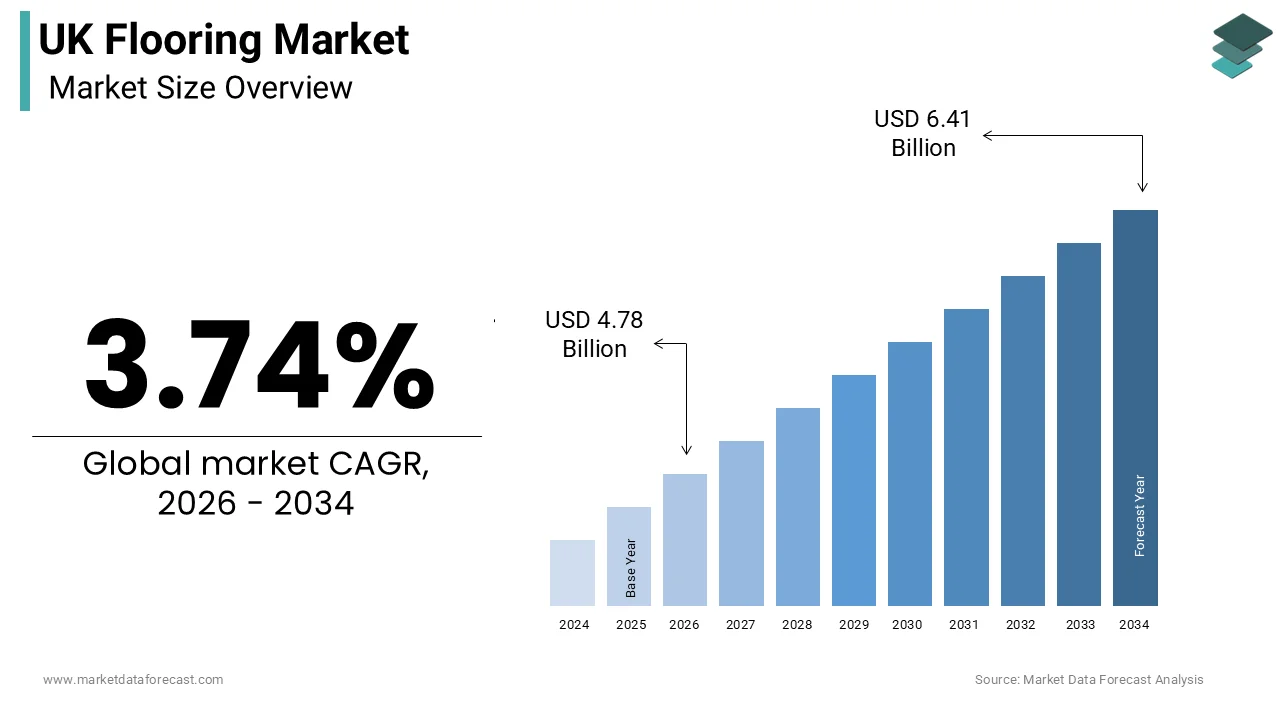
The UK flooring market size was valued at USD 4.61 billion in 2025, reached USD 4.78 billion in 2026, and is projected to reach USD 6.41 billion by 2034, growing at a compound annual growth rate (CAGR) of 3.74% from 2026 to 2034. Driven by robust residential renovation activity, commercial real estate modernization, and rising consumer demand for durable, low-maintenance materials, the sector demonstrates stable and steady expansion.
Key Executive Metrics (At-a-Glance)
- 2025 Base Valuation: USD 4.61 Billion
- 2026 Current Valuation: USD 4.78 Billion
- 2034 Forecast Valuation: USD 6.41 Billion
- Compound Annual Growth Rate (CAGR): 3.74% (2026–2034)
- Largest Type Segment: Carpets and Rugs (Captured 44.8% market share in 2025 due to cultural entrenchment, thermal comfort, and acoustic insulation)
- Fastest-Growing Type Segment: Resilient Flooring (Projected at a CAGR of 6.8% driven by digital printing tech, water resistance, and LVT innovations)
- Largest End Use Segment: Residential (Held 32.8% market share in 2025 anchored by 28.4 million UK dwellings and regular renovation cycles)
- Fastest-Growing End Use Segment: Commercial (Projected at a CAGR of 5.2% fueled by hybrid office fit-outs and hospitality refurbishments)
- Regional Standing: United Kingdom (A mature, highly competitive landscape driven by quality, sustainability, and design trends)
Core Market Drivers & Growth Triggers
- Residential Renovations: Approximately 7 million UK households undertaking major improvement projects annually, prioritizing flooring replacements every 10 to 15 years.
- Commercial & Hospitality Fit-Outs: Modernization of corporate offices, co-working spaces, and hotels requiring high-performance, durable, and aesthetically versatile surfaces.
Primary Market Restraints & Challenges
- Raw Material Cost Volatility: Price fluctuations in timber polymers, adhesives, and natural fibers driven by geopolitical tensions, energy costs, and Brexit trade barriers.
- Skilled Labor Shortages: An aging construction workforce and lack of apprentices extending project timelines and driving up installation costs.
UK Flooring Market Segmentation Breakdown
| Segment Category | Largest Segment Focus | Fastest-Growing Segment Focus |
|---|---|---|
| By Type | Carpets and Rugs (44.8% share in 2025 via thermal comfort and tufted design versatility) | Resilient Flooring (CAGR of 6.8% driven by LVT mimicry, click-lock convenience, and water resistance) |
| By End Use | Residential (32.8% share in 2025 anchored by housing stock turnover and remote working upgrades) | Commercial (CAGR of 5.2% fueled by office revitalization and hospitality sector recovery) |
Major Industry Players Profiled
Key corporations shaping the UK flooring market include Tarkett, Forbo Flooring Systems, Gerflor, Interface, Inc., Mohawk Industries, Shaw Industries, Polyflor Ltd, Karndean Designflooring, Amtico International, Victoria PLC, James Halstead plc, Egger Group, Kronospan, Quick-Step, and Moduleo.
 Download Free Sample Report
UK Flooring Market Size
The UK Flooring market size was valued at USD 4.61 billion in 2025, and is projected to reach USD 6.41 billion by 2034 from USD 4.78 billion in 2026, growing at a CAGR of 3.74%.
The flooring is the surface covering solutions, including carpet, vinyl, wood laminate, and ceramic tiles that serve both residential and commercial interiors. Flooring acts as a fundamental element of interior design, influencing aesthetics, comfort, and functionality within living and working spaces. According to the Office for National Statistics, there are approximately 28.4 million dwellings in the United Kingdom, with a significant proportion undergoing refurbishment or extension projects annually. The average homeowner replaces flooring every 10 to 15 years, creating a consistent replacement cycle that sustains demand independent of new build volumes. Consumer preferences have shifted toward durable and low-maintenance materials, driven by busy lifestyles and increased pet ownership. The rise of remote work has also influenced purchasing decisions as individuals invest more in home office environments, requiring comfortable and professional-looking surfaces. Sustainability concerns are increasingly shaping product development, with manufacturers focusing on recycled content and eco-friendly production methods.
MARKET DRIVERS
Robust Activity In The Residential Renovation Sector
The sustained momentum in residential renovation and improvement projects, as homeowners seek to enhance property value and living standards, is a major factor in escalating the growth of the United Kingdom flooring market. Many British homes feature aging interiors that require updating to meet contemporary tastes and functional requirements, leading to frequent flooring replacements. According to the Home Improvement Trust, approximately 7 million households in the UK undertake major renovation works each year, with flooring being one of the top priorities for visual impact and durability. The trend toward open-plan living spaces has increased the demand for seamless flooring solutions that can unify different areas such as kitchens, dining rooms, and lounges. Consumers are increasingly willing to invest in high-quality materials that offer longevity and ease of cleaning, particularly in high-traffic zones. The popularity of home improvement television programs and social media platforms has elevated awareness of design trends, encouraging individuals to experiment with bold patterns and textures. Government initiatives such as stamp duty holidays in previous years stimulated housing turnover, which often triggers immediate refurbishment by new owners. Additionally, the aging housing stock in the UK necessitates regular maintenance to prevent deterioration and ensure safety standards.
Expansion Of The Commercial Real Estate And Hospitality Sectors
The growth and modernization of the commercial real estate and hospitality sectors are other factors escalating the growth of the United Kingdom flooring market. Businesses recognize that floor coverings play a crucial role in brand identity, customer experience, and employee well-being, leading to increased investment in premium and durable materials. The commercial property investment in the UK reached substantial levels in recent years, with offices, retail spaces, and hotels undergoing extensive fit-out projects. The hospitality industry in particular drives demand for high-performance carpets and resilient flooring that can withstand heavy foot traffic, while maintaining aesthetic appeal. Hotels and restaurants frequently refurbish their interiors to stay competitive, attracting guests who expect modern and stylish environments. The rise of co-working spaces and flexible office layouts requires versatile flooring systems that can be easily reconfigured and maintained. Corporate focus on sustainability has led to the specification of eco-certified products that contribute to green building ratings, such as BREEAM.
MARKET RESTRAINTS
Volatility In Raw Material Costs And Supply Chain Disruptions
The volatility in raw material costs and persistent supply chain disruptions that affect production efficiency and pricing stability are major factors inhibiting the growth of the United Kingdom flooring market. Key inputs, such as timber polymers, adhesives, and natural fibers, are subject to global price fluctuations influenced by geopolitical tensions, energy costs, and logistical hurdles. These rising costs are often passed on to consumers, potentially dampening demand in a price-sensitive market where budget considerations are paramount. Supply chain delays caused by port congestion, labor shortage,s and transportation issues lead to extended lead times, frustrating contractors and homeowners alike. The reliance on imported materials from Europe and Asia exposes the industry to currency exchange rate risks and trade barrier uncertainties following Brexit. Small and medium-sized enterprises struggle to absorb these shocks, lacking the bargaining power of larger corporations to secure favorable terms. Inventory management becomes challenging as companies attempt to balance stock levels against unpredictable delivery schedules. This instability complicates long-term planning and contract negotiations, forcing some players to reduce product ranges or delay new launches.
Shortage Of Skilled Installation Labor
The shortage of skilled installation labor is limiting the capacity to complete projects efficiently and maintain high-quality standards, which is attributed to the decline in the growth of the United Kingdom flooring market. The construction and trades sector has experienced an aging workforce with insufficient numbers of young apprentices entering the field to replace retiring professionals. This scarcity drives up labor costs, making flooring installations more expensive for consumers and potentially discouraging smaller renovation projects. Delays in finding available installers can extend project timelines, causing inconvenience and additional costs for clients. The complexity of modern flooring materials, such as intricate parquet patterns or large-format tiles, requires specialized skills that are not widely available. Poor installation due to inexperienced workers can lead to product failures and customer dissatisfaction, damaging brand reputations and increasing warranty claims. Training providers struggle to keep pace with demand, leaving a gap in qualified personnel. Contractors often face difficulties in scaling their operations during peak seasons due to labor constraints. This structural issue undermines the overall efficiency of the market and restricts its potential for expansion.
MARKET OPPORTUNITIES
Adoption of Sustainable and Eco-Friendly Flooring Solutions
The growing consumer preference for sustainable and eco-friendly flooring solutions is certainly a primary factor in creating new opportunities for the growth of the United Kingdom flooring market. Environmental awareness is driving demand for products made from renewable, recycled, or biodegradable materials that minimize ecological footprints. Consumers consider sustainability when purchasing home improvement products, indicating a substantial addressable market for green flooring options. Materials, such as bamboo, cork, reclaimed wood, and linoleum, are gaining popularity due to their natural origins and lower environmental impact compared to synthetic alternatives. Certifications, such as Forest Stewardship Council and Cradle to Cradle, provide credibility and help consumers make informed choices. Manufacturers can differentiate themselves by developing innovative products that combine sustainability with durability and aesthetic appeal. The commercial sector is also prioritizing green building standards, which require the use of environmentally responsible materials for certifications like BREEAM. Retailers can capitalize on this trend by curating dedicated sustainable collections and educating customers about the benefits of eco-friendly choices. Circular economy models, such as take-back schemes for old flooring, offer additional revenue streams and enhance brand loyalty. Government incentives for energy-efficient and sustainable home improvements further support this shift.
Growth of E-Commerce and Direct-to-Consumer Sales Channels
The expansion of e-commerce and direct-to-consumer sales channels by enhancing accessibility and convenience for shoppers is also expected to leverage the growth of the United Kingdom flooring market. Online platforms allow customers to browse extensive catalogs, compare prices, and access detailed product information from the comfort of their homes. Virtual reality tools and augmented reality apps enable users to visualize how different flooring options will look in their spaces, reducing uncertainty and return rates. Direct-to-consumer brands can bypass traditional retail intermediaries, offering competitive pricing and personalized customer service. Subscription models for sample kits facilitate decision-making by allowing customers to test materials before committing to large purchases. Social media marketing and influencer collaborations drive traffic to online stores, reaching younger people, who prefer digital engagement. Improved logistics and delivery networks ensure the timely arrival of heavy flooring materials, addressing previous barriers to online buying. Data analytics from online interactions provide valuable insights into consumer preferences, enabling targeted marketing and product development.
MARKET CHALLENGES
Intense Competition From Low-Cost Imports
The intense competition from low-cost imports, particularly from Asian manufacturers, which undercut domestic producers on price and volume, is to act as a major barrier to the growth of the United Kingdom flooring market. Countries such as China, Vietnam, and India benefit from lower labor and production costs, enabling them to offer flooring products at significantly reduced prices. Imports of floor coverings into the UK have remained high despite trade adjustments putting pressure on local manufacturers to compete. Domestic companies struggle to match these prices without compromising on quality or margins, leading to market share erosion. The perception of value among budget-conscious consumers often favors cheaper imported options even if they lack the durability or ethical credentials of British-made products. Anti-dumping measures and tariffs provide some protection but do not fully eliminate the price disparity. Retailers may prioritize high-margin imported goods over local alternatives to maximize profitability. The challenge is compounded by the global nature of supply chains, which makes tracking origin and enforcing standards complex.
Complexity Of Regulatory Compliance And Standards
Navigating the complexity of regulatory compliance and adherence to stringent safety and environmental standards is also slowing down the growth of the United Kingdom flooring market. Manufacturers must comply with a myriad of regulations concerning fire safety, volatile organic compound emissions, and material sourcing, which vary across different applications and regions. Small and medium-sized enterprises often lack the resources to manage these compliance burdens effectively, risking penalties or exclusion. Changes in building regulations regarding energy efficiency and indoor air quality necessitate frequent product reformulations and updates. Ensuring that all components, including adhesives and underlays, meet relevant standards adds to the administrative workload. Non-compliance can lead to product recalls, legal liabilities,s and reputational damage, which are costly to rectify. The lack of harmonization between different regulatory bodies creates confusion and inefficiencies in the supply chain. Companies must invest in legal expertise and quality assurance systems to maintain compliance, yet this does not guarantee immunity from changing legislative landscapes.
REPORT COVERAGE
| REPORT METRIC | DETAILS |
| Market Size Available | 2025 to 2034 |
| Base Year | 2025 |
| Forecast Period | 2026 to 2034 |
| CAGR | 3.74% |
| Segments Covered | By Type, End Use, and Region. |
| Various Analyses Covered | Global, Regional and Country-Level Analysis, Segment-Level Analysis, Drivers, Restraints, Opportunities, Challenges; PESTLE Analysis; Porter’s Five Forces Analysis, Competitive Landscape, Analyst Overview of Investment Opportunities |
| Market Leaders Profiled | Tarkett, Forbo Flooring Systems, Gerflor, Interface, Inc., Mohawk Industries, Shaw Industries, Polyflor Ltd, Karndean Designflooring, Amtico International, Victoria PLC, James Halstead plc, Egger Group, Kronospan, Quick-Step, Moduleo |
SEGMENTAL ANALYSIS
By Type Insights
The carpets and rugs segment accounted in holding 44.8% of the United Kingdom flooring market share in 2025, owing to their deep cultural entrenchment, thermal comfort, and acoustic insulation properties, which are highly valued in the British climate. The preference for soft floor coverings is particularly strong in residential bedrooms and living areas where warmth underfoot is a priority during long winter months. The widespread availability of skilled fitters and established retail networks ensures easy access and professional installation services, which reinforce consumer confidence. Tufted carpets dominate this category due to their cost-effectiveness and versatility in design, allowing homeowners to choose from a vast array of colors and textures. The rental sector also contributes significantly to demand as landlords prefer carpets for their ability to mask subfloor imperfections and provide noise reduction between flats. Advances in stain-resistant technologies and durable fibers such as nylon and polypropylene have addressed previous concerns about maintenance and longevity. Furthermore, the psychological comfort associated with soft furnishings makes carpets a preferred choice for families with young children and pets.
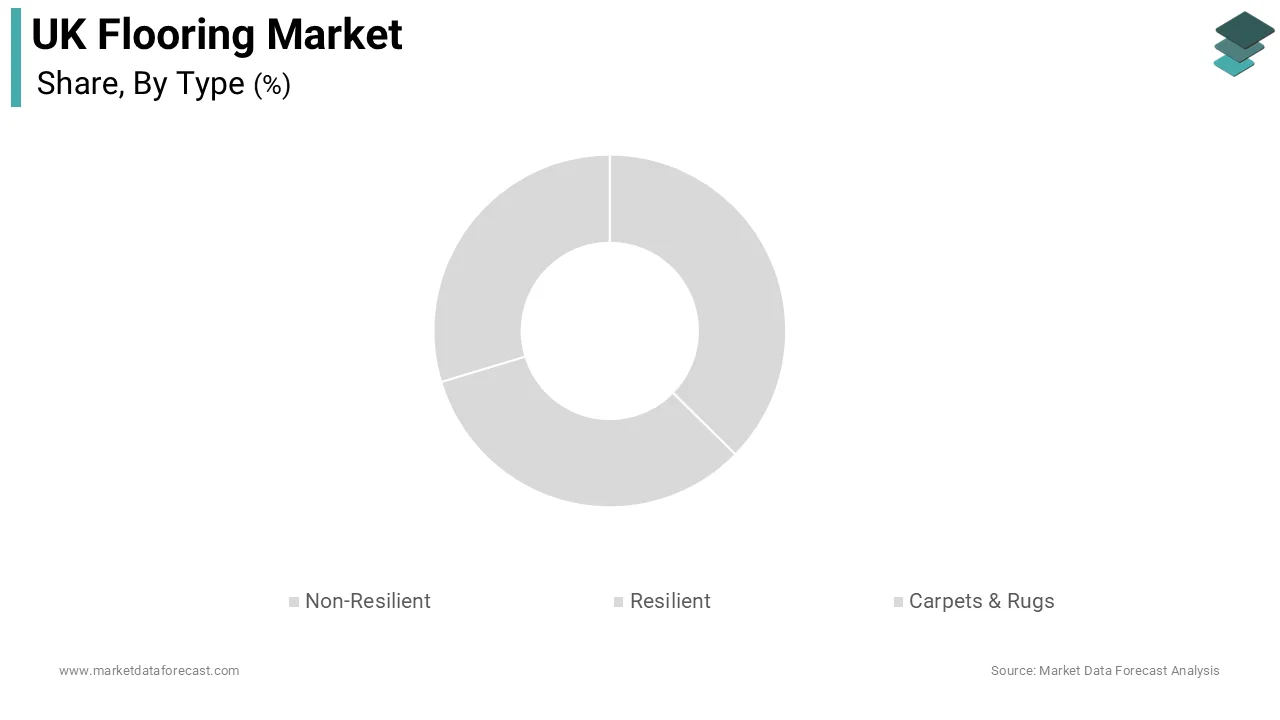
The resilient flooring segment is likely to exhibit the fastest CAGR of 6.8% throughout the forecast period, with the advancements in digital printing technology and durability. This rapid expansion is fueled by the ability of LVT to mimic the appearance of natural wood and stone at a fraction of the cost while offering superior water resistance and ease of maintenance. The click lock installation systems allow for DIY applications, which appeal to budget-conscious homeowners looking to save on labor costs. Commercial sectors, including healthcare and education, increasingly specify resilient flooring due to its hygienic properties and ability to withstand heavy footfall without significant wear. Innovations in rigid core technologies have improved dimensional stability, making these products suitable for environments with fluctuating temperatures. The sustainability profile of modern vinyl has improved with many manufacturers incorporating recycled content and ensuring recyclability at the end of life.
By End Use Insights
The residential sector accounted in holding 32.8% of the United Kingdom flooring market share in 2025, owing to the sheer volume of housing stock and the continuous cycle of home improvement and renovation activities. Homeowners view flooring as an element of interior aesthetics and comfort, leading to frequent upgrades during moves or refurbishments. The trend toward open plan living has encouraged the use of continuous flooring materials that unify spaces, driving higher square meter coverage per project. Consumer spending on home interiors has remained resilient even during economic downturns, as people prioritize their living environments, especially with the rise of remote work. The popularity of property television programs has elevated expectations for interior design, prompting individuals to invest in higher-quality materials, such as engineered wood and premium carpets. Rental properties also contribute substantially to demand as landlords replace flooring between tenancies to maintain property standards and attract tenants. The emotional attachment to home ownership drives willingness to spend on personalized finishes that reflect individual taste. Government initiatives supporting energy efficiency often include insulation upgrades, which coincide with flooring replacements.
The commercial segment is expected to grow at an anticipated CAGR of 5.2% from 2026 to 2034 with the revitalization of office spaces, retail environments, and hospitality venues. Businesses are investing heavily in interior fit-outs to create attractive and functional spaces that enhance employee productivity and customer experience. Commercial property investment has rebounded strongly, with significant funds allocated to refurbishing older buildings to meet modern sustainability and aesthetic standards. The shift toward hybrid working models has led companies to redesign offices with collaborative zones requiring durable and acoustically efficient flooring solutions. Retailers are upgrading store formats to compete with online shopping, using distinctive flooring to guide customer journeys. The hospitality industry recovery post-pandemic has spurred hotel and restaurant renovations, where hygiene and durability are paramount, driving demand for seamless and easy-to-clean surfaces. Green building certifications like BREEAM mandate the use of environmentally responsible materials, encouraging specification of low-emission and recycled content flooring. Corporate social responsibility goals further push organizations to choose sustainable suppliers.
COMPETITION OVERVIEW
The competition within the United Kingdom flooring market is characterized by intense rivalry among global manufacturers, domestic producers, and specialized distributors vying for consumer attention in a mature landscape. Major players leverage their brand recognition and extensive distribution networks to maintain dominance, while continuously innovating to prevent commoditization. The presence of numerous private-label options from large retailers adds significant pressure, forcing branded manufacturers to justify premium pricing through superior durability and unique designs. Competitive dynamics are further complicated by the convergence of aesthetics and functionality, where visual appeal becomes as important as technical performance. Companies compete not only on product quality but also on sustainability credentials, installation service,s and after-sales support, which have become key differentiators for discerning shoppers. Price wars occasionally erupt during promotional periods, eroding margins but serving as necessary tactics to retain shelf space and volume.
KEY MARKET PLAYERS
A few major players of the UK flooring market include
- Tarkett
- Forbo Flooring Systems
- Gerflor
- Interface, Inc
- Mohawk Industries
- Shaw Industries
- Polyflor Ltd
- Karndean Designflooring
- Amtico International
- Victoria PLC
- James Halstead plc
- Egger Group
- Kronospan
- Quick-Step
- Moduleo
Major Strategies Used By Key Market Participants
Key players in the United Kingdom flooring market employ several strategic approaches to maintain competitiveness and drive growth. Product innovation remains central as companies develop sustainable materials and advanced digital printing technologies to differentiate their offerings. Sustainability initiatives with firms adopting circular economy models and reducing carbon footprints are to align with consumer values. Strategic partnerships with architects and designers help influence specification decisions for large commercial projects. Digital transformation enables direct consumer engagement through virtual visualization tools and e-commerce platforms that enhance convenience. Pricing strategies vary from premium positioning for specialized solutions to competitive pricing for mass market segments to capture diverse income groups. Marketing efforts focus on educational content about maintenance and environmental benefits to raise awareness.
Leading Players In The United Kingdom Market
- Interface Inc is a global leader in modular carpet tiles with a strong presence in the United Kingdom commercial sector. The company focuses on sustainable manufacturing practices and circular economy principles to reduce environmental impact. Recent actions include launching carbon-negative carpet collections and expanding their ReEntry recycling program across UK facilities. Interface collaborates with architects and designers to promote biophilic design concepts that enhance well-being in workspaces. Their commitment to climate takes back initiatives, strengthening brand loyalty among environmentally conscious corporate clients. This strategic focus on sustainability and innovation ensures they remain a preferred supplier for high-profile commercial projects throughout the region.
- Tarkett Group contributes significantly to the United Kingdom flooring market through its diverse portfolio of resilient sports and healthcare flooring solutions. The company emphasizes health and well-being by producing low-emission materials that improve indoor air quality. Recent initiatives involve upgrading manufacturing sites to use renewable energy and introducing new ranges of homogeneous vinyl for hospitals. Tarkett partners with sports organizations to provide high-performance surfaces for athletic facilities, enhancing their reputation for durability. Their expert installation services ensure optimal product performance and longevity for clients.
- Shaw Industries Group Inc maintains a robust footprint in the United Kingdom through its extensive range of carpet and hard surface products. The company leverages advanced manufacturing technologies to produce durable and aesthetically pleasing flooring for residential and commercial use. Recent actions include expanding their EcoWorx tile backing technology, which offers superior recyclability and performance. Shaw invests in local distribution centers to improve supply chain efficiency and reduce delivery times for UK customers. Their collaboration with interior designers helps introduce innovative textures and patterns that align with current trends.
MARKET SEGMENTATION
This research report on the UK Flooring market is segmented and sub-segmented into the following categories.
By Type
- Non-Resilient
- Ceramic
- Wood
- Laminate
- Other Non-resilient Flooring
- Resilient
- Vinyl
- Luxury Vinyl Tiles (LVT)
- Vinyl Composite Tiles (VCT)
- Vinyl Sheet Flooring
- Rubber
- Linoleum
- Cork
- Vinyl
- Carpets & Rugs
- Tufted
- Woven
- Others
By End Use
- Residential
- Commercial
- Industrial