UK Gambling Market Size, Share, Trends & Growth Forecast Report By Type, Platform, End User, and Country – Industry Analysis and Forecast, 2026 to 2034
Market Size, 2025
$4.31 BnMarket Estimate, 2026
$4.56 BnMarket Forecast, 2034
$7.20 BnCAGR, 2026–2034
5.87%UK Gambling Market Report Summary
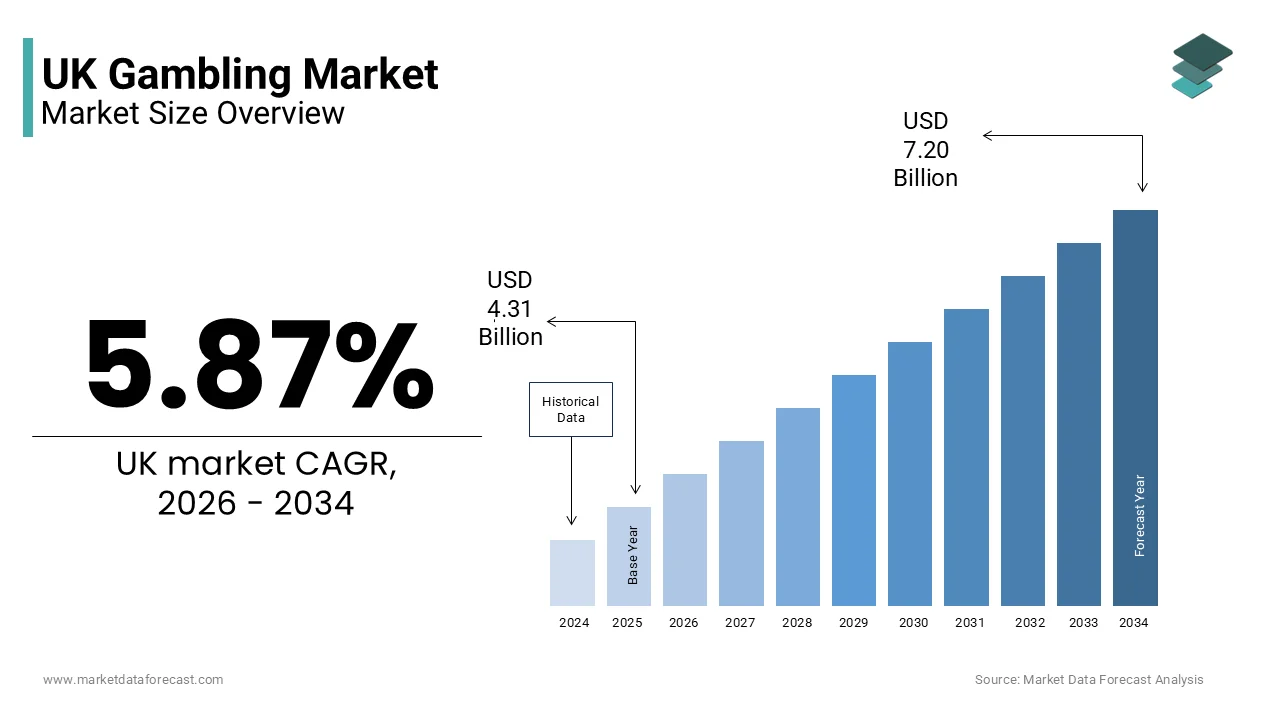
The UK gambling market was valued at USD 4.31 billion in 2025, is estimated to reach USD 4.56 billion in 2026, and is projected to reach USD 7.20 billion by 2034, growing at a CAGR of 5.87% during the forecast period. Market growth is driven by increasing adoption of online gambling platforms, rising smartphone penetration, expanding digital payment infrastructure, and growing consumer interest in sports betting and interactive gaming experiences. Technological advancements, live betting features, and personalized gaming experiences continue to support market expansion across the United Kingdom.
Key Market Trends
- Growing adoption of online and mobile gambling platforms is driving market growth.
- Increasing popularity of sports betting and live wagering is boosting market expansion.
- Rising integration of advanced technologies and personalized gaming experiences is supporting industry development.
- Expansion of digital payment solutions is enhancing user convenience and accessibility.
- Growing focus on responsible gambling measures and regulatory compliance is influencing market advancement.
Segmental Insights
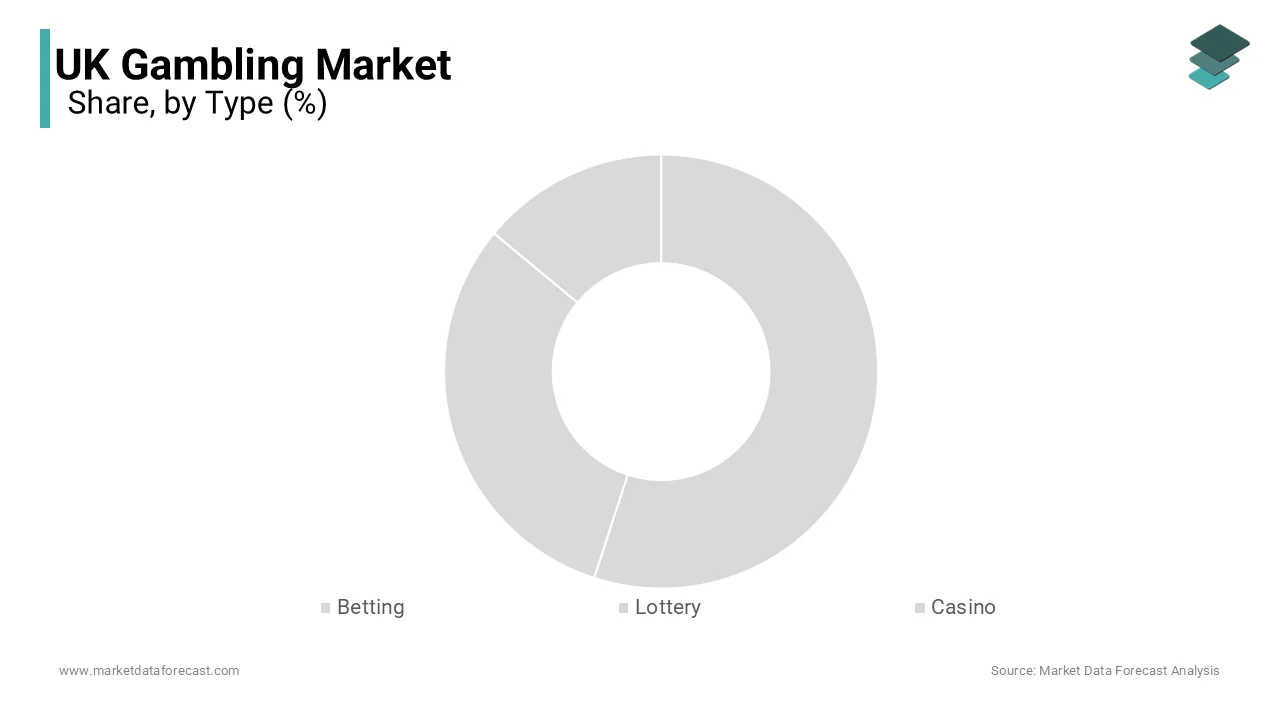
- Based on type, the betting segment accounted for the largest share of the UK gambling market in 2025. This dominance is attributed to strong consumer participation in sports betting and the widespread availability of betting products across digital platforms.
- Based on platform, the online segment held the dominant share of the UK gambling market in 2025, supported by convenience, 24 hour accessibility, extensive game selection, and increasing mobile device usage.
- Based on end user, the men segment accounted for the major share of the UK gambling market in 2025, driven by historically higher participation rates in sports betting and other gambling activities.
Regional Insights
- The United Kingdom represents one of the largest and most regulated gambling markets in Europe. Strong digital infrastructure, high consumer participation, and a comprehensive regulatory framework contribute to the market's continued growth and maturity.
Competitive Landscape
The UK gambling market is highly competitive, with operators focusing on digital innovation, customer engagement, mobile gaming platforms, and responsible gambling initiatives to strengthen their market position. Companies continue to invest in technology development, live gaming experiences, and enhanced security features.
Key companies operating in the UK gambling market include Allwyn UK Holding Ltd., Bally's Corp., Bet365 Group Ltd., Betfred Group, Entain plc, Betsson AB, Buzz Group Ltd., Caesars Entertainment Inc., Casino Del Sol, Evolution AB, Flutter Entertainment Plc, International Game Technology, NetBet Enterprises Ltd., Playtech Plc, Rank Group PLC, 888 Holdings, Scientific Games LLC, Simba Games, and Tombola Ltd.
UK Gambling Market Size
The UK gambling market size was valued at USD 4.31 billion in 2025, and is projected to reach USD 7.20 billion by 2034 from USD 4.56 billion in 2026, growing at a CAGR of 5.87%.
The UK gambling market is one of the most mature and regulated gaming ecosystems globally, encompassing online casinos, sports betting, bingo, lotteries, and land-based operations. This sector operates under the stringent oversight of the Gambling Commission, which ensures fairness, consumer protection, and integrity across all licensed activities. The digital transformation of the industry has shifted consumption patterns significantly, with remote gambling now accounting for the majority of gross gambling yield. According to the Office for National Statistics, approximately 89% of adults in the UK had access to the internet in 2024, providing the essential infrastructure for online participation. The cultural integration of gambling is evident in widespread engagement with the National Lottery and seasonal sports events. As per UK Gambling Commission statistics, around 47% of adults participated in some form of gambling activity in the past four weeks, demonstrating deep societal penetration. The regulatory landscape continues to evolve with the implementation of the Gambling Act review recommendations, aiming to balance industry growth with harm prevention. Technological advancements, such as live dealer streaming and mobile optimization, have enhanced user experience, driving engagement. The market is characterized by high competition among established operators and new entrants leveraging innovative marketing strategies. Consumer awareness regarding responsible gambling tools has increased, influencing operator behavior and product design. This dynamic environment requires continuous adaptation to legal frameworks and shifting consumer preferences, ensuring the market remains robust yet socially responsible.
MARKET DRIVERS
Pervasive Smartphone Penetration and Mobile Betting Accessibility
The pervasive penetration of smartphones and the seamless accessibility of mobile betting applications are majorly driving the UK gambling market forward. Mobile devices have become the dominant interface for wagering, allowing consumers to place bets on sports events or play casino games from any location at any time. According to Ofcom communications market report, 96% of adults in the UK owned a smartphone in 2024 and this creates a near-universal addressable audience for digital gambling platforms. This high level of connectivity ensures that potential customers are always within reach of promotional offers and live betting opportunities. The frictionless nature of mobile apps with biometric login and one-click betting features reduces barriers to entry and encourages spontaneous participation. As per UK Gambling Commission data, remote gambling accounts for over 60% of total gross gambling yield and this indicates the shift away from traditional land-based venues. The integration of live streaming services within betting apps allows users to watch events and bet simultaneously, enhancing engagement and retention. For younger demographics, particularly those aged 18 to 34 who represent a significant portion of the user base, mobile-first experiences are not just preferred but expected. This technological readiness allows operators to scale rapidly without the need for physical infrastructure. The ability to push personalized notifications about odds changes or bonus offers further drives frequent interaction. Consequently, the ubiquity of mobile technology ensures sustained growth in online gambling participation across the nation.
Cultural Integration of Sports Betting and Major Sporting Events
The deep cultural integration of sports betting and the popularity of major sporting events significantly drive demand for gambling services across the UK, which is further boosting the UK gambling market expansion. Football, horse racing, and rugby are ingrained in British culture, with betting viewed by many as an enhancer of the viewing experience rather than a separate activity. According to the Department for Digital, Culture, Media and Sport, millions of viewers tune in to Premier League matches each season, with a substantial portion placing wagers on outcomes. The legalization of advertising during sports broadcasts, until recent restrictions, allowed operators to build strong brand associations with popular teams and leagues. As per Statista consumer surveys, 35% of sports fans in the UK regularly place bets on their favorite teams, indicating a strong correlation between fandom and gambling participation. Major events, such as the Grand National, Cheltenham Festival, and Wimbledon, attract millions of casual bettors who may not gamble regularly otherwise. These seasonal peaks generate significant revenue spikes and introduce new users to platforms, who may continue betting on other sports. The rise of fantasy sports and e-sports betting has further expanded the demographic appeal, attracting younger audiences interested in digital competitions. Operators leverage these cultural touchpoints through targeted marketing campaigns and special odds promotions. This symbiotic relationship between sports entertainment and betting ensures a consistent and robust demand base that withstands economic fluctuations.
MARKET RESTRAINTS
Stringent Regulatory Reforms and Affordability Checks
Stringent regulatory reforms and the implementation of mandatory affordability checks present significant restraints to the UK gambling market growth. The government initiated a comprehensive review of the Gambling Act 2005, resulting in tighter controls designed to protect vulnerable individuals and reduce gambling-related harm. According to the Department for Culture, Media and Sport, new regulations require operators to conduct financial risk assessments for customers showing signs of significant loss or high spending. These checks involve requesting proof of income and source of funds, which can create friction in the user journey and deter casual players. As per UK Gambling Commission enforcement data, several major operators have faced substantial fines for failing to adequately protect customers, leading to increased compliance costs and operational caution. The introduction of stake limits for online slots, capped at 2 pounds per spin for younger players and 5 pounds for older adults, has directly reduced revenue potential from high-volume, low-stake games. Operators must invest heavily in sophisticated monitoring systems to detect problematic behavior in real time, adding to administrative burdens. The uncertainty surrounding future legislative changes creates a cautious investment environment, where companies hesitate to launch aggressive marketing campaigns. These regulatory headwinds require substantial legal and technical resources, diverting focus from innovation and customer acquisition. The balance between safety and commercial viability remains a delicate challenge for industry participants.
Increased Taxation and Financial Pressure on Operators
Increased taxation and mounting financial pressures is another significant restraint, which is further impeding the UK gambling market growth. The government has adjusted point-of-consumption tax rates and introduced additional levies to fund research, education, and treatment for gambling harm. According to HM Revenue and Customs, remote gaming duty remains at 21% of gross gambling yield, representing a significant portion of operator revenue that cannot be passed on to consumers easily. This high tax burden squeezes margins, particularly for smaller operators who lack economies of scale. As per Association of British Insurers analysis, rising operational costs, including compliance technology and customer support staff, have further eroded profitability. The competitive landscape forces companies to spend heavily on customer acquisition and retention through bonuses and free bets, which are also subject to taxation. Recent proposals to increase duties on land-based gaming machines and casinos add further strain to the brick-and-mortar sector, which is already struggling with post-pandemic recovery. The financial pressure limits the ability of operators to invest in new technologies or expand into emerging markets. Some smaller brands have exited the market or consolidated with larger entities to survive. The cumulative effect of high taxes and operational costs restricts industry growth and may lead to higher prices or reduced promotional value for consumers. This fiscal environment demands rigorous cost management and efficiency improvements from all market participants.
MARKET OPPORTUNITIES
Expansion of Live Dealer and Immersive Gaming Technologies
The expansion of live dealer games and immersive gaming technologies presents substantial opportunities for the UK gambling market growth. Consumers increasingly seek authentic casino experiences from home, driving demand for high-definition streams with professional dealers and interactive features. According to Evolution Gaming industry reports, live casino segments have grown by 20% annually, as players value transparency and social interaction. The integration of virtual reality and augmented reality technologies offers new ways to engage users with 3D environments and gamified elements that enhance entertainment value. As per PwC technology forecasts, adoption of immersive tech in entertainment sectors is accelerating, creating early-mover advantages for gambling operators who invest now. Live dealer tables allow for higher betting limits and longer session times compared to standard random number generator games, increasing customer lifetime value. Operators can partner with technology providers to offer exclusive tables, branded experiences, and multi-camera angles that cater to high-roller preferences. The ability to chat with dealers and other players fosters a sense of community, reducing isolation concerns often associated with online gambling. Mobile optimization of live streams ensures accessibility on smartphones, which dominate usage. These innovations attract tech-savvy demographics and provide premium content that justifies higher margins. By leading in technological adoption, operators can distinguish themselves in a crowded market and capture share from traditional land-based venues seeking digital alternatives.
Growth of Esports Betting and Younger Demographic Engagement
The growth of esports betting and strategies to engage younger demographics offer significant opportunities for market expansion, beyond traditional sports audiences. Competitive video gaming has achieved mainstream status, with millions of viewers watching tournaments for titles like League of Legends, Counter-Strike, and FIFA. According to Newzoo global esports market analysis, the UK has one of the largest esports audiences in Europe, with over 15 million enthusiasts. This demographic largely overlaps with the 18-to-35 age group, which is less engaged with traditional sports betting but highly active in digital environments. Operators are developing specialized platforms and betting markets tailored to esports events, including match winners, map outcomes, and player performance metrics. As per YouGov surveys, interest in betting on esports among young adults has risen by 25% in recent years, indicating untapped potential. Integrating streaming content from platforms like Twitch directly into betting interfaces enhances engagement and provides real-time data for in-play wagering. Sponsorship of esports teams and tournaments builds brand loyalty among this influential cohort. The digital native nature of esports fans aligns perfectly with online gambling platforms, requiring minimal education on usage. By catering to this growing segment, operators can diversify their revenue streams and future-proof their businesses against declining interest in traditional sports. This strategic pivot opens new avenues for innovation and community building.
MARKET CHALLENGES
Gambling Addiction and Social Responsibility Concerns
Gambling addiction and escalating social responsibility concerns is a major challenge to the UK gambling market growth. The visibility of gambling-related harm, including debt, mental health issues, and family breakdown, has led to calls for stricter controls and reduced advertising. According to GamCare charity data, over 250,000 people in the UK are classified as problem gamblers, with hundreds of thousands more at risk requiring urgent intervention. High-profile cases of suicide linked to gambling losses have triggered media outrage and parliamentary inquiries, demanding accountability from operators. The Gambling Commission has increased enforcement actions, with millions of pounds in fines issued for failures in social responsibility protocols. As per NHS Digital statistics, referrals to gambling treatment services have increased by 40% in recent years, highlighting the scale of the issue. Operators face reputational damage if perceived as exploiting vulnerable individuals, leading to loss of trust and customer churn. Implementing effective self-exclusion tools, deposit limits, and reality checks is mandatory, but often criticized as insufficient. The industry must balance commercial objectives with ethical obligations, which can conflict with revenue goals. Public perception shifts can lead to boycotts or support for total bans on certain products. Addressing addiction requires substantial investment in support programs and advanced detection algorithms. Failure to manage this challenge effectively risks severe regulatory backlash and long-term sustainability threats.
Aggressive Competition and Customer Acquisition Costs
Aggressive competition and soaring customer acquisition costs are further challenging the expansion of the UK gambling market. The barrier to entry for online platforms is relatively low, leading to a crowded marketplace where numerous brands compete for the same pool of active players. According to H2 Gambling Capital analysis, customer acquisition costs in the UK have risen by 30% in recent years, due to intense bidding for keywords and affiliate commissions. Consumers frequently switch between platforms based on bonus offers and odds quality, making retention difficult and expensive. As per Deloitte industry insights, loyalty is low in the gambling sector, with players holding accounts with multiple operators to maximize promotional value. This price sensitivity forces companies into continuous discounting cycles, which erode profit margins and devalue the brand. Affiliate marketers who drive traffic demand higher commissions, reducing net revenue for operators. Regulatory restrictions on advertising content and timing limit marketing channels, forcing reliance on more expensive direct methods. The need to constantly innovate with new features and games to retain attention adds to development costs. Smaller operators struggle to compete with large incumbents, who have deeper pockets for marketing spend. This hyper-competitive environment tests the financial resilience of companies and necessitates sophisticated data analytics to optimize spending. Achieving sustainable growth requires balancing acquisition spend with lifetime value, which becomes increasingly difficult in a mature market.
REPORT COVERAGE
| REPORT METRIC | DETAILS |
| Market Size Available | 2025 to 2034 |
| Base Year | 2025 |
| Forecast Period | 2026 to 2034 |
| CAGR | 5.87% |
| Segments Covered | By Type, Platform, End User, and Region. |
| Various Analyses Covered | Global, Regional and Country-Level Analysis, Segment-Level Analysis, Drivers, Restraints, Opportunities, Challenges; PESTLE Analysis; Porter’s Five Forces Analysis, Competitive Landscape, Analyst Overview of Investment Opportunities |
| Market Leaders Profiled | Allwyn UK Holding Ltd., Ballys Corp., Bet365 Group Ltd., Betfred Group, Entain plc, Betsson AB, Buzz Group Ltd., Caesars Entertainment Inc., Casino Del Sol, Evolution AB, Flutter Entertainment Plc, International Game Technology, NetBet Enterprises Ltd., Playtech Plc, Rank Group PLC, 888 Holdings, Scientific Games LLC, Simba Games, and Tombola Ltd |
SEGMENTAL ANALYSIS
By Type Insights
The betting segment led the market by accounting for the highest share of the UK market in 2025, as it is deeply embedded in the national culture through widespread interest in sports such as football, horse racing, and rugby. This dominance stems from the seamless integration of wagering into the viewing experience, where fans place bets to enhance engagement and excitement during matches. As per UK Gambling Commission statistics, remote betting accounts for approximately 45% of total gross gambling yield, which is reflecting the massive scale of online sports wagering activities. The availability of live in-play betting allows users to place wagers in real time as events unfold, creating a dynamic and interactive environment that retains user attention for extended periods. According to Statista data, over 10 million adults in the UK participate in sports betting annually, driven by major events like the Premier League and Cheltenham Festival. The proliferation of mobile applications has made betting accessible anytime and anywhere, removing friction from the process. Operators offer extensive markets ranging from match outcomes to specific player performances, catering to diverse preferences. Sponsorship deals with major sports teams and leagues further reinforce brand visibility and legitimacy. The social aspect of betting pools and syndicates among friends also contributes to sustained participation. This deep cultural resonance ensures that betting remains the cornerstone of the gambling industry, generating consistent revenue streams regardless of economic fluctuations.
On the other hand, the casino segment is anticipated to register a CAGR of 10.4% during the forecast period, as operators innovate with live dealer technologies and enhanced mobile experiences. This accelerated growth is driven by the demand for authentic casino atmospheres from the comfort of home, which live dealer games effectively replicate through high-definition video streams and professional croupiers. According to Playtech industry analysis, live casino revenues in the UK grew by 18% in 2024, as players sought greater transparency and social interaction compared to standard random number generator games. The variety of game options, including blackjack, roulette, baccarat, and game-show style formats, appeals to a broad demographic beyond traditional slot players. As per UK Gambling Commission data, remote casino participation has risen steadily, with younger demographics showing increased interest in skill-based elements within casino games. Mobile apps have optimized these complex games for smaller screens, ensuring smooth performance and intuitive controls. The introduction of gamification features, such as leaderboards and tournaments, adds competitive layers that encourage repeat play. Enhanced security measures and fair play certifications build trust among users concerned about online integrity. These factors combine to drive robust growth, as the casino segment evolves from a niche offering to a mainstream entertainment choice.
By Platform Insights
The online platform segment held the dominant position in the UK gambling market in 2025 as it offers unparalleled convenience, accessibility, and a vast array of gaming options that land-based venues cannot match. Consumers can access thousands of games and betting markets from any location with internet connectivity, eliminating travel time and physical constraints. As per UK Gambling Commission statistics, remote gambling now accounts for over 60% of total gross gambling yield, demonstrating the decisive shift toward digital channels. The ability to compare odds across multiple operators instantly ensures users get the best value for their wagers, enhancing satisfaction. According to Ofcom data, 96% of UK adults have internet access, providing a massive potential user base for online platforms. Mobile applications further enhance this dominance by allowing gambling during commutes or breaks, integrating seamlessly into daily routines. Online platforms operate 24 hours a day, seven days a week, catering to users across different time zones and schedules. The anonymity and privacy offered by online gambling appeal to individuals who may feel uncomfortable in public betting shops. Rapid deposit and withdrawal methods using digital wallets ensure quick access to funds. These functional advantages make online platforms the preferred choice for the majority of modern gamblers, ensuring their continued market leadership.
On the other side, the offline platform segment represents a niche but growing area in specific contexts within the UK gambling market and is predicted to register a CAGR of 4.4% during the forecast period as consumers seek social interaction and tangible experiences. While an overall decline is observed in general betting shops, there is growth in high-end casino resorts and integrated entertainment venues that offer dining, shows, and gaming under one roof. According to British Hospitality Association data, visitor numbers to major casino resorts in London and Manchester increased by 10% in 2024, as tourists and locals sought comprehensive night-out experiences. The tactile nature of handling chips and cards provides a sensory engagement that digital screens cannot replicate, appealing to traditionalists and high rollers. As per Visit Britain statistics, international tourists contribute significantly to offline gambling revenue, seeking authentic British casino experiences during their stays. These venues often host exclusive tournaments and events that create buzz and attract media attention. The social aspect of playing alongside others fosters community and networking opportunities, valuable for business and leisure. Premium service levels, including complimentary drinks and dedicated hosts, enhance perceived value. This experiential focus differentiates offline venues from commoditized online options, driving growth in the luxury segment.
By End User Insights
The men segment led the market by capturing the major share of the UK market in 2025, as historical and cultural factors have strongly associated gambling activities, particularly sports betting, with male demographics. Interest in football, cricket, and horse racing drives frequent participation in wagering activities among men, who view betting as an integral part of sports fandom. According to UK Gambling Commission statistics, 55% of men participated in some form of gambling in the past four weeks compared to 40% of women, highlighting the gender gap in engagement. Men are more likely to engage in high-frequency activities, such as fixed-odds betting terminals and online sportsbooks, which generate significant revenue volumes. As per YouGov surveys, 60% of regular sports bettors are male, reflecting deep-seated behavioral patterns linked to competitiveness and risk-taking. Marketing campaigns by operators often target male audiences through sports sponsorships and masculine branding, reinforcing this dominance. Peer influence and social betting groups among male friends further encourage participation and sustained activity. The prevalence of poker and strategic card games, which appeal to analytical thinking, also draws male users. This entrenched behavior ensures that men remain the primary revenue drivers for the majority of gambling operators, particularly in the betting and poker sectors.
However, the women segment is predicted to register a CAGR of 8.45 during the forecast period, as operators tailor products to appeal to female preferences for social interaction and low-stakes entertainment. Bingo, online slots, and lottery-style games have gained popularity among women, who prefer games with clear rules and community elements over complex sports betting markets. According to UK Gambling Commission data, participation in online bingo among women increased by 15% in 2024 due to chat features and themed rooms that foster social connections. Mobile-friendly interfaces with bright visuals and engaging narratives attract female users, who prioritize aesthetics and ease of use. As per Mintel consumer reports, 45% of female gamblers cite relaxation and stress relief as primary motivations, contrasting with male competitive drives. Operators have launched female-focused marketing campaigns featuring relatable scenarios and inclusive imagery, which resonate with this demographic. The rise of casual gaming apps that blend gambling mechanics with puzzle elements has expanded the addressable market. Lower average stakes make these games accessible for casual play without significant financial risk. This shift in product design and marketing strategy is successfully unlocking a previously underserved segment, driving rapid growth.
COUNTRY LEVEL ANALYSIS
The UK stands as the largest and most regulated gambling market in Europe, characterized by high consumer participation, advanced digital infrastructure, and a robust legal framework overseen by the Gambling Commission. The market status is defined by a mature online sector that dominates revenue generation, alongside a declining but still significant land-based presence. According to UK Gambling Commission data, the total gross gambling yield reached 14 billion pounds in 2024, with remote gambling contributing the majority share. London serves as a global hub for gambling technology and software development, hosting many leading operators and suppliers. The regulatory environment is stringent, with recent reforms focusing on player protection, affordability checks, and advertising restrictions shaping industry operations. As per Department for Culture, Media and Sport guidelines, operators must adhere to strict licensing conditions, ensuring fairness and preventing crime. High internet penetration and smartphone usage facilitate widespread access to online platforms, driving continuous growth. Consumer awareness of responsible gambling tools is high, influencing operator practices and product design. The market benefits from a strong sports culture that fuels betting demand, particularly during major events. Despite regulatory pressures, the UK remains attractive to international investors due to its transparent legal system and large English-speaking customer base. The ongoing balance between commercial freedom and social responsibility defines the current market trajectory, ensuring sustainable yet controlled growth.
COMPETITIVE LANDSCAPE
The competition within the UK gambling market is intense and characterized by the rivalry between established legacy operators and agile digital native entrants striving for dominance in a highly regulated environment. Major players compete aggressively on product variety odds quality and user experience to attract and retain customers who have low switching costs and high expectations. Brand loyalty is increasingly difficult to maintain as consumers frequently compare promotions across multiple platforms leading to price wars and elevated acquisition costs. Regulatory pressures regarding advertising restrictions and affordability checks force all participants to adhere to strict standards leveling the playing field but increasing operational burdens. Technological superiority in platform stability speed and mobile optimization serves as a key differentiator as downtime or poor interface design leads to immediate customer churn. The market sees continuous innovation in live dealer streaming and esports betting to capture younger demographics. Consolidation through mergers allows larger entities to spread compliance costs while smaller niche operators focus on specific verticals like poker or bingo. Marketing spend remains high despite restrictions with operators seeking creative ways to engage users through sponsorships and content partnerships. This dynamic landscape demands constant adaptation to legal changes and consumer trends to ensure long term viability and profitability amidst fierce rivalry.
KEY MARKET PLAYERS
Some of the companies that are playing a dominating role in the UK gambling market are
- Allwyn UK Holding Ltd.
- Ballys Corp.
- Bet365 Group Ltd.
- Betfred Group
- Entain plc
- Betsson AB
- Buzz Group Ltd.
- Caesars Entertainment Inc.
- Casino Del Sol
- Evolution AB
- Flutter Entertainment Plc
- International Game Technology
- NetBet Enterprises Ltd.
- Playtech Plc
- Rank Group PLC
- 888 Holdings
- Scientific Games LLC
- Simba Games
- Tombola Ltd
Top Players in the Market
- Entain plc maintains a significant presence in the UK gambling sector through its portfolio of well known brands including Ladbrokes Coral and Gala Bingo. The company operates an extensive network of retail betting shops alongside robust online platforms that cater to sports betting and casino gaming enthusiasts. Recent strategic initiatives focus heavily on responsible gambling technologies with the introduction of advanced player protection tools designed to identify and mitigate harmful behavior early. Entain has invested substantially in digital transformation to enhance user experience across mobile applications ensuring seamless integration between online and offline services. The organization continues to prioritize regulatory compliance by adhering to strict licensing requirements set by the Gambling Commission. By leveraging data analytics for personalized customer engagement while maintaining high ethical standards Entain strengthens its reputation as a trusted operator committed to sustainable growth and consumer safety in the evolving British market landscape.
- Flutter Entertainment plays a pivotal role in the UK market primarily through its ownership of Paddy Power Betfair and Sky Betting and Gaming which are household names in British gambling culture. The company is renowned for its innovative marketing campaigns and strong brand loyalty among sports betting fans particularly during major football tournaments and horse racing events. Recent actions include the consolidation of its technology platforms to improve operational efficiency and deliver faster more reliable betting experiences to users. Flutter has also expanded its live dealer casino offerings to capture growing demand for immersive online gaming. The group actively supports safer gambling initiatives by implementing deposit limits and reality checks across all its brands. By focusing on product innovation and customer retention strategies Flutter ensures it remains at the forefront of the competitive UK industry while adapting to changing regulatory expectations and consumer preferences.
- 888 Holdings contributes significantly to the UK gambling market by offering a diverse range of online casino games sports betting and poker services through its proprietary platforms. The company distinguishes itself through proprietary software development which allows for unique game content and tailored user interfaces that enhance player engagement. Recent efforts have centered on expanding its sportsbook capabilities through strategic partnerships with data providers to offer competitive odds and extensive market coverage. 888 has also upgraded its mobile application functionality to ensure smooth performance and intuitive navigation for on the go users. The organization places strong emphasis on customer acquisition through targeted digital marketing campaigns while maintaining rigorous compliance with UK advertising standards. By continuously updating its game library and improving backend security measures 888 Holdings reinforces its position as a leading digital first operator capable of meeting the sophisticated demands of modern British gamblers seeking variety and reliability.
Top Strategies Used by Key Market Participants
Key players in the UK gambling market predominantly employ digital innovation and responsible gambling initiatives to maintain competitive advantage and ensure regulatory compliance. Companies invest heavily in artificial intelligence and machine learning technologies to personalize user experiences optimize odds compilation and detect problematic gambling behaviors in real time. Developing exclusive content such as branded slot games and live dealer tables helps differentiate platforms in a saturated market attracting specific demographic segments. Strategic mergers and acquisitions allow larger operators to consolidate resources expand their customer base and achieve economies of scale in technology and marketing. Enhancing mobile application performance ensures seamless accessibility which is critical given the dominance of smartphone usage among consumers. Partnerships with sports leagues and media companies increase brand visibility and credibility among target audiences. Implementing robust know your customer and anti money laundering protocols protects license status and builds trust with regulators. These combined strategies enable participants to navigate complex legal landscapes while driving sustainable growth through improved customer retention and operational efficiency in the dynamic British gambling environment.
MARKET SEGMENTATION
This research report on the UK gambling market is segmented and sub-segmented into the following categories.
By Type
- Betting
- Lottery
- Casino
By Platform
- Offline
- Online
By End User
- Men
- Women
Frequently Asked Questions
1. What is the UK gambling market?
The UK gambling market comprises betting, gaming, lotteries, casinos, bingo, and online gambling services offered to consumers across the United Kingdom.
2. What factors are driving the growth of the UK gambling market?
Market growth is driven by increasing adoption of online gambling platforms, mobile betting applications, technological advancements, and growing consumer participation in gaming activities.
3. Which segment holds the largest share of the UK gambling market?
Online gambling, particularly sports betting and online casino gaming, accounts for a significant share of the UK gambling market.
4. How is digital technology influencing the UK gambling industry?
Digital technology is enhancing user experiences through mobile apps, live betting features, artificial intelligence, data analytics, and secure payment solutions.
5. What role does sports betting play in the UK gambling market?
Sports betting is one of the most popular gambling activities in the UK, supported by strong consumer interest in football, horse racing, tennis, and other sporting events.
6. How has mobile gambling impacted the market?
Mobile gambling has increased accessibility and convenience, allowing users to place bets and participate in gaming activities from virtually anywhere.
7. Who regulates the gambling industry in the UK?
The UK gambling industry is regulated by the UK Gambling Commission, which oversees licensing, compliance, and consumer protection.
8. What are the major challenges facing the UK gambling market?
Key challenges include stricter regulatory requirements, responsible gambling concerns, advertising restrictions, and increasing compliance costs.
9. How are operators promoting responsible gambling?
Operators are implementing measures such as self exclusion tools, deposit limits, affordability checks, and player protection programs to encourage responsible gambling practices.
10. Which customer group contributes most to the UK gambling market?
Adult consumers participating in online betting, sports wagering, casino gaming, and lottery activities represent the largest customer base.
Related Reports
Access the study in MULTIPLE FORMATS
Purchase options starting from
$ 1200
Didn’t find what you’re looking for?
TALK TO OUR ANALYST TEAM
Need something within your budget?
NO WORRIES! WE GOT YOU COVERED!
Call us on: +1 888 702 9696 (U.S Toll Free)
Write to us: sales@marketdataforecast.com