UK Home Insurance Market Size, Share, Trends & Growth Forecast Report By Coverage, Customer Type, Property Type, Distribution Channel, and Country – Industry Analysis and Forecast, 2026 to 2034
Market Size, 2025
$7.13 BnMarket Estimate, 2026
$7.28 BnMarket Forecast, 2034
$8.64 BnCAGR, 2026–2034
2.16%UK Home Insurance Market Report Summary
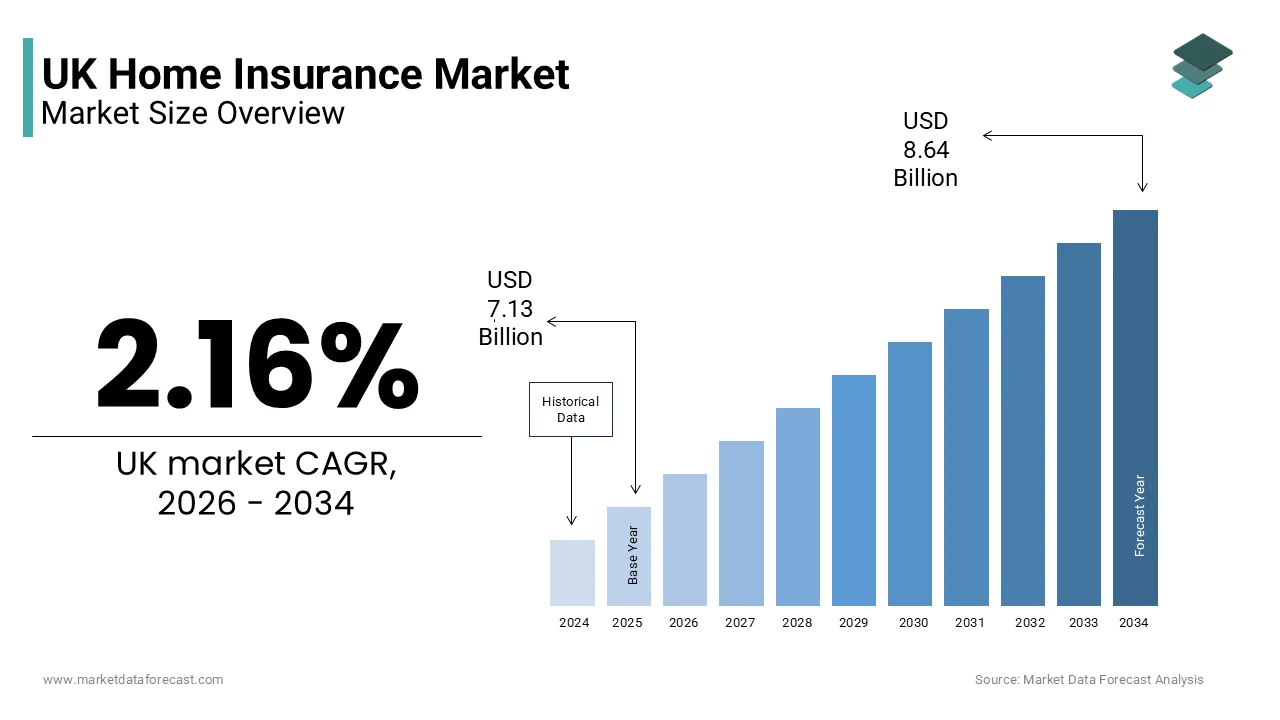
The UK home insurance market was valued at USD 7.13 billion in 2025, is estimated to reach USD 7.28 billion in 2026, and is projected to reach USD 8.64 billion by 2034, growing at a CAGR of 2.16% during the forecast period. Market growth is driven by increasing awareness of property protection, rising property values, growing climate related risks, and the continued importance of financial security among homeowners. Advancements in digital insurance platforms, data analytics, and personalized coverage offerings are further supporting market development across the United Kingdom.
Key Market Trends
- Growing awareness regarding property and asset protection is driving market growth.
- Increasing adoption of digital insurance platforms is boosting market expansion.
- Rising concerns over weather related damage and climate risks are supporting industry development.
- Expansion of personalized and usage based insurance products is enhancing market opportunities.
- Advancements in data analytics and automated claims processing are influencing market advancement.
Segmental Insights
- Based on coverage, the combined building and content coverage segment accounted for the largest share of the UK home insurance market in 2025. This dominance is attributed to its comprehensive protection for both the physical property structure and personal belongings.
- Based on customer type, the homeowner segment held the highest share of the UK home insurance market in 2025, driven by the need to protect valuable assets and mortgage related insurance requirements.
- Based on distribution channel, the aggregators segment accounted for the leading share of the UK home insurance market in 2025. Consumers increasingly prefer comparison platforms due to their convenience, price transparency, and ability to compare multiple insurance providers in a single search.
Regional Insights
- The United Kingdom represents one of the most mature and competitive home insurance markets in Europe. High insurance penetration rates, strong regulatory oversight, advanced digital adoption, and sophisticated consumer expectations continue to support market stability and growth.
Competitive Landscape
The UK home insurance market is highly competitive, with insurers focusing on digital transformation, customer experience enhancement, risk assessment capabilities, and personalized policy offerings to strengthen their market position. Companies continue to invest in online distribution channels, automated claims management systems, and advanced underwriting technologies.
Key companies operating in the UK home insurance market include Aviva plc, Admiral Group plc, Direct Line Insurance Group plc, AXA Insurance UK Ltd, Allianz Holdings, RSA Insurance Group Ltd, Ageas UK Ltd, Hastings Group Holdings plc, Zurich Insurance plc, Hiscox Ltd, NFU Mutual, Saga plc, Covea Insurance plc, Policy Expert, Tesco Bank Home Insurance, HomeProtect, Urban Jungle Services Ltd, Endsleigh Insurance Services Ltd, Churchill Insurance, and Post Office Money Home Insurance.
UK Home Insurance Market Size
The UK home insurance market size was valued at USD 7.13 billion in 2025, and is projected to reach USD 8.64 billion by 2034 from USD 7.28 billion in 2026, growing at a CAGR of 2.16%.
The UK home insurance market is characterized by intense competition among established insurers, direct writers, and comparison platforms that drive innovation in pricing and policy customization. According to the Office for National Statistics, there are approximately 28 million households in the UK, representing the fundamental addressable base for domestic insurance products. As per Department for Levelling Up, Housing and Communities data, homeownership rates stand at roughly 65 percent, indicating a substantial portion of the population has a vested interest in property protection. The increasing frequency of extreme weather events has shifted consumer awareness regarding the necessity of comprehensive coverage, including flood and subsidence risks. Digital transformation has reshaped distribution channels, with mobile applications and artificial intelligence-driven underwriting becoming standard practices. Consumers now demand transparency, speed, and personalized service, influencing product design and customer engagement strategies. The market faces evolving challenges related to climate change adaptation and construction cost inflation, which impact claim settlements and premium calculations. Insurers are increasingly leveraging telematics and smart home technologies to assess risk more accurately and offer preventive solutions. This dynamic landscape requires continuous adaptation to regulatory changes, economic pressures, and shifting consumer expectations to maintain sustainability and growth.
MARKET DRIVERS
Rising Construction Costs and Property Values
Rising construction costs and increasing property values is fuelling the expansion of the UK home insurance market forward, by requiring higher sums insured and comprehensive coverage limits. The cost of building materials, labor, and professional services has escalated significantly due to supply chain disruptions and inflationary pressures, requiring homeowners to adjust their rebuild costs regularly to avoid underinsurance. According to the Royal Institution of Chartered Surveyors, construction costs increased by 12 percent in 2024, reflecting the heightened expense of repairing or rebuilding residential properties after damage. As per Land Registry data, average house prices in the UK reached record levels in many regions, meaning that the financial exposure for insurers and policyholders has grown substantially. Homeowners recognize that inadequate coverage could leave them financially vulnerable in the event of a total loss, driving demand for policies that accurately reflect current replacement values. Insurers respond by offering index-linking features and regular valuation updates to ensure policies remain adequate throughout the term. The complexity of modern building regulations and energy efficiency standards further increases reconstruction expenses that require specialized coverage options. This economic reality ensures that home insurance remains a non-negotiable expense for mortgage lenders and prudent homeowners alike. The correlation between property value and insurance premium creates a natural growth trajectory for the market, as real estate assets appreciate and rebuilding becomes more expensive.
Increasing Frequency of Extreme Weather Events
The increasing frequency and severity of extreme weather events is further fuelling the UK home insurance market growth, as climate change intensifies risks associated with flooding, storms, and subsidence. Consumers are becoming more aware of environmental vulnerabilities, prompting them to seek rohome insurancet coverage that protects against natural disasters, which were previously considered rare occurrences. According to the Met Office, the UK experienced its wettest winter on record in recent years, leading to widespread flooding and significant property damage across multiple regions. As per Association of British Insurers data, weather-related claims exceeded 1 billion pounds annually, demonstrating the substantial financial impact of climate variability on residential properties. Homeowners in high-risk areas are increasingly proactive in securing flood insurance, often mandated by mortgage lenders to protect their investment. The introduction of Flood Re, a joint initiative between the government and insurers, has improved access to affordable cover for those at highest risk, encouraging broader participation in the insurance market. Severe storms cause damage to roofs, windows, and external structures, driving claims for repairs and temporary accommodation. Subsidence risks, exacerbated by drought conditions, also contribute to heightened demand for comprehensive structural coverage. These environmental pressures force insurers to refine risk modeling and offer preventive advice, while consumers prioritize resilience and rapid claims handling. The tangible threat of weather damage ensures sustained demand for home insurance as a critical safeguard against unpredictable natural forces.
MARKET RESTRAINTS
High Premium Affordability and Cost of Living Pressures
High premium affordability and broader cost of living pressures present significant restraints, which is hindering growth and retention within the UK home insurance market. As household budgets tighten due to inflation and rising energy bills, consumers scrutinize discretionary spending, including insurance premiums, leading to increased price sensitivity and policy switching. According to the Office for National Statistics, the cost of living crisis has reduced disposable income for millions of households, forcing many to seek cheaper insurance alternatives or reduce coverage levels. As per Money and Pensions Service surveys, 30 percent of consumers admitted to shopping around for insurance primarily based on price rather than coverage quality, indicating a race to the bottom that compresses insurer margins. Some homeowners may choose to self-insure or drop optional extras, such as accidental damage or legal expenses, to lower costs, exposing themselves to greater financial risk. Insurers face difficulty in passing on rising claim costs to price-sensitive customers without triggering cancellations and churn. The competitive landscape, driven by comparison websites, exacerbates this issue by highlighting minor price differences over service quality or claims handling reputation. Smaller insurers struggle to compete with larger players who can absorb losses or cross-subsidize products. This economic strain limits the ability of providers to invest in innovation or enhanced customer services. The tension between maintaining profitability and offering affordable premiums creates a challenging environment for sustainable market expansion and customer loyalty.
Regulatory Compliance and Administrative Burdens
Stringent regulatory compliance requirements and administrative burdens are further hampering the expansion of the UK home insurance market. Insurers must navigate a complex web of rules encompassing consumer duty, data protection, fair pricing, and claims handling standards, which require substantial investments in technology, personnel, and processes. According to Financial Conduct Authority guidelines, the Consumer Duty regulation mandates firms to deliver good outcomes for retail customers, requiring extensive monitoring, reporting, and governance frameworks. As per Deloitte analysis, compliance costs for financial services firms have increased by 15 percent annually, as regulators tighten oversight on pricing practices and vulnerability identification. The General Data Protection Regulation imposes strict obligations on data handling, requiring rohome insurancet cybersecurity measures and consent management systems that add layers of administrative complexity. Insurers must maintain detailed records of customer interactions and decision-making processes to demonstrate compliance during audits. The need to regularly update policy wording and terms to align with changing legislation diverts resources from product development and customer acquisition. Smaller insurers face disproportionate challenges in absorbing these fixed costs, leading to market consolidation. The constant evolution of regulatory expectations means that compliance is never a one-time project, but a continuous resource drain. These operational constraints limit agility and increase the cost base for all market participants, potentially stifling innovation and competitive diversity.
MARKET OPPORTUNITIES
Integration of Smart Home Technologies and IoT Devices
The integration of smart home technologies and Internet of Things devices presents substantial opportunities for the UK home insurance market. These technologies enable insurers to monitor properties in real time, detect leaks, fires, or intrusions early, and offer preventive advice to policyholders, reducing the frequency and severity of claims. According to Statista, the number of smart home devices in the UK is projected to reach 25 million by 2025, creating a vast ecosystem for data-driven insurance products. Insurers can offer discounts or incentives for installing smart sensors, water leak detectors, and security cameras, aligning customer interests with risk reduction goals. As per ABI research, trials involving smart water sensors demonstrated a 40 percent reduction in escape of water claims, highlighting the tangible benefits of proactive monitoring. Telematics-based home insurance allows for personalized pricing based on actual risk behavior, rather than broad demographic proxies, enhancing fairness and accuracy. Partnerships with technology providers enable insurers to bundle hardware with policies, creating sticky customer relationships and new revenue streams. Data collected from smart devices improves underwriting models, allowing for more precise risk assessment and segmentation. Customers benefit from increased peace of mind and potential premium savings, while insurers reduce loss ratios. This technological convergence transforms home insurance from a reactive indemnity product into a proactive service platform, fostering deeper engagement and long-term loyalty.
Expansion of On-Demand and Flexible Coverage Models
The expansion of on-demand and flexible coverage models offers promising opportunities for UK home insurers to attract younger demographics and address changing lifestyle patterns. Traditional annual policies may not suit individuals who rent short-term, own second homes, or possess high-value items only occasionally, leading to demand for pay-as-you-go or temporary coverage options. According to McKinsey company analysis, 40 percent of consumers express interest in flexible insurance products that allow them to adjust coverage levels based on immediate needs. Digital platforms enable instant activation and deactivation of specific covers, such as gadget insurance or guest liability, through mobile applications, enhancing convenience and control. As per YouGov surveys, millennials and Gen Z consumers prefer modular insurance solutions that avoid paying for unnecessary protections during periods of low risk. Insurers can leverage usage-based data to price these flexible products accurately, ensuring profitability while meeting customer expectations for transparency and choice. This model appeals to the gig economy workforce and digital nomads, who require adaptable financial protection. By offering granular coverage options, insurers can tap into underserved segments and differentiate themselves in a crowded market. The ability to scale coverage up or down instantly reduces barriers to entry and encourages trial among skeptical consumers. This innovation drives customer acquisition and retention, by aligning product structures with modern, fluid lifestyles.
MARKET CHALLENGES
Climate Change Impact on Risk Modeling and Underwriting
Climate change impact on risk modeling and underwriting is a major challenge to the UK home insurance market, as historical data becomes less reliable for predicting future losses. Increasingly unpredictable weather patterns, including severe flooding, coastal erosion, and subsidence, make it difficult for insurers to accurately price risk and maintain solvency. According to the Committee on Climate Change, the number of properties at risk of flooding in the UK is expected to rise significantly by 2050, threatening the viability of coverage in high-risk zones. As per Flood Re reports, the scheme currently covers over 500,000 high-risk properties, but questions remain about its long-term sustainability as climate risks intensify. Insurers face pressure to withdraw from certain geographic areas or impose excessive exclusions, which can leave homeowners unable to secure mortgages or sell properties. The lack of granular, forward-looking climate data complicates actuarial calculations, leading to potential underpricing or overpricing of policies. Reinsurance costs are rising as global capital markets adjust to climate exposure, transferring higher costs to primary insurers. Regulatory requirements to maintain availability of cover conflict with commercial imperatives to manage risk exposure. Developing new models that incorporate climate science requires significant investment and expertise. Failure to adapt underwriting practices effectively could lead to market instability and reduced availability of affordable home insurance for vulnerable populations.
Fraudulent Claims and Cyber Security Threats
Fraudulent claims and escalating cyber security threats are further challenging the expansion of the UK home insurance market. The digitization of claims processes and storage of sensitive personal data make insurers attractive targets for criminal organizations seeking to exploit vulnerabilities for financial gain. According to Insurance Fraud Bureau estimates, organized fraud costs the UK insurance industry over 1 billion pounds annually, with home insurance being a significant contributor through staged accidents and inflated repair costs. As per National Cyber Security Centre statistics, the financial services sector faces thousands of cyber attacks each year, requiring constant vigilance and investment in defensive infrastructure. Data breaches can compromise customer information, leading to reputational damage, regulatory fines, and loss of consumer confidence. Insurers must balance ease of digital access with rohome insurancet authentication measures to prevent unauthorized account takeovers and identity theft. The rise of social engineering scams targeting policyholders further complicates fraud detection efforts, requiring advanced analytics and behavioral biometrics. Implementing effective anti-fraud systems requires substantial ongoing investment in technology and skilled personnel. False positives in fraud detection can delay legitimate claims, causing customer dissatisfaction and churn. The evolving nature of cyber threats means that defense strategies must constantly adapt, creating a perpetual arms race. These security challenges divert resources from core home insuranceiness activities and complicate the digital transformation journey for home insurers.
REPORT COVERAGE
| REPORT METRIC | DETAILS |
| Market Size Available | 2025 to 2034 |
| Base Year | 2025 |
| Forecast Period | 2026 to 2034 |
| CAGR | 2.16% |
| Segments Covered | By Coverage, Customer Type, Property Type, Distribution Channel, and Region. |
| Various Analyses Covered | Global, Regional and Country-Level Analysis, Segment-Level Analysis, Drivers, Restraints, Opportunities, Challenges; PESTLE Analysis; Porter’s Five Forces Analysis, Competitive Landscape, Analyst Overview of Investment Opportunities |
| Market Leaders Profiled | Aviva plc, Admiral Group plc, Direct Line Insurance Group plc, AXA Insurance UK Ltd, Allianz Holdings (LV=), RSA Insurance Group Ltd (More Than), Ageas (UK) Ltd, Hastings Group Holdings plc, Zurich Insurance plc, Hiscox Ltd, NFU Mutual, Saga plc, Covea Insurance plc, Policy Expert (QMetric Group), Tesco Bank Home Insurance (underwritten by Ageas), HomeProtect (Avantia Group), Urban Jungle Services Ltd, Endsleigh Insurance Services Ltd, Churchill Insurance (RBSI), and Post Office Money Home Insurance (underwritten by Ageas UK) |
SEGMENTAL ANALYSIS
By Coverage Insights
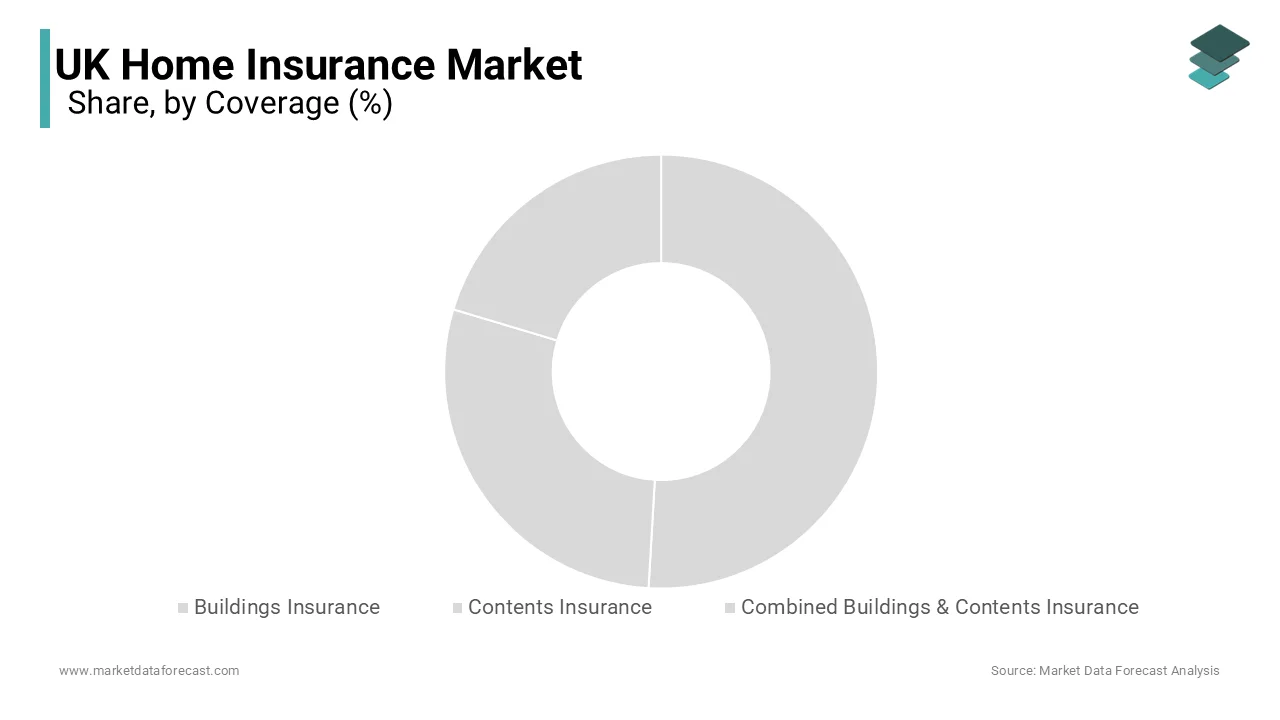
The combined building and content coverage segment dominated the market by holding the leading share of the UK market in 2025 as it offers holistic protection for both the physical structure of the property and the personal belongings within it. This dominance is primarily driven by mortgage lenders, who typically mandate comprehensive coverage as a condition for lending, ensuring that their collateral is protected against structural damage while borrowers safeguard their assets. According to UK Finance data, over 75 percent of residential mortgages in the UK require borrowers to maintain adequate buildings insurance, with many lenders strongly recommending or bundling contents cover for convenience. Homeowners prefer this unified approach as it simplifies policy management, reduces administrative hassle, and often results in cost savings through multi-policy discounts. As per Association of British Insurers statistics, combined policies account for approximately 60 percent of all new home insurance sales, reflecting consumer preference for a single point of contact and claims handling. The integration of coverage ensures there are no gaps in protection where damage to the building might affect contents or vice versa. Claims processes are streamlined when a single insurer handles both aspects of a loss, such as fire or flood, which often impacts both structure and possessions. This comprehensive nature provides peace of mind and financial security, making it the default choice for the majority of homeowners seeking rohome insurancet risk mitigation strategies for their most valuable asset.
On the other hand, the content only coverage segment is estimated to showcase a CAGR of 9.2% during the forecast period, as the rental population increases and tenants recognize the need to protect their personal possessions. Unlike landlords, who are responsible for the building structure, tenants are solely liable for their own belongings, making contents insurance essential for financial security against theft, fire, or water damage. According to the Office for National Statistics, the private rented sector in the UK has grown to include approximately 4.6 million households, reflecting a significant shift away from homeownership among younger demographics. As per English Housing Survey data, nearly 60 percent of renters do not have contents insurance, highlighting a large untapped market with growing awareness driven by educational campaigns and landlord requirements. Tenants are increasingly mobile and possess high-value items, such as electronics, jewelry, and designer goods, which require specific protection beyond standard household limits. The affordability of standalone contents policies makes them accessible to students and young professionals, who may not have substantial disposable income. Insurance providers are tailoring products with flexible terms and portable coverage that follow the tenant when they move, addressing the transient nature of renting. This demographic shift and increasing asset ownership among renters drive rohome insurancet growth in the contents only segment.
By Customer Type Insights
The homeowner segment held the highest share of the UK market in 2025, as property owners have the highest financial stake in protecting their assets and are often legally required to maintain coverage by mortgage providers. Homeowners typically possess higher-value properties and accumulated possessions, necessitating comprehensive insurance solutions that cover both structural integrity and personal wealth. According to the Department for Levelling Up, Housing and Communities, approximately 65 percent of households in the UK are owner-occupied, representing the largest customer base for home insurance products. Mortgage lenders strictly enforce buildings insurance requirements to safeguard their loan security, ensuring near-universal penetration among this segment. As per Council of Mortgage Lenders data, virtually all mortgaged properties must have valid buildings insurance in place throughout the loan term, creating a captive and stable market for insurers. Homeowners are also more likely to invest in additional coverage options, such as legal expenses, home emergency assistance, and high-value item protection, due to their long-term commitment to the property. The emotional and financial attachment to owned homes drives a higher willingness to pay for premium services and faster claims resolution. This segment generates the highest premium volumes, due to the substantial sums insured required for rebuilding costs and replacement values. The stability of homeownership ensures consistent renewal rates and long-term customer relationships for insurance providers.
On the other end, the tenant segment is estimated to showcase a CAGR of 12.4% during the forecast period, as demographic shifts and housing affordability challenges increase reliance on the private rented sector. Younger generations and urban professionals are delaying homeownership due to high property prices and deposit requirements, leading to a larger and more permanent rental population. According to Resolution Foundation analysis, the proportion of adults aged 25 to 34 living in private rentals has risen to over 50 percent, creating a substantial and growing addressable market for contents insurance. As per English Housing Survey data, the average length of tenancy is increasing, indicating that renting is becoming a long-term lifestyle choice rather than a temporary transition. This permanence drives tenants to invest more in their living spaces and accumulate valuable possessions, requiring adequate insurance protection. Landlords are increasingly including clauses in tenancy agreements requiring tenants to hold contents insurance to cover liability for accidental damage, fostering habitual uptake. The mobility of tenants necessitates flexible, portable policies that can transfer between addresses, appealing to this dynamic demographic. Insurers are responding with tailored products featuring low monthly premiums and digital-first experiences that align with tenant preferences. This structural change in the housing market ensures sustained, rapid growth for the tenant insurance segment.
By Distribution Channel Insights
The aggregators segment accounted for the largest share of the UK market in 2025, as it provides consumers with unparalleled price transparency and the ability to compare multiple quotes instantly from various providers. Platforms such as Compare the Market, GoCompare, and Confused.com have become the primary starting point for shoppers seeking the best deal on home insurance, due to their user-friendly interfaces and comprehensive market coverage. According to Mintel research, over 60 percent of UK consumers use comparison websites when purchasing home insurance, citing ease of use and speed as key motivators. Aggregators leverage sophisticated algorithms to match customer profiles with suitable policies, ensuring relevant results and competitive pricing. As per Financial Conduct Authority data, the widespread use of price comparison tools has intensified competition among insurers, forcing them to offer sharper rates and clearer policy wording to attract clicks. The convenience of viewing multiple options side by side reduces search costs and decision fatigue for consumers. Aggregators also provide independent reviews and ratings, helping users assess insurer reputation alongside price. The dominant market position is reinforced by heavy advertising investments and brand recognition, making these platforms household names. Insurers rely heavily on aggregator channels for customer acquisition despite commission costs, because of the high volume of qualified leads generated. This centrality in the purchasing journey ensures aggregators remain the leading distribution channel.
However, the direct distribution segment is anticipated to record a CAGR of 8.2% during the forecast period in the UK market, as insurers invest heavily in their own digital platforms to bypass intermediaries and build direct customer relationships. Major insurers are enhancing their websites and mobile apps to offer seamless quoting, buying, and claims experiences that rival aggregator convenience, while retaining full customer data ownership. According to Forrester Research, direct digital channels are seeing increased traffic as brands leverage loyalty programs and bundled discounts to encourage repeat home insuranceiness. As per Juniper Research data, insurers offering exclusive online discounts for direct purchases are successfully converting price-sensitive customers, who value brand reliability over marginal price differences found on comparators. Direct channels allow insurers to personalize offers based on historical data and cross-sell additional products, such as life or car insurance, more effectively. The elimination of aggregator commissions improves profit margins, allowing insurers to reinvest in customer service and technology. Enhanced user interfaces with chatbots and AI-driven support provide immediate assistance, improving satisfaction. The ability to control the entire customer journey from acquisition to retention enables insurers to deliver consistent brand experiences. This strategic shift toward direct engagement drives rohome insurancet growth in this distribution channel.
COUNTRY LEVEL ANALYSIS
The UK stands as the most mature and competitive home insurance market in Europe, characterized by high penetration rates, sophisticated consumer expectations, and a rohome insurancet regulatory framework. The market status is defined by a dense network of insurers, brokers, and aggregators offering diverse products tailored to various property types and risk profiles. According to the Association of British Insurers, the general insurance sector, including home insurance, contributes significantly to the national economy with billions in gross written premiums annually. London serves as a global hub for insurance innovation and reinsurance capacity, supporting the domestic market with advanced risk modeling and capital resources. The regulatory environment, overseen by the Financial Conduct Authority, ensures high standards of consumer protection and fair pricing, influencing product design and distribution practices. As per Office for National Statistics data, the high rate of homeownership and substantial private rented sector create a broad and stable demand base for home insurance products. Climate change risks, particularly flooding and subsidence, are central to market dynamics, driving investment in resilient infrastructure and specialized coverage schemes like Flood Re. The widespread adoption of digital technologies has transformed customer interactions, making online comparison and purchase the norm. The UK market is highly sensitive to economic conditions, with inflation and construction costs impacting premium levels and claim settlements. Despite these challenges, the market remains resilient due to mandatory lender requirements and strong consumer awareness of property protection needs. The presence of world-class insurers and tech firms fosters continuous innovation in smart home integration and predictive underwriting, maintaining the UK's leadership in European home insurance sophistication.
COMPETITIVE LANDSCAPE
The competition within the UK home insurance market is intense and characterized by the rivalry between established legacy insurers agile digital natives and price comparison aggregators. Incumbent institutions leverage their extensive brand recognition financial stability and large customer bases to retain loyal clients while investing heavily in digital platforms to counter the threat from newer entrants. Digital first insurers disrupt traditional models by offering lower overheads faster service and innovative features such as on demand coverage or smart home integration. This dynamic forces traditional banks and insurers to accelerate their innovation cycles and adopt more customer centric approaches to prevent churn. Regulatory changes such as the Consumer Duty require all firms to demonstrate fair outcomes raising the bar for service quality and transparency. Price competition remains fierce particularly through comparison websites where consumers can easily switch providers for marginal savings. Differentiation increasingly depends on claims handling speed additional benefits like home emergency cover and personalized risk advice. Customer retention strategies focus on loyalty rewards bundled discounts and proactive communication. Overall the market is shifting toward a hybrid model where digital efficiency combines with human expertise to deliver comprehensive and trustworthy home insurance solutions.
KEY MARKET PLAYERS
Some of the companies that are playing a dominating role in the UK home insurance market are
- Aviva plc
- Admiral Group plc
- Direct Line Insurance Group plc
- AXA Insurance UK Ltd
- Allianz Holdings (LV=)
- RSA Insurance Group Ltd (More Than)
- Ageas (UK) Ltd
- Hastings Group Holdings plc
- Zurich Insurance plc
- Hiscox Ltd
- NFU Mutual
- Saga plc
- Covea Insurance plc
- Policy Expert (QMetric Group)
- Tesco Bank Home Insurance (underwritten by Ageas)
- HomeProtect (Avantia Group)
- Urban Jungle Services Ltd
- Endsleigh Insurance Services Ltd
- Churchill Insurance (RBSI)
- Post Office Money Home Insurance (underwritten by Ageas UK)
Top Players in the Market
- Direct Line Group maintains a prominent position in the UK home insurance sector by leveraging its strong brand recognition and direct to consumer distribution model. The company focuses on providing comprehensive coverage options tailored to individual homeowner needs with an emphasis on digital convenience and customer service excellence. Recent strategic initiatives include significant investments in artificial intelligence driven claims processing systems which reduce settlement times and enhance user satisfaction. Direct Line has also expanded its product offerings to include smart home device integrations that help prevent damage and lower risks for policyholders. By prioritizing technological innovation and streamlined customer journeys the group aims to retain existing clients while attracting new customers who value efficiency and reliability in their insurance providers across the competitive British market landscape.
- Aviva plc plays a pivotal role in the UK home insurance market as one of the largest general insurers offering a wide range of property protection products through multiple distribution channels. The company utilizes its extensive data analytics capabilities to refine underwriting accuracy and offer personalized pricing models that reflect individual risk profiles. Recent actions involve enhancing its digital platforms to provide seamless online quoting and policy management experiences for customers. Aviva has also strengthened its partnerships with brokers and comparison sites to increase market reach and visibility. The insurer is actively investing in climate resilience initiatives helping customers mitigate flood and storm risks through proactive advice and preventive measures. These efforts reinforce Aviva’s commitment to sustainable insurance practices and long term customer relationships in the evolving UK home insurance environment.
- Admiral Group plc contributes significantly to the UK home insurance market through its distinctive customer centric approach and innovative use of technology to drive operational efficiency. Known for its strong corporate culture and employee engagement Admiral offers competitive home insurance products that appeal to a broad demographic of homeowners and tenants. Recent strategies include the expansion of its price comparison tool integrations and the development of mobile applications that simplify policy administration and claims reporting. The company has also introduced flexible payment options and bundled discounts to enhance value propositions for multi product holders. By focusing on cost effective operations and high levels of customer satisfaction Admiral continues to strengthen its market presence and build loyalty among UK consumers seeking reliable and affordable home insurance solutions.
Top Strategies Used by Key Market Participants
Key players in the UK home insurance market predominantly employ digital transformation and data analytics to enhance customer experience and optimize risk assessment. Companies invest heavily in artificial intelligence and machine learning technologies to automate claims processing detect fraud and personalize pricing based on individual behavior patterns. Developing user friendly mobile applications allows insurers to offer seamless policy management and instant support thereby meeting the expectations of digitally savvy consumers. Strategic partnerships with smart home technology providers enable firms to integrate preventive devices such as leak detectors and security cameras which reduce claim frequencies and improve safety. Expanding distribution through comparison websites and direct digital channels ensures broad market reach and competitive visibility. Enhancing cybersecurity measures protects sensitive customer data and maintains trust in an era of increasing cyber threats. Personalization through targeted marketing campaigns improves conversion rates and customer retention. These combined strategies enable participants to remain competitive agile and responsive to the evolving needs of homeowners in a dynamic regulatory and economic landscape.
MARKET SEGMENTATION
This research report on the UK home insurance market is segmented and sub-segmented into the following categories.
By Coverage
- Buildings Insurance
- Contents Insurance
- Combined Buildings & Contents Insurance
By Customer Type
- Homeowners
- Landlords
- Tenants/Renters
By Property Type
- Detached Houses
- Semi Detached Houses
- Terraced Houses
- Flats & Apartments
By Distribution Channel
- Direct (Insurer Websites & Call Centres)
- Bancassurance (Banks & Building Societies)
- Brokers & Independent Advisers
- Aggregators / Price Comparison Websites
- Affinity & Retailer Partnerships
- Digital Only / Insurtech Carriers
Frequently Asked Questions
1. What is home insurance?
Home insurance is a policy that provides financial protection against damage to a property, its contents, and liabilities resulting from unforeseen events.
2. What are the main types of home insurance available in the UK?
The main types include buildings insurance, contents insurance, and combined buildings and contents insurance policies.
3. Is home insurance mandatory in the UK?
Home insurance is not legally required, but mortgage lenders often require homeowners to have buildings insurance coverage.
4. What factors are driving growth in the UK home insurance market?
Growth is driven by rising property values, increasing awareness of property protection, climate related risks, and demand for customized insurance solutions.
5. Which segment holds the largest share of the UK home insurance market?
Combined buildings and contents insurance policies account for the largest market share due to their comprehensive coverage.
6. How are digital platforms impacting the UK home insurance market?
Digital platforms and comparison websites simplify policy selection, improve customer access, and enhance the purchasing experience.
7. What risks are typically covered under UK home insurance policies?
Most policies cover risks such as fire, theft, storms, flooding, and accidental damage, depending on the policy terms.
8. How is climate change influencing the UK home insurance industry?
More frequent extreme weather events are increasing claims costs and encouraging insurers to strengthen risk assessment practices.
9. Who are the major customers in the UK home insurance market?
Homeowners represent the largest customer segment, followed by landlords and tenants seeking property protection.
10. What challenges does the UK home insurance market face?
Key challenges include rising repair costs, inflation, increasing weather related claims, and profitability pressures for insurers.
Related Reports
Access the study in MULTIPLE FORMATS
Purchase options starting from
$ 1200
Didn’t find what you’re looking for?
TALK TO OUR ANALYST TEAM
Need something within your budget?
NO WORRIES! WE GOT YOU COVERED!
Call us on: +1 888 702 9696 (U.S Toll Free)
Write to us: sales@marketdataforecast.com