- Product Description Description
- Table of Contents TOC
- List of Table & Figure LOT
- Get Free Sample PDF Sample PDF
Market Size, 2025
$0.26 BnMarket Estimate, 2026
$0.30 BnMarket Forecast, 2034
$1.17 BnCAGR, 2026–2034
18.20%UK Orthodontics Market Report Summary
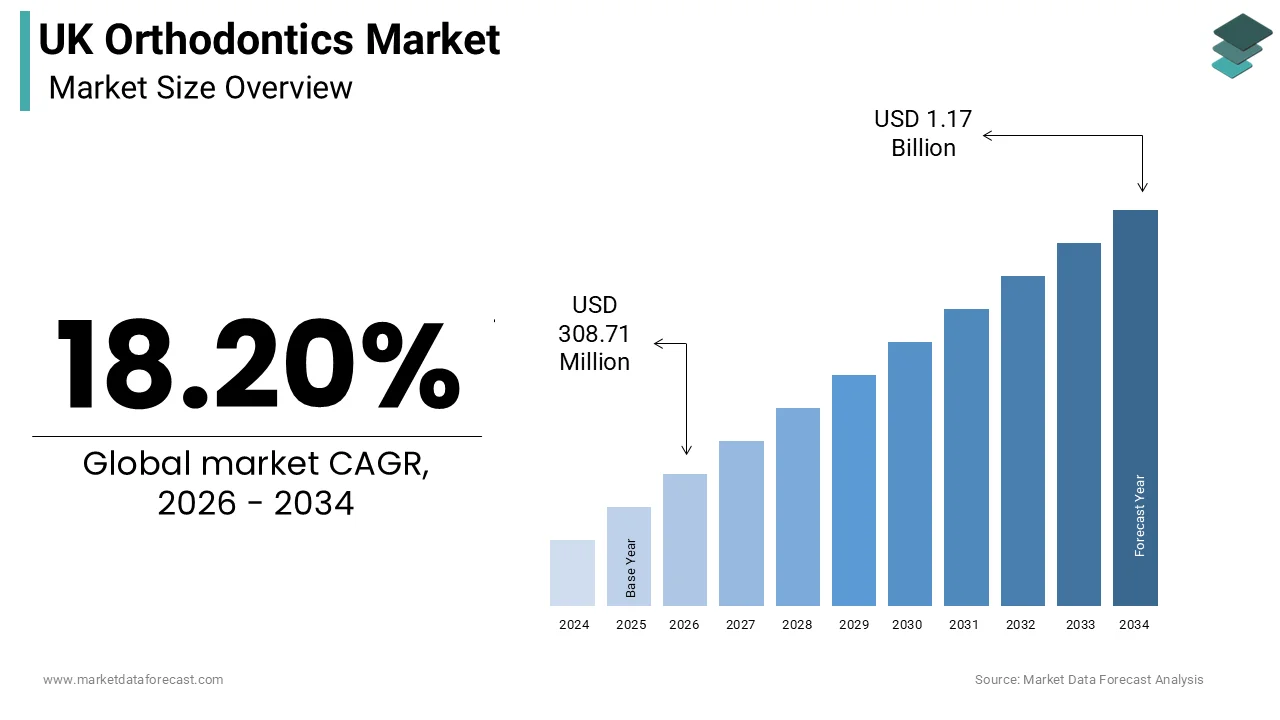
The United Kingdom orthodontics market was valued at USD 261.18 million in 2025 and is projected to reach USD 1.17 billion by 2034, growing from USD 308.71 million in 2026 at a CAGR of 18.20% during the forecast period. Market growth is driven by increasing awareness of dental aesthetics, rising demand for clear aligners, growing prevalence of malocclusion, and advancements in orthodontic technologies. The expansion of private dental clinics and the increasing adoption of digital orthodontic treatment planning are further supporting market growth.
Key Market Trends
- Rising demand for clear aligners and invisible orthodontic treatments
- Increasing awareness of dental aesthetics among adults and teenagers
- Growth in digital orthodontics and 3D treatment planning technologies
- Expansion of private dental and orthodontic clinics
- Increasing adoption of customized and patient-specific orthodontic solutions
Segmental Insights
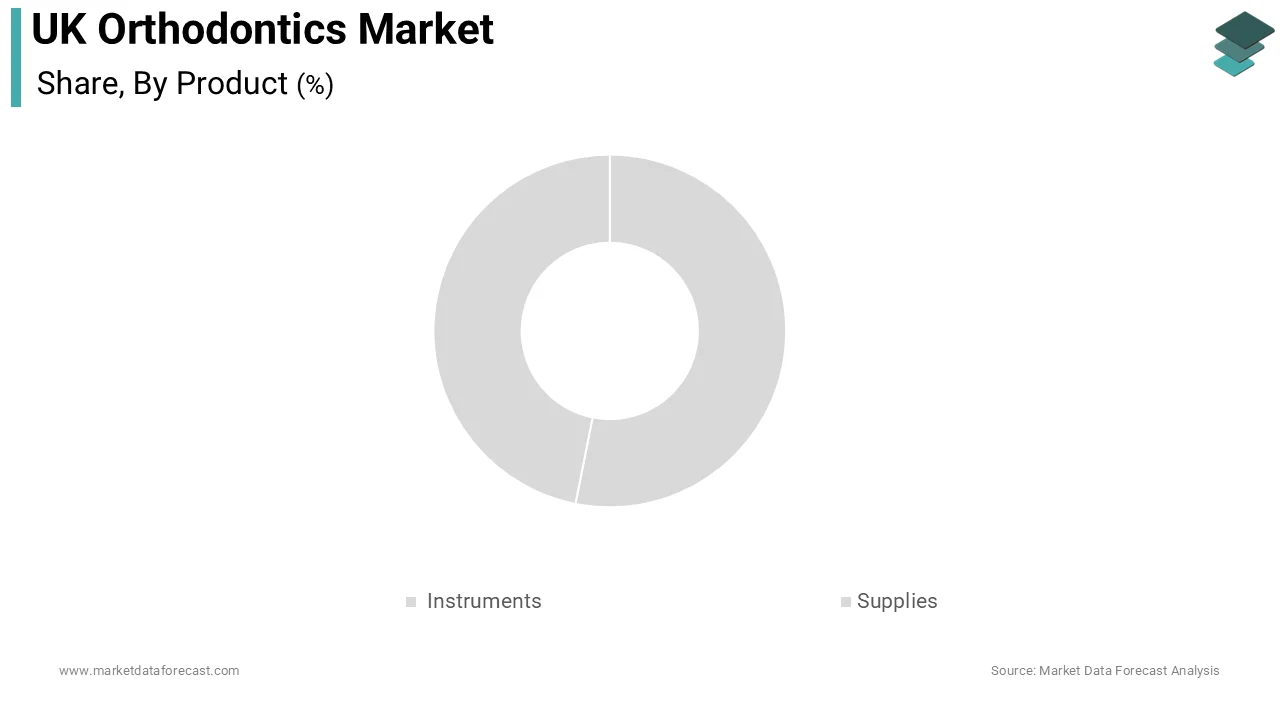
- Based on Product, the orthodontic supplies segment dominated the UK orthodontics market in 2025 by accounting for the largest share of the market. Growth of this segment is attributed to the increasing use of braces, aligners, archwires, brackets, retainers, and other orthodontic consumables in corrective dental procedures.
Regional Insights
- The United Kingdom held a major share of the European orthodontics market in 2025 and is expected to witness steady and robust growth over the forecast period. The country's strong dental healthcare infrastructure, increasing adoption of advanced orthodontic treatments, growing demand for aesthetic dentistry, and rising awareness of oral health are key factors driving market expansion. The presence of leading dental clinics and the increasing availability of clear aligner solutions are further supporting the growth of the orthodontics market in the UK.
Competitive Landscape
- The UK orthodontics market is highly competitive, with manufacturers and service providers focusing on technological innovation, digital workflows, and patient-centric treatment solutions. Companies are investing in advanced aligner systems, AI-assisted treatment planning, and customized orthodontic devices to strengthen their market position.
- Key participants in the UK orthodontics market include Align Technology, 3M, Dentsply Sirona, Henry Schein, Envista Holdings, Institut Straumann, Ormco, American Orthodontics, GC Corporation, and Dentaurum.
UK Orthodontics Market Size
The UK Orthodontics market size was valued at USD 261.18 million in 2025, and is projected to reach USD 1.17 billion by 2034 from USD 308.71 million in 2026, growing at a CAGR of 18.20%.
According to the British Orthodontic Society, there are approximately 1,400 specialist orthodontists practicing in the UK, serving a population where demand for straighter smiles has surged across all age groups. As per data from the Office for National Statistics, the median age of the UK population is rising, with adults increasingly seeking orthodontic treatment to improve oral health and professional appearance. The cultural shift toward aesthetic consciousness has been amplified by social media platforms, where perfect smiles are often portrayed as a standard of success and well-being. Regulatory frameworks governed by the General Dental Council ensure strict professional standards, while the National Health Service provides funded treatment primarily for children with severe clinical need. However, the majority of adult treatment occurs in the private sector, driven by discretionary spending and innovative direct-to-consumer models. The integration of digital scanning, 3D printing, and artificial intelligence into treatment planning is transforming clinical workflows and patient experiences. This market operates at the intersection of medical necessity, cosmetic desire, and technological advancement, reflecting a growing emphasis on personalized and efficient dental care solutions.
MARKET DRIVERS
Rising Aesthetic Consciousness and Social Media Influence
The pervasive influence of social media and heightened aesthetic consciousness among the UK population is one of the major factors propelling the expansion of the UK orthodontics market, particularly among adolescents and young adults. Platforms such as Instagram, TikTok, and Snapchat have normalized the display of perfect smiles, creating a powerful psychological incentive for individuals to seek corrective treatments. According to a survey by the British Orthodontic Society, approximately 80% of orthodontists reported an increase in adult private patients, with many citing social media images as a major factor influencing their decision to pursue teeth straightening procedures. The phenomenon known as "selfie culture" has made individuals more aware of dental imperfections, leading to increased consultations for minor misalignments that were previously ignored. Data from Mintel reveals that 45% of UK adults aged 18 to 34 consider straight teeth essential for confidence in social and professional interactions. This demographic is also more willing to invest in discreet options, such as clear aligners, which offer aesthetic benefits without the visibility of traditional metal brackets. Celebrity endorsements and influencer marketing further amplify this trend by showcasing successful transformation journeys. The desire for photogenic appearances drives demand not only for functional correction but for cosmetic enhancement, positioning orthodontics as a key component of personal grooming and self-improvement. This cultural shift ensures sustained growth in the private sector, as patients prioritize aesthetic outcomes alongside clinical efficacy.
Technological Advancements in Clear Aligner Systems
Rapid technological advancements in clear aligner systems are further boosting the UK market growth by offering a convenient, discreet, and effective alternative to traditional fixed appliances. Innovations in 3D printing, computer-aided design, and manufacturing have enabled the production of precise, custom-fit trays that gradually move teeth into desired positions with minimal discomfort. According to the Royal College of Surgeons, the adoption of digital intraoral scanners has reduced the need for messy impressions, improving patient comfort and treatment accuracy. Data from industry analysts indicates that the clear aligner segment is experiencing double-digit growth rates, as patients prefer removable devices that facilitate easier oral hygiene and dietary freedom. The integration of artificial intelligence in treatment planning allows orthodontists to predict tooth movement with greater precision, reducing treatment duration and the number of required adjustments. Direct-to-consumer models have emerged, leveraging these technologies to provide remote monitoring and home impression kits, although professional supervision remains crucial for complex cases. The availability of faster treatment options, such as accelerated orthodontics, appeals to busy professionals who seek efficient solutions. These technological enhancements have democratized access to orthodontic care, making it appealing to a broader demographic, including older adults who previously avoided treatment due to aesthetic concerns. This innovation cycle continues to drive market expansion and patient uptake.
MARKET RESTRAINTS
High Treatment Costs and Limited NHS Coverage
The substantial financial burden associated with orthodontic treatment is a significant restraint on the UK market, particularly for adults and families who do not qualify for National Health Service funding. NHS orthodontic care is strictly limited to children and adolescents under 18 with severe clinical need, as defined by the Index of Orthodontic Treatment Need, leaving the vast majority of adults and mild cases to the private sector. According to the British Orthodontic Society, the average cost of private orthodontic treatment in the UK ranges from 2,000 to 5,000 pounds, depending on the complexity and type of appliance used. This high price point excludes a large segment of the population, particularly those on lower incomes or without comprehensive dental insurance. Data from the Health Foundation indicates that out-of-pocket expenditure on dental care has risen sharply, contributing to health inequalities where only affluent individuals can afford optimal aesthetic corrections. The lack of flexible payment plans from some providers further deters potential patients, who may struggle with upfront payments. Economic uncertainty and inflationary pressures have also reduced disposable income, leading many households to postpone or cancel elective dental procedures. This financial barrier creates a two-tier system where access to orthodontic care is determined by ability to pay rather than clinical need, limiting overall market penetration and leaving many individuals with untreated malocclusions that could impact long-term oral health.
Shortage of Qualified Orthodontic Specialists
The scarcity of qualified orthodontic specialists in the UK is further hampering the UK orthodontics market expansion, which is also creating long waiting lists and limiting access to timely care. Training to become a specialist orthodontist requires extensive postgraduate education and clinical experience, resulting in a limited pipeline of new practitioners entering the workforce. According to NHS England, recruitment and workforce retention challenges persist across the country, with vacancy rates under continuous scrutiny alongside the impact of the retirement of senior staff. Data from the British Orthodontic Society highlights that the ratio of orthodontists to population is lower than in many other developed nations, leading to capacity constraints in both NHS and private practices. Patients often face waiting times of several months to years for initial consultations and treatment commencement, which can discourage them from pursuing care. The shortage also increases workload pressure on existing specialists, potentially affecting the quality of care and job satisfaction. Private practices compete fiercely for limited talent, driving up operational costs, which may be passed on to patients. The lack of sufficient training places and retention issues further compound the problem, threatening the sustainability of service delivery. Without strategic interventions to expand training capacity and improve workforce retention, the specialist shortage will continue to bottleneck market expansion and limit patient access to essential orthodontic services.
MARKET OPPORTUNITIES
Expansion of Direct-To-Consumer and Remote Monitoring Models
The emergence of direct-to-consumer orthodontic services and remote monitoring technologies is a significant opportunity for market expansion by lowering barriers to entry and increasing accessibility for mild to moderate cases. These models leverage digital impressions, smartphone apps, and telehealth consultations to provide affordable and convenient teeth straightening solutions without frequent clinic visits. According to the General Dental Council, while full remote treatment carries risks, hybrid models that combine initial professional assessment with remote progress tracking are gaining traction among tech-savvy consumers. Data from YouGov indicates that 30% of UK adults would consider using remote monitoring services if they offered cost savings and flexibility compared to traditional appointments. Companies are partnering with local dentists to create networks that provide oversight, while utilizing centralized labs for aligner production, reducing overhead and prices. This approach appeals to busy professionals and individuals in rural areas with limited access to specialists. The integration of AI-driven progress tracking ensures safety and efficacy by alerting clinicians to any deviations from the treatment plan. Subscription-based payment models further enhance affordability by spreading costs over the treatment period. By democratizing access and leveraging digital efficiency, these innovative models can capture a large, underserved segment of the market, particularly among younger demographics who value convenience and transparency.
Growing Demand for Adult Orthodontics and Cosmetic Dentistry
The increasing acceptance of orthodontic treatment among adults offers a substantial opportunity for market growth, as societal stigma diminishes and disposable income allows for investment in personal appearance. Adults are increasingly seeking orthodontic care not only for aesthetic improvements but also to address functional issues, such as jaw pain and wear caused by misalignment. According to the British Orthodontic Society, the number of adult patients seeking treatment has seen significant positive growth in recent years, with a vast majority of orthodontists experiencing a rise in adult private patient consultations. Data from the Private Healthcare Information Network shows that dental cosmetics, including orthodontics, remain one of the most popular elective procedures among professionals aged 30 to 50. The availability of discreet options, such as lingual braces and clear aligners specifically marketed to adults, has removed previous aesthetic barriers. Employers are also recognizing the link between oral health and productivity, leading to corporate wellness programs that include dental benefits. Marketing campaigns targeting adults emphasize confidence, career success, and long-term health benefits, resonating with this demographic. Clinics are expanding their services to include comprehensive smile makeovers, combining orthodontics with whitening and veneers. This holistic approach enhances value propositions and drives higher revenue per patient, positioning adult orthodontics as a key growth engine for the future.
MARKET CHALLENGES
Regulatory Scrutiny and Safety Concerns with DIY Treatments
The rise of do-it-yourself (DIY) orthodontic kits and unregulated online providers is a major challenge to the UK orthodontics market, raising serious safety and ethical concerns among professional bodies. The General Dental Council has issued strong warnings against unsupervised tooth movement, highlighting risks such as root resorption, gum disease, and permanent tooth loss. According to a report by the British Orthodontic Society, direct-to-consumer or DIY orthodontic treatments undertaken without proper clinical assessment face strong opposition due to high clinical risks and potential for corrective surgery. Data from consumer protection agencies indicates a rise in complaints related to misleading advertising and a lack of transparency from direct-to-consumer brands regarding the limitations of their services. The absence of face-to-face monitoring means that underlying issues, such as periodontal disease or bone loss, may go undetected, leading to severe complications. Professional orthodontists argue that tooth movement is a biological process requiring expert oversight to ensure safety and stability. Regulatory frameworks are struggling to keep pace with digital business models that operate across borders, complicating enforcement and accountability. This environment creates confusion for consumers, who may prioritize cost over safety, undermining trust in the broader industry. Addressing these challenges requires stricter regulation, public education, and collaboration between professional bodies and policymakers to ensure patient safety remains paramount.
Integration of Digital Workflows and High Implementation Costs
The transition to fully digital orthodontic workflows is further challenging the expansion of the UK market due to high implementation costs and the steep learning curve associated with new technologies. While digital scanners, 3D printers, and software offer long-term efficiency gains, the initial investment can be prohibitive for small and independent clinics. According to the British Dental Association, the cost of setting up a digital suite can exceed several thousand pounds, presenting a substantial financial barrier for small, independent dental practices. Data from industry surveys reveal that 40% of general dental practitioners hesitate to adopt digital orthodontics due to concerns about return on investment and technical complexity. Integrating these systems with existing practice management software often requires additional IT support and customization, creating further logistical hurdles. Staff training is essential to maximize the benefits of digital tools, but it takes time away from patient care and incurs additional costs. Rapid technological obsolescence means that equipment may need frequent upgrades, adding to financial pressure. Practices that fail to modernize risk losing their competitive edge to larger chains and specialized centers that can afford advanced infrastructure. Balancing the need for technological advancement with financial viability remains a critical challenge for sustainable practice growth in an increasingly digital healthcare landscape.
REPORT COVERAGE
| REPORT METRIC | DETAILS |
| Market Size Available | 2025 to 2034 |
| Base Year | 2025 |
| Forecast Period | 2026 to 2034 |
| CAGR | 18.20% |
| Segments Covered | By Product, End User, and Region. |
| Various Analyses Covered | Global, Regional and Country-Level Analysis, Segment-Level Analysis, Drivers, Restraints, Opportunities, Challenges; PESTLE Analysis; Porter’s Five Forces Analysis, Competitive Landscape, Analyst Overview of Investment Opportunities |
| Market Leaders Profiled | DLA Piper LLP, Clifford Chance LLP, Linklaters LLP, A&O Shearman LLP, Freshfields LLP, Herbert Smith Freehills Kramer LLP, CMS Cameron McKenna Nabarro Olswang LLP, Eversheds Sutherland LLP, Pinsent Masons LLP, Ashurst LLP, Hogan Lovells International LLP, Norton Rose Fulbright LLP, Bird & Bird LLP, Taylor Wessing LLP, Mishcon de Reya LLP |
SEGMENTAL ANALYSIS
By Product Insights
The orthodontic supplies segment dominated the market by capturing the leading share of the UK market in 2025. The dominance of the orthodontic supplies segment in the UK market is mainly driven by the high volume of recurring consumables required for every active treatment case. Unlike instruments, which are durable capital assets, supplies are single-use or limited-use items that must be replenished regularly, ensuring consistent and predictable revenue streams for manufacturers and distributors. According to the British Orthodontic Society, there are over 300,000 active orthodontic patients in the UK at any given time, each requiring a steady supply of archwires, ligatures, and bonding agents throughout their 18-to-24-month treatment journey. Data from industry procurement records indicates that the average cost of consumable supplies per patient case ranges from 200 to 400 pounds, representing a significant portion of clinical overheads. The shift toward clear aligner therapy has further boosted this segment, as each stage of treatment requires a new set of custom-manufactured trays, creating a high-frequency replacement cycle. Additionally, the rise in adult orthodontics has increased demand for aesthetic supplies, such as ceramic brackets and tooth-colored wires, which command higher prices than traditional metal components. The necessity of maintaining strict hygiene standards also drives the consumption of sterilization pouches and disposable tools. This continuous demand loop ensures that supplies remain the largest product segment by value and volume, sustaining market stability even during periods of slower new patient acquisition.
On the other hand, the digital instruments segment is estimated to register the fastest CAGR of 13.4% during the forecast period, owing to the rapid transition from analog impressions to digital workflows. These advanced devices enable clinicians to capture precise 3D images of patients' dentitions, eliminating the discomfort and inaccuracies associated with traditional alginate molds. According to the British Dental Association, the adoption of digital technologies has increased significantly among UK practices, as practitioners seek to improve efficiency and patient experience. Data from the Royal College of Surgeons highlights that digital workflows reduce chair time by up to 30%, allowing clinics to see more patients and increase throughput. The integration of artificial intelligence software with these scanners facilitates automated treatment planning and predictive modeling, enhancing clinical outcomes. Furthermore, the ability to instantly share digital files with laboratories for aligner fabrication accelerates turnaround times, meeting consumer expectations for speed. As the cost of scanners decreases and their usability improves, smaller practices are increasingly investing in this technology. The government’s push for digital dentistry and the availability of training programs further support this growth trajectory, positioning digital instruments as the primary engine of innovation and expansion in the UK orthodontic sector.
By End User Insights
The dental clinics segment dominated the market in the UK with the largest share of the UK market in 2025 due to their accessibility, specialized expertise, and dominance in private care provision. The majority of orthodontic treatments, especially for adults and mild cases, are delivered in outpatient clinic settings where patients receive personalized care in a comfortable environment. According to the British Orthodontic Society, over 80% of orthodontic specialists in the UK operate primarily in private practice or mixed NHS-private clinics, reflecting the sector’s reliance on fee-paying patients. Data from the Private Healthcare Information Network indicates that dental clinics perform the vast majority of clear aligner treatments, which require frequent monitoring and adjustments best suited to regular clinic visits. The decentralized nature of dental care allows for widespread geographic coverage, ensuring that patients in both urban and rural areas can access services. Clinics also benefit from established patient relationships and referral networks with general dentists, who identify orthodontic needs during routine checkups. The flexibility of private clinics to offer diverse payment plans and aesthetic options further enhances their appeal compared to institutional settings. This structural advantage ensures that dental clinics remain the primary channel for orthodontic service delivery, driving demand for both professional services and associated products.
However, the hospital-based orthodontic departments segment is experiencing the fastest growth and is anticipated to record a CAGR of 7.5% during the forecast period, owing to the increasing prevalence of severe craniofacial anomalies and the need for surgical orthodontics. While hospitals handle a smaller volume of routine cases, they are essential for treating patients with cleft lip and palate, jaw deformities, and other complex conditions requiring collaboration between orthodontists, oral surgeons, and speech therapists. According to NHS England, referrals for complex orthodontic surgical cases have risen significantly in recent years due to improved diagnostic capabilities and earlier detection of developmental issues. Data from the British Association of Oral and Maxillofacial Surgeons highlights that integrated hospital teams provide superior outcomes for severe malocclusions that cannot be managed in primary care settings. The centralization of specialized equipment and expertise in hospitals allows for advanced imaging and computer-guided surgery, which are becoming standard for complex reconstructions. Government investment in regional centers of excellence for craniofacial care further supports this growth. As the population ages and trauma-related jaw injuries increase, the demand for hospital-based orthodontic intervention continues to rise. This segment’s growth is characterized by high-value, complex procedures rather than volume, making it a critical component of the national healthcare infrastructure.
REGIONAL ANALYSIS
The UK held the major share of the European market in 2025 and is expected to experience steady, robust expansion in the orthodontics sector over the next few years due to rising demand for clear aligners and expanding private dental care services. The nation serves as a hub for orthodontic innovation and education, with leading universities and professional bodies setting high standards for clinical practice and training. According to the Office for National Statistics, the UK population includes millions of individuals with unmet orthodontic needs, creating a substantial addressable market for both functional and cosmetic treatments. Data from the British Orthodontic Society indicates that while NHS funding is restricted to severe cases, the private sector has expanded rapidly to meet the growing desire for straighter smiles among adults. The UK is also a leader in the adoption of digital orthodontics, with a high penetration rate of intraoral scanners and clear aligner systems compared to other European countries. Regulatory oversight by the General Dental Council ensures patient safety and professional accountability, fostering trust in the healthcare system. The presence of major global orthodontic manufacturers and local distributors creates a competitive landscape that drives product availability and technological advancement. This combination of rigorous standards, demographic demand, and technological readiness positions the UK as a key influencer in shaping orthodontic trends and practices across the European region.
COMPETITION OVERVIEW
The UK orthodontics market features intense competition characterized by the presence of global medical device giants, specialized aligner manufacturers, and numerous local dental laboratories vying for practitioner loyalty. Established corporations leverage extensive research and development capabilities, strong brand recognition, and comprehensive distribution networks to maintain dominance while niche players disrupt the status quo with innovative materials and direct-to-consumer models. Competitive dynamics are shaped by the rapid adoption of digital technologies, prompting companies to integrate software and hardware ecosystems that lock in users. Price sensitivity varies between NHS-funded treatments and private care, with private providers competing on aesthetics, speed, and convenience. The rise of clear aligners has intensified rivalry as traditional bracket manufacturers expand their own aligner offerings to retain market relevance. Regulatory compliance with General Dental Council standards ensures high quality but creates barriers to entry for new competitors. Brand loyalty among orthodontists is driven by clinical outcomes, support services, and ease of use rather than price alone. Success depends on balancing technological advancement with practical clinical utility while maintaining strong relationships with healthcare professionals in a rapidly evolving digital landscape.
KEY MARKET PLAYERS
A few major players of the UK orthodontics market include
- DLA Piper LLP
- Clifford Chance LLP
- Linklaters LLP
- A&O Shearman LLP
- Freshfields LLP
- Herbert Smith Freehills Kramer LLP
- CMS Cameron McKenna Nabarro Olswang LLP
- Eversheds Sutherland LLP
- Pinsent Masons LLP
- Ashurst LLP
- Hogan Lovells International LLP
- Norton Rose Fulbright LLP
- Bird & Bird LLP
- Taylor Wessing LLP
- Mishcon de Reya LLP
Top Strategies Used By Key Market Participants
Key players in the UK orthodontics market employ several strategic approaches to maintain competitiveness and drive growth. Product innovation remains central as companies develop clearer, more comfortable, and faster-acting appliances to meet patient expectations. Digital transformation is prioritized with investments in intraoral scanning, artificial intelligence planning, and 3D printing to enhance clinical efficiency. Educational initiatives focus on training orthodontists and general dentists in new technologies and treatment protocols to expand the provider base. Strategic partnerships with dental laboratories and software firms enable integrated solutions that streamline workflows. Marketing strategies leverage social media and patient testimonials to build brand awareness and reduce stigma around orthodontic treatment. Sustainability efforts include eco-friendly packaging and recycling programs for used appliances. These combined strategies allow market participants to navigate regulatory challenges and capitalize on the rising demand for aesthetic dental care.
Leading Players In The UK Orthodontics Market
- Align Technology maintains a dominant presence in the UK through its flagship Invisalign brand, which has revolutionized clear aligner therapy for both adults and teenagers. The company actively invests in digital infrastructure by providing intraoral scanners and treatment planning software to UK orthodontists, enhancing clinical precision and efficiency. Recent actions include expanding its professional education programs to train more clinicians in complex case management and digital workflows. Align Technology collaborates with local dental associations to promote best practices and patient safety standards. The brand leverages direct-to-consumer marketing campaigns to raise awareness about discreet orthodontic options. By focusing on continuous product innovation and strong practitioner support, Align Technology strengthens its reputation as a market leader. Their commitment to improving patient experiences ensures sustained growth and loyalty in the competitive UK orthodontics landscape.
- Dentsply Sirona contributes significantly to the UK orthodontics market by offering a comprehensive portfolio of fixed appliances, brackets, wires, and digital imaging solutions. The company supports clinicians with advanced technologies such as 3D printing systems and computer-aided design software that streamline laboratory processes. Recent efforts involve launching new aesthetic bracket systems designed for minimal visibility and maximum comfort, appealing to image-conscious patients. Dentsply Sirona partners with UK dental schools to provide training and resources for future orthodontic specialists. The company emphasizes sustainability by reducing packaging waste and optimizing supply chain logistics. By integrating hardware and software solutions, Dentsply Sirona enables practices to adopt efficient digital workflows. Their focus on quality, reliability, and professional development reinforces their position as a trusted partner for orthodontic providers across the UK.
- Envista Holdings Corporation plays a pivotal role in the UK market through its specialized orthodontic brands, including Ormco and Spark Clear Aligners. The company focuses on delivering high-performance products that cater to diverse clinical needs, from traditional braces to modern clear aligner therapies. Recent actions include introducing the Spark system to UK practitioners, offering a highly transparent and stain-resistant alternative to existing aligner options. Envista invests in clinical research to validate the efficacy of its products and supports evidence-based practice. The company provides extensive technical support and customer service to ensure smooth integration of its products into daily workflows. By fostering strong relationships with key opinion leaders and distributors, Envista strengthens its market presence. Their dedication to innovation and clinical excellence ensures they remain a competitive force in the evolving UK orthodontics sector.
MARKET SEGMENTATION
This research report on the UK orthodontics market is segmented and sub-segmented into the following categories.
By Product
- Instruments
- Supplies
By End User
- Hospitals
- Dental Clinics