- Product Description Description
- Table of Contents TOC
- List of Table & Figure LOT
- Get Free Sample PDF Sample PDF
Market Size, 2025
$4.33 BnMarket Estimate, 2026
$5.27 BnMarket Forecast, 2034
$25.36 BnCAGR, 2026–2034
21.70%U.S. Orthodontics Market Report Summary
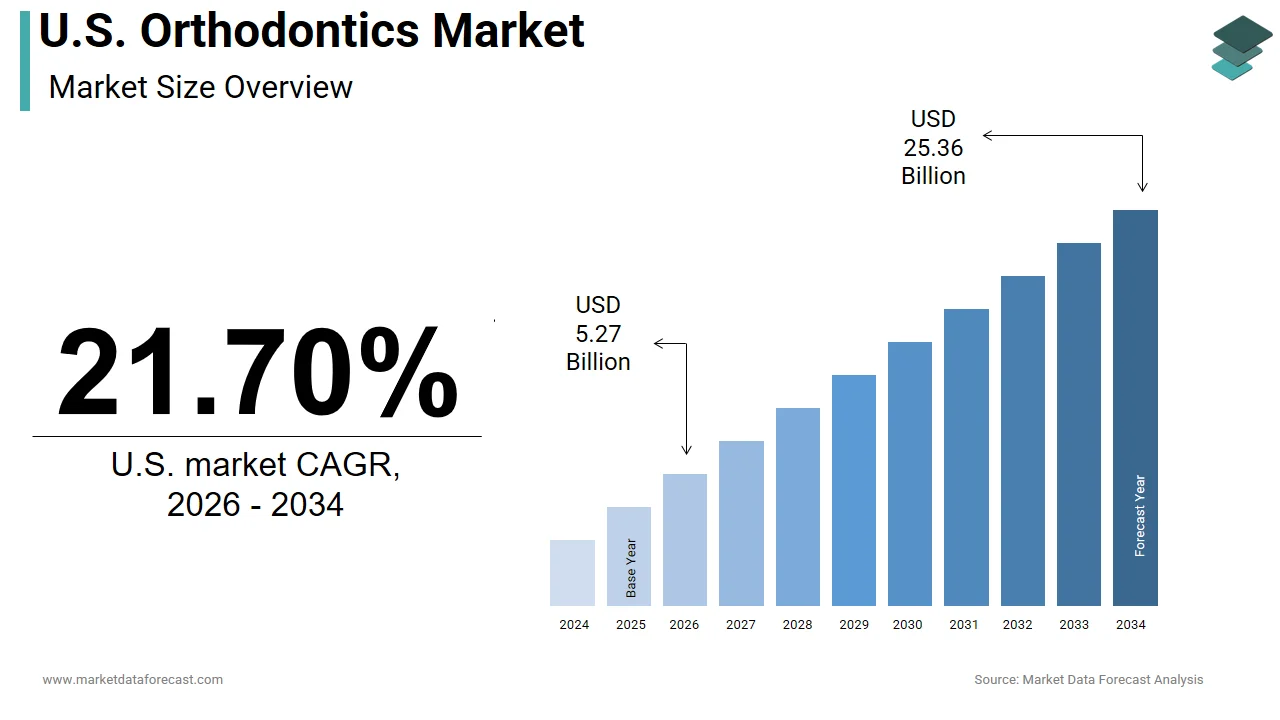
The U.S. orthodontics market was valued at USD 4.33 billion in 2025, is estimated to reach USD 5.27 billion in 2026, and is projected to reach USD 25.36 billion by 2034, growing at a CAGR of 21.70% from 2026 to 2034. The growth of the U.S. orthodontics market is driven by the rising demand for aesthetic dental treatments, increasing awareness about oral health, and the growing adoption of clear aligners and technologically advanced orthodontic solutions. Furthermore, the rise in teen and adult orthodontic treatments, coupled with digital advancements such as 3D imaging and AI-driven treatment planning, continues to enhance patient outcomes and fuel market growth.
Key Market Trends
- Rising adoption of clear aligners and invisible braces as a preferred alternative to traditional braces.
- Increasing use of AI-based orthodontic software and 3D imaging technologies for accurate diagnosis and treatment customization.
- Growing awareness of dental aesthetics and oral hygiene, particularly among younger and working-age populations.
- Expansion of direct-to-consumer orthodontic solutions through teledentistry platforms and mail-order aligner models.
- Continuous innovation in biocompatible and lightweight materials used for brackets, wires, and aligners to improve comfort and aesthetics.
Segmental Insights
- Based on product type, the fixed appliances segment was the largest and held a significant share of the U.S. orthodontics market in 2024, driven by their proven effectiveness in complex dental corrections and long-term treatment stability.
- Based on age group, the teens (ages 13–19) segment accounted for 58.3% of the U.S. orthodontics market share in 2024, as early diagnosis and treatment of malocclusion, combined with rising awareness of dental aesthetics among adolescents, are driving segment dominance.
- Based on end user, the dentist & orthodontist-owned practices segment held a significant share of the market in 2024, supported by the availability of skilled professionals, advanced in-office treatment technologies, and patient trust in specialized care providers.
Competitive Landscape
- The U.S. orthodontics market is highly competitive, with leading players focusing on product innovation, digital integration, and expanding patient accessibility through teledentistry platforms.
- Companies are investing in AI-powered treatment planning, advanced material sciences, and customer-centric orthodontic solutions to enhance efficiency and comfort.
- Prominent players in the U.S. orthodontics market include Align Technology, Inc. (U.S.), SmileDirectClub, Inc. (U.S.), Institut Straumann AG (Switzerland), 3M (U.S.), Dentsply Sirona (U.S.), Henry Schein, Inc. (U.S.), Envista Holdings Corporation (Ormco Corporation) (U.S.), American Orthodontics (U.S.), and DB Orthodontics (U.K.).
- These companies are emphasizing technological innovation, product portfolio expansion, and strategic partnerships with dental professionals to strengthen their market footprint and meet the growing demand for efficient, aesthetic, and personalized orthodontic solutions in the U.S.
U.S. Orthodontics Market Size
The U.S. orthodontics market was valued at USD 4.33 billion in 2025, is estimated to reach USD 5.27 billion in 2026, and is projected to reach USD 25.36 billion by 2034, growing at a CAGR of 21.70% from 2026 to 2034.
According to the American Association of Orthodontists, approximately 5.6 million people are currently undergoing orthodontic treatment in the United States, with a significant portion comprising adults seeking aesthetic improvements. As per the Centers for Disease Control and Prevention, nearly 45% of children aged 12 to 15 years have some form of malocclusion. The market is characterized by a shift toward invisible and removable appliances driven by consumer demand for discreet treatment options. Technological advancements such as three-dimensional imaging, computer-aided design, and direct-to-consumer models have transformed patient access and treatment efficiency. The Food and Drug Administration regulates orthodontic devices as medical instruments, ensuring safety standards for materials and digital software used in treatment planning. Rising awareness of the link between oral health and systemic well-being further stimulates demand. This landscape is defined by the convergence of cosmetic desires, functional necessities, and technological innovation, creating a dynamic environment for practitioners and manufacturers alike.
MARKET DRIVERS
Rising Prevalence of Malocclusion and Dental Anomalies
The increasing incidence of dental irregularities and jaw misalignments is primarily propelling the growth of the U.S. orthodontics market. According to the National Institute of Dental and Craniofacial Research, approximately 65% of the US population exhibits some degree of malocclusion, ranging from mild crowding to severe skeletal discrepancies. As per data from the American Association of Orthodontists, early intervention guidelines recommend screening for orthodontic problems by age seven, leading to higher diagnosis rates among pediatric populations. Environmental factors such as dietary changes and prolonged thumb sucking contribute to the development of narrow arches and crowded teeth. Furthermore, genetic predispositions play a significant role, with many individuals inheriting jaw size discrepancies from their parents. According to the Centers for Disease Control and Prevention, untreated malocclusion can lead to temporomandibular joint disorders, speech impediments, and increased risk of dental caries due to difficulty in cleaning misaligned teeth. This clinical necessity drives parents to seek corrective treatments for children to prevent long-term health issues. Additionally, the aging population experiences shifting teeth due to periodontal disease and bone loss, and is creating a secondary wave of demand among older adults. The broad demographic impact of dental anomalies ensures a consistent patient pipeline for orthodontic practices across the country.
Growing Aesthetic Consciousness and Social Media Influence
The rising emphasis on physical appearance and the influence of digital media significantly propel the adoption of cosmetic orthodontic treatments, which is further boosting the U.S. market expansion. According to the International Society of Aesthetic Plastic Surgery, surgical and non-surgical facial enhancements increased by approximately 5.5% in 2023, which reflects a broader cultural focus on aesthetics. As per surveys conducted by the American Association of Orthodontists, over 75% of adult patients cite improved appearance as their primary motivation for seeking orthodontic care. Social media platforms like Instagram and TikTok amplify this trend by showcasing smile transformations and promoting idealized dental standards among younger demographics. The visibility of celebrities and influencers wearing clear aligners has normalized orthodontic treatment as a lifestyle enhancement rather than merely a medical procedure. This cultural shift reduces the stigma associated with wearing braces, particularly among teenagers and young adults who are highly sensitive to peer perception. Furthermore, the rise of selfie culture encourages individuals to invest in smiles that photograph well, driving demand for invisible and fast-acting solutions. Marketing campaigns by direct-to-consumer aligner companies leverage these psychological drivers by emphasizing convenience and confidence. Consequently, the intersection of social validation and aesthetic desire creates robust growth momentum for cosmetic orthodontic products and services.
MARKET RESTRAINTS
High Cost of Treatment and Limited Insurance Coverage
The substantial financial burden associated with orthodontic procedures remains a significant barrier to market penetration for many Americans, which is a major restraint to the U.S. market growth. According to the American Association of Orthodontists, the average cost of comprehensive orthodontic treatment ranges from 3,000 to 8,000 dollars, depending on the complexity of the case and the type of appliance used. As per the Kaiser Family Foundation, standard dental insurance plans often include a lifetime orthodontic maximum that is capped at 1,000 to 2,000 dollars, which covers only a fraction of total expenses. This lack of comprehensive coverage forces patients to pay out of pocket or rely on financing plans that may carry high interest rates. For low and middle-income families, these costs are prohibitive, leading to delayed or forgone treatment. The Medicaid program covers orthodontics only in cases of severe medical necessity, excluding purely cosmetic corrections, which limits access for vulnerable populations. According to the Health Policy Institute, many individuals postpone treatment until they achieve financial stability, resulting in more complex and costly interventions later in life. Furthermore, economic downturns and inflationary pressures reduce disposable income, causing consumers to prioritize essential healthcare over elective dental procedures. Until insurance reforms expand coverage or costs decrease significantly, high prices will continue to restrict market growth and exacerbate health inequities in oral care access.
Shortage of Qualified Orthodontic Specialists
The limited number of board-certified orthodontists relative to patient demand constrains the U.S. market expansion. According to the American Board of Orthodontics, there are approximately 11,000 active orthodontists in the United States serving a population of over 330 million people. As per workforce analyses, this ratio results in significant provider shortages in rural areas and underserved urban communities where residents must travel long distances for specialized care. The rigorous training required to become an orthodontist, including dental school and additional residency programs, limits the speed at which the workforce can expand. Furthermore, an aging practitioner base means that many experienced orthodontists are approaching retirement without sufficient new graduates to replace them immediately. According to the American Dental Education Association, enrollment in orthodontic residency programs has grown slowly due to capacity constraints and high educational costs. This scarcity leads to longer wait times for appointments and reduced availability for new patients. Additionally, general dentists offering orthodontic services may lack the specialized expertise required for complex cases, potentially compromising treatment outcomes. The imbalance between supply and demand creates bottlenecks in service delivery, hindering market expansion and limiting patient access to high-quality orthodontic care.
MARKET OPPORTUNITIES
Expansion of Direct-to-Consumer Clear Aligner Models
The emergence of direct-to-consumer clear aligner platforms is a substantial opportunity for the U.S. orthodontics market. According to industry reports, the direct-to-consumer orthodontics segment has grown rapidly by offering remote monitoring and mail-order impression kits at lower costs than traditional practices. As per the Federal Trade Commission, these models appeal to adults with mild to moderate alignment issues who seek convenience and affordability. By eliminating the need for frequent in-office visits, direct-to-consumer companies reduce overhead costs and pass savings to patients. This approach democratizes access to orthodontic care for individuals who may not have nearby specialists or flexible schedules. The integration of telehealth technologies allows for remote progress tracking using smartphone apps, enhancing patient engagement and compliance. According to consumer surveys, price sensitivity is a major factor in treatment decisions, with many preferring budget-friendly alternatives. Furthermore, partnerships with retail pharmacies and online platforms increase visibility and ease of purchase. While regulatory scrutiny regarding safety persists, the convenience factor drives adoption among tech-savvy demographics. This disruptive business model expands the addressable market beyond traditional clinical settings, creating new revenue streams and fostering competition that benefits consumers through lower prices and innovative service delivery methods.
Technological Advancements in Digital Dentistry and AI
The integration of artificial intelligence and advanced digital workflows offers significant potential for the U.S. market expansion. According to the American Association of Orthodontists, the adoption of intraoral scanners has replaced messy traditional impressions, improving patient comfort and accuracy. As per industry developments, AI algorithms can now predict tooth movement patterns and optimize treatment plans, reducing the duration of therapy and the number of aligners required. These technologies enable orthodontists to visualize final outcomes before starting treatment, enhancing patient communication and satisfaction. The use of three-dimensional printing allows for rapid fabrication of custom brackets and aligners, streamlining laboratory processes. According to research published in the Journal of Clinical Orthodontics, digital planning reduces chair time by up to 25%, allowing practitioners to see more patients efficiently. Furthermore, remote monitoring tools powered by AI enable patients to submit scans from home, facilitating timely adjustments without office visits. This technological evolution supports the scalability of orthodontic practices and improves clinical outcomes. Manufacturers investing in software and hardware innovations can differentiate their offerings and capture market share. The synergy between digital tools and clinical expertise positions technology as a key driver of future growth and operational excellence in the orthodontics sector.
MARKET CHALLENGES
Regulatory Scrutiny and Safety Concerns with Remote Care
The growing regulatory oversight and safety concerns regarding direct-to-consumer and remote orthodontic treatments pose significant challenges to the U.S. market growth. According to the American Association of Orthodontists, unsupervised tooth movement can lead to serious complications such as root resorption, gum recession, and bite dysfunction. As per the Food and Drug Administration, agencies are reviewing the marketing claims and clinical protocols of direct-to-consumer aligner companies to ensure patient protection. Several state dental boards have issued cease and desist orders to companies operating without proper local supervision, highlighting legal risks. The lack of comprehensive clinical data on long-term outcomes for remote monitoring models raises doubts among traditional practitioners and insurers. According to legal analyses, liability issues arise when complications occur without immediate access to professional care. Furthermore, the absence of standardized guidelines for teledentistry creates uncertainty for providers navigating compliance requirements. Patients may not fully understand the limitations of remote assessments, leading to unrealistic expectations and dissatisfaction. These regulatory and safety hurdles require companies to invest heavily in clinical validation and legal defense. Consequently, the threat of stricter regulations and potential litigation acts as a deterrent to innovation and expansion in the direct-to-consumer segment.
Patient Compliance and Treatment Adherence Issues
Poor patient adherence to treatment protocols remains a persistent challenge to the expansion of the U.S. market. According to studies published in the Angle Orthodontist, nearly 45% of patients fail to comply with the full daily wear instructions for clear aligners, which is a leading cause of treatment failure and prolonged therapy. As per clinical data, patients are required to wear aligners for 20 to 22 hours daily, yet many fail to meet this requirement due to discomfort or forgetfulness. This non-adherence necessitates mid-course corrections, additional aligner sets, and extended treatment durations, increasing costs for both patients and providers. Traditional braces also face compliance issues with patients neglecting oral hygiene, leading to decalcification and cavities around brackets. The American Association of Orthodontists notes that managing non-compliant patients consumes significant chair time and resources, straining practice operations. Furthermore, psychological factors such as treatment fatigue and aesthetic dissatisfaction contribute to dropout rates, especially among adolescents. Without effective monitoring and motivation strategies, these adherence gaps undermine the efficacy of orthodontic interventions. Manufacturers and practitioners must develop engaging reminder systems and educational tools to improve compliance. However, achieving consistent behavioral change remains difficult, limiting the overall success rates and profitability of orthodontic treatments.
REPORT COVERAGE
| REPORT METRIC | DETAILS |
| Market Size Available | 2025 to 2034 |
| Base Year | 2025 |
| Forecast Period | 2026 to 2034 |
| Segments Covered | By Product Type, Age Group, End-user, and Region. |
| Various Analyses Covered | Global, Regional and Country-Level Analysis, Segment-Level Analysis, Drivers, Restraints, Opportunities, Challenges; PESTLE Analysis; Porter’s Five Forces Analysis, Competitive Landscape, Analyst Overview of Investment Opportunities |
| Countries Covered | New York, Massachusetts, Pennsylvania, Illinois, Ohio, Michigan, Texas, Florida, Georgia, California, Washington, Colorado. |
| Market Leaders Profiled | Align Technology, Inc. (U.S.), SmileDirectClub, Inc. (U.S.), Institut Straumann AG (Switzerland), 3M (U.S.), Dentsply Sirona (U.S.), Henry Schein, Inc. (U.S.), Envista Holdings Corporation (Ormco Corporation) (U.S.), American Orthodontics (U.S.), DB Orthodontics (U.K.) |
SEGMENTAL ANALYSIS
By Product Type Insights
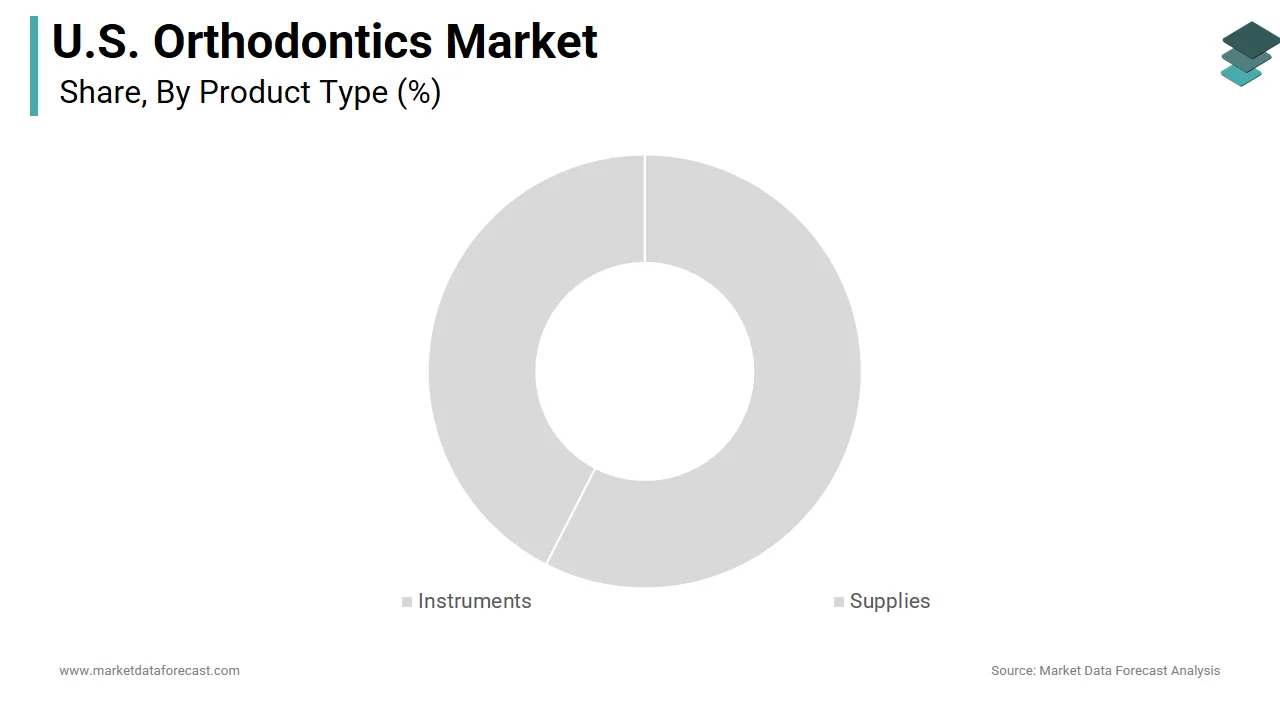
The fixed appliances segment dominated the market by capturing the 56.5% of the U.S. market share in 2025. The superior clinical versatility and proven effectiveness of fixed appliances in treating severe malocclusions significantly sustain their market dominance. According to the American Association of Orthodontists, fixed braces are the preferred treatment modality for cases involving significant skeletal discrepancies, rotations, and vertical dimension corrections that removable aligners cannot adequately address. As per clinical guidelines published in the American Journal of Orthodontics and Dentofacial Orthopedics, fixed appliances provide precise three-dimensional control over tooth position, allowing orthodontists to achieve optimal occlusion and facial aesthetics. The ability to use various auxiliary components, such as elastics, springs, and temporary anchorage devices, enhances the mechanical efficiency of fixed systems. Furthermore, fixed appliances do not rely on patient compliance for wear time, ensuring consistent force application throughout the treatment duration. According to survey data from orthodontic practitioners, over 70% of complex adolescent cases are treated with fixed appliances due to their predictability and robustness. The widespread training of orthodontists in fixed appliance therapy ensures a high level of provider confidence and proficiency. This clinical reliability, combined with the ability to handle diverse pathological conditions, ensures that fixed appliances remain the cornerstone of orthodontic practice and the largest revenue generator in the product segment.
On the other hand, the removable aligners segment is anticipated to showcase a promising CAGR of 13.4% during the forecast period in the U.S. market, owing to the aesthetic preferences, technological advancements, and the proliferation of direct-to-consumer models. The strong preference for discreet and comfortable orthodontic solutions significantly drives the exceptional growth of removable aligners. According to the American Association of Orthodontists, adult patients now comprise nearly 27% of all orthodontic cases, with aesthetics being the primary concern for this demographic. As per consumer surveys, over 80% of adult patients prefer clear aligners over traditional braces due to their near invisibility and lack of metal brackets. The removable nature of aligners allows for easier oral hygiene and unrestricted eating, which enhances patients' quality of life during treatment. Technological advancements in smart track features and material science have improved the precision and comfort of aligners, making them suitable for a wider range of cases. The American Journal of Orthodontics reports that patient satisfaction scores are significantly higher for aligner therapy due to reduced soft tissue irritation and pain. Furthermore, the integration of digital scanning and virtual treatment planning allows patients to visualize outcomes before committing to treatment, increasing conversion rates. Social media influence also plays a role with influencers promoting invisible orthodontics as a lifestyle enhancement. This convergence of aesthetic desire, comfort, and digital engagement positions removable aligners as the fastest-growing product segment in the market.
By Age Group Insights
The teen segment held the major share of 54.7% of the U.S. market in 2025. The growth of the teens segment in the U.S. market is attributed to its early intervention guidelines and parental prioritization of dental health. The widespread adoption of early orthodontic screening guidelines and high parental awareness significantly sustains the dominance of the teen segment. According to the American Association of Orthodontists, children should have an orthodontic check-up no later than age seven to identify developing problems. As per the Centers for Disease Control and Prevention, nearly 45% of children aged 12 to 15 years have some form of malocclusion requiring professional attention. Parents are increasingly educated about the benefits of early intervention, which can simplify or shorten future treatment and prevent more severe issues. School-based dental programs and pediatric dentist referrals further facilitate early diagnosis. The social environment of middle and high schools also influences treatment timing, with many teens seeking orthodontics alongside peers. According to survey data, over 70% of parents consider orthodontic treatment a priority for their children’s health and self-esteem. Insurance coverage for dependents often extends to orthodontics, providing financial support for families. Furthermore, the developmental stage of adolescence is ideal for modifying jaw growth and guiding erupting teeth. This combination of clinical recommendations, parental proactive behavior, and social norms ensures that teens remain the largest consumer base for orthodontic services.
On the other hand, the adult age group segment is predicted to showcase a CAGR of 13.4% during the forecast period in the U.S. market, owing to the aesthetic consciousness and disposable income. The increasing emphasis on personal appearance and professional image significantly drives expansion in the adult orthodontics segment. According to the American Society of Plastic Surgeons, there has been a significant rise in non-surgical cosmetic procedures among adults, reflecting a broader trend toward self-improvement. As per surveys by the American Association of Orthodontists, over 75% of adult patients cite improved appearance as their primary motivation for seeking treatment. In competitive job markets, a confident smile is perceived as an asset, influencing career opportunities and social interactions. The destigmatization of orthodontics among older demographics has encouraged more adults to pursue correction. Social media platforms amplify this trend by showcasing smile transformations and normalizing adult brace wear. According to industry analyses, adults aged 35 to 54 are the fastest-growing demographic for clear aligner therapy. Furthermore, the availability of discreet options such as lingual braces and clear aligners addresses the aesthetic concerns of professionals who wish to avoid visible metal brackets. This cultural shift toward valuing dental aesthetics, combined with effective marketing, drives robust growth in the adult segment.
By End User Insights
The dentist and orthodontist-owned practices segment accounted for the leading share of the U.S. orthodontics market in 2025. The specialized clinical expertise and comprehensive care capabilities of orthodontic practices are contributing to the dominance of dentist and orthodontist-owned practices in the U.S. market. According to the American Board of Orthodontics, board-certified orthodontists undergo additional years of specialized training beyond dental school, ensuring high standards of care. As per patient surveys, trust in provider expertise is the primary factor in selecting a treatment location. Orthodontic practices are equipped with advanced diagnostic tools such as cone beam computed tomography and intraoral scanners that enable precise treatment planning. The ability to manage complex cases, including surgical orthodontics and multidisciplinary care, ensures that patients seek out specialized practices. The American Association of Orthodontists emphasizes the importance of specialist-led care for achieving optimal functional and aesthetic outcomes. Furthermore, established practices have loyal patient bases and strong referral networks with general dentists and pediatricians. According to industry analyses, independent practices offer personalized attention and continuity of care that large corporate chains may lack. This reputation for quality and individualized service ensures that dentist and orthodontist-owned practices remain the primary destination for orthodontic treatment.
COUNTRY ANALYSIS
U.S. Orthodontics Market Analysis
The United States is likely to remain the most influential market for orthodontic technology for the next few years due to its massive investment in digital dental research. The strong cultural emphasis on dental aesthetics and sophisticated healthcare infrastructure significantly propels the United States market dominance. According to the American Society of Plastic Surgeons, the United States leads globally in cosmetic procedures, reflecting a societal value placed on appearance. As per the Centers for Disease Control and Prevention, approximately 87% of the US population had some form of dental benefit coverage by late 2023, which ensures high utilization of orthodontic services. The presence of world-class orthodontic training programs and research institutions fosters innovation and clinical excellence. The Food and Drug Administration maintains a robust regulatory framework that encourages the development of new orthodontic technologies. According to the American Association of Orthodontists, the United States has a significant density of practitioners ensuring broad access to specialized care. Furthermore, the integration of digital dentistry and CAD CAM technologies is more advanced in the US than in other regions. This combination of cultural drivers, technological leadership, and professional availability ensures that the United States remains the central hub for orthodontic innovation and consumption.
COMPETITIVE LANDSCAPE
The United States orthodontics market features intense competition among established medical device corporations, specialized orthodontic manufacturers, and emerging direct-to-consumer companies. Incumbent players leverage extensive distribution networks, brand recognition, and clinical evidence to maintain leadership, while challengers differentiate through innovative, clear aligner materials and digital workflow integration. Competition centers on technological advancement, with companies investing heavily in artificial intelligence and three-dimensional printing to accelerate treatment times and improve accuracy. Pricing strategies vary significantly, with premium brands emphasizing clinical superiority and value-oriented competitors focusing on accessibility and speed. The rise of direct-to-consumer models disrupts traditional practice-based revenue streams by offering lower-cost alternatives for mild cases. Patent litigation and intellectual property disputes frequently arise as firms protect proprietary designs and software algorithms. Customer service and provider support differentiate brands as orthodontists seek reliable partners for complex cases. Regulatory scrutiny regarding the safety and efficacy of remote monitoring tools adds complexity to the competitive landscape. This dynamic environment drives continuous innovation in product design and service delivery, ensuring patients benefit from improved aesthetics and functionality while manufacturers strive for sustainable growth and market relevance.
KEY MARKET PLAYERS
Some of the companies that are playing a dominating role in the U.S. orthodontics market include
- Align Technology, Inc. (U.S.)
- SmileDirectClub, Inc. (U.S.)
- Institut Straumann AG (Switzerland)
- 3M (U.S.)
- Dentsply Sirona (U.S.)
- Henry Schein, Inc. (U.S.)
- ENVISTA HOLDINGS CORPORATION (Ormco Corporation) (U.S.)
- AMERICAN ORTHODONTICS (U.S.)
- DB Orthodontics
TOP PLAYERS IN THE MARKET
- Align Technology Inc revolutionizes the United States orthodontics market through its proprietary Invisalign clear aligner system and iTero digital scanners. The company leverages advanced three-dimensional imaging and proprietary software to create customized treatment plans for millions of patients globally. Align Technology recently strengthened its market position by expanding its manufacturing capabilities and enhancing its digital ecosystem with new software features for providers. The company actively collaborates with orthodontists to improve clinical outcomes and streamline workflows through continuous innovation. Align Technology also invests heavily in direct-to-consumer marketing campaigns to increase brand awareness among adult patients. These strategic initiatives reinforce its leadership in the clear aligner segment while driving adoption of digital dentistry tools across private practices and corporate dental groups.
- Envista Holdings Corporation contributes significantly to the US orthodontics market through its comprehensive portfolio of brands, including Ormco Spark and Damon systems. The company provides a wide range of fixed appliances, clear aligners, and digital solutions tailored to diverse clinical needs. Envista recently strengthened its market position by integrating acquired brands and launching next-generation self-ligating bracket systems that reduce treatment time. The company focuses on empowering clinicians with educational resources and technical support to enhance patient care. Envista also expands its global distribution network to ensure a reliable supply of high-quality orthodontic products. These efforts demonstrate its commitment to innovation and customer satisfaction while maintaining a strong presence in both traditional and modern orthodontic treatment modalities across the United States.
- Dentsply Sirona Inc plays a pivotal role in the US orthodontics market by offering integrated digital workflows and specialized orthodontic products. The company combines its expertise in dental technology with innovative solutions such as SureSmile clear aligners and bracket systems. Dentsply Sirona recently strengthened its market position by advancing its digital platform capabilities and introducing artificial intelligence-driven treatment planning tools. The company collaborates with healthcare providers to optimize efficiency and precision in orthodontic procedures. Dentsply Sirona also emphasizes sustainability and regulatory compliance in its manufacturing processes. These actions enhance its competitive edge by providing seamless end-to-end solutions that support clinicians in delivering high-quality care while adapting to the evolving demands of the modern orthodontic landscape.
TOP STRATEGIES USED BY KEY MARKET PARTICIPANTS
Key players in the United States orthodontics market employ strategic approaches to maintain competitive advantages and drive growth. Companies prioritize product innovation by developing clear aligner technologies and digital scanning systems that enhance treatment precision and patient comfort. Strategic acquisitions enable firms to expand their product portfolios and integrate complementary technologies into cohesive ecosystems. Manufacturers invest heavily in research and development to create faster and more effective orthodontic solutions. Direct-to-consumer marketing campaigns target adult patients seeking aesthetic improvements and convenience. Partnerships with dental schools and professional associations foster education and brand loyalty among future practitioners. Expansion of digital platforms facilitates remote monitoring and streamlined communication between providers and patients. These coordinated efforts enable participants to address evolving consumer preferences while improving clinical outcomes and operational efficiency in a highly competitive marketplace.
MARKET SEGMENTATION
This research report on the U.S. orthodontics market has been segmented and sub-segmented into the following categories.
By Product Type
- Instruments
- Supplies
- Fixed
- Brackets
- Bands & Buccal Tubes
- Archwires
- Others
- Removable
- Aligners
- Retainers
- Others
- Fixed
By Age Group
- Teens
- Adults
By End-user
- Dentist & Orthodontist Owned Practices
- Others
By Country
- New York
- Texas
- Florida
- Georgia
- California
- Rest of U.S.