- Product Description Description
- Table of Contents TOC
- List of Table & Figure LOT
- Get Free Sample PDF Sample PDF
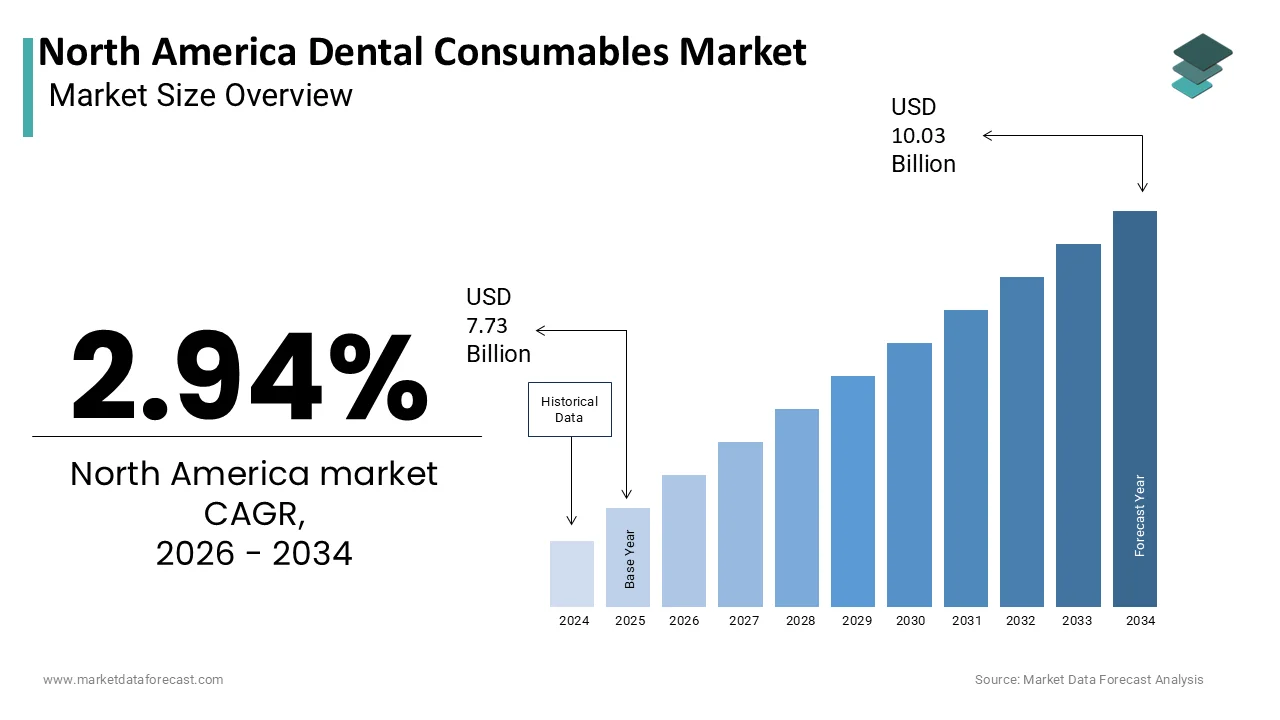
Market Size, 2025
$7.73 BnMarket Estimate, 2026
$7.96 BnMarket Forecast, 2034
$10.03 BnCAGR, 2026–2034
2.94%Executive Summary: North America Dental Consumables Market
- Market Scope: Comprehensive North American dental consumables market analysis covering product types (implants, prosthetics, orthodontics, endodontics, etc.), clinical applications, end-user settings, and country-level landscapes.
- Market Valuation: Valued at USD 7.73 billion in 2025, estimated at USD 7.96 billion in 2026, and projected to reach USD 10.03 billion by 2034, registering a compound annual growth rate (CAGR) of 2.94% from 2026 to 2034.
- Primary Growth Drivers: Expanding geriatric population, surging demand for cosmetic dentistry and restorative treatments, rising healthcare and aesthetic expenditures, and growing incidence of oral health conditions. Key market restraints include limited patient awareness regarding advanced procedures, inadequate reimbursement coverage, high cost of care, and stringent regulatory compliance.
Key Market Segment Metrics (2026–2034)
| Category | Leading Segment (2025 Position) | Fastest-Growing Segment |
|---|---|---|
| By Product Type | Dental Implants & Prosthetics (captured major revenue share owing to widespread tooth restoration and edentulous population needs) | Orthodontics & Whitening Products (expanding steadily driven by aesthetic preference trends and clear aligner adoption) |
| By Application | Restorative Dentistry (held primary market share due to routine treatment demand for dental decay and structural repairs) | Cosmetic Dentistry (gaining strong momentum backed by rising patient spending on smile enhancements and aesthetic procedures) |
| By End User | Dental Hospitals & Clinics (dominated as the primary point of care for general and specialized oral health treatments) | Dental Laboratories (growing via increased outsourcing of custom prosthetics, crowns, and CAD/CAM aligners) |
| By Country | The United States (commanded the largest market share supported by an extensive dental economy generating ~$60B in annual activity) | Canada (projected for steady growth driven by expanding oral healthcare coverage and high adoption of digital dentistry) |
Major Market Players & Market Structure
Market Structure: Consolidated and highly competitive dental supply and manufacturing market characterized by extensive distribution networks, continuous product innovation, and portfolio diversification.
Key Companies: DENTSPLY Sirona (DENTSPLY International Inc.), 3M ESPE Dental Solutions, Align Technology, Henry Schein, Inc., Patterson Companies, Inc., Zimmer Biomet (Biomet 3I / Zimmer Dental), Envista Holdings (Sybron Dental / Danaher), Ivoclar Vivadent AG, Straumann, and Heraeus Dental.
North America Dental Consumables Market Size
The North America Dental Consumables Market is projected to grow from USD 7.73 billion in 2025 to USD 7.96 billion in 2026 and reach USD 10.03 billion by 2034, registering a CAGR of 2.94% from 2026 to 2034.
Dental consumables are disposable and reusable products essential for clinical dental procedures, including restorative materials,s infection control supplies, es endodontic files,les and impression compounds. According to the Centers for Disease Control and Prevention, approximately 90% of adults aged 20 and older in the United States have had at least one cavity, creating a perpetual need for restorative consumables. As per data from the Canadian Institute for Health Information, over 13 million dental procedures are performed annually in Canada alone, necessitating consistent procurement of clinical supplies. Regulatory oversight by bodies such as the Food and Drug Administration ensures product safety while technological advancements in material science drive product differentiation.
MARKET DRIVERS
High Prevalence of Dental Caries and Periodontal Disease
The widespread incidence of oral pathologies is the primary demand generator for restorative and preventive dental consumables, especially fuelling the growth of the North America dental consumables market. According to the National Institute of Dental and Craniofacial Research, nearly 26% of adults in the United States have untreated tooth decay, which necessitates immediate intervention using fillings, liners,s and bonding agents. As per statistics from the American Academy of Periodontology, approximately 47% of Americans aged 30 and older suffer from some form of periodontal disease requiring specialized scaling instruments, antimicrobial gels, and regenerative materials. These epidemiological facts directly dictate consumption volumes because every diagnosed case translates into specific procedural requirements, including single-use and multi-use supplies. The aging demographic profile further exacerbates this trend as older populations retain more natural teeth but require complex maintenance and root canal therapies. Manufacturers align their production schedules with these disease patterns to ensure adequate supply of composite cements and hygiene products. Therefore, the biological reality of oral disease burden acts as a non-discretionary engine sustaining high utilization rates of dental consumables across general and specialty practices.
Stringent Infection Control Standards and Single-Use Mandates
The rigorous regulatory standards regarding cross-contamination prevention are significantly accelerating the growth of the North American dental consumables market. According to the Organization for Safety Asepsis and Prevention, compliance with updated infection control guidelines requires dental practices to utilize barrier protection and single-use items for over 85% of chairside procedures to mitigate liability and ensure patient safety. As per data from the Centers for Disease Control and Prevention, healthcare-associated infections remain a concern, prompting facilities to increase spending on disinfectants, gloves, masks, and sterilization indicators by 15% annually since recent global health events. This regulatory pressure transforms consumables from optional accessories into mandatory operational expenditures that cannot be deferred or substituted. Dental clinics must maintain higher inventory buffers of personal protective equipment and surface barriers to avoid compliance violations during inspections. The shift away from reusable metal trays and cloth barriers toward disposable plastic alternatives permanently elevates unit volumes per patient visit. Consequently, infection control protocols function as a structural driver that decouples consumable demand from procedure complexity,lexity ensuring consistent sales volume driven purely by safety mandates and regulatory adherence rather than clinical treatment choices alone.
MARKET RESTRAINTS
Reimbursement Limitations and Insurance Coverage Gaps
The restrictive dental insurance reimbursement policies act as a significant brake on the utilization of premium consumables and advanced restorative materials, which is limiting the growth of the North America dental consumables market. According to the National Association of Dental Plans, the average annual maximum benefit for private dental insurance has remained stagnant at approximately 1500 dollars for over two decades despite inflation and rising material costs. As per data from the American Dental Association, nearly 35% of adults cite cost as the primary reason for delaying or avoiding dental care,e leading to fewer billable procedures and reduced consumable turnover. This financial ceiling forces practitioners to select lower-cost generic alternatives over high-performance branded consumables to keep out-of-pocket expenses manageable for patients. Insurance plans often exclude coverage for newer bioactive materials or aesthetic composites, categorizing them as cosmetic upgrades rather than medical necessities. When patients decline recommended treatments due to lack of coverage,e the associated consumables remain unused in inventory. This dynamic creates a price-sensitive environment where value propositions outweigh clinical superiority, limiting the adoption of innovative products. Therefore, inadequate third-party payer support constrains market expansion by suppressing procedural volume and incentivizing cost containment strategies that favor basic commodities over advanced therapeutic solutions.
Supply Chain Vulnerabilities and Raw Material Price Volatility
The global supply chain disruptions and fluctuating raw material costs create significant instability for dental consumable manufacturers and distributors, which is also slowing the growth of the North American dental consumables market. According to the U.S. Bureau of Labor Statistics, the producer price index for dental equipment and supplies increased by 8% in recent years, driven by shortages of polymer resins and precious metals used in restoratives. As per data from the Healthcare Distribution Alliance, logistics delays have extended lead times for imported consumables by an average of 3 weeks,s causing stockouts and forcing clinics to seek inconsistent alternative suppliers. These operational frictions directly impact market reliability as dental practices operate on just-in-time inventory models and cannot absorb prolonged supply gaps without canceling appointments. Currency exchange fluctuations further compound costs for North American buyers sourcing components from Asia or Europe, squeezing profit margins for domestic distributors. Manufacturers face difficult choices between absorbing rising input costs or passing them onto already budget-constrained dental offices. This volatility discourages long-term contracts and promotes conservative purchasing behaviors. Supply chain fragility acts as a restraint by introducing uncertainty that hampers steady growth and limits the ability of companies to forecast demand accurately or invest confidently in new product lines.
MARKET OPPORTUNITIES
Adoption of Digital Dentistry and CAD CAM Compatible Materials
The rapid integration of digital workflows for specialized consumables designed for computer-aided design and manufacturing systems is likely to create new opportunities for the growth of the North American dental consumables market. According to the American Student Dental Association, over 60% of dental schools now incorporate digital scanning and milling into the curriculum,m creating a generation of clinicians proficient in and preferential toward digital consumables. As per statistics from the Journal of Prosthetic Dentistry, the installation base of chairside milling units in North America grew by 25% in the last three years, driving parallel demand for proprietary ceramic blocks, resin pucks, and sintering aids. This technological transition opens a niche for high-margin consumables that are incompatible with traditional analog methods, thereby reducing competition from generic suppliers. Digital workflows also increase efficiency,y allowing dentists to complete more restorations in less time, which naturally accelerates material throughput. Manufacturers who develop validated material libraries for popular scanners and mills can lock in recurring revenue streams through ecosystem dependency. Furthermore, digital precision reduces waste,e optimizing the cost per restoration and encouraging adoption.
Growing Demand for Minimally Invasive and Bioactive Materials
The paradigm shift toward preservation of natural tooth structure drives opportunity for bioactive and minimally invasive consumables that promote regeneration rather than mere replacement. According to the Academy of Operative Dentistry surveys, 70% of practitioners now prioritize biomimetic approaches that mimic natural dentin and enamel properties to extend tooth longevity. As per research published in the Journal of Clinical Dentistry, sales of bioactive glass ionomers and calcium silicate cements have increased by 18% annually as clinicians recognize their therapeutic benefits in arresting caries and stimulating pulp healing. This clinical evolution favors premium consumables that offer biological functionality beyond mechanical restoration, differentiating them from commoditized amalgams and standard composites. Patients increasingly request conservative options that avoid drilling and anaesthesia, supporting higher utilization of sealants, infiltration resins, ns and desensitizers. Regulatory bodies are fast-tracking approvals for regenerative materials, recognizing their public health value. Manufacturers investing in biomaterial science can capture this growing segment by educating providers on long-term clinical outcomes.
MARKET CHALLENGES
Workforce Shortages Impacting Procedural Volume
A shortage of dental hygienists and assistants to perform procedures that consume high volumes of supplies is a major challenge for the growth of the North America dental consumables market. According to the American Dental Hygienists Association, the profession faces a deficit of over 15000 licensed hygienists nationwide, resulting in reduced appointment availability and longer wait times for preventive care. Since consumable usage is linearly correlated with chair time,e any reduction in clinical staffing immediately depresses sales volumes for prophylaxis pastes, es polishing cups, barriers,iers and restorative kits. Practices operating below full capacity cannot maximize their return on inventory investments, leading to expiration and waste. Recruitment difficulties also increase labor costs, diverting funds away from premium material purchases toward payroll retention. Training new staff consumes resources and temporarily lowers productivity,ctivity further dampening consumption.
Environmental Sustainability Pressures and Waste Management Costs
The increasing regulatory and societal pressure to reduce medical waste from single-use plastic is also to decline the growth of the North American dental consumables market. According to the Environmental Protection Agency, healthcare facilities generate over 5 million tons of waste annually, with dental clinics contributing disproportionately through disposable barriers, gloves, and packaging. As per data from the Green Dentistry Practice initiative over 40% of dental practices report increased disposal fees and compliance burdens related to hazardous and non-recyclable waste management in the last five years. This environmental scrutiny threatens the viability of traditional disposable business models as regulators consider bans on certain plastics and insurers begin evaluating sustainability metrics in provider networks. Transitioning to eco-friendly alternatives requires substantial retooling and validation testing, increasing development costs and time to market. Clinics may resist switching if sustainable options compromise clinical performance or increase per-unit costs. Manufacturers face the dual challenge of maintaining sterility and convenience while eliminating environmental harm. Failure to adapt risks reputational damage and regulatory penalties.
REPORT COVERAGE
| REPORT METRIC | DETAILS |
| Market Size Available | 2025 to 2034 |
| Base Year | 2025 |
| Forecast Period | 2026 to 2034 |
| Segments Covered | By Product Type, Application, End User, and Region. |
| Various Analyses Covered | Global, Regional, and Country-Level Analysis, Segment-Level Analysis, Drivers, Restraints, Opportunities, Challenges; PESTLE Analysis; Porter’s Five Forces Analysis, Competitive Landscape, Analyst Overview of Investment Opportunities |
| Countries Covered | The U.S., Canada, Rest of North America |
| Market Leaders Profiled | DENTSPLY International Inc. |
SEGMENTAL ANALYSIS
By Product Type Insights
The restorative materials segment accounted for 46.2% of the North America Dental Consumables Market share in 2025 due to the ubiquitous nature of dental caries and the continuous need for tooth repair across all age groups. According to the Centers for Disease Control and Prevention, approximately 90% of adults in the United States have experienced dental decay at some point in their lives, creating a massive baseline demand for fillings and crowns. As per data from the American Dental Association, over 100 million restorative procedures are performed annually in North America, necessitating consistent procurement of composite resins, glass ionomers, rs and dental cements. This high procedural volume directly drives market dominance,e as these materials are consumed in every general dentistry practice daily. The shift toward aesthetic dentistry has further accelerated the replacement of amalgam with tooth colored composites, which require more frequent replenishment due to thesingle-useuse nature and shorter shelf life once opened. Manufacturers benefit from this steady consumption pattern as restorative materials are non-discretionary items required for basic oral health maintenance. The aging population retaining natural teeth longer also contributes to increased wear and secondary caries requiring ongoing restoration.
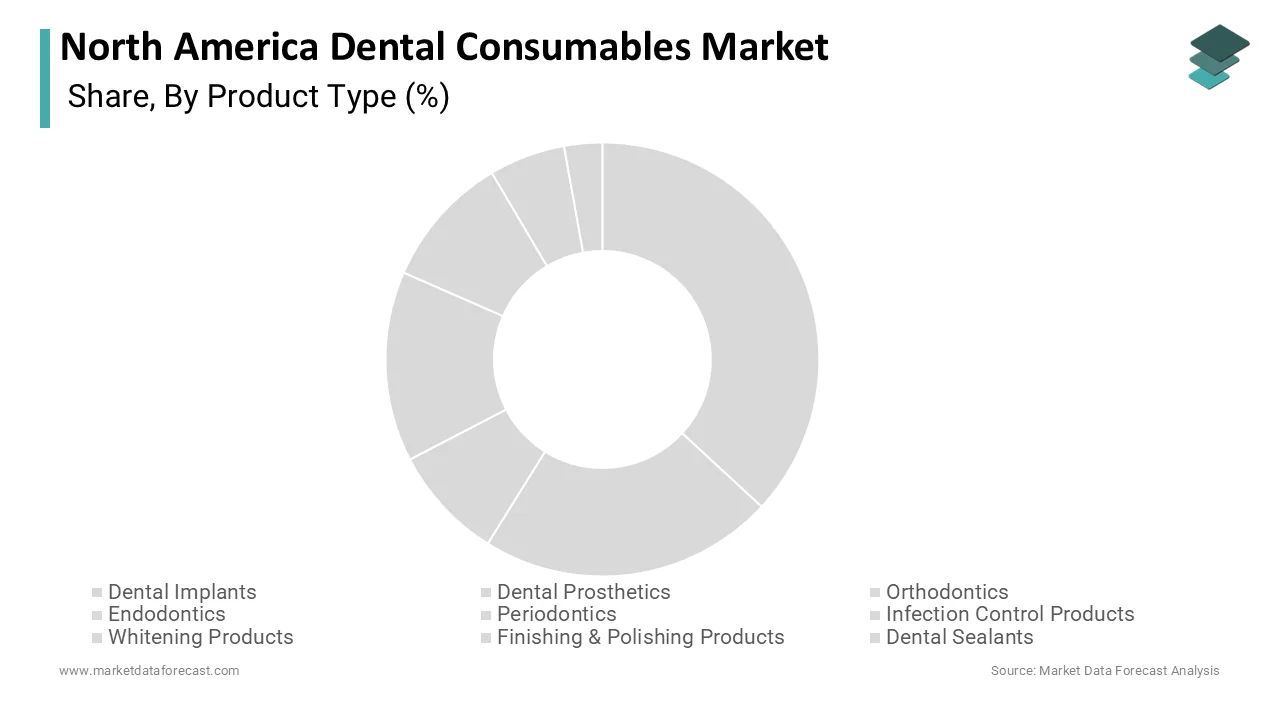
The infection control products segment is expected to exhibit the fastest CAGR of 6.8% during the forecast period due to rigorous regulatory requirements and heightened awareness of cross-contamination risks. According to the Centers for Disease Control and Prevention, updated guidelines mandate the use of personal protective equipment and surface barriers for 100% of patient interactions in dental settings, ensuring consistent demand foglovesve, masks , ks and gowns. This regulatory pressure directly accelerates market expansion, ion as these items are mandatory operational expenses that cannot be reduced without violating safety codes. The transition from reusablesingle-use use items such as saliva ejectors and prophy cups further boosts volume sales as clinics prioritize convenience and safety over cost savings. Post-pandemic hygiene expectations have permanently elevated patient standards, making visible infection control measures a key factor in practice selection. Manufacturers benefit from this structural shift as recurring purchases of disposables create a stable and growing revenue stream.
By Application Insights
The general dentistry segment held a significant share of the North America Dental Consumables Market in 2025 due to its role as the primary entry point for oral healthcare and the wide range of procedures performed. This high volume directly drives market dominance as general dentists consume a diverse array of consumables from prophylaxis pastes to restorative kits. The comprehensive nature of general care means that these practices purchase across all product categories rather than specializing in niche items. Routine preventive care ensures steady recurring demand for hygiene supplies while restorative work drives sales of composites and cements. The large number of general practitioners compared to specialists creates a broader customer base for distributors. The integration of preventive and restorative services within general practice settings significantly contributes to its leading market position.
The orthodontics segment is likely to grow at an anticipated CAGR of 15.2% during the forecast period due to the increasing acceptance of orthodontic treatment among adults and the demand for discreet aesthetic options. According to the American Association of Orthodontists, adult patients now constitute over 30% of all orthodontic cases in North America, up from 15% two decades ago. As per data from the Journal of Clinical Orthodontics, the adoption of clear aligner therapy has grown by 40% annually, ly driving demand for specialized scanning materials, as well as impression trays and bonding agents. The preference for invisible braces requires precise digital workflows and high-strength adhesives that can withstand prolonged treatment durations. General dentists are also incorporating orthodontic services into their practices, expanding the user base beyond specialists. Manufacturers respond by developing user-friendly systems that simplify case planning and execution. This expansion of the patient pool and provider base ensures that the orthodontic segment will continue to grow rapidly as aesthetic concerns drive increased utilization of corrective treatments.
COUNTRY LEVEL ANALYSIS
The United States Dental Consumables Market Analysis
The United States was the largest contributor to the North America Dental Consumables Market by capturing an 89.1% share in 2025 with its advanced healthcare infrastructure, high disposable income, and large population of dental patients. According to the American Dental Association, there are over 200000 active dentists in the US performing millions of procedures annually, creating massive demand for restorative and hygiene consumables. As per data from the Centers for Medicare and Medicaid Services, dental spending in the US exceeds 140 billion dollars annually,y supporting robust procurement of premium materials and infection control products. The presence of major global manufacturers and distributors ensures wide availability of innovative products. High patient awareness of aesthetic dentistry drives demand for composite resins and ceramic materials. Regulatory oversight by the FDA ensures high ssafety standards ds fostering trust in domestic products. The trend toward corporate dental practices standardizes purchasing patterns,rns favoring large contracts with major suppliers.
Canada Dental Consumables Market Analysis
Canada dental consumables market was drivenby holding 9.2% of the share in 2025, with universal healthcare coverage for children and seniors in many provinces and a strong private sector for adults. According to the Canadian Dental Association, over 15000 dentists serve the population, driving steady demand for high-quality consumables compliant with Health Canada regulations. The geographic vastness requires efficient distribution networks ensuring remote clinics have access to essential items. Government initiatives promoting oral health in indigenous communities increase volume sales of basic hygiene and restorative kits. Canadian dentists are early adopters of digital technologies, driving growth in CAD/CAM-compatible materials. Strict environmental regulations influence the shift toward eco-friendly disposables.
COMPETITIVE LANDSCAPE
The competition in the North America Dental Consumables Market is characterized by intense rivalry among established multinational corporations and specialized regional distributors, who strive to differentiate through product quality, service reliability, ty and price competitiveness. Major competitors focus on developing innovative restorative materials and infection control products that offer superior clinical outcomes and ease of use. Product differentiation is achieved through technological advancements such as bioactive materials and digital workflow integration, ion which appeal to modern dental practices seeking efficiency. Companies must balance premium pricing for innovative products with affordable options for routine supplies to capture diverse customer segments. Strategic partnerships with dental schools and professional associations help build brand credibility and influence purchasing decisions. Regulatory compliance and quality assurance serve as key barriers to entry,ntry ensuring that only reputable players maintain trust. The rise of online purchasing platforms has intensified competition by increasing price transparency and enabling easier comparison shopping. This dynamic environment requires continuous innovation and strong customer relationships to sustain leadership positions and capture growing demand for high-quality dental supplies.
KEY MARKET PLAYERS
Some of the companies that are playing a dominating role in the North America Dental Consumables Market include:
- DENTSPLY International Inc.
- Biomet 3i
- 3M ESPE Dental Solutions
- Henry Schein, Inc.
- Sybron Dental Specialties
- Patterson Companies, Inc.
- Ivoclar Vivadent AG
- Zimmer Dental
- Straumann Group
- Danaher Corporation
- Sirona Dental Systems, Inc.
- Heraeus Dental
- Align Technology, Inc.
TOP LEADING PLAYERS IN THE MARKET
- 3M Company is a global leader in the dental consumables sector, offering a comprehensive portfolio that includes restorative materials,s impression products,ts and infection control supplies. The company leverages its extensive research and development capabilities to innovate high-performance composites and adhesives that meet the evolving needs of modern dentistry. Recent actions include the launch of advanced bulk fill composites designed to simplify clinical procedures and reduce chair time for practitioners. 3M actively collaborates with dental professionals to provide educational resources and technical support, ensuring optimal product utilization. Their strategic focus on sustainability has led to the development of eco-friendly packaging and waste reduction initiatives.
- Dentsply Sirona Inc. contributes significantly to the market through its wide range of dental consumables, including endodontic supplies,s prostheticsmaterialsa,, ls and preventive care products. The company integrates its consumable offerings with digital workflow solutions, creating a seamless ecosystem for dental professionals. Recent initiatives involve the expansion of its PrimeScan digital impression system compatibility with various restorative materials, enhancing accuracy and efficiency. Dentsply Sirona focuses on strategic acquisitions to broaden its product portfolio and enter new therapeutic areas. They invest heavily in clinical training programs to ensure dentists are proficient in using their advanced materials and technologies.
- Henry Schein Inc. plays a pivotal role in the market as a leading distributor of dental consumables,ables providing essential supplies to thousands of practices across North America. The company offers a vast selection of products from major manufacturers alongside its own private-label brands ,ensuring competitive pricing and availability. Recent actions include the enhancement of its e-commerce platform and logistics network to improve delivery speed and order accuracy for customers. Henry Schein actively engages with dental communities through sponsorships and educational events, building strong relationships with practitioners. They leverage data analytics to optimize inventory management and predict demand trends,s ensuring consistent supply.
TOP STRATEGIES USED BY KEY MARKET PARTICIPANTS
Key players in the North America Dental Consumables Market primarily employ product innovation strategies to differentiate their offerings through advanced material science and improved clinical performance. Companies focus on expanding distribution networks by strengthening partnerships with independent distributors andenhancing direct-to-consumerr e-commerce platforms. Strategic mergers and acquisitions are utilized to broaden product portfolios and gain access to new technologies or geographic markets. Manufacturers invest in educational initiatives and clinical training to build brand loyalty and ensure proper product usage among dental professionals. Sustainability efforts, including eco-friendly packaging and waste reduction programs,s are increasingly adopted to meet regulatory requirements and consumer expectations.
MARKET SEGMENTATION
This research report on the North America Dental Consumables Market has been segmented and sub-segmented into the following categories.
By Product Type
- Dental Implants
- Dental Prosthetics
- Orthodontics
- Endodontics
- Periodontics
- Infection Control Products
- Whitening Products
- Finishing & Polishing Products
- Dental Sealants
- Dental Burs
- Other Consumables
By Application
- Restorative Dentistry
- Orthodontics
- Endodontics
- Periodontics
- Prosthodontics
- Cosmetic Dentistry
By End User
- Dental Hospitals & Clinics
- Dental Laboratories
- Academic & Research Institutes
By Country
- The U.S.
- Canada
- Rest of North America