- Product Description Description
- Table of Contents TOC
- List of Table & Figure LOT
- Get Free Sample PDF Sample PDF
Market Size, 2025
$22.9 BnMarket Estimate, 2026
$23.61 BnMarket Forecast, 2034
$30.14 BnCAGR, 2026–2034
3.1%Executive Summary: Dental Consumables Market
- Market Scope: Global dental consumables market analysis covering product categories, application segments, end-users, regional leadership frameworks, and adoption metrics.
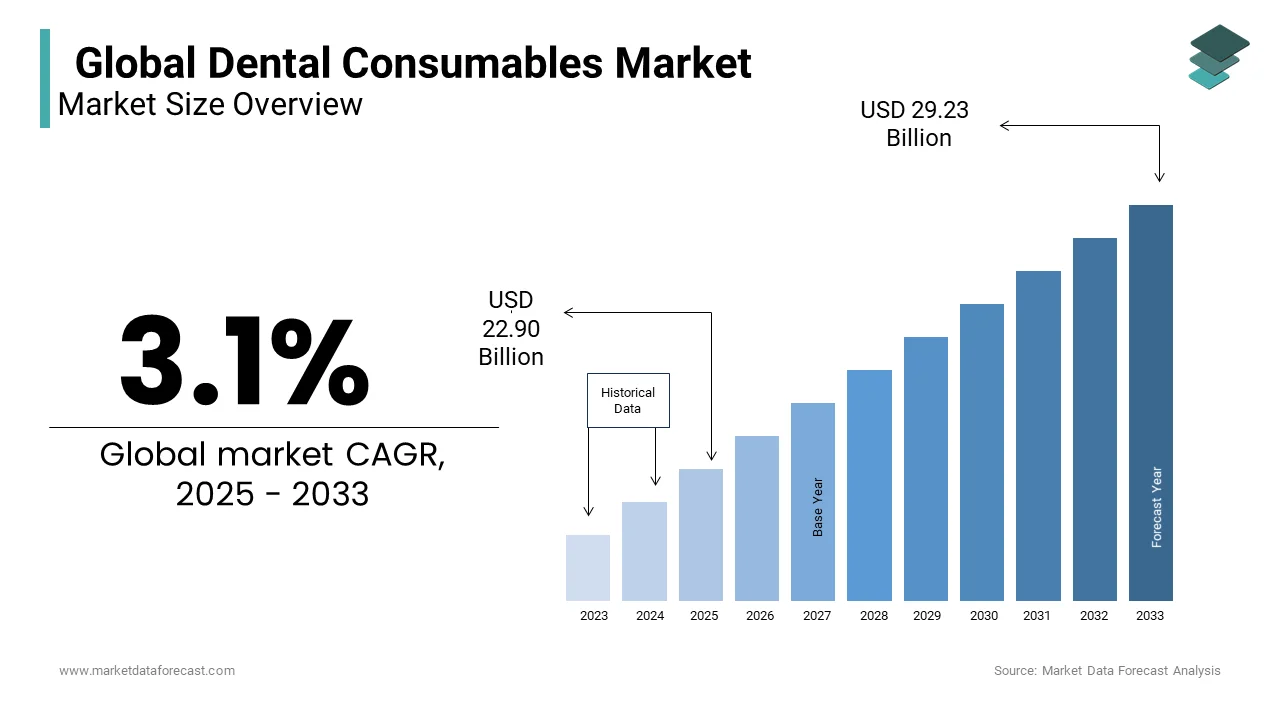
- Market Valuation: Valued at USD 22.90 billion (2025), estimated at USD 23.61 billion (2026), and projected to reach USD 30.14 billion by 2034, growing at a steady CAGR of 3.10% (2026–2034).
- Primary Growth Drivers: High global oral-disease burden (>3.5 billion people worldwide affected by oral diseases and nearly 2.24 billion suffering from caries of permanent teeth), alongside digital dentistry integration (>62% of dental labs in developed markets using digital workflows and 78% of crown/bridge procedures in South Korea utilizing digital impressions). Key operational challenges include raw-material pressures (global tungsten production declining 8% in 2023 with China accounting for 83% of supply, driving a 27% increase in dental-bur prices).
Key Market Segment Metrics (2026–2034)
| Category | Leading Segment (2025 Position) | Fastest-Growing Segment |
|---|---|---|
| By Product Type | Infection control products (dominated with 24.3% of total market revenue in 2025) | Whitening products (projected to expand at a rapid 10.8% CAGR driven by aesthetic demands) |
| By Application | Restorative dentistry (accounted for 31.7% of total consumption in 2025) | Cosmetic dentistry (forecast to grow at a high 12.4% CAGR supported by patient-driven smile makeovers) |
| By End-User | Dental hospitals and clinics (remained the leading end-user segment) | Academic and research institutes (projected to register a 9.3% CAGR) |
| By Region | North America (led the global market with a 34.2% share in 2025, supported by advanced infrastructure, reimbursement frameworks, and established manufacturers) | Asia-Pacific (identified as the fastest-expanding regional market driven by improving healthcare access, urbanization, and dental infrastructure growth) |
Major Market Players & Market Structure
Market Structure: Highly competitive global dental consumables landscape featuring 10 prominent multinational medical device and consumer product corporations competing on new product launches, strategic collaborations, acquisitions, digital-compatible materials, advanced infection-control solutions, and high-performance restorative consumables.
Key Companies: 3M Company, Colgate-Palmolive Company, Danaher Corporation, Dentsply Sirona Inc., Institute Straumann AG, Ivoclar Vivadent, Koninklijke Philips N.V., OSSTEM IMPLANT Co., Ltd., Procter & Gamble, and Zimmer Biomet Holdings, Inc.
Global Dental Consumables Market Size
The Global Dental Consumables Market is projected to grow from USD 22.90 billion in 2025 to USD 23.61 billion in 2026 and reach USD 30.14 billion by 2034, registering a CAGR of 3.10% from 2026 to 2034.
Dental consumables refer to the single-use and recurring-use products essential for clinical dental procedures, including impression materials, restorative compounds, prophylaxis pastes, burs, gloves, masks, disposable syringes, and orthodontic accessories. These materials form the backbone of daily operations in dental clinics, hospitals, and ambulatory surgical centers, ensuring hygiene, precision, and procedural efficacy. Unlike capital equipment, consumables require continuous replenishment, creating a steady demand stream driven by procedural volume rather than one-time purchases. The global increase in dental visits underscores this necessity according to the World Health Organization, over 3.5 billion people worldwide suffer from oral diseases, with untreated caries in permanent teeth being the most prevalent condition. Additionally, stringent infection control protocols post-pandemic have institutionalized the use of disposable items. The integration of digital dentistry has also altered consumption patterns, increasing demand for specialized materials compatible with CAD/CAM systems. As oral health transitions from episodic care to preventive and aesthetic models, the reliance on high-performance, biocompatible consumables intensifies, reshaping supply chains and product innovation trajectories across the sector.
MARKET DRIVERS
Rising Prevalence of Oral Diseases and Preventive Care Adoption
The escalating global burden of oral diseases is a primary catalyst for the sustained demand for dental consumables. Also, nearly 2.24 billion people suffer from caries of permanent teeth, while millions of children are affected by primary tooth decay, making dental caries one of the most widespread non-communicable diseases. This growing disease burden is particularly acute in low- and middle-income countries, where access to dental care remains limited, but even in high-income nations, the recurrence of dental issues necessitates frequent clinical interventions. The integration of routine check-ups into national health programs, such as Japan’s biennial dental screening for citizens over 40, has further institutionalized consumable-dependent visits. Additionally, school-based fluoride programs in countries like Thailand and Malaysia have expanded the use of topical agents. This preventive orientation ensures a continuous, non-discretionary demand for consumables, anchoring market growth in public health necessity rather than elective care.
Expansion of Dental Care Infrastructure in Emerging Economies
The rapid proliferation of dental clinics and outpatient centers in emerging economies is significantly amplifying the demand for dental consumables. This expansion is mirrored by a surge in clinical facilities. Each new clinic requires a continuous supply of gloves, masks, burs, impression trays, and sterilization pouches, creating a structural upswing in baseline consumption. The infrastructural growth is further supported by rising insurance coverage. Besides, corporate dental chains such as Clove Dental in India and MyDentalClinic in Malaysia are standardizing protocols across multi-location networks, leading to bulk procurement and consistent usage of branded consumables. This structural build-out ensures long-term market resilience and volume growth.
MARKET RESTRAINTS
Stringent Regulatory Scrutiny and Compliance Burdens
The dental consumables market faces significant constraints due to increasingly rigorous regulatory standards governing product safety, biocompatibility, and environmental impact. In the European Union, the enforcement of the Medical Device Regulation (MDR) since 2021 has led to delays in product approvals. Similarly, in Japan, the Pharmaceuticals and Medical Devices Agency (PMDA) mandates rigorous biocompatibility testing for all materials entering the oral cavity, increasing time-to-market by several months, as noted by the Japan Dental Equipment and Materials Industry Association. Smaller manufacturers, particularly in emerging markets, struggle to meet these requirements. Additionally, environmental regulations are impacting material choices. These regulatory hurdles increase operational costs and slow innovation.
Volatility in Raw Material Supply and Pricing
The production of dental consumables is highly sensitive to fluctuations in the availability and cost of specialized raw materials, including medical-grade polymers, silicones, tungsten carbide, and rare earth elements used in burs and impression materials. As per the U.S. Geological Survey, global tungsten production declined by 8% in 2023 due to mine closures in China, which accounts for 83% of supply, leading to a 27% price increase for dental burs, according to the Global Tungsten Industry Report. Similarly, platinum-group metals used as catalysts in addition-cure silicones have seen price volatility, with a spike in 2022 following supply chain disruptions in South Africa. The dental resin market, critical for restorative and 3D printing materials, is equally vulnerable ethylene glycol monobutyl ether (EGBE), a key solvent, saw a price surge in 2023. These cost escalations directly impact manufacturers’ margins, with many of the surveyed dental consumable producers in India and South Korea citing raw material volatility as a top operational challenge. Additionally, geopolitical tensions have disrupted shipping lanes transit times from Southeast Asia to Europe increased in 2023, raising inventory costs. This instability limits pricing flexibility and delays product launches, particularly for small and mid-sized players reliant on just-in-time manufacturing.
MARKET OPPORTUNITIES
Integration of Digital Dentistry and CAD/CAM-Compatible Consumables
The rapid adoption of digital dentistry is creating a transformative opportunity for advanced dental consumables designed for compatibility with intraoral scanners, 3D printers, and computer-aided manufacturing (CAD/CAM) systems. As per the European Academy of Dental Sciences, over 62% of dental laboratories in developed markets now use digital workflows, a shift that necessitates specialized materials such as scan sprays, milling burs, and resin blocks with precise optical properties. In South Korea, digital impression systems are used in 78% of crown and bridge procedures, driving demand for non-reflective scanning powders and anti-fogging agents, as reported by the Korean Academy of Prosthodontics. Manufacturers are responding with innovation 3M and Dentsply Sirona have launched zirconia blocks engineered for high-speed milling with minimal chipping, reducing material waste. Additionally, biocompatible 3D printing resins are gaining traction. In India, corporate dental chains are standardizing digital workflows, increasing per-clinic consumable spending. This technological shift not only elevates material performance requirements but also creates premium pricing opportunities, allowing innovators to differentiate in a commoditized segment.
Growth of Dental Tourism and Cross-Border Clinical Demand
The expansion of dental tourism is generating substantial demand for high-quality, internationally compliant consumables in destination countries. These clinics cater to foreign patients seeking cost-effective yet high-standard treatments, necessitating the use of premium consumables that meet U.S. FDA or EU MDR standards to ensure trust and safety. For instance, dental implants placed in India for international patients are increasingly paired with ISO-certified impression materials and sterilization pouches, as per the Indian Dental Tourism Federation. This demand has spurred local clinics to upgrade their supply chains. Besides, bilingual labeling and multilingual instructions for use are becoming standard, facilitating cross-border compliance. The economic impact is significant. This niche is driving standardization and quality upgrading in regional markets, offering manufacturers a pathway to premium positioning.
MARKET CHALLENGES
Counterfeit and Substandard Products in Price-Sensitive Markets
The dental consumables market faces a persistent challenge from the proliferation of counterfeit and substandard products, particularly in price-sensitive regions such as South Asia and parts of Latin America. As per the World Health Organization, 1 in 10 medical devices in low-income countries are either falsified or non-compliant with safety standards, a trend mirrored in dental consumables like impression materials, burs, and gloves. Similarly, in Nigeria, counterfeit dental composites lacking proper filler content have been linked to premature restoration failure. These substandard products not only compromise patient outcomes but also erode trust in legitimate brands, forcing multinational manufacturers to invest heavily in anti-counterfeiting measures such as holographic labels and blockchain tracking. This undermines innovation incentives and creates an uneven playing field. Regulatory enforcement remains weak in many regions. Addressing this challenge requires coordinated efforts across manufacturing, distribution, and policy domains.
Environmental Sustainability Pressures and Waste Management
The dental consumables industry is under increasing pressure to address its environmental footprint, particularly concerning single-use plastics and chemical waste. Regulatory and consumer scrutiny is intensifying few European countries have introduced extended producer responsibility (EPR) schemes for medical plastics, requiring manufacturers to fund recycling or disposal. Additionally, mercury from dental amalgam waste remains a concern. Some clinics are adopting eco-alternatives Sweden has seen a rise in biodegradable impression tray usage. However, sustainable materials often come with higher costs and performance trade-offs, limiting adoption. Manufacturers like Ivoclar and Kerr are developing recyclable packaging and low-waste delivery systems, but scalability remains a challenge. Balancing clinical safety, cost, and sustainability is becoming a critical strategic dilemma for the industry.
REPORT COVERAGE
| REPORT METRIC | DETAILS |
| Market Size Available | 2025 to 2034 |
| Base Year | 2025 |
| Forecast Period | 2026 to 2034 |
| Segments Covered | By Product, Application, End-User, and Region |
| Various Analyses Covered | Global, Regional & Country Level Analysis, Segment-Level Analysis, Drivers, Restraints, Opportunities, Challenges; PESTLE Analysis; Porter’s Five Forces Analysis; Competitive Landscape; Analyst Overview of Investment Opportunities |
| Regions Covered | North America, Europe, Asia Pacific, Latin America, Middle East & Africa |
| Market Leaders Profiled | 3M Company, Colgate-Palmolive Company, Danaher Corporation, Dentsply Sirona Inc., Institute Straumann AG, Ivoclar Vivadent, Koninklijke Philips N.V., OSSTEM IMPLANT Co., Ltd., Procter & Gamble, and Zimmer Biomet Holdings, Inc. |
SEGMENTAL ANALYSIS
By Product Insights
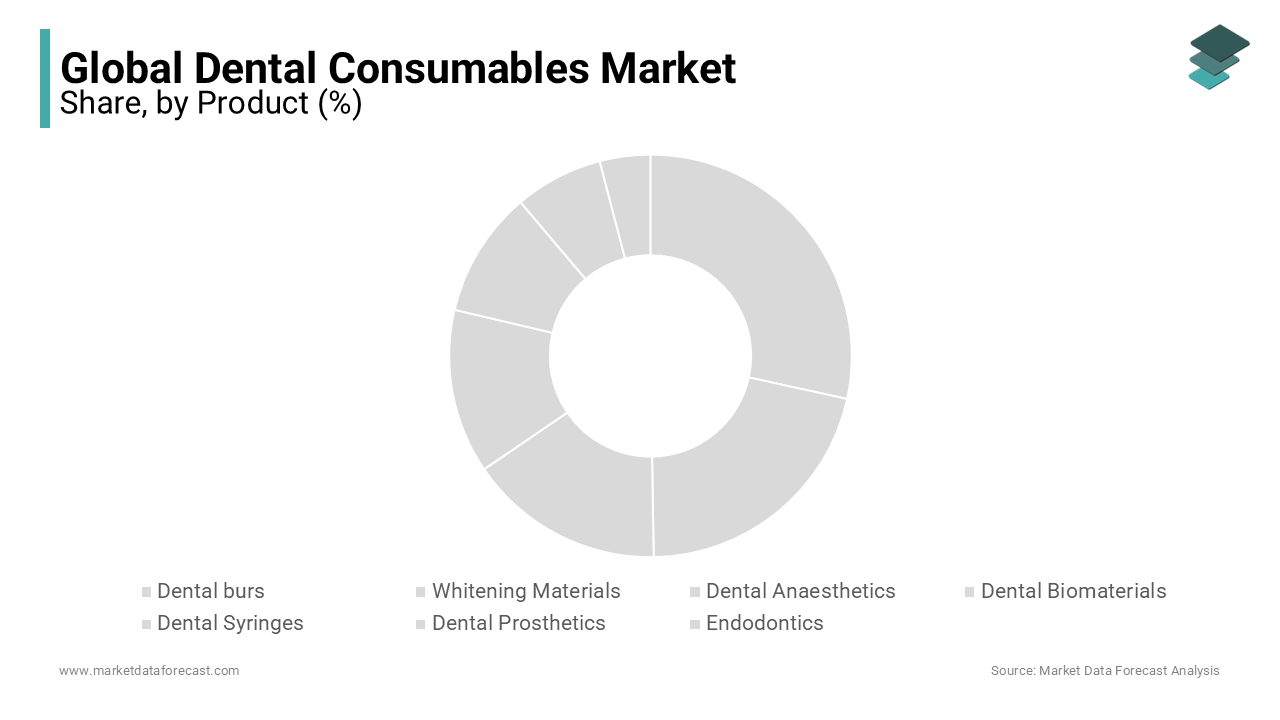
The infection control products segment dominated the dental consumables market by capturing 24.3% of total revenue in 2025. This lead position is due to the non-discretionary nature of hygiene protocols in clinical settings, where compliance with infection prevention standards is both a regulatory mandate and a patient safety imperative. The widespread institutionalization of single-use barriers, gloves, masks, sterilization pouches, and surface disinfectants has created a high-volume, recurring demand stream. In the United States, the Centers for Disease Control and Prevention emphasizes that all dental operators use personal protective equipment (PPE) during every patient interaction. Additionally, regulatory enforcement has intensified. The integration of infection control into accreditation frameworks, such as the Joint Commission International standards, further institutionalizes consumption. Hence, the operational dependency on infection control consumables ensures this segment’s sustained dominance.
The whitening products segment is the fastest-growing category within the dental consumables market and is projected to expand at a CAGR of 10.8% from 2025 to 2033. This surge is fueled by the rising global emphasis on aesthetic dentistry and appearance-driven self-care, particularly among millennials and Gen Z consumers. The demand is especially pronounced in urban centers across Asia-Pacific and North America, where social media and influencer culture have normalized cosmetic dental enhancements. At-home whitening kits, often prescribed by dentists, with premium brands like Opalescence and Zoom experiencing growth. The integration of LED-activated gels and custom trays has improved efficacy and safety, increasing patient compliance. Additionally, dental professionals are bundling whitening with routine check-ups. The psychological impact of appearance is a key driver. This convergence of clinical innovation, consumer psychology, and digital influence is propelling the segment’s rapid ascent.
By Application Insights
The restorative dentistry segment was the largest application in the dental consumables market by accounting for 31.7% of total consumption in 2025. This dominance is due to the high prevalence of dental caries and tooth decay, which necessitate fillings, -inlays, onlays, and crown placements, procedures that rely heavily on composite resins, bonding agents, liners, and impression materials. The shift from amalgam to tooth-colored composites has further amplified consumable usage; composite restorations require more auxiliary materials (e.g., etchants, primers, curing lights) than traditional fillings. Additionally, the integration of CAD/CAM systems in chairside restorations has increased the use of specialized milling burs, polishing kits, and resin blocks. Countries like Brazil and South Africa are expanding public restorative programs. The combination of high disease burden, material intensity, and technological adoption ensures restorative dentistry remains the cornerstone of consumable demand.
The cosmetic dentistry segment is emerging as the fastest-growing application in the dental consumables market and is expanding at a CAGR of 12.4% in the coming years. This growth is driven by increasing consumer focus on appearance, self-image, and social perception, particularly in urban and high-income demographics. The demand is especially strong in countries like South Korea, where a notable share of adults aged 25–40 have undergone at least one cosmetic dental procedure. Social media platforms such as Instagram and TikTok have amplified this trend, fueling aspirational demand. The rise of “Hollywood smiles” and digitally simulated smile designs has increased patient expectations, requiring precise, high-margin consumables like ultra-thin porcelain veneers and light-cured composites. In the United States, the number of cosmetic dentistry practices grew between 2020 and 2023. Additionally, premium clinics in Dubai and Thailand are attracting medical tourists with all-inclusive smile makeover packages. The fusion of aesthetics, digital visualization, and emotional appeal is transforming cosmetic dentistry into a high-value, consumable-intensive specialty.
By End User Insights
The dental hospitals and clinics segment represented the prominent end-user in the dental consumables market by commanding a substantial share of total consumption in 2025. This overwhelming share is attributable to the sheer volume of daily clinical procedures performed in outpatient settings, where consumables are used in every patient interaction. The operational model of private practice, often single- or multi-dentist offices, relies on continuous procurement of single-use and procedural materials, creating a stable, recurring revenue stream for suppliers. Additionally, the rise of corporate dental chains, such as Aspen Dental in the U.S. and Clove Dental in India, has standardized supply chains and increased bulk purchasing, enhancing market efficiency. These clinics also serve as primary points of access for preventive, restorative, and cosmetic care, ensuring broad-based consumable utilization. The structural reliance on disposable and procedural items ensures this segment remains the dominant force in market dynamics.
The academic and research institutes segment is the fastest-growing end-user in the dental consumables market and is projected to grow at a CAGR of 9.3% from 2025 to 2033. This growth is driven by the expansion of dental education programs and the increasing focus on clinical research, biomaterials testing, and digital dentistry innovation. Also, each dental student requires extensive hands-on training, consuming large quantities of impression materials, simulation teeth, burs, and restorative compounds. Additionally, research into biocompatible materials, 3D printing, and regenerative dentistry is accelerating. Institutions like King’s College London and the University of Melbourne are leading biomaterials trials, requiring high-purity resins, scaffolds, and cell culture media. Government funding is also rising. This convergence of education expansion and scientific advancement is transforming academic institutes into significant consumers of specialized dental materials
REGIONAL ANALYSIS
North America Dental Consumables Market Insights
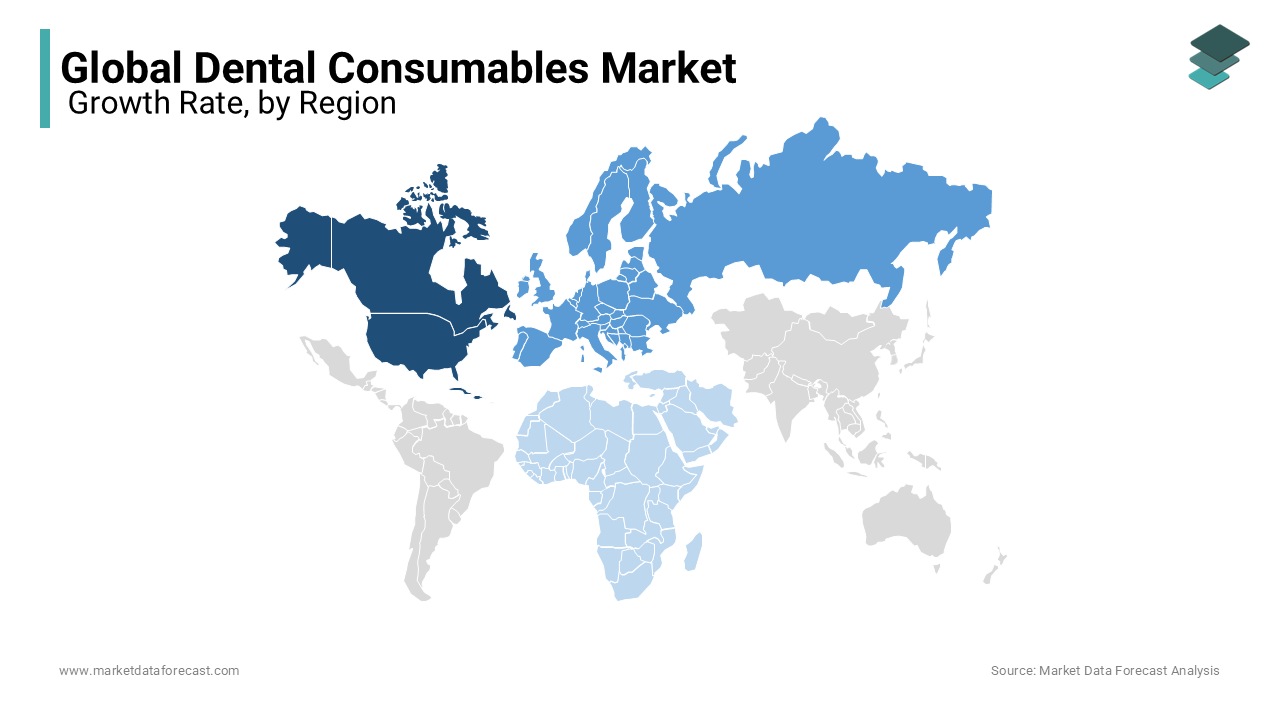
North America led the global dental consumables market at 34.2% in 2025. The region’s lead position is anchored in its advanced healthcare infrastructure, high dentist-to-patient ratio, and robust reimbursement frameworks that support routine and elective dental care. The high utilization drives consistent demand for consumables across restorative, preventive, and cosmetic applications. The presence of major manufacturers such as 3M, Dentsply Sirona, and Kerr ensures a steady supply of innovative products. Additionally, the integration of digital dentistry is widespread. Canada complements this ecosystem with strong public-private partnerships in oral health, with Quebec and Ontario leading in clinical technology adoption. The region also benefits from stringent regulatory oversight by the FDA, which ensures product quality and fosters consumer trust. With high disposable income and insurance coverage, North America remains the most mature and resilient market for dental consumables.
Europe Dental Consumables Market Insights
Europe holds a significant share of the dental consumables market. The region’s market is characterized by a dense network of dental professionals, universal healthcare access, and a strong emphasis on preventive care. Germany, France, and the United Kingdom are the primary contributors. The enforcement of the EU Medical Device Regulation (MDR) has raised product compliance standards, favoring established manufacturers with robust quality systems. Additionally, digital dentistry adoption is accelerating. The region also leads in sustainability initiatives, with Sweden and the Netherlands pioneering recyclable packaging and low-waste consumable designs. Despite slower population growth, Europe’s commitment to oral health equity and technological integration sustains its market strength.
Asia-Pacific Dental Consumables Market Insights
Asia-Pacific is another key player in the global dental consumables market and is the fastest-expanding region due to rising healthcare access and urbanization. Japan, South Korea, and Australia form the premium tier, with high per capita spending and advanced clinical infrastructure. Meanwhile, emerging economies like India, Indonesia, and Vietnam are experiencing a surge in dental infrastructure. The region’s middle class is expanding rapidly, increasing the affordability of dental care. Preventive programs are also gaining traction. The region’s blend of demographic momentum, economic growth, and policy support positions it as the future epicenter of market expansion.
Latin America Market Insights
Latin America is witnessing steady growth driven by healthcare reforms and private sector expansion. Brazil and Mexico are the dominant players. The program has significantly increased the consumption of sealants, composites, and infection control materials. In Mexico, the number of private dental clinics grew, catering to a growing middle class. Chile and Colombia are also investing in oral health infrastructure, with Santiago and Bogotá emerging as regional hubs for advanced dentistry. However, access remains uneven. Despite this, urban centers are adopting digital technologies. The region also faces challenges with counterfeit products. Nevertheless, rising awareness and government initiatives are creating a foundation for sustainable market growth.
Middle East and Africa Market Insights
The Middle East and Africa collectively exhibit strong potential due to urbanization and healthcare modernization. The Gulf Cooperation Council (GCC) countries lead the region, with the UAE and Saudi Arabia investing heavily in medical infrastructure. Saudi Arabia’s Vision 2030 includes a healthcare modernization plan, with dental services as a priority, primarily in Dubai and Abu Dhabi, serving both residents and medical tourists, as reported by the Dubai Health Authority. In Sub-Saharan Africa, access remains limited. However, mobile dental units and NGO-led programs are expanding care delivery, increasing demand for portable infection control kits and basic restorative materials. South Africa is a regional leader. Additionally, the rise of corporate clinics in Kenya and Egypt is standardizing consumable usage. Though currently small, the region’s demographic and economic trajectory suggests untapped potential.
KEY MARKET PLAYERS
The promising companies leading the global dental consumables market profiled in this report are 3M Company, Colgate-Palmolive Company, Danaher Corporation, Dentsply Sirona Inc., Institute Straumann AG, Ivoclar Vivadent, Koninklijke Philips N.V., OSSTEM IMPLANT Co., Ltd., Procter & Gamble, and Zimmer Biomet Holdings, Inc. The global dental consumables market has become competitive, with numerous market participants. Key players operating in this market mainly focus on product launches, collaborations, and acquisitions to maximize their market share.
TOP LEADING PLAYERS IN THE MARKET
3M Oral Care
3M Oral Care maintains a strong presence in the Asia-Pacific dental consumables market through its innovative restorative materials, adhesives, and infection control solutions. The company has deepened its regional footprint by launching localized product variants, such as humidity-resistant bonding agents tailored for tropical climates in Southeast Asia. It has also expanded its technical training programs for dentists in India and Indonesia through partnerships with dental academies, strengthening brand loyalty. The company’s investment in digital dentistry integration, including CAD/CAM-compatible materials, has positioned it as a technology-forward supplier. Additionally, 3M has strengthened distribution networks in tier-2 and tier-3 cities in China and Vietnam, improving access to rural clinics. Its focus on sustainability has led to the introduction of recyclable packaging for select product lines in Australia and New Zealand, aligning with regional environmental regulations. By combining clinical innovation, education, and supply chain expansion, 3M Oral Care continues to solidify its influence across diverse APAC markets.
Dentsply Sirona
Dentsply Sirona plays a pivotal role in shaping the Asia-Pacific dental consumables landscape through its comprehensive portfolio of endodontic files, restorative composites, and prosthetic materials. The company has intensified its engagement in the region by launching region-specific product lines, such as heat-resistant impression materials designed for high-humidity environments in Thailand and Malaysia. The company has also invested in digital integration, enabling seamless compatibility between its consumables and Sirona’s CEREC scanning systems used in over 15,000 APAC clinics. Dentsply Sirona has expanded its technical support teams in Singapore and Sydney to provide real-time clinical training. It collaborates with dental schools in Australia and Japan to incorporate its products into curricula, fostering long-term brand familiarity. By aligning product development with regional clinical needs and digital workflows, Dentsply Sirona has established itself as a trusted partner in the evolving APAC dental ecosystem.
GC Corporation
GC Corporation, headquartered in Japan, is a dominant regional force in the Asia-Pacific dental consumables market, leveraging its deep market understanding and home-region advantage. The company is renowned for its Fuji line of glass ionomer cements, which are widely used in public health programs across India, Thailand, and Vietnam due to their fluoride-releasing properties and cost-effectiveness. It has strengthened its presence through the establishment of the GC Academy, offering hands-on training to over 20,000 dentists annually across APAC. The company actively participates in government-led oral health initiatives, supplying sealants and preventive materials for school-based programs in Indonesia and the Philippines. GC has also invested in sustainable material research, introducing bioactive composites that stimulate dentin regeneration, now used in academic centers in South Korea and Taiwan. Its localized R&D centers in Singapore and India enable rapid adaptation to regional clinical preferences. By combining public health integration, education, and biomaterials innovation, GC Corporation maintains a deeply rooted and influential position across the Asia-Pacific region.
TOP STRATEGIES USED BY THE KEY MARKET PARTICIPANTS
Key players in the dental consumables market are deploying strategic initiatives centered on product innovation, digital integration, and geographic expansion to gain a competitive advantage. A primary strategy is the development of bioactive and biomimetic materials that enhance clinical outcomes, such as self-repairing composites and fluoride-releasing cements, which are increasingly adopted in preventive care programs. Companies are also aligning consumables with digital dentistry ecosystems, ensuring compatibility with CAD/CAM systems, intraoral scanners, and 3D printers to support chairside restorations. Strategic partnerships with dental schools and professional associations are being leveraged to embed brand-specific products into training curricula, fostering long-term user loyalty. E-commerce platforms and direct-to-clinic distribution models are expanding market reach, particularly in emerging economies where traditional supply chains are fragmented. Sustainability is emerging as a strategic differentiator, with firms introducing recyclable packaging and reducing carbon footprints in manufacturing. Additionally, companies are investing in clinical education through academies and webinars to position themselves as knowledge partners rather than mere suppliers. Mergers and acquisitions are also employed to enhance technological capabilities such as integrating AI-driven diagnostics with consumable usage. Lastly, localization of product formulations for regional challenges like humidity resistance or cost sensitivity is enabling deeper market penetration. These multifaceted strategies collectively enhance brand equity, clinical relevance, and operational resilience in a highly specialized and evolving market.
COMPETITION OVERVIEW
Competition in the dental consumables market is marked by a blend of technological sophistication, regional adaptation, and brand-driven loyalty. The landscape features multinational corporations like 3M, Dentsply Sirona, and GC Corporation, which compete on innovation, quality, and integrated solutions, while regional players focus on cost efficiency and local responsiveness. The absence of significant price elasticity in premium segments allows leading firms to differentiate through performance, biocompatibility, and digital compatibility. However, in emerging markets, competition intensifies around affordability and distribution reach, where local manufacturers challenge global brands with lower-cost alternatives. The rise of corporate dental chains has shifted procurement dynamics, favoring suppliers capable of bulk supply, consistent quality, and technical support. Digital dentistry is reshaping competitive boundaries companies that synchronize consumables with software and hardware platforms gain ecosystem advantages. Additionally, sustainability and regulatory compliance are becoming battlegrounds, particularly in Europe and parts of the Asia-Pacific, where eco-conscious practices influence purchasing decisions. Educational outreach and clinical training programs serve as soft power tools, embedding brands into professional practice. Counterfeit products remain a challenge in price-sensitive regions, undermining trust and forcing legitimate players to invest in authentication technologies. Ultimately, the most competitive firms are those that combine clinical excellence with strategic localization, digital integration, and stakeholder education, ensuring sustained relevance in a fragmented yet high-barrier market.
RECENT MARKET DEVELOPMENTS
- In June 2022, 3M launched its Elipar™ FreeLight 3 portable LED curing light in Australia and Southeast Asia, enhancing clinical flexibility and expanding its presence in remote and mobile dental units.
- In September 2023, Dentsply Sirona introduced an e-commerce portal for Indian dental practitioners, enabling direct ordering of consumables and reducing dependency on third-party distributors.
- In January 2023, GC Corporation partnered with the Indonesian Ministry of Health to supply glass ionomer cements for a nationwide school-based caries prevention program, increasing institutional adoption.
- In May 2024, 3M Oral Care collaborated with the Thai Dental Association to launch a digital training series on adhesive dentistry, strengthening professional engagement across Southeast Asia.
- In November 2023, Dentsply Sirona acquired a minority stake in a Singapore-based dental 3D printing startup, integrating advanced biomaterials into its digital workflow ecosystem for the Asia-Pacific region.
MARKET SEGMENTATION
This research on the global dental consumables market has been segmented based on the product, end-user, and region.
By Product Type
- Dental Implants
- Dental Prosthetics
- Orthodontics
- Endodontics
- Periodontics
- Infection Control Products
- Whitening Products
- Finishing & Polishing Products
- Dental Sealants
- Dental Burs
- Other Consumables
By Application
- Restorative Dentistry
- Orthodontics
- Endodontics
- Periodontics
- Prosthodontics
- Cosmetic Dentistry
By End User
- Dental Hospitals & Clinics
- Dental Laboratories
- Academic & Research Institutes
By Region
- North America
- Europe
- Asia-Pacific
- Latin America
- The Middle East and Africa