- Product Description Description
- Table of Contents TOC
- List of Table & Figure LOT
- Get Free Sample PDF Sample PDF
Market Size, 2025
$8.22 BnMarket Estimate, 2026
$8.86 BnMarket Forecast, 2034
$16.13 BnCAGR, 2026–2034
7.77%Executive Summary: Global Dental Crown and Bridges Market
- Market Scope: Comprehensive global dental crown and bridges market analysis covering material categories, product types, regional leadership frameworks, growth drivers, restraints, and competitive landscapes.
- Market Valuation: Valued at USD 8.22 billion (2025), estimated at USD 8.86 billion (2026), and projected to reach USD 16.13 billion by 2034, registering a robust CAGR of 7.77% (2026–2034).
- Primary Growth Drivers: Increasing prevalence of the edentulous population, rising demand for cosmetic and preventive dental treatments, expanding medical tourism, and technological advancements like CAD/CAM systems and 3D medical imaging.
Key Market Segment Metrics (2026–2034)
| Category | Leading Segment (2025 Position) | Fastest-Growing Segment |
|---|---|---|
| By Material | Ceramic materials (anticipated to hold the major share as they closely match natural tooth color) | Zirconium and high-strength aesthetic ceramics (driven by high compressive strength and biocompatibility) |
| By Product | Bridges (lead the market due to higher missing tooth cases and rising oral disease occurrences) | Crowns (experiencing continuous steady growth supported by single-tooth restorations and growing cosmetic focus) |
| By Region / Country | North America (dominated with over 45% global market share, backed by well-established reimbursement policies and healthcare infrastructure) | Asia-Pacific (predicted to exhibit the highest potential and fast growth driven by medical tourism, dental education, and rising disposable incomes) |
Major Market Players & Market Structure
Market Structure: Highly competitive global dental prosthetics landscape featuring leading multinational companies competing intensely on digital chair-side solutions, advanced CAD/CAM integration, high-performance biocompatible materials, and single-visit restorative workflows.
Key Companies: 3M, Ivoclar Vivadent, DENTSPLY International, Nobel Biocare Services, BioHorizons, Camlog Holding, Cynovad, Straumann, Zimmer Biomet, Heraeus Holding, Sirona Dental Systems, and Wieland Dental.
 Download Free Sample Report
Global Dental Crown and Bridges Market Size
The global dental crown and bridges market is projected to grow from USD 8.22 billion in 2025 to USD 8.86 billion in 2026 and reach USD 16.13 billion by 2034, registering a CAGR of 7.77% during the forecast period from 2026 to 2034.

Dental crowns and bridges are fixed, non-removable dental devices used to repair damaged teeth or replace missing ones. These solutions include ceramic zirconia and metal alloy crowns along with fixed bridges that restore masticatory function and aesthetic appeal for patients suffering from dental decay or trauma. According to the World Health Organization (WHO), untreated dental caries in permanent teeth affect approximately 2 billion people globally, creating a vast reservoir of patients requiring restorative interventions. This widespread prevalence directly fuels the demand for durable and biocompatible crown and bridge materials. These facts underscore the necessity for advanced fabrication technologies such as computer aided design and computer aided manufacturing which enhance precision and fit. Dental laboratories are increasingly adopting digital workflows to reduce turnaround times and improve patient satisfaction. The aging population contributes significantly to market dynamics as older adults are more prone to tooth loss and structural degradation. Insurance coverage for major restorative procedures further supports accessibility ensuring steady utilization rates across clinical settings. This intersection of clinical need technological advancement and demographic trends defines the current landscape of the dental crown and bridge sector.
MARKET DRIVERS
Rising Prevalence of Dental Caries and Periodontal Diseases
The escalating incidence of dental caries and periodontal diseases is driving the expansion of the dental crown and bridges market. This growth is due to the direct correlation between tooth damage and restorative needs. According to the Centers for Disease Control and Prevention (CDC), nearly 90% of adults aged 20 to 64 years have had dental caries in their permanent teeth, indicating a massive potential patient base for restorative procedures. This high prevalence creates a sustained requirement for crowns to protect weakened tooth structures after root canal therapy or large fillings. As per the National Institute of Dental and Craniofacial Research (NIDCR) and the CDC, severe periodontal disease affects approximately 8% of American adults, leading to tooth loss that often necessitates bridge placement for functional restoration. These conditions compromise the structural integrity of teeth making crowns essential for preventing further fracture and preserving natural dentition. Dentists prioritize early intervention with crowns to extend the lifespan of compromised teeth rather than opting for extraction. The integration of minimally invasive preparation techniques has made crown placement more appealing to patients who wish to retain their natural teeth. Public health initiatives focusing on oral hygiene education have increased awareness but have not yet reversed the high burden of existing decay. This persistent disease burden ensures consistent demand for high quality restorative materials and laboratory services across dental practices.
Growing Demand for Aesthetic and Cosmetic Dentistry
The increasing consumer preference for aesthetic perfection fundamentally supports the growth of the dental crown and bridges market. Patients are seeking natural looking solutions for visible dental imperfections. According to the American Academy of Cosmetic Dentistry (AACD), approximately 74% of participants believe an unattractive smile can hurt chances for career success. This social pressure fuels the adoption of all ceramic and zirconia crowns which offer superior translucency and color matching compared to traditional metal alloys. As per studies, the demand for metal-free esthetic restorations has increased manifold as patients become more educated about material options and biocompatibility. Zirconia bridges provide a strong and aesthetically pleasing alternative to conventional metal frameworks allowing for seamless integration with surrounding natural teeth. Dental practitioners are leveraging digital shade matching tools to ensure precise color replication which enhances patient satisfaction and trust. The rise of social media and celebrity culture has normalized cosmetic dental procedures making them more accessible and desirable for the general population. Insurance plans are increasingly covering aesthetic restorations when they also serve a functional purpose further reducing financial barriers. This convergence of social expectations technological capability and financial accessibility drives the robust adoption of premium aesthetic crown and bridge solutions.
MARKET RESTRAINTS
High Cost of Advanced Restorative Procedures
The substantial financial burden associated with advanced dental crowns and bridges is a major hindrance to their global market. This limits accessibility for uninsured or underinsured populations. According to the Kaiser Family Foundation (KFF), standard Medicare explicitly excludes routine dental care, leaving a high percentage of beneficiaries without coverage, while private plans often feature annual caps and high coinsurance for major procedures. This high out of pocket expense discourages many individuals from seeking necessary treatment leading to delayed care and worsening oral health outcomes. As per the National Association of Dental Plans (NADP), approximately 77% of the U.S. population had dental benefits, and commercial major procedures like crowns and bridges are typically covered at 50% with an annual limit averaging $1,500 to $2,500. Consequently patients may opt for cheaper alternatives such as partial dentures or even extraction which reduces the volume of premium crown and bridge procedures. Dental practices face challenges in convincing patients to invest in high quality materials when lower cost options are available. The economic uncertainty in various regions further exacerbates this issue as discretionary spending on healthcare declines. Manufacturers and laboratories struggle to balance the cost of premium materials like zirconia with the price sensitivity of the end consumer. This financial barrier restricts market penetration particularly in lower income demographics where the need for restorative care is often highest due to limited preventive access.
Shortage of Skilled Dental Technicians and Labor Constraints
The insufficient number of trained dental technicians significantly impedes the growth of the dental crown and bridges market. This creates constraints in production capacity and increases turnaround times. According to the U.S. Bureau of Labor Statistics, employment of dental laboratory technicians is projected to decline 6 percent from 2025 to 2035 due to industry changes. However the complexity of custom aesthetic restorations still requires highly skilled manual craftsmanship that cannot be fully replicated by machines. As per the National Association of Dental Laboratories (NADL), commercial dental laboratories report a structural shortage of skilled labor and difficulty in recruiting and retaining qualified technicians. This labor shortage leads to longer wait times for patients and increased operational costs for laboratories that must pay premium wages to attract talent. Dental practitioners may hesitate to recommend complex cases if they cannot guarantee timely delivery of restorations. The aging workforce in the dental laboratory sector means that experienced mentors are retiring without enough young professionals entering the field to replace them. Training programs are often lengthy and expensive which deters new entrants. This human resource gap limits the scalability of dental laboratories and constrains the overall supply of high quality crowns and bridges available to meet growing patient demand.
MARKET OPPORTUNITIES
Adoption of Digital Dentistry and CAD/CAM Technologies
The widespread adoption of computer-aided design and computer-aided manufacturing technologies offers a substantial opportunity for the dental crown and bridges market. This enhances precision, efficiency, and patient experience. According to research, digital workflows can reduce adjustment times and impression steps compared to traditional analog methods, enabling single-visit restorations. This speed advantage appeals to patients who prefer fewer visits and immediate results driving higher acceptance rates for crown procedures. As per studies, digital scanning eliminates the discomfort associated with traditional impression materials, significantly improving patient comfort and practice efficiency. Dental laboratories are investing in milling machines and 3D printers that can produce zirconia and ceramic restorations with exceptional accuracy and minimal material waste. Clinicians benefit from the ability to digitally design restorations chairside ensuring optimal fit and occlusion before final cementation. The integration of artificial intelligence in design software assists technicians in creating anatomically correct shapes reducing the need for manual adjustments. This technological shift lowers long term operational costs and increases throughput for dental practices. Patients are willing to pay a premium for the convenience and precision offered by digital dentistry. This transformation positions digital CAD/CAM systems as a key growth driver for modern crown and bridge fabrication.
Expansion of Medical Tourism for Dental Care
The growing trend of medical tourism provides a promising prospect for the dental crown and bridges market. This opportunity arises as patients travel to countries with lower costs and high quality dental services. As per studies, dental care is a prominent driver of medical travel due to the significant cost gap between treatment abroad and patients' home countries. Patients from high cost regions such as North America and Western Europe travel to destinations in Asia Latin America and Eastern Europe where costs can be 50 to 70 %lower. As per the Global Healthcare Accreditation Program many international dental clinics now adhere to strict quality standards ensuring that patients receive safe and effective restorative care. This accessibility allows individuals who cannot afford domestic prices to obtain necessary crowns and bridges using premium materials like zirconia. Dental laboratories in these tourist hubs are scaling up production to meet international demand investing in advanced equipment and skilled staff. Local economies benefit from the influx of foreign currency which encourages further investment in dental infrastructure. Marketing efforts by tourism boards and dental clinics highlight the combination of vacation and affordable care attracting a steady stream of patients. This global mobility expands the addressable market for crown and bridge manufacturers beyond domestic borders creating new revenue streams.
MARKET CHALLENGES
Regulatory Compliance and Material Safety Standards
The stringent regulatory requirements governing dental materials are a significant challenge to the dental crown and bridges market. This increases compliance costs and delays product launches. The Food and Drug Administration classifies dental ceramics and alloys as medical devices requiring rigorous testing for biocompatibility mechanical strength and chemical stability. According to sources, obtaining formal certification or validation for new restorative materials can take several years and requires structured evaluation to prove clinical safety and mechanical efficacy. This prolonged timeline prevents manufacturers from quickly introducing innovative materials that may offer superior aesthetic or functional properties. As per the European Commission Medical Device Regulation manufacturers must maintain detailed technical documentation and post market surveillance data which adds administrative burden and expense. Small and medium sized laboratories often lack the resources to navigate these complex regulatory landscapes effectively. Consequently many innovative products fail to reach the market or are launched only in regions with less stringent regulations. The uncertainty surrounding regulatory decisions also discourages investment in novel material research. Dental practitioners must stay updated on compliance status to avoid liability issues when using new products. This restrictive environment stifles innovation and slows the pace at which patients can benefit from advanced restorative materials.
Competition from Dental Implants
The increasing popularity of dental implants is a major barrier to the dental crown and bridges market. They offer a more permanent and bone-preserving alternative for tooth replacement. According to the American Academy of Implant Dentistry, implant success rates exceed 95%, making them a highly reliable option for replacing missing teeth compared to traditional bridges. Unlike bridges which require grinding down adjacent healthy teeth for support implants stand independently preserving the integrity of surrounding dentition. As per research, patient preference is shifting towards implants due to their longevity and natural feel despite the higher initial cost. This trend reduces the volume of bridge cases particularly for single tooth replacements where implants are clinically indicated. Dental schools are emphasizing implant training in their curricula producing a new generation of dentists who prefer implant based solutions. Insurance coverage for implants is gradually improving making them more accessible to a broader patient population. Manufacturers of traditional bridge materials face pressure to innovate or risk losing market share to implant companies. The perception of implants as a superior long term investment challenges the traditional role of bridges in restorative dentistry. Adapting to this competitive threat requires crown and bridge providers to highlight specific clinical scenarios where bridges remain the optimal choice.
REPORT COVERAGE
| REPORT METRIC | DETAILS |
| Market Size Available | 2025 to 2034 |
| Base Year | 2025 |
| Forecast Period | 2026 to 2034 |
| Segments Covered | By Material, Product, and Region |
| Various Analyses Covered | Global, Regional & Country Level Analysis, Segment-Level Analysis, DROC, PESTLE Analysis, Porter’s Five Forces Analysis, Competitive Landscape, Analyst Overview on Investment Opportunities |
| Regions Covered | North America, Europe, APAC, Latin America, Middle East & Africa |
| Market Leaders Profiled | 3M, Ivoclar Vivadent, DENTSPLY International, Nobel Biocare Services, BioHorizons, Camlog Holding, Cynovad, Straumann, Zimmer Biomet, Heraeus Holding, Sirona Dental Systems, and Wieland Dental |
SEGMENTAL ANALYSIS
By Material Insights
In 2025, the ceramic materials segment held the majority share within the dental crown and bridges market because of its superior aesthetic properties and biocompatibility, which align with modern patient expectations for natural looking restorations. According to the National Dental Practice-Based Research Network, all-ceramic restorations like lithium disilicate (54%) and layered zirconia (17%) are highly prominent choices for anterior crowns in the United States, reflecting a widespread clinical adoption of metal-free materials. This preference is driven by the ability of ceramics to mimic the translucency and color of natural enamel ensuring seamless integration with surrounding dentition. As per the Journal of Prosthetic Dentistry, clinical studies indicate that modern high-strength ceramics have 5-year survival rates exceeding 95% (such as lithium disilicate glass-ceramics at 96.6%), which matches or exceeds the durability of traditional metal-ceramic restorations while offering better aesthetics. Dental laboratories are increasingly investing in milling machines specifically designed for ceramic blocks which enhances production efficiency and precision. Dentists favor these materials because they cause less wear on opposing teeth compared to porcelain fused to metal restorations. The absence of metal eliminates the risk of gray lines at the gum margin which is a common complaint with older restoration types. Patient awareness campaigns highlighting the benefits of metal free dentistry have further accelerated adoption. Insurance providers are updating coverage policies to include premium ceramic options recognizing their long term value. This combination of clinical performance aesthetic appeal and technological support secures the leading position of ceramic materials in the global market.
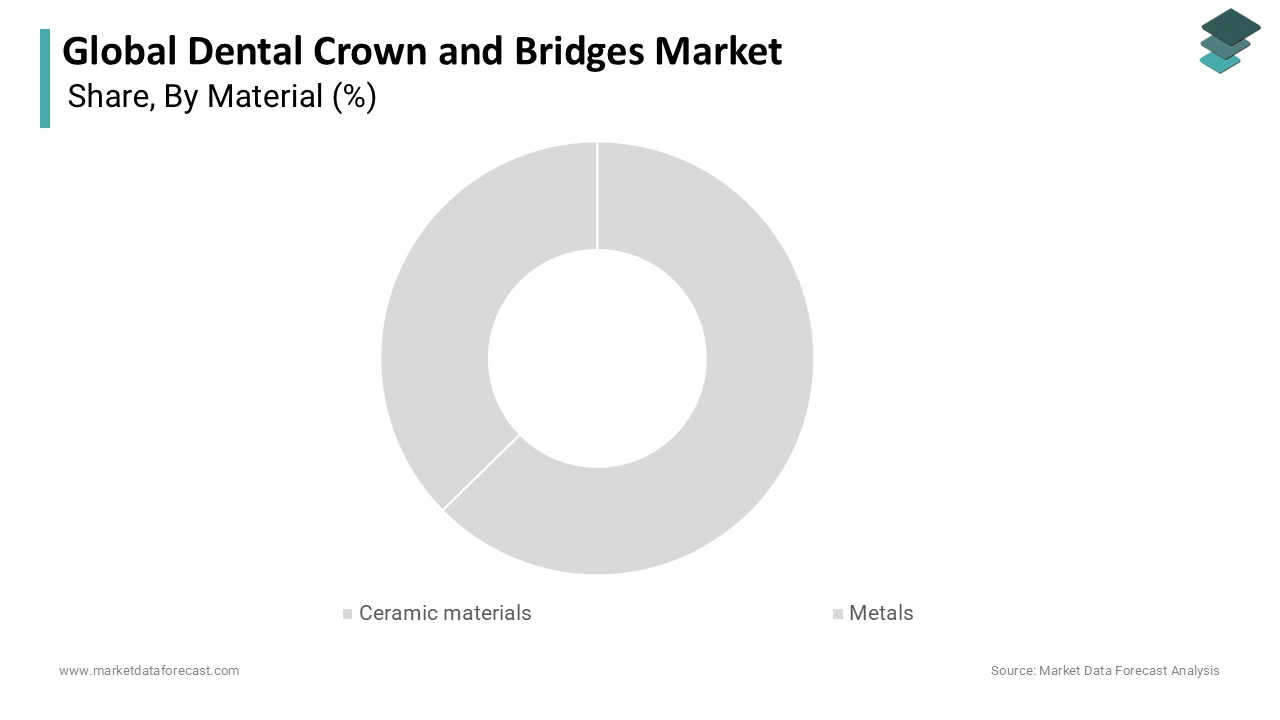
The exceptional aesthetic quality and biological safety of ceramic materials significantly drive their market dominance by meeting the high cosmetic standards of contemporary dental patients. According to sources, all-ceramic restorations achieve exceptionally high patient satisfaction scores due to their superior aesthetic integration, light transmission, and natural appearance compared to metal-containing alternatives. This positive feedback loop encourages dentists to recommend ceramic options more frequently for both anterior and posterior teeth. As per research, zirconia and alumina ceramics exhibit excellent biocompatibility with a minimal risk of local tissue reactions or gingival inflammation compared to base metal alloys containing nickel or chromium. This safety profile is crucial for patients with metal sensitivities which affect approximately 10 to 15 %of the population according to dermatological studies. The ability to customize shade and opacity allows technicians to create restorations that are indistinguishable from natural teeth even under close inspection. Social media influence has heightened awareness of smile aesthetics making patients more discerning about the materials used in their dental work. Clinicians appreciate that ceramics do not interfere with magnetic resonance imaging scans which is an added health benefit. The continuous improvement in fracture toughness of newer ceramic formulations has addressed previous concerns about brittleness. These factors collectively ensure that ceramic materials remain the preferred choice for high quality restorative dentistry.
The metal materials segment is anticipated to witness the fastest CAGR of 6.2% between 2026 and 2034 due to its unmatched durability and cost effectiveness in posterior regions. The Academy of General Dentistry notes that gold alloys and base metal combinations remain the gold standard for long span bridges and patients with heavy occlusal forces due to their superior strength and wear resistance. As per the Journal of Oral Rehabilitation, cast metal restorations demonstrate an exceptionally low rate of structural fracture and chipping compared to brittle ceramic alternatives, making them ideal for molars that endure significant chewing pressure. The affordability of metal crowns appeals to patients with limited insurance coverage or those seeking budget friendly solutions for non visible teeth. Dental laboratories continue to refine casting techniques to produce thinner and more precise metal frameworks that require less tooth reduction. The rise in geriatric populations who prioritize function over aesthetics contributes to this growth trajectory. Emerging markets with price sensitive consumers are driving demand for durable and affordable metal options. Manufacturers are developing new alloys with improved corrosion resistance and biocompatibility to address historical concerns. This sustained relevance in specific clinical scenarios ensures steady growth for the metal segment despite the overall trend towards ceramics.
The exceptional mechanical strength and wear resistance of metal materials fuel their growth in posterior dental applications where functional demands are highest. According to reviews, gold alloy crowns demonstrate a 10-year survival rate of approximately 95% to 96%, illustrating structural longevity that remains a clinical benchmark in high-stress posterior areas. This longevity reduces the need for frequent replacements saving patients money and preserving tooth structure over time. As per the American Academy of Fixed Prosthodontics metal on metal contacts generate less wear on opposing natural teeth compared to porcelain which helps maintain the integrity of the entire dentition. Dentists recommend metal crowns for patients with bruxism or clenching habits who are at high risk of fracturing ceramic restorations. The thinness of metal crowns allows for conservative tooth preparation which is beneficial for teeth with limited remaining structure. Older patients often prefer metal due to its proven track record and lower cost. The ease of adjustment and polishing makes metal restorations convenient for clinicians during placement. These functional advantages ensure that metals remain a vital component of the restorative toolkit particularly for complex cases requiring maximum durability.
By Product Insights
The crowns segment was the largest in 2025 and occupied a commanding share of the dental crown and bridges market. This prominence was supported by its widespread application in restoring single damaged teeth and protecting structures after root canal therapy. According to the American Dental Association (ADA) and clinical practice surveys, approximately 15 million dental crowns are placed annually in the United States alone, reflecting their status as one of the most common restorative procedures. This high volume is driven by the prevalence of dental caries and trauma which frequently compromise individual teeth rather than causing multiple adjacent losses. As per the National Institute of Dental and Craniofacial Research (NIDCR), over 90% of adults have experienced tooth decay, creating a vast pool of candidates for dental crowns and other structural restorations. Crowns are also essential for covering dental implants which are gaining popularity as a tooth replacement option. The versatility of crowns allows them to be used for both aesthetic enhancement and functional restoration in various parts of the mouth. Dentists prefer crowns over large fillings for weakened teeth because they provide full coverage and protection against fracture. The development of minimally invasive preparation techniques has made crown placement more acceptable to patients. Insurance coverage for crowns is generally more comprehensive than for bridges which are considered major prosthetics. This broad clinical utility and high procedural frequency secure the dominant position of crowns in the market.
The widespread occurrence of single tooth damage from decay trauma or wear significantly drives the dominance of the crown segment by creating a constant need for individual tooth restoration. According to the Centers for Disease Control and Prevention, untreated cavities affect nearly 20% of adults aged 20 to 64 years, often requiring crowns to restore structural integrity after extensive decay removal. This persistent disease burden ensures a steady stream of patients needing protective caps to save their natural teeth. As per the Journal of Endodontics, teeth that undergo root canal treatment exhibit a loss of structural integrity and have greater longevity when crowned, whereas uncrowned posterior endodontically treated teeth show a significantly higher rate of prosthetic and cusp fractures under occlusal loads. Dentists routinely recommend crowns following root canal therapy to ensure the long term success of the treatment. Accidental trauma to front teeth is another common indication for crowns particularly in children and young adults. The aging population experiences increased tooth wear from decades of use necessitating crowns to restore height and function. Preventive dentistry efforts have reduced some decay but the cumulative effect of past damage remains high. This consistent clinical need for single unit restorations maintains the high volume of crown placements globally.
The bridges segment is on the rise and is expected to be the fastest growing segment in the market by witnessing a CAGR of 7.5% over the forecast period. This rapid expansion is fuelled by the need for fixed solutions to replace multiple missing teeth without surgery. As per the American College of Prosthodontists, bridges remain a preferred option for patients who are not candidates for implants due to medical conditions or insufficient bone density. As per the Journal of Prosthetic Dentistry, the development of adhesive bridge technologies, such as resin-bonded Maryland bridges, has expanded the indications for bridge placement by allowing for the minimally invasive restoration of missing teeth. These innovations reduce the need for extensive tooth preparation making bridges more appealing to patients concerned about preserving healthy tooth structure. The aging population is experiencing higher rates of multiple tooth loss which increases the demand for multi unit restorations. Bridges offer a faster and less expensive alternative to multiple implants for replacing several adjacent teeth. Dental laboratories are utilizing digital workflows to design and mill precise bridge frameworks that fit accurately. Improved materials such as high strength zirconia allow for longer span bridges with reduced risk of fracture. This combination of technological advancement and clinical necessity fuels the rapid growth of the bridge segment.
The existence of a significant patient population who cannot undergo dental implant surgery drives the growth of the bridge segment by providing a reliable fixed alternative. According to the Journal of Oral and Maxillofacial Surgery, systemic conditions such as uncontrolled diabetes, severe osteoporosis, and a history of local radiation therapy serve as relative or absolute contraindications that complicate implant candidacy and raise the risk of failure. For these individuals bridges offer a stable and functional solution that does not rely on osseointegration. As per the American Diabetes Association millions of adults with diabetes suffer from periodontal disease and tooth loss but may have compromised healing capabilities that make implants risky. Bridges allow these patients to restore their chewing ability and aesthetics without the surgical risks associated with implants. Dentists value bridges for their predictable outcomes and shorter treatment timeline compared to the months required for implant integration. The ability to replace multiple teeth with a single prosthesis is cost effective for patients. Insurance plans often cover bridges more readily than implants making them financially accessible. This critical role in treating complex medical cases ensures steady demand for bridge restorations.
COUNTRY LEVEL ANALYSIS
North America Dental Crown And Bridges Market Analysis
North America dominated the dental crown and bridges market and accounted for a substantial share in 2025. This dominance was driven by its advanced healthcare infrastructure high disposable income and strong emphasis on aesthetic dentistry. According to the American Dental Association's Health Policy Institute, national dental expenditures in the United States reached a historic high of $189 billion in 2024, constituting approximately 3.6% of total U.S. health expenditures. This robust expenditure supports the adoption of premium materials such as zirconia and lithium disilicate for crowns and bridges. As per the Centers for Medicare and Medicaid Services (CMS) and public health longitudinal records, the aging baby boomer population is retaining their natural teeth longer due to preventative milestones, which inherently increases the programmatic demand for restorative interventions to preserve function and appearance later in life. High prevalence of dental insurance coverage facilitates access to costly procedures like crowns and bridges. The presence of leading dental device manufacturers and laboratories in the region fosters innovation and rapid adoption of digital technologies. Patients in North America are highly conscious of smile aesthetics driving demand for metal free restorations. Regulatory standards ensure high quality materials and practices which build consumer trust. The integration of teledentistry and digital workflows is enhancing efficiency in dental practices. This combination of economic strength demographic trends and technological leadership sustains North America's dominant position in the global market.
Europe Dental Crown And Bridges Market Analysis
Europe plays a major role in the dental crowns and bridges market because of universal healthcare coverage and strong demand for high quality restorations. The European Federation of Periodontology states that periodontal disease affects a significant portion of the adult population in Europe leading to tooth loss that requires replacement with bridges or implants. This health burden drives consistent demand for restorative devices across the continent. As per the Organisation for Economic Co-operation and Development (OECD), health spending across member nations averages 9.3% of GDP, with European nations like Germany (11.7% to 12.3%) and France (11.5%) representing the highest spending brackets on the continent. Strict regulations under the Medical Device Regulation ensure high safety and quality standards for dental materials. Patients in Western Europe prioritize aesthetic outcomes driving the shift towards all ceramic restorations. Eastern European countries are emerging as hubs for dental tourism offering high quality crowns and bridges at lower costs. The aging population in countries like Italy and Germany increases the need for durable restorative solutions. Reimbursement policies vary by country but generally support essential restorative care. Strong tradition of craftsmanship in dental laboratories ensures high quality manual and digital production. This balanced approach to quality regulation and accessibility defines the European market landscape.
Asia-Pacific Dental Crown And Bridges Market Analysis
The Asia Pacific region exhibits swift expansion in the Dental Crown and Bridges Market due to rising income levels increasing health awareness and expanding dental infrastructure. The World Health Organization notes that oral health initiatives in countries like China and India are improving access to dental care for millions of previously underserved individuals. This expansion creates a vast new customer base for restorative procedures. As per the Ministry of Health in Japan the super aging society has created immense demand for durable and functional dental prosthetics including crowns and bridges to support nutrition and quality of life. Rising middle class populations in Southeast Asia are increasingly willing to invest in aesthetic dentistry. Medical tourism in countries like Thailand and Malaysia attracts international patients seeking affordable high quality crowns. Local manufacturing of dental materials is increasing which reduces costs and improves supply chain efficiency. Government programs in some countries are beginning to cover basic restorative care for elderly citizens. The adoption of digital dentistry is accelerating in urban centers improving service quality. Cultural emphasis on oral health and appearance is driving demand for premium ceramic options. This dynamic mix of economic growth policy support and demographic trends fuels rapid market expansion in the region.
Latin America Dental Crown And Bridges Market Analysis
Latin America shows steady growth in the dental crown and bridge market, owing to a strong culture of aesthetic dentistry and a growing medical tourism industry. The Pan American Health Organization states that non communicable diseases including oral conditions are a growing burden in the region prompting governments to improve dental care access. This focus on public health drives demand for basic restorative services. As per the Inter American Development Bank healthcare spending in Latin America has increased although out of pocket payments remain high for many citizens. Despite this the desire for attractive smiles drives significant private spending on cosmetic crowns and veneers. Countries like Brazil and Mexico are major destinations for dental tourists from North America seeking affordable high quality restorations. This influx of foreign patients supports the growth of advanced dental laboratories and clinics. Local dentists are increasingly trained in modern techniques including digital impressions and ceramic milling. Economic volatility poses challenges but the resilience of the dental sector remains strong. Urbanization is leading to greater concentration of dental services in cities improving access. The cultural importance of appearance ensures sustained demand for aesthetic restorative options. This unique combination of local demand and international tourism defines the regional market dynamics.
The Middle East and Africa Dental Crown And Bridges Market Analysis
The Middle East and Africa region provides a diverse landscape for the dental crowns and bridges market, supported by high spending in Gulf countries and emerging potential in Africa. The World Health Organization reports that oral health infrastructure in many African nations is limited but growing through international partnerships and local investments. This development is gradually increasing access to basic restorative care. According to sources, countries in the Middle East are investing heavily in world-class healthcare facilities, including advanced dental clinics offering premium prosthodontic and restorative crown and bridge services. High disposable income in countries like Saudi Arabia and the United Arab Emirates drives demand for luxury aesthetic restorations using top tier materials. Dental tourism is emerging in destinations like Turkey and Dubai attracting patients from Europe and Asia. In Africa the lack of insurance coverage limits access to expensive restorations but basic metal crowns remain popular for their durability and low cost. Local training programs are improving the skills of dental technicians. Government initiatives in some countries are focusing on preventive care which may reduce future restorative needs. The contrast between high tech hubs and developing regions creates a varied market landscape. This dual dynamic offers opportunities for both premium and budget friendly dental products.
COMPETITITVE LANDSCAPE
The competition in the Dental Crown and Bridges Market is characterized by intense rivalry among established multinational corporations and specialized regional manufacturers who strive for technological superiority and aesthetic excellence. Major corporations leverage their extensive distribution networks and brand recognition to dominate the market while continuously investing in research and development to introduce novel ceramic materials and digital workflows. These leading firms engage in strategic acquisitions of smaller technology companies to integrate innovative software and hardware solutions into their portfolios. Smaller specialized companies compete by focusing on niche segments such as custom shaded zirconia or rapid prototyping services where they can offer personalized value propositions. The regulatory environment requires strict adherence to safety and quality standards which favors larger entities with greater resources for compliance. Price competition is moderate in the premium segment but intense in the budget sector particularly in emerging markets. Market participants also differentiate themselves through comprehensive training programs and technical support services that enhance customer loyalty. The landscape is further shaped by the rapid adoption of digital dentistry which necessitates continuous innovation in both materials and equipment. This dynamic environment drives continuous improvement and strategic positioning as companies seek to capture growth opportunities in an increasingly aesthetic conscious and technologically advanced dental care sector.
KEY MARKET PLAYERS
Some of the companies that are playing a dominating role in the Global Dental Crown and Bridges Market include:
- 3M
- Ivoclar Vivadent
- DENTSPLY International
- Nobel Biocare Services
- BioHorizons
- Camlog Holding
- Cynovad
- Straumann
- Zimmer Biomet
- Heraeus Holding
- Sirona Dental Systems
- Wieland Dental
TOP LEADING PLAYERS IN THE MARKET
- 3M Company significantly influences the Dental Crown and Bridges Market through its extensive portfolio of restorative materials including high strength ceramics and adhesive cements. The company actively drives innovation by developing advanced zirconia blocks that offer superior translucency and durability for aesthetic restorations. 3M recently enhanced its digital dentistry offerings by integrating new milling compatible materials with chairside CAD CAM systems to streamline workflow efficiency. Their strategic focus on education ensures that dental professionals are trained in the latest bonding and preparation techniques for optimal outcomes. The firm continuously invests in research to improve the biocompatibility and mechanical properties of its restorative products. This commitment to quality and technological integration solidifies their reputation as a trusted partner for dental laboratories and clinics seeking reliable solutions.
- Dentsply Sirona Inc. plays a pivotal role in the market by providing comprehensive digital workflows and premium ceramic materials for crown and bridge fabrication. The company strengthens its position through the development of integrated hardware and software solutions that enable precise design and milling of restorations. Dentsply Sirona recently launched next generation lithium disilicate materials that combine ease of use with exceptional aesthetic results for anterior and posterior teeth. Their global network of training centers supports clinicians in adopting digital technologies effectively. The firm collaborates with key opinion leaders to validate clinical performance and refine product features based on real world feedback. This holistic approach to digital dentistry and material science enhances their standing as a leader in modern restorative care.
- Ivoclar Vivadent AG contributes substantially to the market by offering innovative all ceramic systems and specialized milling units for dental laboratories. The company reinforces its presence through the introduction of high performance zirconia discs that allow for thin yet strong restorations with natural aesthetics. Ivoclar recently expanded its digital ecosystem by launching cloud based design platforms that facilitate seamless collaboration between dentists and technicians. Their strategic partnerships with equipment manufacturers ensure compatibility and optimized processing protocols for their materials. The firm prioritizes sustainability by developing eco friendly production processes and recyclable packaging for dental products. This dedication to innovation and environmental responsibility ensures their continued leadership in delivering high quality restorative solutions globally.
TOP STRATEGIES USED BY KEY MARKET PARTICIPANTS
Key players in the Dental Crown and Bridges Market primarily employ strategic product innovation to differentiate their offerings through advanced materials such as high translucency zirconia and lithium disilicate. Companies actively invest in digital dentistry ecosystems by integrating CAD CAM software with milling machines to enhance precision and workflow efficiency. Strategic partnerships with dental laboratories and clinics are crucial for promoting adoption and providing technical support to end users. Manufacturers focus on continuous education and training programs to ensure clinicians are proficient in using new materials and technologies effectively. Expansion into emerging markets is achieved through localized production and distribution networks that reduce costs and improve accessibility. Regulatory compliance remains a priority to maintain safety standards and facilitate global market entry. These multifaceted approaches enable market leaders to maintain competitive advantages and respond effectively to evolving aesthetic and functional demands in the dynamic dental restoration environment.
MARKET SEGMENTATION
This research report on the global dental crown and bridges market has been segmented and sub-segmented based on material, product, and region.
By Material
- Ceramic materials
- Metals
By Product
- Crowns
- Bridges
By Region
- North America
- Europe
- Asia-Pacific
- Latin America
- The Middle East and Africa