- Product Description Description
- Table of Contents TOC
- List of Table & Figure LOT
- Get Free Sample PDF Sample PDF
Market Size, 2025
$8.46 BnMarket Estimate, 2026
$8.91 BnMarket Forecast, 2034
$13.41 BnCAGR, 2026–2034
5.25%Executive Summary: Dental Equipment Market
- Market Scope: Comprehensive global dental equipment market analysis covering product categories, end-user segments, workforce availability metrics, global oral disease prevalence, and regional leadership frameworks.
- Market Valuation: Valued at USD 8.46 billion (2025 base year), estimated at USD 8.91 billion (2026), and projected to reach USD 13.41 billion by 2034, registering a steady CAGR of 5.25% (2026–2034).
- Primary Growth Drivers: High global prevalence of dental disorders, technological shifts toward digital dentistry, and expanding cosmetic and restorative procedures. Key clinical, demographic, and operational highlights include oral diseases affecting nearly 3.5 billion people globally, untreated dental caries impacting 2.4 billion individuals, extreme global workforce disparities (ranging from 1.8 dentists per 100,000 people in Sub-Saharan Africa to 60 per 100,000 in Western Europe), and >50% of rural India's population lacking access to basic dental care, boosting demand for portable diagnostics and teledentistry.
Key Market Segment Metrics (2026–2034)
| Category | Leading Segment (2025 Position) | Fastest-Growing Segment |
|---|---|---|
| By Product Segment | Dental Radiology Equipment (dominated product segment with 25.8% of global revenue in 2025; >25,000 CBCT units in U.S. clinics) | CAD/CAM Systems, 3D Printing, & Digital Imaging Solutions |
| By End-User Sector | Hospitals & Dental Clinics (collectively represented the largest end-user category in 2025) | Dental Laboratories (identified as the fastest-growing category, expanding at an 11.8% CAGR) |
| By Technology & Capabilities | Standard Operatory Units, Handpieces, & Conventional Treatment Planning | AI-Powered Diagnostics, Cloud-Based Treatment Planning, & Portable Diagnostic Units |
| By Country / Region | North America (led global market with a 37.6% share in 2025) | Asia-Pacific (identified as the fastest-growing region globally) |
Major Market Players & Market Structure
Market Structure: Highly competitive global dental technology and medical device manufacturing landscape featuring major international enterprises competing intensely on AI-powered diagnostics, advanced digital imaging, CAD/CAM systems, 3D printing integration, and cloud-based treatment workflow solutions.
Key Companies: Danaher Corporation, Planmeca OY, A-dec Inc., Carestream Health, Dentsply Sirona, AMD LASERS, Biolase, Ivoclar Vivadent, Midmark Corporation, and 3M.
Global Dental Equipment Market Size
The Global Dental Equipment Market is projected to grow from USD 8.46 billion in 2025 to USD 8.91 billion in 2026 and reach USD 13.41 billion by 2034, registering a CAGR of 5.25% from 2026 to 2034.
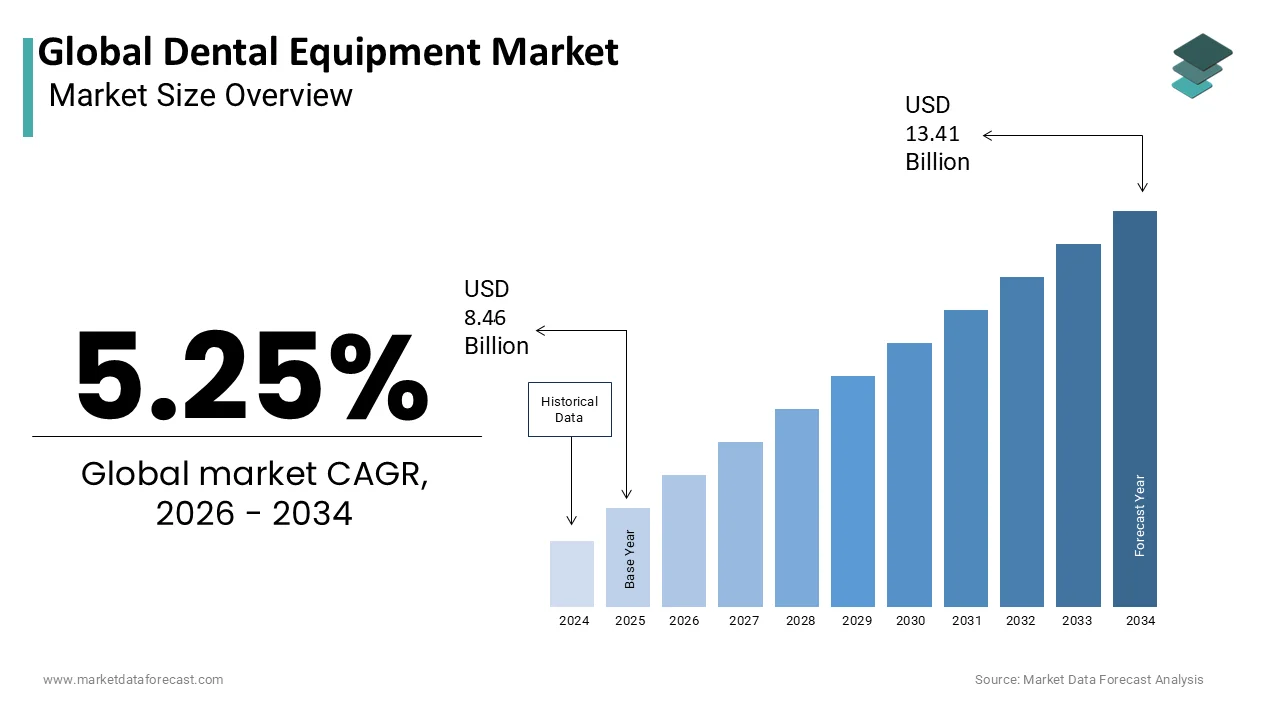
The Dental Equipment Market encompasses a comprehensive array of devices, instruments, and technologies utilized in the diagnosis, treatment, and management of oral health conditions within clinical and laboratory settings. This includes intraoral imaging systems, dental chairs, handpieces, sterilization units, CAD/CAM systems, and digital impression devices, all of which are integral to modern dental practice. Unlike general medical equipment, dental devices are specifically engineered for precision in confined anatomical spaces, requiring high ergonomics, sterility, and compatibility with both patient comfort and clinician workflow. As per the World Health Organization, oral diseases affect nearly 3.5 billion people globally, with untreated dental caries being the most prevalent condition, impacting 2.4 billion individuals. This widespread burden has intensified the demand for reliable, advanced dental instrumentation. In low- and middle-income countries, the scarcity of trained dental professionals exacerbates treatment gaps; as reported by the Global Burden of Disease Study 2023, there is an average of only 1.8 dentists per 100,000 population in Sub-Saharan Africa, compared to 60 per 100,000 in Western Europe. Furthermore, the integration of infection control protocols post-pandemic has elevated the importance of autoclaves, high-volume evacuators, and disposable barriers. The shift toward preventive care and early intervention, supported by national health strategies in countries like Japan and Germany, has further institutionalized the use of diagnostic and restorative equipment in routine dental visits.
MARKET DRIVERS
Rising Prevalence of Chronic Oral Diseases and Preventive Care Adoption
The escalating global burden of oral diseases is a primary catalyst for the expansion of the dental equipment market. Periodontal disease, another major contributor, impacts a substantial number of individuals with severe forms. This growing disease prevalence has prompted health authorities to emphasize early diagnosis and preventive interventions, directly increasing the demand for diagnostic and restorative equipment. As a result, dental practices are investing in caries detection devices, intraoral cameras, and digital radiography systems to enhance early diagnosis accuracy. The integration of these technologies into standard care protocols ensures sustained demand for advanced equipment, particularly in high-income nations where preventive dentistry is institutionalized.
Technological Advancements in Digital Dentistry and Chairside CAD/CAM Systems
Digital transformation in dentistry, particularly through chairside computer-aided design and computer-aided manufacturing (CAD/CAM) systems, is reshaping clinical workflows and accelerating equipment procurement. These systems enable same-day crown fabrication, reducing reliance on external laboratories and improving patient throughput. Companies like Dentsply Sirona and 3Shape have introduced AI-enhanced software that predicts marginal fit and occlusion, minimizing remakes and enhancing clinical outcomes. Furthermore, cone beam computed tomography (CBCT) units are increasingly used in implant planning. The integration of digital workflows also reduces material waste and improves sterilization efficiency, aligning with sustainability goals. This convergence of precision, efficiency, and patient demand for faster treatments is driving sustained investment in next-generation dental instrumentation.
MARKET RESTRAINTS
High Capital Investment and Maintenance Costs for Advanced Equipment
The acquisition and upkeep of advanced dental equipment represent a significant financial barrier, particularly for independent practitioners and clinics in low- and middle-income economies. These exclude ongoing expenses such as software licensing, service contracts, and technician training. Even in developed nations, economic pressures affect adoption. Additionally, regulatory compliance for radiation-emitting devices like CBCT requires facility modifications and staff certification, further increasing entry costs. These financial burdens limit scalability and delay technological modernization, especially in regions where reimbursement models do not cover equipment-intensive procedures, constraining market penetration despite clinical benefits.
Shortage of Skilled Dental Professionals and Training Gaps in Technology Utilization
The global deficit of trained professionals capable of operating and maintaining advanced systems is a critical impediment to the widespread adoption of sophisticated dental equipment. As per the World Health Organization, there are only 1.8 dentists per 100,000 people in Sub-Saharan Africa, compared to 60 in Western Europe, creating a stark disparity in service delivery and technology access. Even in countries with adequate practitioner density, a lack of formal training in digital dentistry limits effective utilization. In China, the National Health Commission reported that fewer than 20% of dental graduates receive hands-on instruction in intraoral scanning or digital workflow integration during undergraduate programs. This skills gap results in underutilization or improper operation of equipment, leading to increased error rates and reduced return on investment. Furthermore, rapid technological evolution necessitates continuous professional development, yet structured continuing education remains inconsistent. Without standardized curricula and accessible upskilling programs, the full potential of advanced dental equipment remains unrealized, particularly in rural and underserved areas where the need is greatest.
MARKET OPPORTUNITIES
Expansion of Teledentistry and Portable Diagnostic Equipment in Underserved Regions
The rise of teledentistry has created a transformative opportunity for the deployment of portable, battery-operated dental equipment in remote and underserved areas, where access to fixed clinics is limited. As per the World Bank, over 50% of the population in rural India lacks access to basic dental care, prompting the integration of mobile dental units equipped with handheld intraoral cameras, wireless X-ray sensors, and compact sterilization devices. These virtual consultations often require patients to be examined using portable diagnostic tools, stimulating demand for lightweight, durable, and connected devices. Companies like Carestream Dental and Midmark have introduced handheld digital X-ray units weighing under 1.5 kg, compatible with smartphone integration. Thus, the ancillary demand for compact, field-ready dental equipment is poised for exponential growth.
Integration of Artificial Intelligence in Diagnostic and Treatment Planning Systems
Artificial intelligence is emerging as a pivotal enabler in dental diagnostics, offering unprecedented accuracy in image analysis, disease prediction, and treatment personalization. AI-powered software can detect dental caries, periodontal bone loss, and even early signs of oral cancer from radiographic images with high sensitivity. This capability is being integrated into imaging systems by companies like Dentsply Sirona and Planmeca, enhancing the value proposition of their equipment. In orthodontics, AI-driven platforms such as SmileDirectClub’s SmileScan use facial recognition and 3D modeling to generate treatment plans, reducing clinician workload and increasing throughput. Regulatory approvals are accelerating. Furthermore, AI integration supports predictive maintenance of equipment by analyzing usage patterns and flagging potential malfunctions. With dental schools beginning to incorporate AI training into curricula, as noted by the American Dental Education Association, the ecosystem is aligning for widespread adoption, positioning AI-enhanced devices as a cornerstone of next-generation dental care delivery.
MARKET CHALLENGES
Regulatory Heterogeneity and Compliance Burden Across Geographies
The dental equipment market faces significant operational complexity due to divergent regulatory frameworks governing device approval, radiation safety, and sterilization standards across countries. In the European Union, compliance with the Medical Device Regulation (MDR) requires extensive clinical evidence and post-market surveillance, leading to delays in product launches. Emerging markets present additional challenges. Brazil’s ANVISA enforces stringent biocompatibility testing, while China’s National Medical Products Administration mandates data localization and on-site inspections. These fragmented requirements compel manufacturers to maintain multiple device configurations and quality management systems, inflating R&D and compliance expenditures. The International Electrotechnical Commission estimates that harmonization of dental device standards could reduce regulatory costs, yet progress remains slow. Without global alignment, companies face sustained barriers to scalability, particularly for small and mid-sized innovators lacking multinational regulatory expertise.
Risk of Cross-Contamination and Evolving Infection Control Protocols
Infection control remains a paramount concern in dental settings due to the aerosol-generating nature of many procedures, heightening the risk of pathogen transmission. As per the Centers for Disease Control and Prevention, dental handpieces, ultrasonic scalers, and air-water syringes can produce bioaerosols containing bacteria, viruses, and fungi, necessitating rigorous sterilization and barrier protocols. However, compliance is inconsistent. Additionally, the emergence of antimicrobial-resistant organisms in dental unit waterlines has prompted stricter monitoring. Manufacturers are responding with antimicrobial-coated surfaces and self-disinfecting handpieces, but retrofitting existing equipment is costly. As public awareness grows and regulatory scrutiny intensifies, the burden of maintaining sterile environments is reshaping equipment design, maintenance cycles, and clinic economics, posing a persistent operational challenge.
REPORT COVERAGE
| REPORT METRIC | DETAILS |
| Market Size Available | 2025 to 2034 |
| Base Year | 2025 |
| Forecast Period | 2026 to 2034 |
| Segments Covered | By Product Type, End-User, and Region |
| Various Analyses Covered | Global, Regional & Country Level Analysis, Segment-Level Analysis, Drivers, Restraints, Opportunities, Challenges; PESTLE Analysis; Porter's Five Forces Analysis, Competitive Landscape; Analyst Overview of Investment Opportunities |
| Regions Covered | North America, Europe, Asia Pacific, Latin America, the Middle East, and Africa |
| Market Leaders Profiled | Danaher Corporation, Planmeca OY, A-dec Inc., Carestream Health, Inc., Dentsply Sirona, AMD LASERS, Biolase, Inc., Ivoclar Vivadent AG, Midmark Corporation, and 3 MM. |
SEGMENTAL ANALYSIS
By Product Type Insights
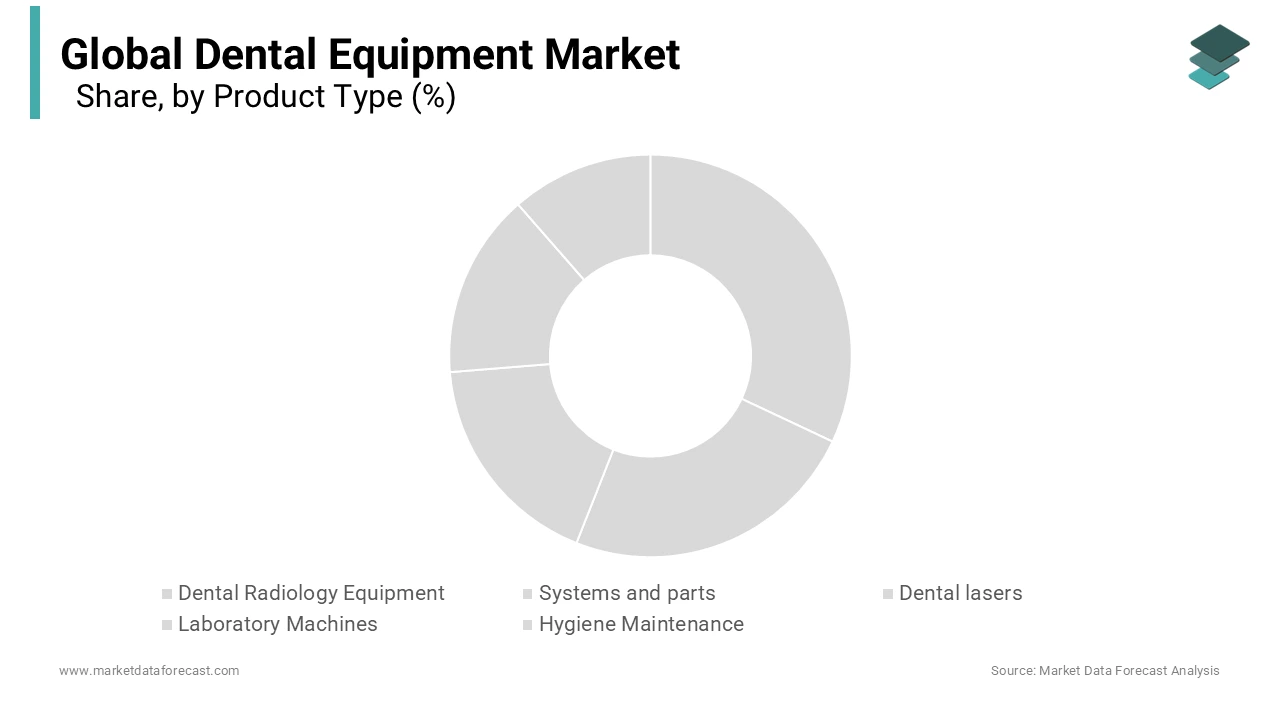
The dental radiology equipment segment held the largest share of the global dental equipment market at 25.8% of total revenue in 2025. This dominance is primarily driven by the indispensable role of imaging in diagnostic accuracy and treatment planning across general dentistry, orthodontics, and oral surgery. Digital radiography systems, including intraoral sensors, panoramic units, and cone beam computed tomography (CBCT), have become standard in modern clinics due to their ability to detect pathologies invisible to visual examination. A further key driver is the global shift from film-based to digital imaging, which enhances efficiency, reduces radiation exposure, and supports electronic health record integration. Furthermore, technological advancements such as AI-powered lesion detection and cloud-based image storage are increasing the utility of radiology systems. With over 25,000 CBCT units installed in U.S. dental offices alone, as documented by the National Council on Radiation Protection and Measurements, the segment’s entrenched clinical necessity ensures its continued leadership.
By End-User Insights
The hospitals and dental clinics collectively represented the largest end-user in the dental equipment market by capturing a substantial share of total demand in 2025. This dominance is rooted in the direct delivery of patient care, which necessitates a comprehensive suite of diagnostic, therapeutic, and sterilization equipment. General dental clinics, specialty practices (such as orthodontics and endodontics), and hospital-based oral surgery units are primary purchasers of dental chairs, handpieces, radiography systems, and hygiene units. A critical driver of this segment’s leadership is the expansion of private dental practices in emerging economies, where rising disposable incomes and insurance penetration are increasing access to care. Moreover, the institutionalization of preventive care in national health policies, such as Japan’s biannual dental screening mandate and Germany’s statutory coverage for check-ups, ensures consistent equipment utilization and replacement cycles. The integration of digital workflows, including electronic patient records and chairside CAD/CAM, further amplifies demand for advanced instrumentation within clinical settings, reinforcing their position as the primary engine of market growth.
The dental laboratories segment is emerging as the fastest-growing end-user category in the dental equipment market and is expanding at a CAGR of 11.8% from 2025 to 2033. This surge is fueled by the rising demand for custom restorations, crowns, bridges, dentures, and aligners, driven by aging populations and aesthetic dentistry trends. Dental labs are increasingly adopting digital workflows, including 3D printers, milling machines, and CAD software, to meet the precision and turnaround expectations of modern clinics. An additional major driver is the decentralization of lab services, with chairside labs and regional hubs reducing reliance on centralized facilities. In China, as per the National Medical Products Administration, there has been an increase in registered dental laboratories between 2021 and 2023, many of which serve private dental chains in tier-1 and tier-2 cities. The proliferation of invisible aligners, marketed by companies like Invisalign and SmileDirectClub, has further amplified demand; each case requires multiple physical models and 3D-printed templates. Additionally, regulatory approvals for 3D-printed biocompatible materials, such as cobalt-chromium and dental resins, have expanded application scope. With dental labs transitioning from manual craftsmanship to high-tech production centers, their equipment needs are evolving rapidly, positioning them as a pivotal growth node in the market.
REGIONAL ANALYSIS
North America Dental Equipment Market Insights
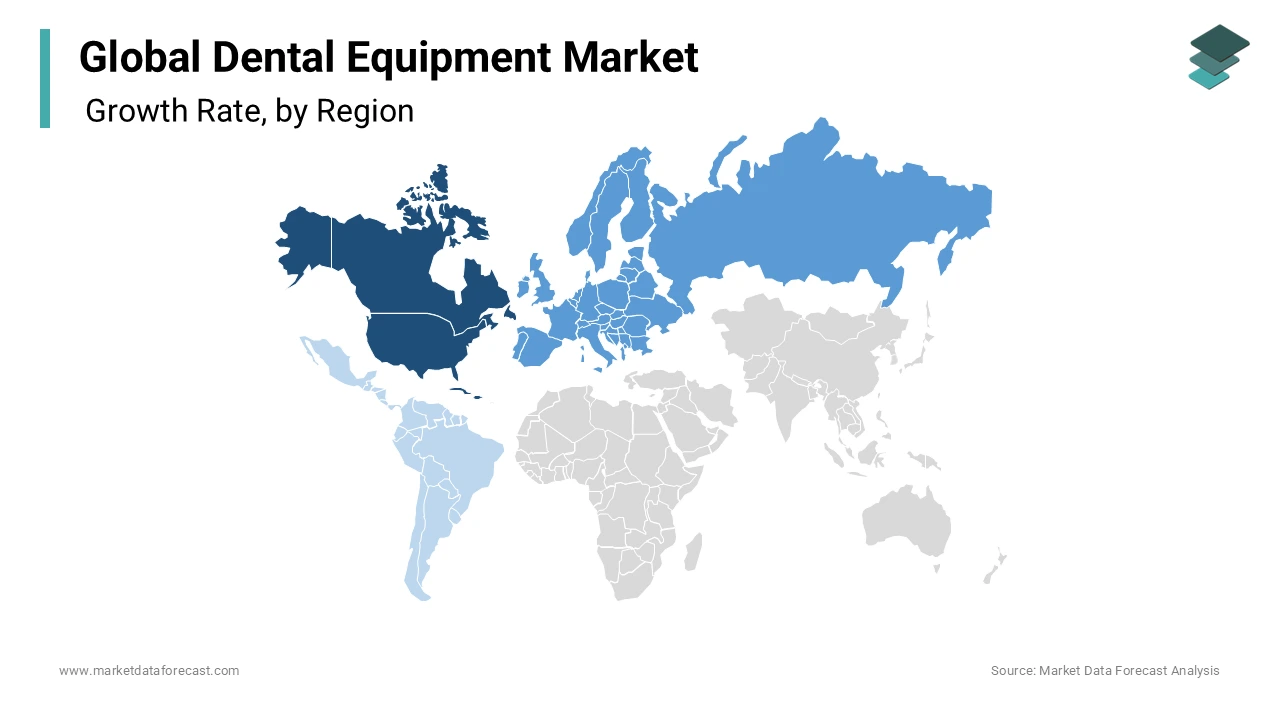
North America spearheaded the global dental equipment market at 37.6% which is driven by high healthcare expenditure, advanced clinical infrastructure, and strong insurance coverage for dental procedures. The United States, as the dominant player, accounts for a significant portion of regional demand, supported by a dense network of a large number of licensed dentists and a culture of preventive care. Regulatory frameworks such as FDA 510(k) clearance ensure product safety and innovation, while Medicare and private insurers increasingly reimburse for advanced procedures like implantology and digital diagnostics. The presence of leading manufacturers Dentsply Sirona, Carestream Dental, and Henry Schein further strengthens the ecosystem. Furthermore, dental service organizations (DSOs) are driving standardization and bulk procurement, accelerating equipment upgrades. With ongoing investments in teledentistry and AI-assisted diagnostics, North America remains the technological vanguard of the global dental equipment market.
Europe Dental Equipment Market Insights
Europe is characterized by a mature, regulation-driven landscape with strong public and private dental care systems. Germany, France, and the United Kingdom are the primary contributors, supported by high dentist-to-population ratios and robust reimbursement models. In Germany, statutory health insurance covers routine check-ups and basic restorative care, ensuring consistent patient flow and equipment utilization. The European Union’s Medical Device Regulation (MDR) has raised safety and performance standards, prompting clinics to upgrade outdated equipment to maintain compliance. Besides, the European Federation of Conservative Dentistry promotes minimally invasive techniques, increasing demand for lasers and micro-instrumentation. The region also hosts major manufacturing hubs, with companies like Planmeca (Finland) and W&H (Austria) exporting globally. With aging populations driving demand for prosthetics and implants, and EU funding supporting digital health integration, Europe remains a stable and innovative market.
Asia-Pacific (APAC) Dental Equipment Market Insights
Asia-Pacific is the fastest-growing region due to rising healthcare investment, urbanization, and expanding middle-class access to dental care. China and India are the primary growth engines. In India, the government’s “Ayushman Bharat” initiative has expanded oral health services to rural populations, increasing demand for portable and mid-range equipment. Japan, despite a shrinking population, maintains high per-capita spending on dental care. South Korea leads in digital dentistry adoption, with a notable share of clinics using intraoral scanners. The region is also a manufacturing hub for dental devices. With increasing private insurance penetration and aesthetic dentistry trends, APAC is transitioning from basic care to advanced treatment modalities, fueling equipment modernization.
Latin America Dental Equipment Market Insights
Latin America holds a notable share of the global dental equipment market, with Brazil, Mexico, and Colombia leading regional development. Brazil is the largest market, with a significant number of registered dentists and a growing number of private clinics adopting digital technologies. The Brazilian Ministry of Health launched the “Brasil Sorridente” program, which has expanded access to dental care in underserved areas, increasing demand for mobile and portable equipment. Mexico’s private dental sector has grown annually since 2020, driven by medical tourism and rising middle-class demand for cosmetic procedures. However, economic volatility and limited insurance coverage constrain large-scale equipment procurement. Despite challenges, there is growing interest in digital dentistry. Chile and Peru are investing in public dental infrastructure, while regional trade agreements are facilitating equipment imports. With increasing urbanization and awareness, Latin America is poised for gradual but sustained market expansion.
Middle East and Africa Dental Equipment Market Insights
The Middle East and Africa collectively represent a small share of the global dental equipment market, with limited but accelerating development. The Gulf Cooperation Council (GCC) countries, particularly the UAE, Saudi Arabia, and Qatar, are the primary drivers, investing heavily in healthcare modernization under national visions like Saudi Vision 2030. In Saudi Arabia, the Public Investment Fund is backing the development of specialized dental hospitals, creating demand for advanced imaging and surgical systems. South Africa leads in Sub-Saharan Africa. However, in most African nations, access remains constrained. Nigeria and Kenya are witnessing growth in private clinics, but equipment is often second-hand or imported informally. With donor-funded programs and regional training initiatives gaining traction, the foundation for market growth is being laid, though scalability remains a long-term challenge.
KEY MARKET PLAYERS
The list of key market participants leading the global dental equipment market profiled in the report is Danaher Corporation, Planmeca OY, A-dec Inc, Carestream Health, Inc, Dentsply Sirona, AMD LASERS, Biolase, Inc, Ivoclar Vivadent AG, Midmark Corporation, and 3 M.
TOP LEADING PLAYERS IN THE MARKET
Dentsply Sirona
Dentsply Sirona plays a transformative role in the Asia-Pacific dental equipment market by integrating digital workflows and AI-driven solutions into mainstream clinical practice. The company has established regional innovation centers in Singapore and Tokyo to adapt its products such as CEREC CAD/CAM systems, intraoral scanners, and endodontic motors to local clinical preferences and regulatory frameworks. In 2023, it launched the PrimeScan SW 3.0 in South Korea, featuring enhanced scanning speed and AI-based margin detection tailored for high-volume practices. It also partnered with India’s Apollo Dental to deploy digital treatment planning systems across 150 clinics, improving diagnostic accuracy and patient engagement. Through its “Digital Dentistry Academy” initiative, the company provides hands-on training to over 5,000 clinicians annually in the region, accelerating technology adoption. Additionally, Dentsply Sirona has expanded its local manufacturing and service hubs in Thailand and Australia to reduce delivery lead times and enhance after-sales support. By combining clinical education, localized R&D, and end-to-end digital integration, the company is shaping the modernization of dental care across diverse Asia-Pacific healthcare ecosystems.
Envista Holdings Corporation
Envista Holdings Corporation has strengthened its footprint in the Asia-Pacific market through strategic localization, digital innovation, and targeted acquisitions that align with regional growth dynamics. The company operates key manufacturing and distribution centers in Malaysia and India, enabling cost-effective supply of its Nobel Biocare implants, Ormco orthodontic systems, and Kerr endodontic instruments. In 2022, Envista launched the X-Tra Smart panoramic X-ray system in Indonesia, designed for compact urban clinics with limited space and high patient turnover. It also introduced AI-powered treatment planning software for Nobel Biocare implants in Japan, streamlining surgical workflows and improving predictability. The company has expanded its clinical training network, collaborating with the Thai Dental Association to certify over 2,000 dentists in digital implantology. In India, Envista partnered with rural telehealth providers to distribute portable imaging units, enhancing access in underserved areas. Its focus on modular, scalable equipment such as chair-integrated CBCT units caters to the growing network of dental service organizations in China and Australia. By combining localized product development with digital integration and education, Envista is positioning itself as a key enabler of advanced dental care across the region.
Planmeca
Planmeca has emerged as a pivotal innovator in the Asia-Pacific dental equipment market by delivering high-precision imaging and CAD/CAM solutions tailored to both private clinics and large healthcare networks. Headquartered in Finland but with a strong regional presence, the company has established dedicated R&D collaborations with dental universities in South Korea and Australia to refine its ProMax 3D imaging systems and PlanCAD software for Asian anatomical variations. In 2023, Planmeca launched the ProFace facial recognition module in Japan, enabling non-invasive smile design and orthodontic tracking, a feature now adopted in over 1,200 cosmetic clinics. It also introduced energy-efficient, compact units for urban practices in densely populated cities like Manila and Mumbai. The company supports regional clinicians through its Planmeca Academy, offering multilingual digital training and certification programs. In China, it partnered with Alibaba Health to integrate imaging data into cloud-based patient management platforms, enhancing interoperability. With a focus on sustainability, its devices are designed for low power consumption and recyclable components, aligning with green hospital initiatives in Singapore and New Zealand. These innovations and partnerships underscore Planmeca’s commitment to advancing clinical excellence across Asia-Pacific.
TOP STRATEGIES USED BY THE KEY MARKET PARTICIPANTS
Key players in the dental equipment market are deploying a range of strategic initiatives to consolidate their positions and drive long-term growth. Vertical integration is increasingly common, with companies acquiring software firms, implant manufacturers, and digital labs to offer end-to-end clinical solutions. Geographic expansion, particularly into high-growth Asia-Pacific and Latin American markets, is being pursued through localized manufacturing, joint ventures, and distributor partnerships. Investment in artificial intelligence and cloud-based platforms is enhancing diagnostic accuracy and treatment personalization, differentiating premium product lines. Strategic collaborations with dental schools and professional associations are strengthening brand credibility and accelerating technology adoption. Companies are also focusing on modular and scalable equipment designs to meet the needs of both large clinics and small practices. After-sales service networks and remote diagnostics are being expanded to improve customer retention and equipment uptime. Additionally, sustainability initiatives, including energy-efficient devices and recyclable packaging, are being leveraged as competitive differentiators in environmentally conscious markets.
COMPETITION OVERVIEW
The competitive landscape of the dental equipment market is characterized by a convergence of technological innovation, regional expansion, and strategic consolidation among multinational corporations, regional specialists, and emerging digital health firms. Established leaders like Dentsply Sirona, Envista, and Planmeca dominate through integrated product portfolios that combine hardware, software, and consumables, creating ecosystem lock-in for clinicians. Competition is intensifying around digital dentistry, with AI-powered diagnostics, 3D printing, and cloud-based treatment planning becoming key differentiators. Smaller innovators are challenging incumbents with niche solutions, such as portable imaging devices and subscription-based software models. In the Asia-Pacific region, local manufacturers are gaining traction by offering cost-effective alternatives, prompting global players to localize production and adapt pricing strategies. Regulatory compliance, particularly under the EU MDR and FDA guidelines, serves as both a barrier and a benchmark for market entry. Service and training capabilities are increasingly critical, as advanced equipment requires ongoing support and clinician upskilling. Mergers and acquisitions are reshaping the industry, with companies acquiring software firms to enhance digital workflows. As patient expectations rise and dental practices evolve into technology-driven care centers, competition is shifting from product features to total clinical value, encompassing precision, efficiency, connectivity, and sustainability.
RECENT MARKET DEVELOPMENTS
- In January 2022, Dentsply Sirona launched the PrimeScan SW 3.0 intraoral scanner in South Korea, featuring AI-enhanced margin detection and faster acquisition speed, improving clinical efficiency for restorative workflows.
- In June 2022, Envista introduced the X-Tra Smart panoramic X-ray system in Indonesia, designed for compact clinics and equipped with dose optimization technology to meet regional radiation safety standards.
- In March 2023, Planmeca partnered with Alibaba Health to integrate its ProMax 3D imaging data into cloud-based patient management platforms in China, enhancing digital interoperability and remote diagnostics.
- In September 2023, Dentsply Sirona expanded its Digital Dentistry Academy in India, training over 3,000 dentists in CAD/CAM and digital implantology, accelerating technology adoption in emerging markets.
- In November 2023, Envista launched AI-powered surgical planning software for Nobel Biocare implants in Japan, enabling precision-guided procedures and reducing planning time by 40% in clinical settings.
MARKET SEGMENTATION
This research report on the global dental equipment market has been segmented and sub-segmented based on the product type, end-user, and region.
By Product Type
- Dental Radiology Equipment
- Intraoral
- Extra-oral
- Systems and parts
- Cast Machine
- Instrument Delivery Systems
- Vacuums & Compressors
- Cone Bean CT Systems
- Furnace and Ovens
- CAD/CAM
- Electrosurgical Equipment
- Dental lasers
- Diode Lasers
- Carbon dioxide lasers
- Laboratory Machines
- Micromotor
- Ceramic furnaces
- Electronic waxer
- Hydraulic press
- Suction unit
- Hygiene Maintenance
- Air purification and filters
- Hypodermic needle incinerator
- Sterilizers
- Others
By End User
- Hospitals and Clinics
- Dental Laboratories
- Others
By Region
- North America
- Europe
- Asia Pacific
- Latin America
- Middle East and Africa