- Product Description Description
- Table of Contents TOC
- List of Table & Figure LOT
- Get Free Sample PDF Sample PDF
Market Size, 2025
$558.17 MnMarket Estimate, 2026
$598.92 MnMarket Forecast, 2034
$1,052.37 MnCAGR, 2026–2034
7.3%UK Rum Market Size, Growth, Trends & Forecast (2026–2034)
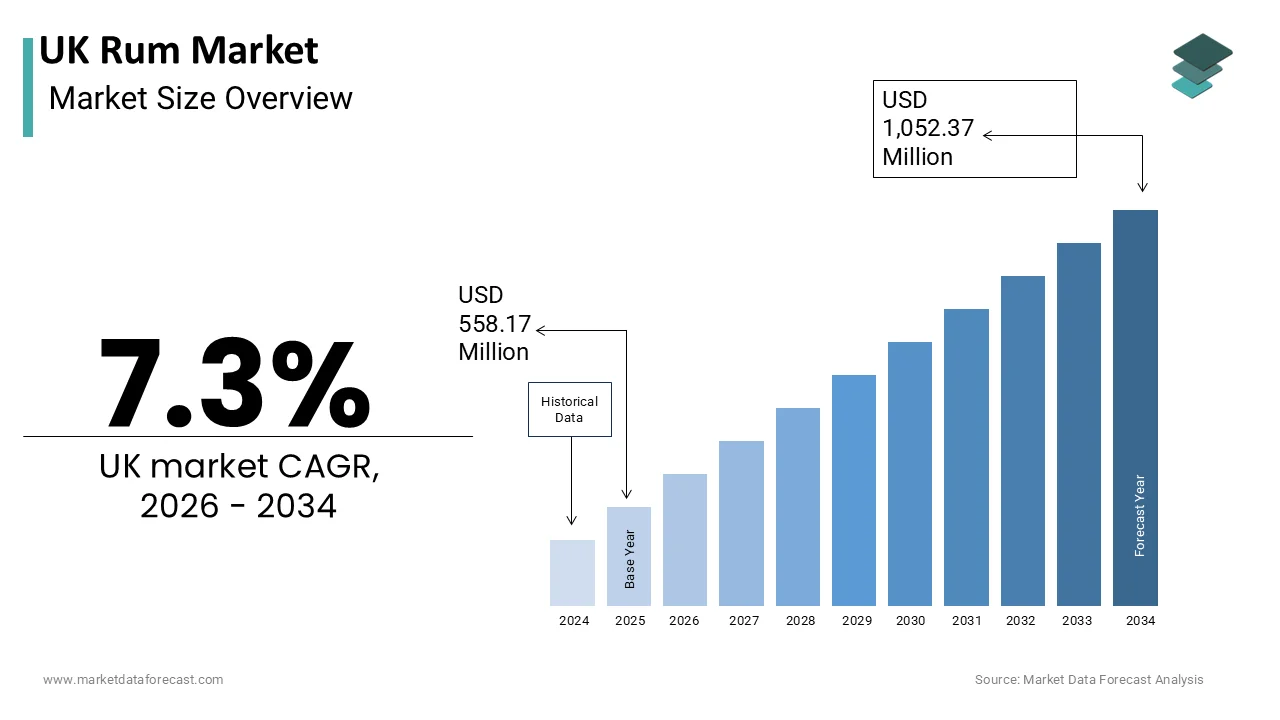
The UK rum market size is projected to grow from USD 558.17 million in 2025, reach USD 598.92 million in 2026, and climb to USD 1,052.37 million by 2034, registering a compound annual growth rate (CAGR) of 7.3% during the forecast period from 2026 to 2034. Driven by the rising trend toward premiumization, connoisseurship culture, cocktail expansion, and home mixology, the market continues to evolve dynamically across retail and hospitality channels.
Key Executive Metrics (At-a-Glance)
- 2025 Base Valuation: USD 558.17 Million
- 2026 Current Valuation: USD 598.92 Million
- 2034 Forecast Valuation: USD 1,052.37 Million
- Compound Annual Growth Rate (CAGR): 7.3% (2026–2034)
- Dominant Product Type Segment: Dark and Golden Rum (accounting for a 58.1% share in 2025, driven by sophisticated aging profiles and sipping culture)
- Fastest-Growing Product Type Segment: White Rum (projected to witness the highest CAGR of 7.5%, fueled by tropical cocktail trends and clean-label preferences)
- Dominant Distribution Channel: Off-Trade (holding the majority share in 2025 due to home consumption convenience, grocery integration, and cost efficiency)
- Fastest-Growing Distribution Channel: On-Trade (estimated to register the fastest CAGR of 9.2%, supported by the hospitality revival and craft cocktail culture)
- Regional Standing: The United Kingdom occupies a 28.4% share of the European rum market in 2025, anchored by deep historical ties and high per capita consumption.
Core Market Drivers
- Premiumization & Connoisseurship: Consumers prioritizing spirit quality over volume, driving demand for single-estate rums, aged cask expressions, and storytelling elements.
- Cocktail Culture & Home Mixology: The proliferation of specialist bars, social media influence, and home entertainment boosting interest in versatile rum-based cocktails.
Primary Market Restraints & Challenges
- Stringent Taxation & Pricing Pressures: High alcohol duties (including recent duty hikes) suppressing market volumes and prompting inflation-linked price adjustments.
- Health Consciousness & Supply Volatility: Rising wellness trends, the sober-curious movement, and climate change impacts affecting sugarcane harvests and cost consistency.
UK Rum Market Segmentation Breakdown
| Segment Category | Leading Sub-Segment (Base Year) | Fastest-Growing Sub-Segment (2026–2034) |
|---|---|---|
| By Product Type | Dark & Golden Rum (58.1% share in 2025, valued for complex aging, vanilla notes, and sipping culture) | White Rum (7.5% CAGR, fueled by tropical cocktail trends, clean labels, and organic variants) |
| By Distribution Channel | Off-Trade (majority share in 2025, driven by home consumption convenience and supermarket availability) | On-Trade (9.2% CAGR, supported by hospitality revival, craft bars, and experiential social drinking) |
| By Region / Country | United Kingdom (28.4% share of the European rum market in 2025, key hub for distribution and consumption) | Urban Centers across the UK (driven by cocktail bars, tourism recovery, and specialty off-licenses) |
Major Industry Players Profiled
Key enterprises shaping the competitive United Kingdom rum market include Diageo plc, Bacardi Limited, Pernod Ricard S.A., Campari Group, William Grant & Sons Ltd., Halewood Artisanal Spirits plc, Edrington Group Limited, Davide Campari-Milano N.V., The Duppy Share Ltd., Havana Club International S.A., Plantation Rum (Maison Ferrand), and Bumbu Rum Company.
 Download Free Sample Report
UK Rum Market Size
The UK Rum Market is projected to grow from USD 558.17 million in 2025 to USD 598.92 million in 2026 and reach USD 1,052.37 million by 2034, registering a CAGR of 7.3% during the forecast period from 2026 to 2034.
Rum is a distilled alcoholic beverage made from sugarcane byproducts, like molasses, or directly from sugarcane juice. It has transcended its historical association with naval heritage and simple cocktails to become a category of connoisseurship driven by appreciation for aging processes, terroir,r and artisanal production methods. The market includes a diverse spectrum ranging from accessible white rums used in high-volume mixed drinks to ultra premium aged expressions sourced from specific Caribbean islands or independent bottlers. According to trade figures from HM Revenue and Customs, United Kingdom rum imports sharply contracted by over 38% to approximately 22 million litres in 2024, reflecting an inflation-driven decline in volume and a softening of consumer demand amid broader economic headwinds. As per data from the Office for National Statistics, alcohol consumption brought home constitutes less than 1.5% of total average weekly household spending, with overall real-terms expenditure on alcohol declining in recent years as consumers adjust their discretionary budgets during periods of financial constraint. The regulatory landscape is governed by strict labeling standards and taxation policies that influence pricing strategies and product positioning. Consumer behavior is increasingly influenced by sustainability credentials, with buyers seeking brands that demonstrate ethical sourcing and environmental stewardship. The rise of craft distilleries and independent bottlers has fragmented the market,t offering unique small batch options that appeal to adventurous drinkers. Retailers have responded by expanding dedicated rum sections in off-licenses and supermarkets, providing educational content to guide purchasing decisions. This dynamic environment fosters innovation while maintaining strong ties to the cultural heritage of rum consumption in British society.
MARKET DRIVERS
Premiumization And The Rise Of Connoisseurship Culture
The trend toward premiumization is fueling growth in the United Kingdom rum market. This is because consumers now prioritize spirit quality over the amount they buy. This shift is fueled by a growing culture of connoisseurship where drinkers seek to understand the nuances of aging barrels, origin, and production techniques. According to market reports from the Wine and Spirit Trade Association and industry analysts, consumer preferences continue to favor premiumization and high-quality aged spirits. Consumers are willing to pay higher prices for single estate rums and limited edition releases that offer unique flavor profiles and storytelling elements. The influence of social media and digital content has democratized knowledge about spirits,s allowing enthusiasts to share tasting notes and recommendations widely. Bars and restaurants contribute to this trend by featuring extensive rum lists and hosting tasting events that educate patrons on the diversity of the category. The perception of rum as a sophisticated alternative to whiskey or cognac has expanded its appeal among affluent demographics. Independent bottlers play a crucial role by curating rare casks that appeal to collectors and serious enthusiasts. This demand for exclusivity drives manufacturers to invest in longer aging periods and innovative finishing techniques. The emotional connection formed through the discovery of unique flavors fosters brand loyalty and encourages repeat purchases at higher price points. This cultural evolution ensures that premium rum remains a resilient segment within the broader alcohol market.
Expansion Of Cocktail Culture And Home Mixology Trends
The vibrant cocktail culture significantly drives demand for rum as it serves as a versatile base for both classic and contemporary mixed drinks, which in turn propels the expansion of the United Kingdom rum market. The proliferation of specialist bars and the popularity of home mixology have elevated the status of rum beyond simple cola mixers. According to hospitality and bar industry trackers, rum remains a staple of modern mixology and cocktail menus, driven by a resurgence in premium aged varieties, artisan rum brands, and tropical-themed flavor innovations. The rise of home entertainment during recent years has led consumers to invest in high-quality ingredients and tools for crafting professional-level drinks at home. Retailers report increased sales of premium white and gold rums alongside bartending accessories such as shakers and jiggers. Social media platforms amplify this trend with influencers sharing recipes and techniques that inspire followers to experiment with different rum styles. The versatility of rum allows it to pair well with a wide range of flavors, from tropical fruits to spicy herbs,s appealing to diverse palates. Brands support this movement by providing detailed cocktail guides and partnering with mixologists to create signature serves. The availability of ready-to-drink canned cocktails featuring premium rum also caters to convenience-seeking consumers who do not compromise on quality. This cultural engagement transforms rum consumption from a passive activity into an interactive and creative experience, driving sustained volume growth.
MARKET RESTRAINTS
Stringent Regulatory Taxation And Pricing Pressures
High levels of taxation and stringent regulatory frameworks are major restraints on the United Kingdom rum market. This affects affordability and consumer purchasing power. Alcohol duties in the United Kingdom are among the highest in Europe, placing a substantial financial burden on producers and retailers. According to HM Treasury, the landmark 10.1% increase in alcohol duty implemented in August 2023 continued to fuel noticeable price hikes across spirit categories throughout 2024, suppressing market volumes and prompting a subsequent inflation-linked adjustment in early 2025. These increases disproportionately impact mid-tier products, where consumers are most price sensitive, potentially forcing them to trade down to cheaper alternatives or reduce consumption frequency. The complexity of tax calculations based on alcohol by volume creates administrative burdens for smaller importers and independent bottlers. Retailers face challenges in maintaining margins while keeping shelf prices competitive in a cost-of-living crisis. Surveys indicate that a substantial portion of British adults have tightened their discretionary budgets and scaled back on alcohol purchases in response to rising prices and inflationary pressures. This economic pressure limits the ability of brands to invest in marketing and innovation as resources are diverted to cover compliance costs. The uncertainty surrounding future tax policies discourages long-term planning and investment in the category. These fiscal measures are essential for public health revenue. However, they constrain market growth and limit accessibility for younger or lower-income demographics.
Health Consciousness And Changing Lifestyle Preferences
Growing health consciousness and shifting lifestyle preferences are barriers to the United Kingdom rum market. As a result, consumers are becoming much more mindful of their alcohol intake. Public health campaigns emphasize the risks associated with excessive alcohol consumption, prompting individuals to adopt moderation or abstinence. According to data from UK public health trackers and market research agencies, an increasing number of adults, particularly younger demographics, are reducing their alcohol consumption or pivoting to low-and no-alcohol alternatives to support health and wellness goals. The rise of the sober curious movement has led to increased demand for low and no alcohol alternatives, which compete directly with traditional spirits. Younger demographics,s particularly Generation Z, are less likely to view alcohol as a central component of socializing, preferring experiences focused on fitness and mental wellbeing. This cultural shift reduces the overall volume of spirit consumption as fewer people participate in heavy drinking occasions. Brands face the challenge of remaining relevant in a landscape where indulgence is increasingly scrutinized. Marketing restrictions on alcohol advertising further limit visibility and engagement with potential customers. The perception of rum as a high sugar beverage due to its molasses origin also deters health-conscious shoppers despite variations in production methods. Manufacturers must navigate these changing attitudes by promoting responsible drinking messages and exploring lighter product formats. The tension between traditional enjoyment and modern wellness trends requires strategic adaptation to maintain market relevance.
MARKET OPPORTUNITIES
Innovation In Sustainable And Ethical Production Practices
The increasing consumer demand for sustainability and ethical production offers significant opportunities for the United Kingdom rum market. This helps to differentiate and add value. Shoppers are increasingly interested in the environmental and social impact of their purchases, seeking brands that demonstrate a genuine commitment to responsible practices. Rum producers can leverage this by adopting eco-friendly packaging, such as recycled glass and biodegradable labels, and reducing plastic usage. Initiatives such as carbon-neutral certification and water conservation programs resonate with environmentally aware buyers. Ethical sourcing of sugarcane and fair labor practices in producing countries enhance brand reputation and build trust. Collaborations with local communities in Caribbean nations highlight the positive social impact of rum production. Retailers are prioritizing sustainable brands in their assortments, providing prominent shelf space and promotional support. The story of sustainability adds depth to the brand narrative,e appealing to consumers who value purpose-driven purchases. Innovation in circular economy models, such as repurposing waste products from distillation,n creates additional revenue streams. This focus on responsibility aligns with broader corporate social responsibility goals, attracting investment and partnership opportunities. Rum brands can capture a loyal segment of conscious consumers by leading in sustainability. This approach attracts buyers who are willing to pay a premium for ethical products.
Expansion Into Flavored And Ready-To-Drink Segments
The growth of flavored rums and ready-to-drink (RTD) beverages creates a pathway for the expansion of the United Kingdom rum market. This paves the way to attract younger and more casual consumers. These products offer convenience and approachable flavors that lower the barrier to entry for those unfamiliar with traditional spirits. Flavored rums infused with tropical fruits, spice,s or desserts appeal to consumers seeking sweet and familiar taste profiles. RTD cans provide portability and portion control, making them ideal for outdoor activities, such as festivals and casual gatherings. Brands can innovate with unique flavor combinations that reflect current culinary trends, such as yuzu chili or salted caramel. Marketing these products through digital channels and influencer partnerships enhances visibility among target demographics. Retailers benefit from higher turnover rates and impulse purchases associated with single-serve formats. The flexibility of RTDs allows for seasonal launches and limited editions that keep the category exciting. This segment bridges the gap between soft drinks and spirits, capturing consumers who may not commit to full bottles. Rum producers can expand their customer base by diversifying into accessible formats. This strategy helps drive volume growth in a competitive landscape.
MARKET CHALLENGES
Volatility In Raw Material Supply And Climate Change Impacts
The vulnerability of sugarcane production to climate change is a significant challenge for the United Kingdom rum market. This affects supply stability and cost consistency. Sugarcane is highly sensitive to weather conditions such as drought,s floods, and hurricanes,s which are becoming more frequent and severe. According to reports from the Food and Agriculture Organization, global sugarcane and sugar production faced ongoing vulnerability in 2024 due to weather anomalies and changing climate patterns in dominant producing regions, creating intermittent supply pressures for rum-producing raw materials. These disruptions lead to shortages of raw materials, ls forcing producers to seek alternative sources at higher costs. The dependency on specific geographic regions for authentic rum production limits flexibility in sourcing. Climate-related risks also threaten the long-term viability of historic distilleries and agricultural communities. Insurance costs for producers increase as weather patterns become more unpredictable, impacting overall profitability. Supply chain delays caused by logistical issues in affected regions further complicate inventory management. Manufacturers must invest in resilient agricultural practices and diversify sourcing strategies to mitigate these risks. However, such adaptations require significant capital and time. The uncertainty surrounding future harvests makes long-term planning difficult for importers and distributors. This volatility translates into price instability for consumers, potentially dampening demand. Addressing climate resilience is critical for ensuring the sustainability of the rum industry.
Intense Competition From Other Spirit Categories
Intense competition from other spirit categories further impedes the expansion of the United Kingdom rum market. Meanwhile, spirits like gin, whiskey, and tequila have seen significant growth and innovation recently. Gin has maintained strong popularity due to its versatility and botanical variety, while whiskey benefits from a perception of heritage and prestige. According to hospitality and retail tracking data, the United Kingdom gin market faced a severe double-digit decline in sales volume, while premium tequila categories demonstrated relative resilience by generating modest value growth amidst an overall contraction in spirits sales. These categories invest heavily in marketing and premiumization,n drawing consumer attention and discretionary spending away from rum. The saturation of the spirits market means that rum brands must work harder to differentiate themselves and justify shelf space. Retailers often prioritize categories with higher turnover or margin potential, all limiting visibility for rum products. Consumer fatigue with established flavors drives experimentation with competing spirits that offer novel experiences. The rise of agave-based spirits appeals to health-conscious consumers who perceive tequila as a cleaner option. Rum brands struggle to shake off historical associations with mixers and lower quality perceptions compared to aged whiskeys. Competing for mindshare in a crowded marketplace requires substantial investment in branding and education. The agility of competitors in launching new products and engaging trends puts pressure on rum producers to innovate rapidly. Maintaining relevance amidst this competitive dynamism is a persistent challenge for the sector.
REPORT COVERAGE
| REPORT METRIC | DETAILS |
| Market Size Available | 2025 to 2034 |
| Base Year | 2025 |
| Forecast Period | 2026 to 2034 |
| Segments Covered | By Product Type, Distribution Channel, and Region |
| Various Analyses Covered | Global, Regional and Country-Level Analysis, Segment-Level Analysis, Drivers, Restraints, Opportunities, Challenges; PESTLE Analysis; Porter’s Five Forces Analysis, Competitive Landscape, Analyst Overview of Investment Opportunities |
| Countries Covered | United Kingdom |
| Market Leaders Profiled | Diageo plc, Bacardi Limited, Pernod Ricard S.A., Campari Group, William Grant & Sons Ltd., Halewood Artisanal Spirits plc, Edrington Group Limited, Davide Campari-Milano N.V., The Duppy Share Ltd., Havana Club International S.A., Plantation Rum (Maison Ferrand), Bumbu Rum Company. |
SEGMENTAL ANALYSIS
By Product Type Insights
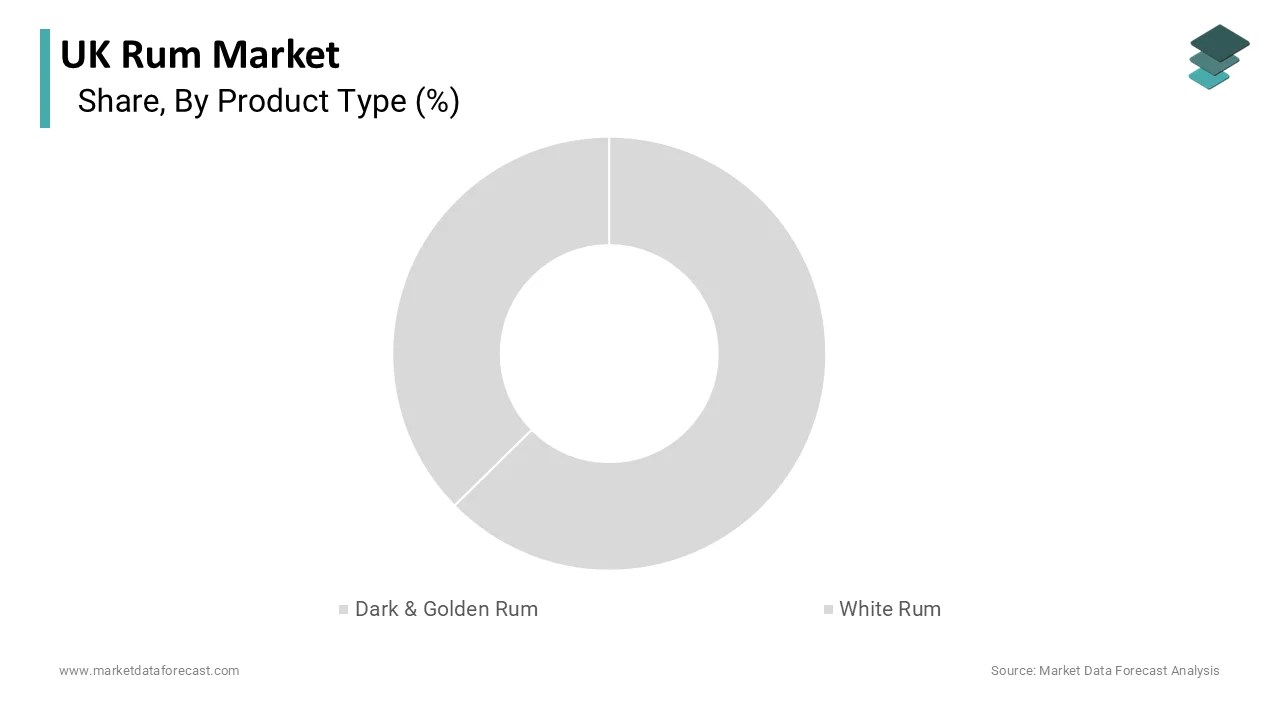
The dark and golden rum segment dominated the United Kingdom market and accounted for a 58.1% share in 2025. This dominance of the segment is driven by a sophisticated consumer base that values the complex flavor profiles derived from aging in oak barrels, which impart notes of vanilla, caramel, spice, ice, and dried fruit. The rise of sipping culture has transformed dark rum from a mere mixer into a spirit enjoyed neat or on the rocks, similar to whiskey or cognac. The perception of dark rum as a premium product aligns with the broader trend of trading up,p where consumers buy fewer but higher-quality bottles. Independent bottlers and single estate releases have further elevated the status of dark rum by highlighting terroir and production methods. Bars and restaurants contribute to this trend by offering extensive lists of aged rums, encouraging patrons to explore different regions and vintages. The versatility of golden rum in classic cocktails such as the Old Fashioned or Negroni also supports its popularity among mixology enthusiasts. This segment benefits from strong brand heritage and storytelling that resonates with consumers seeking authenticity and tradition. The emotional connection to the craftsmanship involved in aging fosters loyalty and justifies higher price points.
The domination of dark and golden rum is further reinforced by its versatility in premium mixology and culinary application,s which drives consistent demand across various consumption occasions. Unlike white rum, which is often limited to tropical drinks, dark and golden rums add richness and complexity to a wide array of cocktails, including Mai Tai,s Dark n Stormy, ys and Rum Punches. The robust flavor profile of these rums allows them to stand up against strong ingredients like coffee, chocolate,e and spic, es making them ideal for winter warmer drinks and dessert pairings. Home mixologists appreciate the ability of golden rum to enhance simple recipes without overpowering other flavors. Retailers support this usage by bundling dark rum with premium mixers and bits, creating convenient kits for home entertaining. The culinary use of dark rum in baking and marinades also contributes to household penetration as consumers keep bottles for both drinking and cooking. Marketing campaigns often highlight these dual uses, expanding the perceived value of the product. The seasonal nature of darker spirits ensures strong sales during autumn and winter months,onths balancing out the summer peak of white rum. Year-round relevance stabilizes revenue streams for manufacturers and retailers alike.
The white rum segment is predicted to witness the highest CAGR of 7.5% between 2026 and 2034. This rapid growth of the segment is fueled by the resurgence of tropical cocktail trends and the increasing popularity of light, refreshing drinks suitable for warm weather and social gatherings. The association of white rum with vacation vibes and leisure appeals to younger demographics seeking escapism through food and beverage experiences. Bars and beach clubs promote mojitos, daiquiris,s and piña coladas as staple offerings, gs driving volume sales of clear spirits. The clean and crisp profile of white rum makes it an ideal base for fruit infusions alow-calorierie mixers, aligning with health-conscious preferences. Social media influencers amplify this trend by sharing vibrant visuals of tropical drinks, encouraging followers to recreate them at home. Retailers respond by expanding their summer ranges and placing white rum prominently in promotional displays. The affordability of entry-level white rums also attracts new drinkers who are experimenting with spirits for the first time. This accessibility, combined with the aspirational lifestyle imagery associated with tropical culture, sustains high growth rates.
The expansion of the white rum segment is significantly accelerated by innovation in clean-label and organic variants that appeal to health-conscious and environmentally aware consumers. Modern shoppers are scrutinizing ingredient lists and seeking spirits made from natural sugarcane without artificial additives or excessive processing. Brands are highlighting certifications such as non-GMO and fair trade to differentiate their products in a crowded marketplace. The transparency of white rum production allows manufacturers to communicate purity and quality effectively, appealing to minimalist dietary preferences. Mixologists favor these clean rums for their ability to showcase fresh ingredients like herbs and fruits without interference from heavy barrel notes. The rise of low-sugar and keto-friendly diets also supports the demand for unaged spirits, which typically contain fewer congeners and impurities. Retailers are dedicating shelf space to the natural and organic spirit section,s providing visibility for these niche products. Collaborations with health-focused brands and wellness influencers enhance credibility and reach. This alignment with broader wellness trends ensures that white rum remains relevant and attractive to evolving consumer segments. The focus on sustainability and purity creates a competitive advantage for brands that prioritize ethical sourcing and transparent labeling.
By Distribution Channel Insights
The off-trade segment held the majority share of the United Kingdom rum market in 2025 because of the convenience of home consumption and the cost efficiency of purchasing spirits for private enjoyment rather than at marked-up bar prices. Also, the ability to buy rum alongside weekly groceries simplifies shopping trips and encourages impulse purchases through prominent shelf placement and promotional offers. Private label ranges from major supermarkets, providing affordable options that attract budget-conscious shoppers while maintaining acceptable quality standards. The rise of home entertainment and streaming services has further cemented the habit of enjoying drinks at home, reducing the frequency of visits to pubs and clubs. Retailers leverage loyalty programs to offer personalized discounts on spirits,s driving repeat purchases. The wide availability of diverse brands and price points in the off-trade ensures that consumers can find products that match their specific preferences and budgets. This channel benefits from established logistics networks that ensure consistent stock levels and fresh product rotation. The tactile experience of selecting bottles in the store also builds trust and allows for immediate gratification.
The top position of the off-trade channel is also supported by the expansion of premium retail sections and educational initiatives that enhance the shopping experience for rum buyers. Major supermarkets and specialist off-licences have invested in dedicated spirits aisles featuring knowledgeable staff and tasting events that guide consumers through the complexities of rum. These initiatives demystify the category and encourage trial of higher-priced products, driving value growth. Retailers collaborate with brands to create exclusive bundles and gift sets that appeal to occasion-based shoppers. The integration of digital tools such as QR codes on shelves provides access to detailed product information, cocktail recipes,s and brand stories, es enhancing engagement. The availability of rare and limited-edition rums in select off-trade outlets attracts collectors and enthusiasts who value exclusivity. Marketing campaigns in stores highlight the heritage and craftsmanship of rum, building emotional connections with shoppers. The trust associated with established retail brands ensures that consumers feel confident in the authenticity and quality of their purchases. This combination of education accessibility and premium positioning sustains the leadership of the off-trade channel in the rum market.
The on-trade segment is estimated to register the fastest CAGR of 9.2% during the forecast period due to the strong revival of the hospitality sector following pandemic-related disruptions and the consumer desire for social experiences and professional service. Consumers are willing to pay a premium for the ambiance, expertise,e and social interaction provided by bon-tradede venues. The rise of speakeasy bars and craft cocktail lounges has elevated the status of rum as a sophisticated choice for night out occasions. Bartenders play a crucial role in influencing consumer preferences by recommending specific brands and creating unique signature serves. The experiential aspect of drinking rum in a social setting enhances its perceived value and encourages experimentation with premium varieties. Events such as rum festivals and masterclasses hosted by venues further engage consumers and build brand loyalty. The recovery of the tourism industry also contributes to on-trade growth as visitors seek local drinking experiences. This channel benefits from the emotional connection formed through shared moments and professional hospitality.
The swift growth of the on-trade segment is significantly supported by innovation in cocktail menus and premiumization strategies that attract discerning drinkers. Bars and restaurants are increasingly featuring extensive rum lists and artisanal cocktails that showcase the diversity of the category. The use of small batch and independent bottler rums allows venues to differentiate themselves and command higher price points. Mixologists are experimenting with unconventional ingredients and techniques, creating visually stunning and flavorful drinks that drive social media engagement. Pairing rum with food menus also enhances the dining experience,e introducing customers to new flavor combinations. Training programs for staff ensure that they can confidently recommend and serve rum, improving customer satisfaction. Promotions such as happy hours and themed nights drive traffic and increase volume sales. The exclusivity of certainon-tradee only releases creates buzz and encourages visits from enthusiasts. This focus on quality and creativity transforms rum from a commodity into a centerpiece of the hospitality experience. The ability to offer personalized service and unique products sustains the momentum of the on-trade channel.
COUNTRY LEVEL ANALYSIS
UK Rum Market Analysis
The United Kingdom maintained a significant position in the European rum market and occupied a 28.4% share in 2025. This growth is driven by deep historical ties and high per capita consumption. Also, the country serves as a key hub for spirit distribution and consumption. The legacy of the British Empire and naval history has ingrained rum into the national consciousness, creating a stable base of loyal consumers. However, according to research, the United Kingdom imported approximately 22 million litres of rum, down from a peak of 36 million litres, reflecting a significant contraction in consumer demand and volume amidst rising inflationary pressures and tax adjustments. The presence of major international brands alongside a thriving community of independent bottlers creates a dynamic and competitive landscape. Regulatory standards enforced by the Food Standards Agency ensure product safety and accurate labeling,g building consumer trust. The well-developed retail infrastructure facilitates efficient distribution across the country, ensuring widespread availability. Cultural diversity introduces global influence,s expanding the range of rum styles and consumption occasions. Health awareness campaigns promote responsible drinking, ng supporting the shift toward premium and moderate consumption. The mature market status means growth relies on innovation and premiumization rather than volume expansion. Retailers leverage data analytics to optimize assortments and promotions,ons maximizing sales potential. The United Kingdom serves as a testing ground for new products before wider European launches due to its receptive consumer base. Economic stability supports consistent purchasing power,o wer although inflationary pressures occasionally impact discretionary spending. The market benefits from e-commerce penetration, enabling direct-to-consumer sales models. Sustainability initiatives gain traction as consumers prioritize ethical sourcing and environmental responsibility. The United Kingdom remains a key driver of trends and innovations shaping the broader European rum landscape.
COMPETITIVE LANDSCAPE
The competition in the United Kingdom rum market is characterized by intense rivalry among established multinational corporations and agile independent bottlers. Major players leverage their extensive distribution networks and brand heritage to maintain dominant positions while smaller companies differentiate through niche offerings and unique storytelling. The market sees continuous innovation in product formulations with a strong emphasis on aging techniques and sustainable production methods. Private label brands from major supermarkets pose significant competitive pressure by offering comparable quality at lower price points, attracting budget-conscious consumers. Digital transformation has intensified competition as online platforms enable new entrants to reach customers directly without traditional retail barriers. Sustainability and ethical sourcing have become key differentiators, with consumers increasingly favoring brands that demonstrate environmental responsibility. Marketing strategies focus heavily on experiential engagement and cocktail culture to build brand affinity among younger demographics. Price volatility in raw materials adds complexity,y forcing companies to balance cost management with quality maintenance. The fragmented nature of the market encourages constant adaptation and strategic agility to retain consumer loyalty and market relevance in a crowded spirits category.
KEY MARKET PLAYERS
Some of the companies that are playing a dominating role in the U.K. Rum Market include
- Diageo plc
- Bacardi Limited
- Pernod Ricard S.A.
- Campari Group
- William Grant & Sons Ltd.
- Halewood Artisanal Spirits plc
- Edrington Group Limited
- Davide Campari-Milano N.V.
- The Duppy Share Ltd.
- Havana Club International S.A.
- Plantation Rum (Maison Ferrand)
- Bumbu Rum Company
TOP LEADING PLAYERS IN THE MARKET
- Diageo plc maintains a formidable presence in the United Kingdom rum sector through its iconic Captain Morgan and Kraken brands. The company focuses on delivering consistent quality and strong brand recognition that appeals to both casual drinkers and enthusiasts. Recent actions include launching limited-edition spiced variants and investing heavily in sustainable packaging initiatives to reduce plastic waste. Diageo has enhanced its digital marketing efforts targeting younger demographics through social media campaigns and influencer partnerships. By expanding distribution into premium off-licenses and online platforms, they ensure widespread availability. Their commitment to responsible drinking programs reinforces corporate social responsibility. These strategic moves strengthen their competitive edge and maintain brand loyalty in the dynamic British spirits market while adapting to evolving consumer preferences for transparency and ethical production practices.
- Pernod Ricard SA leverages its extensive portfolio,o including Havana Club and Malibu, to maintain a strong position in the United Kingdom rum market. The company emphasizes authentic Caribbean heritage and innovative flavor profiles to attract diverse consumer segments. Recent actions involve introducing premium aged expressions and eco-friendly bottle designs to align with sustainability goals. Pernod Ricard actively collaborates with mixologists and bars to create signature cocktails that highlight the versatility of their rums. They have invested in consumer education programs to deepen appreciation for traditional rum-making techniques. The company also supports local community projects in producing regions, enhancing supply chain resilience. These initiatives demonstrate a commitment to long-term growth and ethical business practices while maintaining product excellence and appealing to discerning shoppers who value quality and origin stories.
- William Grant & Sons Ltd contributes significantly to the United Kingdom rum market through its premium offerings, such as Sailor Jerry and Monkey Shoulder rum finishes. The company focuses on craftsmanship and independent bottling to cater to connoisseurs seeking unique small-batch experiences. Recent actions include expanding their range of single estate rums and adopting carbon-neutral manufacturing processes. They have partnered with specialty retailers to offer exclusive releases that drive interest among collectors. William Grant & Sons invests in staff training to ensure high-quality advisory services in the on-trade sector. The company also promotes responsible sourcing of sugarcane, supporting agricultural communities. These measures strengthen customer loyalty and position the group as a trusted provider of high-quality spirits. Their agile approach allows them to respond quickly to trending flavors and premiumization demands in the competitive landscape.
TOP STRATEGIES USED BY KEY MARKET PARTICIPANTS
Key players in the United Kingdom rum market employ several strategic approaches to maintain competitiveness and drive growth. Product innovation remains central with companies launching aged spiced and flavored variants to meet evolving taste preferences. Sustainable sourcing initiatives are widely adopted to appeal to environmentally conscious consumers and ensure supply chain stability. Brands invest heavily in digital marketing and experiential events to connect with younger demographics and build brand loyalty. Expansion into e-commerce platforms enables direct-to-consumer sales and broader market reach beyond traditional retail outlets. Strategic partnerships with bars and mixologists facilitate exclusive cocktail creations and prominent menu placement. Companies also focus on premiumization by introducing limited edition and single estate rums that command higher price points. Cost optimization through efficient production helps maintain profitability amid rising raw material prices. These combined strategies allow market participants to navigate challenges while capitalizing on emerging opportunities in the dynamic British spirits landscape.
MARKET SEGMENTATION
This research report on the UK rum market is segmented and sub-segmented as follows.
By Product Type
- Dark & Golden Rum
- White Rum
By Distribution Channel
- Off-Trade
- On-Trade
By Country
- United Kingdom