- Product Description Description
- Table of Contents TOC
- List of Table & Figure LOT
- Get Free Sample PDF Sample PDF
Market Size, 2025
$4.54 BnMarket Estimate, 2026
$4.69 BnMarket Forecast, 2034
$6.13 BnCAGR, 2026–2034
3.41%UK Tire Market Report Summary
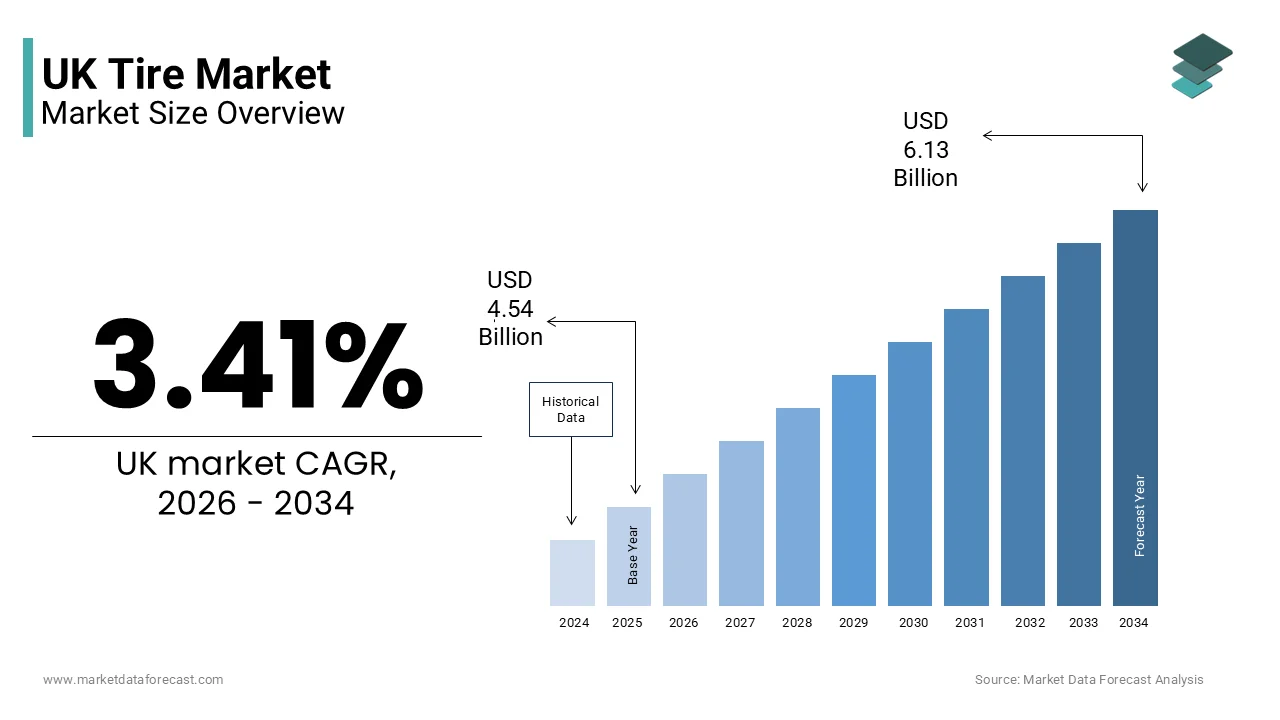
The UK tire market was valued at USD 4.54 billion in 2025, is estimated to reach USD 4.69 billion in 2026, and is projected to reach USD 6.13 billion by 2034, growing at a CAGR of 3.41% during the forecast period. Market growth is driven by increasing vehicle ownership, rising demand for replacement tires, growing focus on fuel efficiency, and advancements in tire technology. The market also benefits from the expansion of electric vehicle adoption, stricter vehicle safety standards, and increasing consumer preference for high performance and durable tire solutions.
Key Market Trends
- Growing demand for fuel efficient and long lasting tires is driving market growth.
- Increasing adoption of electric vehicles is boosting demand for advanced tire technologies.
- Rising focus on vehicle safety and performance is supporting industry development.
- Expansion of premium tire offerings and smart tire technologies is enhancing market opportunities.
- Innovation in sustainable materials and environmentally friendly manufacturing processes is influencing market advancement.
Segmental Insights
- Based on construction type, the radial tires segment accounted for 43.2% of the UK tire market share in 2025. This dominance is attributed to superior fuel efficiency, improved handling, enhanced ride comfort, and longer tread life compared to bias ply tires.
- Based on vehicle type, the passenger cars segment held 39.1% of the UK tire market share in 2025, driven by the large number of registered passenger vehicles and recurring replacement demand.
- Based on distribution channel, the offline segment accounted for 45.3% of the UK tire market share in 2025. Consumers continue to prefer physical outlets due to professional installation services, immediate product availability, and expert consultation.
Regional Insights
- The United Kingdom remains one of the key automotive markets in Europe, supported by a substantial vehicle fleet, established aftermarket networks, and increasing demand for technologically advanced and sustainable tire solutions.
Competitive Landscape
The UK tire market is highly competitive, with manufacturers focusing on product innovation, sustainability, performance enhancement, and distribution network expansion to strengthen their market position. Companies continue to invest in advanced tread technologies, eco friendly materials, and tires designed for electric and connected vehicles.
Key companies operating in the UK tire market include Yokohama Tire Corporation, Toyo Engineering, Pirelli, The Goodyear Tire & Rubber Company, Michelin, Sumitomo Corporation, Continental AG, and Bridgestone Corporation.
UK Tire Market Size
The UK tire market size was valued at USD 4.54 billion in 2025, and is projected to reach USD 6.13 billion by 2034 from USD 4.69 billion in 2026, growing at a CAGR of 3.41%.
The tire ensures vehicle safety performance and regulatory compliance. The average age of cars on UK roads has reached 8.5 years, according to the Society of Motor Manufacturers and Traders, which directly correlates with increased frequency of tire replacements due to wear and tear. Consumer behavior is shifting toward premium and eco- friendly tires that offer better fuel efficiency and reduced noise levels aligning with broader sustainability goals. The independent garages and fast fit centers account for a significant portion of tire sales, alongside dealership networks. Regulatory frameworks, such as the EU Tire Labeling Regulation, which remains influential post Brexit mandate clear information on fuel efficiency wet grip and external rolling noise. These labels empower consumers to make informed choices driving competition among manufacturers to innovate in rubber compounds and tread designs.
MARKET DRIVERS
Increasing Average Age of the Vehicle Parc
The increasing average age of the vehicle parc is more frequent replacement cycles due to natural degradation and wear, which is a major factor promoting the growth of the United Kingdom tire market. As economic pressures and supply chain disruptions have led consumers to retain, their vehicles for longer periods the maintenance requirements including tire changes have intensified. Older vehicles typically exhibit higher mileage accumulation which accelerates tire wear requiring drivers to purchase new sets more often than those with newer models. Trend shift ensures a steady baseline demand for replacement tires regardless of new car sales fluctuations. The total number of licensed vehicles continues to grow steadily further expanding the potential customer base for tire retailers. Additionally, older vehicles may lack advanced driver assistance systems that optimize tire life making manual maintenance and timely replacements even more critical for safety. Independent garages and fast fit chains benefit significantly from this trend as they offer cost effective solutions for maintaining aging fleets. The reliability of the vehicle becomes dependent on regular upkeep, including tire rotations and alignments, which drives ancillary services alongside product sales.
Stringent Safety Regulations and Consumer Awareness
The stringent safety regulations and heightened consumer awareness regarding vehicle safety is another factor fuelling the growth of the United Kingdom tire market. The UK adheres to rigorous safety protocols that require tires to meet specific criteria for wet grip braking distance and durability which influences purchasing decisions. As per guidelines from the Driver and Vehicle Standards Agency, tires must maintain a minimum tread depth of 1.6 millimeters across the central three quarters of the breadth to be considered legal. Failure to comply results in severe penalties including fines and penalty points which motivates drivers to monitor tire condition closely. Consumer education campaigns by organizations such as TyreSafe have significantly raised awareness about the dangers of worn or incorrect tires leading to more vigilant replacement habits. Surveys indicate that a growing proportion of drivers now check their tire pressure and tread depth regularly reducing the risk of accidents and improving overall road safety. This cultural shift toward safety consciousness drives demand for high quality tires that offer superior performance in adverse weather conditions particularly given the unpredictable British climate. Retailers leverage this awareness by promoting premium brands that emphasize safety features and longevity.
MARKET RESTRAINTS
Volatility in Raw Material Prices and Supply Chain Disruptions
The volatility in raw material prices and persistent supply chain disruptions is hampering the growth of the United Kingdom tire market. Tires are composed of complex materials, including natural rubber synthetic rubber carbon black steel and various chemicals, whose prices are subject to global commodity market fluctuations. The natural rubber prices have experienced considerable instability due to weather conditions in producing countries like Thailand and Indonesia, affecting input costs for tire makers. Synthetic rubber prices are linked to crude oil, which have seen dramatic swings due to geopolitical tensions and energy crises. These cost increases are often passed on to consumers leading to higher retail prices which can dampen demand especially among price sensitive segments. Supply chain bottlenecks exacerbated by port congestion and logistics challenges have also delayed the delivery of finished tires causing inventory shortages for retailers. According to industry reports lead times for certain tire sizes have extended significantly forcing distributors to hold larger safety stocks which ties up capital. The unpredictability of supply makes it difficult for businesses to plan procurement strategies and manage cash flow effectively. Smaller independent retailers are particularly vulnerable as they lack the bargaining power of large chains to negotiate better terms with suppliers.
Competition from Low Cost Imports and Counterfeit Products
Competition from low cost imports and the prevalence of counterfeit products is another attribute degrading the growth of the United Kingdom tire market. The inexpensive tires from emerging economies that offer lower prices but often fail to meet the same quality and safety standards as established brands. The authorities counterfeit tires pose serious safety risks as they may lack proper structural integrity and fail prematurely under stress. Consumers attracted by lower upfront costs may inadvertently purchase substandard tires that do not comply with UK safety regulations leading to potential legal liabilities and accident risks. The difficulty in distinguishing between genuine and fake products online further exacerbates the issue as e commerce platforms provide easy access to unverified sellers. The presence of non-compliant tires distorts dynamics and puts pressure on reputable brands to lower prices potentially compromising their own quality standards. This race to the bottom threatens the long-term sustainability of the industry by reducing margins available for innovation and safety improvements. Efforts to combat counterfeiting through stricter enforcement and consumer education are ongoing but remain challenging due to the sheer volume of online transactions.
MARKET OPPORTUNITIES
Rise of Electric Vehicles and Specialized Tire Demand
The rapid adoption of electric vehicles with the design to handle unique performance characteristics is solely to create new opportunities for the growth of the United Kingdom tire market. Electric vehicles are typically heavier than their internal combustion engine counterparts due to battery packs and deliver instant torque, which places greater stress on tires leading to faster wear. The electric car registrations have surged accounting for a growing%age of new vehicle sales in the United Kingdom. This shift requires tires with reinforced structures higher load indices and optimized tread patterns to maximize range by reducing rolling resistance. Manufacturers are developing innovative compounds that balance durability with energy efficiency addressing the specific needs of EV owners. The opportunity lies in capturing this niche segment by offering premium products that enhance vehicle performance and safety. Retailers can differentiate themselves by training staff on EV specific requirements and promoting compatible tire options. The replacement cycle for EV tires may be shorter due to increased wear creating higher frequency sales opportunities. Partnerships with electric vehicle manufacturers for original equipment supply also provide stable revenue streams. As the EV parc expands the demand for specialized tires will grow disproportionately compared to standard tires. This trend allows companies to command higher margins and build brand loyalty among early adopters who prioritize performance and sustainability.
Expansion of Sustainable and Eco Friendly Tire Solutions
The expansion of sustainable and eco-friendly tire solutions by aligning with consumer preferences and regulatory pressures for environmental responsibility is additionally to leverage the growth of the United Kingdom tire market. Consumers are increasingly seeking products that minimize environmental impact throughout their lifecycle from production to disposal. There is growing interest in tires made from renewable materials, such as dandelion, rubber rice, husk ash, and recycled plastics. These innovations reduce dependence on fossil fuels and lower the carbon footprint of manufacturing processes. Regulatory initiatives promoting circular economy principles encourage the development of retreading technologies and recycling programs for end of life tires. Companies that invest in green manufacturing practices and transparent sustainability reporting can enhance their brand image and attract environmentally conscious buyers. The significant portion of consumers are willing to pay a premium for eco-friendly products if the benefits are clearly communicated. This opportunity extends to commercial fleets which are under pressure to meet corporate sustainability goals through efficient and green logistics solutions.
MARKET CHALLENGES
Complexity of Recycling and Waste Management
The complexity of recycling and waste management by imposing logistical and financial burdens on manufacturers and retailers is likely to impede the growth of the United Kingdom tire market. End of life tires are classified as hazardous waste in some contexts due to their composition and potential to harbor pests or catch fire if stored improperly. Millions of tires are discarded annually in the United Kingdom requiring efficient collection and processing systems. While retreading and material recovery are common practices the infrastructure for handling large volumes of waste tires is often strained leading to illegal dumping and stockpiling issues. The cost of compliance with waste disposal regulations adds to operational expenses for businesses involved in the tire supply chain. Finding viable markets for recycled rubber products such as playground surfaces or asphalt modifiers is challenging due to fluctuating demand and quality concerns. The lack of standardized recycling technologies limits the efficiency of material recovery processes. Manufacturers face pressure to design tires that are easier to recycle but this often conflicts with performance requirements. The transition toward a circular economy requires significant investment in new technologies and partnerships with waste management firms. Failure to address these challenges can result in regulatory penalties and reputational damage.
Labor Shortages in Installation and Maintenance Services
The labor shortages in installation and maintenance services is another factor to pose as a challenge for the growth of the United Kingdom tire market. The sector relies heavily on skilled technicians to fit balance and align tires safely and efficiently yet recruiting and retaining qualified staff has become increasingly difficult. Many garages struggle to fill vacancies due to an aging workforce and a lack of new entrants into the trade. This shortage leads to longer waiting times for customers and reduced throughput for businesses impacting revenue potential. The physical nature of the work and perceived low status of manual labor roles deter younger generations from pursuing careers in tire fitting. Training programs are often insufficient to meet the demand for skilled workers particularly as technology advances require new competencies such as handling sensor equipped wheels for tire pressure monitoring systems. Surveys overtime costs have risen as existing staff work longer hours to cope with demand further squeezing profit margins. The inability to provide timely service can drive customers to competitors or delay necessary maintenance compromising safety. Addressing this challenge requires industry wide initiatives to improve the image of the profession and offer better career pathways. Investment in automation and digital tools may help alleviate some pressure but cannot fully replace the need for human expertise.
REPORT COVERAGE
| REPORT METRIC | DETAILS |
| Market Size Available | 2025 to 2034 |
| Base Year | 2025 |
| Forecast Period | 2026 to 2034 |
| CAGR | 3.41% |
| Segments Covered | By Construction Type, Vehicle Type, Distribution Channel, and Region. |
| Various Analyses Covered | Global, Regional and Country-Level Analysis, Segment-Level Analysis, Drivers, Restraints, Opportunities, Challenges; PESTLE Analysis; Porter’s Five Forces Analysis, Competitive Landscape, Analyst Overview of Investment Opportunities |
| Market Leaders Profiled | Yokohama Tire Corporation, Toyo Engineering, Pirelli, The Goodyear Tire & Rubber Company, Michelin, Sumitomo Corporation, Continental AG, and Bridgestone Corporation |
SEGMENTAL ANALYSIS
By Construction Type Insights
The radial tires was the largest by holding 43.2% of the United Kingdom tire market share in 2025 due to their superior performance characteristics including better fuel efficiency enhanced handling and longer tread life compared to bias ply alternatives. The construction of radial tires with steel belts running perpendicular to the direction of travel allows for greater flexibility in the sidewall, while maintaining a rigid tread area which reduces rolling resistance. The lower rolling resistance directly contributes to reduced carbon emissions helping vehicle owners comply with increasingly stringent environmental regulations. The widespread adoption is driven by consumer demand for cost effective ownership as radial tires typically last longer and improve mileage. The technological maturity of radial production allows for continuous innovation in compound materials enhancing wet grip and noise reduction.
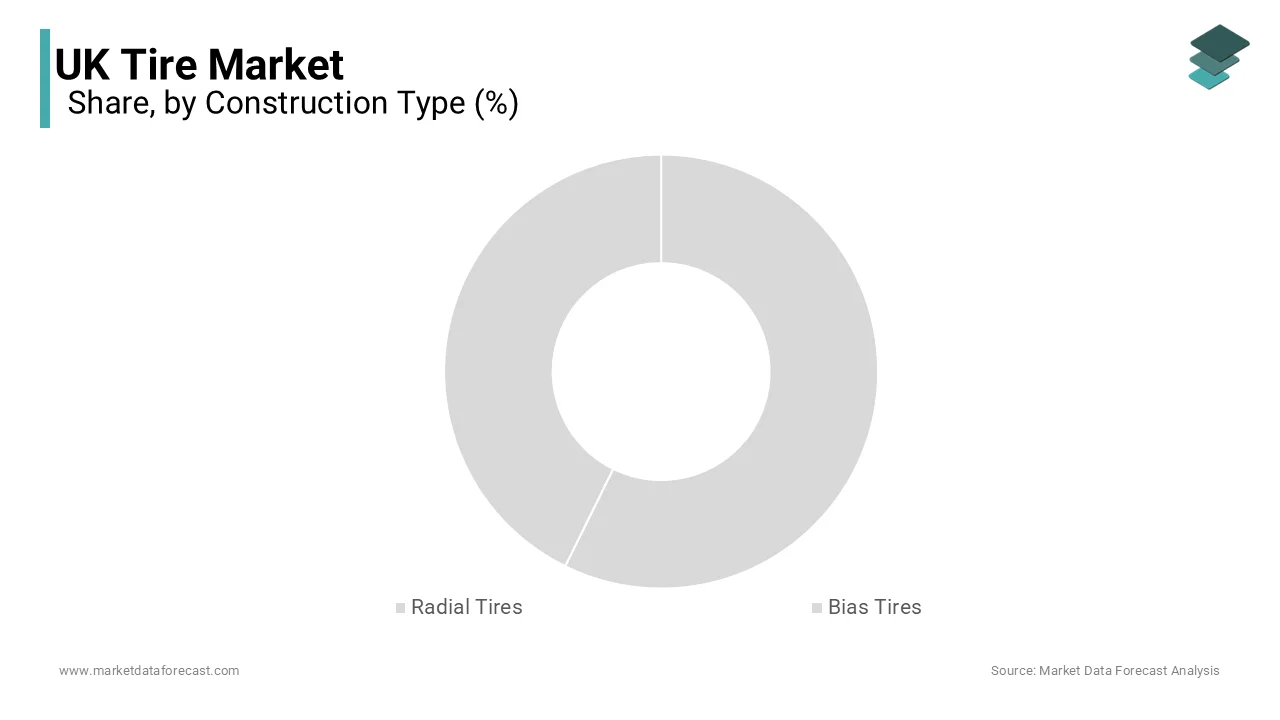
The bias tires segment is likely to grow at a fastest CAGR of 2.1 percent.CAGR of 2.1% during the forecast period. While their share in the passenger vehicle sector is negligible, bias ply tires offer distinct advantages in terms of sidewall strength and durability under heavy loads and rough terrain conditions. As per data from the National Farmers Union theThe modernization of agricultural equipment and the increase in farm mechanization have led to a steady demand for specialized bias tires that can withstand sharp objects and extreme weights. These tires are preferred for tractors harvesters and construction equipment where puncture resistance and load bearing capacity are more criticalimportant than fuel efficiency or high speed handling. The robust construction of bias tires with crisscrossing ply layers provides superior protection against cuts and bruises in off road environments. According to industry analysis theThe growth in rural infrastructure projects and forestry operations has further boosted demand for heavy duty bias tires. Manufacturers are innovating with advanced rubber compounds to extend the life of bias tires making them more cost effective for commercial operators. The limited competition in this specialized segment allows for higher margins and focused product development. As the UK continues to invest in rural development and sustainable farming practices the need for reliable off road mobility solutions ensures that the bias tire segment experiences steady growth despite its small overall market share.
By Vehicle Type Insights
The passenger cars segment was the dominant by capturing 39.1% of the United Kingdom tire market share in 2025 owing to the sheer volume of licensed vehicles and the regular need for tire replacement. The average annual mileage for private cars remains significant leading to natural wear and tear that necessitates periodic tire changes. The typical replacement cycle for passenger car tires is every three to five years depending on driving habits and road conditions creating a predictable revenue stream for retailers. The diversity of the passenger car market ranging from compact city cars to luxury sedans requires a wide array of tire sizes and specifications, which manufacturers readily supply. New car registrations although fluctuating continue to add to the total parc by ensuring a steady influx of vehicles entering the replacement cycle in future years. The emphasis on safety and performance in passenger vehicles drives consumers to purchase high quality tires that offer better grip and braking distances. Retailers benefit from this volume through economies of scale and established distribution networks. The prevalence of seasonal weather changes in the UK also encourages some drivers to switch between summer and winter tires further boosting sales volume.
The light commercial vehicles segment is anticipated to register a fastest CAGR of 3.5% from 2026 to 2034 with the explosive expansion of e-commerce and last mile delivery services. The shift toward online shopping has increased the number of vans and light trucks on UK roads, as logistics companies strive to meet consumer expectations for rapid delivery. The online retail sales have grown substantially leading to a surge in the registration of light commercial vehicles used for parcel distribution. These vehicles operate in urban environments with frequent stops and starts placing unique stress on tires, which require durable construction and high load capacity. The intensity of usage means that LCV tires wear out faster than passenger car tires leading to more frequent replacements. The growth of gig economy platforms has also increased the number of independent couriers using light vans further boosting demand. Manufacturers are developing specialized LCV tires with reinforced sidewalls to handle heavy loads and resist curb damage.
By Distribution Channel Insights
The offline channels segment was the largest by holding 45.3% of the share in 2025 with the immediate service needs and professional installation requirements associated with tire replacement. The majority of tire purchases are made in conjunction with installation services making physical stores the primary point of sale. The urgency of replacing damaged or worn tires often drives customers to local providers, who can offer same day service minimizing vehicle downtime. Trust plays a crucial role in offline transactions as consumers rely on the expertise of technicians to recommend the correct tire size and type for their vehicles. The presence of over 10000 independent garages and numerous national fast fit chains ensures wide geographic coverage and accessibility. The ability to physically inspect the product and receive immediate professional advice enhances confidence in the purchase decision. Dealerships also capture a significant portion of the market by offering genuine replacement tires for warranty serviced vehicles. The integration of additional services, such as wheel alignment and suspension checks during tire replacement adds value for customers.
The online channels segment is to grow at an anticipated CAGR of 6.8% from 2026 to 2034 with the price transparency and the convenience of home delivery or click and collect services. Digital platforms allow consumers to easily compare prices specifications and reviews for thousands of tire models empowering them to find the best deals. The rise of hybrid models, where consumers buy online and have tires fitted at partner garages combines the cost benefits of online shopping with the necessity of professional installation. This model appeals to tech savvy shoppers who value efficiency and control over their purchasing journey. The availability of detailed product information and user generated reviews online builds confidence in buying tires digitally. Major online retailers offer competitive pricing due to lower overhead costs which attracts price sensitive consumers. The convenience of having tires delivered to a chosen fitting center or home eliminates the need to visit multiple stores. This seamless integration of digital browsing and physical service is reshaping consumer habits. The flexibility and transparency offered by online platforms make them an increasingly attractive option for modern consumers.
COMPETITIVE LANDSCAPE
The competition in the UK tire market is intense and characterized by the presence of global multinational corporations alongside numerous regional distributors and independent retailers. Major brands compete on the basis of technology performance and sustainability credentials rather than price alone due to the regulated nature of safety standards. The market is fragmented in the aftermarket segment where independent garages fast fit chains and online platforms vie for consumer attention through service quality and convenience. Original equipment supply is dominated by a few key players who secure long term contracts with car manufacturers creating high barriers to entry for new competitors. Price transparency driven by online comparison tools forces retailers to offer competitive pricing while maintaining service excellence to retain customers. The rise of electric vehicles has introduced a new dimension to competition as companies race to develop specialized tires that address unique weight and torque requirements. Regulatory compliance with labeling and environmental standards acts as a baseline requirement pushing firms to innovate continuously. Brand loyalty remains strong among consumers who trust established names for safety critical components.
KEY MARKET PLAYERS
Some of the companies that are playing a dominating role in the UK tire market are
- Yokohama Tire Corporation
- Toyo Engineering
- Pirelli
- The Goodyear Tire & Rubber Company
- Michelin
- Sumitomo Corporation
- Continental AG
- Bridgestone Corporation
Top Players in the Market
- Michelin plc maintains a robust presence in the United Kingdom through its extensive distribution network and commitment to sustainable mobility solutions. The company supplies high performance tires for passenger cars commercial vehicles and industrial applications ensuring safety and efficiency for diverse users. Recently, Michelin has intensified its focus on circular economy initiatives by expanding tire retreading services and investing in recycling technologies to reduce environmental impact. The brand actively promotes its Total Performance strategy, which balances fuel efficiency safety and longevity to meet stringent regulatory standards. Michelin also collaborates with local fleets to optimize tire management through digital tools that monitor wear and pressure. These efforts reinforce its reputation for innovation and reliability, while addressing the growing demand for eco-friendly products in the UK automotive sector.
- Bridgestone Europe NV SA serves as a key contributor to the UK tire market by offering advanced mobility solutions tailored to consumer and commercial needs. The company leverages global research and development capabilities to introduce tires with enhanced wet grip and reduced rolling resistance. Recently Bridgestone has strengthened its position by launching new electric vehicle specific tire lines designed to handle higher loads and torque efficiently. The firm also invests in digital platforms that provide fleet operators with real time data for predictive maintenance and cost optimization. Bridgestone supports sustainability goals through its renewable material initiatives and responsible sourcing practices.
- Continental Tyre Group Ltd plays a vital role in the UK tire market by delivering premium quality products known for superior handling and safety features. The company serves both original equipment manufacturers and the aftermarket sector with a wide range of tire solutions for various vehicle types. Recently Continental has accelerated its digital transformation by integrating smart tire technologies that connect vehicles to cloud based services for improved performance monitoring. The brand emphasizes sustainability through its Green Chili technology which reduces fuel consumption and CO2 emissions without compromising grip. Continental also engages in extensive training programs for technicians to ensure proper installation and maintenance standards. These strategic actions enhance brand loyalty and operational efficiency positioning the company as a leader in innovative and responsible tire manufacturing within the UK market.
Top Strategies Used by Key Market Participants
Key players in the UK tire market primarily focus on product innovation to develop eco-friendly tires that meet strict environmental regulations and consumer demands for sustainability. Companies invest heavily in digital technologies, such as tire pressure monitoring systems and fleet management software to enhance service value and customer retention. Strategic partnerships with automotive manufacturers ensure original equipment supply contracts, which drive long term brand loyalty and aftermarket sales. Expansion of online retail channels combined with mobile fitting services improves accessibility and convenience for consumers seeking seamless purchasing experiences. Manufacturers prioritize supply chain resilience by diversifying sourcing locations and adopting circular economy practices like retreading and recycling to mitigate raw material volatility. Continuous investment in research and development that allows firms to create specialized tires for electric vehicles which require unique performance characteristics. These strategies enable participants to maintain competitiveness adapt to regulatory changes and deliver superior value in a mature and evolving market landscape.
MARKET SEGMENTATION
This research report on the UK tire market is segmented and sub-segmented into the following categories.
By Construction Type
- Radial Tires
- Bias Tires
By Vehicle Type
- Passenger Cars
- Light Commercial Vehicles
- Medium and Heavy Commercial Vehicles
- Two-Wheeler
- Three-Wheelers
- Off-The-Road (OTR)
By Distribution Channel
- Offline
- Online