- Product Description Description
- Table of Contents TOC
- List of Table & Figure LOT
- Get Free Sample PDF Sample PDF
Market Size, 2025
$580.99 MnMarket Estimate, 2026
$610.67 MnMarket Forecast, 2034
$909.83 MnCAGR, 2026–2034
5.11%UK Yogurt Market Summary
UK Yogurt Market | USD 580.99 Million (2025) | CAGR 5.11% | Forecast to USD 909.83 Million by 2034
The UK yogurt market encompasses fermented milk products, including set, Greek, drinkable, flavored, and frozen yogurt variants sold across retail, specialty, and online channels in the United Kingdom.
Market Size & Growth
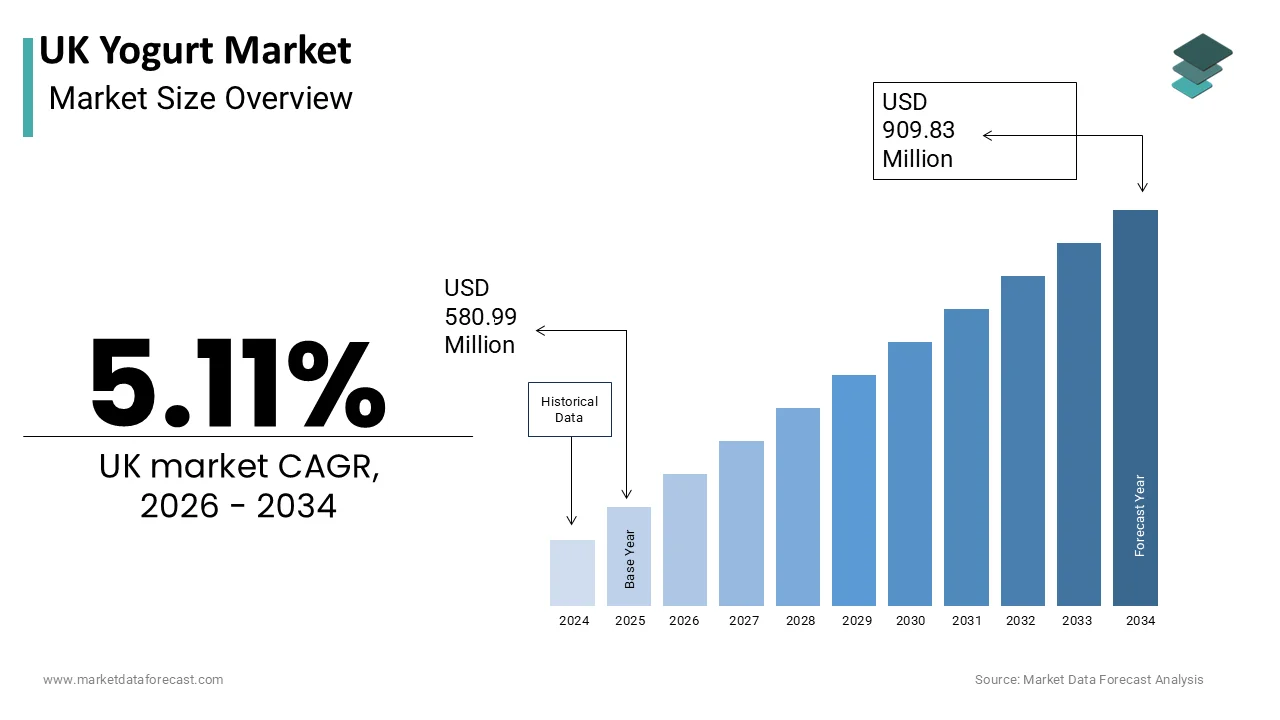
- Valued at USD 580.99 million in 2025, projected to reach USD 610.67 million in 2026.
- Forecast to reach USD 909.83 million by 2034, growing at a CAGR of 5.11% from 2026 to 2034.
Key Market Segments
- By Content Type: Regular Fat Yogurt (45.3% share, 2025); Low Fat Yogurt fastest growing at CAGR 9.8%
- By Product Type: Set Yogurt (42.3% share, 2025); Greek Yogurt fastest growing at CAGR 12.5%
- By Distribution Channel: Hypermarkets and Supermarkets (34.2% share, 2025); Specialty Stores, fastest growing at CAGR 7.8%
Key Drivers
- Rising consumer demand for probiotic gut-health foods featuring Lactobacillus and Bifidobacterium strains
- Mainstream expansion of plant-based yogurt alternatives using soy, almond, coconut, and oat bases
- Premiumization trend toward Greek-style yogurt, priced approximately 30% higher per kilogram than standard set yogurt
Key Players
- Danone S.A.
- Muller UK and Ireland Group
- Yeo Valley Organic Ltd.
- Arla Foods amba
- Nestle S.A.
- Lactalis Group
- FAGE International S.A.
- Chobani LLC
- The Collective Dairy (Epicurean Dairy UK Ltd.)
- Onken (Ehrmann GmbH)
- Brooklea (Aldi)
- Biotiful Dairy Ltd.
 Download Free Sample Report
UK Yogurt Market Size
The UK Yogurt Market is projected to grow from USD 580.99 million in 2025 to USD 610.67 million in 2026 and reach USD 909.83 million by 2034, registering a CAGR of 5.11% during the forecast period from 2026 to 2034.
The yogurt is a fermented milk product ranging from traditional set styles to drinkable variants and Greek-style alternatives. This sector serves as a staple in British dietary habits, offering versatile consumption options for breakfast snacks and culinary applications. As per the Department for Environment,t Food and Rural Affairs, the UK dairy sector contributed approximately 2.9 billion pounds to the national economy in 2023, demonstrating its substantial agricultural footprint. Consumer engagement with yogurt extends beyond basic nutrition, encompassing lifestyle choices and wellness goals. Environmental considerations have become prominent, ent with packaging sustainability emerging as a central concern for both manufacturers and retailers increasingly. The industry continues to navigate complex supply chain dynamics while adapting to technological advancements in fermentation and preservation that shape contemporary product offerings and distribution channels across the nation.
MARKET DRIVERS
Rising Consumer Preference For Gut Health: Consumer Benefits
Consumer awareness regarding the connection between diet and digestive wellness is greatly influencing the growth of the United Kingdom yogurt market. Individuals are increasingly seeking functional foods that offer specific health benefits, beyond basic nutrition, leading to a probiotic-enriched product. This behavioral change has prompted manufacturers to live and active cultures on packaging and invest in research to validate health claims. The British Dietetic Association emphasizes the role of fermented dairy in maintaining a balanced microbiome,e which has further legitimized yogurt as a preventive health tool. Sales of yogurt varieties containing specific strains such as Lactobacillus and Bifidobacterium have seen consistent growth outpacing standard plain options. Retailers have responded by expanding health-focused brands while marketing campaigns emphasize scientific backing and clinical studies. This trend reflects a broader societal movement, where consumers view food as medicine, thereby creating sustained demand for products aligned with holistic wellbeing strategies and the immune system.
Plant-Based Expansion Of Plant-Based Alternatives Catering To Dietary Restrictions.
The proliferation of plant-based yogurt alternatives has fundamentally altered the competitive landscape, addressi, lactose-intolerant, an lactose intolerant and environmentally conscious consumplant-basedpansion of placatering alternatives caterinf to dietary restrictions is accelerating the growth of the United Kingdom yogurt market. Manufacturers have developed sophisticated formulations using soy, almond,d coconut,t and oat bases that mimic the texture and taste of traditional dairy yogurt. This expansion is not limited to niche health food stores but has permeated mainstream supermarkets, where plant-based options now occupy prominent shelf positions. The improvement,, in sensory qualities such as creamin,e, ss and flavor profile has reduced the compromise previously associated with non-dairy options. Additionally, environmental concerns regarding methane emissions from cattle farming have motivated flexitarian consumers to reduce dairy intake without abandoning yogurt entirely. Major dairy companies have launched their own plant-based lines to capture this growing segment, but have not ensured wide availability and competitive pricing. This diversification allows the yogurt category to maintain relevance among changing dietary patterns, while attracting new customer segments who prioritize ethical and sustainable consumption choices in their daily routines.
MARKET RESTRAINTS
Volatility In Raw Material Costs And Energy Prices
The fluctuating prices of key ingredients and soaring energy costs required for productiare aare a and refrigeration is major factors hindering the growth of the United Kingdo,,m yogu, markett. Milk, sugar, and packaging materials represent major cost components that have experienced significant price instability in recent years. According to the Department for Environment, Food and Rural Affairs, the average farm gate price for milk increased by 12.5% in 2024, driven by feed costs and global supply constraints. These cost pressures are compounded by labor shortage, which has driven up wages in the processing and distribution sectors. Supply chain disruptions originating from geopolitical tensions and weather events have further exacerbated these challenges,e,s leading to inventory inconsistencies. Brexit-related administrative burdens continue to affect imports of certain fruits and additives from European Union countries, adding layers of complexity and cost. These interconnected factors create an unpredictable operating environment where profit margins remain under constant ttthreat,equiring agile responses and diversified sourcing strategies.
Stringent Regulatory Frameworks On Sugar Content And Labeling
The government interventions aimed at improving public health have introduced significant operational challenges for yogurt manufacturers, particularly regarding sugar content and nutritional labelling, which is impeding the growth of the United Kingdom yogurt market. The Soft Drinks Industry Levy has set a precedent for potential taxes on high sugar dairy products, prompting reformulation efforts that can alter taste and texture profiles. However, achieving acceptable sweetness levels without added sugar requires investment in natural sweeteners and flavor enhancers, which can be costly. Furthermore, updated labeling regulations require clear disclosure of allergens and nutritional information, which increases packaging complexity and compliance costs. The Food Standards Agency updated guidelines in 2024, mandating stricter verification of health claims,s preventing misleading marketing about probiotic benefits without scientific evidence. These measures have disproportionately impacted smaller manufacturers who lack the resources to navigate complex legal requirements or invest in extensive research and development. The cumulative effect of these policies has created an environment where innovation must balance commercial viability with strict adherence to health-oriented mandates, thereby constraining traditional growth pathways and forcing strategic pivots.
MARKET OPPORTUNITIES
Innovation In Premium And Artisanal Yogurt Segments
The pursuit of premiumization offers substantial growth potential for yogurt manufacturers, as consumers increasingly seek high-quality, authentic, experiential products, which is likely to create new opportunities for the growth of the United Kingdom yogurt market. This trend is particularly evident among affluent demographics, who value craftsmanship, organic ingredients, and distinctive flavor profiles. Artisanal brands featuring small batch production of exotic fruits and traditional fermentation methods have captured attention in specialty retail outlets and upscale grocery chains. Icelandic-styleeek and Icelandic-style yogurts have created opportunities for thicker, creamier textures that appeal to consumers seeking indulgence alongside nutrition. Additionally, the integration of superfoods such as chia seed,s hemp, and matcha into yogurt formulations attracts health-conscious buyers willing to pay a premium for functional benefits. Restaurants and cafes are increasingly featuring curated yogurt bowls with gourmet toppings, thereby enhancing perceived value. This segment allows manufacturers to command higher margins while fostering brand loyalty through storytelling and emphasis on provenance.
Adoption Of Sustainable Packaging And Circular Economy Initiatives
The environmental sustainability for manufacturers, who can differentiate themselves through innovative packaging solutions and commitment to circular economy principles,s is also substantially to enhance the growth of the United Kingdom yogurt market. Consumers are increasingly demanding eco-friendly alternatives to single-use plastics, driving investment in recyclable, biodegradable,e and reusable container technologies. Companies that adopt lightweight packaging designs and incorporate post-consumer recycled materials can appeal to environmentally conscious buyers while reducing material costs over time. The introduction of deposit return schemes for dairy containers presents an opportunity for brands to enhance collection rates and demonstrate corporate responsibility. Additionally, innovations in paper-based pots and compostable films offer potential breakthroughs that could revolutionize the industry. Brands that transparently communicate their environmental initiatives through clear labeling and third-party certifications can build trust and loyalty among discerning customers, positioning themselves as leaders in the transition toward a more sustainable dairy ecosystem.
MARKET CHALLENGES
Intense Competition From Private Label And Discount Retailer Brands
The aggressive expansion of private label offerings by major supermarket chains and discount retailers, who leverage economies of scale to offer competitive, low-priced alternatives,s is one of the challenges for the growth of the United Kingdom yogurt market. Retailers, such as Aldi and Lidl, have invested heavily in their own brand development, launching premium-tier products that rival branded counterparts in taste and packaging aesthetics, while maintaining lower price points. This competitive pressure forces branded manufacturers to engage in frequent promotional activities and price reductions that compress profit margins and dilute brand equity over time. Additionally, discount retailers have expanded their product ranges to include organic and plant-based yogurts, traditionally dominated by specialized brands,s thereby capturing diverse consumer segments. This dynamic creates a challenging environment, where differentiation becomes increasingly difficult, leading to brand loyalty diminishing as consumers demonstrate greater willingness to switch based on price and convenience,e leading to market consolidation.
Navigating Complex Consumer Preferences And Fragmented Demand Patterns
The ongoing challenge of addressing increasingly fragmented and rapidly evolving consumer preferences that defy traditional segmentation approaches, which also hibits the growth of the United Kingdom yogurt market. The diverse dietary requirements, cultural influences, and individualized taste profiles make it difficult to develop products with broad appeal. The rise of personalized nutrition has led to expectations for customized yogurt options that cater to individual health goals and lifestyle choices, complicating production processes and inventory management. Social media amplifies niche trends rapidly,y creating fleeting demand spikes for specific ingredients or flavors that may not sustain long-term viability. Additionally, generational differences in consumption habits present distinct challenges, with older demographics favoring traditional plain yogurts while younger consumers experiment with novel concepts and ethical considerations. This fragmentation requires manufacturers to maintain flexible production capabilities and agile marketing strategies that can respond quickly to emerging trends without compromising operational efficiency, creating strategic tensions, where resource allocation decisions become critical yet uncertain.
REPORT COVERAGE
| REPORT METRIC | DETAILS |
| Market Size Available | 2025 to 2034 |
| Base Year | 2025 |
| Forecast Period | 2026 to 2034 |
| Segments Covered | By Content Type, Product Type,Distribution Channel, and Region |
| Various Analyses Covered | Global, Regional and Country-Level Analysis, Segment-Level Analysis, Drivers, Restraints, Opportunities, Challenges; PESTLE Analysis; Porter’s Five Forces Analysis, Competitive Landscape, Analyst Overview of Investment Opportunities |
| Countries Covered | United Kingdom |
| Market Leaders Profiled | Danone S.A., Müller UK & Ireland Group, Yeo Valley Organic Ltd., Arla Foods amba, Nestlé S.A., Lactalis Group, FAGE International S.A., Chobani LLC, The Collective Dairy (Epicurean Dairy UK Ltd.), Onken (Ehrmann GmbH), Brooklea (Aldi), Biotiful Dairy Ltd. |
SEGMENTAL ANALYSIS
By Content Type Insights
The regat yogurt segments accounted in holding 45.3% of the United Kingdom yogurt market share in 2025 due to the superior sensory experience and satiety it provides compared to reduced-fat alternatives. Consumers increasingly recognize that dietary fat is essential for flavor release and texture, contributing to a more enjoyable eating experience. The culinary versatility of full-fat yogurt makes it a preferred ingredient in cooking, where lower-fat variants often fail to provide adequate consistency or richness. The shift away from decades of low-fat dogma has been supported by nutritional science,e indicating that natural dairy fats do not necessarily contribute to weight gain when consumed in moderation. This changing perception has encouraged manufacturers to focus on premium quality milk sources and traditional fermentation methods that enhance the natural creaminess of regular fat products. Further protein rise of high protein diets has aligned with Greek-style Greek-stylegular fa,t Greek style yogurts which offer both macronutrient density and satisfying mouthfeel.
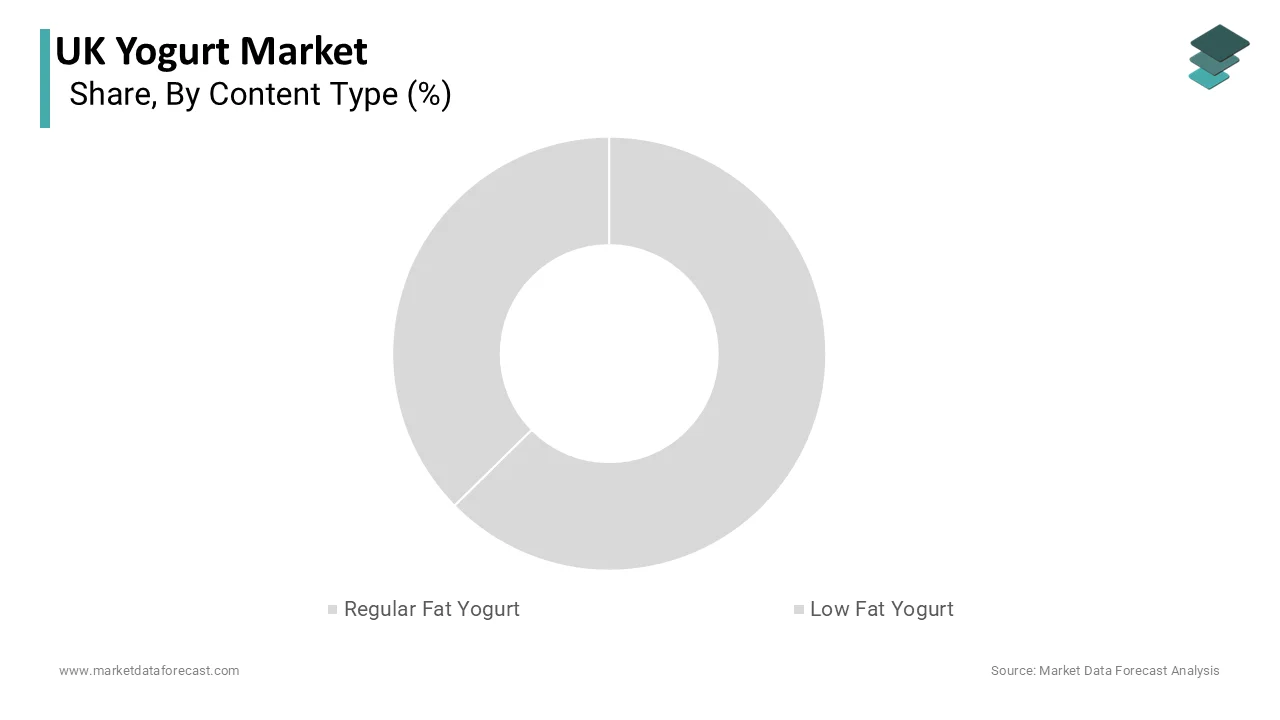
The low-fat yogurt segment is likely to register the fastest CAGR of 9.8% during the forecast period, with the sustained consumer interest in weight management and heart health. As per the Office for National Statistics, 35% of adults in the UK were classified as obese in 2024, prompting many to seek lighter dietary alternatives. Low-fat yogurt offers a compromise, allowing consumers to enjoy the benefits of dairy protein and probiotics while reducing overall energy intake. Marketing campaigns emphasizing lean protein and reduced guilt have resonated with fitness enthusiasts and individuals following structured diet plans. The availability of low-fat options in convenient single-serve formats supports on-the-go consumption for busy professionals seeking healthy snacks. Furthermore, government public health initiatives promoting balanced diets have indirectly boosted demand for products labeled as lower in fat. Manufacturers have improved the formulation of low-fat yogurts to mitigate texture issues using natural thickeners and stabilizers that maintain palatability.
By Product Type Insights
The set yogurt segment was the largest by holding 42.3% of the United Kingdom market share in 2025 due to its deep-rooted presence in traditional British consumption habits and widespread acceptance among families. The firm texture and mild flavor profile make it a versatile staple suitable for breakfast,t, desserts, and cooking, appealing to a broad demographic range. The simplicity of set yogurt appeals to older generations, who prefer classic formats over newer innovations such as drinkable or Greek styles. Its affordability compared to specialized variants ensures it remains accessible to budget-conscious households during periods of economic pressure. Of the private label set, yogurt brands dominate shelf space in major supermarkets, offering competitive pricing that drives high volume turnover. The long shelf life of set yogurt reduces waste for retailers and consumers alike,e enhancing its practicality for weekly grocery shopping. Additionally, set yogurt serves as a blank canvas for customization, allowing consumers to add their own fruits, honey, or toppings, which fosters engagement and reduces flavor fatigue.
The Greek expected segment is expected to witness the fastest CAGR of 12.5% from 2026 to 2034, with the dual trends of premiumization and high-protein demand for high-protein foods. Consumers perceive Greek yogurt as a healthier and more indulgent option due to its thick, creamy texture and concentrated nutritional profile. The straining process used to produce Greek yogurt removes whey,y resulting in higher protein content and lower sugar, making it appealing to health-conscious buyers. The average price per kilogram for Greek yogurt is 30% higher than standard-set yogurt, indicating a strong willingness to pay for perceived quality. The versatility of Greek yogurt in both sweet and savory applications has expanded its usage beyond breakfast to include lunch, snack,s and dinner ingredients. Social media trends featuring Greek yogurt bowls with exotic toppings have enhanced their visual appeal and desirability among younger demographics. Manufacturers have responded by introducing flavored variants and mixed fruit options that cater to diverse tastes while maintaining the premium image.
By Distribution Channel Insights
The hypermarkets and supermarkets segment was the largest by caUnitedUnited 34.2% of the United Kingdom yogurt market. Consumers prefer purchasing yogurt alongside other grocery items during weekly shops, maximizing efficiency and reducing transaction costs. Major retailers, such as Tesco, Sainsbury's,s and Asda, offer wide selections ranging from budget-friendly private labels to premium international brands catering to diverse consumer preferences. The ability to compare prices and read nutritional information in person enhances decision-making confidence for shoppers. All promotional activities in supermarkets, including loyalty card discounts and multi-buy offers, significantly drive volume sales and encourage brand switching. The strategic placement of yogurt in chilled aisles near complementary products like cereals and fruit increases visibility and impulse purchases. Supermarkets also invest in cold chain infrastructure,e ensuring product freshness and quality, which builds consumer trust. The integration of online grocery services with physical stores allows customers to order yogurt for home delivery or click and collect,t further enhancing accessibility.
The specialty stores segment is likely to witness the fastest CAGR of 7.8% from 2026 to 2034 with the consumer demand for premium artisanal and organic products that are not widely available in mainstream supermarkets. These outlets cater to discerning shoppers, who prioritize quality, sustainability, and ethical sourcing in their purchasing decisions. Independent delicatessen,s farm shops, and health food stores offer small-batch selections of small-batch yogurts made from locally sourced milk and traditional methods. The personalized service and expert knowledge provided by staff in specialty stores enhance the shopping experience and build customer loyalty. Consumers are willing to pay a premium for unique flavors and transparent supply chains, which specialty stores effectively communicate through storytelling and branding. The rise of food tourism and localism has further boosted traffic to these outlets as shoppers seek authentic regional products. This focus on exclusivity and quality ensures that specialty stores continue to grow as a vital channel for innovative and high-value yogurt brands.
The rapid expansion of the specialty store segment held a dominant share of the United Kingdom yogurt market, with the strong community engagement of direct-to-consumer models that foster deeper connections with customers. Many specialty stores operate as community hubs hosting tasting events, workshops,s and farmer markets that educate consumers about yogurt production and benefits. These stores often source directly from local dairies, reducing carbon footprint and supporting regional economies, which resonates with environmentally conscious buyers. Consumers are increasingly interested in food provenance, with 60% preferring products with clear local origins. Specialty stores leverage this trend by the stories behind the brands they stock ,creating emotional connections that drive loyalty. Subscription boxes and online ordering platforms offered by specialty retailers provide convenience while maintaining the personal touch of independent shopping. Social media campaigns featuring local producers and behind-the-scenes content further amplify reach and engagement.
COMPETITIVE LANDSCAPE
The competition in the United Kingdom yogurt market is characterized by intense rivalry among established multinational corporations and agile local artisans. Major players leverage extensive distribution networks and brand recognition to dominate shelf space while niche producers differentiate through premium quality and unique flavors. Price, competition is fierce, particularly in the tablet segment, where private label offerings from supermarkets pose a significant threat to branded products. Companies compete aggressively, on health credentials promoting probiotic content and reduced sugar levels to appeal to wellness-oriented consumers. Innovation in packaging sustainability and convenience formats drives differentiation as environmental concerns influence purchasing decisions. The rise of plant-based alternatives has introduced new competitors from the non-dairy sector, further fragmenting the market. Strategic partnerships with healthcare professionals and influencers help build trust and validate health claims. Customer loyalty is increasingly driven by ethical practices and transparency in sourcing, requiring companies to demonstrate genuine commitment to social and environmental responsibility.
KEY MARKET PLAYERS
Some of the companies that are playing a dominating role in the U.K. Yogurt Market include
- Danone S.A.
- Müller UK & Ireland Group
- Yeo Valley Organic Ltd.
- Arla Foods amba
- Nestlé S.A.
- Lactalis Group
- FAGE International S.A.
- Chobani LLC
- The Collective Dairy (Epicurean Dairy UK Ltd.)
- Onken (Ehrmann GmbH)
- Brooklea (Aldi)
- Biotiful Dairy Ltd.
TOP LEADING PLAYERS IN THE MARKET
- Muller UK & Ireland Group stands as a pivotal entity in the national dairy landscape, operating prominent brands such as Muller Corner and Fruyo. The company significantly contributes to the market by offering diverse product ranges that cater to varying consumer preferences,s from om indulgent desserts to healthy snacking options. Recent strategic initiatives include substantial investments in sustainable packaging solutions aiming to reduce plastic usage across its portfolio. Muller has strengthened its position by launching innovative low-sugar plant-based alternatives to address evolving health trends. The organization actively engages in community programs and supports local dairy farmers,s ensuring a robust supply chain.
- Danone Limited maintains a strong presence in the United Kingdom yogurt market through its well-known brands, including Activia and Actimel. The company plays a critical role in promoting gut health and wellness by emphasizing the probiotic benefits of its products. Recent actions to strengthen its market position include the reformulation of existing lines to reduce sugar content and eliminate artificial additives. Danone has invested heavily in digital marketing strategies to engage directly with consumers and educate them on digestive health. The organization also prioritizes sustainability by committing to carbon neutrality and using recycled materials in packaging. Strategic collaborations with healthcare professionals help validate health claims and build trust.
- Arla Foods UK contributes significantly to the yogurt sector through its extensive portfolio of fresh dairy products, including Lactofree and Anchor brands. As a farmer-owned cooperative, Arla emphasizes quality sourcing and ethical production practices, which resonate strongly with British consumers. The company has strengthened its market position by expanding its range of lactose-free and high-protein yogurt options to meet specific dietary needs. Recent initiatives include the launch of organic yogurt lines and investment in advanced fermentation technologies to improve texture and flavor. Arla actively promotes sustainable farming methods and transparent supply chains to build consumer confidence. The organization collaborates with retailers to optimize distribution and ensure product freshness.
TOP STRATEGIES USED BY KEY MARKET PARTICIPANTS
Key players in the United Kingdom yogurt market employ diverse strategies to maintain competitive advantage and drive sustainable growth. Product innovation remains central as compani, es devel, op new flavors, textures, and functional benefits to attract health-conscious consumers. Strategic investments in sustainable packaging and ethical sourcing help build brand loyalty and meet regulatory requirements. Partnerships with retailers ensure optimal shelf placement and promotional visibility, ty driving sales volume. Digital marketing campaigns engage directly with consumers, emphasizing health benefits and lifestyle alignment. Reformulation efforts focus on reducing sugar and artificial ingredients to comply with public health guidelines, plant-based, and free from categories, addressing emerging dietary trends and broadening consumer reach. These combined approaches enable vendors to navigate the market long-term and sustain long-term relevance in an evolving landscape.
MARKET SEGMENTATION
This research report on the UK yogurt market is segmented and sub-segmented into the following categories.
By Content Type
- Regular Fat Yogurt
- Low Fat Yogurt
By Product Type
- Set Yogurt
- Greek Yogurt
- Drinking Yogurt
- Flavored Yogurt
- Frozen Yogurt
- Others
By Distribution Channel
- Hypermarkets & Supermarkets
- Specialty Stores
- Convenience Stores
- Online Retail
- Others
By Country
- United Kingdom