- Product Description Description
- Table of Contents TOC
- List of Table & Figure LOT
- Get Free Sample PDF Sample PDF
Market Size, 2025
$16.02 BnMarket Estimate, 2026
$16.75 BnMarket Forecast, 2034
$23.87 BnCAGR, 2026–2034
4.53%U.S. Biodiesel Market Report Summary
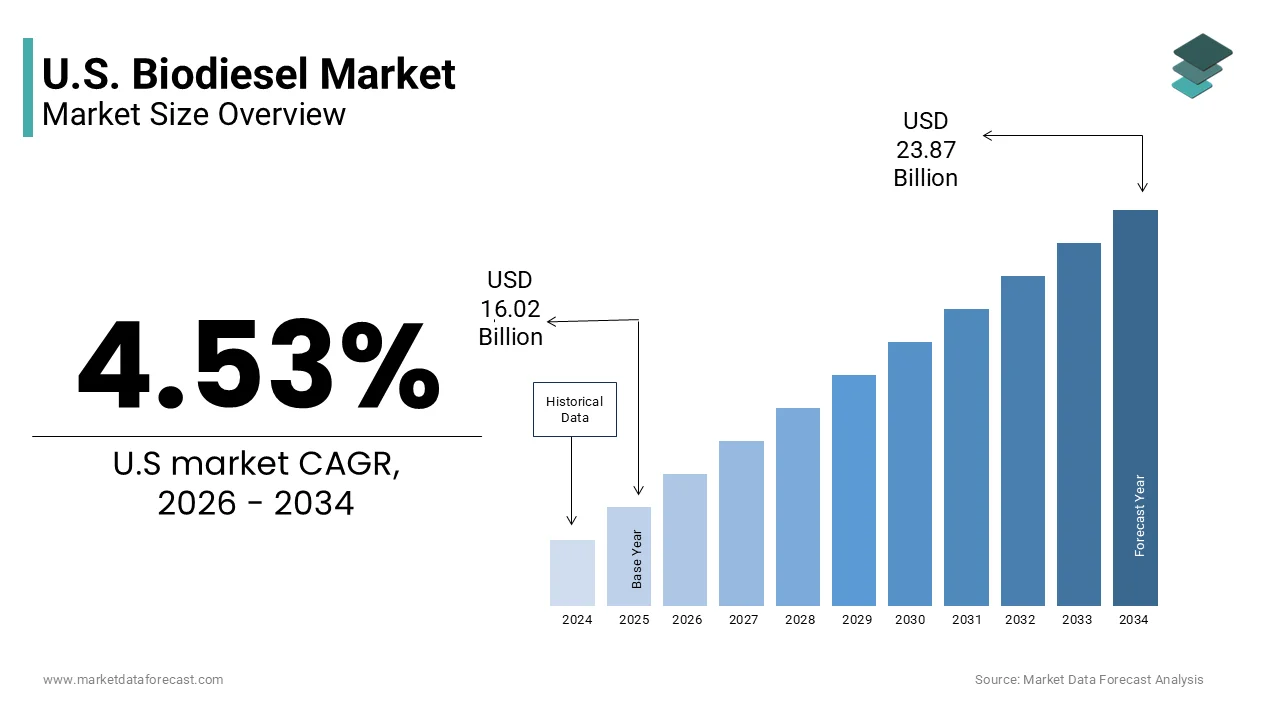
The U.S. biodiesel market was valued at USD 16.02 billion in 2025, is estimated to reach USD 16.75 billion in 2026, and is projected to reach USD 23.87 billion by 2034, growing at a CAGR of 4.53% during the forecast period. Market growth is driven by increasing renewable fuel adoption, supportive government policies, and growing demand for cleaner transportation fuels. Biodiesel continues to play an important role in reducing greenhouse gas emissions and improving energy diversification across the transportation sector. Rising investments in renewable energy infrastructure and advancements in feedstock processing technologies are further supporting market expansion across the United States.
Key Market Trends
- Growing adoption of renewable transportation fuels is driving market growth.
- Increasing government mandates and emission reduction targets are boosting biodiesel demand.
- Rising focus on energy security and sustainability is supporting market expansion.
- Expansion of renewable fuel production capacity is enhancing supply chain development.
- Innovation in feedstock optimization and advanced biofuel technologies is influencing market development.
Segmental Insights
- Based on feedstock, the vegetable oils segment accounted for 34.2% of the U.S. biodiesel market share in 2025. This dominance is attributed to strong soybean production capacity and established feedstock supply chains across the country.
- Based on blend type, the B6 to B20 blend segment held 51.2% of the U.S. biodiesel market share in 2026, driven by alignment with renewable fuel standards and biomass based diesel blending requirements.
- Based on application, the on road transportation segment accounted for 43.2% of the U.S. biodiesel market share in 2025, supported by growing diesel fleet usage and increasing focus on transportation emission reduction initiatives.
Regional Insights
- The United States remains one of the largest biodiesel markets globally, supported by renewable fuel mandates, agricultural feedstock availability, and growing investment in sustainable transportation fuels. Continued policy support and advancements in renewable energy infrastructure continue to strengthen market development.
Competitive Landscape
The U.S. biodiesel market is highly competitive, with companies focusing on renewable fuel production expansion, feedstock diversification, and sustainability initiatives to strengthen their market position. Market participants are investing in advanced processing technologies and strategic supply chain partnerships to improve production efficiency. Prominent players in the U.S. biodiesel market include Archer Daniels Midland Company, FutureFuel, Neste, Renewable Energy Group, Inc., Bunge Global SA, Wilmar, and Shell.
U.S. Biodiesel Market Size
The U.S. biodiesel market size was valued at USD 16.02 billion in 2025, is estimated to reach USD 16.75 billion in 2026, and is projected to reach USD 23.87 billion by 2034, growing at a CAGR of 4.53% from 2026 to 2034.
The biodiesel is the fatty acid methyl esters derived from vegetable oils animal fats and recycled cooking grease. This alternative fuel serves as a direct substitute or blend component for petroleum diesel in compression ignition engines offering reduced greenhouse gas emissions and enhanced lubricity. The feedstock composition varies significantly with soybean oil accounting for the largest share followed by corn oil and used cooking oil. Agricultural output directly influences supply dynamics, since soybean cultivation covers millions of acres across the Midwest. According to the US Department of Agriculture, soybean production exceeded 4 billion bushels in the latest harvest season providing ample raw material for conversion facilities. The geographic distribution of production plants is concentrated in states with strong agricultural bases and supportive state level incentives. Environmental benefits include a reduction in particulate matter and carbon monoxide emissions compared to conventional diesel. The integration of biodiesel into the national fuel supply chain supports rural economies by creating demand for agricultural products. Technological advancements in transesterification processes continue to improve yield efficiency and product quality ensuring compatibility with modern engine technologies.
MARKET DRIVERS
Federal Renewable Fuel Standard Mandates Drive Consumption
The renewable fuel standard program established by the Environmental Protection Agency by legally requiring fuel refiners and importers to blend specific volumes of renewable fuels into the transportation supply. The federal renewable is expanding the demand for the fuel standard, which is gearing up the growth of the United States biodiesel market. As per the Environmental Protection Agency, the annual biomass based diesel volume obligation has been set at levels exceeding 2.8 billion gallons for recent compliance years ensuring consistent uptake of biodiesel and renewable diesel. These mandates are designed to reduce greenhouse gas emissions and decrease dependence on imported petroleum thereby enhancing national energy security. Obligated parties must acquire Renewable Identification Numbers which are credits generated when renewable fuels are produced and blended creating a financial incentive for compliance. The stability of these regulatory targets allows producers to plan long term investments in production capacity and feedstock sourcing. State level programs such as Low Carbon Fuel Standards in California further amplify demand by providing additional credits for low carbon intensity fuels. The legal enforceability of these standards ensures that biodiesel maintains a baseline presence in the fuel mix even during periods of low economic activity. This regulatory backbone provides the certainty needed for capital intensive projects in the biofuel sector.
Increasing Corporate Sustainability Commitments Boost Demand
The corporate sustainability initiatives and environmental social and governance criteria are increasingly driving demand for biodiesel as companies seek to reduce their carbon footprints and meet net zero emission targets. The increasing corporate sustainability commitments is boosting the growth of the United States biodiesel market. Major logistics transportation and shipping firms are incorporating biodiesel blends into their fleets to comply with internal sustainability goals and respond to stakeholder pressure for cleaner operations. As per the Environmental Defense Fund, the transportation sector accounts for nearly 29% of total US greenhouse gas emissions prompting companies to adopt alternative fuels as a viable mitigation strategy. Biodiesel offers an immediate solution for reducing emissions in existing diesel infrastructure without requiring significant vehicle modifications or new charging infrastructure. Many Fortune 500 companies have publicly committed to reducing scope 1 and scope 2 emissions which directly incentivizes the procurement of low carbon fuels like biodiesel. The availability of sustainability reporting frameworks encourages transparency and accountability in fuel sourcing leading to increased preference for verified renewable options. Consumer awareness of climate change impacts also influences corporate behavior as brands strive to maintain positive public images through eco friendly practices. Partnerships between fuel providers and corporate fleets are becoming more common to ensure consistent supply of high quality biodiesel blends. The economic benefit of potential tax credits and incentives further supports adoption by lowering the effective cost of sustainable fuel options.
MARKET RESTRAINTS
Feedstock Price Volatility Restrains Production Stability
The volatility of feedstock prices, as the cost of raw materials, such as soybean oil and animal fats is limiting the growth of the United States biodiesel market. Fluctuations in agricultural commodity markets driven by weather conditions global trade policies and competing demands from the food industry create uncertainty for producers. The price of soybean oil has experienced substantial variations in recent years impacting the profit margins of biodiesel manufacturers, who struggle to pass these costs onto consumers. Competition for feedstocks from the renewable diesel sector which uses similar inputs but benefits from different regulatory incentives further exacerbates price pressures. When feedstock costs rise disproportionately to petroleum diesel prices biodiesel loses its economic competitiveness unless supported by subsidies or tax credits. The reliance on a limited number of primary feedstocks makes the industry vulnerable to supply shocks such as crop failures or disease outbreaks in livestock populations. Diversifying feedstock sources is challenging due to technical limitations in processing varied lipid profiles and the need for specialized equipment. High input costs can lead to reduced production volumes or temporary plant closures affecting supply reliability. The inability to hedge effectively against commodity price risks limits the financial stability of smaller producers.
Infrastructure Compatibility Issues Limit Distribution Reach
The limitations in existing fuel distribution infrastructure to the widespread adoption of biodiesel, particularly for higher blend concentrations above B20 is also hindering the growth of the United States biodiesel market. While most modern diesel engines can accommodate low level blends without modification higher concentrations require specific handling storage and dispensing equipment to prevent material degradation and performance issues. The biodiesel can degrade certain types of rubber hoses and seals in older vehicles and fueling stations by necessitating costly upgrades for compatibility. The lack of dedicated biodiesel pumps at retail stations limits consumer access and awareness restricting penetration to commercial fleets and specialized users. Storage stability is another concern as biodiesel is susceptible to oxidation and microbial growth if not managed properly requiring additives and regular monitoring. The fragmented nature of the fuel distribution network means that many rural and remote areas lack access to biodiesel supplies increasing logistical costs for transportation. Regulatory inconsistencies regarding blend warranties and insurance coverage further discourage retailers from offering higher blends due to perceived liability risks. The capital investment required to retrofit existing infrastructure is significant and often lacks sufficient return on investment given current demand levels.
MARKET OPPORTUNITIES
Expansion into Aviation and Marine Sectors Offers Growth
The emerging demand for sustainable fuels in the aviation and marine sectors to expand beyond traditional road transportation applications, which is setting up new opportunities for the United States biodiesel market. Sustainable Aviation Fuel derived from hydrotreated vegetable oils and other biomass sources is gaining traction as airlines seek to meet international carbon reduction targets and regulatory requirements. As per the International Air Transport Association, the aviation industry has committed to achieving net zero carbon emissions by 2050 driving investment in alternative fuel pathways including those based on biodiesel technologies. The marine sector is also exploring biodiesel blends to comply with stricter sulfur and carbon emission regulations imposed by the International Maritime Organization. These sectors offer high value markets where premium pricing for sustainable fuels is more acceptable due to the lack of viable electrification options for long haul flights and large vessels. Technological advancements in hydroprocessing allow for the conversion of biodiesel feedstocks into drop in fuels that meet stringent aviation and marine specifications without requiring engine modifications. Government incentives such as the Inflation Reduction Act provide tax credits for sustainable fuel production enhancing economic viability. Partnerships between biofuel producers and aerospace or shipping companies are facilitating pilot projects and commercial scale trials. The diversification into these high growth sectors reduces reliance on the saturated road transport market and opens new revenue streams.
Technological Advancements in Feedstock Conversion Enhance Efficiency
The innovations in conversion technologies and feedstock flexibility offer substantial to improve production efficiency and reduce costs is another factor to set up the growth of the United States biodiesel market. Advanced catalytic processes and enzymatic transesterification methods are enabling producers to utilize lower cost and non-traditional feedstocks such as algae municipal waste grease and industrial byproducts. The research initiatives are focusing on improving yield rates and reducing energy consumption in biodiesel production facilities through process intensification and automation. The ability to process diverse and abundant waste streams reduces dependency on volatile agricultural commodities and enhances supply chain resilience. Co-product valorization is another area of opportunity where glycerin and other byproducts are converted into high value chemicals pharmaceuticals or cosmetics adding revenue streams. Digitalization and artificial intelligence are being integrated into production plants to optimize operating parameters predict maintenance needs and minimize downtime. These technological improvements lower the overall cost of production making biodiesel more competitive with petroleum diesel even without subsidies. Investment in biorefinery concepts allows for the integrated production of multiple bio based products maximizing resource utilization and economic returns. The development of modular and scalable production units enables decentralized manufacturing closer to feedstock sources reducing transportation costs.
MARKET CHALLENGES
Regulatory Policy Uncertainty Creates Investment Risks
The uncertainty surrounding future regulatory policies and tax incentives, as investors and producers require stable frameworks to justify capital expenditures, which is a challenge for the growth of the United States biodiesel market. The periodic expiration and renewal of federal tax credits, such as the Biodiesel Mixture Excise Tax Credit create periods of market instability, where production decisions are delayed or halted. The lapses in policy support have historically led to fluctuations in production volumes and plant closures as companies wait for legislative clarity. The complexity of overlapping federal and state regulations adds administrative burdens and compliance costs that vary by jurisdiction. Changes in administration or political priorities can lead to shifts in renewable energy support affecting long term planning and strategic direction. The lack of predictable policy timelines discourages private sector investment in new facilities and technology development. Stakeholders often face challenges in forecasting revenue streams due to the intermittent nature of incentive programs. This unpredictability affects supply contracts and pricing mechanisms creating friction between producers and buyers. The need for continuous lobbying and advocacy to maintain support diverts resources from operational improvements and innovation.
Competition from Renewable Diesel and Electric Vehicles Intensifies
The intensifying competition from renewable diesel and electric vehicles, which offer alternative pathways for decarbonizing the transportation sector is also to hinder the growth of the United States biodiesel market. Renewable diesel also known as hydrotreated vegetable oil is chemically identical to petroleum diesel and can be used in existing infrastructure without blending limits posing a direct threat to traditional biodiesel. The renewable diesel production capacity in the United States is expanding rapidly with several new facilities coming online to meet growing demand. Additionally, the rapid adoption of electric vehicles for light duty transportation reduces the overall demand for liquid fuels including biodiesel. Government incentives often favor electrification and advanced biofuels over conventional biodiesel shifting investment and policy support away from traditional producers. The capital intensity of renewable diesel plants allows large energy companies to dominate the market squeezing out smaller biodiesel producers. Consumer perception of electric vehicles as the future of transport further marginalizes liquid biofuels in public discourse. Biodiesel producers must differentiate their products through sustainability credentials and cost competitiveness to retain market share.
REPORT COVERAGE
| REPORT METRIC | DETAILS |
| Market Size Available | 2025 to 2034 |
| Base Year | 2025 |
| Forecast Period | 2026 to 2034 |
| CAGR | 4.53% |
| Segments Covered | By Feedstock, Blend Type, Application, and Region. |
| Various Analyses Covered | Global, Regional and Country-Level Analysis, Segment-Level Analysis, Drivers, Restraints, Opportunities, Challenges; PESTLE Analysis; Porter’s Five Forces Analysis, Competitive Landscape, Analyst Overview of Investment Opportunities |
| Countries Covered | California, Washington, Oregon, New York, United States |
| Market Leaders Profiled | Archer Daniels Midland Company, FutureFuel, Neste’s, Renewable Energy Group, Inc.,, Bunge Global SA, Wilmar, Shell, Others |
SEGMENTAL ANALYSIS
By Feedstock Insights
The vegetable oils segment was the largest by holding 34.2% of the United States biodiesel market share in 2025 with the extensive cultivation of soybeans, which provides a reliable and scalable supply chain. Soybean oil accounts for the majority of vegetable oil usage in biodiesel production due to its widespread availability and established processing infrastructure. As per the US Department of Agriculture, soybean production in the United States reached approximately 4.2 billion bushels in the recent harvest season ensuring a consistent surplus of oil for industrial applications. The geographic concentration of soybean farming in states like Iowa Illinois and Minnesota allows for efficient logistics and reduced transportation costs for biodiesel producers located in these regions. Government agricultural policies and subsidies further support soybean farmers creating a stable economic environment that encourages continuous crop expansion. The compatibility of soybean oil with existing transesterification technologies makes it the preferred choice for manufacturers seeking operational efficiency and high yield rates. Additionally, the domestic demand for soybean meal as animal feed creates a dual revenue stream for crushers making the extraction of oil economically viable even when biodiesel margins are tight. This symbiotic relationship between the agricultural and energy sectors reinforces the dominance of vegetable oils. The established trade networks and futures markets for soybeans also provide price transparency and hedging opportunities that are less available for alternative feedstocks.
The waste oils segment is likely to witness a fastest CAGR of 9.1% during the forecast period with the increasing regulatory pressure to reduce lifecycle carbon emissions and promote circular economy principles. Biodiesel produced from waste oils qualifies for higher value credits under programs like the California Low Carbon Fuel Standard due to its significantly lower carbon intensity compared to virgin vegetable oils. As per the Environmental Protection Agency, waste based biodiesel can achieve carbon reduction scores of up to 80% making it highly attractive for compliance with stringent environmental regulations. Municipalities and private collection agencies are expanding infrastructure to capture used cooking oil from restaurants and food processing facilities increasing the available supply of this feedstock. The diversion of waste oils from landfills and sewage systems also aligns with broader waste management goals reducing environmental pollution and disposal costs. Corporate sustainability initiatives are increasingly prioritizing waste derived fuels to enhance brand image and meet net zero commitments. The economic incentive of selling waste oil has spurred the growth of specialized collection networks that ensure consistent quality and volume for biodiesel producers. Technological advancements in pretreatment processes have improved the efficiency of converting heterogeneous waste streams into high quality biodiesel reducing processing costs.
By Blend Type Insights
The B6 to B20 blend segment was accounted in holding 51.2% of the US biodiesel market share in 2026 due to its alignment with federal and state renewable fuel mandates that require significant volumes of biomass-based diesel. These blends offer a balanced approach to reducing greenhouse gas emissions while maintaining compatibility with most modern diesel engines without requiring extensive modifications. The majority of biodiesel consumption in the United States occurs in the B5 to B20 range reflecting the practical limits of current infrastructure and vehicle warranties. Fleet operators, particularly in the public transit and municipal sectors are mandated to use these blends to meet local air quality standards and sustainability goals. The B20 blend is widely recognized as the optimal balance between environmental benefit and operational reliability making it the standard choice for many commercial applications. State level incentives often target these specific blend levels to encourage adoption among medium and heavy duty vehicle owners. The availability of B20 at an increasing number of retail and commercial fueling stations supports its widespread use. Industry standards such as ASTM D7467 provide clear specifications for B6 to B20 blends ensuring quality consistency and consumer confidence. The established supply chain for these blends allows for efficient distribution and storage minimizing logistical challenges.
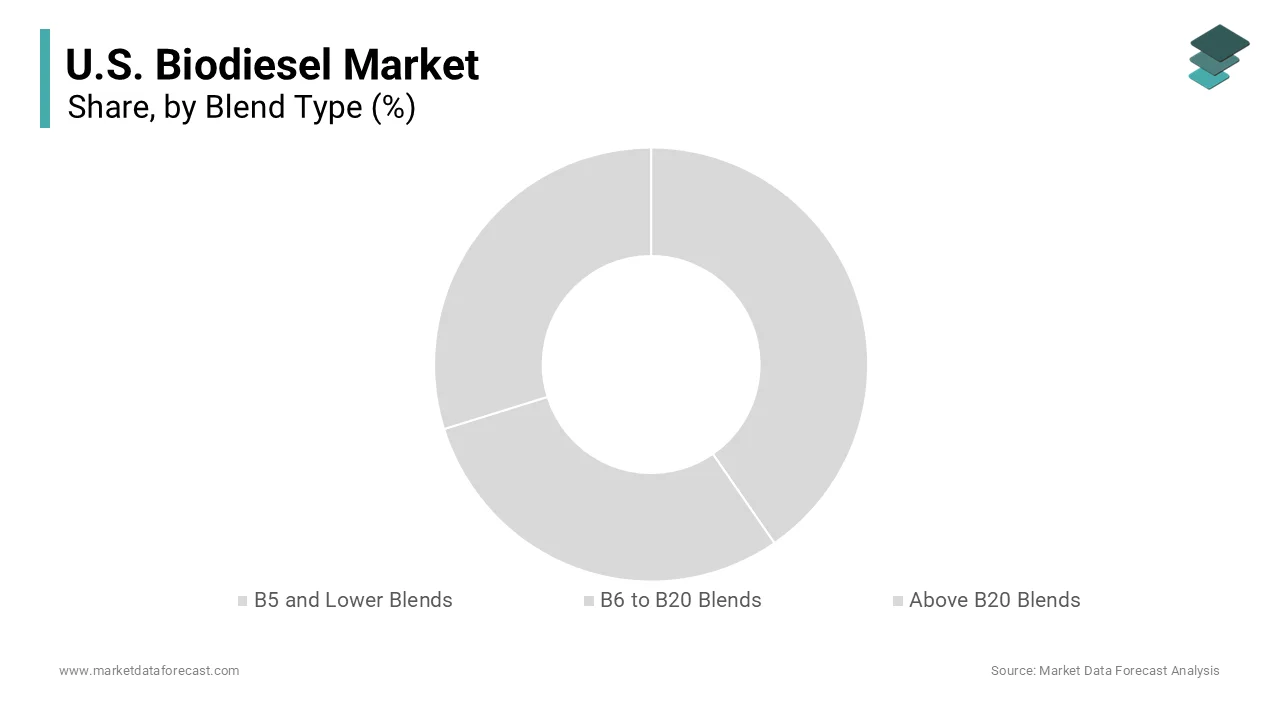
The above B20 blend segment is esteemed to witness register a fastest CAGR of 6.1% during the forecast period with the aggressive decarbonization goals of heavy-duty fleet operators and municipal agencies. These high concentration blends offer maximum greenhouse gas reduction potential making them ideal for organizations committed to achieving net zero emissions in their transportation operations. The several transit agencies have successfully transitioned portions of their fleets to B100 demonstrating the feasibility of high blend usage in controlled environments. The availability of dedicated fueling infrastructure at fleet depots that allows for the safe storage and handling of B100 mitigating the cold flow and material compatibility issues associated with retail distribution. Government grants and funding programs specifically target the adoption of high blend biodiesel in public sector vehicles accelerating market penetration. The superior lubricity and cleaning properties of B100 can lead to reduced maintenance costs over time providing an economic incentive for fleet managers. Advances in engine technology and fuel additives have improved the performance of high blend biodiesel in varying temperatures expanding its geographical applicability. The desire to showcase leadership in sustainability drives many corporations to adopt B100 for their corporate fleets enhancing brand reputation.
By Application Insights
The on-road transportation segment was accounted in holding 43.2% of the US biodiesel market share in 2025 with the stringent federal emission standards and the widespread use of diesel engines in heavy duty trucks and fleet vehicles. The transportation sector is the largest contributor to greenhouse gas emissions in the United States prompting regulatory agencies to mandate the use of renewable fuels to mitigate environmental impact. The Renewable Fuel Standard requires billions of gallons of biomass based diesel to be blended into the transportation fuel supply annually with the majority consumed by on road vehicles. The extensive network of diesel fueling stations, across the country facilitates the widespread distribution of biodiesel blends to commercial trucks delivery vans and public transit buses. Fleet operators are increasingly adopting biodiesel to meet corporate sustainability targets and reduce their carbon footprints while maintaining operational efficiency. The compatibility of biodiesel blends with existing diesel infrastructure allows for seamless integration without significant capital investment. Government incentives such as tax credits for alternative fuel usage further encourage the adoption of biodiesel in the on road sector. The high visibility of on road vehicles makes them a primary target for environmental regulations and public scrutiny driving faster adoption rates.
The off-road transportation segment is likely to witness a fastest CAGR of 6.1% from 2026 to 2034 with the agricultural community's commitment to sustainability and energy independence. Farmers and agricultural operators are increasingly utilizing biodiesel blends to power tractors combines and other machinery aligning with the broader goals of sustainable farming practices. The adoption of renewable fuels in the agricultural sector is supported by various grant programs and incentives that encourage the use of domestically produced biofuels. The proximity of biodiesel production facilities to agricultural regions reduces transportation costs and supports local economies creating a synergistic relationship between farmers and biofuel producers. The use of biodiesel in agricultural equipment helps reduce the carbon footprint of food production enhancing the environmental profile of agricultural products. The robust nature of modern agricultural engines allows for the use of higher biodiesel blends without compromising performance or reliability. The desire to reduce dependence on fossil fuels and stabilize fuel costs drives many agricultural operations to adopt biodiesel as a primary fuel source.
COMPETITIVE LANDSCAPE
The competitive landscape of the United States biodiesel market is characterized by intense rivalry among established agricultural giants independent producers and emerging renewable fuel companies. Major competitors differentiate themselves through feedstock accessibility production efficiency and sustainability credentials rather than price alone due to the commoditized nature of the fuel. The shift toward lower carbon intensity fuels has intensified competition for high quality waste feedstocks and advanced conversion technologies. Firms are increasingly investing in research and development to create innovative production processes that reduce costs and environmental impacts. Regulatory frameworks such as the Renewable Fuel Standard and state level low carbon fuel programs shape competitive dynamics by rewarding producers with superior sustainability profiles. Collaborative efforts between producers and end users are becoming more common to drive innovation and secure long-term contracts. The entry of large energy companies into the renewable diesel segment adds pressure on traditional biodiesel producers to adapt and innovate.
KEY MARKET PLAYERS
Some of the companies that are playing a dominating role in the U.S. biodiesel market are
- Archer Daniels Midland Company
- FutureFuel
- Neste
- Renewable Energy Group, Inc.
- Bunge Global SA
- Wilmar
- Shell
- Others
Top Players in the Market
- Renewable Energy Group Inc operates as a leading provider of renewable fuels and chemicals with a significant footprint in the United States biodiesel sector. The company utilizes a diverse range of feedstocks including soybean oil and recycled cooking grease to produce high quality biodiesel at multiple facilities across the nation. Recent actions include the expansion of its pretreatment capabilities to process lower cost and higher carbon intensity feedstocks which enhances profitability and sustainability metrics. The company focuses on optimizing supply chain logistics to ensure consistent raw material availability and efficient product distribution to customers. Their strategic partnerships with agricultural producers secure long term feedstock contracts that stabilize production inputs. The integration of digital monitoring systems allows for real time process optimization and predictive maintenance. These initiatives strengthen their market position by delivering reliable and low carbon fuel solutions to commercial and industrial clients who prioritize environmental responsibility and operational excellence in their energy sourcing strategies.
- Archer Daniels Midland Company leverages its extensive global agricultural network to serve as a major producer of biodiesel in the United States. The company integrates biodiesel production with its existing oilseed processing operations creating a synergistic model that maximizes value from soybean and canola crops. Recent efforts focus on expanding renewable diesel capacity alongside traditional biodiesel to meet evolving customer demands for drop in fuels. ADM invests heavily in research and development to improve conversion efficiencies and explore novel feedstock sources such as camelina and cover crops. The company actively engages in sustainability programs that track carbon intensity and promote regenerative agriculture practices among suppliers. Strategic collaborations with automotive manufacturers help tailor fuel specifications for modern engine requirements.
- Cargill Incorporated plays a pivotal role in the US biodiesel market through its integrated approach to oilseed processing and renewable fuel production. The company operates several biodiesel facilities that convert vegetable oils and animal fats into clean burning alternative fuels for transportation and industrial use. Recent actions include significant investments in upgrading existing plants to handle a wider variety of feedstocks including waste oils and non-edible oils. Cargill focuses on enhancing the sustainability profile of its products by implementing rigorous traceability systems and reducing greenhouse gas emissions throughout the production lifecycle. The company collaborates with farmers to promote sustainable agricultural practices that improve soil health and crop yields. By expanding its renewable energy portfolio Cargill aims to provide comprehensive low carbon solutions to diverse customer segments. Strategic alliances with logistics providers optimize supply chain efficiency and reduce transportation costs.
Top Strategies Used by Key Market Participants
Key players in the United States biodiesel market primarily employ strategies focused on feedstock diversification and vertical integration to enhance competitiveness and resilience. Companies are increasingly investing in technologies that allow the processing of lower cost and waste based feedstocks such as used cooking oil and animal fats to improve profit margins. Strategic partnerships with agricultural producers ensure stable supply chains for virgin vegetable oils while reducing exposure to commodity price volatility. Expansion into renewable diesel production allows firms to offer drop in fuels that meet stricter regulatory standards and customer preferences for seamless integration. Investment in sustainability certifications and carbon intensity reduction initiatives helps participants maximize value from regulatory credits and incentives. Operational efficiency improvements through automation and digitalization reduce production costs and enhance reliability. Geographic expansion of distribution networks ensures broader market access and customer reach. These strategic moves collectively strengthen market positions by addressing economic environmental and regulatory challenges inherent in the biofuel industry landscape today.
MARKET SEGMENTATION
This research report on the U.S. biodiesel market is segmented and sub-segmented into the following categories.
By Feedstock
- Vegetable Oils
- Soybean Oil
- Corn Oil
- Palm Oil
- Canola Oil
- Waste Oils
- Others
- Animal Fats
- Others
By Blend Type
- B5 and Lower Blends
- B6 to B20 Blends
- Above B20 Blends
By Application
- On-road
- Fleet Vehicles
- Heavy-duty Trucks
- Others
- Off-road
- Agricultural Equipment
- Construction Equipment
- Marine Vessels
- Locomotives
- Others
- Stationary
- Electric Generators
- Furnaces
- Others
By Country
- California
- Washington
- Oregon
- New York
- Rest of the United States