U.S. Black Hair Care Market Size, Share, Trends & Growth Forecast Report By Type (Shampoo, Hair Oil, Conditioner, Others,), Application, Distribution Channel, and Country (California, Washington, Oregon, New York & Rest of the United States) – Industry Analysis and Forecast, 2026 to 2034
U.S. Black Hair Care Market Report Summary
The U.S. black hair care market was valued at USD 1.39 billion in 2025, is estimated to reach USD 1.46 billion in 2026, and is projected to reach USD 2.13 billion by 2034, growing at a CAGR of 4.86% during the forecast period. Market growth is driven by increasing demand for specialized hair care products, rising consumer awareness regarding textured hair health, and growing preference for natural and clean beauty formulations. The market continues to benefit from expanding product innovation, greater representation of diverse beauty needs, and increasing investment in inclusive personal care solutions. The growing popularity of protective hairstyles and natural hair movements is further supporting market expansion across the United States.
Key Market Trends
- Growing demand for products specifically formulated for textured and curly hair is driving market growth.
- Increasing consumer preference for natural, organic, and sulfate free formulations is boosting market expansion.
- Rising awareness regarding hair health, scalp care, and protective styling is supporting industry development.
- Expansion of multicultural beauty product offerings across retail channels is enhancing market accessibility.
- Innovation in ingredient technology and personalized hair care solutions is influencing market advancement.
Segmental Insights
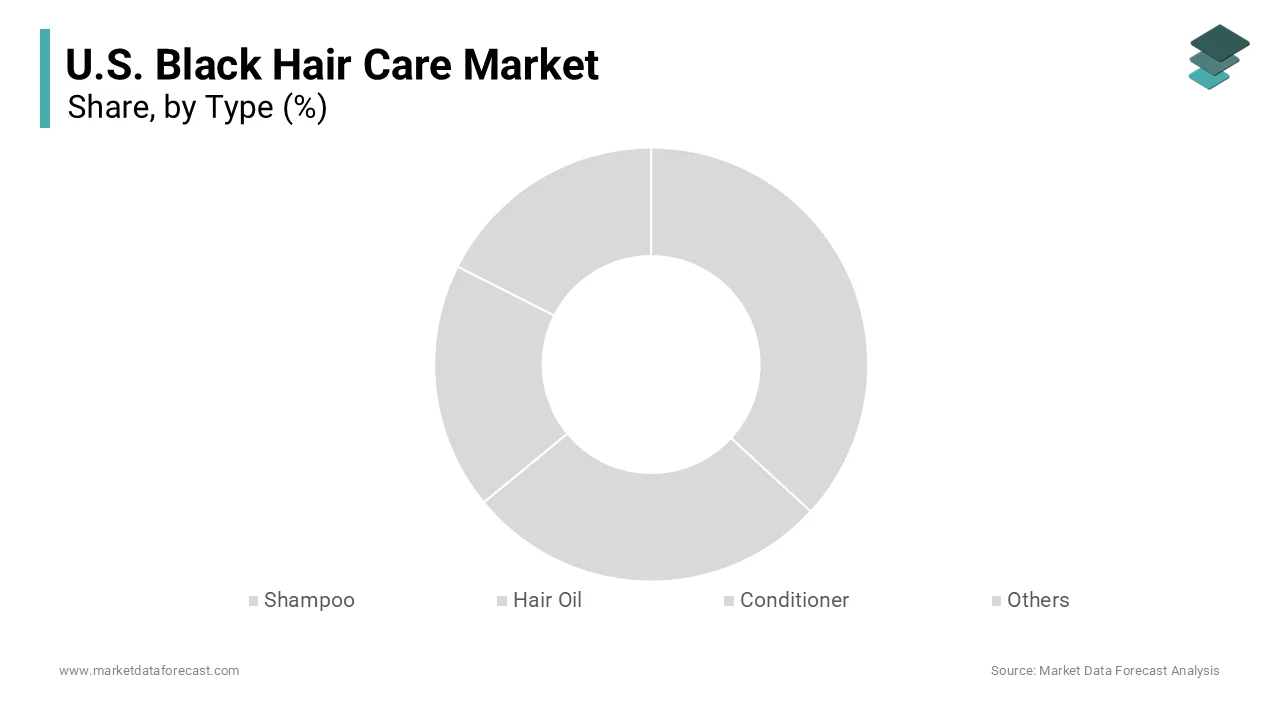
- Based on type, the shampoo segment accounted for the largest share of the U.S. black hair care market in 2025. This dominance is attributed to the essential role of cleansing products in regular hair care routines and the growing demand for moisturizing and scalp nourishing formulations.
- Based on application, the household segment held the leading share of the U.S. black hair care market in 2025, driven by increasing at home hair care practices and rising consumer spending on personal care products.
- Based on distribution channel, the offline segment accounted for the major share of the U.S. black hair care market in 2025, supported by strong product availability through supermarkets, beauty supply stores, pharmacies, and specialty retail outlets.
Regional Insights
The United States maintained a notable share of the global black hair care market in 2025 and is expected to remain a leading center for inclusive beauty innovation and multicultural personal care product development during the forecast period.
Competitive Landscape
The U.S. black hair care market is highly competitive, with companies focusing on natural ingredients, inclusive product development, scalp health solutions, and brand expansion to strengthen their market position. Manufacturers continue to invest in research, product diversification, and targeted marketing strategies to address evolving consumer preferences. Key companies operating in the U.S. black hair care market include Procter & Gamble, Unilever, L'Oréal, Revlon, Inc., Mielle Organics, SheaMoisture, Carol's Daughter, Ouidad, EDEN BodyWorks, Alodia Hair Care, Cantu Beauty, and The Mane Choice.
U.S. Black Hair Care Market Size
The U.S. black hair care market size was valued at USD 1.39 billion in 2025, and is projected to reach USD 2.13 billion by 2034 from USD 1.46 billion in 2026, growing at a CAGR of 4.86%.
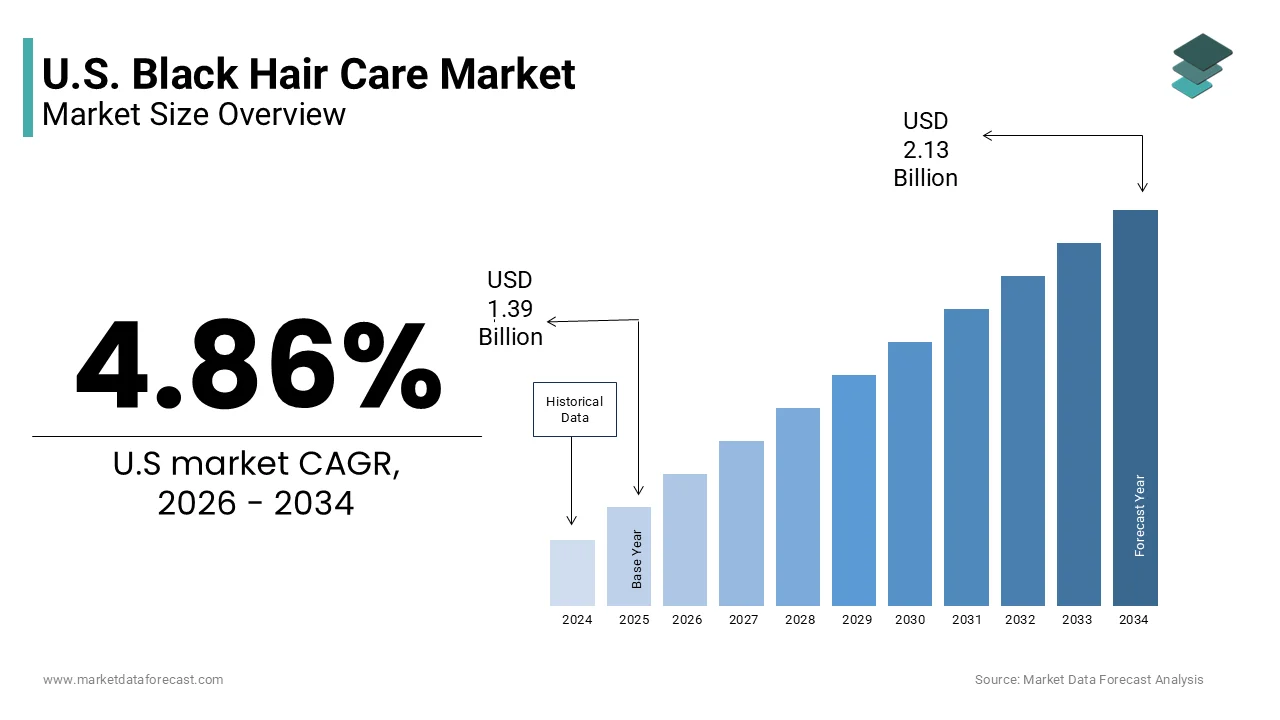
The U.S. Black hair care market is a specialized segment of the personal care industry dedicated to products and services designed for the unique structural properties of Afro textured hair. According to the U.S. Census Bureau, the Black or African American population constitutes approximately 14.4% of the total U.S. population, providing a substantial demographic base for this niche sector. Furthermore, the purchasing power of this demographic is significant, with Nielsen data indicating that Black consumers spend nine times more on hair care than the general population, reflecting deep engagement and loyalty to specific brands. The natural hair movement has further transformed the landscape, encouraging a shift away from chemical relaxers toward products that enhance natural textures. As per the Centers for Disease Control and Prevention, awareness of health risks associated with certain chemical treatments has influenced consumer behavior, leading to increased demand for organic and non-toxic alternatives. Retailers have responded by expanding shelf space for ethnic hair care products in mainstream stores, thereby increasing accessibility. The rise of digital platforms and social media has also empowered consumers to share knowledge and advocate for inclusivity in beauty standards. This convergence of demographic strength, cultural pride, and evolving health consciousness ensures that the Black hair care market remains a dynamic and resilient component of the broader U.S. beauty industry.
MARKET DRIVERS
Cultural Shift toward Natural Hair Acceptance and Identity
The widespread cultural shift toward accepting and celebrating natural hair textures is a primary key for the U.S. black hair care market growth. For decades, many Black individuals relied on chemical relaxers to conform to Eurocentric beauty standards, but recent years have seen a powerful movement embracing natural curls, coils, and kinks. According to a survey by Mintel, approximately 60% of Black women in the U.S. now wear their hair in its natural state, reflecting a significant departure from previous trends. This transition has spurred demand for specialized products, such as leave in conditioners, curl creams, and defining gels, that nurture and style untreated hair. The CROWN Act legislation, which prohibits discrimination based on hair texture and style, has further validated natural hair in professional and educational settings, encouraging more individuals to abandon damaging chemical processes. As per the National Conference of State Legislatures, multiple states have enacted laws protecting individuals from hair discrimination, reinforcing the social acceptance of natural styles. Social media platforms play a crucial role in this driver by providing tutorials and communities that educate consumers on proper natural hair care routines. Influencers and celebrities openly sharing their natural hair journeys have normalized diverse textures and reduced stigma. This cultural empowerment translates directly into increased product consumption, as consumers seek solutions tailored to their specific hair types. Brands that align with this values driven movement gain strong customer loyalty. The emphasis on self-acceptance and authenticity ensures sustained growth for products that support healthy natural hair management.
Increasing Health Consciousness and Demand for Clean Ingredients
Growing health consciousness among consumers has significantly driven the demand for clean and non-toxic ingredients in Black hair care products, which is further boosting the U.S. market expansion. Awareness of the potential health risks associated with traditional hair care chemicals, such as formaldehyde, parabens, and sulfates, has prompted a shift toward safer alternatives. According to the Environmental Working Group, many conventional hair products contain ingredients linked to hormonal disruption and respiratory issues, leading consumers to scrutinize labels more closely. The popularity of the natural hair movement coincides with a broader wellness trend, where individuals prioritize holistic health, including the safety of personal care items. As per the Food and Drug Administration, increased reporting of adverse events related to hair straightening treatments has heightened public scrutiny and regulatory attention on product safety. Consumers are increasingly seeking products labelled as organic, vegan, and free from harmful additives that have forced manufacturers to reformulate existing lines and introduce new clean beauty options. Retailers like Sephora and Ulta have expanded their clean beauty sections to include Black owned brands that prioritize transparency and ingredient integrity. This demand for safety extends to scalp health, with products targeting conditions such as dandruff and inflammation gaining traction. The willingness to pay a premium for certified organic and clinically tested products supports market growth. Manufacturers who invest in research and development for safe, effective formulations capture this discerning segment. This health driven demand ensures that innovation in ingredient sourcing and product safety remains a central focus for industry participants.
MARKET RESTRAINTS
High Cost of Specialized Products and Economic Constraints
The high cost of specialized Black hair care products is primarily hampering the expansion of the U.S. black hair care market. Products formulated for textured hair often require specific ingredients, such as shea butter, coconut oil, and argan oil, which are more expensive to source and process than standard cosmetic ingredients. According to the Bureau of Labor Statistics, the Consumer Price Index for personal care products has risen steadily, outpacing inflation in other categories, placing financial strain on household budgets. Black households on average face economic disparities, with median incomes lower than the national average, which restricts discretionary spending on premium hair care items. As per the Federal Reserve, data indicates that wealth gaps persist, affecting the ability of many Black families to afford high quality maintenance products regularly. This economic reality forces some consumers to opt for cheaper, generic alternatives that may not provide adequate nourishment or performance, leading to dissatisfaction and potential hair damage. The frequency of product usage required for maintaining healthy, textured hair further exacerbates costs, as consumers need to replenish supplies more often than those with straight hair. Additionally, professional salon services for braiding, twisting, and protective styling are labor intensive and costly, creating a barrier for regular maintenance. Economic downturns or inflationary periods disproportionately impact this segment, as hair care is often viewed as a necessity, but budget constraints may lead to reduced purchase frequency or trading down to lower tier brands. This financial pressure limits market expansion among lower income demographics and challenges brands to balance quality with affordability.
Limited Availability in Mainstream Retail Channels
Despite improvements, the limited availability of diverse Black hair care products in mainstream retail channels remains a significant restraint and affecting consumer access and convenience. Many large grocery stores and drugstores historically allocated minimal shelf space to ethnic hair care sections, often stocking only a few legacy brands. According to a study by McKinsey and Company, Black consumers frequently report difficulty finding their preferred hair care products in local stores, forcing them to travel to specialized beauty supply stores or shop online. This lack of immediate access creates inconvenience and additional transportation costs, particularly for individuals living in areas with limited retail diversity. As per the USDA, food desert maps often correlate with areas lacking diverse retail options, including beauty supply stores, disproportionately affecting Black communities. While major retailers have expanded their offerings, gaps remain in terms of brand variety and product depth compared to general hair care aisles. Online shopping offers an alternative, but lacks the tactile experience of testing textures and scents, which is important for hair product selection. Shipping delays and return policies also pose barriers for online shoppers. The inconsistency in stock levels at physical stores leads to frustration and brand switching when preferred items are unavailable. This distribution inefficiency hinders market growth by preventing spontaneous purchases and limiting exposure to new, emerging brands. Until mainstream retail fully integrates comprehensive ethnic hair care assortments, accessibility will remain a challenge for many consumers.
MARKET OPPORTUNITIES
Expansion of E-Commerce and Direct-to-Consumer Models
The expansion of e commerce and direct to consumer DTC models presents a significant opportunity for the U.S. black hair care market. Digital platforms allow niche and indie brands to bypass traditional retail gatekeepers and connect directly with consumers seeking specific solutions for textured hair. According to the U.S. Census Bureau, e commerce sales continue to grow, accounting for an increasing share of total retail sales, providing a robust channel for beauty products. DTC brands leverage social media marketing, influencer partnerships, and content creation to educate consumers and foster community engagement. Personalization algorithms enable companies to recommend products based on hair type and concerns, enhancing customer satisfaction and loyalty. The ability to gather direct feedback allows brands to innovate rapidly and respond to trending needs. Emerging Black owned brands have successfully utilized crowdfunding and social media launches to gain visibility and funding without traditional venture capital. This digital democratization lowers entry barriers for entrepreneurs and diversifies the market landscape. Global shipping capabilities also allow U.S. brands to tap into international markets with similar hair care needs. By prioritizing digital presence and customer experience, brands can overcome physical retail limitations and capture value conscious and tech savvy consumers.
Innovation in Scalp Health and Wellness Integration
Innovation in scalp health and wellness integration offers a lucrative opportunity for growth within the U.S. Black hair care market, as consumers increasingly view scalp care as essential to overall hair health. The scalp is the foundation for hair growth, yet it has been historically overlooked in favor of styling products. According to the American Academy of Dermatology, scalp conditions such as seborrheic dermatitis and psoriasis are common among Black individuals due to styling practices and product build up, creating demand for targeted treatments. Brands are developing specialized serums, exfoliants, and masks infused with ingredients like salicylic acid, tea tree oil, and niacinamide to address these issues. The intersection of beauty and wellness encourages holistic approaches, where hair care routines incorporate stress relief and self-care elements. For instance, the global scalp care market is expanding rapidly, driven by awareness of the link between scalp health and hair quality. Professional treatments, such as scalp facials and detoxifying therapies, are gaining popularity in salons, offering high margin service opportunities. At home devices, such as scalp massagers and LED light therapy tools, complement topical products, enhancing efficacy. Educational campaigns by dermatologists and trichologists raise awareness about the importance of maintaining a healthy scalp microbiome. This focus on medical grade efficacy and preventive care appeals to health conscious consumers willing to invest in premium solutions. By positioning scalp care as a critical component of hair wellness, brands can differentiate themselves and expand their product portfolios beyond traditional styling items.
MARKET CHALLENGES
Regulatory Scrutiny and Safety Concerns Regarding Chemical Ingredients
Regulatory scrutiny and safety concerns regarding chemical ingredients pose a major challenge to the expansion of the U.S. black hair care market, particularly concerning hair relaxers and straightening treatments. Recent scientific studies and legal actions have highlighted potential links between certain hair care chemicals and serious health issues, including cancer and reproductive problems. According to the National Institutes of Health, research has indicated that frequent use of hair straightening products may be associated with more than twice the risk of developing uterine cancer, prompting widespread media attention and consumer alarm. The Food and Drug Administration has proposed bans on certain ingredients, such as formaldehyde, in professional smoothing treatments, reflecting increased regulatory pressure. These developments create uncertainty for manufacturers, who must reformulate products or face potential litigation and reputational damage. Consumer trust is eroded as individuals question the safety of long used products, leading to declines in sales for traditional relaxer brands. Legal settlements and class action lawsuits impose financial burdens on companies, diverting resources from innovation and marketing. The lack of clear, uniform regulations across states complicates compliance efforts for national brands. Manufacturers must invest heavily in clinical testing and transparent labeling to reassure consumers, but this increases operational costs. The shift away from chemical straighteners requires rapid adaptation to new market preferences for natural alternatives, which may not be immediately profitable. This regulatory and legal landscape creates a volatile environment, where brands must navigate complex safety standards while maintaining consumer confidence and market relevance.
Counterfeit Products and Brand Integrity Issues
The prevalence of counterfeit products and brand integrity issues presents a significant challenge to legitimate players in the U.S. Black hair care market, undermining consumer trust and revenue. Popular brands are frequently targeted by counterfeiters, who produce inferior imitations sold through unauthorized online marketplaces and unofficial retailers. According to the International Trademark Association, counterfeit goods result in billions of dollars in losses annually across various industries, including beauty and personal care. These fake products often contain harmful substances or fail to deliver promised benefits, posing health risks to consumers and damaging the reputation of authentic brands. As per the U.S. Patent and Trademark Office, enforcement against counterfeiters is difficult due to the vastness of e commerce platforms and cross border trade complexities. Consumers may unknowingly purchase counterfeit items due to deceptive packaging and lower prices, leading to negative experiences that they attribute to the original brand. This erosion of trust makes it challenging for companies to maintain loyal customer bases and justify premium pricing. Authentic brands must invest in anti-counterfeit technologies, such as holographic seals and verification codes, which add to production costs. Monitoring and taking down illegal listings require dedicated legal and technical resources, straining smaller businesses. The ubiquity of third party sellers on major platforms complicates oversight, allowing counterfeiters to operate with relative impunity. Protecting brand integrity becomes an ongoing battle that diverts focus from product development and marketing. Ensuring product authenticity is crucial for maintaining safety standards and consumer confidence in a market where trust is paramount.
REPORT COVERAGE
| REPORT METRIC | DETAILS |
| Market Size Available | 2025 to 2034 |
| Base Year | 2025 |
| Forecast Period | 2026 to 2034 |
| CAGR | 4.86% |
| Segments Covered | By Type, Application, Distribution Channel, and Region. |
| Various Analyses Covered | Global, Regional and Country-Level Analysis, Segment-Level Analysis, Drivers, Restraints, Opportunities, Challenges; PESTLE Analysis; Porter’s Five Forces Analysis, Competitive Landscape, Analyst Overview of Investment Opportunities |
| Countries Covered | California, Washington, Oregon, New York, United States |
| Market Leaders Profiled | Key players in the U.S. black hair care market include Procter & Gamble, Unilever, L'Oréal, Revlon, Inc., Mielle Organics, SheaMoisture, Carol's Daughter, Ouidad, EDEN BodyWorks, Alodia Hair Care, Cantu Beauty, and The Mane Choice |
SEGMENTAL ANALYSIS
By Type Insights
The shampoo segment dominated the market by capturing the highest share of the U.S. market in 2025. The dominance of shampoo segment in the U.S. market can be credited to the fundamental necessity of cleansing and the high frequency of purchase associated with hair washing routines. Cleansing is the foundational step in any hair care regimen, making shampoo a non-negotiable staple for consumers, regardless of their specific styling preferences or hair texture variations. According to Nielsen data, Black households spend significantly more on hair care products than the general population, with shampoos accounting for a substantial portion of this expenditure due to regular usage cycles. The diversity of shampoo formulations catering to specific needs, such as moisture retention, clarifying, sulfate free options, and scalp health, further broadens the consumer base. As per the American Academy of Dermatology, proper cleansing is essential for removing product buildup and maintaining a healthy scalp environment, which is critical for individuals who frequently use heavy styling products like butters and oils. This medical endorsement reinforces the importance of specialized shampoos that effectively clean without stripping natural oils. The rise of the natural hair movement has also increased demand for gentle, hydrating shampoos that support curl definition and elasticity. Manufacturers continuously innovate by incorporating natural ingredients, such as aloe vera and coconut oil, which appeal to health conscious consumers. The universal applicability of shampoo across all age groups and gender demographics ensures consistent volume sales. Furthermore, the integration of shampoo into daily or weekly self-care rituals drives repeat purchases. Retailers prioritize shelf space for diverse shampoo brands, recognizing their role as entry point products for brand loyalty. This combination of essential utility, frequent re-purchase and formulation variety solidifies shampoo as the leading segment in the market.
On the other side, the hair oil segment is projected to register the highest CAGR in the U.S. Black hair care market during the forecast period owing to its versatility, multifunctionality, and alignment with natural hair care trends. Hair oils serve multiple purposes, including pre shampoo treatments, leave in conditioners, sealants, and scalp massages, which is making them indispensable for maintaining moisture and preventing breakage in textured hair. For instance, the global hair oil market is expanding rapidly, with significant contributions from the North American region, driven by increasing awareness of natural ingredients. Consumers are increasingly seeking pure and cold pressed oils, such as argan, jojoba, and castor oil, which are perceived as safer as and more effective than synthetic alternatives. As per Mintel, reports indicate a growing preference for multi-purpose beauty products that simplify routines while delivering visible results, which hair oils effectively provide. The influence of social media tutorials demonstrating the benefits of oil sealing and hot oil treatments has educated consumers on proper usage techniques, driving adoption. Additionally, the rise of scalp care as a priority has boosted sales of therapeutic oils infused with tea tree or peppermint for soothing irritation. Brands are launching premium blends that combine traditional oils with modern actives, appealing to luxury seekers. The portability and ease of application make hair oils attractive for on the go maintenance.
By Application Insights
The household segment led the market with the leading share of the U.S. black hair care market in 2025. The growth of the household segment in the U.S. market is majorly driven by the strong cultural tradition of at home hair maintenance and the economic advantages of self-care. Black consumers have a long history of performing hair care routines within the home environment, ranging from weekly wash days to intricate protective styling, such as braids and twists. According to the Bureau of Labor Statistics, American households allocate a consistent portion of their personal care budget to at home products, reflecting the preference for DIY solutions over expensive salon visits. The high cost of professional services, which can range from 100 to 300 dollars for complex styles, encourages individuals to invest in quality products for home use. As per Nielsen, Black women are among the most loyal consumers of hair care brands, often developing extensive at home regimens that require a wide array of products, including deep conditioners, stylers, and tools. The availability of online tutorials and digital communities has empowered consumers with the skills needed to achieve salon quality results at home. This democratization of knowledge reduces reliance on professionals for routine maintenance. Furthermore, the convenience of managing hair care on ones own schedule fits better with busy lifestyles. The pandemic accelerated this trend, as salon closures forced many to adopt home care practices, which have persisted due to habit and cost savings. Household application also allows for greater customization of products and techniques to suit individual hair needs. This deep rooted practice of self-maintenance ensures that the household segment remains the primary driver of product sales in the market.
On the other side, the commercial use segment is experiencing the fastest growth in the U.S. Black hair care market due to the professionalization of natural hair care and the expansion of specialized salon services. As more consumers embrace natural textures, they seek expert assistance for complex procedures, such as silk presses, color treatments, and protective installations that require professional skill. According to the Professional Beauty Association, the number of licensed cosmetologists specializing in textured hair is increasing, as salons adapt to meet the demands of the natural hair movement. Salons are investing in high performance, professional grade products that offer superior results and durability compared to retail options. For instance, the hair and nail salon industry in the U.S. has seen steady revenue growth, with specialized ethnic hair salons capturing a significant share of this expansion. Professional stylists act as key influencers, recommending specific brands and treatments to clients, thereby driving commercial sales. The rise of men’s grooming bars and barbershop offering specialized beard and hair care services for Black men also contributes to this growth. These establishments utilize premium products for services, such as line ups and scalp treatments. Additionally, corporate partnerships between brands and salon chains facilitate bulk purchasing and exclusive product launches. The trust consumers place in professional recommendations ensures high conversion rates for commercial products. As the complexity of hair care routines increases, the demand for professional expertise and corresponding commercial products continues to rise rapidly.
By Distribution Channel Insights
The offline segment accounted for the major share of the U.S. black hair care market in 2025. The growth of the offline segment in the U.S. market is driven by the tactile nature of product selection and the immediate availability offered by physical stores. Consumers prefer to examine product textures, scents, and packaging before purchasing, particularly for items like creams, butters, and gels where consistency is crucial. According to the U.S. Census Bureau, brick and mortar retail stores, including beauty supply shops, drugstores, and supermarkets, continue to account for the majority of personal care product sales. Specialty beauty supply stores are cultural hubs within Black communities, offering extensive varieties of ethnic hair care brands and expert advice from staff. As per McKinsey and Company, Black consumers often rely on in store experiences to discover new products and receive recommendations from peers and employees, which enhances trust and loyalty. The immediate gratification of purchasing products without waiting for shipping is another significant advantage, particularly for urgent needs. Major retailers like Walmart and Target have expanded their ethnic hair care aisles, making products more accessible in suburban and rural areas. Promotional displays and in store demonstrations further drive impulse purchases and brand trial. The social aspect of shopping for hair care products allows for community interaction and shared knowledge. While e commerce is growing, the sensory experience and instant access provided by offline channels remain irreplaceable for many consumers. This enduring preference for physical retail ensures that offline channels maintain their dominance in distributing Black hair care products across the U.S.
On the other end, the online segment is predicted to register a healthy CAGR in the U.S. market during the forecast period owing to the expansion of e-commerce platforms, direct to consumer brands, and the convenience of home delivery. Digital channels offer unparalleled access to a vast array of niche and indie brands that may not be available in local physical stores. As per the U.S. Census Bureau, e commerce penetration has increased significantly, with consumers becoming more comfortable purchasing high involvement products online. Subscription models and auto replenishment options provide convenience for staple items, ensuring consistent revenue for brands. Online reviews and user generated content help consumers make informed decisions, reducing the risk of trying new products. The ability to compare prices and read detailed ingredient lists appeals to health conscious shoppers. Mobile commerce has further simplified the purchasing process, allowing for seamless transactions on smartphones. During the pandemic, online shopping became a necessity, and many consumers retained this habit due to its efficiency. The global reach of online platforms also allows U.S. brands to export products to international markets. This digital transformation enables faster innovation cycles and direct customer engagement, driving the rapid expansion of the online channel.
COUNTRY LEVEL ANALYSIS
The U.S. had a notable share of the global market in 2025 and is anticipated to experience robust performance and maintain its status as the world's most prominent hub for inclusive personal care development over the next few years. According to the U.S. Census Bureau, the Black or African American population exceeds 47 million individuals, representing a significant demographic with distinct beauty needs and preferences. This large base provides a stable foundation for market growth and diversification. The purchasing power of Black consumers is substantial, with Nielsen reporting that they spend nine times more on hair care than the general population, highlighting their economic impact on the industry. The U.S. market is also a hub for entrepreneurship, with a rising number of Black owned brands gaining national recognition and retail placement. Cultural movements, such as the natural hair revolution and the CROWN Act, have originated in the US, influencing global perceptions and regulations regarding textured hair. As per the National Conference of State Legislatures, legislative efforts to protect hair rights have created a supportive environment for natural hair acceptance. The presence of major retail chains and advanced e commerce infrastructure ensures widespread product accessibility. Media representation and celebrity influence further amplify demand for diverse and inclusive product offerings. The U.S. serves as a testing ground for new ingredients and technologies before they are exported internationally. This combination of demographic scale, economic strength, cultural leadership, and regulatory progress ensures that the U.S. remains the dominant force in the global Black hair care market.
COMPETITIVE LANDSCAPE
The competition in the U.S. Black hair care market is intense and characterized by a mix of established multinational corporations and agile independent Black owned brands. Major players compete on the basis of product efficacy brand authenticity and cultural relevance while striving to meet the diverse needs of textured hair consumers. The market sees continuous innovation in natural and organic formulations as consumers increasingly prioritize health and safety. Price competition is significant in the mass market segment where affordability drives purchase decisions for many households. Conversely premium segments compete on luxury ingredients personalized experiences and sustainable practices. Retailers play a pivotal role by curating assortments that reflect current trends and consumer demands. Digital platforms have lowered barriers to entry allowing niche brands to gain visibility through targeted social media campaigns. Community engagement and representation are critical differentiators as consumers prefer brands that align with their values and identity. Supply chain efficiency and ingredient sourcing transparency also influence competitive advantages. The rise of the natural hair movement has shifted power dynamics enabling smaller brands to challenge incumbents. Collaborations with influencers and stylists amplify brand messages and drive adoption. This dynamic environment fosters constant improvement in product quality and customer experience ensuring that the market remains vibrant and responsive to cultural shifts.
KEY MARKET PLAYERS
Some of the companies that are playing a dominating role in the U.S. black hair care market are
- Procter & Gamble
- Unilever
- L'Oréal
- Revlon, Inc.
- Mielle Organics
- SheaMoisture
- Carol's Daughter
- Ouidad
- EDEN BodyWorks
- Alodia Hair Care
- Cantu Beauty
- The Mane Choice
Top Players in the Market
- L Oreal USA maintains a significant presence in the Black hair care market through its diverse portfolio including brands like Dark and Lovely and Garnier. The company focuses on innovation by developing products that cater to various textures and styling needs while prioritizing ingredient safety. Recent actions include expanding its inclusive beauty initiatives and launching new lines specifically formulated for natural hair health. L Oreal invests heavily in research to understand the unique structural properties of Afro textured hair ensuring effective moisture retention and damage prevention. The company actively collaborates with professional stylists and influencers to promote brand authenticity and trust. By leveraging its global supply chain and marketing resources L Oreal ensures widespread distribution across mass retail and professional channels. Their commitment to sustainability and community engagement further strengthens their reputation among conscious consumers. This strategic focus on inclusivity and scientific advancement allows L Oreal to remain a key competitor in the evolving landscape of ethnic hair care solutions in the U.S..
- Carol s Daughter is a prominent player in the U.S. Black hair care market known for its natural ingredient focused formulations and strong cultural resonance. Originally founded as a direct to consumer brand it now operates under the Albea Beauties Together umbrella while maintaining its distinct identity. The company specializes in products for natural hair textured hair and skin care using botanicals such as shea butter and coconut oil. Recent actions include expanding retail partnerships with major retailers like Target and Ulta to increase accessibility. Carol s Daughter actively engages with its community through digital platforms offering educational content on natural hair care routines. The brand emphasizes transparency in sourcing and formulation appealing to health conscious consumers. By celebrating natural beauty and diversity Carol s Daughter fosters deep loyalty among its customer base. Their continuous product innovation and commitment to empowering Black women through beauty reinforce their position as a leading choice for those seeking clean and effective hair care solutions in the U.S..
- Cantu Beauty has established itself as a leading affordable brand in the U.S. Black hair care market by focusing on natural ingredients and accessibility. The brand offers a wide range of products for washing conditioning and styling textured hair without harsh chemicals such as sulfates or parabens. Cantu recently strengthened its market position by expanding its product line to include specialized collections for men and children. The company leverages social media influencers and community events to build brand awareness and connect with younger demographics. Cantu products are widely available in mass market retailers drugstores and beauty supply stores ensuring broad reach. The brand emphasizes value for money making quality hair care accessible to a wider audience. By consistently delivering reliable performance at competitive prices Cantu has gained significant traction among budget conscious consumers. Their focus on natural hair empowerment and inclusive marketing campaigns resonates strongly with the target demographic. This combination of affordability availability and community engagement solidifies Cantu s role as a major contributor to the growth of the Black hair care sector in the U.S.
Top Strategies Used by Key Market Participants
Key players in the U.S. Black hair care market primarily employ product innovation strategies focusing on natural and clean ingredients to meet evolving consumer preferences for safety and efficacy. Brands emphasize inclusivity by developing formulations for diverse hair textures and types ensuring broad appeal. Strategic partnerships with influencers and professional stylists help build trust and authenticity within the community. Companies expand distribution channels by increasing presence in both mass retail and specialty beauty supply stores. Digital marketing and social media engagement are crucial for educating consumers and fostering brand loyalty. Direct to consumer models allow brands to gather feedback and offer personalized experiences. Mergers and acquisitions enable larger corporations to integrate niche brands and diversify portfolios. Sustainability initiatives such as eco friendly packaging and ethical sourcing attract environmentally conscious buyers. Educational content creation empowers consumers to manage their hair health effectively. These multifaceted strategies enable participants to navigate cultural nuances and maintain competitiveness in a dynamic and values driven market landscape.
MARKET SEGMENTATION
This research report on the U.S. black hair care market is segmented and sub-segmented into the following categories.
By Type
- Shampoo
- Hair Oil
- Conditioner
- Others
By Application
- Household
- Commercial Use
By Distribution Channel
- Hypermarket/Supermarket
- Online Platforms
- Retail Stores
By Country
- California
- Washington
- Oregon
- New York
- Rest of the United States
Frequently Asked Questions
1. What is the U.S. black hair care market?
The U.S. black hair care market includes products specifically designed to meet the needs of textured, curly, coily, and kinky hair types.
2. What is driving the growth of the U.S. black hair care market?
Market growth is driven by increasing consumer awareness of natural hair care, rising demand for specialized products, and growing representation of diverse beauty standards.
3. What types of products are included in the black hair care market?
The market includes shampoos, conditioners, hair oils, styling creams, hair masks, relaxers, hair color products, and scalp care treatments.
4. Why is the natural hair movement important to the market?
The natural hair movement has encouraged consumers to embrace their natural hair textures, increasing demand for products formulated for textured hair.
5. Which product segment holds a significant market share?
Shampoos, conditioners, and moisturizing products account for a substantial share due to their essential role in maintaining healthy hair.
6. How does product innovation influence the black hair care market?
Manufacturers are introducing products with natural ingredients, clean formulations, and advanced moisture retention technologies to meet evolving consumer preferences.
7. What role do natural and organic ingredients play in the market?
Consumers increasingly prefer products containing ingredients such as shea butter, coconut oil, argan oil, aloe vera, and other naturally derived components.
8. Which distribution channels are important in the black hair care market?
Supermarkets, beauty supply stores, specialty retailers, pharmacies, and online platforms are key distribution channels.
9. How is e commerce impacting the U.S. black hair care market?
Online platforms provide access to a wider range of brands, personalized recommendations, product reviews, and convenient purchasing options.
10. What trends are shaping the U.S. black hair care market?
Key trends include clean beauty products, natural hair care solutions, scalp health treatments, personalized formulations, and increased digital engagement.
Related Reports
Access the study in MULTIPLE FORMATS
Purchase options starting from
$ 1200
Didn’t find what you’re looking for?
TALK TO OUR ANALYST TEAM
Need something within your budget?
NO WORRIES! WE GOT YOU COVERED!
Call us on: +1 888 702 9696 (U.S Toll Free)
Write to us: sales@marketdataforecast.com