- Product Description Description
- Table of Contents TOC
- List of Table & Figure LOT
- Get Free Sample PDF Sample PDF
Market Size, 2025
$96.68 BnMarket Estimate, 2026
$101.86 BnMarket Forecast, 2034
$154.65 BnCAGR, 2026–2034
5.36%U.S Childrenswear Market Size
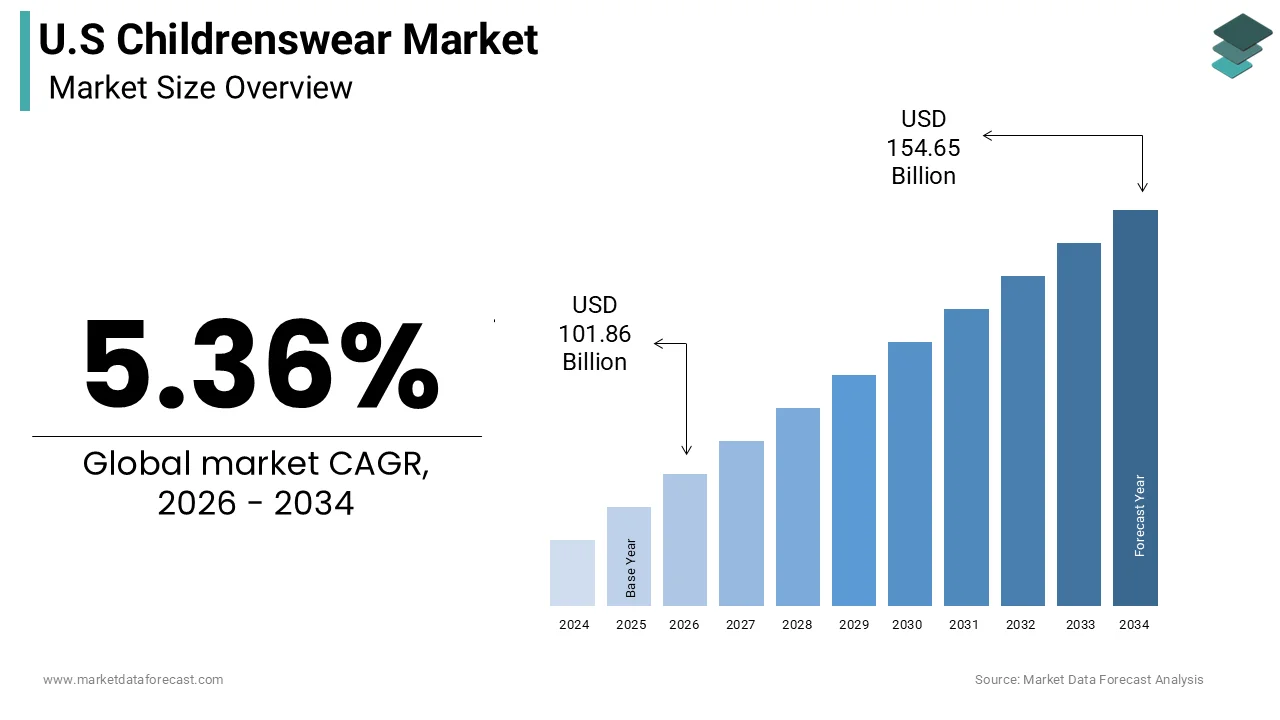
The U.S Childrenswear market size was calculated to be USD 96.68 billion in 2025 and is anticipated to be worth USD 154.65 billion by 2034, from USD 101.86 billion in 2026, growing at a CAGR of 5.36% during the forecast period.
The childrenswear is designed for infants, toddlers, and adolescents ranging from newborns to age 14. The definition extends beyond basic clothing to include functional attributes, such as durability, ease of care, and safety compliance, which are paramount for parents. Furthermore, data from the Bureau of Labor Statistics indicates that families with children spend an average of 1200 dollars annually on apparel, highlighting the economic significance of this demographic. The rise of dual-income households has also influenced purchasing behaviors with parents prioritizing convenience and quality over price alone. The safety standards for children’s clothing, including flammability and choke hazard regulations, are strictly enforced, ensuring that manufacturers adhere to rigorous quality controls. These regulatory frameworks shape the market landscape by limiting the entry of non-compliant products and fostering trust among consumers.
MARKET DRIVERS
Rising Disposable Income And Premiumization Trends
The increasing disposable income among American households is driving the growth of the United States childrenswear market. Parents are increasingly willing to invest in higher-quality, durable, and branded clothing for their children, viewing these purchases as long-term investments rather than temporary necessities. This financial capacity allows families to prioritize brands that offer superior fabric quality, ethical sourcing, and innovative designs. Data from the National Retail Federation shows that spending on children’s apparel outpaces overall apparel growth as parents seek to balance practicality with style. The trend toward premiumization is further driven by the desire for social status and identity expression through branded clothing. Millennials and Generation Z parents, who constitute a significant portion of the market, are particularly inclined toward sustainable and ethically produced items even if they command higher prices. This shift in consumer values encourages manufacturers to elevate their product offerings and marketing strategies. The willingness to spend on special occasion wear and coordinated family outfits also contributes to revenue growth.
Influence Of Social Media And Celebrity Endorsements
The profound impact of social media and celebrity endorsements is additionally leveraging the growth of the United States childrenswear market. Platforms such as Instagram, TikTok, and Pinterest serve as powerful channels for discovering trends, influencing purchasing decisions, and building brand loyalty. According to Statista, over 70% of parents use social media to find inspiration for children’s fashion, creating a direct link between digital content and sales. The viral nature of trends, such as mini-me outfits or themed costumes, drives immediate spikes in demand for specific items. Celebrity collaborations with major retailers also amplify brand visibility and credibility, attracting fans who aspire to emulate their idols. The limited edition collections launched by celebrities often sell out within hours, demonstrating the power of star power in driving sales. The visual appeal of children’s clothing makes it ideal for social sharing, fostering a community of engaged consumers who value aesthetics and novelty. Brands leverage user-generated content to build authenticity and trust, encouraging customers to share their own styling ideas.
MARKET RESTRAINTS
Volatility In Raw Material Costs And Supply Chain Disruptions
The fluctuations in the cost of raw materials, such as cotton, polyester, and synthetic fibers, are impeding the growth of the United States childrenswear market. These inputs are subject to global commodity price swings influenced by geopolitical tensions, climate change, and trade policies. Since children’s clothing requires precise blends of soft and durable fibers, any disruption in supply can halt production lines. The reliance on overseas manufacturing, particularly in Asia, exacerbates this issue as logistical bottlenecks delay shipments. These delays force brands to hold higher inventory levels, tying up capital and increasing storage costs. Small and medium-sized enterprises are disproportionately affected as they lack the bargaining power to secure favorable contracts or absorb sudden price hikes. The inability to pass these costs fully onto price-sensitive consumers further squeezes profitability. Additionally, environmental regulations in sourcing countries are tightening, requiring costly compliance measures. For instance, new laws in major producing nations mandate stricter waste management and labor standards, adding to operational expenses.
Rapid Growth Cycles And Product Obsolescence
The rapid growth cycle of children, which leads to frequent product obsolescence and short usage periods, is also hindering the growth of the United States childrenswear market. Unlike adult clothing, children outgrow their garments quickly, often within a single season, rendering them unusable. According to the Centers for Disease Control and Prevention, children grow an average of 2 to 3 inches per year during early childhood, necessitating regular wardrobe updates. This rapid turnover creates a challenge for parents, who must constantly replace items, leading to potential fatigue and budget strain. The short lifespan of clothing items also contributes to environmental waste, as discarded garments often end up in landfills. Brands face the difficulty of balancing inventory levels to meet demand without overproducing items that may become obsolete before sale. This inefficiency increases operational costs and reduces profit margins. Furthermore, the fast fashion model, which encourages frequent purchases, exacerbates the problem by promoting a disposable clothing culture. Consumers are becoming increasingly aware of these issues, leading to hesitation in purchasing large quantities.
MARKET OPPORTUNITIES
Expansion Of Sustainable and Eco-Friendly Lines
The growing consumer preference for sustainable and eco-friendly clothing is set to create new opportunities for the growth of the United States childrenswear market. Parents are increasingly seeking products that align with their environmental values, creating demand for organic cotton, recycled polyester, and biodegradable fabrics. Brands can differentiate themselves by obtaining certifications such as GOTS or OEKOTEX, which verify safety and eco-friendliness. The demand for transparent supply chains is rising, with consumers wanting to know the origin of their clothing. Manufacturers have the opportunity to launch dedicated green lines that appeal to environmentally conscious families. The introduction of take-back programs, where old clothes are recycled into new items, further enhances brand loyalty. This strategic focus on sustainability not only mitigates environmental impact but also attracts a niche but growing segment of premium customers.
Growth Of Online Resale And Rental Platforms
The emergence of online resale and rental platforms is addressing cost concerns and sustainability goals, which additionally promotes new opportunities for the growth of the United States childrenswear market. Rental services for special occasion wear, such as party dresses and suits, allow parents to access premium styles without the commitment of ownership. These platforms extend the lifecycle of garments, reducing waste and promoting circular consumption. Brands can partner with resale sites to offer certified pre-owned collections, ensuring quality and authenticity. As per a study, 50% of millennial parents prefer buying used clothing for their children due to economic and environmental reasons. The convenience of online platforms with easy return policies and detailed sizing guides further encourages adoption. This strategy diversifies revenue sources and enhances customer loyalty by providing flexible and affordable solutions.
MARKET CHALLENGES
Stringent Safety Regulations And Compliance Costs
The increasing scrutiny regarding safety standards and regulatory compliance is quite a challenge for the growth of the United States childrenswear market. Governments enforce strict rules on flammability, chemical usage, and small parts to protect children from hazards. Compliance with these regulations requires rigorous testing and documentation, increasing production costs and lead times. The complexity of varying state and federal laws creates logistical challenges for national distribution. For instance, California’s Proposition 65 requires specific warnings for chemicals known to cause cancer or reproductive harm, adding to labeling requirements. The need for constant monitoring of supply chains to ensure adherence to safety standards further strains resources. Manufacturers must invest in quality control systems and staff training to mitigate risks. This regulatory burden disproportionately affects smaller players, who lack the infrastructure for comprehensive compliance.
Counterfeit Products And Intellectual Property Theft
The brand integrity and consumer safety are other significant challenges for the growth of the United States market. Illicit manufacturers replicate popular designs and logos, selling them through unauthorized online platforms at discounted prices. These fake products often use substandard materials that lack the durability and safety of genuine items, leading to customer dissatisfaction. More critically, they may contain harmful chemicals or allergens that pose health risks to children. The Food and Drug Administration has issued warnings about hazardous substances found in counterfeit textiles, including formaldehyde and azo dyes. Authentic brands suffer reputational damage when consumers mistakenly attribute poor quality to their genuine products. Combating this issue requires significant investment in legal action and authentication technologies such as holograms and blockchain tracking. However, these measures add to operational costs and may not fully prevent fraud. The anonymity of digital marketplaces makes it difficult to trace and shut down counterfeit operations effectively. Small brands are particularly vulnerable, as they lack the resources to monitor and protect their intellectual property globally.
REPORT COVERAGE
| REPORT METRIC | DETAILS |
| Market Size Available | 2025 to 2034 |
| Base Year | 2025 |
| Forecast Period | 2026 to 2034 |
| CAGR | 5.36% |
| Segments Covered | By Product Type, Age Group, Distribution Channel, And Region |
| Various Analyses Covered | Global, Regional & Country Level Analysis; Segment-Level Analysis; DROC, PESTLE Analysis; Porter’s Five Forces Analysis; Competitive Landscape; Analyst Overview of Investment Opportunities |
| Regions Covered | New York, Massachusetts, Pennsylvania, Illinois, Ohio, Michigan, Texas, Florida, Georgia, California, Washington, Colorado. |
| Market Leaders Profiled | The Children's Place, Carter's, Gap Inc., Nike, Inc., Adidas, H&M, Zara, Levi Strauss & Co., Ralph Lauren Corporation, Under Armour, OshKosh B'gosh, Old Navy |
SEGMENTAL ANALYSIS
By Product Type Insights
The apparel segment was the largest by holding 31.2% of the United States childrenswear market share in 2025 due to its fundamental necessity and the high frequency of replacement required by growing children. Unlike footwear or accessories, which may last longer, clothing items are subject to daily wear and tear and quickly become too small. According to the Centers for Disease Control and Prevention, children grow an average of 2 to 3 inches per year during their early years, requiring parents to purchase new sizes frequently. This biological reality creates a consistent and recurring demand for apparel across all age groups. The need for seasonal variations, including winter coats and summer shorts, further amplifies purchase volume. Additionally, the diversity of occasions, such as school parties, holidays, and sports events, drives the need for specialized apparel items. Parents view apparel as a non-negotiable expense, prioritizing it over other discretionary spending.
The footwear segment is deemed to grow at an anticipated CAGR of 6.5% from 2026 to 2034 with the increasing participation of children in sports and outdoor activities, which drives demand for specialized athletic shoes. Parents are increasingly encouraging active lifestyles to combat sedentary behaviors and promote health. Running, soccer, basketball, and hiking all necessitate durable and supportive shoes that protect developing feet. The medical endorsement drives parents to invest in high-quality athletic shoes rather than generic alternatives. The rise of school sports programs and community leagues further institutionalizes the need for specialized gear. The durability requirements for sports shoes also lead to higher price points compared to casual footwear, increasing overall revenue. Furthermore, the popularity of outdoor adventures such as camping and trail walking has boosted demand for rugged boots and hiking shoes.
By Age Group Insights
The Kids/Children segment held a dominant share of the United States childrenswear market in 202,5 owing to the larger population base and the extended period during which these children actively consume clothing. According to the United States Census Bureau, there are approximately 50 million children aged 5 to 17 in the country compared to roughly 11 million infants and toddlers. This significant numerical advantage translates into higher total sales volume. School-age children require specific uniforms, casual wear, and athletic gear, creating multiple purchase occasions throughout the year. The independence of older children in choosing their own clothes also leads to more frequent requests for new items based on trends. The diverse social and educational requirements that necessitate a wide variety of clothing items are also bolstering the growth of the segment.
The Infant/Toddler segment is expected to register the fastest CAGR of 5.8% from 2026 to 2034, with the premiumization of baby products and the strong culture of gift giving associated with newborns. Parents and relatives are willing to spend significantly more on high-quality, safe, and aesthetically pleasing clothing for infants. Data from market research shows that the average spend per item for infant clothing is 20% higher than for older children due to the emphasis on soft fabrics and safety. Brands are launching luxury lines for babies featuring organic cotton and designer collaborations, which attract affluent consumers. The emotional value attached to dressing a newborn encourages parents to buy multiple outfits for photo opportunities and special moments. Social media plays a role as parents share images of their babies in stylish outfits, driving demand for trendy infant wear.
By Distribution Channel Insights
The offline stores segment accounted in holding 25.3% of the United States childrenswear market share in 2025, owing to the importance of fit and the ability to physically inspect fabric quality before purchase. Children's sizes vary significantly between brands, making it difficult for parents to buy online without trying items on. The tactile experience allows parents to assess the softness and durability of materials, which is crucial for sensitive skin. Data from consumer surveys indicates that return rates for online children's clothing are high due to sizing issues, discouraging some shoppers from using digital channels. In-store shopping eliminates this risk by allowing immediate verification of size and style. Additionally, the ability to see colors and patterns in person helps parents make informed decisions. The immediate availability of products also appeals to parents who need clothes urgently for school or events.
The online stores segment is projected to grow at the fastest CAGR of 8.5% during the forecast period, with the unparalleled convenience and extensive selection available to consumers. Parents can shop from home at any time, avoiding the hassle of traveling with children. Online platforms offer access to a wider variety of brands and styles than physical stores, particularly for niche or international labels. Data from Amazon and other major retailers shows that children's clothing is among the top searched items online due to its variety. The ability to compare prices and read reviews helps parents make informed decisions. Home delivery eliminates the need for travel and allows for flexible scheduling. The integration of easy return policies and virtual fitting tools further mitigates the risks associated with online buying.
COMPETITION OVERVIEW
The competition in the United States childrenswear market is intense and characterized by a mix of established retail giants and specialized niche brands. Large companies leverage their extensive resources to dominate through broad distribution networks and heavy marketing spending. They continuously innovate to maintain relevance and protect their market positions against newer entrants. Independent brands often differentiate themselves by focusing on specific segments such as organic clothing or adaptive wear for children with disabilities. These smaller entities utilize digital channels to build direct relationships with consumers and foster community loyalty. The barrier to entry has lowered due to the rise of e-commerce platforms, allowing new players to launch with minimal overhead. Retailers play a crucial role by curating assortments that balance popular staples with emerging trends. Private label offerings from major retailers further intensify pressure on branded manufacturers. Consumer loyalty is increasingly fluid as shoppers experiment with new products influenced by social media trends. Companies must therefore maintain constant engagement through educational content and transparent communication.
KEY MARKET PLAYERS
A few major players of the U.S childrenswear market include
- The Children's Place
- Carter's, Gap Inc.
- Nike, Inc.
- Adidas
- H&M
- Zara
- Levi Strauss & Co.
- Ralph Lauren Corporation
- Under Armour
- OshKosh B'gosh
- Old Navy
Top Strategies Used by Key Market Participants
Key players in the United States childrenswear market employ several strategic initiatives to maintain competitiveness and drive growth. Product innovation remains a primary strategy, with companies investing heavily in research and development to create durable and comfortable fabrics. Brands frequently introduce items featuring sustainable materials and safety certifications to meet evolving consumer preferences. Digital transformation is another approach as firms enhance their online presence through e-commerce platforms and social media engagement. Companies utilize data analytics to offer personalized recommendations and improve customer experiences. Strategic collaborations with influencers and characters help build credibility and reach targeted audiences effectively. Sustainability initiatives are increasingly prominent with firms adopting eco-friendly materials and ethical sourcing practices to appeal to environmentally conscious buyers. Omnichannel retailing allows brands to integrate online and offline experiences for seamless shopping.
Leading Players in the United States Childrenswear Market
- The Gap Inc maintains a significant presence in the United States childrenswear sector through its diverse portfolio, including Gap Kids, Old Navy, and BabyGap. The company leverages its strong brand recognition to offer affordable and stylish clothing for infants and adolescents. Recent strategic initiatives include the expansion of its digital platforms and the integration of omnichannel services, such as buy online, pick up in store. The corporation has focused on sustainability by introducing collections made from organic cotton and recycled materials. Gap Inc actively engages in marketing campaigns that emphasize inclusivity and family values.
- Carter's Inc serves as a dominant force in the United States childrenswear market, specializing in apparel for newborns and young children. The company is renowned for its extensive distribution network, which includes department stores, specialty retailers, and its own branded outlets. Recent actions to strengthen its position include the acquisition of complementary brands and the expansion of its e-commerce capabilities. Carter's Inc focuses on product innovation by introducing soft, durable, and easy-to-care-for fabrics that appeal to parents. The corporation emphasizes value pricing and frequent promotions to drive volume sales. It also invests in digital marketing and loyalty programs to enhance customer retention.
- Nike Inc holds a prominent position in the United States childrenswear market, particularly in the athletic footwear and apparel segments. The company leverages its global brand power and association with professional sports to attract young consumers and their parents. Recent strategies to strengthen its market position include the launch of innovative performance gear designed specifically for growing bodies. Nike Inc has enhanced its direct-to-consumer channels through improved mobile apps and personalized shopping experiences. The corporation actively sponsors youth sports leagues and events to build brand loyalty from an early age.
MARKET SEGMENTATION
This research report on the US childrenswear market has been segmented and sub-segmented based on product type, age group, distribution channel & region.
By Product Type
- Apparel
- Footwear
- Others
By Age Group
- Infant/Toddler
- Kids/Children
By Distribution Channel
- Offline Stores
- Online Stores
By Region
- New York
- Texas
- Florida
- Georgia
- California
- Rest of U.S.