U.S Countertop Market Size, Share, Trends & Growth Forecast Report Segmented By Material (Marble, Granite, Engineering Stone (quartz), Ceramic, Cast Polymer/Solid Surface Countertops, Other Materials), End Use, Application, And Country (California, Washington, Oregon, New York & Rest Of The United States) – Industry Analysis And Forecast, 2026 To 2034
Market Size, 2025
$48.57 BnMarket Estimate, 2026
$50.23 BnMarket Forecast, 2034
$65.74 BnCAGR, 2026–2034
3.42%U.S. Countertop Market Report Summary
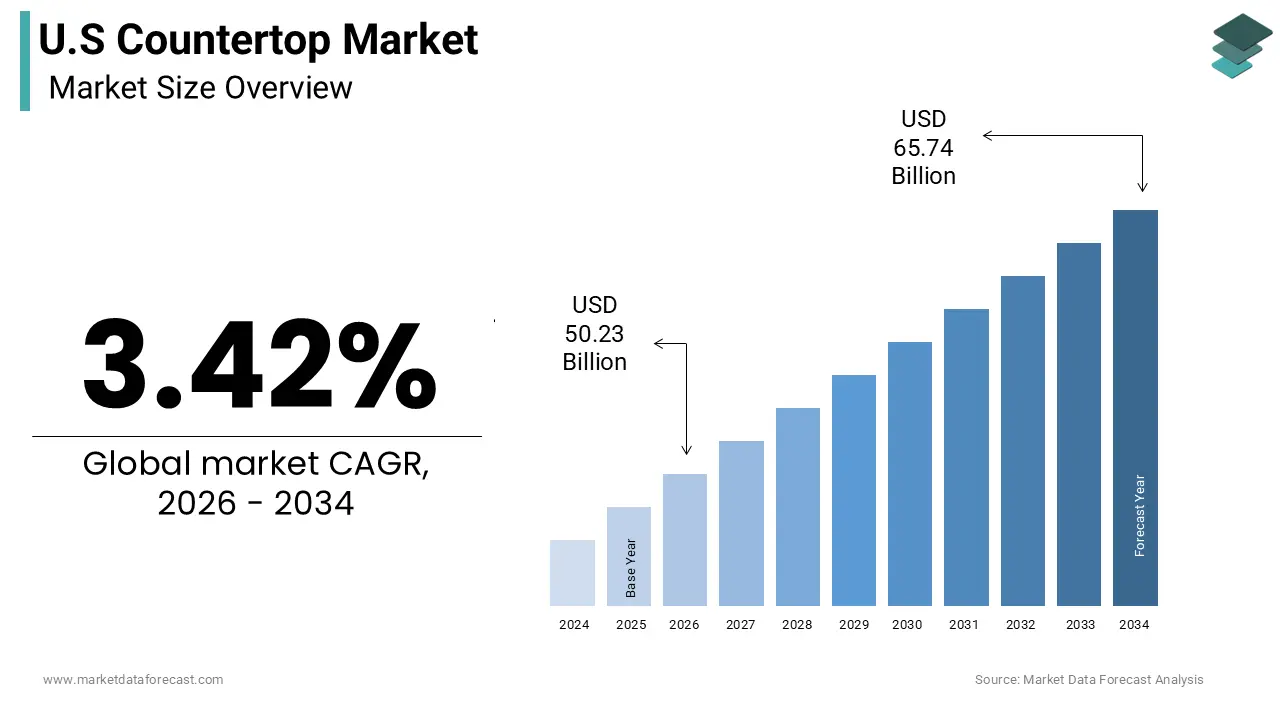
The United States countertop market was valued at USD 48.57 billion in 2025 and is projected to reach USD 65.74 billion by 2034, growing from USD 50.23 billion in 2026 at a CAGR of 3.42% during the forecast period. Market growth is driven by increasing residential renovation activities, rising demand for premium kitchen interiors, and expanding commercial construction projects. Consumer preference for durable, aesthetic, and low-maintenance countertop materials is further supporting the growth of the U.S. countertop market.
Key Market Trends
- Rising demand for quartz and engineered stone countertops
- Increasing home renovation and remodeling activities
- Growing preference for sustainable and eco-friendly materials
- Expansion of smart kitchen and luxury interior trends
- Increasing adoption of stain-resistant and durable countertop surfaces
Competitive Landscape
- The U.S. countertop market is highly competitive, with companies focusing on innovative materials, premium designs, and sustainable manufacturing solutions. Market players are investing in advanced surface technologies, customized countertop designs, and distribution network expansion to strengthen their market presence.
- Prominent players in the U.S. countertop market include Caesarstone, Cosentino Group, DuPont, Wilsonart, Cambria, Formica Corporation, Vicostone, LG Hausys, Panolam Industries, Aristech Surfaces, Pokarna Group, Spectrum Quartz, VT Industries, Hanwha Surfaces, and Daltile.
U.S Countertop Market Size
The U.S countertop market size was calculated to be USD 48.57 billion in 2025 and is anticipated to be worth USD 65.74 billion by 2034, from USD 50.23 billion in 2026, growing at a CAGR of 3.42% during the forecast period.
The countertop is the installation of horizontal work surfaces, primarily for residential kitchens bathrooms and commercial spaces. These surfaces are crafted from diverse materials, including natural stone engineered quartz solid surface laminates and wood serving both functional and aesthetic purposes in interior design. As per the United States Census Bureau, there were approximately 143 million housing units in the United States in 2024 with a significant portion undergoing periodic renovations that necessitate countertop replacement. The aging housing stock drives consistent demand as homeowners seek to modernize outdated interiors. According to the Joint Center for Housing Studies of Harvard University, nearly 50% of owner occupied homes were built before 1980 indicating a vast potential base for remodeling projects. Consumer behavior increasingly favors materials that offer low maintenance and high resistance to heat and stains which influences material selection trends. The integration of smart home technologies also impacts countertop design with features such as wireless charging pads and integrated sinks gaining popularity. Environmental consciousness further shapes the market as buyers prefer sustainable sourcing and recyclable materials. The interplay between new construction activities and retrofitting existing properties creates a dynamic landscape where product innovation and supply chain efficiency determine competitive advantage.
MARKET DRIVERS
Robust Growth in Home Renovation and Remodeling Activities
The robust growth in home renovation and remodeling activities is limiting the growth of the United States countertop market. Homeowners are increasingly investing in kitchen and bathroom upgrades to enhance property value and improve living standards rather than moving to new locations. Kitchen remodels remain one of the most popular projects with countertops being a central element of the design transformation. The desire for open concept layouts and modern aesthetics, which often require replacing old laminate or tile surfaces with premium materials like quartz or granite. The rise of remote work has also led to greater emphasis on home environments prompting investments in high quality finishes. Additionally, the scarcity of existing homes for sale has encouraged owners to stay put and upgrade their current residences. The billings for residential design services have remained strong signaling continued interest in interior renovations. The emotional attachment to homes and the financial prudence of renovating versus buying new sustain the demand for countertop replacements.
Increasing Preference for Durable and Low Maintenance Materials
The increasing preference for durable and low maintenance materials with the adoption of advanced countertop solutions is gearing up the growth of the United States countertop market. Modern consumers prioritize functionality and ease of care alongside aesthetics leading to a shift away from porous natural stones that require regular sealing. The quartz has become the most specified material for kitchen countertops due to its non-porous nature and resistance to staining and scratching. This engineered stone offers the look of natural marble without the associated maintenance burdens appealing to busy households. The hygienic properties of non-porous surfaces have gained importance post pandemic as consumers seek easier to clean environments. Solid surface materials also gain traction for their seamless integration and repairability allowing for a uniform look in large kitchens. Manufacturers are responding by developing enhanced formulations that mimic natural veining while offering superior durability. The longevity of these materials reduces the frequency of replacement providing long term value to homeowners.
MARKET RESTRAINTS
Volatility in Raw Material Costs and Supply Chain Disruptions
The volatility in raw material costs and supply chain disruptions is restraining the growth of the United States countertop market. The production of engineered stone and natural stone processing relies heavily on imported raw materials, such as resin quartz crystals and slab blocks, which are subject to global price fluctuations. These increased input costs are often passed on to consumers leading to higher retail prices that can dampen demand among budget conscious buyers. The reliance on international suppliers for premium granite and marble exposes the market to geopolitical tensions and trade policy changes. The tariffs on certain stone imports have created uncertainty for distributors and fabricators. Supply chain delays also extend lead times for projects causing frustration for contractors and homeowners. The shortage of shipping containers and port congestion further exacerbates these issues making it difficult to maintain consistent inventory levels. Manufacturers face pressure to absorb costs or risk losing customers to cheaper alternatives. The unpredictability of material availability forces some businesses to delay projects or substitute materials which may not meet design specifications.
Labor Shortages in Installation and Fabrication Sectors
The labor shortages in installation and fabrication sectors by limiting operational capacity and increasing project timelines is hindering the growth of the United States countertop market. The skilled labor required for precise cutting polishing and installing heavy stone slabs is in short supply as older workers retire and fewer young entrants join the trades. This scarcity leads to higher wages for skilled installers, which increases the overall cost of countertop projects. Delays in installation also disrupt renovation schedules causing dissatisfaction among clients and potential cancellations. The complexity of handling large format slabs requires specialized equipment and training which further narrows the pool of eligible workers. The construction industry faces a persistent gap between job openings and hires particularly in finishing trades. Small and medium sized fabricators are disproportionately affected as they lack resources for extensive training programs. The inability to scale workforce quickly limits the ability of companies to take on larger contracts or expand into new regions. Quality control issues may arise when less experienced workers are employed leading to costly rework and waste.
MARKET OPPORTUNITIES
Expansion of Eco Friendly and Recycled Material Options
The expansion of eco-friendly and recycled material options, as environmental consciousness rises among consumers is substantially creating new opportunities for the growth of the Unite States countertop market. Buyers are increasingly seeking sustainable alternatives that reduce carbon footprints and utilize waste products, such as glass paper and industrial byproducts. The construction and demolition sector generates significant waste creating a need for recycling initiatives that can be integrated into countertop production. Brands offering surfaces made from recycled content appeal to green building certifications, such as LEED which are becoming standard in both residential and commercial projects. Manufacturers are innovating with bio based resins and reclaimed stone aggregates to create unique aesthetic profiles that resonate with environmentally aware demographics. The transparency of supply chains and third party certifications enhance consumer trust and justify premium pricing. This trend encourages retailers to highlight eco credentials in marketing campaigns. Collaborations with waste management firms ensure a steady supply of raw materials for recycled surfaces.
Integration of Smart Technology and Multifunctional Designs
The integration of smart technology and multifunctional designs for differentiation and value addition is setting up the growth of the United States countertop market. Consumers are looking for surfaces that do more than provide workspace incorporating features, such as wireless charging stations integrated lighting and touchless controls. According to the Consumer Technology Association the smart home market continues to expand with users seeking seamless integration of technology into everyday fixtures. Countertops with embedded induction cooktops or USB ports cater to the modern lifestyle where connectivity and convenience are paramount. The rise of home offices and multi-use kitchens drives demand for surfaces that support various activities simultaneously. Data from Statista suggests that smart kitchen appliance adoption is expected to reach 40% of households by 2027 creating a compatible ecosystem for smart countertops. Manufacturers are partnering with tech firms to develop durable materials that can house electronic components without compromising structural integrity. Heat resistant and scratch proof surfaces are essential to protect embedded sensors and circuits. The ability to customize these features allows for personalized solutions that appeal to high end buyers.
MARKET CHALLENGES
Environmental Regulations and Health Concerns Regarding Silica
The environmental regulations and health concerns regarding silica dust for engineered stone manufacturers is one of the challenge for the growth of the United States countertop market. The cutting and polishing of quartz-based surfaces generate crystalline silica dust which is linked to serious respiratory diseases including silicosis. The strict exposure limits have been enforced requiring manufacturers and fabricators to implement rigorous safety measures and ventilation systems. These compliance requirements increase operational costs and necessitate significant investment in protective equipment and training. Several states have proposed bans on the sale and installation of engineered stone containing high levels of silica citing public health risks. The cases of accelerated silicosis among countertop workers have risen sharply prompting regulatory scrutiny. The industry faces pressure to develop alternative formulations that eliminate or reduce silica content without compromising durability and appearance. Transitioning to new materials involves extensive research and testing which can delay product launches and increase development expenses. Negative publicity surrounding health risks may deter consumers from choosing quartz products affecting sales volumes.
Intense Competition from Substitute Materials and DIY Trends
Intense competition from substitute materials and DIY trends challenges the established players is additionally to impede the growth of the United States countertop market. Alternative surfaces, such as high-pressure laminates butcher block and concrete offer lower cost options that appeal to budget conscious consumers and do it yourself enthusiasts. These substitutes have improved in quality and aesthetic appeal making them viable alternatives for mid-range renovations. The availability of online tutorials and tools empowers individuals to undertake projects that previously required professional fabrication. This shift reduces the volume of high margin professional installations impacting revenue for established fabricators. he growth of e commerce platforms facilitates direct-to-consumer sales of lightweight and easy to install materials. Traditional stone and quartz providers face pressure to lower prices or offer bundled services to remain competitive. The perception that premium materials are unaffordable drives some buyers toward cheaper options despite long term durability differences. Marketing efforts must therefore emphasize value proposition and professional expertise to counteract the DIY appeal. The proliferation of substitute materials also dilutes brand loyalty as consumers experiment with different looks and textures.
REPORT COVERAGE
| REPORT METRIC | DETAILS |
| Market Size Available | 2025 to 2034 |
| Base Year | 2025 |
| Forecast Period | 2026 to 2034 |
| CAGR | 3.42% |
| Segments Covered | By Material, End Use, Application, And Region |
| Various Analyses Covered | Global, Regional & Country Level Analysis; Segment-Level Analysis; DROC, PESTLE Analysis; Porter’s Five Forces Analysis; Competitive Landscape; Analyst Overview of Investment Opportunities |
| Regions Covered | New York, Massachusetts, Pennsylvania, Illinois, Ohio, Michigan, Texas, Florida, Georgia, California, Washington, Colorado. |
| Market Leaders Profiled | Caesarstone, Cosentino Group, DuPont, Wilsonart, Cambria, Formica Corporation, Vicostone, LG Hausys, Panolam Industries, Aristech Surfaces, Pokkarna Group, Spectrum Quartz, VT Industries, Hanwha Surfaces, Daltile |
COMPETITION OVERVIEW
The competition in the United States countertop market is characterized by intense rivalry among global manufacturers and local fabricators striving to offer superior quality and design. Major players compete based on material innovation durability and aesthetic appeal while also focusing on sustainability and customer service. Companies differentiate themselves by providing unique textures colors and finishes that align with current interior design trends. Strategic collaborations with kitchen and bath designers help firms gain visibility and influence purchasing decisions. The rise of e commerce platforms has enabled direct to consumer sales increasing accessibility and convenience for buyers. Price competitiveness remains a key factor, particularly in the mid-range segment where value driven consumers seek affordable options. Manufacturers invest in advanced production technologies to improve efficiency and reduce costs. The emphasis on eco-friendly practices and certifications appeals to environmentally aware customers. Local fabricators compete by offering personalized services and faster turnaround times.
KEY MARKET PLAYERS
A few major players of the U.S countertop market include
- Caesarstone
- Cosentino Group
- DuPont
- Wilsonart
- Cambria
- Formica Corporation
- Vicostone
- LG Hausys
- Panolam Industries
- Aristech Surfaces
- Pokkarna Group
- Spectrum Quartz
- VT Industries
- Hanwha Surfaces
- Daltile
Top Strategies Used by Key Market Participants
Key players in the United States countertop market primarily employ strategies focused on product innovation and sustainable manufacturing practices to maintain competitive advantage. Companies invest heavily in research and development to create durable and aesthetically pleasing materials such as engineered quartz and porcelain slabs. Strategic partnerships with distributors and retailers are common tactics used to expand market reach and ensure product availability. Firms also prioritize digital transformation by implementing virtual design tools that allow customers to visualize countertops in their homes. Mergers and acquisitions are utilized to consolidate market presence and acquire specialized technologies or brands. Manufacturers emphasize sustainability by adopting eco-friendly production processes and using recycled materials to appeal to environmentally conscious consumers. Training programs for fabricators and installers are implemented to ensure high quality installation and customer satisfaction. Additionally, companies engage in direct marketing campaigns targeting homeowners and design professionals to build brand awareness. These strategic initiatives enable firms to differentiate their offerings and respond effectively to changing consumer preferences and market dynamics.
Leading Players in the US Countertop Market
- Caesarstone Ltd maintains a prominent position in the United States countertop market by specializing in premium engineered quartz surfaces. The company focuses on innovative design and superior durability to meet the demands of residential and commercial clients. Recent initiatives include the launch of new collections featuring realistic marble veining and bold solid colors that align with contemporary interior trends. Caesarstone actively collaborates with leading kitchen and bath designers to showcase its products in high visibility projects. The company has invested in advanced manufacturing technologies to enhance the consistency and quality of its slabs. Their strategic partnerships with major distributors ensure widespread availability across the country. These efforts reinforce its reputation for quality and style while expanding its reach in the competitive landscape. The brand continues to drive innovation through research and development of new textures and finishes. This commitment to excellence strengthens its standing as a preferred choice for homeowners and professionals seeking reliable and aesthetically pleasing countertop solutions.
- Cosentino Group significantly influences the United States countertop market through its extensive portfolio of Silestone Dekton and Sensa brands. The company leverages its global expertise to deliver high performance surfaces that cater to diverse architectural needs. Recent actions involve the expansion of its distribution network in North America to improve logistics and customer service efficiency. Cosentino has introduced new digital tools that allow customers to visualize materials in their own spaces enhancing the buying experience. The firm emphasizes sustainability by implementing water recycling systems and using renewable energy in its production facilities. Its Dekton line offers exceptional resistance to heat and scratches making it suitable for both indoor and outdoor applications. Cosentino actively participates in industry trade shows to engage with designers and builders directly. The company also invests in training programs for fabricators to ensure proper installation and handling of its products. These strategic moves enhance brand loyalty and drive adoption among professional stakeholders.
- LG Hausys plays a vital role in the United States countertop market by offering HI MACS solid surface and Viatera quartz products. The company combines technological innovation with aesthetic versatility to serve residential and commercial sectors. Recent developments include the introduction of antimicrobial surfaces that address growing health and hygiene concerns among consumers. LG Hausys has expanded its manufacturing capabilities in the United States to reduce lead times and support local demand. The firm collaborates with architects and interior designers to create custom solutions for high end projects. Its focus on sustainability is evident in the use of recycled materials and eco-friendly production methods. LG Hausys actively promotes its products through digital marketing campaigns and virtual showrooms that reach a broader audience. The company also provides comprehensive warranty and support services to build trust with customers. These initiatives enhance its market position and drive growth in a competitive environment. The commitment to quality and innovation ensures that LG Hausys remains a key player in the evolving countertop industry.
MARKET SEGMENTATION
This research report on the US countertop market has been segmented and sub-segmented based on material, end use, application & region.
By Material
- Marble
- Granite
- Engineering Stone (quartz)
- Ceramic
- Cast Polymer/Solid Surface Countertops
- Other Materials
By End Use
- Residential
- Commercial
By Application
- Kitchen Counter-tops
- Bathroom Vanity Tops
- Others (Outdoor Kitchens, Hospitality Bars, etc.)
By Region
- New York
- Texas
- Florida
- Georgia
- California
- Rest of U.S.
Frequently Asked Questions
1. What are the most popular countertop materials in the U.S.?
Quartz, granite, marble, laminate, solid surface, and butcher block are among the most commonly used materials.
2. Why is quartz becoming popular in the countertop market?
Quartz is durable, non-porous, low-maintenance, and available in a wide range of colors and designs.
3. Which applications drive demand for countertops in the U.S.?
Residential kitchens, bathrooms, commercial buildings, hotels, restaurants, and office spaces are major application areas.
4. What factors are driving growth in the U.S. countertop market?
Home renovation trends, rising construction activities, increasing disposable income, and demand for premium interiors are key growth drivers.
5. Who are the leading companies in the U.S. countertop market?
Major players include Caesarstone, Cambria, Wilsonart, Cosentino Group, and Formica Corporation.
6. What is the difference between natural stone and engineered stone countertops?
Natural stone countertops are made from materials like granite and marble, while engineered stone countertops are manufactured using quartz and resins.
7. What are the advantages of laminate countertops?
Laminate countertops are affordable, lightweight, easy to install, and available in various patterns and finishes.
8. How is technology influencing countertop manufacturing?
Advanced fabrication technologies improve customization, durability, design precision, and installation efficiency.
9. What challenges does the U.S. countertop market face?
Fluctuating raw material costs, supply chain disruptions, and intense market competition are major challenges.
10. What future trends are shaping the U.S. countertop market?
Smart surfaces, sustainable materials, customized designs, and increasing demand for quartz countertops are key future trends.
Related Reports
Access the study in MULTIPLE FORMATS
Purchase options starting from
$ 1200
Didn’t find what you’re looking for?
TALK TO OUR ANALYST TEAM
Need something within your budget?
NO WORRIES! WE GOT YOU COVERED!
Call us on: +1 888 702 9696 (U.S Toll Free)
Write to us: sales@marketdataforecast.com