- Product Description Description
- Table of Contents TOC
- List of Table & Figure LOT
- Get Free Sample PDF Sample PDF
Market Size, 2025
$31.35 BnMarket Estimate, 2026
$32.51 BnMarket Forecast, 2034
$43.51 BnCAGR, 2026–2034
3.71%U.S. Exterior Doors Market Report Summary
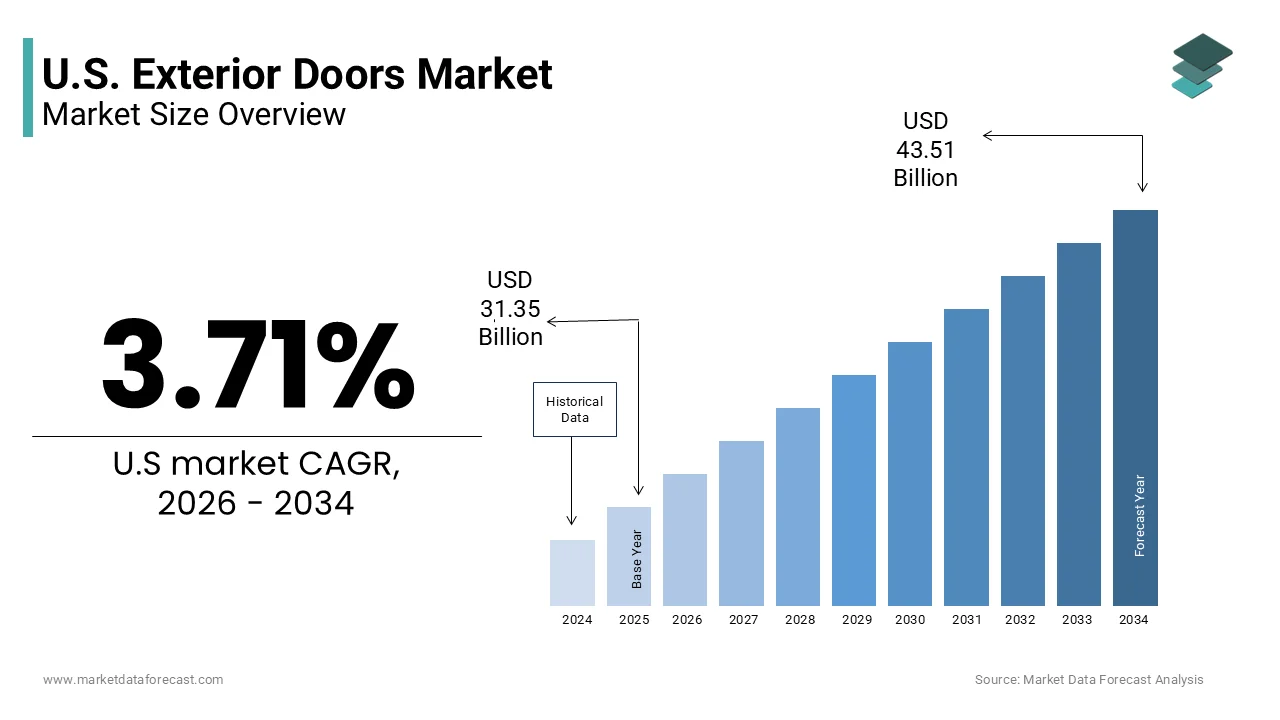
The U.S. exterior doors market was valued at USD 31.35 billion in 2025, is estimated to reach USD 32.51 billion in 2026, and is projected to reach USD 43.51 billion by 2034, growing at a CAGR of 3.71% during the forecast period. Market growth is driven by increasing residential construction activities, rising home renovation projects, and growing consumer demand for energy efficient and secure entry solutions. Exterior doors play a critical role in building aesthetics, insulation performance, and property security. Rising adoption of advanced materials and smart door technologies is further supporting market expansion across the United States.
Key Market Trends
- Increasing residential construction and remodeling activities are driving market growth.
- Growing demand for energy efficient building materials is boosting exterior door adoption.
- Rising consumer preference for durable and aesthetically appealing door designs is supporting market expansion.
- Expansion of smart home technologies is enhancing demand for advanced entry systems.
- Innovation in insulation performance, security features, and sustainable materials is influencing market development.
Segmental Insights
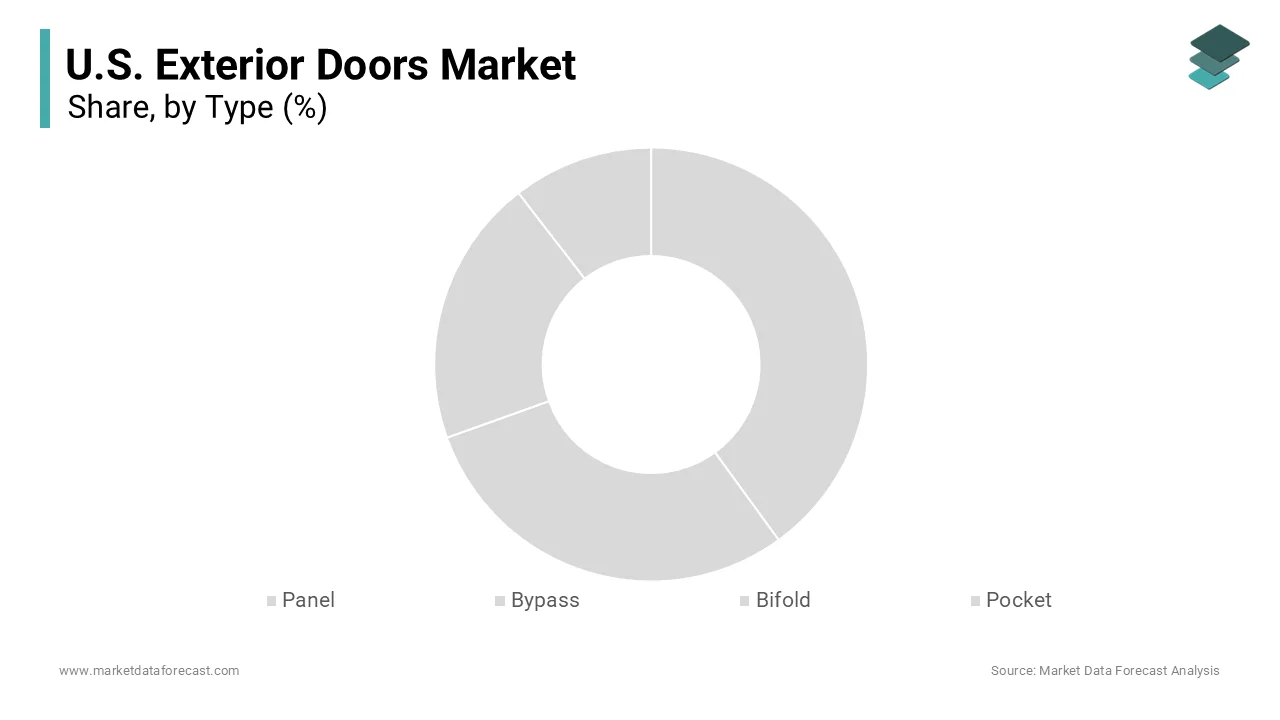
- Based on type, the panel doors segment accounted for 55.4% of the U.S. exterior doors market share in 2025. This dominance is attributed to versatile design options, durability, and widespread residential adoption.
- Based on material, the fiberglass segment held 40.3% of the U.S. exterior doors market share in 2025, driven by strong insulation properties, weather resistance, and low maintenance requirements.
Regional Insights
- The U.S. exterior doors market is experiencing stable growth supported by residential development activities, infrastructure improvements, and rising investments in home improvement projects. Increasing focus on energy efficiency and home security continues to strengthen market demand.
Competitive Landscape
The U.S. exterior doors market is highly competitive, with manufacturers focusing on product innovation, energy efficient materials, and advanced security technologies to strengthen their market position. Companies are investing in premium product offerings and smart entry solutions to meet evolving consumer preferences. Prominent players in the U.S. exterior doors market include Therma Tru Doors, Pella Corporation, Andersen Corporation, JELD WEN Holding Inc., Masonite International Corporation, Simpson Door Company, Assa Abloy Entrance Systems, Milgard Windows & Doors, and ProVia.
U.S. Exterior Doors Market Size
The U.S. exterior doors market size was valued at USD 31.35 billion in 2025, is estimated to reach USD 32.51 billion in 2026, and is projected to reach USD 43.51 billion by 2034, growing at a CAGR of 3.71%.
The exterior doors are entry systems designed to secure residential and commercial structures, while enhancing aesthetic appeal and energy efficiency. These products include front entry doors, patio doors, storm doors, and security gates, constructed from materials, such as wood, fiberglass, steel, and aluminum. As per the United States Census Bureau, there were approximately 143 million housing units in the country in 2024 with a significant portion requiring periodic upgrades to meet modern safety and insulation standards. The aging infrastructure of American homes drives consistent demand for replacement projects. According to the Joint Center for Housing Studies of Harvard University, nearly 50% of owner occupied homes were built before 1980 indicating a vast potential base for retrofitting activities. Consumer preferences increasingly favor materials that offer superior thermal performance and durability against extreme weather conditions. The integration of smart home technologies such as keyless entry systems and video doorbells further influences product design and functionality. Environmental regulations promoting energy conservation also shape market dynamics by encouraging the adoption of high performance insulated cores.
MARKET DRIVERS
Robust Growth in Home Renovation and Remodeling Activities
The robust growth in home-renovation and remodeling activities is leveraging the growth of the United States exterior doors market. Homeowners are increasingly investing in curb appeal enhancements and energy efficient upgrades to improve property value and living standards rather than relocating. Exterior door replacements are among the top priorities for remodelers seeking to modernize outdated facades and reduce utility costs. This trend is fueled by the desire for contemporary designs and improved security features, which often require replacing old wooden or metal doors with premium fiberglass or steel alternatives. The rise of remote work has also led to greater emphasis on home environments prompting investments in high quality finishes that enhance visual appeal. Additionally, the scarcity of existing homes for sale has encouraged owners to stay put and upgrade their current residences. The billings for residential design services have remained strong signaling continued interest in exterior renovations. The emotional attachment to homes and the financial prudence of renovating versus buying new sustain the demand for exterior door replacements.
Increasing Demand for Energy Efficient and Sustainable Building Materials
The increasing demand for energy efficient and sustainable building materials is another factor promoting the growth of the United States exterior doors market. Modern consumers prioritize environmental responsibility and cost savings leading to a shift towards doors with high thermal resistance and recycled content. According to the Environmental Protection Agency, heating and cooling account for nearly 50% of home energy use making insulated exterior doors a critical component for reducing consumption. Fiberglass and steel doors with polyurethane foam cores offer superior R values compared to traditional wood options appealing to eco-conscious buyers. The availability of federal tax credits for energy efficient home improvements that further incentivizes these upgrades. The homeowners can claim credits for qualifying exterior doors that meet specific energy performance criteria. Manufacturers are responding by developing products with sustainable sourcing certifications and low volatile organic compound finishes. The longevity of these materials reduces the frequency of replacement providing long term value to homeowners. The shift in consumer priority drives manufacturers to innovate and expand their portfolios of high performance surfaces.
MARKET RESTRAINTS
Volatility in Raw Material Costs and Supply Chain Disruptions
The volatility in raw material costs and supply chain disruptions is hampering the growth of the United States exterior doors market. The production of exterior doors relies heavily on materials such as steel aluminum wood and fiberglass which are subject to global price fluctuations. These increased input costs are often passed on to consumers leading to higher retail prices that can dampen demand among budget conscious buyers. The reliance on international suppliers for certain hardware components and raw materials exposes the market to geopolitical tensions and trade policy changes. The tariffs on certain metal imports have created uncertainty for manufacturers and distributors. Supply chain delays also extend lead times for projects causing frustration for contractors and homeowners. The shortage of shipping containers and port congestion further exacerbates these issues making it difficult to maintain consistent inventory levels. Manufacturers face pressure to absorb costs or risk losing customers to cheaper alternatives. The unpredictability of material availability forces some businesses to delay projects or substitute materials, which may not meet design specifications.
Labor Shortages in Installation and Construction Sectors
The labor shortages in installation and construction sectors by limiting operational capacity and increasing project timelines is also impeding the growth of the United States exterior doors market. The skilled labor required for precise measurement fitting and installing exterior doors is in short supply as older workers retire and fewer young entrants join the trades. This scarcity leads to higher wages for skilled installers, which increases the overall cost of door replacement projects. Delays in installation also disrupt renovation schedules causing dissatisfaction among clients and potential cancellations. The complexity of ensuring proper weather sealing and alignment requires specialized training which further narrows the pool of eligible workers. The construction industry faces a persistent gap between job openings and hires, particularly in finishing trades. Small and medium sized contractors are disproportionately affected, as they lack resources for extensive training programs. The inability to scale workforce quickly limits the ability of companies to take on larger contracts or expand into new regions. Quality control issues may arise when less experienced workers are employed leading to costly rework and energy inefficiencies.
MARKET OPPORTUNITIES
Integration of Smart Home Technology and Security Features
The integration of smart home technology and security features is to create new opportunities for the growth of the United States exterior doors market. Consumers are increasingly seeking connected entry systems that offer convenience enhanced security and remote monitoring capabilities. Exterior doors equipped with smart locks biometric scanners and integrated video doorbells cater to the modern lifestyle where connectivity and safety are paramount. Data from Statista suggests that smart lock adoption is expected to reach 40% of households by 2027 creating a compatible ecosystem for smart entryways. Manufacturers are partnering with tech firms to develop durable doors that can house electronic components without compromising structural integrity. Weather resistant materials are essential to protect embedded sensors and circuits from extreme temperatures and moisture. The ability to customize these features allows for personalized solutions that appeal to high end buyers. The interactive entryways are becoming a key selling point in luxury renovations. This innovation transforms exterior doors from passive barriers into active hubs of home security.
Expansion of Customizable and Aesthetic Design Options
The expansion of customizable and aesthetic design options is another factor propelling the growth of the United States exterior doors market. Homeowners are looking for unique designs that reflect personal style and complement architectural themes ranging from modern minimalist to classic colonial. Manufacturers are innovating with diverse finishes colors and glass inserts to create unique visual profiles that resonate with design conscious demographics. The trend towards large format glass panels and black framed entries appeals to contemporary tastes while traditional wood grains remain popular for classic homes. Collaborations with interior designers ensure that product lines align with current decor trends. The ability to offer made to measure solutions allows companies to capture niche markets willing to pay premiums for exclusivity.
MARKET CHALLENGES
Stringent Building Codes and Energy Compliance Regulations
The stringent building codes and energy compliance regulations for manufacturers and installers is a major challenge for the growth of the United States exterior doors market. Various states and municipalities have adopted rigorous standards for thermal performance air infiltration and structural integrity which require continuous adaptation of product lines. These compliance requirements increase production costs and necessitate extensive testing and certification processes. The variation in regulations across different jurisdictions complicates logistics and inventory management for national distributors. Manufacturers must maintain multiple product configurations to satisfy diverse regional requirements which increases operational complexity. The cost of obtaining certifications, such as Energy Star or National Fenestration Rating Council labels adds to the financial burden. Small businesses may struggle to keep pace with changing regulations leading to market consolidation. The need for continuous education and training for installers to ensure proper compliance further strains resources. Non-compliant installations can lead to liability issues and reputational damage. Navigating this regulatory requires constant vigilance and investment. Failure to comply can result in significant legal and financial consequences.
Intense Competition from Substitute Materials and DIY Trends
The intense competition from substitute materials and DIY trends by fragmenting demand and prices is also to decline the growth of the United States exterior doors market. Alternative entry solutions such as sliding glass walls or open concept designs offer lower cost options that appeal to budget conscious consumers and do it yourself enthusiasts. These substitutes have improved in quality and aesthetic appeal making them viable alternatives for mid-range renovations. The availability of online tutorials and tools empowers individuals to undertake projects that previously required professional fabrication. This shift reduces the volume of high margin professional installations impacting revenue for established fabricators. The growth of e-commerce platforms facilitates direct to consumer sales of lightweight and easy to install materials. Traditional manufacturers face pressure to lower prices or offer bundled services to remain competitive. The perception that premium materials are unaffordable drives some buyers toward cheaper options despite long term durability differences. Marketing efforts must therefore emphasize value proposition and professional expertise to counteract the DIY appeal. The proliferation of substitute materials also dilutes brand loyalty as consumers experiment with different looks and textures.
REPORT COVERAGE
| REPORT METRIC | DETAILS |
| Market Size Available | 2025 to 2034 |
| Base Year | 2025 |
| Forecast Period | 2026 to 2034 |
| CAGR | 3.71% |
| Segments Covered | By Type, Material, Mechanism, Application, and Region. |
| Various Analyses Covered | Global, Regional and Country-Level Analysis, Segment-Level Analysis, Drivers, Restraints, Opportunities, Challenges; PESTLE Analysis; Porter’s Five Forces Analysis, Competitive Landscape, Analyst Overview of Investment Opportunities |
| Countries Covered | California, Washington, Oregon, New York, United States |
| Market Leaders Profiled | Therma Tru Doors, Pella Corporation, Andersen Corporation, JELD WEN Holding Inc., Masonite International Corporation, Simpson Door Company, Assa Abloy Entrance Systems, Milgard Windows & Doors, and ProVia |
SEGMENTAL ANALYSIS
By Type Insights
The panel doors segment was accounted in holding 55.4% of the United States exterior doors market share in 2025. Versatility in architectural design and customization is bolstering the growth of the segment. These doors can be manufactured with varying numbers of panels configurations and materials allowing them to complement diverse home styles. According to the National Association of Home Builders, over 70% of new single family homes feature panel style entry doors due to their classic and timeless appearance. The ability to customize panel designs with glass inserts carvings or specific finishes appeals to homeowners seeking personalized curb appeal. As per Houzz panel doors are the most requested style in renovation projects because they offer a balance between traditional charm and modern functionality. Manufacturers offer a wide range of options including raised flat and recessed panels which can be paired with different hardware and sidelights. This flexibility allows architects and designers to create unique entryways that enhance the overall aesthetic of the property. The availability of panel doors in various materials such as wood fiberglass and steel further expands their applicability. Homeowners appreciate the ability to match door styles with existing trim and siding creating a cohesive look.
The pocket doors segment is likely to witness a fastest CAGR of 9.8% from 2026 to 2034. Space saving benefits in urban and compact housing is elevating the growth of the United States exterior doors market. As land prices rise and living spaces shrink, homeowners seek innovative solutions to maximize interior square footage. The average size of new single family homes has stabilized, while urban apartment units continue to decrease in size creating a need for efficient space utilization. Pocket doors eliminate the swing radius required by traditional hinged doors freeing up valuable floor space for furniture and movement. As per the study, over 40% of new apartment developments incorporate sliding or pocket door systems to enhance spatial efficiency. This design feature is particularly appealing in small entryways patios and transitional areas, where every inch counts. The sleek and minimalist appearance of pocket doors aligns with contemporary design trends favored by younger demographics. Architects and interior designers recommend pocket doors for creating open and fluid living environments. The ability to completely conceal the door when open enhances the sense of spaciousness. This functional advantage drives adoption in both residential and commercial projects.
By Material Insights
The fiberglass segment was the largest by capturing 40.3% of the United States exterior doors market share in 2025. Unlike wood, which can warp rot or crack fiberglass doors maintain their structural integrity in diverse climate conditions. The fiberglass doors demonstrate higher resilience against extreme weather events, such as hurricanes and hailstorms reducing the risk of damage. The material does not absorb moisture preventing swelling and decay which is a common issue with wooden doors. The inherent strength of the material allows it withstand daily wear and tear without denting or scratching easily. Homeowners in coastal and humid regions prefer fiberglass for its ability to resist salt air and humidity. The stable composition ensures that the door remains straight and operational over time reducing the need for adjustments. The resistance to temperature fluctuations prevents expansion and contraction issues that can compromise seals. This reliability makes fiberglass a cost-effective-long term investment. The consistent performance in harsh environments builds trust among consumers and builders. The durability factor is a primary reason for its widespread adoption in both new construction and replacements.
The glass exterior doors segment is deemed to witness a fastest CAGR of 11.2% from 2026 to 2034. Architectural trend towards natural light and openness is elevating the growth of segment. Modern design principles emphasize the blurring of boundaries between interior and exterior spaces to create airy and inviting environments. Glass doors allow abundant natural light to penetrate deep into living spaces reducing the need for artificial lighting during the day. The exposure to natural light improves occupant well-being and circadian rhythms by making it a priority in healthy home design. The visual connection to outdoors enhances the perceived size of rooms and creates a sense of expansiveness. Frameless and minimal frame glass doors are particularly popular in contemporary homes for their sleek aesthetic. The use of tempered and laminated glass ensures safety and security despite the transparent nature. Homeowners value the ability to enjoy views and outdoor scenery from the comfort of their interiors. This design preference drives adoption in patios sunrooms and main entryways.
COMPETITIVE LANDSCAPE
The competition in the United States exterior doors market is characterized by intense rivalry among established manufacturers and regional suppliers striving to offer superior quality and design. Major players compete based on material innovation durability and aesthetic appeal while also focusing on energy efficiency and security features. The market features a fragmented landscape with numerous small and medium sized enterprises catering to local demands. Companies differentiate themselves by providing unique textures colors and finishes that align with current interior and exterior design trends. Strategic collaborations with kitchen and bath designers help firms gain visibility and influence purchasing decisions. The rise of e commerce platforms has enabled direct to consumer sales increasing accessibility and convenience for buyers. Price competitiveness remains a key factor particularly in the mid-range segment where value driven consumers seek affordable options. Manufacturers invest in advanced production technologies to improve efficiency and reduce costs. The emphasis on eco-friendly practices and certifications appeals to environmentally aware customers. Local fabricators compete by offering personalized services and faster turnaround times. This dynamic environment drives continuous improvement and innovation benefiting consumers with a wide range of choices.
KEY MARKET PLAYERS
Some of the companies that are playing a dominating role in the U.S. exterior doors market are
- Therma Tru Doors
- Pella Corporation
- Andersen Corporation
- JELD WEN Holding Inc.
- Masonite International Corporation
- Simpson Door Company
- Assa Abloy Entrance Systems
- Milgard Windows & Doors
- ProVia
Top Players in the Market
- JELD WEN Holding Inc is a global leader in the design manufacture and distribution of interior and exterior doors and windows. The company serves the United States market with a diverse portfolio including wood fiberglass and steel entry systems. Recent actions involve significant investments in automation and digital manufacturing technologies to enhance production efficiency and product consistency. JELD WEN has expanded its premium offerings by introducing high performance energy efficient door collections that meet strict building codes. The firm actively collaborates with homebuilders and remodelers to provide customized solutions that align with modern architectural trends. These initiatives strengthen its reputation for quality and reliability while addressing the growing demand for durable and aesthetically pleasing exterior doors. The company continues to innovate in material science to improve weather resistance and thermal performance.
- Masonite International Corporation contributes significantly to the United States exterior doors market through its extensive range of innovative entryway solutions. The company is renowned for its proprietary fiberglass and steel door technologies that offer superior durability and insulation. Recent developments include the launch of smart door systems integrated with advanced security features and connectivity options. Masonite has strengthened its distribution network by partnering with major home improvement retailers to increase product accessibility. The firm emphasizes design versatility offering customizable options that cater to diverse consumer preferences. Masonite invests heavily in research and development to create lightweight yet robust door structures that simplify installation. Their commitment to customer satisfaction is evident in comprehensive warranty programs and support services. These strategic moves reinforce its position as a key innovator in the residential entrance sector.
- Assa Abloy Entrance Systems plays a vital role in the United States exterior doors market by providing secure and automated entrance solutions. The company specializes in high performance doors for both residential and commercial applications focusing on safety and convenience. Recent actions include the integration of Internet of Things technology into door hardware enabling remote monitoring and control. Assa Abloy has acquired several niche manufacturers to expand its product portfolio and technological capabilities. The firm prioritizes cybersecurity ensuring that connected door systems are protected against digital threats. Their focus on accessibility has led to the development of automatic opening systems that comply with regulatory standards. Assa Abloy collaborates with architects and developers to create seamless entrance experiences that enhance building functionality. The company also emphasizes sustainable manufacturing practices reducing environmental impact through energy efficient production methods.
Top Strategies Used by Key Market Participants
Key players in the United States exterior doors market primarily employ strategies focused on product innovation and strategic partnerships to maintain competitive advantage. Companies invest heavily in research and development to create durable and energy efficient materials such as fiberglass and composite blends. Strategic collaborations with homebuilders and retailers are common tactics used to expand market reach and ensure product availability. Firms also prioritize digital transformation by implementing virtual design tools that allow customers to visualize doors in their homes. Mergers and acquisitions are utilized to consolidate market presence and acquire specialized technologies or brands. Manufacturers emphasize sustainability by adopting eco-friendly production processes and using recycled materials to appeal to environmentally conscious consumers. Training programs for installers are implemented to ensure high quality installation and customer satisfaction. Additionally, companies engage in direct marketing campaigns targeting homeowners and design professionals to build brand awareness. These strategic initiatives enable firms to differentiate their offerings and respond effectively to changing consumer preferences.
MARKET SEGMENTATION
This research report on the U.S. exterior doors market is segmented and sub-segmented into the following categories.
By Type
- Panel
- Bypass
- Bifold
By Material
- Wood
- Glass
- Metal
- Composite
- Plastic
By Mechanism
- Swinging
- Sliding
- Folding
- Overhead
By Application
- Non Residential
- Residential
By Country
- California
- Washington
- Oregon
- New York
- Rest of the United States