U.S. Gasoline Market Size, Share, Trends & Growth Forecast Report By Type, By End User, and By Country (California, Washington, Oregon, New York & Rest of the United States) – Industry Analysis and Forecast, 2026 to 2034
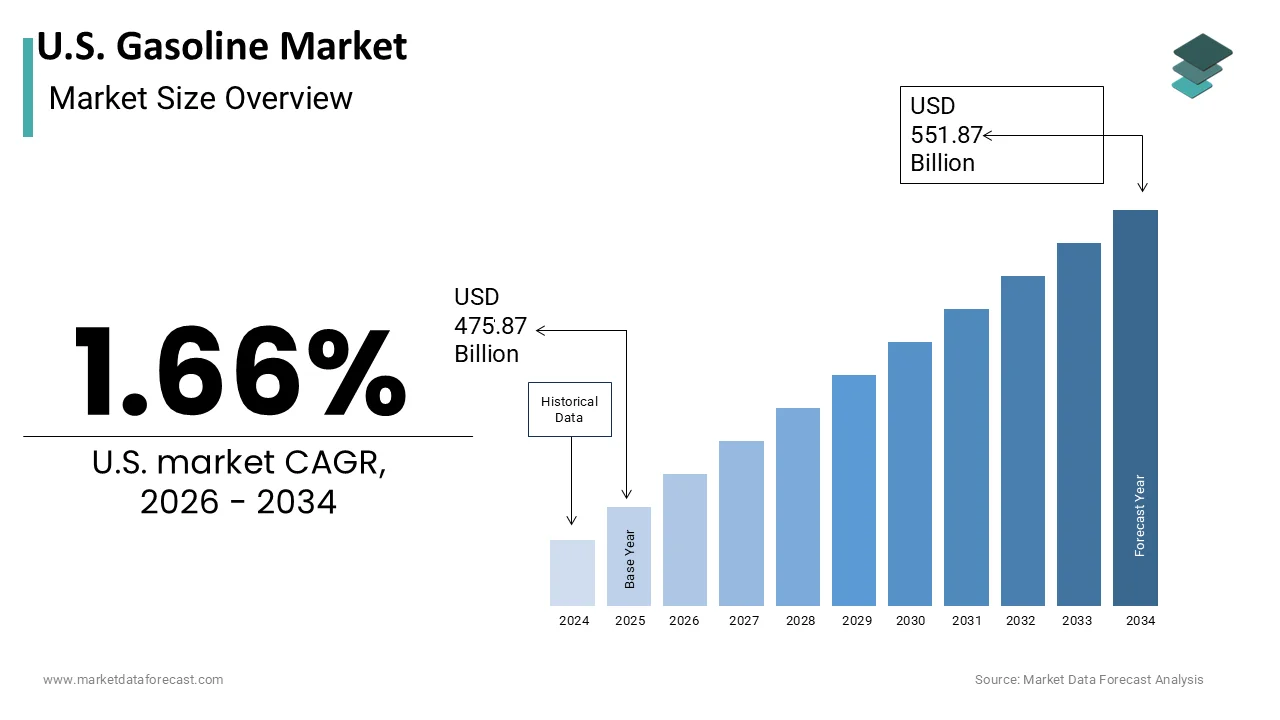
Market Size, 2025
$475.87 BnMarket Estimate, 2026
$483.77 BnMarket Forecast, 2034
$551.87 BnCAGR, 2026–2034
1.66%U.S. Gasoline Market Size
The U.S. Gasoline Market was valued at USD 475.87 billion in 2025, is estimated to reach USD 483.77 billion in 2026, and is projected to reach USD 551.87 billion by 2034, growing at a CAGR of 1.66% from 2026 to 2034.
Gasoline, or petrol, is a transparent, flammable liquid refined from petroleum used primarily as fuel for spark-ignited internal combustion engines in vehicles. This market is characterized by its deep integration into daily life, facilitating personal travel, commuting, and commercial logistics across the nation’s extensive highway system. As per the United States Energy Information Administration, gasoline consumption accounts for approximately 45 percent of total petroleum use in the country, reflecting its dominant role in the energy mix. The market operates within a complex regulatory environment that mandates specific fuel formulations to reduce emissions, such as the use of ethanol blends and reformulated gasoline in certain regions. According to the Federal Highway Administration, there are approximately 298 million registered vehicles in the United States, the majority of which rely on internal combustion engines powered by gasoline. Seasonal variations significantly influence demand patterns, with consumption peaking during summer driving months and declining in winter. The infrastructure supporting this market includes thousands of refineries, pipelines, and storage terminals that ensure a consistent supply despite fluctuating crude oil prices. Recent trends indicate a gradual shift towards higher efficiency vehicles and alternative powertrains, yet gasoline remains indispensable due to the slow turnover rate of the existing vehicle fleet. The definition of this market now encompasses not just traditional petroleum-based fuels but also blended biofuels, reflecting evolving environmental standards and consumer preferences for sustainable energy options.
MARKET DRIVERS
High Vehicle Miles Traveled Sustains Robust Consumption Levels
The extensive distance covered by vehicles across the country is a fundamental driver for gasoline demand and thereby contributes to the overall growth of the United States gasoline market. This demand is anchored by the cultural and economic reliance on personal automobiles. Vehicle miles traveled (VMT) is a key metric that directly correlates with fuel consumption, and recent data indicate a steady recovery and growth in this area following pandemic-related disruptions. As per the Federal Highway Administration, annual vehicle miles traveled in the United States exceeded 3.2 trillion miles, demonstrating the sheer scale of mobility that requires continuous fuel input. This high level of activity is driven by suburban sprawl, which necessitates longer commutes, and the limited availability of public transportation in many regions. According to the Bureau of Transportation Statistics, the average American household owns nearly two vehicles, further reinforcing the dependency on gasoline for daily activities. The resurgence of leisure travel and road trips has also contributed to increased VMT, particularly during holiday seasons and summer months. Additionally, the gig economy and delivery services have added to the mileage accumulated by light-duty vehicles, creating a new layer of consistent demand. The lack of viable alternatives for long-distance travel in rural and semi-urban areas ensures that gasoline remains the primary energy source for most drivers. This structural dependence on road transport creates a resilient baseline for gasoline consumption that persists despite efforts to promote electric vehicles and public transit options.
Consumer Preference for Light-Duty Trucks Boosts Fuel Volume
The shifting consumer preference towards light-duty trucks, including SUVs and pickups, is accelerating the expansion of the United States gasoline market. These vehicles typically consume more fuel than smaller passenger cars. This trend has been sustained for several years, with light trucks accounting for the majority of new vehicle sales in the United States. As per the Environmental Protection Agency, regulatory 'light trucks' represented 63 to 66 percent of new vehicle production in recent years, while broader market data shows SUVs and trucks now comprise nearly 80 percent of sales, reflecting a decisive move away from fuel-efficient sedans. These larger vehicles often feature more powerful engines and heavier frames, resulting in lower miles per gallon ratings and higher overall gasoline consumption per vehicle. According to the National Automobile Dealers Association, the popularity of these vehicles is driven by their versatility, safety perceptions, and suitability for family and recreational use. The automotive industry has responded by expanding its lineup of trucks and SUVs, further cementing this shift in the vehicle parc. While engine technologies have improved to enhance efficiency, the sheer size and weight of these vehicles offset many of these gains, leading to sustained or increased fuel demand. The dominance of light trucks in the sales mix ensures that average fleet fuel economy improvements are slower than they would be if smaller cars remained popular. This consumer behavior creates a robust demand profile for gasoline, as the existing and growing fleet of light trucks requires substantial volumes of fuel to operate effectively across the nation’s diverse driving conditions.
MARKET RESTRAINTS
Stringent Fuel Economy Standards Limit Demand Growth
The implementation of increasingly stringent corporate average fuel economy (CAFE) standards is restraining the growth of the US gasoline market. This forces automakers to produce vehicles that consume less fuel per mile. These regulations, enforced by the National Highway Traffic Safety Administration and the Environmental Protection Agency, require manufacturers to meet specific efficiency targets across their fleets, thereby reducing the overall volume of gasoline needed for transportation. As per the Environmental Protection Agency, the average fuel economy of new vehicles has improved significantly over the past decade, reaching record highs in recent model years. This improvement means that each new vehicle sold consumes less gasoline than its predecessor, leading to a gradual decline in per capita fuel demand. According to the International Council on Clean Transportation, stricter emissions standards are expected to continue pushing fuel efficiency higher, further eroding the traditional growth trajectory of gasoline consumption. Automakers are investing heavily in hybrid and electric technologies to comply with these rules, diverting resources away from conventional internal combustion engine development. The regulatory pressure is complemented by state-level initiatives, such as California’s Advanced Clean Cars II program, which mandates an increasing share of zero-emission vehicle sales. These policies create a structural headwind for the gasoline market, as the fleet gradually becomes more efficient and less dependent on fossil fuels. The cumulative effect of these standards is a slowing rate of demand growth, challenging refiners and retailers to adapt to a shrinking or stagnant consumption base.
Rapid Adoption of Electric Vehicles Displaces Traditional Fuel Use
The accelerating adoption of electric vehicles (EVs) is a significant long-term constraint to the United States gasoline market. Each EV sold represents a direct loss of potential gasoline demand. Government incentives, improving charging infrastructure, and declining battery costs are driving consumers towards electric alternatives, particularly in the light-duty segment. As per the Alliance for Automotive Innovation, electric vehicle sales have recently experienced a slight market share contraction, capturing 9.6 percent of the new car market in 2025, down from 10.2 percent the prior year. This transition is supported by federal tax credits and state-level rebates that make EVs more affordable for a broader range of consumers. According to the Department of Energy, the number of public charging stations has increased substantially. However, infrastructure growth continues to lag behind vehicle adoption rates, leaving geographic disparities that challenge daily electric mobility. Major automakers have announced ambitious plans to electrify their fleets, with several committing to all-electric lineups within the next decade. The operational cost advantage of electricity over gasoline further encourages fleet operators and individual consumers to switch. As the EV parc expands, the displacement of gasoline consumption becomes more pronounced, particularly in urban areas where charging access is dense. This technological shift undermines the foundational demand for gasoline, forcing the industry to confront a future where liquid fuels play a diminished role in personal transportation. The pace of this transition is accelerated by corporate sustainability goals and consumer awareness of environmental impacts, creating a persistent threat to long-term market viability.
MARKET OPPORTUNITIES
Expansion of Ethanol Blends Creates New Revenue Streams
The integration of higher ethanol blends into the gasoline supply chain creates a pathway for market participants to diversify products and meet renewable fuel mandates, which is likely to boost the growth of the United States gasoline market. Ethanol, primarily derived from corn, is blended with gasoline to reduce emissions and support agricultural economies, with E10 being the standard blend across most of the country. As per the Renewable Fuels Association, ethanol production in the United States has reached billions of gallons annually, demonstrating the scale of this biofuel industry. The introduction of E15, a 15 percent ethanol blend, for year-round use in newer vehicles opens up new market segments and increases the volume of biofuel consumed. According to the United States Department of Agriculture, government support for biofuels provides a stable demand base for ethanol producers, encouraging investment in production capacity. Retailers can differentiate themselves by offering higher blends, appealing to environmentally conscious consumers and those seeking cost-effective alternatives. The infrastructure for blending and distributing ethanol is well established, allowing for relatively easy expansion of these products. Furthermore, the development of advanced biofuels and cellulosic ethanol offers pathways to even lower carbon intensity fuels, aligning with stricter environmental regulations. This opportunity allows the gasoline market to evolve into a broader liquid fuel market that includes sustainable components, ensuring relevance in a low-carbon future. Market players should embrace biofuel integration to mitigate the risks associated with pure petroleum dependence. Consequently, they can capitalize on policy-driven demand for renewable energy sources.
Modernization of Retail Stations Enhances Customer Experience
The modernization of retail gasoline stations into multifunctional convenience hubs offers a valuable opportunity for retailers within the United States gasoline market. This transformation increases profitability and customer loyalty beyond simple fuel sales. As fuel margins tighten, station operators are investing in upgraded facilities that offer premium food services, electric vehicle charging, and digital payment options. As per the National Association of Convenience Stores, convenience store gross profit margins from inside transactions have grown significantly, outpacing fuel profit margins in many locations. This shift allows retailers to capture value from customers who spend time at the station, regardless of the fuel type they purchase. According to the Energy Marketers of America, the integration of fast-casual dining and specialty coffee shops transforms stations into destination points rather than mere refueling stops. The installation of high-speed electric chargers attracts EV owners, who may spend 20 to 30 minutes at the location, providing ample opportunity for retail engagement. Digital apps and loyalty programs enable personalized marketing and streamlined transactions, enhancing the overall customer experience. These upgrades help stations remain competitive in a changing landscape where fuel demand may plateau or decline. By diversifying revenue streams and improving service quality, retailers can sustain profitability even as the core gasoline business faces headwinds. This strategic evolution ensures that retail infrastructure remains viable and relevant, adapting to the changing needs of modern consumers.
MARKET CHALLENGES
Volatility in Crude Oil Prices Impacts Consumer Behaviour
The inherent volatility in crude oil prices is a major challenge to the United States gasoline market. This creates uncertainty for both suppliers and consumers that can disrupt demand patterns. Gasoline prices are closely linked to global crude markets, which are influenced by geopolitical events, production decisions by major exporting nations, and supply chain disruptions. As per the United States Energy Information Administration, sharp increases in gasoline prices lead to very minor immediate reductions in driving due to low short-term price elasticity, while more noticeable reductions from trip consolidation or public transportation accumulate over a longer time horizon. This price sensitivity can cause sudden drops in volume, affecting refinery utilization and retail revenues. According to the American Automobile Association, consumer confidence in the economy is often correlated with fuel prices, with high costs contributing to broader economic slowdowns. Refiners face challenges in managing inventory and pricing strategies amidst such fluctuations, as hedging mechanisms may not fully protect against rapid market shifts. Additionally, price volatility complicates long-term planning for infrastructure investments, as uncertain returns discourage capital expenditure. The unpredictability of supply costs also affects small independent retailers who lack the financial resources to absorb margin compression. This economic instability undermines the reliability of gasoline as a predictable expense for households and businesses, encouraging the search for more stable energy alternatives. Managing this volatility remains a critical challenge for industry participants seeking to maintain market stability.
Aging Infrastructure Risks Supply Chain Disruptions
The reliability and safety of the United States gasoline supply chain are severely hampered by aging infrastructure, which negatively impacts the expansion of the United States gasoline market. Pipelines, storage tanks, and refineries are now major bottlenecks. Much of the nation’s fuel distribution network was built decades ago and requires substantial maintenance and upgrades to prevent leaks, spills, and operational failures. As per the Pipeline and Hazardous Materials Safety Administration, incidents involving pipeline leaks and ruptures occur regularly, highlighting the vulnerability of the system. These disruptions can lead to temporary shortages and price spikes in affected regions, causing inconvenience for consumers and losses for retailers. According to the American Society of Civil Engineers, the condition of energy infrastructure is rated as poor, earning a D+ grade and indicating a critical need for significant investment to expand capacity and ensure reliability. Refineries also face challenges related to equipment aging, which can result in unplanned outages and reduced production capacity. The cost of maintaining and upgrading this infrastructure is substantial, and regulatory requirements for safety and environmental protection add to the financial burden. Furthermore, the transition to new fuel formulations and blends requires modifications to existing storage and dispensing equipment, adding complexity to operations. Failure to address these infrastructure issues could lead to more frequent supply interruptions, undermining consumer confidence in the availability of gasoline. Ensuring the integrity of the supply chain is a persistent challenge that requires coordinated efforts from industry and regulators.
REPORT COVERAGE
| REPORT METRIC | DETAILS |
| Market Size Available | 2025 to 2034 |
| Base Year | 2025 |
| Forecast Period | 2026 to 2034 |
| Segments Covered | By Type, End User Region. |
| Various Analyses Covered | Global, Regional and Country-Level Analysis, Segment-Level Analysis, Drivers, Restraints, Opportunities, Challenges; PESTLE Analysis; Porter’s Five Forces Analysis, Competitive Landscape, Analyst Overview of Investment Opportunities |
| Countries Covered | California, Washington, Oregon, New York, the rest of the United States |
| Market Leaders Profiled | Exxon Mobil Corporation, Chevron Corporation, Marathon Petroleum Corporation, Phillips 66, Valero Energy Corporation, BP p.l.c., Shell plc, ConocoPhillips, Citgo Petroleum Corporation, PBF Energy Inc., HF Sinclair Corporation, Murphy USA Inc. |
SEGMENTAL ANALYSIS
By Type Insights
The regular gasoline segment held the majority share of the United States gasoline market in 2025. This supremacy of the segment is mainly credited to the engineering specifications of the vast majority of light-duty vehicles on American roads, which are designed to operate efficiently on standard octane fuel. As per the Environmental Protection Agency, the average fuel economy of the new vehicle fleet has improved significantly, with modern engines utilizing advanced computer controls to optimize performance on regular grade fuel without requiring premium additives. The economic factor plays a crucial role, as regular gasoline is consistently priced lower than premium variants, making it the preferred choice for cost-conscious consumers and commercial fleets. According to the American Automobile Association and federal energy data, the national price differential between regular and premium gasoline averages approximately 93 cents per gallon, translating to substantial savings for high-mileage drivers over the course of a year. The widespread availability of regular gasoline at every retail station across the country ensures convenience and accessibility, reinforcing its status as the default option. Furthermore, automotive manufacturers have increasingly calibrated entry-level and mid-tier vehicles to meet emissions and performance standards using regular fuel, reducing the necessity for higher octane blends. This alignment between vehicle design and consumer economic preference creates a structural demand base that sustains the leading position of regular gasoline in the market.
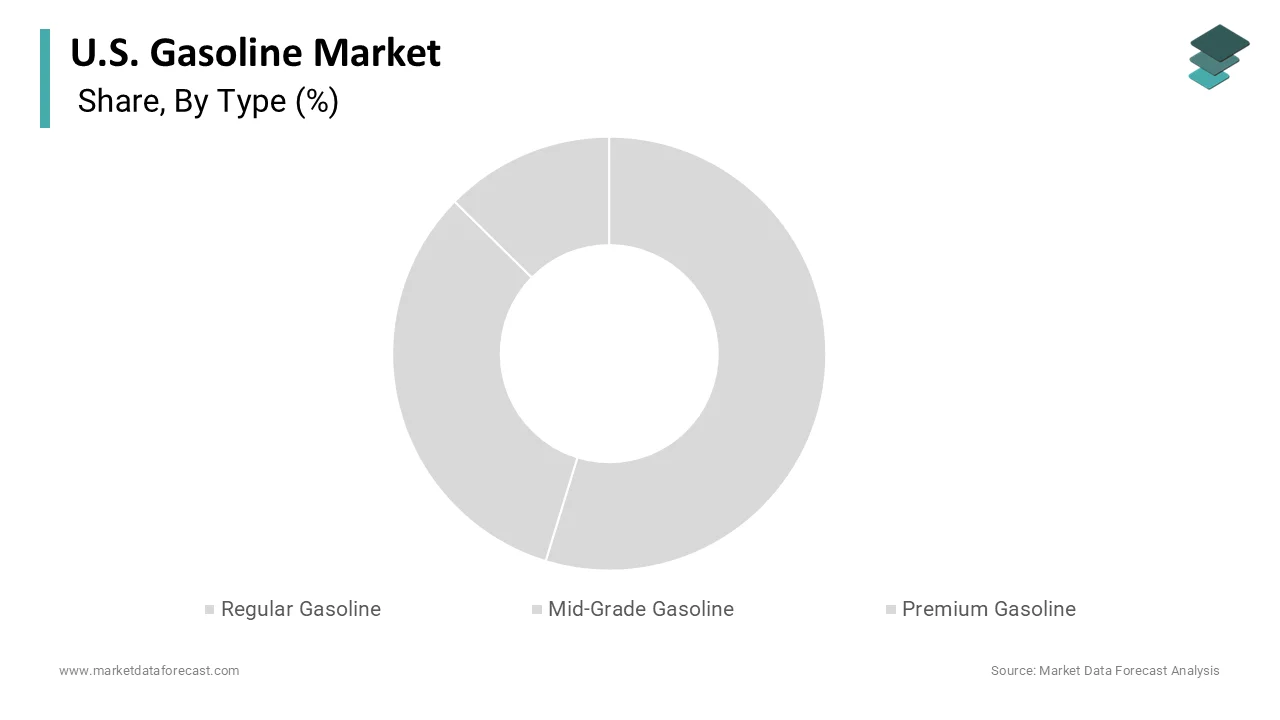
On the other hand, the premium gasoline segment is likely to experience the fastest CAGR of 3.2% over the forecast period. This accelerated growth of the segment is largely propelled by the increasing sales volume of luxury and high-performance vehicles that mandate the use of higher octane fuel to prevent engine knocking and maximize power output. As per the National Automobile Dealers Association, sales of luxury vehicles have shown resilience and growth, with many models recommending or requiring premium fuel as specified by the manufacturer to achieve optimal performance. The trend towards downsized turbocharged engines in mainstream vehicles also contributes to this growth, as these engines often benefit from or require higher octane ratings to achieve their designed efficiency and power levels. According to the Society of Automotive Engineers, turbocharging technology allows smaller engines to produce power comparable to larger naturally aspirated units, but this technology frequently necessitates premium fuel to manage higher combustion pressures and temperatures. Additionally, consumer perception plays a role, with some drivers opting for premium fuel believing it offers better engine cleanliness and longevity, despite limited evidence for older non-required vehicles. The expansion of high-performance sport utility vehicles and trucks further drives demand, as these heavier vehicles utilize powerful engines that perform best with premium grades. This combination of technological advancement in engine design and the rising popularity of luxury automotive segments propels the growth of premium gasoline.
By End User Insights
The transportation segment remained in the lead by capturing a significant share of the United States gasoline market in 2025. This leading position of the segment was attributed to the fundamental reliance of personal and commercial mobility on internal combustion engines, particularly in the light-duty vehicle category. According to the Federal Highway Administration, the average registered vehicle in the United States travels approximately 11,000 miles per year, creating a consistent and massive demand for fuel. The extensive highway infrastructure and suburban development patterns in the US necessitate high levels of vehicle usage for daily commuting, shopping, and leisure activities. According to the Bureau of Transportation Statistics, the average American drives approximately 14,000 miles per year, creating a consistent and massive demand for fuel. The lack of comprehensive public transportation systems in many regions further entrenches the dependence on private vehicles, ensuring that gasoline remains the primary energy source for mobility. Additionally, the growth of the gig economy, including ride-sharing and delivery services, has increased the annual mileage of many vehicles, thereby boosting overall consumption. The transportation sector's demand is relatively inelastic in the short term, as consumers must continue to drive regardless of minor price fluctuations. This structural dependency on road transport solidifies the transportation sector's position as the primary driver of the gasoline market.
But the power generation segment is on the rise and is expected to be the fastest-growing segment in the market by witnessing a CAGR of 2.5% from 2026 to 2034 due to the need for reliable backup power solutions. This growth is fueled by the increasing frequency of extreme weather events and grid instability, which prompts businesses and residential communities to invest in standby gasoline generators. As per the North American Electric Reliability Corporation, the incidence of power outages has risen in recent years due to aging infrastructure and climate-related stresses, highlighting the vulnerability of the electrical grid. Gasoline-powered generators are favored for their portability, ease of maintenance, and immediate availability, making them a popular choice for emergency preparedness. According to the Consumer Technology Association, sales of portable generators have seen steady increases, particularly in regions prone to hurricanes, wildfires, and severe storms. While diesel and natural gas generators are used for larger industrial applications, gasoline remains the dominant fuel for smaller, residential, and small business backup units due to the widespread availability of the fuel at retail stations. The decentralization of power reliability efforts means that more households and small enterprises are maintaining on-site fuel reserves and generation capabilities. This trend towards energy independence and resilience against grid failures supports the modest but steady growth of gasoline consumption in the power generation sector.
COUNTRY LEVEL ANALYSIS
United States Gasoline Market Analysis
The United States dominated the North American gasoline market and accounted for a 90.2% share in 2025. This growth of the country’s market was fuelled by its vast geographic size and car-centric culture. The country’s market status is characterized by a mature but resilient demand structure, where gasoline remains the lifeblood of personal mobility and economic activity. As per the United States Energy Information Administration, the US consumes roughly 9 million barrels of gasoline per day, reflecting the deep integration of this fuel into the national lifestyle. The driving factors behind this sustained consumption include the low density of urban planning in many areas, which necessitates long-distance driving, and the historical affordability of fuel compared to other developed nations. According to the Federal Highway Administration and federal energy data, the total vehicle miles traveled in the US continues to set record highs; however, rising fleet fuel efficiency and electrification mean that total gasoline demand is simultaneously declining despite the dominance of the internal combustion engine. The robust refining infrastructure along the Gulf Coast ensures a steady supply, while federal regulations such as the Renewable Fuel Standard mandate the blending of ethanol, influencing market composition. The transition towards electrification is occurring, but the slow turnover rate of the existing vehicle fleet means gasoline demand will remain strong for years. This combination of infrastructural lock-in, cultural preference for personal vehicles, and economic reliance on road freight positions the United States as the central pillar of the global gasoline market.
COMPETITIVE LANDSCAPE
The competition in the United States gasoline market is characterized by intense rivalry among major integrated oil companies, independent refiners,s and retail chains. Market participants compete based on price, location, and convenience, a convenient location, and brand loyalty. The landscape is highly fragmented at the retail level with numerous independent operators alongside branded stations. Leading firms differentiate themselves through operational efficiency and the ability to process varied crude types cost-effectively. The shift towards sustainable energy sources has introduced new competitive dynamics as companies invest in low-carbon alternatives. Regulatory compliance costs create barriers to entry, favoring established players with significant capital resources. Price volatility in crude oil markets influences competitive strategies, with companies using hedging to manage risks. The integration of convenience stores and food services at gas stations adds another layer of competition, focusing on non-fuel revenue. Overall, the market demands continuous adaptation to technological advancements and environmental regulations to maintain relevance and profitability in a transitioning energy sector.
KEY MARKET PLAYERS
Some of the companies that are playing a dominating role in the U.S. Gasoline Market include
- Exxon Mobil Corporation
- Chevron Corporation
- Marathon Petroleum Corporation
- Phillips 66
- Valero Energy Corporation
- BP p.l.c.
- Shell plc
TOP LEADING PLAYERS IN THE MARKET
- ExxonMobil Corporation is a dominant integrated energy company that plays a pivotal role in the United States gasoline market through its extensive refining and retail operations. The company operates numerous refineries capable of processing crude oil, high-quality petroleum products, and other petroleum products. ExxonMobil has recently focused on optimizing its downstream assets to improve efficiency and reduce emissions. The company is also investing in low-carbon solutions, including advanced biofuels and hydrogen production. These initiatives help ExxonMobil adapt to evolving environmental regulations while maintaining its supply reliability. By leveraging its global logistics network and technological expertise,e the company ensures consistent fuel availability. ExxonMobil continues to enhance its retail brand presence, now offering premium fuels and convenience services to consumers.
- Marathon Petroleum Corporation is a leading downstream energy company that significantly contributes to the US gasoline market through its large refining capacity and retail network. The company owns several refineries that produce substantial volumes of gasoline for domestic consumption. Marathon Petroleum has been actively upgrading its facilities to process heavier crude oils and increase yield flexibility. The company also operates a vast network of retail stations under various brands,s providing direct access to consumers. Recent strategic actions include expanding renewable diesel production to diversify its fuel portfolio. Marathon focuses on operational excellence and cost management to remain competitive. Its strong distribution infrastructureensures as reliable gasoline supply across multiple regions, strengthening its market position.
- Valero Energy Corporation is the largest independent petroleum refiner in the United States and a key supplier of gasoline to the national market. The company operates a diverse portfolio of refineries with significant capacity to produce conventional and reformulated gasoline. Valero has been investing in renewable energy projects, including the conversion of facilities to produce renewable diesel and sustainable aviation fuel. This strategic shift allows Valero to align with sustainability goals while maintaining its core refining strength. The company focuses on maximizing throughput and operational efficiency to meet fluctuating demand. Valero also engages in strategic partnerships to secure feedstock supplies. These efforts ensure Valero remains a resilient and adaptable player in the evolving energy landscape.
TOP STRATEGIES USED BY KEY MARKET PARTICIPANTS
Key players in the United States gasoline market primarily focus on optimizing refining efficiency to maximize output and profitability amid fluctuating crude prices. Companies are increasingly diversifying their portfolios by investing in renewable fuels such as ethanol and renewable diesel to comply with environmental mandates. Strategic acquisitions of retail networks allow firms to control distribution channels and capture higher margins at the pump. Participants are also upgrading infrastructure to handle diverse crude slates and produce cleaner-burning fuels. Digital transformation initiatives enhance customer engagement through loyalty programs and mobile payment solutions. Refiners prioritize maintenance and turnaround planning to minimize downtime and ensure a consistent supply. These strategies enable companies to navigate regulatory pressures and shifting consumer preferences while maintaining a competitive advantage in a mature market.
MARKET SEGMENTATION
This research report on the U.S. gasoline market is segmented and sub-segmented into the following categories.
By Type
- Regular Gasoline
- Mid-Grade Gasoline
- Premium Gasoline
By End User
- Transportation
- Passenger Vehicles
- Commercial Vehicles
- Two-Wheelers
- Power Generation
- Industrial Equipment
- Agriculture
- Construction
By Country
- California
- Washington
- Oregon
- New York
- Rest of the United States
Related Reports
Access the study in MULTIPLE FORMATS
Purchase options starting from
$ 1200
Didn’t find what you’re looking for?
TALK TO OUR ANALYST TEAM
Need something within your budget?
NO WORRIES! WE GOT YOU COVERED!
Call us on: +1 888 702 9696 (U.S Toll Free)
Write to us: sales@marketdataforecast.com