- Product Description Description
- Table of Contents TOC
- List of Table & Figure LOT
- Get Free Sample PDF Sample PDF
Market Size, 2025
$0.41 BnMarket Estimate, 2026
$0.44 BnMarket Forecast, 2034
$0.70 BnCAGR, 2026–2034
5.98%U.S. Hair Removal Market Report Summary
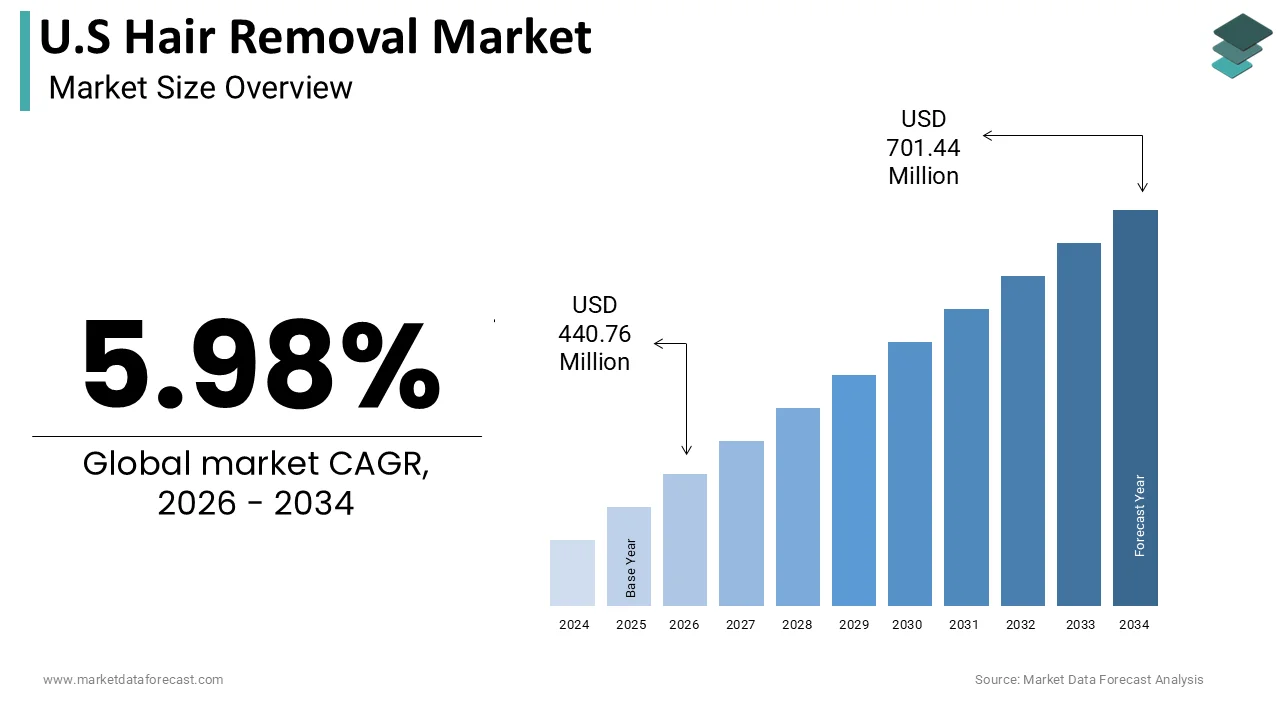
The United States hair removal market was valued at USD 415.89 million in 2025 and is projected to reach USD 701.44 million by 2034, growing from USD 440.76 million in 2026 at a CAGR of 5.98% during the forecast period. Market growth is driven by rising consumer awareness regarding personal grooming, increasing adoption of advanced hair removal technologies, and growing demand for aesthetic treatments. The expansion of at-home hair removal devices and professional dermatology services is further supporting the growth of the U.S. hair removal market.
Key Market Trends
- Increasing demand for laser and IPL hair removal treatments
- Rising popularity of at-home hair removal devices
- Growing consumer focus on personal grooming and aesthetics
- Expansion of dermatology and cosmetic clinics
- Increasing adoption of painless and long-lasting hair removal solutions
Segmental Insights
- Based on product, the razors segment dominated the U.S. hair removal market in 2025 by accounting for 45.2% of the market share, driven by affordability, convenience, and widespread usage.
- Based on gender, the women's segment held the dominant market share in 2025 due to higher spending on personal grooming and beauty products.
- Based on end user, the dermatology clinics segment led the market in 2025 by capturing 55.4% of the market share, supported by increasing demand for professional laser hair removal procedures.
Competitive Landscape
- The U.S. hair removal market is highly competitive, with companies focusing on product innovation, advanced technologies, and premium grooming solutions. Market players are investing in laser technologies, cordless grooming devices, and dermatologist-approved treatments to strengthen market presence.
- Prominent players in the U.S. hair removal market include Procter & Gamble, Edgewell Personal Care, Philips, Panasonic Corporation, Braun, Veet, Church & Dwight, Cynosure, Candela Corporation, Lumenis, Silk’n, Conair Corporation, Spectrum Brands, American International Industries, and Reckitt Benckiser.
U.S Hair Removal Market Size
The U.S hair removal market size was calculated to be USD 415.89 million in 2025 and is anticipated to be worth USD 701.44 million by 2034, from USD 440.76 million in 2026, growing at a CAGR of 5.98% during the forecast period.
The hair removal is designed to eliminate unwanted body hair through temporary or permanent methods. The evolving beauty standards, personal grooming habits, and technological advancements in dermatological care. As per the American Society for Dermatologic Surgery, over 1 million laser hair removal procedures were performed in the United States in recent years, reflecting a significant shift towards long-term solutions. The cultural emphasis on smooth skin remains prevalent across genders, although societal norms are gradually becoming more inclusive of natural body hair. The employment in personal care services, including skincare specialists, is projected to grow faster than the average for all occupations, indicating sustained demand for professional treatments. The rise of at-home devices has democratized access to advanced technologies previously available only in clinical settings. Consumer awareness regarding hygiene and aesthetics continues to influence purchasing decisions. Regulatory oversight by the Food and Drug Administration ensures the safety and efficacy of medical-grade devices.
MARKET DRIVERS
Rising Prevalence of Hypertrichosis and Hormonal Imbalances
The rising prevalence of hypertrichosis and hormonal imbalances is driving the growth of the United States hair removal market. Conditions, such as polycystic ovary syndrome, affect approximately 10% of women of reproductive age in the United States, according to the Centers for Disease Control and Prevention. These conditions often result in hirsutism or excessive hair growth in areas where men typically grow hair, causing significant psychological distress. The emotional impact of unwanted hair drives individuals to pursue both temporary and permanent solutions to improve self-esteem and quality of life. Medical professionals frequently recommend laser hair removal or electrolysis as part of the management strategy for these conditions. Insurance coverage for hair removal related to medical conditions is increasing, although it remains limited. The growing diagnosis rates of hormonal disorders due to better healthcare access and awareness contribute to market expansion. Patients are increasingly educated about the benefits of long-term hair reduction over repetitive shaving or waxing. This medical necessity creates a stable demand base that is less sensitive to economic fluctuations. Consequently, the intersection of healthcare and aesthetics fuels consistent growth in the professional treatment segment.
Increasing Adoption of At-Home Laser and IPL Devices
The increasing adoption of at-home laser and intense pulsed light devices, by offering convenience and cost effectiveness, is accelerating the growth of the United States hair removal market. Technological advancements have miniaturized professional-grade equipment, making it safe and accessible for consumer use. The sales of personal care electronics, including hair removal devices, have seen double-digit growth in recent years. Consumers prefer the privacy and flexibility of treating themselves at home rather than scheduling frequent clinic appointments. Manufacturers focus on user-friendly designs with safety features, such as skin tone sensors to prevent burns. Social media influencers and online reviews play an important role in educating consumers about the efficacy of these devices. The ability to achieve semi-permanent results without leaving home appeals to busy professionals and parents. This trend shifts revenue from service providers to product manufacturers.
MARKET RESTRAINTS
High Cost of Professional Treatments and Limited Insurance Coverage
The high cost of professional treatments and limited insurance coverage for many potential customers are restraining the growth of the United States hair removal market. The average cost for laser hair removal varies widely depending on the size of the treatment area and the number of sessions required. Most insurance plans classify hair removal as a cosmetic procedure and therefore do not provide coverage unless it is medically necessary for conditions like severe hirsutism. This financial barrier excludes a large segment of the population who cannot afford out-of-pocket expenses. The economic uncertainty and inflationary pressures further reduce discretionary spending on non-essential beauty treatments. Consumers may opt for cheaper temporary methods such as shaving or depilatory creams, which offer lower upfront costs but require continuous purchase. The lack of transparent pricing in some clinics creates hesitation among first-time users. Financing options are available but often involve interest charges that increase the total burden. This affordability issue limits the accessibility of permanent solutions to higher-income demographics.
Pain, Discomfort, and Risk of Side Effects
The pain, discomfort, and risk of side effects associated with the widespread adoption of certain hair removal methods are additionally hampering the growth of the United States hair removal market. Procedures, such as waxing, threading, and laser therapy, can cause varying levels of pain, which deters sensitive individuals. The improper use of at-home devices can lead to burns, blisters, and scarring, particularly if instructions are not followed carefully. The fear of adverse reactions discourages some consumers from trying new technologies. Skin irritation from depilatory creams and ingrown hairs from shaving are frequent complaints that reduce customer satisfaction. Individuals with darker skin tones face higher risks of hyperpigmentation with certain laser types, limiting their options. The need for numbing creams or cooling devices adds complexity and cost to the process. Negative experiences shared on social media and review platforms can damage brand reputation and deter potential users. The variability in individual pain tolerance makes it difficult to standardize comfort levels across treatments. Clinics must invest in advanced cooling technologies and trained staff to mitigate discomfort.
MARKET OPPORTUNITIES
Expansion of Male Grooming and Body Positivity Trends
The expansion of male grooming and body positivity trends is setting up new opportunities for the growth of the United States hair removal market. The influence of social media and celebrity culture promotes well-groomed appearances for men. Fitness enthusiasts and athletes often remove body hair for aesthetic and performance reasons. Clinics and brands are developing marketing campaigns specifically tailored to male needs, emphasizing masculinity and hygiene. The stigma surrounding male hair removal is diminishing, allowing for open discussion and adoption. Product manufacturers are creating formulations and devices designed for coarser male hair. Professional services are introducing male-specific packages and private treatment rooms to enhance comfort. The growing acceptance of grooming as self-care for men ensures sustained demand.
Integration of Artificial Intelligence and Smart Technologies
The integration of artificial intelligence and smart technologies for innovation and differentiation is expected to further escalate the growth of the United States hair removal market in the coming years. Advanced devices, no feature skin tone sensors, automatic energy adjustment, and connectivity to mobile apps for tracking progress. The smart beauty devices are gaining traction, as consumers seek personalized and data-driven solutions. The Internet of Things in healthcare and wellness is expanding by enabling devices to provide real-time feedback and safety alerts. AI algorithms can analyze skin characteristics to optimize pulse intensity by reducing the risk of burns and improving efficacy. Mobile applications allow users to schedule treatments, monitor results, and receive maintenance reminders. This technological enhancement increases user confidence and adherence to treatment protocols. Brands that incorporate smart features can command premium prices and build loyal customer bases. The collection of anonymized data helps manufacturers refine product designs and identify usage patterns. Teledermatology platforms can connect users with experts for remote consultations regarding device usage. The emergence of beauty and technology creates a new category of intelligent personal care.
MARKET CHALLENGES
Regulatory Hurdles and Safety Compliance Standards
The regulatory hurdles and safety compliance standards, by imposing strict requirements on product development and marketing, are one of the major challenges for the growth of the United States hair removal market. The Food and Drug Administration regulates medical-grade laser and intense pulsed light devices, requiring rigorous testing and approval processes. Manufacturers must demonstrate substantial equivalence to predicate devices or undergo premarket approval, which is time-consuming and costly. The compliance with laser safety standards, such as ANSI Z136.3, is mandatory for professional equipment. Non-compliance can result in product recalls, fines, and legal liabilities. The complexity of navigating federal and state regulations varies, creating operational challenges for companies. Recent scrutiny of at-home ice has led to stricter labeling and warning requirements to protect consumers. The need for clinical trials to substantiate efficacy claims adds to development expenses. Small businesses may struggle to meet these regulatory burdens, limiting competition. Changes in regulations require continuous monitoring and adaptation of manufacturing processes. The liability associated with potential injuries necessitates comprehensive insurance coverage. These regulatory constraints slow down the introduction of innovations.
Competition from Alternative Beauty Treatments and Natural Movements
The competition from alternative beauty treatments and natural movements, shifting consumer preferences, is expected to impede the growth of the United States hair removal market. The body positivity movement encourages acceptance of natural body hair, challenging traditional beauty standards. The growing number of young adults is choosing to stop removing body hair as a form of self-expression. The rise of holistic wellness trends promotes natural skincare and minimal intervention approaches. Consumers may prioritize other aesthetic treatments, such as facials, massages, or organic skincare, over hair removal. The perception of hair removal as unnecessary or oppressive influences purchasing decisions, particularly among younger people. Social media campaigns advocating for natural beauty reduce the social pressure to conform to hairless ideals. This cultural shift reduces the frequency of purchases and professional visits. Brands face the challenge of repositioning their products as choices rather than necessities. The decline in social stigma around body hair has a long-term impact.
REPORT COVERAGE
| REPORT METRIC | DETAILS |
| Market Size Available | 2025 to 2034 |
| Base Year | 2025 |
| Forecast Period | 2026 to 2034 |
| CAGR | 5.98% |
| Segments Covered | By Product, Gender, End User, And Region |
| Various Analyses Covered | Global, Regional & Country Level Analysis; Segment-Level Analysis; DROC, PESTLE Analysis; Porter’s Five Forces Analysis; Competitive Landscape; Analyst Overview of Investment Opportunities |
| Regions Covered | New York, Massachusetts, Pennsylvania, Illinois, Ohio, Michigan, Texas, Florida, Georgia, California, Washington, Colorado. |
| Market Leaders Profiled | Procter & Gamble, Edgewell Personal Care, Philips, Panasonic Corporation, Braun, Veet, Church & Dwight Co., Inc., Cynosure, Candela Corporation, Lumenis, Silk’n, Conair Corporation, Spectrum Brands, American International Industries, Reckitt Benckiser Group plc |
SEGMENTAL ANALYSIS
By Product Insights
The razors segment was the largest by occupying 45.2% of the United States hair removal market share in 2025. Affordability and immediate accessibility for consumers are elevating the growth of the segment. Razors represent the most cost-effective method for hair removal, requiring minimal upfront investment compared to electronic devices or professional treatments. The average household spends approximately 100 USD annually on shaving products, which is significantly lower than the cost of waxing kits or laser sessions. The consumer price index for personal care products indicates that razors remain one of the most affordable grooming items. The ubiquity of razors in supermarkets, pharmacies, and convenience stores ensures that consumers can purchase replacements instantly. This ease of access eliminates the need for planning or appointments, making razors the default choice for daily grooming routines. The low barrier to entry allows individuals of all income levels to maintain personal hygiene standards. Manufacturers offer a wide range of options from basic disposable units to premium multi-blade systems, catering to diverse budgets. The familiarity with razor usage reduces the learning curve and risk of error.
The electronic devices segment is expected to register the fastest CAGR of 9.8% from 2026 to 2034, owing to the technological advancements in at-home laser and intense pulsed light systems. Innovations, such as skin tone sensors, cooling mechanisms, and adjustable energy levels, have made these devices safer and more effective for consumer use. The sales of personal care electronics have increased significantly as users seek professional-grade results at home. The clearance of more at-home devices has expanded the range of options available to consumers. These devices offer semi-permanent hair reduction, which appeals to individuals tired of repetitive shaving or waxing. The ability to customize treatment settings enhances user comfort and efficacy. Manufacturers invest heavily in research and development to improve pulse technology and battery life. The integration of smartphone apps for tracking treatment progress adds value and engagement. Users appreciate the convenience of treating themselves on their own schedule without visiting clinics. The initial cost is offset by long-term savings compared to professional services.
By Gender Insights
The women segment was accounted for in holding a dominant share of the United States hair removal market in 2025. Societal beauty standards and pressure for smooth skin are accelerating the growth of the segment. Cultural expectations dictate that women should remove body hair from their legs, underarms, and other areas to conform to ideals of femininity and cleanliness. According to a study published in the Journal of Sex Research, over 90% of women in the United States remove body hair regularly, citing social norms as a primary motivator. The Womene greater scrutiny regarding body hair than men, influencing their grooming habits. The media and fashion industries reinforce these standards through imagery of hairless models and celebrities. Women often perceive hair removal as essential for professional and social acceptance. This pressure creates a consistent and high-volume demand for hair removal products and services. The frequency of removal is higher for women due to the larger surface area treated and faster regrowth rates.
The men's segment is likely to grow at the fastest CAGR of 8.5% from 2026 to 2034, owing to the changing grooming trends and male body positivity. Traditional notions of masculinity are evolving, allowing men to explore grooming practices previously considered feminine. The influence of fitness culture and sports encourages men to remove body hair for aesthetic and performance reasons. Social media platforms showcase groomed male bodies, normalizing the practice. Men are increasingly confident in discussing and pursuing hair removal options. The stigma surrounding male grooming is diminishing, leading to broader adoption. Brands are responding by marketing products specifically designed for male physiology and preferences. The focus on self-care and personal presentation drives demand.
By End User Insights
The dermatology clinics segment was the largest by holding 55.4% of the United States hair removal market share in 2025. The perceived safety and medical expertise are also boosting the growth of the segment. Consumers trust board-certified dermatologists to perform procedures with minimal risk of complications. The patients prefer medical settings for laser treatments due to the ability to handle adverse reactions immediately. The medical-grade lasers used in clinics are more powerful and effective than at-home devices, requiring professional operation. The presence of trained staff ensures proper skin assessment and parameter selection by reducing the risk of burns or pigmentation issues. Patients with sensitive skin or medical conditions rely on clinical expertise for safe treatment. The credibility of medical professionals builds confidence and loyalty. Insurance coverage for medically necessary hair removal is more accessible in clinics. The association with healthcare enhances the perceived value of the service.
The beauty clinics segment is expected to witness the fastest CAGR of 10.2% from 2026 to 2034. Proliferation of med spas and accessibility drives the rapid growth of the segment. Med spas offer a relaxed and luxurious environment that appeals to consumers seeking wellness and beauty services. The number of med spas in the United States has increased significantly, providing wider access to hair removal services. The consumers prefer the convenience and ambiance of beauty clinics over sterile medical settings. The locations of med spas in shopping centers and urban areas enhance visibility and ease of access. The extended operating hours accommodate busy schedules. The integration of hair removal with other beauty treatments creates package opportunities. The welcoming atmosphere reduces anxiety associated with medical procedures. The marketing strategies of beauty clinics emphasize relaxation and self-care.
COMPETITION OVERVIEW
The competition in the United States hair removal market is characterized by intense rivalry among established consumer goods giants and specialized technology firms striving to offer superior solutions. Major players compete based on product efficacy, safety features, and brand reputation. The market features a mix of disposable razors, waxing kits, and advanced electronic devices catering to diverse consumer needs. Companies differentiate themselves through innovations such as skin tone sensors, ergonomic designs, and sustainable materials. Strategic collaborations with healthcare professionals enhance credibility for professional-grade equipment. Price competitiveness remains a key factor, particularly in the mass market segment where private labels challenge established brands. Innovation in at-home laser technology drives growth in the premium sector. The rise of male grooming creates new opportunities for targeted marketing. Intellectual property related to laser technology serves as a competitive barrier.
KEY MARKET PLAYERS
A few major players of the U.S hair removal market include
- Procter & Gamble
- Edgewell Personal Care
- Philips
- Panasonic Corporation
- Braun
- Veet
- Church & Dwight Co., Inc
- Cynosure
- Candela Corporation
- Lumenis
- Silk’n
- Conair Corporation
- Spectrum Brands
- American International Industries
- Reckitt Benckiser Group plc
Top Strategies Used by Key Market Participants
Key players in the United States hair removal market primarily employ strategies focused on product innovation and digital integration to maintain a competitive advantage. Companies invest heavily in research and development to create safer and more effective devices with smart features. Strategic partnerships with dermatologists and influencers help build credibility and reach target audiences. Firms prioritize sustainability by adopting eco-friendly packaging and materials to appeal to environmentally conscious consumers. Expansion into male grooming segments diversifies revenue streams and captures new demographics. Providers also focus on enhancing user experience through intuitive designs and mobile app connectivity. Marketing efforts emphasize convenience, cost-effectiveness, and long-term results. These strategic initiatives enable firms to differentiate their offerings and respond effectively to evolving consumer preferences in the dynamic personal care sector.
Leading Players in the US Hair Removal MarketThe
- Procter and Gamble Company is a dominant force in the United States hair removal market through its Gillette and Venus brands. The company offers a wide range of razors, shaving cream,s and accessories for both men and women. Recent actions include the launch of advanced razor systems with ergonomic handles and lubrication strips to enhance comfort. Procter and Gamble has invested in sustainable packaging initiatives to reduce environmental impact. The firm leverages extensive distribution networks to ensure product availability in retail stores and online platforms. Marketing campaigns emphasize precision and smoothness, appealing to diverse consumer needs.
- Koninklijke Philips N.V. contributes significantly to the market through its innovative at-home laser and intense pulsed light devices. The company focuses on providing safe and effective hair removal solutions for consumer use. Recent developments involve the introduction of smart sensors that adjust energy levels based on skin tone. Philips has expanded its digital health ecosystem by integrating mobile apps for treatment tracking. The firm emphasizes user safety and ease of use in its product design. Strategic partnerships with dermatologists help validate the efficacy of its devices. Philips invests in research and development to improve pulse technology and battery life. These initiatives enhance the user experience and build trust in the brand. The focus on technological advancement distinguishes its offerings in the competitive landscape.
- Lumenis Ltd. plays a crucial role in the professional sector by supplying medical-grade laser systems to clinics and dermatology practices. The company is known for its high-performance equipment used for permanent hair reduction. Recent actions include the launch of next-generation laser platforms with faster treatment speeds and improved cooling mechanisms. Lumenis has expanded its training programs for practitioners to ensure safe and effective usage. The firm collaborates with medical professionals to develop customized treatment protocols. Its focus on clinical efficacy and patient safety attracts leading healthcare providers. Lumenis continues to innovate in light-based technologies to address diverse skin types. These efforts reinforce its reputation as a trusted partner in aesthetic medicine. The commitment to quality and support strengthens its position in the professional market.
MARKET SEGMENTATION
This research report on the US hair removal market has been segmented and sub-segmented based on product, gender, end user & region.
By Product
- Creams
- Ready to use Wax Strips
- Electronic Devices
- Razors
By Gender
- Men
- Women
By End User
- Dermatology Clinics
- Beauty Clinics
By Region
- New York
- Texas
- Florida
- Georgia
- California
- Rest of U.S.