- Product Description Description
- Table of Contents TOC
- List of Table & Figure LOT
- Get Free Sample PDF Sample PDF
Market Size, 2025
$16.22 BnMarket Estimate, 2026
$17.08 BnMarket Forecast, 2034
$25.84 BnCAGR, 2026–2034
5.31%U.S. Handbags Market Report Summary
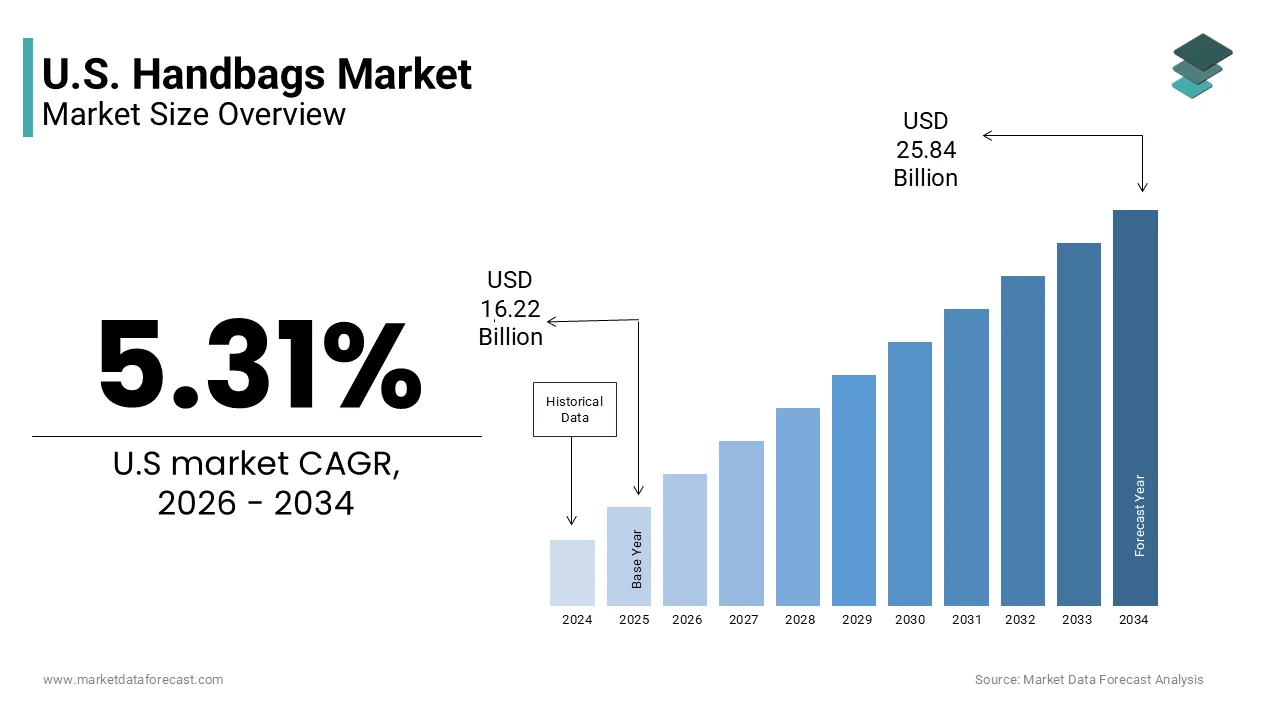
The U.S. handbags market was valued at USD 16.22 billion in 2025, is estimated to reach USD 17.08 billion in 2026, and is projected to reach USD 25.84 billion by 2034, growing at a CAGR of 5.31% during the forecast period. Market growth is driven by increasing consumer spending on fashion accessories, rising demand for premium and luxury handbags, and evolving lifestyle preferences that emphasize both functionality and style. Handbags remain an essential fashion accessory across the United States due to their practicality, aesthetic appeal, and growing influence of luxury fashion trends. The expansion of online retail channels, premium branding strategies, and sustainable fashion initiatives is further supporting market growth.
Key Market Trends
- Rising consumer demand for premium and luxury fashion accessories is driving market growth.
- Increasing preference for functional and versatile handbag designs is boosting market expansion.
- Growing influence of fashion trends, social media, and luxury branding is supporting product demand.
- Expansion of omnichannel retail and e commerce platforms is enhancing market accessibility.
- Innovation in sustainable materials and premium craftsmanship is influencing market development.
Segmental Insights
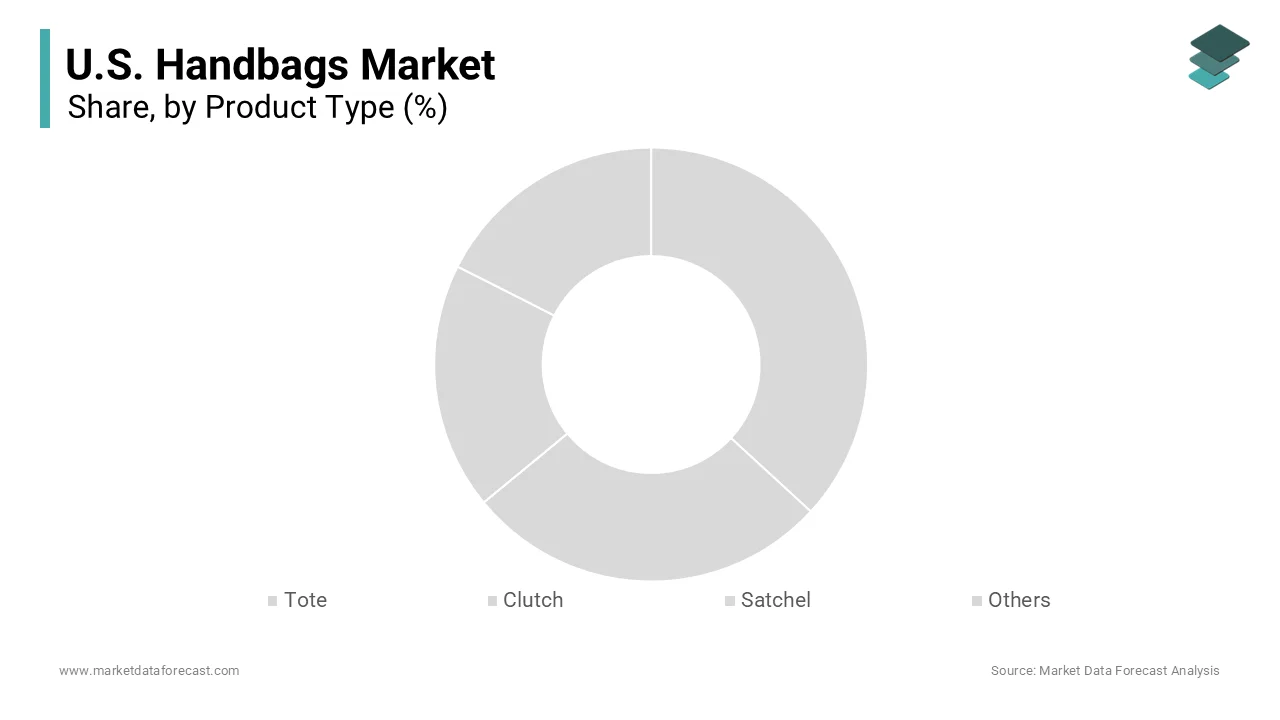
- Based on product type, the tote bag segment accounted for the leading share of the U.S. handbags market in 2025. This dominance is attributed to versatility, spacious design, and suitability for both casual and professional use.
- Based on raw material, the leather segment held the dominant share of the U.S. handbags market in 2025, driven by durability, premium appeal, and strong association with luxury products.
- Based on end user, the women segment accounted for the largest share of the U.S. handbags market in 2025, supported by strong fashion consumption trends and product variety.
- Based on distribution channel, department stores held the leading position in the U.S. handbags market due to extensive brand portfolios, broad product assortments, and established retail infrastructure.
Regional Insights
- The United States accounted for approximately 85% of the North American handbags market share in 2025 and remains the dominant regional market. Strong purchasing power, an established luxury retail ecosystem, and rising consumer interest in fashion accessories continue to support market expansion.
Competitive Landscape
The U.S. handbags market is highly competitive, with companies focusing on luxury positioning, premium materials, sustainability initiatives, and digital commerce expansion to strengthen their market position. Product innovation and brand collaborations continue to shape competition across the industry. Prominent players in the U.S. handbags market include Tapestry Inc., Hermes International SA, CHANEL, Prada SpA, Compagnie Financiere Richemont SA, Burberry Group PLC, Capri Holdings Ltd., Fossil Group Inc., LVMH Moet Hennessy Louis Vuitton SE, and Kering SA.
U.S. Handbags Market Size
The U.S. handbags market size was valued at USD 16.22 billion in 2025, and the market size is expected to be worth USD 25.84 billion by 2034 from USD 17.08 billion by 2026. The market is growing at a CAGR of 5.31% during the forecast period.
The handbags are carryalls, including totes, clutches, satchels, and crossbody bags, designed for both functional utility and aesthetic expression. The definition extends beyond mere storage solutions to encompass items that serve as statements of personal identity and luxury aspiration. Consumer engagement with handbags has shifted from occasional purchases to frequent acquisitions driven by trend cycles and the desire for variety. According to the United States Census Bureau, the female population aged 20 to 64, which represents the core demographic for handbag consumption accounts for approximately 85 million individuals providing a substantial base for discretionary spending. Furthermore, data from the Bureau of Labor Statistics indicates that average annual expenditures on apparel and services per consumer unit reached 1837 dollars in recent years underscoring the significant financial commitment households make toward fashion and accessories. The proliferation of digital commerce has further intensified accessibility allowing consumers to explore global brands and niche designers with ease. Industry observers note that the integration of sustainable materials into handbag production has become a standard expectation rather than a niche preference.
MARKET DRIVERS
Rising Female Workforce Participation Drives Demand for Professional Accessories
The increasing participation of women in the professional workforce for handbag consumption, particularly for structured and functional designs is primarily driving the growth of the United States handbags market. As more women enter corporate and managerial roles, the need for versatile bags that can accommodate laptops documents and personal items has surged. According to the Bureau of Labor Statistics, the labor force participation rate for women in the United States stands at approximately 57% representing millions of professionals who require reliable daily carry solutions. This demographic prioritizes durability and organization leading to higher demand for premium leather totes and messenger bags. The shift toward hybrid work models has also influenced preferences with consumers seeking bags that transition seamlessly from office to casual settings. The number of women owned businesses has grown significantly driving the need for professional attire and accessories. Handbags serve as essential tools for productivity and professionalism enhancing the wearer’s confidence and image. The trend toward remote work has not diminished this demand but rather shifted it toward versatile designs that suit various environments. Companies respond by introducing ergonomic features and tech friendly compartments. This sustained engagement ensures a steady demand for high quality handbags across various price points.
Influence of Social Media and Celebrity Culture on Fashion Trends
The digital platforms, such as Instagram, TikTok, and Pinterest have fundamentally altered perceptions of fashion by showcasing curated lifestyles, where handbags play a central role. Celebrities and influencers frequently display luxury and trendy bags creating an aspirational ideal that drives consumer demand for similar items. According to Pew Research Center approximately 71% of teens and young adults use TikTok regularly where fashion hauls and unboxing videos generate billions of views monthly. This constant exposure creates a powerful psychological pull as users seek to replicate the styles seen online. The visual nature of these platforms emphasizes the immediate impact of accessories encouraging frequent purchases to keep up with fleeting trends. Brands leverage this dynamic by collaborating with digital creators who possess high engagement rates thereby bypassing traditional advertising barriers. As per data from eMarketer digital ad spending in the fashion sector has surged with social media capturing over 40% of total digital fashion ad expenditure. This shift indicates that consumer attention has decisively moved toward interactive digital environments where peer validation plays a crucial role. The immediacy of social commerce features allows users to purchase products directly from posts shortening the sales funnel significantly. Consequently brands must maintain a relentless pace of content creation to retain relevance in this fast paced ecosystem where viral moments can dictate market success overnight.
MARKET RESTRAINTS
Economic Volatility and Inflationary Pressures on Discretionary Spending
The substantial financial investment required for premium handbags acts as a significant restraint for many potential consumers during periods of economic uncertainty. High inflation rates and rising costs of living have reduced disposable income for non essential goods leading consumers to prioritize basic necessities over luxury items. According to the Bureau of Labor Statistics the consumer price index for apparel and accessories has seen moderate increases prompting consumers to seek cost effective alternatives or delay purchases. This price sensitivity places premium products out of reach for budget conscious shoppers who may opt for lower quality substitutes or second hand options. As per data from the Federal Reserve household savings rates have fluctuated indicating financial caution among consumers. The perceived value proposition becomes challenging when consumers weigh the high initial cost against the limited utility of trendy items. Economic uncertainty exacerbates this hesitation causing delays in purchasing decisions or trading down to affordable brands. Brands struggle to justify premium pricing without demonstrating clear longevity and timeless appeal. This economic barrier restricts market expansion among lower income demographics who represent a significant portion of the potential customer base. Consequently the market faces limitations in converting casual users into regular buyers of high end products. The volatility in consumer confidence directly impacts sales volumes particularly for mid tier brands that lack the exclusivity of luxury labels or the affordability of mass market options.
Environmental Concerns Regarding Leather Production and Waste Generation
The handbag industry faces growing scrutiny over its environmental footprint due to heavy reliance on animal leather and synthetic materials that contribute to pollution and waste. Consumers are increasingly aware of the ecological impact of their purchases leading to hesitation in buying products from brands with poor sustainability records. According to the Environmental Protection Agency approximately 17 million tons of textile waste were generated in the United States with accessories representing a substantial portion due to their complex construction. The production of leather involves high energy consumption and chemical usage which exacerbates carbon emissions and water pollution. As per data from the Ellen MacArthur Foundation less than 1% of material used to produce clothing and accessories is recycled into new products highlighting the inefficiency of current systems. Regulatory pressures are mounting as states introduce stricter waste management laws and extended producer responsibility schemes. Brands face challenges in transitioning to bio based or recycled materials without compromising durability or aesthetic appeal. The complexity of bag assembly with mixed materials makes disassembly for recycling technically difficult and expensive. Greenwashing accusations further erode trust when claims do not match actual practices. This environmental backlash forces companies to invest heavily in research for circular design principles. However the higher costs associated with sustainable production can deter price sensitive consumers. Balancing ecological responsibility with commercial viability remains a significant hurdle for market expansion.
MARKET OPPORTUNITIES
Expansion of Sustainable and Vegan Leather Product Lines
The shift toward ethical consumption presents a significant opportunity for brands to differentiate themselves and capture eco conscious consumers. Innovations in plant based leathers such as those derived from mushrooms cactus and pineapple allow companies to reduce environmental impact while maintaining quality. According to a survey by Deloitte nearly 60% of consumers express willingness to pay more for products from brands that demonstrate strong ethical standards. This shift creates a niche for companies that can verify and certify their supply chains providing peace of mind to conscientious buyers. As per data from Mintel the demand for clean fashion extends to accessories with consumers seeking products free from harmful chemicals and animal cruelty. Brands that partner with innovative material startups can command premium pricing and build loyal customer bases. The development of bio based fibers that mimic the texture and durability of traditional leather offers another avenue for innovation. These eco friendly alternatives appeal to younger demographics who prioritize sustainability in their purchasing decisions. Marketing campaigns that highlight the stories behind the materials foster emotional connections and trust. The transparency movement also encourages recycling programs for used bags reducing waste. By aligning with ethical values companies can tap into a growing segment of socially responsible consumers. This strategic positioning not only mitigates reputational risks but also enhances brand equity in a competitive landscape. Embracing sustainability transforms a potential liability into a competitive advantage.
Growth of the Resale and Pre Owned Luxury Market
The rise of the circular economy and resale platforms offers immense potential for brands to engage with value conscious consumers and extend product lifecycles. The pre owned luxury handbag market has grown significantly as shoppers seek authentic high quality items at reduced prices. According to ThredUp the secondhand apparel market is projected to grow significantly with luxury accessories being a key category driven by affordability and sustainability. Brands can capitalize on this by launching certified pre owned programs or partnering with resale platforms to control the secondary market. As per data from Bain and Company the resale luxury market is growing faster than the primary luxury market indicating a shift in consumer behavior. This trend allows brands to reach new customers who may not afford full price items while maintaining brand exclusivity. The authentication services provided by resale platforms build trust and reduce the risk of counterfeits. Companies can also offer trade in programs encouraging customers to return old bags for credit fostering loyalty and repeat purchases. The digitalization of resale through mobile apps makes browsing and buying convenient and accessible. This model aligns with the growing interest in unique and vintage items that offer individuality. By embracing resale brands can enhance their sustainability credentials and create new revenue streams. This approach transforms used products into valuable assets rather than waste. The continued evolution of resale platforms ensures that this channel remains a critical growth driver for the handbag market.
MARKET CHALLENGES
Prevalence of Counterfeit Products and Intellectual Property Theft
The widespread availability of counterfeit handbags poses a severe threat to brand reputation and revenue integrity in the United States market. High demand for popular luxury designs creates a lucrative market for fake products that mimic established brands. According to the International Trademark Association counterfeit goods cost the global economy billions of dollars annually with fashion accessories being a primary target. These inferior copies often fail to meet quality standards potentially causing dissatisfaction among unsuspecting buyers. As per data from the United States Customs and Border Protection seizures of counterfeit handbags remain high indicating the scale of the issue. Counterfeits dilute brand exclusivity and erode consumer trust in authentic products. The rise of online marketplaces makes it easier for counterfeiters to reach unsuspecting buyers who may not distinguish between real and fake items. Legal enforcement is challenging due to the cross border nature of these operations and varying intellectual property laws. Brands must invest heavily in anti counterfeiting technologies such as holograms and blockchain verification. However these measures add to production costs and complexity. The presence of fakes also disrupts pricing strategies and devalues limited edition releases. Consumers who inadvertently purchase counterfeits may develop negative perceptions of the brand. Protecting intellectual property requires constant vigilance and collaboration with law enforcement agencies. This ongoing battle diverts resources from innovation and marketing. Maintaining brand authenticity in a saturated market remains a persistent challenge for industry leaders striving to preserve value.
Supply Chain Disruptions and Raw Material Price Volatility
The United States handbag market relies heavily on global supply chains primarily located in Asia and Europe for manufacturing and raw material sourcing. This dependence exposes brands to geopolitical tensions trade disputes and logistical disruptions that can delay production and increase costs. According to the Institute for Supply Management manufacturing indices have shown fluctuations due to shortages in key inputs like leather hardware and fabrics. Fluctuating oil prices directly affect the cost of synthetic materials and transportation which constitute a major part of production expenses. As per data from the Bureau of Labor Statistics producer prices for leather and allied products have experienced volatility impacting profit margins for manufacturers and retailers. Tariffs imposed on imports from certain countries add another layer of financial burden forcing companies to rethink sourcing strategies. The lack of domestic manufacturing capacity limits flexibility in responding to sudden demand spikes or supply shocks. Natural disasters in producing regions can halt operations causing ripple effects across the global network. Inventory management becomes challenging as businesses struggle to predict lead times accurately. These uncertainties often result in stockouts or excess inventory both of which negatively affect financial performance. Smaller brands with limited resources are particularly vulnerable to these disruptions. While some companies are exploring nearshoring options the transition is slow and capital intensive. This structural vulnerability constrains the ability of the market to maintain stable pricing and consistent product availability amidst external uncertainties.
REPORT COVERAGE
| REPORT METRIC | DETAILS |
| Market Size Available | 2025 to 2034 |
| Base Year | 2025 |
| Forecast Period | 2026 to 2034 |
| CAGR | 5.31% |
| Segments Covered | By Product Type, Raw Material, End User, Distribution Channel, and Region. |
| Various Analyses Covered | Global, Regional and Country-Level Analysis, Segment-Level Analysis, Drivers, Restraints, Opportunities, Challenges; PESTLE Analysis; Porter’s Five Forces Analysis, Competitive Landscape, Analyst Overview of Investment Opportunities |
| Countries Covered | California, Washington, Oregon, New York, United States |
| Market Leaders Profiled | Tapestry Inc., Hermes International SA, CHANEL, Prada SpA, Compagnie Financiere Richemont SA Class A, Burberry Group PLC, Capri Holdings Ltd., Fossil Group Inc., LVMH Moet Hennessy Louis Vuitton SE, and Kering SA. |
SEGMENTAL ANALYSIS
By Product Type Insights
The tote bag segment holds the leading position in the United States handbags market driven by its unparalleled versatility and functional design that caters to the modern consumer's need for spacious and practical carryalls. This category appeals to a broad demographic including students professionals and parents who require ample space for laptops documents and daily essentials. According to the Bureau of Labor Statistics approximately 60% of employed women work in management professional or related occupations where carrying work materials is essential driving demand for structured and durable tote bags. The primary driver is the shift toward hybrid work models which necessitate bags that transition seamlessly from office to casual settings. As per data from the National Retail Federation tote bags consistently rank among the top selling accessories due to their utility and ease of use. The rise of remote work has also influenced preferences with consumers seeking larger bags to accommodate home office equipment during commutes. Major brands respond by introducing ergonomic features such as padded laptop compartments and organized pockets. The aesthetic versatility of totes allows them to complement both formal and casual attire enhancing their appeal. Furthermore the trend toward minimalism encourages consumers to own fewer but more functional items making the tote a staple wardrobe piece. The availability of diverse materials from canvas to leather ensures accessibility across price points. This combination of functionality style and adaptability solidifies the dominance of the tote bag segment in the market.
The clutch bag segment is experiencing the fastest growth rate in the United States handbags market with a projected compound annual growth rate of 6.2% over the next five years. This accelerated expansion is fueled by the resurgence of social events and nightlife following the pandemic which has increased demand for compact and stylish evening accessories. The primary driver is the changing nature of social gatherings where consumers prioritize fashion forward and statement pieces that complement formal attire. According to the Event Marketing Institute the number of corporate and social events has rebounded significantly with millions of attendees seeking appropriate accessories for these occasions. As per data from NPD Group sales of evening bags and clutches have surged as consumers replace outdated items with trendy designs. The influence of celebrity culture and red carpet events amplifies demand for luxurious and embellished clutches that serve as status symbols. Brands are responding by launching innovative designs featuring unique shapes metallic finishes and sustainable materials. The convenience of carrying only essential items such as phones and cards aligns with the minimalist trend among younger demographics. Additionally the rise of micro weddings and intimate celebrations drives demand for specialized occasion wear accessories. The affordability of clutches compared to larger handbags makes them an accessible entry point for luxury purchases. This convergence of social revival and fashion consciousness positions the clutch segment for sustained rapid growth.
By Raw Material Insights
The leather segment commands the largest share of the United States handbags market driven by its enduring appeal durability and association with luxury and quality. Consumers perceive leather as a premium material that offers longevity and timeless elegance making it a preferred choice for investment pieces. According to the United States Department of Agriculture the United States is one of the largest producers of high quality cattle hides ensuring a steady supply of raw materials for domestic manufacturers. The primary driver is the cultural significance of leather goods as status symbols and heirlooms that retain value over time. As per data from the Leather Working Group certified sustainable leather production has increased appealing to environmentally conscious consumers who seek ethical options. The versatility of leather allows for diverse textures and finishes catering to various aesthetic preferences from classic smooth to textured grains. Professional consumers particularly favor leather for its professional appearance and resistance to wear and tear in daily use. The craftsmanship associated with leather handbags enhances their perceived value justifying higher price points. Major brands invest in tanning technologies that reduce environmental impact while maintaining quality. The resale value of leather bags further incentivizes purchases as consumers view them as assets. This combination of durability prestige and sustainability initiatives sustains the leadership of the leather segment in the market.
The fabric segment including canvas nylon and synthetic blends is the fastest growing category in the United States handbags market with a projected compound annual growth rate of 7.5% driven by the demand for lightweight durable and eco friendly alternatives. The primary driver is the increasing consumer preference for sustainable materials that reduce environmental impact without compromising functionality. According to the Textile Exchange the global production of recycled polyester and organic cotton has increased significantly providing raw materials for fabric handbags. As per data from Mintel nearly 40% of US consumers prefer products made from recycled materials reflecting a shift toward ethical consumption. Fabric bags are often lighter than leather making them ideal for travel and daily commutes where weight is a concern. The affordability of fabric materials allows brands to offer trendy designs at accessible price points appealing to younger demographics. Innovations in water resistant and stain proof treatments have enhanced the durability of fabric bags addressing previous concerns about maintenance. The rise of casual and athleisure styles has also boosted demand for fabric totes and backpacks that complement relaxed outfits. Brands are collaborating with eco conscious organizations to create collections from upcycled materials further enhancing appeal. This convergence of sustainability convenience and style positions the fabric segment for rapid expansion in the coming years.
By End User Insights
The women segment holds the leading position in the United States handbags market driven by societal norms that associate handbags with feminine identity and fashion expression. Women are the primary consumers of handbags for both functional and aesthetic purposes utilizing them as essential accessories for daily life. According to the United States Census Bureau women constitute approximately 51% of the population and account for the majority of apparel and accessory expenditures. The primary driver is the diverse range of occasions requiring different types of bags from professional totes to evening clutches. As per data from the Bureau of Labor Statistics women spend approximately 30% more on personal care and accessories than men reflecting higher engagement with fashion trends. The influence of media and advertising reinforces the importance of handbags in completing an outfit driving frequent purchases. Women often view handbags as collectibles leading to ownership of multiple bags for different seasons and styles. The emotional connection between accessories and self esteem drives consistent consumption. Retailers cater specifically to women with extensive collections and personalized shopping experiences. The rise of female influencers showcasing bag collections further stimulates demand. This deep rooted cultural and behavioral pattern ensures that the women segment remains the cornerstone of the handbag market.
The men segment is experiencing the fastest growth rate in the United States handbags market with a projected compound annual growth rate of 8.1% driven by changing gender norms and the increasing acceptance of men using bags for professional and casual purposes. Historically limited to briefcases men are now embracing messenger bags backpacks and crossbody bags as stylish and practical accessories. According to the Council of Fashion Designers of America the number of men focused fashion brands offering handbag lines has increased significantly reflecting broader market acceptance. The primary driver is the rising participation of men in urban lifestyles where carrying tech devices and personal items is essential. As per data from NPD Group sales of men’s bags have grown double digits in recent years indicating shifting consumer behavior. The influence of male celebrities and influencers showcasing bag usage has reduced stigma and encouraged adoption. Modern designs focus on functionality and minimalism appealing to professional men who value organization and style. The growth of remote work has also increased the need for versatile bags that suit various environments. Brands are expanding their men’s collections with innovative features such as anti theft pockets and charging ports. This combination of practicality and evolving fashion sensibilities positions the men segment for rapid expansion.
By Distribution Channel Insights
Departmental stores hold the leading position in the United States handbags market due to their extensive product assortments established brand presence and ability to offer a comprehensive shopping experience. These retailers provide consumers with the opportunity to view and touch products before purchasing which is crucial for assessing quality and style. According to the National Retail Federation department stores account for a significant portion of accessory sales as consumers value the convenience of one stop shopping. The primary driver is the trust associated with established retailers that offer authentic products and reliable customer service. As per data from Statista many consumers prefer department stores for luxury and mid tier handbags due to the availability of exclusive brands and seasonal collections. The presence of knowledgeable sales staff enhances the shopping experience by providing personalized recommendations and styling advice. Department stores often host promotional events and loyalty programs that attract repeat customers. The integration of online and offline channels allows for seamless browsing and purchasing options. The physical presence of flagship stores in major malls serves as a brand showcase enhancing visibility. This combination of trust variety and service maintains the dominance of departmental stores in the distribution landscape.
The off price segment is the fastest growing distribution channel in the United States handbags market with a projected compound annual growth rate of 9.0% driven by the increasing consumer desire for value and discounted luxury goods. Shoppers are increasingly seeking deals on branded items without compromising on quality making off price retailers an attractive option. According to the Off Price Retailers Association sales in this sector have grown consistently as consumers become more price sensitive and bargain oriented. The primary driver is the economic uncertainty that encourages shoppers to maximize their purchasing power through discounts. As per data from McKinsey the popularity of off price shopping has surged among millennials and Gen Z who view finding deals as a smart shopping strategy. Off price retailers offer a treasure hunt experience where consumers discover unique items at reduced prices creating excitement and urgency. The availability of past season collections from premium brands allows access to high quality products at affordable rates. The expansion of online off price platforms has further enhanced accessibility allowing consumers to browse deals from home. This combination of value proposition and engaging shopping experience positions the off price segment for sustained rapid growth.
COUNTRY LEVEL ANALYSIS
The United States stands as the dominant force in the North American handbags market holding approximately 85% of the regional share due to its large affluent population and robust retail infrastructure. The market status in the US is characterized by high consumer spending on fashion accessories and a strong culture of self expression through style. A primary driving factor is the diverse demographic landscape which creates varied demands for different styles and price points. According to the United States Census Bureau the growing diversity of the population ensures a broad customer base for both luxury and mass market handbags. The presence of major global brands and specialized distributors facilitates wide product availability and innovation. As per data from the Bureau of Economic Analysis personal consumption expenditures on apparel and accessories remain resilient indicating strong consumer confidence. The influence of American media and entertainment industries sets global fashion trends driving domestic demand for latest styles. The well developed retail network including online platforms and department stores ensures easy access to products. Regulatory frameworks although evolving provide a structured environment for business operations. The high disposable income of American consumers allows for frequent purchases of premium handbags. The integration of technology in retail such as virtual try ons enhances customer experience. This combination of cultural diversity economic strength and industrial capability ensures that the United States remains the central hub for handbag consumption and innovation in the region.
COMPETITIVE LANDSCAPE
The competitive landscape of the United States handbags market is characterized by intense rivalry among established luxury brands and emerging contemporary labels. Large corporations leverage strong brand equity and extensive distribution networks to maintain dominance while smaller brands compete on uniqueness and agility. The market is fragmented with numerous independent designers and private label offerings adding to the complexity. Price competition is fierce in the mass market segment whereas premium brands compete on craftsmanship and exclusivity. The rise of e commerce has lowered barriers to entry allowing direct to consumer brands to gain traction quickly. Consumer loyalty is increasingly fragmented as shoppers prioritize style and value over brand heritage alone. Retailers play a crucial role by curating assortments that balance popular staples with trending items. Intellectual property protection is vital as counterfeiting remains a persistent issue. Companies must adapt rapidly to changing consumer preferences and technological advancements. Success depends on balancing innovation with operational efficiency and strong brand storytelling. This dynamic environment requires constant vigilance and strategic agility to sustain long term growth and profitability in a evolving fashion sector.
KEY MARKET PLAYERS
Some of the companies that are playing a dominating role in the U.S. handbags market are
- Tapestry Inc.
- Hermes International SA
- CHANEL
- Prada SpA
- Coach Inc
- Compagnie Financiere Richemont SA Class A
- Burberry Group PLC
- Capri Holdings Ltd.
- Michael Kors Holdings Limited
- Fossil Group Inc.
- LVMH Moet Hennessy Louis Vuitton SE
- Kering SA
Top Players in the Market
- Coach Inc maintains a strong presence in the United States handbags market by blending heritage craftsmanship with modern design aesthetics. The brand focuses on accessible luxury offering high quality leather goods that appeal to a broad demographic. Recent actions include expanding its digital ecosystem through enhanced e commerce platforms and personalized customer experiences. Coach has also intensified its sustainability efforts by launching collections made from recycled materials and promoting repair services. Collaborations with contemporary artists and designers keep the brand culturally relevant and fresh. The company leverages data analytics to optimize inventory and tailor marketing campaigns effectively. By strengthening its direct to consumer channels Coach builds deeper relationships with customers. These strategies ensure the brand remains competitive and desirable in a dynamic retail environment.
- Tapestry Inc operates as a global house of brands including Coach Kate Spade and Stuart Weitzman contributing significantly to the US handbags sector. The company drives growth by leveraging synergies across its portfolio to enhance operational efficiency and brand visibility. Recent initiatives include integrating advanced technology into supply chain management to improve speed and accuracy. Tapestry has focused on expanding its omnichannel capabilities ensuring seamless shopping experiences online and in store. The firm actively promotes diversity and inclusion in its marketing campaigns resonating with modern consumers. Investments in digital marketing and social media engagement help capture younger audiences. By fostering innovation and creativity across its brands Tapestry strengthens its market position. The company continues to explore new revenue streams through strategic partnerships and product expansions.
- Michael Kors Holdings Limited is a key player in the US handbags market known for its glamorous and jet set inspired designs. The brand appeals to fashion conscious consumers seeking stylish and functional accessories. Recent actions include revitalizing its core collection with updated silhouettes and vibrant colors to attract new customers. Michael Kors has expanded its presence in off price retail channels to reach value oriented shoppers. The company invests heavily in digital transformation enhancing its mobile app and online store features. Strategic collaborations with celebrities and influencers amplify brand awareness and drive sales. By focusing on customer centric innovations and sustainable practices Michael Kors maintains its competitive edge. The brand continues to adapt to changing consumer preferences ensuring long term relevance.
Top Strategies Used by Key Market Participants
Key players in the United States handbags market employ diverse strategies to maintain competitive advantage and drive growth. Product innovation remains central with companies developing sustainable materials and timeless designs. Brands focus on direct to consumer channels by enhancing digital platforms and offering personalized shopping experiences. Strategic collaborations with influencers and celebrities help generate hype and cultural relevance. Sustainability initiatives are increasingly important as consumers demand ethically sourced and eco friendly products. Companies leverage data analytics to optimize inventory and predict trends accurately. Omnichannel integration ensures seamless experiences between online and physical stores. Limited edition releases create scarcity and drive urgency among consumers. Marketing campaigns emphasize storytelling and community engagement to build emotional connections. These strategies collectively help brands differentiate themselves and capture value in a saturated market.
United States Handbags Market News
- In March 2023, Coach Inc launched a new sustainable leather collection to appeal to eco conscious consumers and strengthen the Us handbags markettt presence
- In June 2023, Tapestry Inc integrated advanced supply chain technology to improve operational efficiency and strengthen the Us handbags markettt presence
- In September 2023, Michael Kors Holdings Limited expanded its off price retail partnerships to reach value oriented shoppers and strengthen the Us handbags markettt presence
- In January 2024, Coach Inc enhanced its digital platform with personalized features to improve customer experience and strengthen the Us handbags markettt presence
- In May 2024, Tapestry Inc launched a diversity focused marketing campaign to resonate with modern consumers and strengthen the Us handbags markettt presence
MARKET SEGMENTATION
This research report on the U.S. handbags market is segmented and sub-segmented into the following categories.
By Product Type
- Tote
- Clutch
- Satchel
- Others
By Raw Material
- Leather
- Fabric
By End User
- Men
- Women
By Distribution Channel
- Departmental Stores
- Mass Market
- Off Price
- Others
By Country
- California
- Washington
- Oregon
- New York
- Rest of the United States