- Product Description Description
- Table of Contents TOC
- List of Table & Figure LOT
- Get Free Sample PDF Sample PDF
Market Size, 2025
$20.15 BnMarket Estimate, 2026
$21.15 BnMarket Forecast, 2034
$31.15 BnCAGR, 2026–2034
4.96%U.S. LED Market Size, Growth, Trends & Forecast (2026–2034)
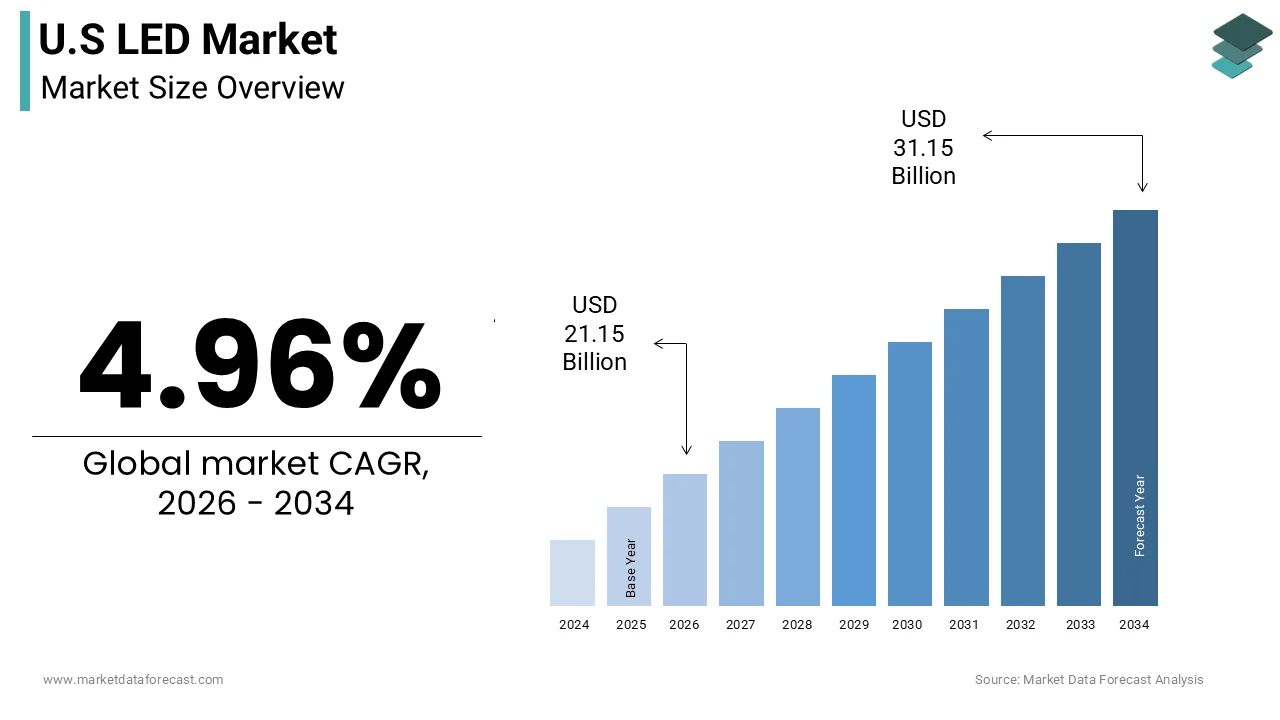
The U.S. LED market size was calculated to be USD 20.15 billion in 2025, is anticipated to reach USD 21.15 billion in 2026, and is projected to be worth USD 31.15 billion by 2034, registering a compound annual growth rate (CAGR) of 4.96% during the forecast period from 2026 to 2034. Driven by stringent energy efficiency regulations, smart city infrastructure expansions, and the integration of Internet of Things (IoT) technologies, the market continues its steady transition toward high-efficiency lighting solutions.
Key Executive Metrics (At-a-Glance)
- 2025 Base Valuation: USD 20.15 Billion
- 2026 Current Valuation: USD 21.15 Billion
- 2034 Forecast Valuation: USD 31.15 Billion
- Compound Annual Growth Rate (CAGR): 4.96% (2026–2034)
- Dominant Product Segment: Luminaires and fixtures (accounting for a 63.1% share in 2025 due to commercial and municipal infrastructure modernization)
- Fastest-Growing Product Segment: LED lamps (registering the fastest CAGR of 8.2% from 2026 to 2034 driven by residential upgrades)
- Dominant Distribution Channel: Wholesale and retail channels (capturing 55.3% of the market share in 2025)
- Fastest-Growing Distribution Channel: E-commerce (projected as the fastest-growing channel at an 11.5% CAGR)
- Dominant Installation Segment: Retrofit installation (holding the majority share in 2025 due to cost-effectiveness and minimal disruption)
Core Market Drivers
- Stringent Federal & State Regulations: Federal efficiency standards and state-level building codes banning traditional incandescent bulbs, forcing a shift to compliant LED alternatives.
- Smart City Infrastructure & IoT Integration: Municipal transitions to smart streetlighting systems equipped with remote monitoring, adaptive controls, and environmental sensors.
Primary Market Restraints & Challenges
- Capital Constraints & Supply Chain Vulnerabilities: High initial setup costs for smart-enabled systems alongside a heavy dependency on foreign supply chains for raw materials and semiconductors.
U.S. LED Market Segmentation Breakdown
| Segment Category | Leading Sub-Segment (Base Year) | Fastest-Growing Sub-Segment (2026–2034) |
|---|---|---|
| By Product Type | Luminaires and Fixtures (63.1% share in 2025) | LED Lamps (fastest CAGR at 8.2%) |
| By Distribution Channel | Wholesale & Retail Channels (55.3% share in 2025) | E-commerce (fastest CAGR at 11.5%) |
| By Installation Type | Retrofit Installation (majority share in 2025) | New Construction & Integrated Smart Upgrades |
Major Industry Players Profiled
Key market leaders driving innovation across the U.S. LED landscape include Acuity Brands, Inc., Cree LED, GE Current, Signify N.V., OSRAM GmbH, Nichia Corporation, Samsung Electronics, LG Innotek, Hubbell Incorporated, and Dialight plc.
U.S LED Market Size
The U.S.led market size was calculated to be USD 20.15 billion in 2025 and is anticipated to be worth USD 31.15 billion by 2034, from USD 21.15 billion in 2026, growing at a CAGR of 4.96% during the forecast period.
A Light-Emitting Diode (LED) is a semiconductor light source that emits light when an electric current passes through it in the forward direction. This market has evolved from simple indicator lights to sophisticated systems powering general lighting, automotive headlights, large-scale video walls, and advanced horticultural setups. The definition extends to include organic light-emitting diodes and micro light-emitting diodes, which are reshaping consumer electronics and television markets with superior contrast and energy efficiency. As per the US Energy Information Administration's 2018 CBECS data, lighting accounts for 10 percent of total electricity consumption in commercial buildings, a significant decrease from 17 percent in 2012, highlighting the impact of efficient lighting solutions. Furthermore, sources indicate that approximately 50 percent of all US traffic signals now utilize light-emitting diode technology, which is favored for its energy efficiency and visibility benefits. The market is characterized by rapid technological convergence, where lighting integrates with Internet of Things capabilities, enabling smart city initiatives and connected home ecosystems. According to the Environmental Protection Agency,y the widespread adoption of energy-efficient lighting has prevented millions of tons of carbon dioxide emissions annually, demonstrating the environmental significance of this technology. The transition away from incandescent and compact fluorescent lamps is nearly complete in many sectors, driven by federal efficiency standards and consumer preference for durable, low-maintenance options. This mature yet innovative landscape focuses on enhancing luminous efficacy, color rendering, and smart connectivity to sustain growth in a highly competitive environment.
MARKET DRIVERS
Stringent Federal and State Energy Efficiency Regulations
Government mandates aimed at reducing energy consumption and greenhouse gas emissions are a main reason for the adoption of light-emitting diode (LED) technology, thereby accelerating the growth of the United States LED market. As a result, this technology is being adopted across residential, commercial, and industrial sectors. The phase out of inefficient lighting sources such as incandescent and halogen bulbs has created a regulatory vacuum that light-emitting diodes are uniquely positioned to fill due to their superior energy performance and longevity. According to the Department of Energy, new federal efficiency standards implemented in recent years have effectively banned the sale of most traditional incandescent bulbs, forcing consumers and businesses to switch to compliant alternatives. This regulatory push is complemented by state-level initiatives such as those in California and New York, which have enacted even stricter building codes requiring high-efficacy lighting in new constructions and major renovations. Data from the National Conference of State Legislatures (NCSL) and the Appliance Standards Awareness Project show that at least 15 states have historically adopted state-specific energy efficiency standards for lighting and appliances that accelerated the retirement of legacy technologies before the 2023 federal ban. The Code of Federal Regulations specifies minimum lumens per watt requirements that only light-emitting diodes and some compact fluorescent technologies can meet, ensuring a sustained demand for LED products. As per the Federal Trade Commission, the enforcement of labeling rules ensures that consumers are informed about energy usage, further driving preference for efficient options. These regulatory frameworks create a non-discretionary demand base where compliance is mandatory rather than optional, securing a stable growth trajectory for manufacturers who can supply certified high-efficiency products to meet legal obligations across diverse jurisdictions.
Expansion of Smart City Infrastructure and IoT Integration
The proliferation of smart city initiatives and the integration of Internet of Things technologies into urban infrastructure significantly drive the demand for connected light-emitting diode systems, which in turn boosts the expansion of the United States LED market. Municipalities are increasingly replacing traditional streetlights with smart LED units that offer remote monitoring, dimming capabilities, and data collection features essential for modern urban management. According to reports and the International City/County Management Association (ICMA) smart city surveys, while nearly 82 percent of local governments prioritize energy cost savings, municipal adoption of smart lighting projects is growing toward a projected 28% penetration of connected streetlights in North America by 2025. These smart LEDs serve as nodes in a broader network, allowing for real-time adjustments based on traffic patterns, weather conditions, and pedestrian activity, leading to substantial energy savings. Data from the U.S. Department of Energy indicates that smart, connected street lighting systems can reduce energy consumption by up to 80 percent compared to conventional high-pressure sodium lamps by utilizing adaptive dimming and advanced controls. The ability to integrate sensors for air quality, noise, and traffic monitoring transforms lighting poles into multifunctional smart infrastructure assets, enhancing their value proposition for city planners. As per the Smart Cities Council, the deployment of connected lighting systems facilitates better emergency response times and improved service delivery by providing accurate location data and status updates. This technological evolution moves lighting beyond mere illumination to become a critical component of digital urban ecosystems, driving sustained investment from local governments and private infrastructure developers seeking efficiency and data-driven insights.
MARKET RESTRAINTS
High Initial Capital Costs for Advanced Systems
High upfront costs for advanced, smart-enabled LED systems restrict their adoption, which limits growth in the United States LED market. This barrier is particularly challenging for small businesses and budget-constrained municipalities. The cost of intelligent lighting systems includes not only the LED fixtures but also communication modules, control software, and installation labor, which can be prohibitively expensive for smaller entities. According to the US Small Business Administration, many small enterprises operate with limited capital reserves, making it difficult to justify the initial investment despite favorable return on investment projections over time. Data from the National League of Cities reveals that budget constraints and funding gaps are cited by over 60 percent of municipal leaders as the primary barrier to upgrading existing street lighting infrastructure to smart LED systems. The complexity of retrofitting older buildings with compatible wiring and control systems further adds to the installation cost,s creating friction in the replacement cycle. As per the Edison Electric Institute, while operational costs are lower, the initial outlay for smart grid-compatible lighting can be three to four times higher than standard LED replacements. This financial hurdle slows down the adoption rate in price-sensitive segments where immediate cash flow concerns outweigh long-term efficiency gains. Additionally, the rapid pace of technological obsolescence creates uncertainty for buyers who fear investing in systems that may become outdated quickly, discouraging premature upgrades and extending the lifespan of existing, albeit less efficient, installations.
Supply Chain Vulnerabilities and Raw Material Dependence
Its heavy reliance on global supply chains for critical raw materials and semiconductor components constrains the expansion of the United States LED market. These components are primarily sourced from Asia. Disruptions in these supply chains caused by geopolitical tensions, trade policies, or logistical bottlenecks can lead to shortages and price volatility, affecting production schedules and profitability. According to the US Geological Survey, the United States imports nearly all of its rare earth elements, which are essential for producing phosphors used in white LED manufacturing, creating a strategic vulnerability. Data from the Bureau of Industry and Security indicates that semiconductors and related components are subject to export controls and trade restrictions that can abruptly limit availability for domestic manufacturers. The concentration of packaging and assembly facilities in countries like China and Vietnam means that any regional disruption, such as a natural disaster or political instability, can ripple through the global market, impacting US inventory levels. As per the Semiconductor Industry Association, lead times for certain electronic components have fluctuated wildly in recent years, causing delays in product launches and fulfillment. This dependence on foreign sources for key inputs limits the ability of domestic manufacturers to scale production rapidly in response to a surge in demand. Furthermore, fluctuations in currency exchange rates and tariffs imposed on imported goods can erode profit margin,s forcing companies to either absorb costs or pass them on to consumers, potentially dampening demand in price-sensitive market segments.
MARKET OPPORTUNITIES
Integration with Human Centric Lighting and Health Wellness Trends
The growing awareness of the impact of lighting on human health and circadian rhythms paves the way for the development and adoption of human-centric lighting solutions using advanced light-emitting diode technology. This integration is likely to propel the growth of the United States LED market. Consumers and healthcare providers are increasingly seeking lighting systems that mimic natural daylight patterns to improve sleep quality, mood, and overall well-being, creating a new premium segment in the market. According to the National Institutes of Health, exposure to blue-rich light during the day and warmer light in the evening can regulate melatonin production and improve sleep hygiene, driving demand for tunable white LED systems. Data from the International WELL Building Institute (IWBI) shows that certification programs prioritizing human health factors, including lighting, are gaining significant traction, with over 40,000 projects registered or certified globally as of 2023. This trend opens opportunities for manufacturers to develop sophisticated control systems that automatically adjust color temperature and intensity throughout the day, aligning with biological needs. As per the Lighting Research Center, studies indicate that proper lighting design can enhance productivity in offices and accelerate recovery in healthcare settings, providing a strong value proposition for institutional buyers. The integration of these health-focused features allows companies to differentiate their products beyond basic illumination, appealing to wellness-oriented consumers and organizations. This shift towards holistic health considerations expands the addressable market into wellness hospitality and senior living sectors, where lighting quality is directly linked to user experience and health outcomes.
Growth in Horticultural Lighting for Controlled Environment Agriculture
The expansion of controlled environment agriculture and vertical farming operations offers major potential for the United States LED market. As a result, growers are seeking energy-efficient and spectrally optimized lighting solutions to maximize crop yield and quality. Indoor farming relies entirely on artificial light, making the efficiency and spectral precision of LEDs critical for economic viability and plant health. According to the Department of Agriculture, the number of indoor farms in the United States has grown significantly in recent years, driven by the demand for locally grown produce and year-round availability. Data from Agrilyst (Artemis) indicates that lighting represents approximately 40 to 50 percent of operational costs for vertical farms, making energy-efficient LED systems essential for profitability. Modern horticultural LEDs allow for precise tuning of light spectra to specific plant growth stages, enhancing photosynthesis and nutrient content while reducing heat stress compared to traditional high-intensity discharge lamps. As per data from Controlled Environment Agriculture research, advancements in LED technology and spectral tuning have led to yield increases of 30 to 50 percent for certain crops, such as leafy greens and herbs, by optimizing the photosynthesis rate. This agricultural application drives demand for specialized high-power LED fixtures designed for durability in humid environments. The trend towards sustainable and local food production supports long-term growth in this niche as farmers adopt technology to optimize resource use. Manufacturers who can provide tailored lighting recipes and robust hardware stand to capture significant value in this expanding sector.
MARKET CHALLENGES
Thermal Management and Heat Dissipation Issues
Effective thermal management remains a persistent challenge for the United States LED market. Excessive heat can significantly degrade the performance, lifespan, and color stability of these devices. Unlike incandescent bulbs, LEDs do not emit heat as infrared radiation but instead generate heat at the junction, which must be efficiently dissipated to prevent failure. According to the Illuminating Engineering Society, improper thermal design can reduce the lifespan of an LED by more than 50 percent, leading to premature failures and customer dissatisfaction. Thermal engineering studies indicate that for every 10 degrees Celsius increase in junction temperature, the relative lumen output can decrease by 5 to 10 percent, while the long-term rated life of the component can be reduced by as much as 50 percent. This challenge is particularly acute in high-power applications such as automotive headlights and stadium lighting, where compact designs limit space for heat sinks and cooling fans. As per the Society of Automotive Engineers, thermal reliability is a top concern for automotive manufacturers who require LEDs to withstand extreme operating conditions without degradation. The need for advanced thermal interface materials and complex heat sink designs increases manufacturing complexity and cost. Furthermore, miniaturization trends in consumer electronics exacerbate thermal issues as smaller form factors offer less surface area for heat dissipation. Manufacturers must continuously innovate in materials science and mechanical design to address these thermal constraints, ensuring that products meet rigorous reliability standards while maintaining compact and aesthetically pleasing forms.
Recycling and Electronic Waste Management Complexities
The end-of-life management of light-emitting diode products holds back the expansion of the United States LED market. This is due to the complexity of recycling materials and the presence of hazardous substances in electronic components. While LEDs are more energy efficient during use, their disposal requires specialized processes to recover valuable metals and safely handle electronic waste. According to the Environmental Protection Agency, electronic waste is one of the fastest-growing waste streams in the United States, with only a small percentage currently being recycled properly. Data from the Consumer Technology Association and the EPA indicate that while general electronics recycling has improved, the recycling rate for specialized items like LED bulbs remains negligible (below 5 percent) due to a lack of dedicated collection infrastructure and consumer confusion. The presence of lead solder and other heavy metals in some LED components necessitates careful handling to prevent environmental contamination. As per the Solid Waste Association of North America, many municipal recycling facilities are not equipped to process LED products, leading to them being sent to landfills, where they can leach toxins. The lack of a standardized design for disassembly makes it difficult and costly to separate materials for recovery. Regulatory pressures are increasing for producers to take responsibility for end-of-life management, requiring investments in take-back programs and recycling technologies. This challenge adds to the total cost of ownership and requires industry collaboration to develop sustainable lifecycle solutions that minimize environmental impact and comply with evolving waste management regulations.
REPORT COVERAGE
| REPORT METRIC | DETAILS |
| Market Size Available | 2025 to 2034 |
| Base Year | 2025 |
| Forecast Period | 2026 to 2034 |
| CAGR | 4.96% |
| Segments Covered | By Product Type, Distribution Channel, Installation Type, And Region |
| Various Analyses Covered | Global, Regional & Country Level Analysis; Segment-Level Analysis; DROC, PESTLE Analysis; Porter’s Five Forces Analysis; Competitive Landscape; Analyst Overview of Investment Opportunities |
| Regions Covered | New York, Massachusetts, Pennsylvania, Illinois, Ohio, Michigan, Texas, Florida, Georgia, California, Washington, Colorado. |
| Market Leaders Profiled | Acuity Brands, Inc., Cree LED, GE Current, Signify N.V., OSRAM GmbH, Nichia Corporation, Samsung Electronics, LG Innotek, Hubbell Incorporated, Dialight plc |
SEGMENTAL ANALYSIS
By Product Type Insights
The luminaires and fixtures segment dominated the United States LED market and accounted for a 63.1% share in 2025. Extensive modernization efforts in commercial, industrial, and municipal infrastructure drive the domination of this segment. Unlike simple lamp replacements, which are often temporary solutions, luminaire upgrades involve comprehensive system overhauls that integrate advanced optics, thermal management, and smart controls. According to the U.S. Department of Energy, commercial buildings account for approximately 13.5 percent of total U.S. energy consumption, with lighting representing a significant portion of this load, driving facility managers to adopt high-efficiency LED fixtures. Data from the General Services Administration indicates that federal agencies have mandated the replacement of outdated fluorescent troffers and high bay fixtures with LED equivalents in millions of square feet of government-owned real estate. This institutional demand creates a stable baseline for fixture sales as large-scale retrofits require standardized, durable, and warrantied solutions rather than individual bulbs. As per the Illuminating Engineering Society, the shift toward integrated LED luminaires ensures better performance consistency and longer operational life compared to retrofit kits, which may suffer from compatibility issues with existing ballasts or housings. The complexity of commercial lighting design also favors complete fixture solutions that offer precise light distribution and glare control essential for workplaces, retail environments, and healthcare facilities. Manufacturers benefit from higher average selling prices in this segment as fixtures incorporate value-added features such as dimming drivers and network connectivity. This structural preference for holistic lighting solutions in non-residential sectors sustains the dominance of luminaires over standalone lamps, ensuring robust revenue streams for industry leaders. The integration of smart controls and Internet of Things capabilities within LED luminaires drives their market leadership by transforming lighting systems into data-generating infrastructure assets. Modern commercial and industrial users increasingly demand fixtures that support occupancy sensing, daylight harvesting, and remote monitoring to optimize energy usage and operational efficiency. LED luminaires serve as the ideal platform for these technologies because they allow for seamless integration of sensors and communication modules at the point of installation. As per the National Electrical Manufacturers Association, the availability of standardized protocols such as Zigbee and Bluetooth Mesh facilitates interoperability between lighting systems and building management platforms. This connectivity enables facility managers to analyze usage patterns, predict maintenance needs, and adjust lighting conditions in real time. The value proposition extends beyond illumination to include space utilization analytics and asset tracking, making LED fixtures critical components of digital workplace strategies. This technological convergence justifies higher upfront investments in luminaires compared to basic lamps, securing their position as the preferred choice for forward-thinking enterprises and institutions seeking long-term operational advantages.
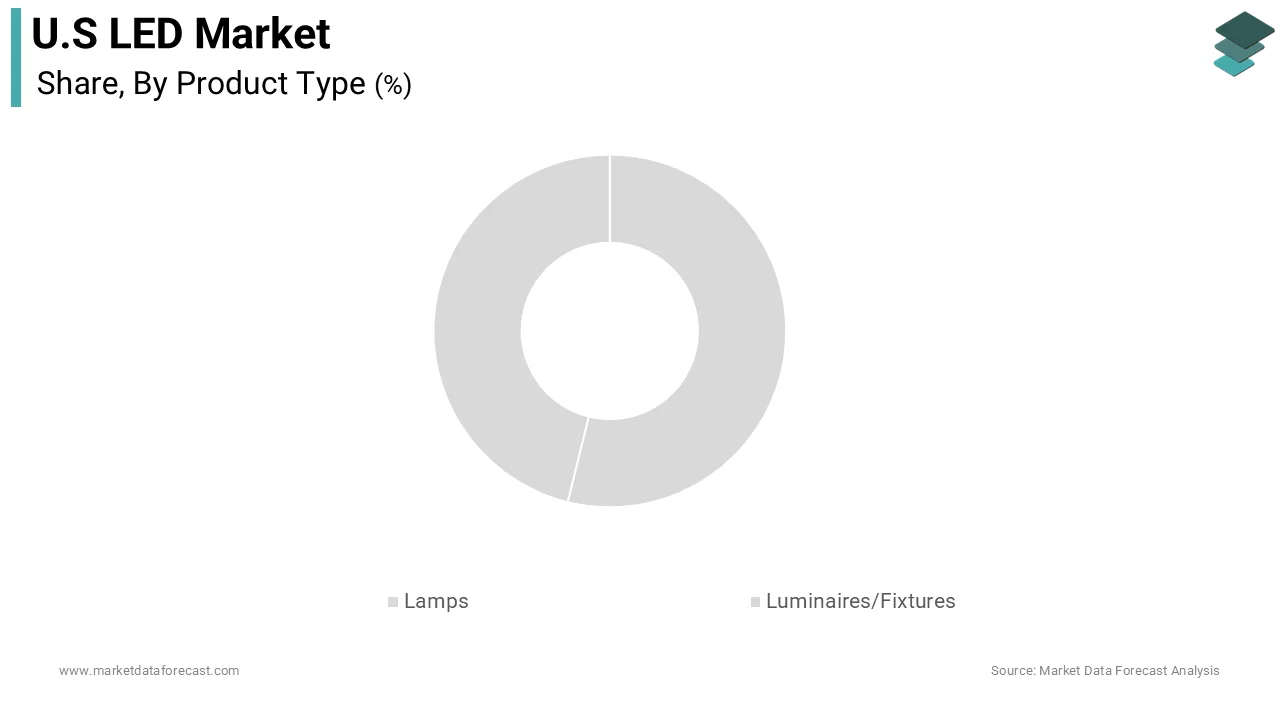
The LED lamps segment is likely to experience the fastest CAGR of 8.2% from 2026 to 2034 due to the continuous replacement of legacy incandescent and compact fluorescent bulbs in residential settings. Homeowners are increasingly motivated by immediate cost savings, ease of installation, and the widespread availability of LED bulbs in retail stores. The simplicity of screwing in a new bulb without requiring electrical expertise makes LED lamps the preferred choice for DIY consumers who wish to improve lighting quality without hiring professionals. As per the Federal Trade Commission, clear labeling requirements regarding brightness, color temperature, and energy usage empower consumers to make informed choices, further accelerating adoption. The declining price of LED lamps has made them accessible to budget-conscious shoppers, removing financial barriers to entry. Additionally, the proliferation of smart LED bulbs that connect to home Wi Fi networks allows users to control lighting via smartphones and voice assistants, adding convenience and customization appeal. This combination of affordability, accessibility, and enhanced functionality ensures that LED lamps continue to grow rapidly as consumers progressively upgrade every socket in their homes to efficient and connected alternatives. The growth of the LED lamp segment is further accelerated by rising consumer interest in decorative and specialty lighting applications that enhance interior aesthetics and ambiance. Trends in home improvement and interior design emphasize layered lighting schemes using filament LEDs, Edison-style bulbs, and color-changing options to create personalized atmospheres. According to the National Kitchen and Bath Association, lighting design has become a top priority in renovation projects, with homeowners investing in statement fixtures that require specific bulb types for visual impact. These decorative lamps offer the warm glow of traditional incandescents while consuming a fraction of the energy, appealing to style-conscious consumers who refuse to compromise on design. As per the American Lighting Association, the development of high color rendering index LED lamps ensures that art furniture and decor are displayed accurately, enhancing the overall visual appeal of living spaces. The availability of tunable white and RGB color options allows users to adjust lighting for different activities such as dining, reading, or entertaining. This focus on emotional and aesthetic benefits drives repeat purchases and experimentation with different bulb types across various rooms. Manufacturers capitalize on this trend by launching diverse product lines that cater to specific design preferences, ensuring sustained growth in the decorative lamp category.
By Distribution Channel Insights
The wholesale and retail channels segment remained in the lead by capturing a 55.3% share of the United States LED market in 2025. This leading position of the segment is attributed to its established supply chains, extensive physical presence, and ability to provide immediate product availability to both professional contractors and individual consumers. Home improvement centers, hardware stores, and electrical supply houses serve as primary touchpoints where customers can physically inspect products, seek expert advice, and purchase items for immediate project needs. According to the National Retail Federation, home improvement retailers reported billions of dollars in annual sales, with lighting categories contributing significantly to overall revenue. Data from the Home Depot and Lowe’s earnings reports indicate that lighting remains a high-traffic category, driving footfall and cross-selling opportunities for related electrical supplies. Professional electricians and contractors rely heavily on wholesale distributors for bulk purchases, credit terms, and technical support, ensuring steady B2B volume. The tactile nature of lighting purchases, where consumers want to verify brightness, color temperature, and build quality before buying, favors brick-and-mortar stores. Additionally, the ability to return defective items easily provides a sense of security for buyers. This combination of convenience, expertise, and immediacy sustains the dominance of wholesale and retail channels despite the rise of digital alternatives. The dominance of wholesale and retail channels is reinforced by the trust and professional consultation services they offer, which are critical for complex lighting decisions. Many consumers and business owners lack the technical knowledge to select appropriate LED products for specific applications requiring guidance on compatibility, lumens, and beam angles. According to the Illuminating Engineering Society, proper lighting design involves multiple factors that often necessitate professional input to avoid issues such as glare, inadequate illumination, or flicker. Data from independent surveys shows that over 50 percent of homeowners consult with store associates or contractors before purchasing lighting for major renovations, valuing expert recommendations. Retailers employ trained staff who can demonstrate products and explain features, helping customers make confident choices. As per the National Association of Electrical Distributors, wholesale partners provide value-added services such as lighting audits and layout designs for commercial clients, enhancing their stickiness. This consultative approach builds long-term relationships and loyalty, particularly in the commercial sector where performance reliability is paramount. Furthermore, established retail brands offer warranties and after-sales support that reassure buyers about product quality. The human element of shopping allows for immediate problem-solving and customization, which pure play e-commerce sites cannot fully replicate. This reliance on expertise and trust ensures that wholesale and retail channels remain the preferred route for significant lighting investments.
The e-commerce segment is on the rise and is expected to be the fastest-growing segment in the market by witnessing a CAGR of 11.5% during the forecast period, owing to the unparalleled convenience and extensive product variety it offers to consumers. Online platforms allow shoppers to browse thousands of SKUs, compare specifications, read user reviews, and find niche products that may not be available in local stores. According to the US Census Bureau, sales of building materials and garden equipment have grown consistently, outpacing overall retail growth rates. Data from Amazon and other major online retailers indicates that lighting fixtures and bulbs are among the top searched home improvement categories due to the ease of shipping and handling. The ability to filter search results by color temperature, wattage equivalent, and smart compatibility simplifies the selection process for tech-savvy consumers. Consumers appreciate the ability to shop at any time and have products delivered directly to their doorstep, saving time and effort. This convenience is particularly appealing to younger demographics who prefer digital interactions over physical store visits. The aggregation of customer feedback provides social proof that influences purchasing decisions, reducing perceived risk. This seamless shopping experience, combined with competitive pricing and fast delivery options, fuels the rapid expansion of e-commerce in the LED market. The growth of the e-commerce segment is further accelerated by the rise of direct-to-consumer models and aggressive competitive pricing strategies employed by online retailers. Manufacturers and brands are increasingly bypassing traditional intermediaries to sell directly to end users through their own websites or third-party marketplaces, allowing for higher margins and lower prices for consumers. According to Shopify data, direct-to-consumer brands in the home improvement sector have seen significant revenue growth as they leverage digital marketing to reach targeted audiences. Data from Jungle Scout indicates that private label LED products on Amazon have captured substantial market share by offering high-quality items at lower price points than established brands. Online platforms facilitate dynamic pricing and frequent promotions such as flash sales and bundle deals, which attract price-sensitive shoppers. As per the Federal Trade Commission, increased transparency in online pricing allows consumers to easily find the best deal,s fostering intense competition that benefits buyers. The elimination of physical store overheads enables online sellers to pass savings on to customers, making LED products more affordable. Additionally, subscription services for bulb replacements are emerging, providing recurring revenue streams and convenience for users. This shift towards digital-first sales strategies disrupts traditional distribution networks and drives the rapid adoption of e-commerce as a primary channel for LED purchases.
By Installation Type Insights
In 2025, the retrofit installation segment held the majority share of the United States LED market because it offers a cost-effective and minimally disruptive solution for upgrading existing lighting infrastructure. Most commercial and residential buildings already have functional wiring and fixtures, making full replacement unnecessary and economically unjustifiable. According to the Department of Energy, retrofitting existing fixtures with LED lamps or kits can achieve energy savings of up to 70 percent with a payback period of less than two years. Data from the Environmental Protection Agency’s Energy Star program shows that millions of retrofit projects have been completed nationwide, driven by utility rebates and incentives that lower initial costs. Building owners prefer retrofits because they avoid the high labor costs and downtime associated with tearing out old fixtures and installing new ones. As per the International Facility Management Association, facility managers prioritize retrofits for their ability to improve lighting quality and efficiency without interrupting business operations or requiring extensive construction work. The availability of plug-and-play LED tubes and retrofit kits that fit into existing fluorescent troffers simplifies the installation process, allowing for quick upgrades. This ease of implementation makes retrofits attractive for large portfolios of buildings such as schools, offices, and retail chains, where speed and minimal disruption are critical. The proven track record of retrofit solutions in delivering immediate energy reductions ensures their continued dominance in the market. Regulatory pressure and the phased ban on inefficient lighting technologies drive the dominance of retrofit installations as entities rush to comply with new standards. Federal and state regulations prohibiting the manufacture and import of incandescent and certain fluorescent bulbs force building owners to upgrade their existing systems. As per the California Energy Commission Title 24 regulations, specific lighting power densities can only be met through retrofitting with high efficacy LED sources. This regulatory environment creates a captive market for retrofit products, as non-compliance can result in fines or the inability to lease commercial space. Utility companies further incentivize retrofits through rebate programs that cover a significant portion of upgrade costs, making it financially attractive for businesses. The urgency to replace banned or hard-to-find legacy bulbs ensures a steady stream of retrofit projects. This regulatory tailwind, combined with economic incentives, solidifies the leading position of retrofit installations in the US LED market.
The new installation segment is expected to exhibit a noteworthy CAGR of 9.8% between 2026 and 2034. This quick surge of the segment is supported by the robust construction boom and stringent green building standards that mandate high-efficiency lighting from the outset. New commercial and residential projects are increasingly designed with integrated LED luminaires to meet certification requirements such as LEED and WELL. Data from the US Green Building Council shows that LEED-certified projects require optimized energy performance, which is best achieved through native LED systems rather than retrofits. As per the International Code Council, newer versions of the International Energy Conservation Code require higher lighting efficacy levels that naturally favor LED technology in new builds. Architects and designers specify LED fixtures for their sleek profiles, flexibility in design, and ability to integrate with smart building systems. This specification at the design stage ensures that new installations capture the latest technological advancements without the constraints of existing infrastructure. The trend towards sustainable construction practices drives developers to adopt LED lighting as a standard feature, enhancing property value and appeal. This structural shift in construction norms ensures rapid growth for the new installation segment. The rapid growth of new installations is further driven by the seamless integration of LED lighting with smart building ecosystems in modern constructions. New buildings are designed with networked lighting systems that serve as the backbone for Internet of Things applications, including occupancy sensing and environmental monitoring. According to Deloitte insights, smart buildings with integrated LED systems reduce installation complexity and cost compared to adding sensors and controls later. As per the National Institute of Building Sciences, new facilities prioritize interoperability and scalability, which native LED installations provide more effectively than retrofitted systems. Developers recognize that smart lighting enhances tenant experience and operational efficiency, making it a key selling point for premium properties. The ability to customize lighting scenes and automate controls from day one appeals to tech-forward occupants. This alignment with digital transformation trends in real estate ensures that new installations grow at a faster rate as modern buildings become smarter and more connected.
REGIONAL ANALYSIS
The United States was the top performer in the North American LED market and secured a 84.8% share in 2025. This growth of the LEDs in the US is driven by its large economy, advanced infrastructure, and strong regulatory framework. Sustained replacement demand and new construction activity are driving high LED penetration rates across the US residential, commercial, and industrial sectors. As a result, the market is considered mature. According to the U.S. Energy Information Administration (EIA), the country is the second-largest electricity consumer globally. Consequently, the Department of Energy (DOE) has established energy efficiency as a national priority, implementing standards that support LED adoption. Data from the Department of Commerce indicates that the US is a major importer and consumer of LED products, leveraging global supply chains to meet domestic needs. The market status is characterized by intense competition among global brands and a shift towards smart and connected lighting solutions. As per the Federal Reserve Bank of New York's Survey of Consumer Expectations, consumer spending on home repairs has softened or prioritized essential maintenance over discretionary upgrades, reflecting a cautious outlook for home improvement demand. The presence of leading technology firms and research institutions fosters innovation in LED applications such as horticulture and healthcare. This robust ecosystem ensures that the US remains the primary driver of LED market growth in the region, setting trends in technology adoption and sustainability standards. Strong economic indicators and supportive government policies drive the United States LED market, ensuring continued expansion and technological advancement. The Inflation Reduction Act provides tax credits and incentives for energy-efficient upgrades, encouraging businesses and homeowners to invest in LED technology. According to the Bureau of Economic Analysis, Personal Consumption Expenditures on housing and utilities reflect stable spending on rent and energy operations, while distinct data on Residential Fixed Investment tracks ongoing renovation and upgrade activities. Data from the Department of Labor shows that the construction sector continues to add jobs, indicating healthy activity in new installations. As per the Environmental Protection Agency, federal initiatives aimed at reducing carbon emissions align with the energy-saving benefits of LEDs, creating a favorable policy environment. The high disposable income of American consumers allows for investment in premium smart lighting systems, enhancing market value. Additionally, the widespread adoption of broadband internet facilitates the growth of connected LED devices. These factors combine to create a dynamic market where efficiency, sustainability, and innovation drive sustained demand and leadership in the global LED landscape.
COMPETITION OVERVIEW
The competition within the United States LED market is characterized by intense rivalry among established global giants and specialized domestic players who strive to capture value in a mature and saturated environment. Major corporations such as Signify, Acuity Brand,s and Cree LED dominate the landscape, leveraging their extensive distribution network,s strong brand recognition, and comprehensive product portfolios to maintain leadership positions. These incumbents compete fiercely on innovation, particularly in areas like smart connectivity, spectral tuning, and energy efficiency, to differentiate their offerings and justify premium pricing strategies. The market sees continuous pressure from emerging brands that offer cost-effective alternatives through online channels, forcing established players to optimize supply chains and reduce costs. Competitive dynamics are further influenced by regulatory standards, where the ability to meet strict energy codes determines market access. Companies increasingly focus on service-based models, including lighting as a service, to create recurring revenue streams beyond hardware sales. This multifaceted competition drives rapid technological iteration and forces constant adaptation to changing consumer preferences regarding sustainability and digital integration, ensuring a dynamic and evolving marketplace structure.
KEY MARKET PLAYERS
A few major players of the United States-led market include
- Acuity Brands, Inc
- Cree LED
- GE Current
- Signify N.V
- OSRAM GmbH
- Nichia Corporation
- Samsung Electronics
- LG Innotek
- Hubbell Incorporated
- Dialight plc
Top Strategies Used by Key Market Participants
Key players in the United States LED market employ several strategic approaches to maintain competitiveness and drive growth amidst saturation. Product differentiation through smart connectivity serves as a primary strategy where manufacturers integrate Internet of Things capabilities into fixtures, enabling remote monitoring and control. Sustainability initiatives are increasingly vital as companies adopt circular economy principles by designing products for repairability and recycling to meet regulatory demands. Manufacturers also focus on human-centric lighting by developing tunable white systems that support health and well-being, appealing to premium segments. Strategic partnerships with technology firms ensure interoperability with building management systems, creating ecosystem lock-in effects. Additionally, firms expand direct-to-consumer channels, allowing for greater customization and improved customer relationships. Emphasis on energy efficiency certifications helps comply with strict federal and state regulations. These strategies collectively enable companies to navigate market maturity by focusing on value addition, technological innovation,n and customer experience rather than competing solely on price in the highly developed American landscape.
Leading Players in the Market
- Signify, formerly known as Philips Lighting, maintains a leading position in the US LED market through its comprehensive portfolio of connected lighting solutions and strong brand recognition. The company focuses on integrating Internet of Things technology into its Lumileds and Interact platform,s enabling smart city and building applications. Signify strengthens its market position by partnering with technology giants to ensure interoperability and by expanding its circular lighting offerings to meet sustainability goals. Its recent actions include launching AI-driven lighting management systems that optimize energy use and enhance user experience. The company also invests heavily in research and development for human-centric lighting solutions addressing health and wellness trends. Signify leverages its global scale and local expertise to deliver innovative and reliable LED products. These solutions cater to diverse customer needs in the United States.
- Acuity Brands Inc. is a dominant player in the North American LED market, specializing in commercial and industrial lighting solutions. The company leverages its Atrius digital building platform to provide integrated lighting control and data analytics services. Acuity Brands strengthens its position through strategic acquisitions and organic growth in smart building technologies. Recent actions include expanding its manufacturing capabilities in the US to reduce supply chain risks and introducing new LED fixtures with advanced spectral tuning. The company focuses on sustainability by offering recyclable products and energy-efficient designs. Acuity Brands collaborates with architects and engineers to specify its solutions in new constructions, ensuring a strong presence in the new installation segment. Its commitment to innovation and customer service solidifies its leadership in the professional lighting market.
- Cree LED a subsidiary of Wolfspeed, is a key player in the LED component and fixture market, known for its high-performance silicon carbide and LED technologies. The company focuses on providing superior brightness and efficiency in its LED chips and arrays. Cree LED strengthens its market position by supplying components to major fixture manufacturers and developing its own branded lighting solutions. Recent actions include expanding its production capacity for next-generation LED materials and enhancing its product roadmap for automotive and general lighting applications. The company emphasizes quality and reliability, catering to demanding sectors such as outdoor lighting and retail. Cree LED delivers innovative products that drive performance and efficiency in the US market. They achieve this by leveraging their vertical integration and technological expertise.
MARKET SEGMENTATION
This research report on the US-led market has been segmented and sub-segmented based on product type, distribution channel, installation type & region.
By Product Type
- Lamps
- Luminaires/Fixtures
By Distribution Channel
- Direct Sales
- Wholesale/Retail
- E-Commerce
By Installation Type
- New Installation
- Retrofit Installation
By Region
- New York
- Texas
- Florida
- Georgia
- California
- Rest of U.S.