U.S. Nutraceuticals Market Size, Share, Trends, and Growth Analysis Report, Segmented by Type, Form, Sales Channel, and Country – Industry Forecast From 2026 to 2034
Market Size, 2025
$176.56 BnMarket Estimate, 2026
$185.74 BnMarket Forecast, 2034
$278.63 BnCAGR, 2026–2034
5.20%U.S. Nutraceuticals Market Report Summary
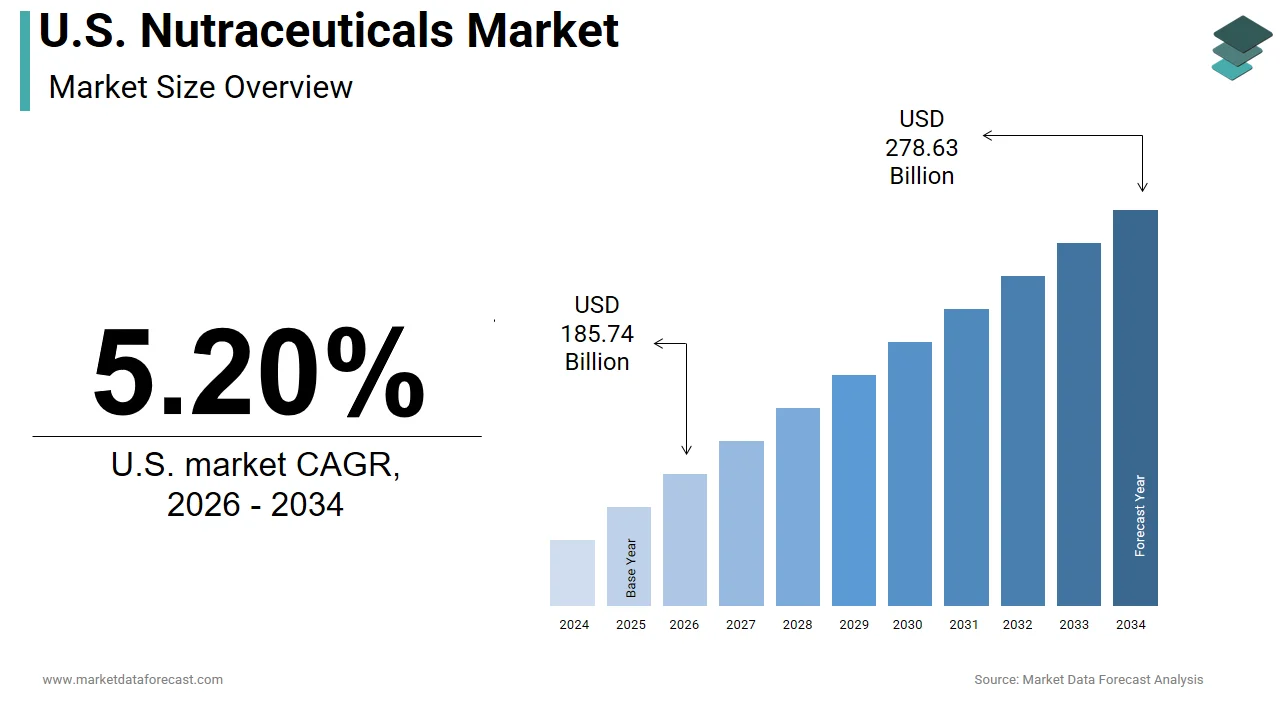
The U.S. nutraceuticals market was valued at USD 176.56 billion in 2025, is estimated to reach USD 185.74 billion in 2026, and is projected to reach USD 278.63 billion by 2034, growing at a CAGR of 5.20% from 2026 to 2034. Market growth is driven by rising consumer awareness regarding preventive healthcare, increasing demand for dietary supplements, and growing interest in functional foods and beverages. Consumers are increasingly seeking products that support immunity, digestive health, energy, and overall wellness. Additionally, advancements in personalized nutrition, clean-label ingredients, and plant-based formulations are further accelerating the growth of the nutraceuticals market across the United States.
Key Market Trends
- Rising demand for dietary supplements and functional foods.
- Increasing consumer focus on preventive healthcare and immunity support.
- Growth in plant-based and clean-label nutraceutical products.
- Expansion of personalized nutrition and wellness solutions.
- Increasing adoption of functional beverages and fortified foods.
Segmental Insights
- Based on type, the dietary supplements segment dominated the United States nutraceuticals market in 2025, driven by growing health consciousness and preventive healthcare trends.
- Based on form, the tablets segment accounted for the highest share in 2025 due to convenience, longer shelf life, and accurate dosage delivery.
- Based on sales channel, the offline segment held the leading share in 2025, supported by strong retail pharmacy, supermarket, and specialty health store networks.
Country-Level Insights
- The United States accounted for 86.7% of the North American nutraceuticals market share in 2025, supported by strong consumer spending on wellness products, high healthcare awareness, and a well-established dietary supplement industry.
Competitive Landscape
The U.S. nutraceuticals market is highly competitive, with companies focusing on product innovation, natural ingredient formulations, and expansion of wellness-focused product portfolios. Strategic acquisitions, partnerships, and investments in research and development are shaping the competitive landscape.
Prominent companies operating in the U.S. nutraceuticals market include DSM, Amway Corporation, Pfizer Inc., Nestlé, Nature's Bounty, General Mills Inc., Danone, The Kraft Heinz Company, The Hain Celestial Group, Inc., and Tyson Foods.
U.S. Nutraceuticals Market Size
The size of the U.S. nutraceuticals market was worth USD 176.56 billion in 2025. The market is anticipated to grow at a CAGR of 5.20% from 2026 to 2034 and be worth USD 278.63 billion by 2034 from USD 185.74 billion in 2026.
As per the Centers for Disease Control and Prevention, approximately 75% of American adults have at least one chronic condition, which is creating a substantial demographic seeking preventive health solution through nutrition. The landscape is heavily influenced by an aging population, with the U.S. Census Bureau projecting that by 2030, all baby boomers will be older than 65 years and one in every five Americans will be of retirement age, expanding the cohort most likely to consume health enhancing products. Regulatory oversight by the Food and Drug Administration under the Dietary Supplement Health and Education Act ensures safety standards while allowing for innovation in product formulation. Consumer behavior is shifting toward personalized nutrition, driven by advancements in genetic testing and digital health monitoring. According to the National Institutes of Health, there is increasing scientific validation for the efficacy of specific bioactive compounds, which bolsters consumer confidence. The market operates within a complex ecosystem of retail pharmacies, online platforms, and specialty health stores, reflecting the integration of wellness into everyday lifestyle choices rather than merely reactive healthcare measures.
MARKET DRIVERS
Rising Prevalence of Chronic Lifestyle Diseases
The escalating prevalence of chronic lifestyle diseases in the U.S. is a key factor of the expansion of the U.S. nutraceuticals market as consumers increasingly seek preventive measures to manage long term health conditions. Conditions such as type 2 diabetes, cardiovascular diseases, and obesity have reached epidemic proportions, prompting individuals to adopt proactive dietary strategies. As per the American Heart Association, heart disease remains the leading cause of death in the U.S., resulting in someone dying of cardiovascular disease every 34 seconds. This stark statistic drives demand for nutraceuticals such as omega 3 fatty acids, fiber supplements, and plant sterols that support cardiovascular health and lipid management. Furthermore, the International Diabetes Federation reports that approximately 13.7% of the U.S. population has diabetes, representing over 38 million people, creating a robust market for glucose regulating supplements and low glycemic functional foods. Consumers are moving away from solely relying on prescription medications and are incorporating nutraceuticals into their daily routines to mitigate risk factors and improve quality of life. The shift toward preventive healthcare is reinforced by rising healthcare costs, which incentivize individuals to invest in wellness products that may reduce the need for medical interventions. This demographic pressure ensures sustained demand for evidence based nutritional solutions that address specific pathological concerns, positioning nutraceuticals as essential components of modern disease management protocols.
Growing Geriatric Population and Age Related Health Concerns
The rapidly expanding geriatric population in the U.S. significantly drives the nutraceuticals market in the U.S. As per the U.S. Census Bureau, the population aged 65 and older is projected to reach 82 million by 2050, representing nearly 23% of the total population. This cohort faces heightened risks of conditions such as osteoporosis, cognitive decline, and vision impairment, leading to increased consumption of targeted supplements. For instance, the Bone Health and Osteoporosis Foundation indicates that approximately 10 million Americans have osteoporosis and another 44 million have low bone density, driving demand for calcium, vitamin D, and magnesium supplements that support skeletal health. Additionally, concerns about cognitive health have spurred interest in nootropics and antioxidants such as ginkgo biloba and curcumin, which are believed to support brain function and memory retention. The desire for healthy aging extends to skin health, with collagen and hyaluronic acid supplements gaining popularity for their potential to improve elasticity and reduce wrinkles. Older consumers are often more health literate and willing to invest in premium products that promise tangible benefits, making them a lucrative segment for manufacturers. The convergence of demographic trends and heightened health awareness creates a fertile environment for nutraceutical innovation, particularly in categories that address the specific needs of the aging body. This sustained demand from the senior population ensures long term market stability and growth.
MARKET RESTRAINTS
Stringent Regulatory Framework and Compliance Burdens
The stringent regulatory framework governing the nutraceuticals industry in the U.S. is primarily hindering the U.S. nutraceuticals market growth. Unlike pharmaceuticals, dietary supplements do not require pre-market approval from the Food and Drug Administration, but manufacturers must adhere to strict Good Manufacturing Practices and labeling requirements. As per the Federal Trade Commission, companies face rigorous scrutiny regarding health claims, with any assertion of disease treatment or prevention requiring substantial scientific substantiation. This regulatory ambiguity creates uncertainty for businesses, as the line between structure function claims and unauthorized drug claims is often nuanced and subject to interpretation. The cost of conducting clinical trials to validate efficacy is prohibitively high for many small and medium sized enterprises, limiting their ability to compete with larger corporations that possess greater resources. Furthermore, the Dietary Supplement Health and Education Act mandates that manufacturers ensure product safety, yet post market surveillance relies heavily on adverse event reporting, which can lead to sudden recalls and reputational damage. According to industry analyses, the time and financial investment required to navigate these regulatory landscapes can delay product launches and increase operational costs. This environment discourages rapid innovation and may result in conservative product portfolios that fail to meet evolving consumer expectations. The constant threat of regulatory enforcement actions necessitates vigilant legal oversight, further straining company resources and limiting agility in a dynamic market.
Consumer Skepticism Due to Product Quality Variability
Consumer skepticism stemming from variability in product quality and efficacy are further impeding the U.S. nutraceuticals market expansion. The lack of mandatory pre-market approval means that the market is saturated with products of inconsistent potency and purity, leading to instances of contamination or mislabeling. As per studies published by independent testing organizations, a notable percentage of dietary supplements available on the market do not contain the ingredients listed on the label or contain undeclared substances. This discrepancy erodes consumer trust and creates hesitation among potential buyers who are unsure of the safety and effectiveness of the products they purchase. The presence of counterfeit goods in online marketplaces further exacerbates this issue, making it difficult for consumers to distinguish between legitimate and fraudulent brands. According to consumer surveys, a significant portion of the population expresses concern about the reliability of supplement claims, with many preferring to obtain nutrients from whole foods rather than processed formulations. This skepticism is amplified by media reports highlighting adverse effects or lack of scientific backing for popular ingredients. Manufacturers face the challenge of differentiating their products in a crowded marketplace where credibility is paramount. Building trust requires extensive third party certification and transparent sourcing practices, which add to production costs. Until standardized quality controls are universally adopted and enforced, consumer apprehension will continue to limit market penetration and repeat purchases.
MARKET OPPORTUNITIES
Integration of Personalized Nutrition and Digital Health Technologies
The integration of personalized nutrition with digital health technologies offers a promising opportunity for the U.S. nutraceuticals market. Advances in genomics, microbiome analysis, and wearable health devices allow for the creation of customized supplement regimens based on individual biological profiles. As per the National Institutes of Health, precision medicine initiatives are gaining momentum, providing the scientific foundation for personalized nutritional interventions. Companies can leverage data from smart watches and health apps to monitor vital signs and adjust supplement recommendations in real time, offering a dynamic approach to wellness. This level of customization appeals to tech savvy consumers who value data driven insights and measurable outcomes. Subscription based models that deliver personalized packs directly to consumers homes further enhance convenience and adherence. According to market trends, the demand for bespoke health solutions is rising, with users willing to pay a premium for products that address their specific genetic predispositions and lifestyle factors. Collaborations between nutraceutical brands and technology firms can unlock new revenue streams and foster deeper customer loyalty. By moving away from one size fits all offerings, manufacturers can differentiate themselves and capture a niche but highly engaged segment of the market. This synergy between biology and technology positions personalized nutrition as a key driver of future growth and innovation in the industry.
Expansion into Functional Foods and Beverage Formats
The expansion of nutraceutical ingredients into functional foods and beverage formats offers a significant opportunity to the U.S. market expansion. Consumers are increasingly seeking convenient ways to incorporate health boosting compounds into their daily meals and snacks, driving demand for fortified products such as protein bars, probiotic yogurts, and vitamin enriched beverages. As per the International Food Information Council, approximately 74% of consumers express interest in foods that provide additional health benefits beyond basic nutrition. This trend aligns with the busy lifestyles of modern Americans, who prioritize efficiency without compromising on wellness. Manufacturers can innovate by embedding ingredients like adaptogens, collagen, and fiber into popular food items, thereby normalizing the consumption of nutraceuticals. The beverage sector, in particular, shows strong potential, with ready to drink shots and infused waters gaining traction among younger demographics. According to industry observations, the sensory experience of food and drink plays a crucial role in adoption, making taste and texture key factors in product development. By diversifying delivery formats, companies can attract consumers who are averse to swallowing supplements and expand their market reach. This strategy also allows for higher frequency of consumption, as functional foods are often integrated into multiple daily meals. The convergence of nutrition and indulgence creates a vibrant space for innovation and growth.
MARKET CHALLENGES
Supply Chain Volatility and Raw Material Sourcing Issues
Supply chain volatility and challenges in sourcing high quality raw materials is majorly challenging the expansion of the U.S. nutraceuticals market. Many key ingredients, such as herbal extracts and specialized vitamins, are sourced from international suppliers, making the industry vulnerable to geopolitical tensions, trade restrictions, and environmental disruptions. As per the U.S. Department of Agriculture, climate change affects crop yields and quality, leading to fluctuations in the availability of botanical ingredients. These disruptions can cause delays in manufacturing and increase input costs, which may be passed on to consumers, potentially reducing demand. The reliance on single source suppliers for critical components further exacerbates risk, as any failure in the supply chain can halt production entirely. According to logistics reports, transportation bottlenecks and port congestions have historically led to extended lead times, complicating inventory management for manufacturers. Ensuring the purity and potency of raw materials requires rigorous testing and verification, which adds to operational complexity and expense. The lack of transparency in global supply chains makes it difficult to trace the origin of ingredients, raising concerns about sustainability and ethical sourcing. Manufacturers must invest in diversified sourcing strategies and robust supplier relationships to mitigate these risks. However, building resilient supply chains requires significant capital and time, posing a challenge for smaller players. Addressing these vulnerabilities is essential for maintaining product availability and consumer trust in an unpredictable global market.
Misinformation and Lack of Scientific Consensus
Misinformation and the lack of consistent scientific consensus regarding the efficacy of certain nutraceutical ingredients is further challenging the U.S. market expansion. The internet is rife with unverified claims and anecdotal evidence that often contradict peer reviewed research, which is creating confusion among consumers. As per the National Center for Complementary and Integrative Health, while some supplements have strong scientific support, others lack rigorous clinical trials, leading to mixed messages about their benefits. This disparity makes it difficult for consumers to make informed decisions and can result in disillusionment when expected outcomes are not achieved. Social media platforms amplify misleading information, with influencers promoting products without adequate scientific backing, further muddying the informational landscape. According to public health experts, this erosion of trust can lead to skepticism toward the entire industry, affecting even those products with proven efficacy. Manufacturers face the challenge of educating consumers and distinguishing their brands from those making exaggerated claims. The need for clear, evidence based communication requires significant investment in marketing and consumer outreach. Additionally, regulatory bodies are increasingly scrutinizing marketing practices, forcing companies to navigate a complex legal environment. Overcoming this challenge requires a collective effort from industry stakeholders to promote transparency and uphold scientific integrity. Without a unified approach to combating misinformation, the market risks stagnation due to diminished consumer belief in the value of nutraceutical interventions.
REPORT COVERAGE
| REPORT METRIC | DETAILS |
| Market Size Available | 2025 to 2034 |
| Base Year | 2025 |
| Forecast Period | 2026 to 2034 |
| Segments Covered | By Type, Form, Sales Channel,, and Country. |
| Various Analyses Covered | Global, Regional, and Country-Level Analysis, Segment-Level Analysis, Drivers, Restraints, Opportunities, Challenges; PESTLE Analysis; Porter’s Five Forces Analysis, Competitive Landscape, Analyst Overview of Investment Opportunities |
| Countries Covered | New York, Massachusetts, Pennsylvania, Illinois, Ohio, Michigan, Texas, Florida, Georgia, California, Washington, Colorado. |
| Market Leaders Profiled | DSM, Amway Corporation, Pfizer Inc., Nestlé, Nature's Bounty, General Mills Inc., Danone, The Kraft Heinz Company, The Hain Celestial Group, Inc., Tyson Foods, and Others. |
SEGMENTAL ANALYSIS
By Type Insights
The dietary supplements segment dominated the market by holding the highest share of the U.S. nutraceuticals market in 2025. The dominance of dietary supplements segment in the U.S. market is attributed to its versatility and the widespread consumer perception of supplements as essential tools for maintaining health and preventing disease and the high prevalence of nutritional deficiencies among the American population coupled with a strong cultural emphasis on preventive healthcare. Many individuals fail to meet daily recommended intakes of essential nutrients through diet alone, creating a consistent demand for supplemental sources. As per the Centers for Disease Control and Prevention, approximately 95% of the U.S. population has inadequate intake of vitamin D and 84% has inadequate intake of vitamin E. This gap in dietary adequacy prompts consumers to rely on multivitamins and specific nutrient supplements to ensure optimal physiological function. Furthermore, the rising awareness of the role of nutrition in immune support has accelerated adoption, particularly following recent global health crises. According to the Council for Responsible Nutrition, approximately 75% of U.S. adults report taking at least one dietary supplement, reflecting deep market penetration. The ease of access and variety of formulations allow consumers to tailor their regimens to specific health goals, such as bone health, energy levels, or immune defense. This widespread usage across diverse demographic groups ensures that dietary supplements remain the cornerstone of the nutraceutical industry, driving sustained volume and revenue growth.
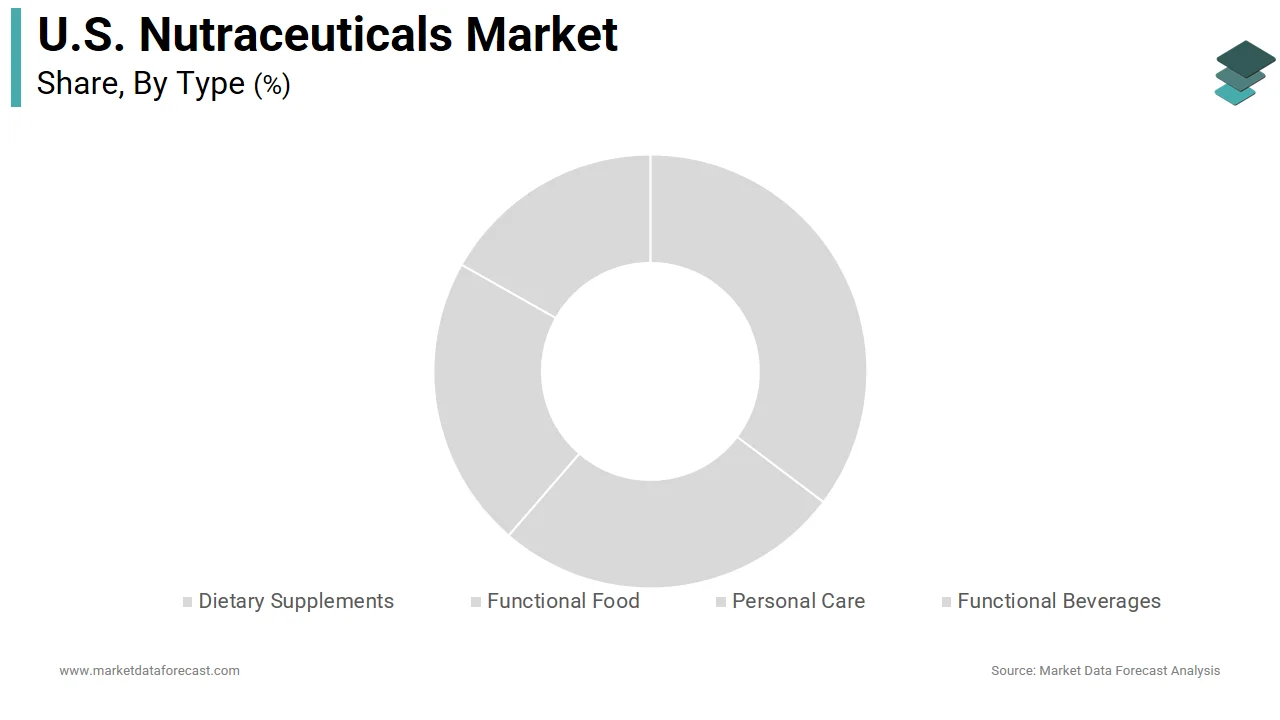
On the other hand, the functional food segment is on the rise and is estimated to record a CAGR of 8.2% during the forecast period in the U.S. market owing to the rising consumer preference for integrating health benefits into everyday meals rather than relying solely on pills or powders. The rapid growth of the functional food segment is largely attributed to the convenience it offers and its seamless integration into daily dietary habits, appealing to consumers who seek health benefits without altering their routines significantly. Unlike traditional supplements that require separate consumption events, functional foods such as fortified cereals, yogurts, and snacks provide nutritional advantages during regular meal times. As per the International Food Information Council, a majority of consumers express interest in foods that provide additional health benefits, indicating a shift toward holistic nutrition. This trend is particularly strong among younger demographics who value efficiency and are less inclined to adhere to complex supplement regimens. The availability of functional options in mainstream grocery stores makes them accessible to a broad audience, reducing the barrier to entry. According to market observations, products enriched with fiber, protein, and probiotics are seeing robust sales as they address common health concerns such as digestive health and satiety. The sensory appeal of functional foods also plays a crucial role, as manufacturers invest in improving taste and texture to match conventional counterparts. This combination of convenience, accessibility, and palatability drives frequent repurchase and broader adoption. By embedding wellness into familiar food formats, companies can capture impulse buys and establish long term loyalty, propelling the segment’s rapid expansion.
By Form Insights
The tablets segment accounted for the highest share of the U.S. nutraceuticals market in 2025. The dominance of tablets segment in the U.S. market is attributed to its cost effectiveness, stability, and ease of manufacturing, making it the preferred choice for a wide range of vitamins and minerals. The cost efficiency and scalability in manufacturing that allows producers to offer affordable products to a mass market is further aiding the dominance of tablets segment in the U.S. market. Tablet production involves well established processes such as compression and coating, which are highly automated and capable of high output volumes. As per pharmaceutical manufacturing data, the cost per unit for tablets is significantly lower than that of capsules or liquid forms, enabling competitive pricing strategies that appeal to price sensitive consumers. This economic advantage is crucial in a market where many users purchase supplements regularly and seek value for money. The ability to produce large batches with consistent quality ensures reliable supply chains and reduces inventory costs for retailers. According to industry analyses, the low production cost also allows for higher profit margins, encouraging manufacturers to prioritize tablet formats in their product portfolios. The compact nature of tablets reduces packaging and shipping expenses, further enhancing logistical efficiency. These economic benefits make tablets the default choice for standard multivitamins and mineral supplements, which constitute a substantial portion of market sales. The widespread availability of tablet press machinery and raw materials supports continuous production, ensuring that tablets remain the most accessible and ubiquitous form of nutraceuticals in the U.S..
On the other end, the soft capsules segment is predicted to expand at a CAGR of 7.4% during the forecast period in the U.S. market owing to the increasing popularity of oil based supplements and the enhanced bioavailability associated with this delivery system and the enhanced bioavailability it offers for lipid soluble nutrients such as omega 3 fatty acids, vitamin D, and coenzyme Q10. Soft capsules encase liquid or semi solid ingredients in a gelatin or vegetarian shell, facilitating easier digestion and absorption in the gastrointestinal tract. As per nutritional science research, the lipid matrix in softgels improves the solubility of hydrophobic compounds, leading to higher plasma concentrations and greater therapeutic effects. This scientific advantage appeals to health conscious consumers who seek maximum efficacy from their supplements. The growing demand for heart health and immune support products, which often rely on oil based ingredients, further drives adoption. According to clinical studies, users report better tolerance and fewer gastrointestinal side effects with softgels compared to tablets, enhancing compliance and satisfaction. The perception of soft capsules as a premium and advanced format also contributes to their growth, attracting buyers willing to pay for superior performance. Manufacturers are responding by expanding their softgel lines to include a wider variety of botanical oils and concentrated extracts. This alignment with scientific evidence and consumer preference for effective delivery systems positions soft capsules as a rapidly growing segment in the nutraceutical landscape.
By Sales Channel Insights
The offline segment captured the leading share of the U.S. nutraceuticals market in 2025. The growth of the offline segment is primarily driven by the trust consumers place in healthcare professionals and the immediate accessibility of products for urgent health needs and the trust consumers place in healthcare professionals and the availability of expert guidance during the purchasing process. Pharmacists and store associates are often viewed as credible sources of information regarding supplement safety, interactions, and efficacy. As per the American Pharmacists Association, a significant percentage of consumers consult with pharmacists before starting new supplement regimens, relying on their expertise to make informed decisions. This professional endorsement builds confidence and reduces the perceived risk of adverse effects, encouraging purchases. The presence of licensed professionals also ensures that products meet regulatory standards, further enhancing credibility. According to consumer behavior studies, the ability to ask questions and receive personalized recommendations is a key determinant in channel selection, particularly for first time buyers or those with complex health conditions. Pharmacies often curate their selections based on clinical evidence and quality standards, filtering out lower quality options. This curated approach simplifies the decision making process for shoppers who may feel overwhelmed by the vast array of choices online. The integration of health services such as vaccinations and screenings also drives foot traffic, creating opportunities for cross selling nutraceuticals. This synergy between professional care and retail availability solidifies the position of drug stores and pharmacies as the primary channel for nutraceutical sales.
However, the online segment is expected to exhibit a CAGR of 10.6% during the forecast period in the U.S. market owing to the convenience of home delivery and the popularity of subscription models that ensure consistent supply without manual reordering. Consumers appreciate the ability to browse and purchase supplements from the comfort of their homes, saving time and effort associated with physical shopping trips. As per the U.S. Census Bureau, online grocery and personal care sales reached a record high in 2023, reflecting a permanent shift in shopping habits. Subscription services offered by online retailers automate the replenishment process, reducing the risk of running out of essential supplements and enhancing customer retention. This model is particularly appealing to busy professionals and older adults who value simplicity and reliability. According to market data, subscribers exhibit higher lifetime value and lower churn rates compared to one time buyers. The flexibility to modify or pause subscriptions adds to the appeal, accommodating changing health needs and schedules. The integration of mobile apps facilitates easy management and tracking of orders, enhancing the user experience. Competitive pricing and exclusive online discounts further incentivize digital purchases. As digital literacy increases and logistics improve, the convenience of online retail continues to drive its rapid growth, capturing a larger share of the nutraceutical market.
COUNTRY ANALYSIS
U.S. Nutraceuticals Market Analysis
The U.S. held 86.7% of the North American market share in 2025. As the largest and most mature market globally, the country exhibits a high level of consumer awareness and spending on health and wellness products. The presence of major multinational corporations and innovative startups fosters intense competition and continuous innovation. The U.S. market is fundamentally driven by its high healthcare expenditure and a shifting focus toward preventive care to mitigate rising medical costs. As per the Centers for Medicare and Medicaid Services, national health spending in the U.S. is projected to grow to $7.7 trillion by 2032, prompting individuals and insurers to seek cost effective preventive measures. Nutraceuticals are increasingly viewed as viable tools for reducing the incidence of chronic diseases, thereby lowering long term healthcare burdens. The high disposable income of many Americans allows for significant investment in wellness products, supporting premium segments. According to economic data, the willingness to pay for health enhancement is higher in the U.S. compared to other regions, driven by a culture that values individual responsibility for health. The integration of nutraceuticals into corporate wellness programs and insurance plans further boosts demand. The strong emphasis on fitness and longevity among the population creates a fertile environment for product innovation and adoption. This economic and cultural backdrop ensures that the U.S. remains the primary engine of growth and innovation in the global nutraceuticals market.
COMPETITIVE LANDSCAPE
The competitive landscape of the U.S. nutraceuticals market is characterized by a mix of established pharmaceutical giants specialized supplement manufacturers and emerging direct to consumer brands. Incumbent players leverage strong brand equity extensive distribution networks and substantial research capabilities to maintain dominance. However the market is becoming increasingly fragmented as new entrants introduce niche products targeting specific health concerns such as gut health mental wellness and immune support. Competition is driven by innovation in product formulations delivery methods and personalized nutrition technologies. Price competition remains intense in the mass market segment while premium brands differentiate through quality transparency and scientific validation. Regulatory compliance and label accuracy are critical factors influencing consumer trust and brand reputation. Digital marketing and social media influence play significant roles in shaping consumer preferences and driving sales. The rise of private label offerings from major retailers adds pressure on branded manufacturers to justify premium pricing. Overall the market favors companies that can balance scientific credibility with agile marketing and supply chain efficiency to meet the diverse and evolving needs of health conscious Americans.
KEY MARKET PLAYERS
Some of the companies that are playing a dominating role in the U.S. nutraceuticals market include
- DSM
- Amway Corporation
- Pfizer Inc.
- Nestle
- Nature's Bounty
- General Mills Inc.
- Danone
- The Kraft Heinz Company
- The Hain Celestial Group, Inc.
- Tyson Foods
TOP PLAYERS IN THE MARKET
Nestlé Health Science contributes significantly to the U.S. nutraceuticals market through its extensive portfolio of medical nutrition and wellness brands. The company focuses on science based solutions for specific health conditions such as diabetes and gastrointestinal disorders. Recent strategic initiatives include expanding its product lines with personalized nutrition offerings and investing in digital health platforms to enhance consumer engagement. Nestlé actively collaborates with healthcare professionals to validate product efficacy and build trust among medical communities. The corporation has also strengthened its supply chain resilience to ensure consistent product availability across retail and online channels. By prioritizing research and development in gut health and immune support Nestlé maintains its position as a leader in evidence based nutritional interventions. These efforts aim to address the growing demand for preventive healthcare solutions while fostering long term brand loyalty among health conscious consumers seeking reliable and effective dietary supplements.
Pfizer Inc. plays a pivotal role in the U.S. nutraceuticals market primarily through its robust portfolio of vitamin and mineral supplements under the Centrum and Emergen C brands. The company leverages its pharmaceutical expertise to ensure high quality standards and scientific rigor in product formulation. Recent actions involve launching innovative delivery formats such as gummies and powders to appeal to younger demographics who prefer convenient and tasty options. Pfizer has also invested heavily in digital marketing campaigns to educate consumers about the importance of immune support and daily wellness. The organization focuses on expanding its presence in e commerce platforms to reach a broader audience and enhance accessibility. By emphasizing transparency in ingredient sourcing and manufacturing processes Pfizer builds credibility and trust. These strategies enable the company to maintain strong brand recognition and capture a significant portion of the mass market while adapting to evolving consumer preferences for holistic health and preventive care solutions.
Amway Corporation maintains a strong presence in the U.S. nutraceuticals market through its Nutrilite brand which is renowned for its commitment to organic farming and sustainable sourcing. The company operates on a direct selling model that fosters personal connections between distributors and consumers. Recent strategic moves include enhancing its digital infrastructure to support independent business owners with advanced tools for customer engagement and sales tracking. Amway has also expanded its product portfolio to include plant based proteins and specialized supplements targeting active lifestyles and healthy aging. The organization emphasizes traceability from seed to supplement ensuring purity and potency of its ingredients. By leveraging its global supply chain and vertical integration Amway offers competitive pricing and consistent quality. These initiatives strengthen its market position by appealing to environmentally conscious consumers who value transparency and ethical practices. The focus on community building and educational resources further reinforces brand loyalty and drives sustained growth in the competitive nutraceutical landscape.
TOP STRATEGIES USED BY KEY MARKET PARTICIPANTS
Key players in the U.S. nutraceuticals market primarily employ product innovation and digital engagement strategies to sustain growth. Companies are increasingly launching personalized nutrition solutions powered by artificial intelligence to cater to individual health needs and genetic profiles. This customization enhances customer loyalty and differentiates brands in a saturated market. Another major strategy involves expanding into functional food and beverage formats to reach consumers who prefer integrating supplements into their daily meals rather than taking pills. Manufacturers invest heavily in scientific research and clinical trials to validate health claims thereby building trust and credibility with healthcare providers and consumers. Strategic partnerships with e commerce platforms and direct to consumer models enhance accessibility and convenience. Sustainability initiatives such as eco friendly packaging and ethical sourcing are also prioritized to appeal to environmentally conscious buyers. By combining scientific rigor with consumer centric innovation key participants strengthen their market positions and adapt to evolving health trends effectively.
MARKET SEGMENTATION
This research report on the U.S. nutraceuticals market has been segmented and sub-segmented into the following categories.
By Type
- Dietary Supplements
- Vitamins
- Botanicals
- Minerals
- Proteins & Amino Acids
- Fibers & Specialty Carbohydrates
- Omega Fatty Acids
- Others
- Functional Beverages
- Energy Drinks
- Sports Drinks
- Functional Juices
- Others
- Functional Food
- Carotenoids
- Dietary Fibers
- Fatty Acids
- Minerals
- Prebiotics & Probiotics
- Vitamins
- Others
- Personal Care
By Form
- Tablets
- Hard Capsules
- Soft Capsules
- Oil
- Powder
- Others
By Sales Channel
- Offline
- Specialty Stores
- Supermarkets/Hypermarkets
- Convenience Stores
- Drug Stores/Pharmacies
- Online Retail Stores
By Country
- New York
- Texas
- Florida
- Georgia
- California
- Rest of U.S.
Access the study in MULTIPLE FORMATS
Purchase options starting from
$ 1200
Didn’t find what you’re looking for?
TALK TO OUR ANALYST TEAM
Need something within your budget?
NO WORRIES! WE GOT YOU COVERED!
Call us on: +1 888 702 9696 (U.S Toll Free)
Write to us: sales@marketdataforecast.com