- Product Description Description
- Table of Contents TOC
- List of Table & Figure LOT
- Get Free Sample PDF Sample PDF
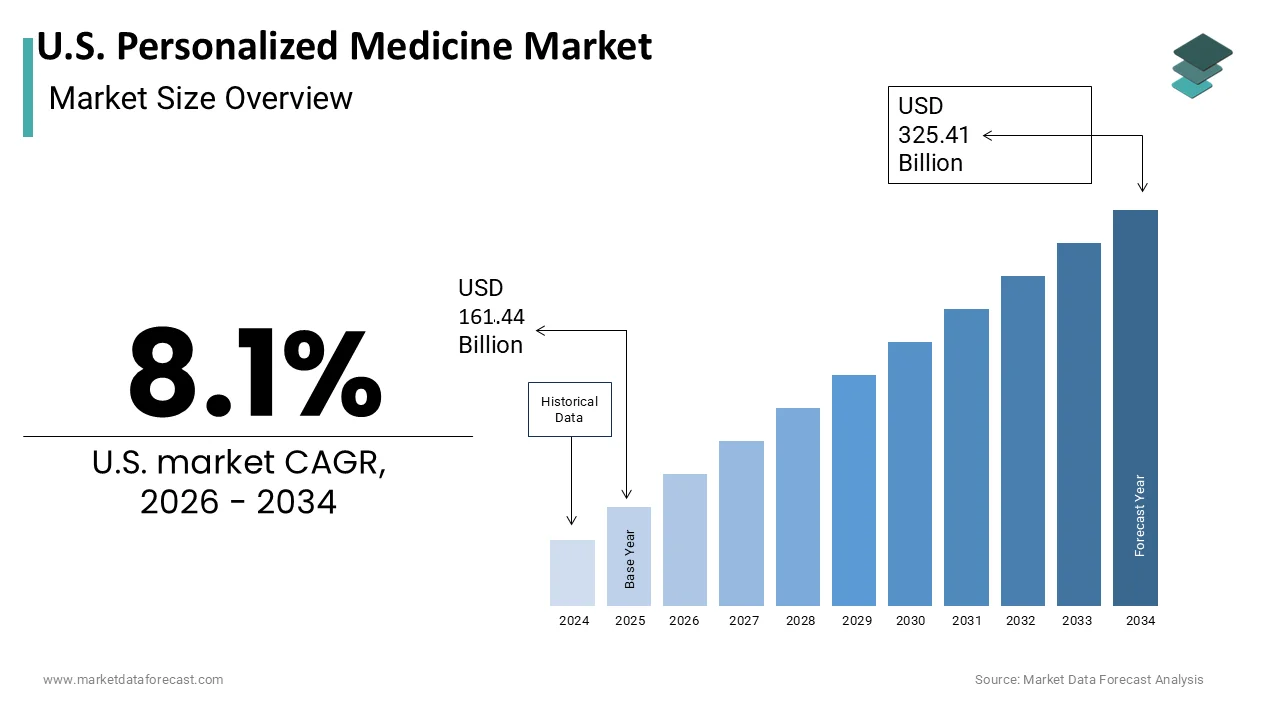
Market Size, 2025
$161.44 BnMarket Estimate, 2026
$174.51 BnMarket Forecast, 2034
$325.41 BnCAGR, 2026–2034
8.1%Executive Summary: U.S. Personalized Medicine Market
- Market Scope: Comprehensive analysis of the U.S. personalized medicine market, covering therapeutic products, diagnostic solutions, end-use settings, technological drivers, reimbursement challenges, and competitive industry landscapes.
- Market Valuation: Valued at USD 161.44 billion in 2025, reaching USD 174.51 billion in 2026, and projected to expand to USD 325.41 billion by 2034, growing at a steady CAGR of 8.10% from 2026 to 2034.
- Primary Growth Drivers: Rapid advancements in genomic sequencing technologies and dramatic cost reductions, escalating prevalence of chronic diseases and cancer incidence, and integration of AI with big data analytics.
Key Market Segment Metrics
| Category | Leading Segment (Base Position) | Fastest-Growing / High-Growth Segment |
|---|---|---|
| By Product | Personalized Medicine Therapeutics (accounted for 45.7% share in 2025 due to targeted biologics in oncology) | Personalized Medicine Diagnostics (exhibiting a CAGR of 11.5% driven by essential companion diagnostics and liquid biopsies) |
| By End Use | Hospitals (led with 48.2% share in 2025 due to comprehensive infrastructure, academic medical centers, and multidisciplinary care) | Diagnostic Centers (predicted to witness the highest CAGR of 12.8% due to decentralized testing and fast turnaround times) |
| By Region / Country | United States (commanding position with 45.1% share supported by strong research funding, NIH initiatives, and FDA pathways) | Major Biotech Hubs (Boston, San Francisco, and regional medical centers driving precision healthcare adoption) |
Major Market Players & Industry Landscape
Market Structure: Highly consolidated and intensely competitive marketplace featuring major pharmaceutical corporations, genomic sequencing pioneers, and specialized diagnostic firms navigating complex reimbursement models and data privacy regulations.
Key Companies: F. Hoffmann-La Roche Ltd., Thermo Fisher Scientific Inc., Illumina, Inc., Pfizer Inc., Novartis AG, Abbott Laboratories, Danaher Corporation, Qiagen N.V., Exact Sciences Corporation, 23andMe Holding Co., Bio-Rad Laboratories, Inc., and Guardant Health, Inc.
 Download Free Sample Report
U.S. Personalized Medicine Market Size
The U.S. Personalized Medicine Market was valued at USD 161.44 billion in 2025, is estimated to reach USD 174.51 billion in 2026, and is projected to reach USD 325.41 billion by 2034, growing at a CAGR of 8.1% from 2026 to 2034.
Personalized medicine is an innovative healthcare model that tailors disease prevention, diagnosis, and treatment to each patient's unique genetic profile, lifestyle, and environment. This domain integrates genomics, proteomics,s and advanced data analytics to optimize disease prevention, diagnosis, and treatment strategies. The framework is particularly pivotal in oncology,y where targeted therapies have revolutionized patient outcomes by addressing specific genetic mutations. According to the National Institutes of Health,h the All of Us Research Program has enrolled over 760000 participants to build a diverse database that accelerates precision health discoveries. The Food and Drug Administration emphasizes the importance of companion diagnostics, which are essential for identifying patients likely to benefit from specific targeted drugs. As per the Centers for Disease Control and Prevention, chronic diseases such as cancer and heart disease account for 90% of the nation's $4.9 trillion in annual healthcare costs, driving the need for more effective personalized interventions. The integration of electronic health records with genomic data enables clinicians to make informed decisions,s reducing trial and error in prescribing. The American Medical Association supports the education of physicians on pharmacogenomics and advocates for coverage of evidence-based testing to improve health outcomes and minimize adverse drug reactions, though it continues to evaluate the evidence base for broad clinical implementation. This market landscape is defined by rapid technological advancements in sequencing and bioinformatics, fostering a collaborative ecosystem among researchers, clinicians, and technology providers. The shift toward value-based care further incentivizes the adoption of personalized medicine by improving efficacy and reducing unnecessary treatments.
MARKET DRIVERS
Advancements in Genomic Sequencing Technologies and Cost Reductions
The rapid advancement in genomic sequencing technologies, coupled with significant cost reduction, ns is a key reason for the growth of the United States personalized medicine market. The ability to sequence an entire human genome quickly and affordably has democratized access to genetic information, enabling widespread clinical application. According to the National Human Genome Research Institute, the cost of sequencing a human genome has dropped from approximately 100 million dollars in 2001 to under 1000 dollars in recent years. This dramatic decrease has made genomic testing accessible for routine clinical use rather than remaining a research-only tool. The American College of Medical Genetics and Genomics states that next-generation sequencing is now standard practice for diagnosing rare genetic disorders and guiding cancer treatment plans. Hospitals and diagnostic laboratories are increasingly incorporating whole exome and whole genome sequencing into their service offerings. The Food and Drug Administration has approved numerous tests that rely on these sequencing technologies to identify biomarkers for targeted therapies. Furthermore, the integration of artificial intelligence with genomic data allows for faster interpretation of complex genetic variants. The National Institutes of Health supports initiatives that enhance the computational infrastructure needed for large-scale genomic analysis. As sequencing becomes faster and more accurate, clinicians can provide precise diagnoses and tailored treatment recommendations. This technological accessibility empowers healthcare providers to move beyond symptomatic treatment to address the root genetic causes of disease,s thereby improving patient outcomes and driving market growth.
Increasing Prevalence of Chronic Diseases and Cancer Incidence
The rising prevalence of chronic diseases, particularly cancer, drives substantial demand for personalized medicine solutions in the country and, therefore, propels the expansion of the United States personalized medicine market. Traditional treatment methods often fail to address the heterogeneity of diseases, es leading to suboptimal outcomes and high healthcare costs. Personalized medicine offers targeted therapies that improve efficacy and reduce side effects by focusing on the molecular characteristics of the disease. According to the American Cancer Society, approximately 2.1 million new cancer cases are diagnosed annually in the United States, necessitating more effective treatment strategies. The National Cancer Institute highlights that targeted therapies have significantly improved survival rates for patients with specific genetic mutations, such as those in breast, lung,, ng and melanoma cancers. Pharmacogenomics also plays a critical role in managing chronic conditions like cardiovascular disease and diabetes by optimizing drug selection and dosage. The Centers for Disease Control and Prevention reports that six in ten adults in the US have at least one chronic disease, making personalized approaches essential for effective management. Healthcare providers are increasingly adopting precision oncology panels to guide treatment decisions. Insurance providers are beginning to cover these tests as evidence of their cost-effectiveness grows. The demand for a better quality of life and prolonged survival among patients further fuels the adoption of personalized interventions. This epidemiological trend ensures a steady stream of patients who benefit from tailored medical solutions, sustaining market expansion.
MARKET RESTRAINTS
High Costs of Development and Reimbursement Challenges
High costs associated with the development of personalized therapies and complex reimbursement landscapes inhibit the growth of the United States personalized medicine market. Developing targeted drugs and companion diagnostics requires significant investment in research and clinical trials, ls which often involve smaller patient populations stratified by genetic markers. According to the Tufts Center for the Study of Drug Development, ent the average cost to bring a new drug to market exceeds 2 billion dollars, with personalized medicines facing even higher per-patient development costs due to niche targeting. The complexity of demonstrating clinical utility for small subgroups makes it difficult to achieve traditional statistical significance in trials. Reimbursement remains a critical hurdle as payers often hesitate to cover high-cost targeted therapies without robust long-term outcome data. The Kaiser Family Foundation notes that inconsistent coverage policies across different insurance providers create uncertainty for both patients and providers. Many insurers require prior authorization or deny coverage for newer genomic tests, citing a lack of established clinical guidelines. The Centers for Medicare and Medicaid Services has implemented varying coverage determinations for molecular diagnostic tests, leading to fragmented access. Pharmaceutical companies face pressure to justify premium pricing while ensuring accessibility. These financial barriers limit the widespread adoption of personalized medicine,e particularly for underserved populations. Reimbursement models must evolve to accommodate the value of precision health. Without this change, the market will face constraints in scaling innovative solutions to broader patient groups.
Data Privacy Concerns and Regulatory Complexities
Data privacy concerns and regulatory complexities surrounding the handling of sensitive genetic information obstruct the expansion of the United States personalized medicine market. The collection, storage,e and sharing of genomic data raises ethical and legal questions regarding patient consent and data security. According to the Department of Health and Human Services, es the Health Insurance Portability and Accountability Act provides some protections, but gaps remain in governing the use of genetic data by third parties such as research institutions and commercial entities. The Genetic Information Nondiscrimination Act prohibits discrimination in health insurance and employment, but does not cover life, disability, or long-term care insurance, creating potential risks for individuals. The Federal Trade Commission monitors deceptive practices by direct-to-consumer genetic testing companies, but regulatory oversight remains fragmented. Patients may hesitate to undergo genetic testing due to fears of data breaches or misuse of their information. The National Academies of Science, Engineering,, ng and Medicine emphasizes the need for robust frameworks to ensure trust and transparency in data handling. Additionally, ally the Food and Drug Administration faces challenges in regulating rapidly evolving digital health tools and algorithms used in personalized medicine. Inconsistent state laws regarding genetic privacy further complicate compliance for national healthcare providers. These regulatory and privacy hurdles slow down data-sharing collaborations essential for advancing precision medicine. Addressing these concerns requires comprehensive policy reforms to balance innovation with patient rights and data security.
MARKET OPPORTUNITIES
Integration of Artificial Intelligence and Big Data Analytics
The integration of artificial intelligence and big data analytics unlocks potential for the growth of the US personalized medicine market. This enhances the ability to process and interpret vast amounts of complex health data. AI algorithms can identify patterns and correlations in genomic, clinical,l and lifestyle data that are imperceptible to human analysts. According to the National Institutes of Health, AI-driven platforms are increasingly used to predict disease risk and recommend personalized treatment plans with greater accuracy. The ability to analyze real-world evidence from electronic health records allows for continuous learning and improvement of predictive models. The Food and Drug Administration has established a digital health center of excellence to facilitate the regulation and adoption of AI-based medical devices. Healthcare systems are investing in cloud computing infrastructure to support large-scale data processing. The American Medical Informatics Association highlights that AI can streamline clinical workflows by automating the interpretation of genetic test results. This efficiency reduces the time required for diagnosis and treatment initiation. Furthermore, AI enables the discovery of novel biomarkers and drug targets, thus accelerating the development of new therapies. Partnerships between technology firms and pharmaceutical companies are fostering innovation in this space. As data volumes grow, row the capacity of AI to deliver actionable insights will expand, making personalized medicine more scalable and effective. This technological synergy offers a pathway to overcome current limitations in data analysis and clinical decision support.
Expansion of Direct-to-Consumer Genetic Testing and Wellness Services
The proliferation of direct-to-consumer genetic testing and wellness services is a key area for the expansion of the US personalized medicine market. This increases public awareness and engagement with personal health data. Companies offering affordable genetic kits allow individuals to access information about their ancestry, health risks,s and traits without requiring a physician referral. According to the Pew Research Center, er millions of Americans have used direct-to-consumer genetic testing services, generating a wealth of data that can inform personalized health strategies. These services empower consumers to take proactive steps in disease prevention and lifestyle modification. The Food and Drug Administration has authorized certain direct-to-consumer tests for specific genetic health risks, bridging the gap between consumer curiosity and clinical utility. Healthcare providers are increasingly integrating this consumer-generated data into clinical discussions, fostering a more collaborative approach to care. The growing interest in wellness and preventive health drives demand for personalized nutrition and fitness recommendations based on genetic profiles. Companies are developing subscription-based models that offer ongoing health insights and coaching. This trend democratizes access to genetic information and encourages earlier engagement with the healthcare system. As consumers become more health literate, the demand for clinically validated personalized solutions increases. This shift creates new revenue streams for companies that can translate raw genetic data into actionable health recommendations.
MARKET CHALLENGES
Interoperability Issues and Fragmented Health Data Systems
The lack of interoperability among disparate health data systems is a major challenge to the US personalized medicine market. This lack of interoperability hinders the seamless exchange of critical patient information. Electronic health records, laboratory systems,s and genomic databases often operate in silos using incompatible formats and standards. According to the Office of the National Coordinator for Health Information Technology, despite widespread adoption of electronic health records,s significant barriers remain in sharing data across different healthcare organizations. This fragmentation prevents clinicians from accessing a comprehensive view of a patient's genetic and clinical history necessary for making informed personalized treatment decisions. The American Medical Association advocates for standardized data formats to facilitate integration, but progress has been slow. Without interoperability, valuable genomic data may remain unused or duplicated, leading to inefficiencies and increased costs. Healthcare providers struggle to integrate genetic test results into existing workflows due to technical limitations. The National Institute of Standards and Technology works on developing standards,s but implementation varies widely across institutions. This lack of connectivity limits the potential of big data analytics and AI in personalized medicine. Patients who seek care from multiple providers face disjointed experiences as their data does not follow them. Overcoming these technical and organizational barriers requires substantial investment in infrastructure and collaboration among stakeholders to create a unified health information ecosystem.
Shortage of Skilled Workforce in Genomics and Bioinformatics
The shortage of skilled professionals in genomics, cs bioinformat,ics, and precision medicine is a major hurdle for the United States personalized medicine market. The rapid advancement of technology has outpaced the training of healthcare providers and scientists capable of interpreting and applying complex genetic data. According to the Genetic Counselor Workforce Working Group (including the NSGC and ABGC), there is a growing gap between the demand for genetic counselors and the number of certified professionals available to meet patient needs. Many physicians lack adequate training in genomics during medical school, limiting their ability to incorporate personalized medicine into routine practice. The National Society of Genetic Counselors reports that wait times for genetic counseling appointments can be lengthy due to workforce shortages. This barrier delays diagnosis and treatment initiation for patients requiring specialized care. Additionally, there is a scarcity of bioinformaticians who can manage and analyze large-scale genomic datasets. Universities and training programs are expanding curricula, but the pipeline of qualified graduates remains insufficient. The American Board of Medical Specialties has introduced certifications in clinical informatics, but adoption is gradual. Healthcare organizations face difficulties in recruiting and retaining talent with specialized skills. This workforce deficit constrains the scalability of personalized medicine services and limits access for rural and underserved populations. Addressing this challenge requires sustained investment in education and professional development to build a capable workforce.
REPORT COVERAGE
| REPORT METRIC | DETAILS |
| Market Size Available | 2025 to 2034 |
| Base Year | 2025 |
| Forecast Period | 2026 to 2034 |
| Segments Covered | By Product, End Use, and Region. |
| Various Analyses Covered | Global, Regional and Country-Level Analysis, Segment-Level Analysis, Drivers, Restraints, Opportunities, Challenges; PESTLE Analysis; Porter’s Five Forces Analysis, Competitive Landscape, Analyst Overview of Investment Opportunities |
| Countries Covered | California, Washington, Oregon, New York, and the rest of the United States |
| Market Leaders Profiled | F. Hoffmann-La Roche Ltd., Pfizer Inc., Novartis AG, Abbott Laboratories, Illumina, Inc., Thermo Fisher Scientific Inc., Danaher Corporation, Qiagen N.V., Exact Sciences Corporation, 23andMe Holding Co., Bio-Rad Laboratories, Inc., Guardant Health, Inc. |
SEGMENTAL ANALYSIS
By Product Insights
The personalized medicine therapeutics segment dominated the United States market and accounted for a 45.7% share in 2025. This dominance of the segment was driven by the widespread adoption of targeted biologics and small-molecule drugs in oncology and rare disease management. The primary factor fueling this dominance is the clinical efficacy of these therapies in treating conditions with specific genetic markers, which traditional broad-spectrum drugs often fail to address effectively. According to the Food and Drug Administration, approximately 40 percent of new drug approvals in recent years have been for precision medicine, es highlighting the regulatory and clinical shift toward targeted interventions. The National Cancer Institute reports that targeted therapies have improved five-year survival rates for certain cancers by up to 20 percent compared to conventional chemotherapy. This tangible improvement in patient outcomes drives physician preference and insurance coverage for these advanced treatments. Pharmaceutical companies invest heavily in developing monoclonal antibodies and kinase inhibitors that block specific pathways involved in disease progression. The American Society of Clinical Oncology emphasizes that guideline-recommended care increasingly includes molecularly targeted agents as first-line treatments for various malignancies. Furthermore, the expansion of indications for existing targeted drugs broadens their patient base. For instance, the drugs initially approved for breast cancer are now used for other HER2-positive tumors. This versatility enhances the commercial viability of therapeutic products. The high revenue potential of these specialized drugs, despite a smaller patient population,s supports their market leadership. The pipeline of personalized therapeutics continues to grow as research identifies more actionable mutations. Consequently, this reinforces their central role in modern healthcare delivery and sustains their dominant share in the product segment.
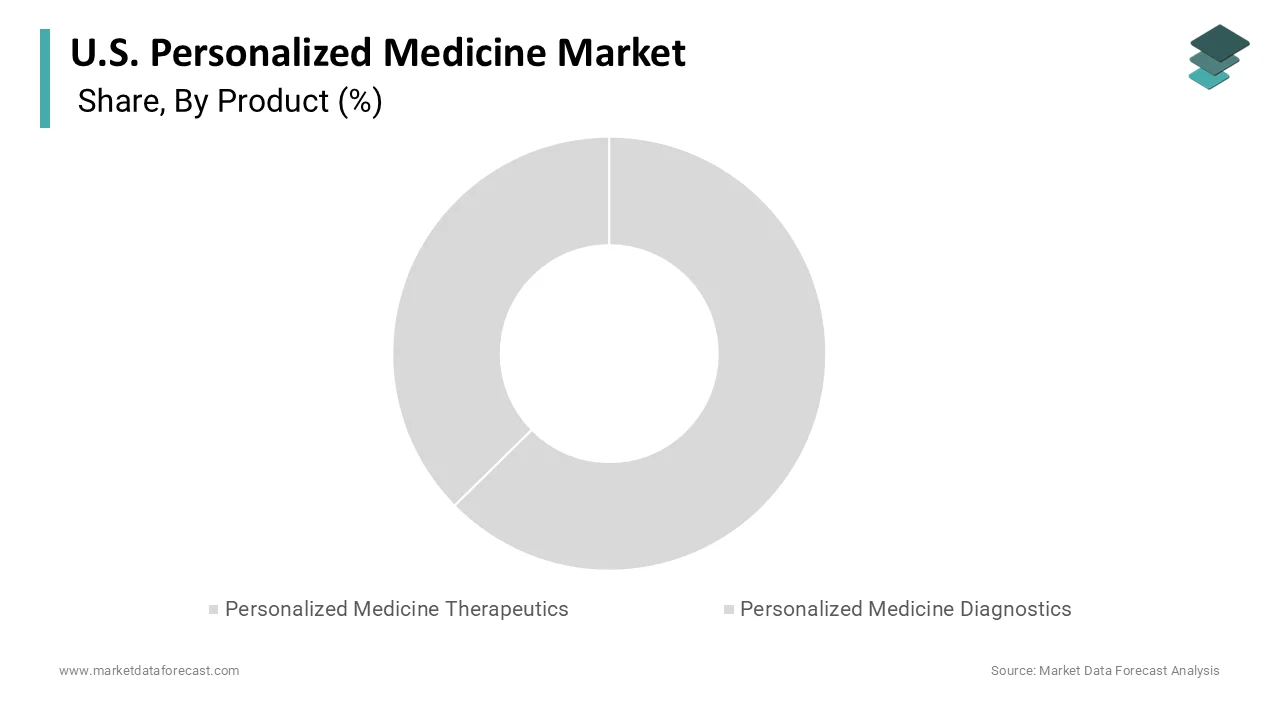
The personalized medicine diagnostics segment is expected to exhibit a noteworthy CAGR of 11.5% from 2026 to 2034 due to the critical need for companion diagnostics to guide therapeutic decisions. Companion diagnostics are essential for identifying patients who will benefit from specific targeted therapy, es ensuring treatment efficacy and minimizing adverse events. According to the Centers for Medicare and Medicaid Services, coverage for molecular diagnostic tests has expanded significantly,y reflecting their growing clinical utility and necessity in precision oncology. The College of American Pathologists states that next-generation sequencing panels are becoming the standard of care for comprehensive genomic profiling in advanced cancer cases. This shift from single-gene testing to multi-gene panels increases the volume and complexity of diagnostic procedures. Additionally, the rise of liquid biopsies,s which detect circulating tumor DNA in blood samples, offers a non-invasive alternative to tissue biopsies, enabling real-time monitoring of disease progression and treatment response. The American Association for Cancer Research highlights that liquid biopsy usage is increasing due to its ability to capture tumor heterogeneity and detect resistance mechanisms early. Technological advancements in bioinformatics and artificial intelligence further accelerate the interpretation of complex genomic data, reducing turnaround times. As healthcare providers integrate these diagnostics into routine practice, the demand for rapid and accurate testing solutions surges. The synergy between diagnostic innovation and therapeutic development creates a robust growth trajectory for this segment,t making it the fastest expanding component of the personalized medicine market.
By End Use Insights
In 2025, the hospitals segment led the US personalized medicine market and captured a 48.2% share. This leading position of the segment was attributed to its comprehensive infrastructure capacity to handle complex cases and integration of multidisciplinary care teams. Large academic medical centers and tertiary care hospitals are equipped with advanced genomic sequencing laboratories and specialized oncology units that facilitate the delivery of personalized treatments. According to the American Hospital Association (AHA), while there are 6,120 hospitals in the United States, approximately 50% of community hospitals provide dedicated critical care services, with major institutions serving as primary hubs for precision medicine initiatives. These facilities have the resources to implement electronic health records that integrate genomic data, ta allowing clinicians to make informed decisions at the point of care. The National Institutes of Health supports many hospital-based research programs that translate genomic discoveries into clinical practice, enhancing the availability of personalized therapies. Hospitals also manage the administration of complex biologics and targeted infusions that require specialized monitoring and nursing care. The Joint Commission mandates strict quality standards for laboratory testing and patient safety,y which hospitals are well-positioned to meet. Furthermore, hospitals often participate in clinical trials,s offering patients access to cutting-edge personalized medicine interventions before they are widely available. The concentration of skilled professionals, including genetic counselors, pharmacists, ts an and oncologists within a hospital setting ensures comprehensive patient management. This integrated approach improves coordination and outcomes, driving the dominance of hospitals in the market. As value-based care models emphasize outcomes, hospitals are incentivized to adopt personalized medicine to reduce readmissions and improve long-term health status.
On the other hand, the diagnostic centers segment is predicted to witness the highest CAGR of 12.8% during the forecast period, due to the decentralization of testing services and increased accessibility for patients. Independent laboratories and specialized diagnostic clinics offer rapid and cost-effective genomic testing without the overhead costs associated with large hospital systems. According to the Association for Molecular Pathology, the volume of outsourced molecular diagnostic tests has risen sharply as physicians seek faster turnaround times and specialized expertise. Diagnostic centers invest heavily in automation and high-throughput sequencing technologies, enabling them to process large volumes of samples efficiently. The Clinical Laboratory Improvement Amendments regulate these facilities, ensuring high-quality standards that build trust among referring physicians. Additionally, the rise of direct-to-consumer genetic testing has partnered with local diagnostic centers for confirmatory clinical testing, expanding their customer base. The American Medical Association encourages the use of certified independent laboratories to reduce healthcare costs and improve access in rural areas. Diagnostic centers also offer niche services such as pharmacogenomic testing for medication management,nt which is gaining traction in primary care settings. Their flexibility allows them to adopt new technologies quickly and scale operations to meet rising demand. As insurance coverage for outpatient diagnostics improves,oves more patients are opting for these convenient and specialized services. This shift toward decentralized testing models accelerates the growth of diagnostic centers entering,s making them a dynamic and rapidly expanding component of the personalized medicine ecosystem.
COUNTRY LEVEL ANALYSIS
United States Personalized Medicine Market Analysis
The United States was the top performer in the global personalized medicine market and held a 45.1% share in 2025. This growth of the US market was supported by its robust healthcare infrastructure, substantial research funding,g and favorable regulatory environment. The market status within the country is characterized by rapid innovation and early adoption of precision health technologies across clinical and research settings. According to the National Institutes of Health, the United States invests billions of dollars annually in biomedical research, including the All of Us Research Program, which aims to gather data from one million or more people to accelerate breakthroughs in precision medicine. The Food and Drug Administration plays a pivotal role by providing expedited approval pathways for breakthrough therapies and companion diagnostics, fostering a conducive environment for pharmaceutical and diagnostic companies. The presence of world-renowned academic medical centers and biotechnology hubs in regions like Boston and San Francisco drives continuous innovation and collaboration. The Centers for Medicare and Medicaid Services has expanded coverage for numerous molecular diagnostic tests, recognizing their clinical value in improving patient outcomes. High healthcare expenditure in the United States, although a challenge, also reflects the capacity to fund advanced treatments. The American Cancer Society notes that the high incidence of cancer in the population drives demand for targeted therapies. Furthermore,e strong intellectual property protections encourage investment in research and development. The integration of digital health technologies and electronic health records facilitates data sharing and analysis. These factors collectively sustain the United States position as the premier market for personalized medicine influencing global trends and setting standards for precision healthcare implementation worldwide.
KEY MARKET PLAYERS
Some of the companies that are playing a dominating role in the U.S. Personalized Medicine Market include
- F. Hoffmann-La Roche Ltd.
- Pfizer Inc.
- Novartis AG
- Abbott Laboratories
- Illumina, Inc.
- Thermo Fisher Scientific Inc.
- Danaher Corporation
- Qiagen N.V.
- Exact Sciences Corporation
- 23andMe Holding Co.
- Bio-Rad Laboratories, Inc.
- Guardant Health, Inc.
COMPETITIVE LANDSCAPE
The competition in the United States personalized medicine market is intense and characterized by the presence of major pharmaceutical companies,ies diagnostic firms, and technology providers vying for leadership. Key players compare based on technological innovation, product efficacy, and the ability to offer integrated solutions that combine diagnostics with therapeutics. The market is highly consolidated with established entities leveraging their extensive resources to maintain dominance through continuous research and development investments. Regulatory approval from the Food and Drug Administration serves as a significant barrier to entry, ensuring only high-quality and safe products reach the market. Companies differentiate themselves by developing proprietary biomarkers and advanced sequencing platforms that provide superior accuracy and speed. Strategic alliances between pharmaceutical and diagnostic companies are common as they seek to create comprehensive ecosystems for precision health. Intellectual property rights play a crucial role in maintaining competitive advantages and protecting innovations. The rise of direct-to-consumer genetic testing has also introduced new competitors who challenge traditional models by offering accessible and affordable options. Overall, the market requires constant innovation and strategic agility to navigate complex regulatory landscapes and meet the evolving demands of healthcare providers and patients seeking personalized solutions.
TOP LEADING MARKET PLAYERS
- Hoffmann-La Roche Ltd maintains a pivotal role in the United States personalized medicine market through its integrated approach combining diagnostics and pharmaceuticals. The company leverages its subsidiary Foundation Medicine to provide comprehensive genomic profiling that guides treatment decisions for cancer patients. Roche recently expanded its portfolio of targeted therapies by securing approvals for new indications in breast and lung cancers. The corporation actively collaborates with healthcare providers to integrate companion diagnostics into routine clinical practice, ensuring precise patient stratification. By investing in digital pathology and artificial intelligence tools, Roche enhances the interpretation of complex biomarker data. These strategic initiatives strengthen its position as a leader in precision oncology while improving patient outcomes through tailored therapeutic interventions and robust diagnostic support systems across the nation.
- Thermo Fisher Scientific Inc serves as a critical enabler of personalized medicine in the United States by providing advanced instruments and reagents for genomic analysis. The company offers a comprehensive suite of next-generation sequencing platforms and bioinformatics solutions that facilitate rapid and accurate genetic testing. Thermo Fisher recently launched innovative liquid biopsy technologies that allow for non-invasive monitoring of disease progression and treatment response. The organization partners with academic institutions and commercial laboratories to streamline workflows and reduce turnaround times for critical diagnostic results. By expanding its manufacturing capabilities and supply chain resilience, Thermo Fisher ensures the consistent availability of essential tools. These efforts support the widespread adoption of precision medicine practices and reinforce its status as a foundational partner in the genomic healthcare ecosystem.
- Illumina Inc dominates the genomic sequencing landscape in the United States, personalizing medicine through its high-throughput sequencing technologies. The company provides scalable platforms that enable researchers and clinicians to decode genetic information with unprecedented speed and accuracy. Illumina recently introduced enhanced software solutions that simplify data analysis and interpretation for healthcare professionals lacking specialized bioinformatics expertise. The firm actively engages in partnerships with health systems to implement population-scale genomic programs aimed at preventive care and early disease detection. By focusing on reducing the cost and complexity of sequencing, Illumina democratizes access to genetic insights. These actions solidify its leadership in the diagnostics segment and drive the integration of genomics into standard medical care protocols throughout the country.
TOP STRATEGIES USED BY KEY MARKET PARTICIPANTS
Key players in the United States personalized medicine market primarily focus on strategic collaborations and partnerships to accelerate innovation and expand market reach. Companies invest heavily in research and development to create novel targeted therapies and advanced diagnostic tools that address unmet medical needs. Mergers and acquisitions are common strategies used to integrate complementary technologies, such as combining pharmaceutical portfolios with diagnostic capabilities. Firms also prioritize regulatory engagement to secure faster approvals for breakthrough therapies and companion diagnostics. Educational initiatives targeting healthcare providers help promote the adoption of precision medicine practices in clinical settings. Additionally, many companies leverage artificial intelligence and big data analytics to enhance drug discovery and improve the accuracy of genetic interpretations. These strategies collectively drive growth and competitiveness in the evolving landscape of personalized healthcare.
MARKET SEGMENTATION
This research report on the U.S. personalized medicine market is segmented and sub-segmented into the following categories.
By Product
- Personalized Medicine Therapeutics
- Personalized Medicine Diagnostics
By End Use
- Hospitals
- Diagnostic Centers
- Research & Academic Institutes
- Specialty Clinics
- Others
By Country
- California
- Washington
- Oregon
- New York
- Rest of the United States